Home Blog Page 44

Railways all set to outsources 11 passenger trains

Railways all set to outsources 11 passenger trains
ISLAMABAD, Nov 18 (APP/DNA):Pakistan Railways is all set to outsource 11 passenger trains under a new operational framework aimed at improving efficiency and revenue generation for the department.

“11 trains will be offered through an open auction instead of the previous bidding system,” an official in the Ministry of Railways told APP.

The trains to be outsourced included Hazara Express, Bahauddin Zakariya Express, Millat Express, Badar Express, Ghouri Express, Rawal Express, Thal Express, Mohenjo Daro Passenger, Fareed Express, Mianwali Express, and Faiz Ahmad Faiz Passenger train, he added.

He said that private operators to participate in a transparent process.

The official said that Federal Minister for Railways Hanif Abbasi canceled all previous financial bids, directing that future outsourcing will be conducted exclusively through open auctions to ensure transparency, competition and public confidence.

He said the new system will not only bring greater efficiency and better service quality for passengers but also help Pakistan Railways reduce losses and modernize its operations through public-private collaboration.

Japan announces $3.5 million grant to support Pakistan’s Polio Programme

Japan announces $3.5 million grant to support Pakistan’s Polio Programme

ISLAMABAD, NOV 18 /DNA/ – The Government of Japan has announced a new US$ 3.5 million grant to procure essential oral polio vaccines as part of its continued support to Pakistan’s polio eradication efforts. The Pakistan Polio Eradication Initiative (PEI) will use these funds to procure more than 24 million doses of vaccines to support polio campaigns in 2026.

Pakistan remains one of only two countries globally yet to stop the transmission of poliovirus. So far in 2025, Pakistan has reported a total of 30 cases. In an urgent effort to eradicate the incurable disease, the Government of Pakistan, with support from partners, has developed the National Emergency Action Plan 2025–26 under the Roadmap to Zero, aimed at stopping polio transmission across the country. Each national immunization drive targets over 45 million children under five, supported by more than 400,000 frontline health workers who play a vital role in reaching communities and delivering vaccines.

“This partnership represents more than financial assistance; it reflects solidarity and shared purpose,” said Ms. Ayesha Raza Farooq, the Prime Minister’s Focal Person on Polio Eradication. “Every dose of vaccine and every outreach effort supported through Japan’s contribution brings us closer to a polio-free Pakistan. We are deeply grateful for Japan’s continued confidence in our programme and our frontline workers.”

Mr. Akamatsu Shuichi, Ambassador of Japan to Pakistan, reaffirmed Japan’s long-term commitment to Pakistan’s health priorities. “Japan has always believed that protecting children from preventable diseases is one of the most important investments in a nation’s future.” he said. “Through this support, we renew our commitment to stand with Pakistan, UNICEF and all partners who continue to work tirelessly toward our shared goal of eradicating polio.”

The newly signed grant will provide critical funding to the PEI for the procurement and delivery of polio vaccines, reinforcing ongoing progress to interrupt the spread of poliovirus and sustain the gains achieved in recent years.

“We appreciate the Government of Pakistan’s strong commitment to ensuring that every child receives the essential polio vaccine,” said Mr. Naoaki Miyata, Chief Representative, JICA Pakistan Office. “Vaccines remain one of the most effective ways to protect children and communities, and we are confident that this support will be used effectively through the dedication of frontline workers and the engagement of parents and communities. We look forward to continued progress toward achieving a polio-free Pakistan.”

The new funding also underscores the importance of strong partnerships in achieving shared global health goals.

“Japan’s support continues to be instrumental in Pakistan’s progress toward ending polio,” said Ms. Pernille Ironside, UNICEF Representative in Pakistan. “This contribution will help ensure that every child, no matter where they live, receives the polio vaccine. We deeply value Japan’s partnership with UNICEF, the Government of Pakistan, and communities across the country to protect children, strengthen health systems, and build a future free of polio.”

The Government of Japan has been a long-standing partner of Pakistan’s polio eradication efforts. Since 1996, Japan has contributed over US$ 245 million in grants and loans through UNICEF to protect millions of children across Pakistan.

OGRA enforcement team seals three LPG plants over overcharging

OGRA enforcement team seals three LPG plants over overcharging

ISLAMABAD, NOV 18: /DNA/ – The Oil and Gas Regulatory Authority (OGRA) Enforcement Team has launched a decisive operation in the Rawalpindi–Islamabad region, sealing three LPG plants found guilty of overcharging consumers in violation of the authority’s prescribed pricing.

The action was taken against LPG units operating in Fateh Jang Road, Tarnol, and surrounding localities after inspectors confirmed that the outlets were selling liquefied petroleum gas at rates higher than the officially notified prices. Legal proceedings have been initiated against the owners of the sealed plants.

According to OGRA, the enforcement team has made it clear that no LPG operator will be allowed to sell gas beyond the regulated price. The authority has directed its enforcement wings to intensify inspections across multiple cities to ensure compliance and take strict action against those involved in profiteering.

OGRA reiterated its commitment to protecting consumers from exploitation and ensuring fair market practices in the LPG sector.

SCO ‘well-placed’ to promote regional cooperation: FM Dar

SCO ‘well-placed’ to promote regional cooperation: FM Dar

He said that the Tianjin summit was a clear signal, “a signal that our organisation is evolving with the resolve to harness the full spectrum of our collective potential by focusing on economic integration

DNA

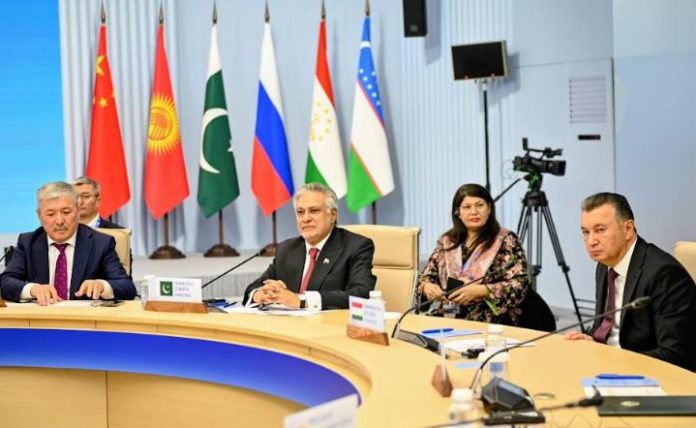
MOSCOW: Deputy Prime Minister and Foreign Minister Ishaq Dar, on Tuesday, while addressing a Shanghai Cooperation Organisation (SCO) conference in Moscow, said the summit was “well-placed” to promote regional cooperation in dealing with emergencies and to extend cooperation in the humanitarian field.

The SCO is holding its Council of Heads of Government summit in Moscow from November 17 to 18. Taking place under Russia’s rotating presidency, the high-level meeting follows the landmark Tianjin Summit three months earlier and comes at a pivotal moment for Eurasian economic connectivity in a shifting global order.

“Excellencies, the agenda before us, spanning trade, economy, culture and humanitarian cooperation, is the basis of a mature, future-oriented SCO,” FM Dar said during his speech. “Pakistan views them as interconnected threads in a single, stronger fabric of regional partnership.”

He said that the Tianjin summit was a clear signal, “a signal that our organisation is evolving with the resolve to harness the full spectrum of our collective potential by focusing on economic integration through expanded trade collaboration, improved infrastructure connectivity, investment partnerships, advancement of cross-border trade corridors, and the promotion of digital economic development”.

The SCO, Dar highlighted, has established a foundation for sustainable economic progress throughout the SCO space.

“Pakistan has developed a technology-driven, proactive disaster management system,” the FM pointed out, adding that the country is “keen” to organise simulation exercises with SCO partners to bolster disaster preparedness across the region.

“Excellencies, our discussions at Tianjin underscored the need to modernise our outreach. The value of our observer and partner states is immense,” Dar said.

He added, “Let us move from a model of passive observation to one of real engagement. Let us invite them to participate not as guests on the periphery but as stakeholders in specific project-based initiatives that align with their expertise and our collective goals.

This way, Dar emphasised, “we can create a flexible, multi-tiered model of cooperation that would benefit all”.

“An important feature of the modernisation of the SCO is the introduction of English as a working language,” FM Dar pointed out. “Let us move forward from political declarations and establish a translation unit. The SCO can attract more partners and achieve wider goal influence with this only one step.”

“Excellencies, to translate the momentum of Tianjin into tangible progress, we suggest greater focus on practical, cross-cutting initiatives,” Dar said.

Pakistan, according to Dar’s address, has two proposals: operationalise financial tools for the promotion of trade and economy and build human capital.

“While our efforts continue to make available diversified financial tools such as the SCO Development Bank and development and investment funds for our economies and businesses, we must aggressively utilise the tools already at our disposal, like the SCO Interbank Consortium, to finance connectivity and technical collaboration projects,” he said.

26 food outlets fined in PFA crackdown

26 food outlets fined in PFA crackdown

SIALKOT, NOV 18 (APP/DNA): Punjab Food Authority (PFA) conducted a comprehensive crackdown across Sialkot, inspecting 241 food outlets in Daska, Sambrial and the city area to ensure compliance with food safety standards.

According to a PFA spokesperson, 26 outlets were fined Rs. 400,000, while large quantities of expired and prohibited food items were disposed of on the spot.

The teams also found unhygienic conditions, including flies in kitchen and processing areas, and spoiled meat and dairy products stored in broken freezers. Several outlets lacked important records such as employees’ medical and training certificates.

The spokesperson added that inspections of food points and marriage halls across the district were continuing under a zero-tolerance policy against unsafe food practices.

ICT admin opens 7 M-Tag centres

ICT admin opens 7 M-Tag centres

DNA

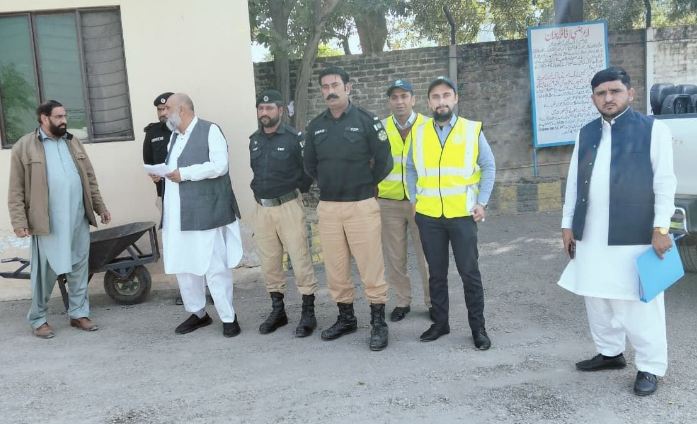
ISLAMABAD: The Islamabad Capital Territory (ICT) administration has introduced 7 new M-Tag installation points, allowing residents to get their vehicles tagged between 9 am and 9 pm.

According to the spokesman of ICT administration here, the move aims to give thousands of daily commuters easy access to the mandatory tagging system before enforcement begins across the capital.

He said that the Islamabad’s administration has expanded M-Tag facilities by setting up seven points across the federal capital. The service is now available for vehicle owners from 9 am to 9 pm, giving citizens a full 12-hour window to complete their M-Tag installation.

According to the district administration, new service points have been established at Kachnar Park in I-8, Islamabad Club, and Lake View Park.

Additional centres are operating at F-9 Park, Tarlai, Gulberg Greens and 26 Number Chungi, covering both central and peripheral areas of the city.

 These locations were selected to help reduce travel time for residents who need to get their vehicles registered under the tagging system.

Meanwhile, the Excise and Taxation Office in H-9 will also offer M-Tag services, but with specific timings from 3 pm to 9 pm. Officials said this adjustment will help manage heavy footfall at the office while allowing citizens to access multiple points throughout the day.

The district administration has stated that the new setup will help citizens avoid long queues and can choose the nearest centre to complete the process.

 Each point is staffed to assist residents in applying for a new tag, verifying vehicle details or updating information linked to their M-Tag account.

Officials emphasised that no vehicle will be allowed to operate in Islamabad without an M-Tag once full enforcement begins. This step is part of a broader plan to ensure a smooth traffic management system and streamline vehicle identification within the capital.

The administration also announced that the next phase will involve action against vehicles operating without an M-Tag. For now, residents are being encouraged to visit their nearest centre to avoid complications once enforcement starts.

The introduction of seven service points marks a shift from previous arrangements where citizens had limited access to M-Tag facilities. Earlier, most residents had to visit fewer centres, resulting in long waiting times and heavy congestion. The new arrangement spreads traffic across multiple locations, lowering the burden on each centre and helping commuters complete the process quickly.

At the parks-based points—such as F-9 Park, Kachnar Park and Lake View Park—visitors can complete their M-Tag registration during regular park visits. This placement, officials say, is meant to bridge the accessibility gap by bringing essential services into public spaces.

Tarlai and 26 Number Chungi centres will benefit residents of rural and semi-urban localities who previously had to travel long distances for registration. By covering these areas, the administration aims to ensure that motorists from every zone of Islamabad have access to the service without extensive travel.

Residents have been advised to bring their CNIC, vehicle registration book and phone number for verification. Those who already have an M-Tag can visit any of the new points to update their data or resolve issues linked to their account.

The extended 12-hour availability is designed to accommodate government employees, private-sector workers and commercial drivers who may not be free during standard office hours. By offering services into the evening, the administration expects a higher completion rate before enforcement begins.

Officials said the citywide rollout of M-Tag services reflects an effort to modernise traffic systems. Once fully enforced, the system will help regulate vehicle movement and improve toll collection processes in coordination with relevant authorities.

Diplomats and Golfers Unite for Poland’s Independence Day

Diplomats and Golfers Unite for Poland’s Independence Day

ISLAMABAD, NOV 18 /DNA/ – The Embassy of Poland celebrated its Independence Day on the greens at The Club at Eighteen, Islamabad. The event brought together diplomats, dignitaries, and notable members of the business community for an afternoon of sport, cultural connection, and celebration.

 Over 30 golfers participated, while more than 150 guests attended, including diplomats from various countries. The tournament highlighted the spirit of friendship, unity, and international engagement, making it one of the most prestigious diplomatic sporting events of the year.  Players showcased remarkable skill and sportsmanship across various categories.

In the Strokeplay Gross Category, Pham Hong Quang took first place, followed by Ibrar Khan in second place and Trevor Grainger in third.

 In the Strokeplay Net Category, Yumiko Akamatsu took first place, Thanakon was runner-up, and Lorraine Van Der Gracht secured third position.

 On the course, Atadjan Movlamov won the Longest Drive competition, while Imtiaz Zaidi was closest to the pin.

 In the Ladies Division, Salza Dure Falak was awarded Best Lady, with Marilina Armellin as the runner-up.

 The tournament concluded with a prize-giving ceremony, celebrating outstanding performances and the spirit of Poland’s Independence Day. It was a memorable day at The Club at Eighteen, highlighting both sport and community.”

FCC: it’s time to get down to business

BY Ansar M Bhatti

With the establishment of the Constitutional Court (FCC), Pakistan has entered a new phase of judicial evolution. The political leadership proudly calls it a major reform designed to ease the burden on the Supreme Court and ensure swift adjudication of constitutional matters. But now that the court is operational, the real test begins: will justice finally be delivered, or will it merely be repackaged under a new title? For decades, Pakistan has suffered from an overburdened judiciary, chronic delays, and widespread violations of human rights. Tens of thousands of constitutional petitions remain pending. Citizens continue to suffer humiliating experiences in lower courts where cases drag on for years and where, in many instances, justice has to be “purchased” rather than secured. With the FCC now functional, the nation expects more than ceremonial inaugurations and official fanfare. It expects real results.

The state of Pakistan’s lower judiciary remains a matter of deep concern. Litigants often queue outside courtrooms for years, spending their life savings to prove what should have been resolved within months. Court staff, lawyers, and at times even judges become part of an environment where influence, money, and political connections can alter the course of justice. This is not merely judicial weakness; it is judicial paralysis. The establishment of the FCC offers an opportunity to begin cleaning up this system, but the responsibility does not rest on one institution alone. Reforms in civil and criminal procedures, digitization of case management, transparent monitoring systems, and strict accountability of judicial officers are urgently needed. Unless the lower judiciary is repaired and strengthened, no top-tier court—regardless of its mandate—can deliver justice at the grassroots level.

One of the most pressing issues surrounding the newly formed Constitutional Court is the perception of its independence. Questions began to arise even before its first significant judgment. Critics argue that the selection of judges appears to follow a familiar pattern appointments of like-minded individuals who may be inclined toward predictable outcomes. Whether or not these concerns are justified, the danger lies in the perception itself. For the highest constitutional court in the country, even a hint of partiality undermines credibility. If the public believes that judgments are influenced by political will, institutional pressure, or internal alignment, the FCC’s verdicts will inevitably lose their moral authority. Justice, after all, must not only be done; it must be seen to be done. The government and the Judicial Commission must ensure that the FCC reflects diversity in legal thought. Future appointments should include judges known for their independence, courage, and integrity ,those who command respect across the political spectrum.

Ironically, the political parties now expressing reservations about the FCC are the very architects of the system. They drafted and supported the amendment, voted on it in Parliament, defended it in public, and called it a historic milestone. If they are genuinely committed to constitutionalism, they must also be prepared to accept the decisions of the very court they helped create even when the axe falls on them. Selective acceptance of judicial verdicts has long damaged Pakistan’s institutional stability, where parties praise courts when decisions favor them and condemn the same courts when judgments go against their interests. This cycle of hypocrisy must end.

While political leaders spent days debating the 27th Amendment and restructuring the judicial hierarchy, they remained largely silent on Pakistan’s biggest menace: corruption. If the nation is to progress, corruption must be confronted with iron resolve. Politicians frequently cite the example of China, where corrupt officials face severe penalties, even the death penalty. Yet, when it comes to Pakistan, no political party has dared to introduce similar tough legislation. If our leaders truly desire a corruption-free Pakistan, why not propose harsher punishments for plunderers of national wealth? Why not push for an amendment suggesting capital punishment for those who rob billions from the exchequer? The silence in this regard is both striking and revealing.

Another deeply troubling issue is the deteriorating law-and-order situation, which continues to scare away foreign investors. Diplomats in Islamabad share candid feedback: their investors ask two straightforward questions about Pakistan whether the judiciary is independent and whether the investment environment is secure. When diplomats describe the actual situation on the ground, including political interference, delays in legal processes, corruption, and insecurity, the response from investors is almost always the same: they decline to come. No constitutional amendment, economic conference, or investment package can yield meaningful results unless Pakistan provides predictability, stability, and transparent dispute resolution. If investors cannot trust the courts, they cannot trust the country and without investor confidence, economic revival remains a distant dream.

The creation of the Constitutional Court gives Pakistan an opportunity to redefine justice. But institutions alone cannot transform a system deeply mired in corruption, manipulation, and inefficiency. Real change requires independent judges at every level, transparency in appointments, digitization of procedures, strict accountability for corrupt judicial officers, and long-overdue reforms that protect citizens and investors alike. Legislation against corruption must move beyond rhetoric and become a national priority. The FCC will be judged not by its architecture, composition, or inaugurations, but by the fairness, quality, and speed of its decisions.

Pakistan now stands at a critical crossroads. The Constitutional Court can become a catalyst for genuine judicial reform or it can become yet another institution overshadowed by suspicion and political manipulation. The choice, ultimately, belongs to the nation and its leaders.

PM Shehbaz vows Centre-provinces cooperation to modernise Pakistan Railways

PM Shehbaz vows Centre-provinces cooperation to modernise Pakistan Railways

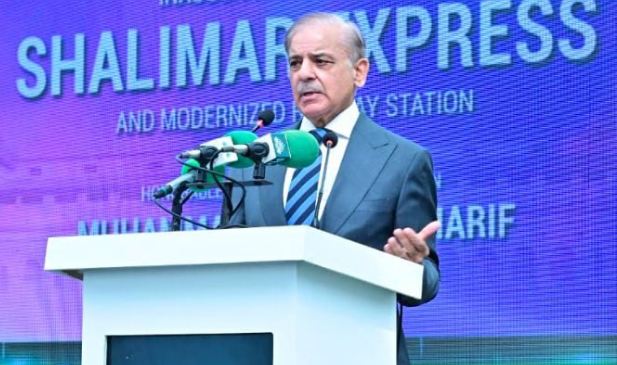
ISLAMABAD, NOV 17: Prime Minister Shehbaz Sharif said on Monday that the digitisation and modernisation of the Pakistan Railways and the provision of state-of-the-art facilities would play a key role in strengthening the national economy.

The prime minister expressed these views while addressing the inauguration ceremony of the new Shalimar Express and the newly upgraded waiting rooms and CIP lounges at Karachi Cantt Railway Station.

Sindh Chief Minister Syed Murad Ali Shah, Federal Minister for Railways Muhammad Hanif Abbasi, Federal Minister for Information and Broadcasting Attaullah Tarar, and other dignitaries were present on the occasion.

The prime minister said that soon after assuming office, Abbasi worked diligently to modernise the railway system. After revamping Lahore Railway Station, Karachi Cantt Station has also been upgraded with contemporary facilities.

He said that all railway stations in the province would be modernised in coordination with the Sindh government to ensure better travel facilities for the passengers.

He said like Sindh and Punjab, such coordination with the governments of Khyber Pakhtunkhwa and Balochistan should be evolved, which would ultimate make the Pakistan Railways the best transport system of this region.

PM Shehbaz said the railways freight system is also being organised, while the federal and Sindh governments have a partnership to provide transportation for Thar coal, with both governments investing 50% each in the project.

He assured that all required funds would be released in this regard so that the set targets of the projects could be achieved.

The premier said the Shalimar Express running between Karachi and Lahore has been converted into a new, upgraded train. He described Karachi as not only the economic hub but also “the heart of Pakistan”.

He reiterated that cooperation with the provincial governments of Punjab, Sindh, KP, and Balochistan would continue to ensure modernisation across the railway network and help stabilise the economy.

The prime minister praised Abbasi’s leadership, calling him the “hero of today’s ceremony”, and congratulated him for transforming the outdated railway system.

He said the federal government would work with all provinces to extend the railway network to Central Asia, specifically highlighting the Uzbekistan-Afghanistan-Pakistan railway line project.

He also emphasised reviving the Islamabad–Tehran-Istanbul rail route, which would boost our economy to the heights.

The prime minister noted that Abbasi has initiated discussions with the Asian Development Bank (ADB) for a $2 billion loan to further upgrade Pakistan Railways’ line from Karachi to Rohri, and that it would ultimately be connected to the Reko Diq project.

Responding to CM Shah’s request to include the KCR project in the China-Pakistan Economic Corridor (CPEC), the prime minister assured full cooperation, calling it a vital initiative.

He said he had flagged the KCR project at every international forum and we would jointly revive it as this project was inevitable for the people of Karachi. He hoped this project would soon become a reality.

The prime minister said that 54 railway stations have already been modernised, and once all stations — big or small — are upgraded, he would recommend a presidential award for the railways minister.

Earlier, Minister Abbasi said that under the prime minister’s guidance, significant improvements were achieved in just eight months, including the modernisation of Karachi Cantt Station and the renewal of the Shalimar Express.

He added that Rs1 billion is being spent on upgrading Rohri Station, while work is also underway at Karachi City Station.

The prime minister said that 14 trains are being outsourced under government policy, and railway hospitals and schools are also being given to private administration, while ensuring full protection for railway employees. Work on the ML-1 project is also progressing, he added.

The Sindh chief minister reaffirmed full cooperation from the provincial government for the improvement of the railways.

Earlier, the prime minister inaugurated the new Shalimar Express at Karachi Cantt Station by cutting the ribbon and unveiling the plaque, as well as inspecting the modernisation and digitisation works.

He visited the upgraded waiting area, CIP lounge, state-of-the-art dining hall and computerised ticketing system, accompanied by federal ministers, senior railway officials, and the Railways IG.

The ceremony was also attended by foreign diplomats and parliament members, senior officers from the federal as well as provincial governments.


‘Fully prepared’: Indian Army chief says May conflict was ‘a trailer’ in new warning to Pakistan

‘Fully prepared’: Indian Army chief says May conflict was ‘a trailer’ in new warning to Pakistan

New Delhi, NOV 17: Indian army chief General Upendra Dwivedi on Monday issued a pointed warning to Pakistan, comparing the brief May conflict to a “trailer” rather than a full-length film.

The Indian army chief’s remarks come a week after an explosion near the Red Fort in New Delhi on November 10, leaving 12 people dead in the first such explosion in the Indian capital since 2011.

Delivering a speech at a defence conference in New Delhi, Gen Dwivedi said, “I’d like to say that the movie hasn’t even started — only a trailer was shown, and, after the trailer, it was over within 88 hours.“

“So, we’re fully prepared for the future, and if Pakistan gives us such an opportunity, we’d like to provide them with a thorough education on how a responsible nation should behave with its neighbours.“

The conflict between the two countries in May was sparked by an attack on tourists in India-occupied Kashmir, which New Delhi, without evidence, linked to Pakistan. Islamabad strongly denied responsibility while calling for a neutral investigation.

New Delhi then launched deadly air strikes in Punjab and Azad Kashmir on May 7. After tit-for-tat strikes on each other’s airbases during the four-day escalation, it took American intervention on May 10 for both sides to finally reach a ceasefire.

Delhi blast suspect presented in court
Indian anti-terrorism investigators presented a suspect linked to the bombing in court, one of two men accused of involvement in the suicide attack. Officials have not disclosed any details on the motives or organisational backing of the alleged attackers, both of whom they claim came from India-occupied Kashmir.

India’s National Investiagtion Agency (NIA) alleged that Amir Rashid Ali “conspired with the alleged suicide bomber, Umarun Nabi, to unleash the terror attack” last Monday.

It remains unclear whether Nabi is included in the tally.

Security personnel escort the suspect from a police vehicle at the Patiala House Court, a day after his arrest, in New Delhi, India on November 17. — AFP
An AFP photographer saw Ali being taken under heavy guard from a police truck to a New Delhi court to face charges. Indian media reported that the court had ordered that he be held in custody for 10 days by the NIA.

Nabi was a medical professor at a university in Haryana state, just outside the capital, while Ali had allegedly travelled to Delhi to “facilitate the purchase of the car which was eventually used as a vehicle-borne improvised explosive device (IED)”, according to the NIA.

India has provided no further information on the alleged motives or network behind the two suspects.

Another suspect apprehended: NIA
Later on Monday, the NIA said in a statement that it “arrested another key associate of the terrorist involved in the blast” in Delhi.

According to the statement, the suspect was arrested from Srinagar in India-occupied Kashmir by an NIA team, with the agency stating that he “allegedly provided technical support for carrying out terror attacks by modifying drones and attempting to make rockets ahead of the deadly car bomb blast which killed 10 persons and left 32 persons injured”.

“The accused, a resident of Qazigund in Anantnag district of [India-occupied Kashmir], was an active co-conspirator behind the attack and had worked closely with the terrorist, Umarun Nabi, to plan the terror carnage,” the statement read.

“NIA continues to explore various angles to unravel the conspiracy behind the bombing,” it added. “Several teams of the anti-terror agency are pursuing multiple leads and are conducting searches across states to identify every person involved in the terror attack.”

The Indian government has since branded the Delhi car blast a terrorist attack, with Indian Prime Minister Narendra Modi vowing not to spare anyone involved in the “conspiracy” the day after the blast. Yesterday, the NIA said the blast was a “suicide bombing”.

Stay Connected

64FansLike
60FollowersFollow

Latest Reviews

Exchange Rates

USD - United States Dollar
EUR
1.17
GBP
1.34
AUD
0.67
CAD
0.73