Home Blog Page 44

CPEC 2.0: The Next Phase of Pakistan’s Economic Transformation

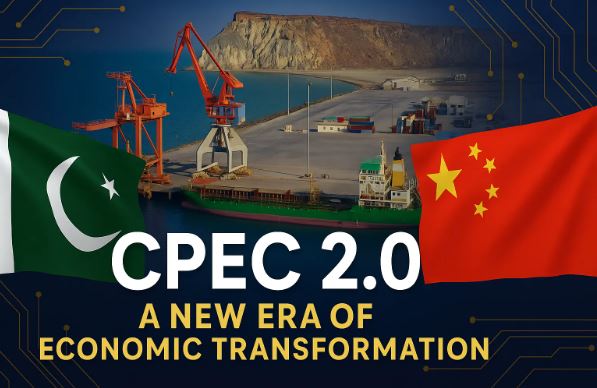
CPEC 2.0: The Next Phase of Pakistan's Economic Transformation

T.M Awan

When the China-Pakistan Economic Corridor (CPEC) was launched in 2013, it was primarily viewed through the lens of infrastructure. Roads, power plants, transmission lines, and the development of Gwadar Port dominated public discourse. At the time, Pakistan was grappling with crippling energy shortages, inadequate transport connectivity, and an investment deficit that constrained economic growth. CPEC was designed to address these structural bottlenecks.

More than a decade later, the conversation is changing.

The emerging concept of CPEC 2.0 suggests a shift from building infrastructure to creating economic value. The focus is gradually moving from roads and energy projects toward industrial cooperation, technological innovation, agriculture modernization, digital connectivity, human resource development, and export-oriented growth. In many ways, CPEC 2.0 reflects both the lessons of the first phase and the realities of a rapidly changing global economy.

The first phase of CPEC undoubtedly delivered significant gains. Energy projects helped reduce Pakistan’s chronic electricity shortages, while new highways and transport networks improved connectivity across various regions. Gwadar, despite its challenges, established itself as an important symbol of Pakistan-China strategic cooperation. Yet infrastructure alone was never intended to be the final destination. It was meant to create the foundation for industrialization and economic transformation.

That transformation remains a work in progress.

Several factors slowed the momentum of the original CPEC roadmap. Political transitions, policy inconsistencies, economic instability, IMF-related fiscal constraints, and security concerns all affected implementation timelines. The result was that while many infrastructure projects moved forward, the industrial and investment dimensions lagged behind expectations.

Today, however, the international environment may be creating a new opportunity.

Global supply chains are undergoing a profound restructuring. Rising geopolitical tensions, trade disputes, technological competition, and the “China Plus One” strategy adopted by many multinational firms are encouraging businesses to diversify production locations beyond China. Countries capable of offering competitive labor, strategic geography, and improved infrastructure are increasingly positioning themselves as alternative manufacturing destinations.

This is where CPEC 2.0 becomes strategically significant.

Pakistan’s geographic location remains one of its most underutilized assets. Situated at the crossroads of South Asia, Central Asia, the Middle East, and Western China, Pakistan possesses the potential to become a regional hub for trade, logistics, and industrial production. The infrastructure built during the first phase of CPEC provides a platform upon which a more sophisticated economic model can be developed.

Recent discussions between Pakistani and Chinese officials suggest that the next stage of cooperation will place greater emphasis on agriculture, information technology, industrial cooperation, vocational training, and innovation-driven growth. Chinese officials have increasingly described CPEC 2.0 as a vehicle for translating earlier infrastructure investments into broader economic opportunities. The objective is no longer simply connectivity. It is productivity.

This transition is consistent with China’s own economic evolution. As labor costs rise in China and advanced manufacturing becomes a national priority, certain labor-intensive industries are expected to seek new destinations abroad. Pakistan has an opportunity to attract a portion of this investment, particularly if Special Economic Zones can be linked to export-oriented manufacturing and integrated into regional supply chains.

Agriculture presents another important frontier. Pakistan possesses vast agricultural potential but continues to struggle with low productivity, outdated farming practices, and inefficient resource management. Chinese expertise in agricultural technology, water management, seed development, and mechanization could contribute significantly to improving productivity and food security. Such cooperation would align closely with the broader objectives of China’s Global Development Initiative, which emphasizes sustainable and inclusive development.

The digital economy may prove equally important. The next phase of economic competition will not be determined solely by highways and ports but also by data, innovation, artificial intelligence, fintech, and digital infrastructure. If CPEC 1.0 focused on physical connectivity, CPEC 2.0 has the potential to focus on knowledge connectivity. Joint ventures in information technology, research collaboration, skills development, and startup ecosystems could generate long-term economic dividends that traditional infrastructure projects alone cannot provide.

However, optimism must be accompanied by realism.

Pakistan cannot expect CPEC 2.0 to succeed automatically. The challenges that slowed progress in the past have not disappeared entirely. Policy continuity, regulatory reforms, investor confidence, macroeconomic stability, and security remain essential prerequisites for attracting large-scale investment. Industrial zones cannot flourish without predictable policies, reliable governance, and a competitive business environment.

Moreover, Pakistan must avoid viewing CPEC solely through a geopolitical lens. While the corridor undoubtedly carries strategic significance, its long-term success will ultimately be measured by economic outcomes. Job creation, export growth, technology transfer, industrial competitiveness, and improvements in living standards are the indicators that matter most.

The broader regional environment also strengthens the case for economic cooperation. As global power centers shift and economic fragmentation increases, middle-income countries face growing pressure to build resilient partnerships and diversify growth strategies. For Pakistan, deepening economic engagement with China while simultaneously expanding connectivity with regional markets offers a pragmatic path forward.

The true significance of CPEC 2.0 lies not in the scale of investment alone but in the nature of transformation it seeks to achieve. The first phase focused on constructing the foundations of growth. The second phase must focus on generating growth itself.

If CPEC 1.0 was about building roads, power plants, and ports, CPEC 2.0 must be about building industries, skills, innovation, and competitiveness. The success of this transition will determine whether the corridor remains merely an infrastructure project or evolves into the economic transformation initiative that its architects originally envisioned.

——————————————————————————————————————————

The writer is a journalist, strategic communication and public diplomacy advisor based in Islamabad. X: @TMAwanOfficial
Declaration adopted by the participants of the First International Islamic Civilization Forum

Declaration adopted by the participants of the First International Islamic Civilization Forum

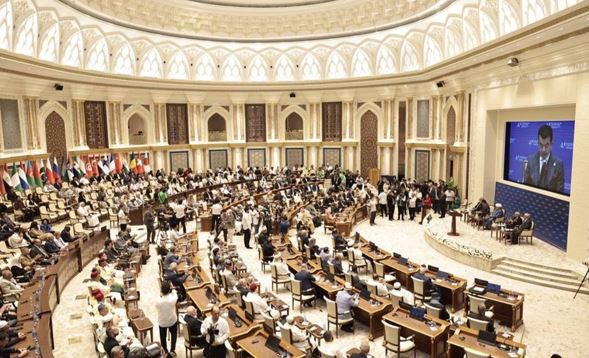
TASHKENT, JUL 12 (DNA) – The First International Islamic Civilization Forum concluded here today with the adoption of a landmark declaration, marking the beginning of a new international cooperation framework to study, preserve, and promote the rich humanistic legacy of the Islamic world.

Held on July 7–8 in the Uzbek capital, the forum saw participants express profound gratitude to President Shavkat Mirziyoyev for his historic initiative, first presented at the 72nd session of the United Nations General Assembly in September 2017, which called for the revival and scientific dissemination of Islamic civilization’s heritage.

The declaration, unanimously adopted by the participants, recognizes the establishment of the Islamic Civilization Center in Uzbekistan as the practical realization of that vision. It asserts that these efforts have “undoubtedly marked the beginning of a new era” in international cooperation regarding the Muslim Ummah’s invaluable heritage.

Ten Global Initiatives Unveiled

The declaration proposes a sweeping framework of ten global initiatives designed to counteract ignorance, extremism, and Islamophobia, while highlighting the contributions of Islamic civilization to global science, art, and intellectual thought.

Key proposals include:

  1. A World Alliance for Islamic Civilization, anchored by the Islamic Civilization Center in Uzbekistan, to unite international organizations, scientific institutions, museums, and research entities to coordinate efforts.
  2. A World Digital Registry, a unified international platform to aggregate manuscripts, archival materials, museum collections, and architectural monuments.
  3. An International Program titled “Islamic Civilization: Heritage of All Humanity” to highlight the civilization’s contributions through exhibitions, educational projects, and conferences.
  4. An International Islamic Civilization Prize to honor individuals for significant contributions to the field and intercultural dialogue.
  5. An International Foundation to support fundamental research, monument restoration, and emerging scholars.
  6. A Global Digital Library integrating multilingual manuscripts, scholarly works, and educational resources.
  7. A Comprehensive International Encyclopedia focused on the history, scholars, and achievements of the Islamic world.
  8. An Annual International Report addressing the condition of heritage sites and opportunities for cooperation.
  9. A Permanent International Youth Forum to cultivate the next generation of scholars.
  10. An International Union of Museums to advance joint exhibitions, research, and the exchange of collections and specialists.

Roadmap for 2030

To ensure the realization of these proposals, the declaration establishes the Forum’s International Council as a permanent coordinating body. The Council is tasked with consolidating proposals, developing an international roadmap for joint actions through 2030, and presenting it to participants, international organizations, and the Government of Uzbekistan.

“We, the Forum participants, urge states, international organizations, scientific institutions, universities, museums, libraries, and public organizations to collaborate in implementing these initiatives,” the declaration reads, “for the sake of peace, mutual respect, education, and the preservation of the rich heritage of Islamic civilization as an essential component of the world’s cultural treasury.”

Uzbekistan’s Central Role

The declaration emphasizes the historical contributions of both ancient and modern Uzbekistan to the formation and advancement of Islamic and global civilization. The forum and the newly established Islamic Civilization Center position Uzbekistan as a central hub for the preservation and study of Islamic heritage, fulfilling President Mirziyoyev’s vision of fostering tolerance and intercultural dialogue through academic rigor.

The initiatives represent a significant push toward digitizing and preserving the intellectual and cultural wealth of the Islamic world, aiming to build bridges between civilizations and counter modern challenges of misunderstanding and extremism.

Iran, Oman discuss mechanisms for safe passage of ships through Hormuz strait, Tehran says

Iran, Oman discuss mechanisms for safe passage of ships through Hormuz strait, Tehran says

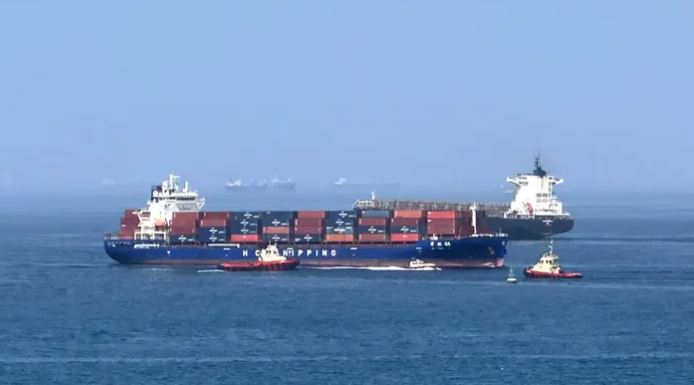
TEHRAN, JUL 11: Iran’s Foreign Minister Abbas Araghchi and his Omani counterpart exchanged views on “appropriate mechanisms” for the safe passage of ships through the Strait of Hormuz in accordance with Article 5 of the Islamabad memorandum of understanding, Araghchi said on his Telegram channel on Saturday.

DPM, Saudi FM call for de-escalation in region

DPM, Saudi FM call for de-escalation in region

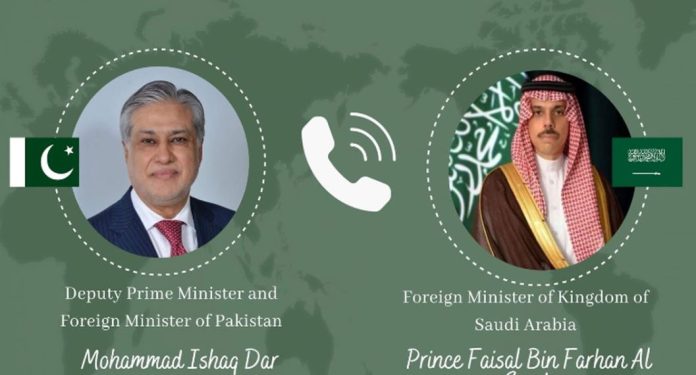
ISLAMABAD, Jul 11: Deputy Prime Minister and Foreign Minister, Senator Mohammad Ishaq Dar on Saturday held a telephonic conversation with Prince Faisal bin Farhan Al Saud, Foreign Minister of Saudi Arabia and exchanged views on the recent developments in the region.

They expressed deep concern over the escalations despite the signing of the Islamabad MoU between the United States and Iran in June 2026. They agreed that the renewed conflict serves no one’s interest and undermines efforts toward regional peace and stability.

The Saudi Foreign Minister shared the Kingdom’s perspective on ongoing diplomatic efforts and emphasized the importance of de-escalation and continued dialogue. DPM/FM reaffirmed Pakistan’s call on all parties to exercise maximum restraint and allow mediation efforts the necessary time and space to achieve a peaceful and meaningful outcome.

The two leaders agreed to remain in close contact.

Indonesia, Pakistan boost humanitarian ties with emergency training

Indonesia, Pakistan boost humanitarian ties with emergency training

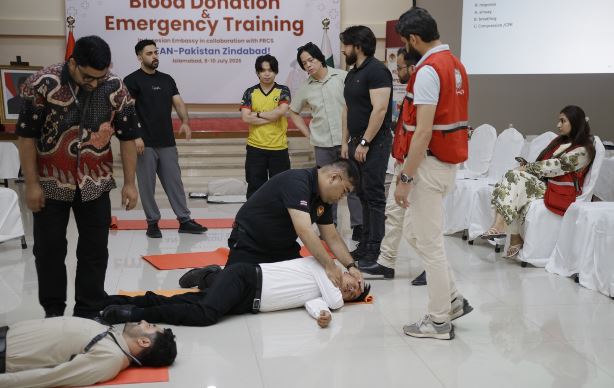
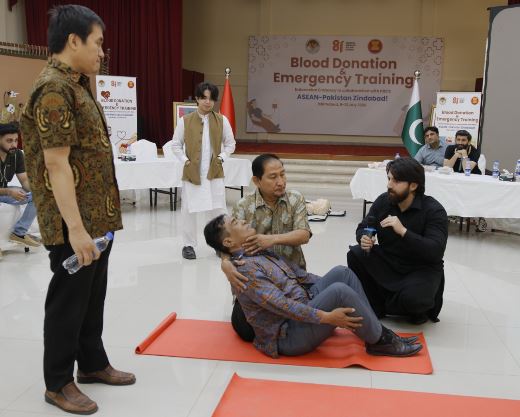
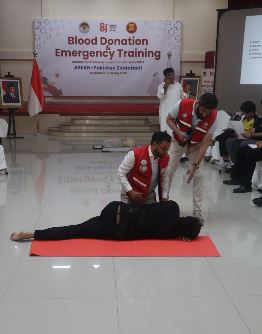
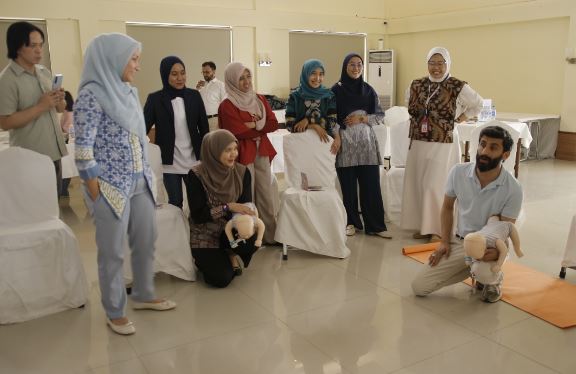
ISLAMABAD, JUL 11 /DNA/ – The Embassy of the Republic of Indonesia in Islamabad, in collaboration with the Pakistan Red Crescent Society (PRCS), successfully concluded a two-day Basic First Aid / Emergency Response Training held on 9–10 July 2026. Organized under Indonesia’s current Chairmanship of the ASEAN Committee in Islamabad (ACI), the program marked another concrete milestone in the institutional humanitarian partnership between the Embassy and PRCS.

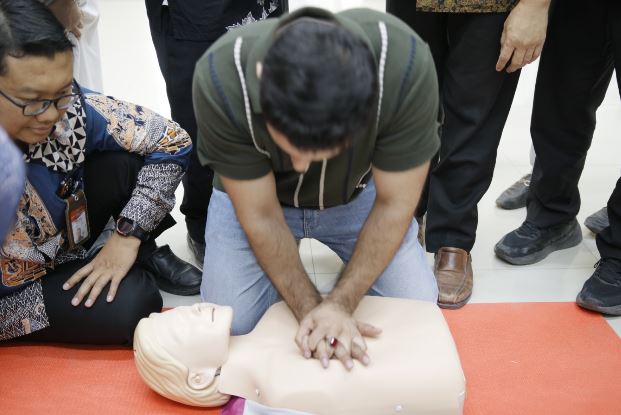
The training brought together Ambassadors and representatives of ASEAN Member States accredited to Pakistan, ASEAN family members, the Indonesian community, and Indonesian students. Led by Mr. Abdullah Wajid, Commercial First Aid Training Officer of PRCS, the two-day program provided participants with practical knowledge and hands-on skills in emergency preparedness, including scene assessment, CPR, wound and fracture management, burns, choking, cardiac emergencies, casualty transportation, and triage.

In his opening remarks, Mr. Ferry J. Murdiansyah, Counselor at the Embassy, quoted Ambassador Chandra W. Sukotjo’s message that emphasized “preparedness should become a shared mindset for diplomats in catering citizens and communities living abroad”. He noted that emergency response capacity is no longer merely a technical competence, but an essential element in safeguarding lives and ensuring that assistance can be provided effectively to families, communities and to the citizen without any delay.

The Emergency Response Training, together with blood donation event (8/07) organized under Indonesia’s ACI Chairmanship, reflects Indonesia’s commitment to strengthening humanitarian diplomacy through practical and result-oriented cooperation. Building stronger emergency preparedness, he said, contributes not only to the resilience of the ASEAN community in Pakistan but also to the broader Indonesia–Pakistan partnership based on solidarity, mutual assistance, and people-to-people cooperation.

Representing PRCS, the training team reaffirmed its commitment to further strengthening cooperation with ASEAN Embassies in Islamabad in promoting first aid awareness, emergency preparedness, and humanitarian action. PRCS team appreciated active participation of ASEAN diplomatic missions and young participants, highlighting that community resilience begins with equipping individuals with the confidence and skills to respond effectively during emergencies.

Through this initiative, Indonesia reaffirmed its role as Chair of the ASEAN Committee in Islamabad in promoting a more resilient, inclusive, and people-centred ASEAN presence in Pakistan. The Emergency Response Training further strengthened institutional cooperation between Indonesia and Pakistan while advancing ASEAN–Pakistan friendship through concrete humanitarian action.

England battle Norway as Argentina face Swiss in World Cup last eight

England battle Norway as Argentina face Swiss in World Cup last eight

MIAMI, JUL 11: England lock horns with Norway in a World Cup quarter-final in Miami on Saturday that pits Harry Kane against Erling Haaland in a mouthwatering battle of elite strikers.

The teams are competing to face either reigning champions Argentina or surprise package Switzerland in the semi-finals.

Kane has once again been England’s hero, dragging his teammates through an attritional last-16 meeting with Mexico at the Estadio Azteca that they won 3-2 despite having a man sent off. The Bayern Munich forward has scored six goals to fire the Three Lions to the quarter-finals.

Haaland appears to have been enjoying himself ever since he touched down in the United States and began smashing in the seven goals that have carried Norway further than ever before.

Their run, which included eliminating Brazil, has been accompanied by their fans’ joyous rowing celebration that has turned venues across the US into giant human Viking ships.

“Every game has been the most important (in history) for Norwegian football, especially in the knockout rounds, so this is the third time it is the most important game,” Norway coach Stale Solbakken said on Friday.

Kane described 25-year-old Haaland as “a beast” but insisted he and the Manchester City striker had contrasting styles.

“I see myself as a different player, although I score the same goals,” the England captain, 32, said on Friday. “I like to maybe touch the ball a little bit more, be involved with the play a little bit more, but also can play as maybe the out-and-out number nine.

“I don’t think it’s one to compare ourselves. I respect him a lot as a player and as a professional.”

England were boosted by the return to training on Friday of the influential trio of Declan Rice, Marc Guehi and Reece James, who have been dealing with illness and injury.

Coach Thomas Tuchel described their presence as “the best news” and said: “We took a big step in our last match, but it was only a step.

“The next step is to win a quarter-final. The important thing is to look up at what is ahead of us.”

The contest in Miami’s Hard Rock Stadium is likely to be a sweaty affair played in temperatures forecast to rise above 40° Celsius.

Fatigue setting in?
Argentina made a smooth start to their bid to become the first country since Brazil in 1962 to win back-to-back World Cups. But since they entered the knockout rounds, frailties have crept in as they were pushed to breaking point, first by World Cup debutants Cape Verde and then Egypt.

Lionel Messi, who turned 39 during the group phase, has again been the talisman for the South Americans, his genius repeatedly getting his team out of tight spots.

But there is just a suggestion that the Swiss, a well-organised unit marshalled by midfield general Granit Xhaka, could exploit any weariness and cause them problems at Arrowhead Stadium in Kansas City.

“They have very experienced players. They are strong. So it will be a tough opponent, that is for sure,” Argentina coach Lionel Scaloni said on Friday.

Messi will be bidding to add to the 21 goals — a new record — he has scored across the six World Cups in which he has played.

Messi’s numbers could be even better had he converted two penalties, but Scaloni said he would not take spot-kick duties away from his inspirational captain.

“It wouldn’t even cross my mind to go and tell him not to [take the next penalty]. Let him do whatever he wants,” he said.

On Friday, Spain struck late to beat Belgium 2-1 and move on to a blockbuster World Cup semi-final against France.

The game in Los Angeles was decided by a goalkeeping error from Belgium’s Senne Lammens, who spilt a shot, allowing Mikel Merino to pounce to make it 2-1 in the 88th minute.

European champions Spain, who earlier conceded their first goal in the entire tournament, will now face the swashbuckling French in Arlington, Texas, on Tuesday.

Spain coach Luis de la Fuente said the game would be “a final before the final”, given the quality of both teams.

Trump says 1,000 missiles aimed at Tehran, US will ‘decimate’ Iran if assassinated

Trump says 1,000 missiles aimed at Tehran, US will ‘decimate’ Iran if assassinated

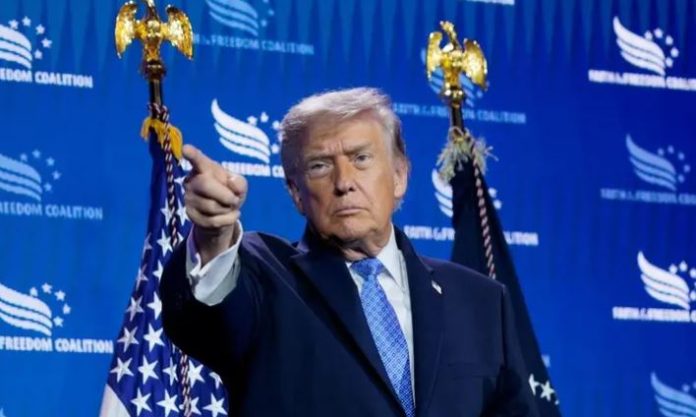
WASHINGTON, JUL 11: President Donald Trump said Friday the United States would “completely decimate” Iran if it attempted or succeeded in assassinating the sitting president.

“1000 Missiles are Locked and Loaded and aimed at the Islamic Republic of Iran, with thousands of more to immediately follow, should the Iranian Government act on its threat, pronounced in many corners of the Globe, to assassinate, or attempt to assassinate, the sitting President of the United States of America, in this case, ME!,” Trump wrote on his social media platform Truth Social.

“Orders have already been given, and the US Military is ready, willing, and able, for a one year period of time, subject to extension, to completely decimate and destroy all areas of Iran,” he said.

Pakistan welcomes OIC delegations for 9th Ministerial Conference on Women

Pakistan welcomes OIC delegations for 9th Ministerial Conference on Women

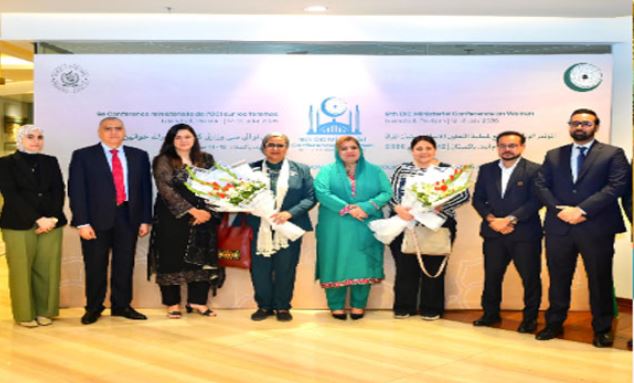
ISLAMABAD, Jul 11: The delegations from member states of the Organization of Islamic Cooperation (OIC) have arrived in Pakistan to participate in the 9th OIC Ministerial Conference on Women, scheduled to be held on July 12-13 in Islamabad.

Pakistan is hosting the two-day conference, which will bring together ministers, senior officials from OIC member states and representatives of international organizations to deliberate on issues related to the social, economic and political empowerment of women.

Minister of State for Law and Justice Barrister Aqeel Malik, Punjab Minister for Social Welfare and Bait-ul-Maal Saba Sadiq, Secretary Ministry of Human Rights Farah Naz Akbar and senior government officials received the distinguished delegations upon their arrival.

Pakistan has the honour of hosting the 9th OIC Ministerial Conference on Women and will reaffirm its commitment to promoting the rights, dignity and empowerment of women across OIC member states.

According to the official source, Federal Minister for Human Rights, Senator Azam Nazeer Tarar will assume the responsibilities as Chair of the conference.

During Pakistan’s chairmanship, efforts will be made to further strengthen cooperation among OIC member states on women’s development and empowerment.

The conference will review progress made in advancing women’s development, share best national practices and formulate a future course of action for enhanced cooperation among OIC member states in the field of women’s empowerment.

The Government of Pakistan has extended a warm welcome to all distinguished delegations participating in the conference.

Ishaq Dar greets Maldives on 61st Independence anniversary

Ishaq Dar greets Maldives on 61st Independence anniversary

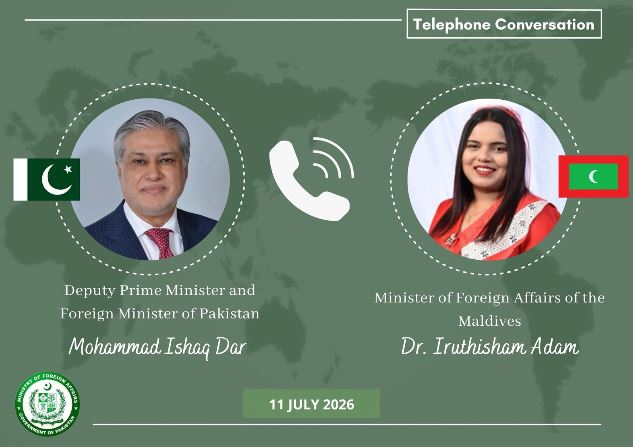
ISLAMABAD, JUL 11 /DNA/ – Deputy Prime Minister and Foreign Minister Senator Ishaq Dar held a telephone conversation with the Foreign Minister of the Republic of Maldives, Dr. Iruthisham Adam, today.

During the call, Senator Dar conveyed his warm congratulations to Foreign Minister Adam on the occasion of the 61st anniversary of the Maldives’ independence, which is forthcoming.

The two foreign ministers exchanged views on key regional and international developments. Foreign Minister Adam acknowledged and appreciated Pakistan’s constructive role in mediating the recent Iran-US conflict, lauding the country’s diplomatic efforts.

Reaffirming their mutual commitment to further strengthening the longstanding bonds of friendship and cooperation between Pakistan and the Maldives, both leaders agreed to remain in close contact and continue their dialogue on matters of mutual interest.=DNA

=============

Operation Shaban kills 57 Khwarij terrorists in Balochistan

Nine more terrorists killed in ongoing Operation Shaban in Balochistan: sources

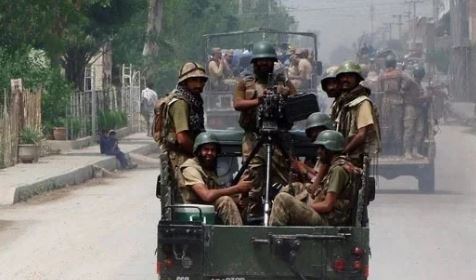
RAWALPINDI/QUETTA, JUL 11 /DNA/ – The Pakistan Army, Frontier Corps (FC) Balochistan, and police are continuing their joint counter-terrorism offensive, codenamed “Operation Shaban,” across the troubled province, security sources confirmed on Saturday.

According to official sources, security forces are conducting effective clearance operations against terrorists belonging to the Fitna al-Khwarij (terrorist group) in various districts of Balochistan. In the latest round of engagements, security personnel killed five more Khwarij terrorists, raising the overall death toll in Operation Shaban to 57 since its initiation.

Security officials further revealed that since July 5, a combined total of 95 Khwarij terrorists have been eliminated in Balochistan through Operation Shaban and other intelligence-based operations (IBOs) carried out simultaneously across the province.

“The operation will continue until the last terrorist is eliminated,” a senior security official stated, reiterating the resolve to purge Balochistan of militant elements.

Authorities have urged the local population to cooperate with law enforcement agencies and report any suspicious activity. Further details on the ongoing operations are expected as clearance efforts proceed.=DNA

Stay Connected

64FansLike
60FollowersFollow

Latest Reviews

Exchange Rates

USD - United States Dollar
EUR
1.15
GBP
1.34
AUD
0.70
CAD
0.71