Home Blog Page 439

Korean embassy hosts K Wave Festa at Serena Hotel

Korean embassy hosts K Wave Festa at Serena Hotel

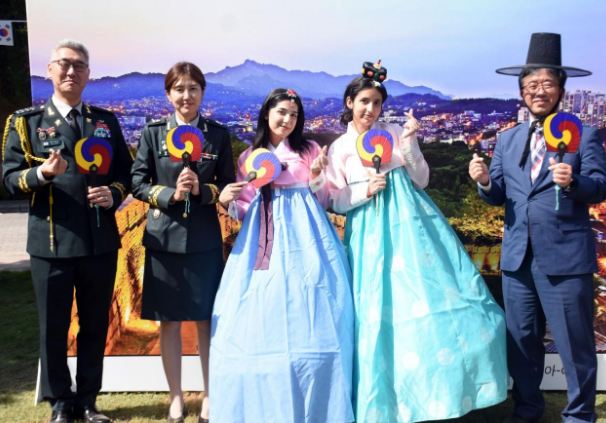
The event opened with welcoming remarks by Mr. Park Jaelark, Charge d’Affaires of the Republic of Korea, who emphasized the Embassy’s ongoing efforts to enhance cultural and people-to-people exchanges between the two nations

DNA

ISLAMABAD, OCT 11 — The Embassy of the Republic of Korea successfully hosted “K-Wave Festa: Beauty, Beats and Beyond” at Shamadan Hall, Serena Hotel, celebrating the growing global appeal of Korean culture and the strengthening cultural ties between Korea and Pakistan.

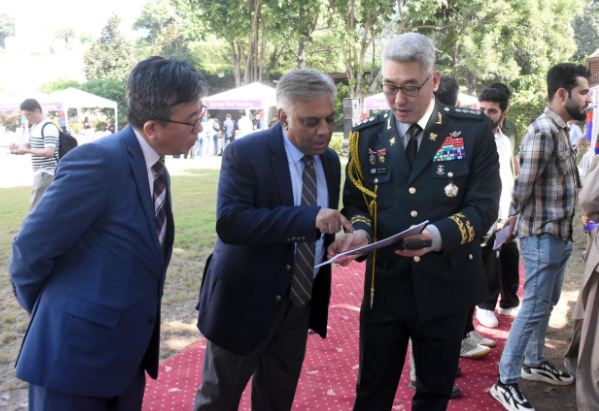
The event opened with welcoming remarks by Mr. Park Jaelark, Charge d’Affaires of the Republic of Korea, who emphasized the Embassy’s ongoing efforts to enhance cultural and people-to-people exchanges between the two nations. He highlighted a series of K-initiatives being organized to deepen mutual understanding — including the recently inaugurated Immersive Gallery at the Islamabad Museum, aimed at expanding avenues of cultural cooperation.

Mr. Sabino Sikandar Jalal, who graced the event as Chief Guest, commended the Embassy’s continued dedication to showcasing Korea’s rich and diverse cultural heritage in Pakistan. He underlined how such initiatives foster lasting friendship, artistic collaboration, and cross-cultural appreciation.

A highlight of the evening was the K-Beauty Masterclass by renowned Korean makeup artist Hoskeok Jung, who captivated the audience with expert techniques and a live demonstration on popular influencer Areeka Haq. The session offered valuable insights into Korean skincare regimens and the artistry that has propelled K-beauty to global prominence.

Adding rhythm and excitement to the event, Mr. Jay Kim from Korea led a K-Dance workshop, teaching participants popular K-pop choreography and giving them a firsthand experience of Korea’s dynamic performing arts.

The venue buzzed with energy as guests explored interactive stalls featuring traditional Korean cuisine, Hanbok dress experiences, and complimentary K-beauty and cultural gift booths. Visitors delighted in tasting authentic dishes and capturing memorable photos in traditional Hanbok attire.

With an overwhelming turnout of enthusiastic participants and K-culture fans, the K-Wave Festa turned into a lively celebration of art, beauty, and friendship.

Through such vibrant events, the Embassy of the Republic of Korea continues to promote cultural exchange and strengthen the enduring bonds of friendship between Korea and Pakistan.

Tarar, US Chargé d’Affaires discuss strengthening bilateral cooperation

Tarar, US Chargé d’Affaires discuss strengthening bilateral cooperation

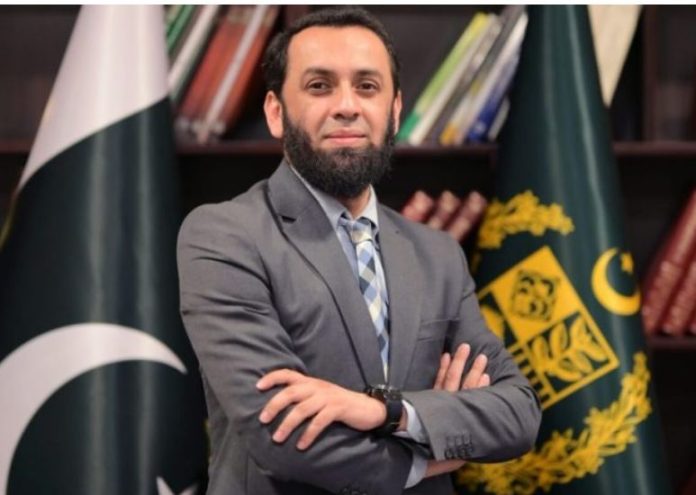
ISLAMABAD, OCT 11 (APP/DNA): United States Chargé d’Affaires Natalie A. Baker met with Federal Minister for Information and Broadcasting, Attaullah Tarar, and discussed matters of mutual interest, including strengthening bilateral relations and exploring opportunities for collaboration in the digital media sector.

During the meeting, Pakistan’s frontline role in the fight against terrorism was appreciated, while US Chargé d’Affaires Natalie A. Baker noted that the country’s economy is moving toward stability and growth.

Federal Minister for Information and Broadcasting affirmed that Pakistan remains at the forefront of the global fight against terrorism, with its sacrifices serving the cause of international peace and stability.

He further emphasized that the government has implemented a robust and comprehensive policy aimed at combating fake news and advancing digitalization. He called for greater visibility and recognition of these efforts to ensure their continued success and public engagement.

Tarar highlighted Pakistan’s abundant natural beauty, vibrant cultural diversity, and rich historical heritage, describing them as key assets for tourism development.

He emphasized that promoting tourism will not only stimulate economic growth but also foster stronger people-to-people connections between nations. The minister shared that the government is implementing concrete measures to enhance the tourism sector and elevate Pakistan’s profile on the global tourism map.

During the meeting, the minister shared that new legislation is being introduced to enhance the welfare and safeguard the rights of journalists in Pakistan.

US Chargé d’Affaires Natalie Baker appreciated Pakistan’s efforts to ensure the protection of journalists.

The Blood That Guards the Nation

The Blood That Guards the Nation

By Muhammad Mohsin Iqbal

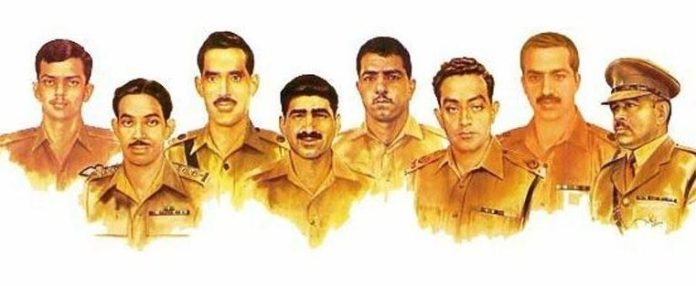
There is nothing more valuable than human life. Everyone holds on to existence and does everything they can to preserve it; yet some, driven by choice and conviction, willingly sacrifice their lives for the sake of Allah and in defense of their homeland. Such individuals are martyrs, and their sacrifice deserves the utmost honor in this world. Allah regards them as among the living, and in the Hereafter, their rank is neither insignificant nor overlooked. The family of a martyr holds a unique and respected place in their community, city, and nation. Mothers, fathers, spouses, siblings, and children who receive the bodies of their loved ones do so not in despair but in the dignity of a noble sacrifice; they accept their loss as an honour for the greater good of the country.

The martyr fulfills his commitment to the Divine, leaving the living with a profound moral responsibility; to honor that sacrifice through actions, not just words.  If we fail to discharge that responsibility, we shall be deemed traitors to the blood that soaked our soil. Recent events remind us that our brave forces can defeat an aggressor in a day. However, when an enemy strikes stealthily, like thieves in the night, it becomes the shared responsibility of the nation to take civic, administrative, and moral steps to prevent such actions with fulfilling the necessities and norms of justice. If this is our homeland, then we, along with our armed forces, are its protectors and guardians. As they sacrifice their present for the sake of our future, it is our duty to work hard to ensure their sacrifices are not in vain.

Following setbacks on the battlefield, India has resorted to overt acts of terrorism through its facilitators in Balochistan and Khyber Pakhtunkhwa, with clear evidence of these actions being presented globally. In KPK during 2024, 799 terrorists were eliminated — an average of one every 2.1 days — while 577 Pakistanis achieved martyrdom. Among them were 272 brave army personnel, 140 policemen, and 165 innocent civilians who became victims of the enemy’s ruthless plans. In 2025 so far, our forces have carried out over 10,115 intelligence-based operations, with nearly 40 percent taking place in Khyber Pakhtunkhwa. This has resulted in 917 terrorists being eliminated — averaging one every 3.5 days — while 516 lives have been lost, including 311 soldiers, 173 policemen, and 32 civilians. Each number represents courage, sacrifice, and the unyielding spirit of a nation determined to overcome terror.

Terrorism in our homeland is a pressing issue that stems from identifiable causes and policies needing immediate attention. The primary driver of its rise is the failure to implement the National Action Plan. When measures are left unexecuted, it creates room for harmful elements to thrive.

There are evidences that India is using Afghanistan as a base for terrorism against Pakistan, and we have urged Afghanistan not to allow its territory to be used this way. Afghanistan must ensure its territory does not become a safe haven for non-state actors.

Pakistan’s stance is straightforward; as a brotherly Islamic nation, we seek peace, stability, and mutual respect. However, the presence of non-state actors in Afghanistan poses a global threat. These groups have no ties to religion, ethnicity, or tradition; their sole purpose is spreading violence and chaos.

The flow of weapons into Afghanistan, including some of American origin, poses a threat not only to Pakistan but to the entire region. These arms can be used anywhere, creating widespread danger. The security of the Pakistani people cannot be compromised for the sake of any other country, especially Afghanistan. Our national sovereignty and the safety of our citizens are non-negotiable. The Pakistani nation stands united and resolute, like a steel wall, against terrorists and their facilitators and will continue to do so, God willing. The sacrifices of our martyrs will never be in vain. The entire nation deeply respects and honors the martyrs and salutes their bravery.

On this occasion, the entire nation must resolve that we will not let the blood of our  protectors go in vain due to some institutional failures. If terrorism is to be eradicated in the country, the nexus of crime must be eradicated. Terrorists and their facilitators, whoever they are or whatever position they occupy, will be confronted.

Dialogue is certainly the best approach to resolving issues, but when the enemy and its allies reject peace, it becomes necessary to respond on their ways. Our ancestors taught us that if peaceful dialogue is refused, war becomes the alternative. Those who stand for truth and justice are always granted victory by Allah.

These same terrorists violate the most sacred tribal traditions by using children and women as shields, turning the innocent into instruments of savagery. Such methods reveal their moral bankruptcy and their utter incompatibility with any notion of honour or humanity. We must therefore pursue every lawful and necessary means — political, social and military — to uproot this evil.

To honor those who have made the ultimate sacrifice, the nation must come together, transcending political divides and differences, to rebuild our institutions, carry out our plans, and take collective responsibility.Martyrdom ennobles the dead and summons the living to duty. Let us answer that summons with courage, wisdom and an unshakeable resolve that the sacrifices of our sons will be honoured by a Pakistan that is secure, just and free.

Pakistan–Saudi partnership enters new era of trade

Pakistan–Saudi partnership enters new era of trade

ISLAMABAD, OCT 11 /DNA/ – Sardar Tahir Mehmood, President Islamabad Chamber of Commerce and Industry (ICCI), has said that both Pakistan and Saudi Arabia have transformed decades of strategic brotherhood into a forward-looking economic partnership, opening new horizons for trade, investment, and industrial cooperation.

In a statement issued here on Saturday  he said  that  visit of the Saudi delegation led by Prince Mansour bin Mohammad bin Saad Al Saud, Chairman of the Saudi-Pakistan Joint Business Council, symbolizes the renewed vigor in Pakistan–Saudi relations and the shared resolve to convert political goodwill and defense cooperation into robust joint ventures across trade, agriculture, food security, construction, and research sectors. He said the Saudi government and private sector have expressed strong interest in investing in food security, meat processing, agriculture, construction, and pharmaceuticals in Pakistan.

 The President ICCI termed this visit as part of a broader diplomatic and economic reset between Islamabad and Riyadh,  a relationship that has recently witnessed significant expansion in defense, investment, and labor mobility.

Highlighting the future course of action, Sardar Tahir Mehmood  said “as the premier Chamber of the country, the Islamabad Chamber of Commerce and Industry will play a commanding role in strengthening Pakistan’s economy by fostering deeper trade and investment ties with friendly nations, particularly with the Jeddah Chamber of Commerce and Industry.”

He further committed that ICCI will organize industrial exhibitions and business opportunity awards not only in Islamabad but also in Saudi Arabia and other Gulf States, aiming to project Pakistan’s industrial strength, attract foreign investors, and build sustainable business linkages between the two brotherly nations.

Trump’s Gamble: Internal Chaos, External Confrontation

Qamar Bashir

By Qamar Bashir

Since Donald Trump assumed office in January 2025, U.S. policy toward China has been a study in contradictions. On some days, he hails China as a great country deserving normal relations with the United States. On others, he brandishes tariffs as weapons, imposing crushing duties on Chinese imports. This oscillation between praise and punishment betrays a failure to grasp the transformation of China. It is no longer the vulnerable power of a decade ago but an ascendant nation, propelled by consistent leadership, unity of purpose, and a relentless focus on rising as a global force.

China’s achievements are undeniable. Over the past decades, it has eliminated mass poverty, built unparalleled infrastructure, and secured dominance over industries that define the modern age. From artificial intelligence and quantum computing to aerospace, electric vehicles, and cyber security, China sits at the commanding heights of technology. Central to this dominance is its control over rare minerals—the essential inputs for semiconductors, batteries, aircraft, and advanced weaponry. While America was lulled into complacency, financing consumption with printed dollars, China quietly consolidated its grip on global mineral refining, leaving the United States exposed at the core of its supply chain.

Against this backdrop, Trump’s decision to impose a sweeping 100 percent tariff on Chinese goods by November 2025 has alarmed economists worldwide. Their verdict is nearly unanimous: tariffs will not cripple China but will instead damage the American economy. The burden falls squarely on U.S. consumers and industries, who must pay higher prices for imports and inputs. For companies such as Boeing, electric vehicle manufacturers, and defense contractors, which rely heavily on Chinese components, the effect will be immediate and severe. Instead of securing advantage, tariffs threaten to undercut sectors vital to U.S. national security and global competitiveness.

What makes this escalation more dangerous is China’s newfound willingness to retaliate. Traditionally cautious in the face of U.S. provocations, Beijing now responds with confidence. Its counter-tariffs on American soybeans struck at the heart of U.S. agriculture, redirecting purchases to Brazil, a BRICS partner eager to deepen trade ties. American farmers, once heavily dependent on Chinese markets, are left scrambling, while Brazil emerges as the winner. In this struggle, China adapts swiftly while the United States absorbs the blow.

The timing could not be worse. The U.S. government shutdown, now stretching into weeks, has already eroded public confidence and economic stability. Inflation is climbing, job growth is stalling, and uncertainty hangs over financial markets. Trump’s long-term vision of rebuilding domestic refining and mining capacity may carry merit, but the reality is sobering: constructing such infrastructure will take five to ten years. Until then, the United States remains tied to China. With Beijing redirecting exports to other markets at competitive rates, Washington risks isolation and decline in sectors where it once excelled.

The domestic repercussions extend beyond economics. Trump’s reliance on executive orders to deploy National Guard units across American cities has stirred resentment. Governors, civil society groups, and ordinary citizens increasingly resist federal overreach. What began as isolated protests now carries the seeds of civil disobedience. If these tensions deepen, the United States could face a crisis of internal legitimacy alongside its external challenges.

Internationally, relationships once grounded in cooperation have soured. Under Trump, ties with Mexico, Brazil, Canada, and Europe have deteriorated, shifting from cordiality to volatility. Diplomacy has been supplanted by threats, taunts, and public insults. America’s reputation as a partner of choice is waning, leaving it with fewer allies and diminishing influence. Soft power, once its greatest asset, has been eroded. What remains is the blunt projection of military might—a tool ill-suited for resolving economic and political disputes.

At the heart of the crisis lies the failure to pass a coherent federal budget. Without it, the machinery of government grinds to a halt. Public servants go unpaid, households lose income, consumer spending contracts, and economic growth falters. Inflation compounds the pain, creating a vicious cycle that ordinary Americans feel most acutely. Jobs vanish, prices rise, and confidence evaporates. The very people who form the backbone of the nation bear the brunt of political dysfunction.

It is this human cost that makes the current trajectory so alarming. Americans, resilient and innovative, do not deserve humiliation at home or antagonism abroad. They deserve leaders who strengthen alliances, foster diplomacy, and pursue prosperity through cooperation rather than confrontation. Instead, they are witnessing the erosion of goodwill with neighbors, partners, and global institutions, while being asked to shoulder the economic pain of tariffs and shutdowns.

The trade war with China is not an isolated clash. Its consequences ripple across the global economy. Supply chains are disrupted, investment flows redirected, and markets destabilized. For consumers worldwide, the fallout means higher prices and increased uncertainty. For businesses, it means recalibrating strategies and bearing new risks. A conflict between the world’s two largest economies cannot be contained—it reverberates in every corner of the globe.

The path forward demands wisdom, not bravado. Tariffs, coercion, and military posturing cannot secure a sustainable future. Only dialogue can. The United States and China, as the central pillars of the global economy, must find common ground. A balanced agreement that delivers tangible benefits to both peoples would not only stabilize relations but also reassure a world rattled by their rivalry. Cooperation would send a signal of stability, confidence, and hope—qualities the global economy sorely needs.

The stakes could not be higher. Confrontation risks undermining prosperity, fueling unrest, and deepening global fractures. Cooperation offers the chance to channel competition into progress, ensuring that innovation, trade, and development serve people everywhere. In the end, the choice is stark: a spiral of tariffs and tensions that punish the many, or a diplomatic breakthrough that uplifts all. For the sake of Americans, Chinese, and citizens across the world, one hopes that reason prevails before it is too late.

By Qamar Bashir

Press Secretary to the President (Rtd)

Former Press Minister, Embassy of Pakistan to France

Former Press Attaché to Malaysia

Former MD, SRBC | Macomb, Michigan, USA

Serena Hotels revives the tradition of Mehfil-e-Sukhan

Serena Hotels revives the tradition of Mehfil-e-Sukhan

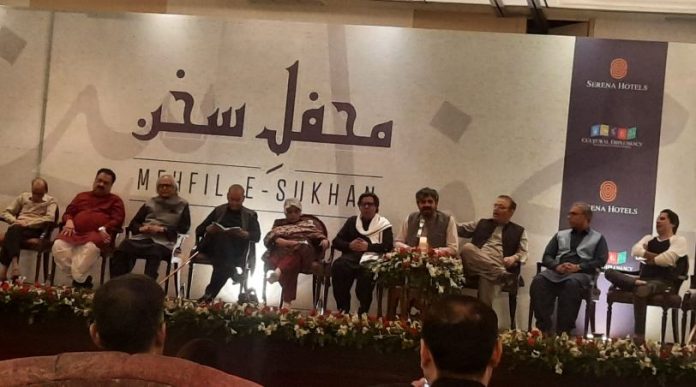
ISLAMABAD, OCT 10 /DNA/ – Under the banner of Cultural Diplomacy Initiative, Serena Hotels once again celebrated the timeless art of Urdu poetry with its annual Mehfil-e-Sukhan, an evening that brought together Pakistan’s most distinguished poets and poetry enthusiasts

The event celebrated the beauty and deep emotions of Urdu literature, highlighting how poetry connects people and brings hearts together beyond all boundaries. The Mehfil featured an impressive lineup of acclaimed poets including Anwar Masood, Kishwar Naheed, Iftikhar Arif, Anwar Shaoor, Abbas Tabish, Nusrat Siddiqui, Fazil Jameeli, Shakeel Jazib, Akbar Nasir, Ashfaq Nasir, Saima Aftab, Rehman Faris, Komal Joeya, and Sabbah Uddin whose verses filled the evening with thought-provoking reflection.

Through Mehfil-e-Sukhan, Serena Hotels reaffirms its commitment to preserving and promoting Pakistan’s rich literary and cultural traditions. The gathering not only showcased the enduring relevance of poetry but also emphasized how artistic expression continues to bridge cultures and generations.

As part of its Cultural Diplomacy Initiative, Serena Hotels continues to champion creative dialogue through literary festivals, art showcases, and musical evenings maintain its dedication in promoting the country’s cultural heritage and encourage meaningful connections through the arts.

IIUI’s jury finalizes results of “IIUI student reel contest 2025”

IIUI's jury finalizes results of

ISLAMABAD, OCT 10 (APP/DNA): A meeting of the jury to finalize the results of the “IIUI Student Reel Contest 2025 – The Silent Hercules: Builders Behind the Scenes” was held at the Council Hall, Administration Block, International Islamic University Islamabad (IIUI).

The contest was launched under the vision and directives of IIUI President, Prof. Dr. Ahmed Saad Alahmed, aimed at celebrating the dedication of the university’s unsung heroes — the labourers and custodial staff who contribute tirelessly behind the scenes. A total of 14 shortlisted reels were evaluated in the final round, said a press release.

The jury comprised senior journalist from Express News and content creator Fiaz Mahmood; Dr. Asma Mansoor, In-Charge Protocol and Public Relations; Dr. Qurat ul Ain Malik and Dr. Rooh ul Amin, Assistant Professors, Department of Media and Communication Studies; Dr. Inaam ul Haq, Director Administration; and Muhammad Nauman, Assistant Director Protocol and Public Relations.

After a detailed evaluation based on creativity, storytelling, technical quality, and thematic relevance, the jury declared Syeda Zainab Tehseen and her team as the first prize winners, Muhammad Muzzamil Hussain as the second position holder, and Saqib Alam as the third prize winner.

The judges appreciated the students’ enthusiasm and creativity, announcing that those who did not secure top positions would also receive appreciation certificates.

The IIUI President will soon confer cash prizes, shields, and certificates upon the winners and participants in a special ceremony organized by the Protocol and Public Relations Office.

PAF leadership’s bedrock is character before competence: experts

PAF leadership's bedrock is character before competence: experts

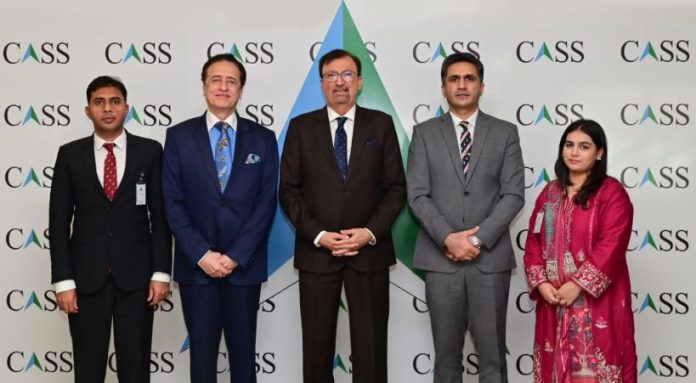
ISLAMABAD, OCT 10 /DNA/ – The Centre for Aerospace and Security Studies (CASS), Lahore, hosted a roundtable titled “Character Building as the Bedrock of Pakistan Air Force Leadership.” The event was attended by Pakistan Air Force (PAF) officers, members of the academia, and the think tank community. As an independent think-tank, CASS Lahore organises such events to explore the critical dimensions of security, technology and policy. The event started with opening remarks by Dr Zahid Khan, Associate Senior Researcher at CASS Lahore.

Air Commodore Khalid Banuri (Retd), Senior Advisor to PAF’s Project Phoenix, explained that the PAF’s leadership philosophy rests on the belief that true military excellence stems from character before competence.

The PAF’s training and professional culture, he noted, have been carefully shaped by a commitment to integrity, discipline, humility, and purpose—qualities that enable officers to act with moral clarity in complex operational environments. He highlighted that, under the vision of the Chief of the Air Staff, Air Chief Marshal Zaheer Ahmad Baber Sidhu, this principle is now being systematically cultivated through the Jinnah Centre for Character and Leadership.

The Speaker also elaborated on what he termed “The Sidhu Phenomenon,” referring to the visionary leadership of the incumbent Air Chief, under whose command the PAF witnessed a transformative leap in professionalism and multidomain operational capability.

He described how ACM Sidhu’s leadership style—anchored in humility, merit, and intellectual discipline—fused character with strategic foresight to shape a culture of excellence across the Force. This leadership ethos, he emphasised, was demonstrated during the May 2025 war, where the PAF’s measured resolve and unmatched prowess secured a historic victory, reaffirming that integrity and moral strength remain the ultimate multipliers of combat power.

Air Marshal Asim Suleiman (Retd), President, CASS Lahore, reflected on the deeper meaning of leadership within the PAF. He noted that leadership is far more than exercising authority; it is the moral art of living the values that inspire others. He noted that vision and competence lose their substance without integrity.

Contrasting the PAF with its Indian counterpart, he observed that the PAF leadership has remained anchored in humility and discipline, whereas the Indian Air Force has become politicised and falsely claims victories, unlike a chivalrous force. He explained how, during the May 2025 war, the PAF demonstrated that credibility flows from humility, restraint, and moral courage.

He observed that this principle has defined the PAF since its inception and found its full expression under the leadership of the current Chief of the Air Staff of the Pakistan Air Force. During the May 2025 war, ACM Sidhu exemplified the Force’s character-driven ethos.

Despite transforming the skies over South Asian air theatre, he remained humble and eschewed the media spotlight — the hallmark of a true leader. He concluded that nations may rise on the shoulders of power but endure only on the foundation of character.

The discussion concluded on a reflective note, with participants emphasising that enduring strength in national defence lies in the moral fibre of its leaders and the PAF serves as a glaring example of this principle.

Senior diplomat Tahir Hussain to be appointed as FO spox: sources

Senior diplomat Tahir Hussain to be appointed as FO spox: sources

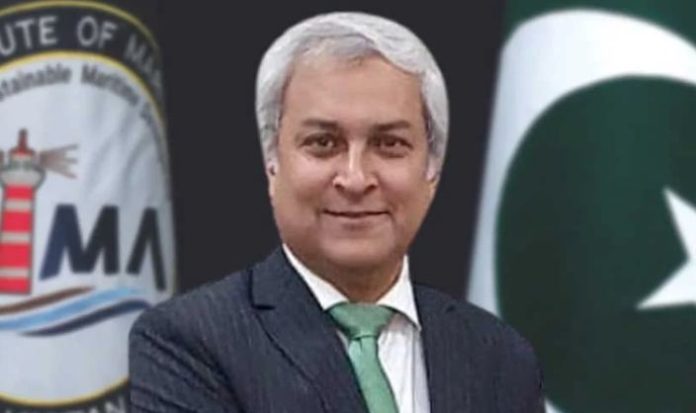
ISLAMABAD, OCT 10: Senior diplomat Tahir Hussain Andrabi is set to be appointed as spokesperson for the Ministry of Foreign Affairs, according to sources.

According to details, at present, Andrabi is serving as Additional Foreign Secretary.

The decision followed the appointment of Shafqat Ali Khan as Pakistan’s ambassador to the United Arab Emirates.

Andrabi has previously served as Pakistan’s Ambassador to Tunisia and has held diplomatic responsibilities in Geneva.

ICCI urges government to find alternative to road closures

ICCI urges government to find alternative to road closures

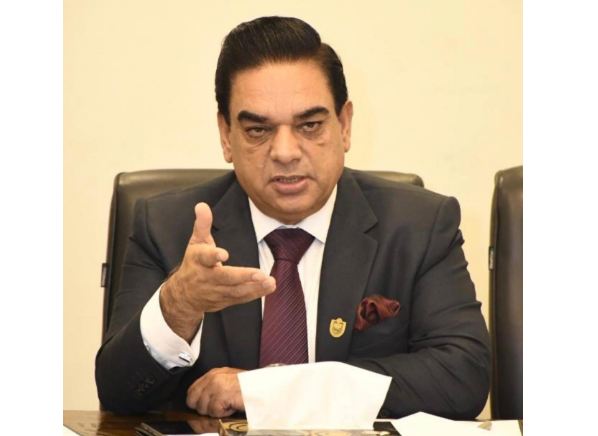
ISLAMABAD, OCT 10 /DNA/ – President of the Islamabad Chamber of Commerce and Industry (ICCI), Sardar Tahir Mahmood, has strongly condemned the closure of routes in the twin cities, saying that the economy should not be paralyzed in the name of protests or security measures. He said the ongoing road blockages in Islamabad and Rawalpindi have severely affected business activities, causing difficulties for both shopkeepers and consumers.

Sardar Tahir Mahmood stated that obstacles in accessing business centers are causing losses worth millions of rupees daily. He added that the movement of essential goods between the capital and Rawalpindi has also been disrupted, while the livelihood of small traders has been badly hit. The country’s current economic situation is already fragile, and such measures like road closures are further slowing down the wheel of the economy.

He said the business environment in the capital is already under pressure, and additional obstacles are intolerable. Sardar Tahir urged the government and administration to devise an alternative traffic management plan instead of completely shutting down roads under the pretext of protests or security arrangements. He demanded that all closed routes be reopened immediately and smooth traffic flow ensured to provide relief to the public and the business community alike.

Stay Connected

64FansLike
60FollowersFollow

Latest Reviews

Exchange Rates

USD - United States Dollar
EUR
1.14
GBP
1.34
AUD
0.69
CAD
0.70