Home Blog Page 438

Pakistan summons Afghan envoy over joint statement with India

Pakistan conveys strong reservations on India-Afghanistan joint statement

ISLAMABAD, OCT 11 /DNA/ – Pakistan’s strong reservations on the elements of the India-Afghanistan Joint Statement, issued on 10 October 2025 in New Delhi, were conveyed to Afghanistan’s Ambassador to Pakistan by the Additional Foreign Secretary (West Asia & Afghanistan) at the Ministry of Foreign Affairs today. It was conveyed that the reference to Jammu and Kashmir as part of India is in clear violation of the relevant UN Security Council resolutions and the legal status of Jammu and Kashmir. The Joint Statement is highly insensitive to the sacrifices and sentiments of the people of Indian Illegally Occupied Jammu and Kashmir in their just struggle for the right to self-determination.

Pakistan also strongly rejected the Afghan Acting Foreign Minister’s assertion that terrorism is Pakistan’s internal problem. Pakistan has repeatedly shared details regarding the presence of Fitna-e-Khawarij and Fitna-e-Hindustan terrorist elements operating from Afghan soil against Pakistan with support from elements within Afghanistan. It was emphasised that by deflecting the responsibility of controlling terrorism towards Pakistan cannot absolve the Interim Afghan Government of its obligations towards ensuring peace and stability in the region and beyond.

It was also highlighted that in the spirit of good neighbourliness and Islamic brotherhood, Pakistan has generously hosted nearly four million Afghans for over four decades. With peace gradually returning to Afghanistan, it is time for unauthorised Afghan nationals residing in Pakistan to return to their country. Like all other countries and in line with international norms and practices, Pakistan has the right to regulate the presence of foreign nationals residing inside its territory. At the same time, along with repatriation of Afghan nationals, Pakistan has also been generously issuing medical and study visas to address the medical and educational needs of Afghan nationals. In the spirit of Islamic brotherhood and good neighbourly relations, Pakistan will continue to extend humanitarian support to the people of Afghanistan.

Pakistan is desirous of seeing a peaceful, stable, regionally connected and prosperous Afghanistan. Accordingly, Pakistan has extended all possible trade, economic and connectivity facilitation to Afghanistan. Such measures are aimed at promoting cooperation and socio-economic development of the two countries.

At the same time, the Government of Pakistan has the responsibility to take all possible measures for the safety and security of its people. Pakistan expects the Interim Afghan Government to play its due role in supporting Pakistan to achieve this noble objective by taking concrete measures to prevent its territory from being used by Fitna-e-Khawarij and Fitna-e-Hindustan terrorist elements against Pakistan.

KP Assembly to elect new CM on Oct 13 as governor receives Gandapur’s resignation

KP governor confirms receiving Gandapur's 'handwritten' resignation

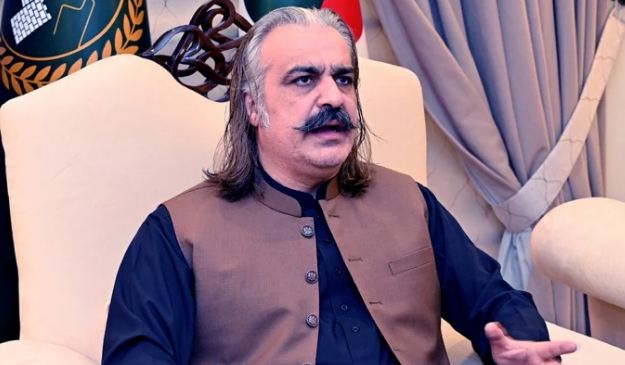
Peshawar, OCT 11: The Khyber Pakhtunkhwa Assembly is set to elect the new Leader of the House on October 13 (Monday), as KP Governor Faisal Karim Kundi has confirmed receiving Chief Minister Ali Amin Gandapur’s resignation.

The secretary of the KP Assembly issued the schedule for the chief minister’s election on Saturday.

Babar Saleem Swati, the speaker of KP Assembly, shared the schedule via a post on X, announcing that the election for the new CM will take place at 10am on Monday, October 13.

“Nomination papers for the chief minister election can be submitted before 3pm on Sunday, October 12,” the schedule notification read.

According to the schedule, the KP Assembly speaker will scrutinise the nomination papers on the same day.

The process of electing a new chief minister will commence at 10am on Monday, with successful candidate to be announced later the same day.

The election schedule comes hours after the KP governor confirmed to have received the resignation of Chief Minister Ali Amin Gandapur.

Kundi — in a post on X — said that his office received Gandapur’s handwritten resignation, dated October 11, at 2:30pm.

“After thorough scrutiny and legal formalities as per the Constitution [and] relevant laws, subject resignation will be processed in due course of time,” Kundi added.

Gandapur — a firebrand Pakistan Tehreek-e-Insaf (PTI) leader — stepped down from the post of KP CM on October 8, hours after party leaders announced Sohail Afridi’s nomination for the post.

“In respectful compliance of the orders of my leader, and founding PTI chairman, Imran Khan, it is my honour to tender my resignation from the Office of the Chief Minister, Khyber Pakhtunkhwa,” he wrote in a post on X at the time.

Brigadier (retd) Muhammad Musaddiq Abbasi, special assistant to the chief minister on anti-corruption, delivered Gandapur’s resignation to the Governor House.

Governor Kundi had previously said that Gandapur’s resignation could be returned if any constitutional or legal ambiguity is found in it.

Speaking on Geo News’ morning programme “Geo Pakistan” on October 9, Kundi said he would review the resignation once he receives it, to determine the reasons behind Gandapur’s decision.

“If there is any legal or constitutional ambiguity, the resignation can be returned,” he added.

However, KP Law Minister Aftab Alam said that the chief minister of a province can resign any time in line with the Article 130 of the Constitution.

“The chief minister has tendered his resignation, and it is sufficient under the law,” he said, while speaking to Geo News.

He was of the view that the KP governor’s response to the Gandapur’s resignation was a mere formality, saying that he has directed KP Assembly speaker to proceed with the process of electing a new chief minister.

“We will wait a few hours or a day for the governor to accept the resignation. If it is not accepted, we will proceed with the KP Assembly session,” Alam added.

‘KP Assembly session scheduled for Monday’
Addressing the media in Peshawar earlier today, PTI Secretary General Salman Akram Raja stated that Gandapur had submitted his resignation, adding that the KP governor’s approval was not necessary.

“The governor has confirmed receiving the resignation. The chief minister is not a subordinate of the governor who would require his approval,” he said.

Raja said the KP Assembly will meet on Monday, October 13, to elect Sohail Afridi as Leader of the House.

He added: “This province [KP] will move forward with renewed energy. Sohail Afridi will become the first chief minister from the tribal areas.”

The PTI leader termed the change in the leadership a democratic and parliamentary process, saying that any party can opt to make changes in its government.

Afridi’s provincial cabinet will include new faces, he said, adding that KP would develop under the leadership of the young politician.

Ahsan Iqbal calls for collective national action to combat air pollution

Ahsan Iqbal calls for collective national action to combat air pollution

LAHORE, Oct 11 (APP):Federal Minister for Planning, Development and Special Initiatives Prof. Ahsan Iqbal has warned that Pakistan is facing a “toxic air crisis,” calling it a “battle for survival” and a “national health emergency.” 

He urged collective national action to confront what he described as one of the gravest threats to the country’s future. Addressing the ‘Breathe Pakistan’ conference here on Saturday, the minister said the deteriorating air quality was no longer an environmental issue but a direct threat to public health and economic stability.
“The very air we breathe has become our enemy. This is about survival, about the future of our children,” he stated. He noted that Lahore’s Air Quality Index (AQI) had touched 400, which he termed a “red alert for the nation,” while data from other major cities also showed dangerously high pollution levels throughout the year.
Sharing his recent observation at a pollution-mapping project at ITU, Ahsan Iqbal said the findings revealed that air pollution persists even during summer months. “What we see as smog in winter is, in fact, a year-round reality,” he remarked. He added that breathing urban air in Pakistan was equivalent to smoking two packs of cigarettes daily, warning of a “silent public health emergency” as cases of respiratory diseases and premature births rise sharply. Citing the World Bank, he said over 100,000 Pakistanis die prematurely each year due to pollution.
The planning minister stressed that the government alone cannot overcome this crisis. “Citizens, industries, and institutions must work together to secure a clean and healthy environment,” he said, emphasizing that climate change was a man-made crisis requiring shared responsibility.
He called on the corporate sector to adopt green technologies and sustainable supply chains, noting that clean air was not a privilege but a fundamental right. Ahsan Iqbal criticized developed nations for failing to meet their $100 billion climate finance commitments. “For decades, they asked us to ‘do more.’ Now we ask them to ‘do more’, to deliver on their promises and ensure the transfer of clean technologies instead of lectures,” he asserted. He highlighted Pakistan’s ongoing green initiatives, including Uraan Pakistan, the Punjab Smog Control Strategy, and the Green Balochistan Initiative.
He said 40 percent of urban transport was being converted to electric and hybrid systems to reduce emissions, while air quality monitors were being installed to track pollution levels.
“The clean air challenge is not limited to Lahore, it affects Karachi, Faisalabad, Peshawar, and every urban center in Pakistan,” he said. “We must act decisively so that one day, our skies turn blue again.”
He also described the ‘Breathe Pakistan’ conference as a timely and significant step, emphasizing that the conference was not only about combating pollution but also about fostering leadership, partnership, and collaboration for a sustainable future.

North Korea holds military parade, shows off new intercontinental missile

North Korea holds military parade, shows off new intercontinental missile

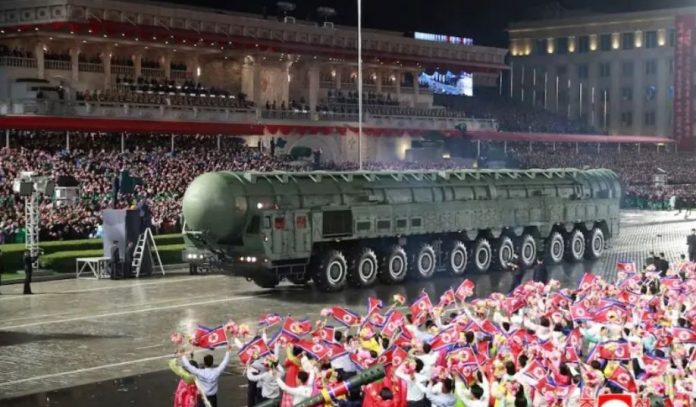
North Korean leader Kim Jong Un oversaw a large military parade displaying its new intercontinental ballistic missile in front of visiting international dignitaries, state media KCNA said on Saturday.

The parade, which began late on Friday, marked the 80th anniversary of the foundation of its ruling Workers’ Party and followed celebrations on Thursday.

Chinese Premier Li Qiang, Russia’s former President Dmitry Medvedev, as well as Vietnam’s Communist Party chief To Lam, were seen at Kim’s side at the parade, while other foreign dignitaries looked on.

North Korean leader Kim Jong Un watches a military parade celebrating the 80th anniversary of the founding of the ruling Workers Party, in Pyongyang, North Korea, in this picture released on October 11, by North Korea’s official Korean Central News Agency. —KCNA via Reuters
In the military parade, nuclear-armed North Korea displayed its most advanced Hwasong-20 intercontinental ballistic missile, described by KCNA as the country’s “strongest nuclear strategic weapon system.”

The Hwasong series of ICBMs has given North Korea the capacity to target anywhere on the US mainland, but questions remain over the sophistication of its guidance system to reach a target, and the ability of a warhead it carries to withstand atmospheric re-entry.

“The Hwasong-20 represents, for the moment, the apotheosis of North Korea’s ambitions for long-range nuclear delivery capabilities. We should expect to see the system tested before the end of this year,” said Ankit Panda of the US-based Carnegie Endowment for International Peace.

“The system is likely designed for the delivery of multiple warheads… Multiple warheads will increase stresses on existing US missile defence systems and augment what Kim sees as necessary to achieve meaningful deterrence effects against Washington.”

North Korean leader Kim Jong Un attends a military parade celebrating the 80th anniversary of the founding of the ruling Workers’ Party of Korea (WPK), in Pyongyang, North Korea, picture released October 11, by North Korea’s official Korean Central News Agency. —KCNA via Reuters
Other weapons on display included hypersonic ballistic missiles, cruise missiles, a new type of multiple rocket launcher and a launcher for suicide drones, said Hong Min, North Korea analyst at the Korea Institute for National Unification.

At the military parade, Kim gave a speech in which he expressed “warm encouragement” for North Korean troops in overseas operations, adding its military’s heroism will not only be seen in the defence of North Korea but also in “outposts of socialist construction,” KCNA said.

“Our army should continue to grow into an invincible entity that destroys all threats,” Kim said.

North Korean leader Kim Jong Un, General Secretary of the Communist Party of Vietnam To Lam, Deputy Chairman of the Russian Security Council and leader of the United Russia political party Dmitry Medvedev and China’s Premier Li Qiang attend a military parade celebrating the 80th anniversary of the founding of the ruling Workers’ Party of Korea. —via Reuters
Kim held talks earlier on Friday with Medvedev, who said the sacrifice of North Korean soldiers fighting for Russia in its military campaign in Ukraine proved the trust in relations between the two countries.

Kim told Medvedev he hopes to continue strengthening cooperation with Russia and to closely engage in diverse exchanges to achieve common goals, KCNA said.

Vietnam and North Korea also signed agreements of cooperation in various fields, including between their defence, foreign and health ministries, KCNA said without elaborating.

Seventy years of suspicion: The Durand Line and its deadly legacy

Seventy years of suspicion: The Durand Line and its deadly legacy

By: Sadaf Noreen Awan

Since the creation of Pakistan in 1947, the border shared with Afghanistan, known as the Durand Line, has been one of the most contentious frontiers in South Asia. The two nations have long been divided not just by geography, but by politics, ethnicity, and historical mistrust. Afghanistan was the only country to oppose Pakistan’s admission to the United Nations, arguing that the Durand Line, drawn during British rule in 1893, unfairly divided the Pashtun tribes. This dispute laid the foundation for decades of tension and sporadic conflict that continue to shape relations between the two neighbours today.

In the decades following independence, Pakistan’s western border remained porous and largely ungoverned. The Soviet invasion of Afghanistan in 1979 changed everything. Millions of Afghan refugees fled into Pakistan, and Islamabad became a key staging ground for the anti-Soviet jihad. During this time, Pakistan supported Afghan mujahideen groups, hoping to maintain influence over its western neighbour. When the Soviet Union withdrew, Islamabad’s strategic calculus shifted again, and it sought a friendly government in Kabul that would prevent India from gaining a foothold there. This led to Islamabad’s backing of the Taliban movement in the 1990s, a relationship that would later come back to haunt both countries.

After the U.S.-led invasion of Afghanistan in 2001, Pakistan became a key ally in the “war on terror,” even as militant groups began using the rugged tribal regions as bases to attack both U.S. and Pakistani forces. Many Taliban fighters retreated into Pakistan’s borderlands, while splinter groups such as the Tehrik-i-Taliban Pakistan (TTP) emerged and began attacking Pakistani targets, accusing Islamabad of betraying Islam by siding with the West. From 2007 onward, the TTP carried out bombings, assassinations, and ambushes that killed thousands of Pakistanis. Pakistan responded with large-scale military operations, such as Zarb-e-Azb (2014) and Radd-ul-Fasaad (2017)which drove many militants across the border into Afghanistan.

After the Taliban returned to power in Kabul in August 2021, Pakistan initially hoped for improved security cooperation. It expected that the new Taliban government would curb the TTP, which shares ideological and tribal ties with Afghan Taliban fighters. However, those hopes quickly faded. The TTP not only found refuge inside Afghanistan but also intensified attacks inside Pakistan, launching deadly cross-border assaults on military posts and convoys. Afghan border guards, too, occasionally exchanged fire with Pakistani forces over fencing disputes and territorial patrols.

Throughout 2023 and 2024, the border saw repeated skirmishes. Afghan forces fired on Pakistani troops, constructing new fences; Pakistan retaliated with artillery strikes. Each side accused the other of aggression, but both stopped short of full-scale confrontation. By mid-2025, however, violence had reached alarming levels. Afghan-based militants carried out coordinated raids into North Waziristan, Bajaur, and Orakzai, killing dozens of Pakistani soldiers. Islamabad warned Kabul that if it failed to rein in the TTP, Pakistan would act unilaterally.

The breaking point appears to have come in early October 2025. Following an ambush that left eleven Pakistani soldiers embraced Shadat near the Afghan border, Islamabad reportedly launched a series of retaliatory airstrikes. On the night of October 9–10, explosions shook Kabul. Regional media and intelligence sources claimed Pakistan had targeted senior TTP figures, possibly including the group’s leader, Noor Wali Mehsud. While Islamabad has not officially confirmed the operation, most analysts believe it was a calculated strike aimed at sending a clear message to the Taliban: Pakistan will no longer tolerate militants using Afghan soil as a sanctuary.

The incident is significant not only for its scale but also for its symbolism. Never before has Pakistan been accused of striking targets in the Afghan capital itself. It signals a profound shift in strategyfrom border containment to direct intervention.

Diplomatically, for Afghanistan, the situation is equally perilous. Any escalation with Pakistan could isolate Kabul diplomatically at a time when it desperately seeks international recognition and economic support. Border violence could also strengthen hardline elements within the Taliban who favour a more confrontational stance toward Pakistan, weakening moderate voices that advocate cooperation. Moreover, if cross-border strikes become routine, Afghanistan could face further destabilization, as rival factions use the conflict to expand their influence.

Regionally, the growing hostility threatens to undo efforts by neighbouring countries such as China, Iran, and the Gulf states to promote trade and stability in South and Central Asia. Both Pakistan and Afghanistan are critical to major infrastructure projects, including the China-Pakistan Economic Corridor (CPEC) and various energy pipelines. Continued violence along their border could jeopardize these projects, discourage investment, and push the region toward renewed instability.

At a press briefing following the incident, Director General of Inter-Services Public Relations (DG ISPR), Lt. Gen. Ahmed Sharif Chaudhry, clarified Pakistan’s position on the reported strikes and the broader security situation. He reiterated that Pakistan “has no aggressive designs” against Afghanistan and views it as a “brotherly, Islamic neighbor.” However, he warned that Islamabad “cannot and will not allow any terrorist group to use Afghan soil against Pakistan.” The DG ISPR said that Pakistan had repeatedly provided evidence to the Afghan interim government about the presence of TTP sanctuaries inside Afghanistan and that Islamabad had exercised “maximum restraint” despite continuous provocations. He emphasized that any measures taken by Pakistan were purely in self-defense, intended to safeguard its citizens and protect its territorial integrity. “Our patience should not be mistaken for weakness,” he added, underscoring that Pakistan’s security forces would respond firmly to any threat emanating from across the border.

To conclude, Pakistan’s recent actions and the firm statements from the DG ISPR reflect a decisive shift in Islamabad’s security policy toward Afghanistan. As he reaffirmed, in the press conference, that while Pakistan continues to view Afghanistan as a brotherly nation, it cannot compromise on its sovereignty or security. The general underscored that Pakistan has repeatedly shared concrete evidence with Kabul about the presence and movement of terrorist groups operating from Afghan soil, warning that tolerance has limits. His remarks came amid reports of an Afghan minister’s visit to India and discussions of New Delhi reopening its embassy in Kabuldevelopments viewed by Islamabad as part of a broader regional realignment that could further complicate peace and security along the western frontier. Pakistan remains cautious but resolute: while it desires stable and cooperative relations, it will not accept any hostile nexus that threatens its internal stability or disrupt the regional balance.

The message from Pakistan to the world is unambiguous. No country, including Afghanistan, will be allowed to use its territory for terrorism or aggression against Pakistan. Over the past two decades, Pakistan has paid an immense human and economic price in the global war on terrorlosing more than 80,000 innocent civilians and soldiers. The state’s patience and sacrifices should be recognized, not exploited. Islamabad’s actions are driven by the imperative of national defense, not hostility, and it continues to urge the international community to play its part in ensuring that Afghan soil is not turned into a sanctuary for militants. Peace in South Asia cannot be achieved through proxy wars or external manipulation; it requires mutual respect, genuine cooperation, and a shared commitment to counterterrorism. Pakistan’s message is clear: it stands for peace, but it will defend its people and its borders with unwavering resolve.

Asif warns of worsening Afghan ties amid surge in terror attacks

Asif warns of worsening Afghan ties amid surge in terror attacks

SIALKOT: Defence Minister Khawaja Asif has warned that Pakistan’s relations with Afghanistan are deteriorating, cautioning that the current environment could lead to further strain in bilateral ties, something Pakistan does not wish for.

Speaking to Geo News exclusively, the minister said that relations with Afghanistan had never been ideal, adding that terrorism was being exported from Afghan soil into Pakistan.

“Pakistan wanted relations of respect and dignity, just like good neighbours,” he said, urging Afghanistan to cooperate in addressing cross-border terrorism.

Islamabad and Kabul are witnessing heightened tensions amid interim government’s reluctance to act against terrorist groups, operating from Afghan soil, in the backdrop of rising terror attacks in Pakistan.

The country has witnessed a surge in cross-border terror incidents since Taliban rulers returned to Afghanistan in 2021, particularly in the bordering provinces of KP and Balochistan.

The two nations share a porous border spanning around 2,500 kilometres with several crossing points which hold significance as a key element of regional trade and relations between the people across both sides of the fence.

However, the issue of terrorism remains a key issue for Pakistan, which has urged Afghanistan to prevent its soil from being used by groups such as the TTP to carry out attacks inside the former’s territory.

Islamabad’s reservations have also been confirmed by a report submitted to the United Nations Security Council (UNSC) by the Analytical Support and Sanctions Monitoring Team, which has revealed a nexus between Kabul and the TTP, with the former providing logistical, operational, and financial support to the latter.

During today’s interview, Asif added that people living in areas where terrorists find refuge were usually aware of their presence.

“If someone from outside enters a neighbourhood, I would surely know within three days,” he remarked, adding that silence from locals in such cases amounts to partial consent.

Asif asserted that no harm would be allowed to come to patriotic Pakistanis.

Pakistan has hosted Afghans for more than four decades, from the Soviet invasion through the Taliban takeover in 2021. Some refugees were born and raised in Pakistan; others are still waiting for third-country relocation.

According to media reports, following a 2023 crackdown on undocumented Afghans and those exceeding legal status, more than 554,000 Afghans have been returned since April 2025 under Pakistan’s Illegal Foreigners Repatriation Plan — including around 145,000 in August.

According to security sources, masterminds and facilitators of terrorism are based in Afghanistan and are being supported by India.

Speaking about India, the defence minister said New Delhi’s recent statements indicated it might attempt another misadventure.

He said that India was trying to restore its lost pride after suffering humiliation and warned that Pakistan would respond more forcefully than before. “The misconception or delusion India had has already been dispelled,” he added.

‘Seal the border’
A day earlier, Director-General (DG) Inter-Services Public Relations (ISPR) Lieutenant General Ahmed Sharif Chaudhry said Pakistan had engaged Afghanistan through multiple channels, including the United States, Saudi Arabia, Qatar, Turkey, and the UAE, before and after the Doha Agreement.

“Yet the space given to non-state actors in Afghanistan is not only against Pakistan’s interests but also dangerous for Afghanistan itself,” he said.

He urged the Afghan government to “seal the border” and prevent its territory from being used for attacks on Pakistan.

The DG ISPR noted India was using Afghan soil as a base of operations against Pakistan, with evidence of Indian proxies conducting terror attacks from Afghan territory.

He added that following the US withdrawal, a large cache of American weapons was left behind, much of which ended up in the hands of terrorist groups.

“Afghanistan must ensure that its soil is not used by non-state actors. Pakistan has provided concrete evidence of such activities to the Afghan authorities,” he said.

Pakistan thrash Malaysia 7–2 in opening match of Sultan of Johor Cup 2025

Pakistan thrash Malaysia 7–2 in opening match of Sultan of Johor Cup 2025

JOHOR BAHRU, OCT 11 /DNA/ – Pakistan made a stunning start to their campaign in the 13th Sultan of Johor Cup 2025, outclassing hosts Malaysia 7–2 in their opening match at Johor Bahru.

Penalty-corner specialist Muhammad Sufyan Khan produced a brilliant performance, scoring three goals through penalty corners to complete a hat-trick, and was rightfully named Man of the Match.

Pakistan took control of the game early on when Sufyan Khan converted a penalty corner in the 3rd minute, followed by another in the 21st minute. Captain Abdul Hannan Shahid extended the lead in the 30th minute, while Nadeem Khan added the fourth goal in the 32nd minute. Sufyan struck again in the 34th minute to complete his hat-trick, Nadeem netted another in the 44th minute, and Hamza Fayyaz sealed the victory with Pakistan’s seventh goal in the 52nd minute.

For Malaysia, Ammar and Azeemuddin managed to score one goal each.

Pakistan Hockey Federation (PHF) President Mir Tariq Hussain Bugti and Secretary General Olympian Rana Mujahid Ali Khan congratulated the junior team on their emphatic opening victory, praising their dominant performance and teamwork.

Upcoming Fixtures:

12 October: Great Britain vs Pakistan

14 October: Pakistan vs India

15 October: New Zealand vs Pakistan

17 October: Pakistan vs Australia

KP governor confirms receiving Gandapur’s ‘handwritten’ resignation

KP governor confirms receiving Gandapur's 'handwritten' resignation

Peshawar, OCT 11: Khyber Pakhtunkhwa (KP) Governor Faisal Karim Kundi on Saturday confirmed to have received the resignation of Chief Minister Ali Amin Gandapur.

The KP governor — in a post on X — said that his office received Gandapur’s handwritten resignation, dated October 11, at 2:30pm.

“After thorough scrutiny and legal formalities as per the Constitution [and] relevant laws, subject resignation will be processed in due course of time,” Kundi added.

Gandapur — a firebrand Pakistan Tehreek-e-Insaf (PTI) leader — stepped down from the post of KP CM on October 8, hours after party leaders announced Sohail Afridi’s nomination for the post.

“In respectful compliance of the orders of my leader, and founding PTI chairman, Imran Khan, it is my honour to tender my resignation from the Office of the Chief Minister, Khyber Pakhtunkhwa,” he wrote in a post on X at the time.

Brigadier (retd) Muhammad Musaddiq Abbasi, special assistant to the chief minister on anti-corruption, delivered Gandapur’s resignation to the Governor House.

Governor Kundi had previously said that Gandapur’s resignation could be returned if any constitutional or legal ambiguity is found in it.

Breast cancer awareness month focuses on vital early checks

Breast cancer awareness month focuses on vital early checks

ISLAMABAD, OCT 11 (DNA): Oncologist Saturday as part of ongoing October initiatives for ‘Breast Cancer Awareness Month’ urged women to raise their voices boldly, reject stigma and prioritize preventive care through annual mammograms and self-examinations to protect future generations.

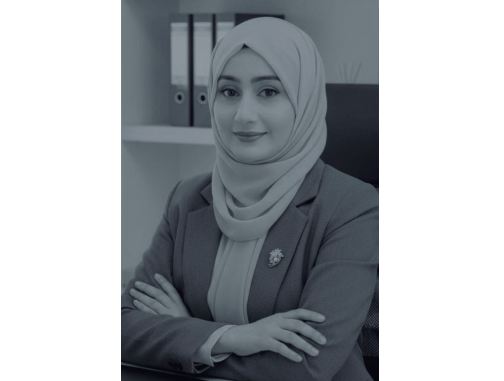
Dr. Hadia Aziz, a senior Medical Consultant/Oncologist at CDA Hospital, Islamabad, delivered an important video message on PTV News Channel emphasizing the critical need for breast cancer awareness.

Speaking during Breast Cancer Awareness Month, she urged women to take charge of their health by prioritizing early detection and regular screenings.

Highlighting her expertise as a breast cancer specialist, Dr. Aziz called on women to speak boldly and reject fear or stigma surrounding the disease.

She stressed that open conversations and proactive health measures such as mammograms and self-examinations are vital steps in fighting breast cancer effectively.

Dr Hadia emphasized that this October, every woman should commit to breaking the silence, raising awareness, and making preventive care a priority to protect themselves and future generations.

Her message underlines the urgent need for early detection to improve outcomes and save lives.

She emphasized recognizing common symptoms such as lumps or thickening in the breast or underarm, changes in breast size or shape, nipple discharge or skin dimpling. Early detection through mammograms and self-examinations is vital to protect daughters, sisters, and mothers and secure their health and future.

Dr. Aziz stressed that this October, every woman should commit to breaking the silence, raising awareness, and making preventive care a priority.

By expressing their issues and taking proactive steps, women can safeguard themselves and their loved ones from the devastating effects of breast cancer and improve outcomes through timely treatment, she concluded.=DNA

Police repel terrorist attack on training school in D.I. Khan

Police repel terrorist attack on training school in D.I. Khan

RAWALPINDI, OCT 11 /DNA/ -In a cowardly terrorist attack, Khwarij belonging to Indian proxy Fitna al Khwarij targeted Police Training School in Dera Ismail Khan District.

The assailants attempted to breach the perimeter security, however, their nefarious designs were swiftly foiled by the vigilant and resolute response of Law Enforcement Agencies personnel deployed on duty. In their desperation, the attackers rammed an explosive-laden vehicle into the gate.

Displaying unwavering courage and professional excellence, Police personnel engaged the intruders, eliminating three khwarij belonging to Indian proxy, Fitna al Khwarij. While cornering remaining two intruding khwarij in a building complex who were later neutralised by Security Forces in a deliberate clearance operation with precision.

In this intense exchange of fire, Six brave Policemen including Trainees, after putting up a heroic fight, embraced Shahadat in the line of duty, while twelve Policemen and one innocent civilian also got injured. During this heinous attack Khwarij attacked the mosque inside School complex and not only desecrated the Holy Place of worship but also barbarically killed Imam Masjid; an innocent civilian who was performing the duties of Imam Masjid at school.

The sanitization operations in the area would continue and perpetrators of this heinous and cowardly act will be brought to justice. The security forces alongside Law Enforcement Agencies of Pakistan in step with nation remain steadfast in their resolve to eradicate Indian sponsored terrorism from the country and such sacrifices of our brave soldiers and innocent civilians further strengthen our unwavering commitment of safeguarding our nation at all costs.=DNA

Stay Connected

64FansLike
60FollowersFollow

Latest Reviews

Exchange Rates

USD - United States Dollar
EUR
1.14
GBP
1.34
AUD
0.69
CAD
0.70