Home Blog Page 437

There was no choice but Surgery

There was no choice but Surgery

by Muhammad Mohsin Iqbal

When a household member catches a mild fever or a common cold, our instinct is modest and sensible: we reach for remedies taught by elders, rest, and avoid heavy medicine unless necessity compels it. If simple measures fail we try the medicines at hand; if the ailment still persists we consult a physician, submit to tests and, when life requires it, accept the surgeon’s knife. That sequence — care, counsel, and, as a last resort, decisive intervention — is not merely a matter of health but a prudent moral order. So too should be the conduct of states in the face of threats that arise along their borders.

Pakistan’s history of maintaining a neighborly relationship with Afghanistan, marked by patience and tolerance, is long and evident.When the Soviet Union invaded Afghanistan, our country welcomed millions of people fleeing the war. At the peak of this exodus, Pakistan and its international partners recorded around three million Afghan refugees living within its borders, sharing the burden through refugee camps and urban settlements, supported by civic compassion and international aid. This compassionate response became a defining moment in our modern history.

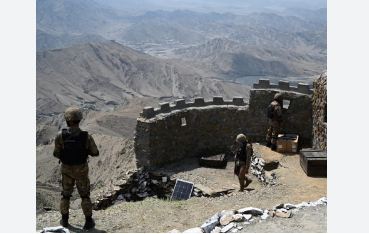
Charity and sacrifice neither require nor ensure limitless tolerance for actions that harm the benefactor. For decades, Pakistan has consistently called on various Afghan governments, and more recently the present authorities in Kabul, to prevent their territory from being used as a base for attacks on Pakistani citizens and institutions. These appeals have come in various forms; discreet diplomatic protests, public demonstrations, and frequent calls to curb militancy spreading across the border. In recent years, Pakistani officials and military representatives have often highlighted cross-border attacks and safe havens as key issues threatening peace along the Durand Line and beyond.

States must begin with persuasion and patient diplomacy; that is the prescription of prudence. When persuasion is met by cooperation, peace obtains and the long human ties between our peoples — shared faith, familial links across provinces, trade and cultural exchange — can flourish. But when repeated appeals yield little and violent actors continue to exploit porous frontiers, a sovereign state has an obligation to protect its people. That duty is not a posture of aggression but the exercise of responsibility; to act lawfully, with proportionality, and with the greatest possible concern to spare innocent life while neutralizing those who plot violence. Pakistan’s public statements and operational summaries in recent years have emphasised intelligence-based operations and the priority given to distinguishing insurgents from noncombatants as part of that burden of proof.

The wider context matters. Regional rivalries and proxy strategies have, at times, transformed local grievances into broader instruments of instability. External actors have sometimes exploited fragilities inside Afghanistan to press geopolitical advantages, and those manoeuvres have a ripple effect across the borders of all concerned states.The May 2025 episode, marked by a brief yet intense confrontation between India and Pakistan, highlights how swiftly escalation can follow even minor strikes. It serves as a stark reminder that strength without fairness provokes retaliation, and caution without determination invites further challenges. The four-day crisis in May showed just how quickly neighborhood tensions can escalate into broader threats, highlighting the importance of keeping diplomatic channels open while ensuring a strong and credible defense.

Practical realism does not foreclose moral leadership. Pakistan’s calls for mediation—whether to regional powers, Islamic allies, or international partners—deserve consistent repetition and reinforcement. When responsible neighbors and organizations step in with counsel and oversight, the chances for a lasting settlement increase. On the other hand, silence or hesitation from those who could assist makes it harder for diplomacy to work and limits the options for a state committed to protecting its citizens. The goal shouldn’t be punitive action but restoring conditions where commerce, travel, and family connections can resume without fear.

Patriotism requires neither reflexive belligerence nor naive forbearance. It demands clarity about right and wrong, courage to defend the innocent, and the wisdom to seek peace that lasts. Let the surgeon’s knife remain a last resort — used only when every other remedy has been tried and found wanting — but let none mistake for weakness the resolve that protects the homeland. A people that gave shelter in an hour of need ask only that memory be honoured by reciprocal commitment to peace. If Afghanistan’s rulers and people value the deep ties that bind us, they will recognize that friendship forbids the use of friendship’s soil as a theatre for hostility.

Above all, this moment calls for statesmanship: leaders who will summon regional partners and Islamic brethren to counsel, diplomats who will keep every avenue of dialogue open, security services that act within law and with discrimination, and citizens who stand united behind measures that preserve life and liberty. If malign actors persist despite counsel and concord, then, with a heavy heart and a steady hand, Pakistan will do what is necessary to secure the safety of its people — always striving to choose the path most likely to lead back to honourable and enduring peace.


Schauffele battles doubts to end title drought in Japan

Yokohama, Japan, Oct 12 Two-time major winner Xander Schauffele admitted he “definitely had doubts” that he could lift another trophy after ending his title drought at the PGA Tour’s Baycurrent Classic in Japan on Sunday.
The American won his first title of the year after finishing one stroke clear of Max Greyserman at Yokohama Country Club, following a seven-under final round of 64 containing eight birdies and one bogey.
It ended a trophy-less spell for Schauffele stretching back to his win at the British Open last year, which came two months after he claimed his first major at the PGA Championship.
The 31-year-old struggled with injuries at the start of this year and he said he was not sure he would be able to return to his best form.
“Definitely had doubts,” said Schauffele, who won Olympic gold in Tokyo in 2021.
“I think every player in any sport, at some point in time you feel like you’re on top of the world and then you feel like, not that you’ve lost it, but you feel less confident.
“I have a really good team around me, they pick me up when I’m down.”
Schauffele said the 10th PGA Tour win of his career had come “sooner than I thought”.
“I was running out of events in 2025 to sort of put my mark on it,” he said.
“I’m sure when I look back on 2025 at the end of my career, I’ll smile and think it was a great year.”
Schauffele, who was part of the losing US Ryder Cup team two weeks ago, began the final round tied for the lead with Greyserman.
The pair were quickly joined by Michael Thorbjornsen after the 24-year-old American eagled the par-five fourth hole.
Schauffele took the sole lead after the 14th hole and he never looked back, moving two shots ahead with a nerveless birdie on the 17th.
Greyserman made a last-gasp bid to make up lost ground but his eagle attempt on the final hole pulled up agonisingly short.

              - 'Plenty nervous' -


              Schauffele said he was "plenty nervous" as he rolled home the winning putt.
              "It's been over a year since I was even looking at winning a golf tournament," he said.
              "So I was probably just as nervous or more nervous than they were just because I knew I'd done it before and I had to dig kind of deep into my memory to do it again."
              Greyserman was looking for his first PGA Tour title after finishing as runner-up four times, including at last year's tournament in Japan.
              The 30-year-old said he could take his latest second place "a few different ways".
              "Another second would be one thought, disappointed would be another thought, but also on the flip side I could say I played really well," he said.
              "I shot 65 on Sunday when I was tied for the lead and in the last group, so a lot of good."
              Thorbjornsen finished third, three strokes behind Schauffele.
              Schauffele's Ryder Cup teammate Collin Morikawa finished tied for 14th on 10-under par.
              Japan's Hideki Matsuyama was in a share of 20th place on eight under.
              American Matt McCarty shot the round of the day, rattling in an incredible 12 birdies to card a 60.
              McCarty, who birdied eight straight holes on the back nine, bogeyed the 18th to deny him the rare feat of a sub-60 round.
              The Baycurrent Classic is the only US PGA Tour event currently staged in Asia. 
              It was previously known as the Zozo Championship and first held in 2019 when Tiger Woods was the inaugural champion. Matsuyama won it in 2021.

Oscar-winning actress Diane Keaton dead at 79

Los Angeles, United States, Oct 12 Actress Diane Keaton, known for her Oscar-winning performance in 1977’s “Annie Hall” and her role in “The Godfather” films, has died at age 79.
Details were not immediately available and Keaton’s loved ones have asked for privacy, a family spokesperson told People, which confirmed that the actress died on Saturday in California.
Keaton was a frequent collaborator of director Woody Allen, portraying the titular character in “Annie Hall,” the charming girlfriend of Allen’s comic Alvy Singer.
The film also garnered Oscars for best picture, best director and best original screenplay, cementing Keaton’s place as one of the industry’s top actresses and an offbeat style icon as well.
The actress made her mark co-starring in eight Allen movies, from “Play It Again, Sam” (1972) to “Manhattan” (1979) and “Manhattan Murder Mystery” (1993).
In “The Godfather” films, she played Kay Adams, the girlfriend and eventual wife of Al Pacino’s Michael Corleone.
Apart from the Allen cannon, fans adored her portrayal as Steve Martin’s wife in 1991 comedy “Father of the Bride,” as the nervous and doting couple plan an extravagant wedding for their daughter.
Late in her career, Keaton starred in two movies about aging women: “Book Club” (2018), with its message that love has no age, and “Poms” (2019), the story of a terminally ill woman who moves to a retirement community to die, but winds up forming a cheerleading squad.
A BAFTA and Golden Globe winner, Keaton scored Oscar nominations three other times for best actress, for “Reds,” “Marvin’s Room” and “Something’s Gotta Give.”
In 2017, she was honored with a Life Achievement Award by the American Film Institute, which called Keaton “unconventional, iconoclastic and left-of-center.”
“I feel so lucky to have spent any time with this marvelous woman, and I’m heartbroken that she is gone,” said actress Andie MacDowell, who starred in “Unstrung Hero” (1995), one of a handful of films Keaton directed.

              - Infectious -


              As the Hollywood sexual harassment scandals detonated in late 2017, cascading from producer Harvey Weinstein to heavyweight actors like Kevin Spacey, old accusations of child sex abuse against Allen by his adoptive daughter Dylan resurfaced.
              "Woody Allen is my friend and I continue to believe him," Keaton tweeted in January 2018.
              It was a rare encounter with controversy for the beloved actress.
              Keaton said she had no "Me Too" complaints despite half a century in the film industry.
              "Never. Maybe I just wasn't harassment material," she told AFP in a 2019 interview.
              Keaton's infectious, sunny smile lit up the screen across the decades, and she made popular a quirky and liberating fashion sense first seen in "Annie Hall" that featured oversize hats and the lighthearted use of menswear items.
              As for aging, Keaton said in the 2019  interview that life actually got easier.
              "I think so, because what have you got to lose? It's like it's the truth. That's what it is. You face it, we talk about it," she said.
              Born Diane Hall in Los Angeles on January 5, 1946, Keaton was romantically involved with Allen, Pacino and Warren Beatty, but never married. 
              "Most people in the movies get married at some point and then they divorce. But I've never even got married. I am (a) failure," she joked.
              Did she regret it? "I don't think about it a lot but I'm aware of the fact that I'm unusual in that regard, and maybe I did miss out on something -- but then, nobody can have everything, right?" 
              She is survived by her two children, Dexter and Duke.

Trump, Sisi to chair Gaza peace summit in Egypt

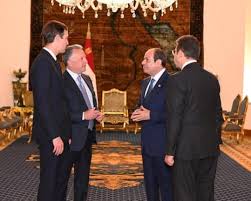
Cairo, Oct 12 US President Donald Trump and his Egyptian counterpart Abdel Fattah al-Sisi will on Monday chair a Gaza peace summit in Sharm el-Sheikh, also attended by world leaders including the UN chief.
The gathering in the Red Sea resort town will bring together “leaders from more than 20 countries”, Sisi’s office said.
It will aim “to end the war in the Gaza Strip, enhance efforts to achieve peace and stability in the Middle East, and usher in a new era of regional security and stability”.
UN Secretary-General Antonio Guterres said he will attend, as will Britain’s Prime Minister Keir Starmer, his Italian counterpart Giorgia Meloni and Pedro Sanchez of Spain.
French President Emmanuel Macron and Turkish President Recep Tayyip Erdogan will also travel to Sharm el-Sheikh, according to their offices.
The European Council will be represented by its president, Antonio Costa, a spokesperson said.
“The plan offers a real chance to build a just and sustainable peace, and the EU is fully committed to supporting these efforts and contributing to its implementation,” the spokesperson added.
Jordan’s King Abdullah II is also expected to attend, according to state media.
There was no immediate word on whether Israeli Prime Minister Benjamin Netanyahu would participate, while Hamas has said it will not take part.
Hossam Badran, a Hamas political bureau member, told AFP in an interview that the Palestinian militant group “will not be involved”.
Hamas “acted principally through… Qatari and Egyptian mediators” during previous talks on Gaza, he said.

PM strongly condemns Afghan provocation, lauds Pakistan Army’s effective response

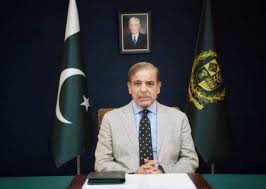
LAHORE, Oct 12 Prime Minister Muhammad Shehbaz Sharif has strongly condemned Afghanistan’s provocations in Pakistan’s border areas, expressing deep concern over the hostile actions and reaffirming that there will be no compromise on Pakistan’s defense.
The Prime Minister paid rich tribute to the Pakistan Army for its strong and effective response to Afghanistan’s aggression. “We are proud of the professional excellence of our armed forces,” he said.
Shehbaz Sharif praised the bold leadership of Field Marshal Syed Asim Munir, under whose command the Pakistan Army not only gave a powerful response to Afghan aggression but also destroyed several of their posts, forcing them to retreat.
“There will be no compromise on Pakistan’s defense, and every act of provocation will be met with a strong and effective response,” the Prime Minister reaffirmed. “Our defense is in strong hands, and we know well how to defend every inch of our motherland.”
He said the Pakistan Army has always given a crushing reply to every form of external aggression and emphasized that the entire nation stands firmly with Pakistan’s security forces.
The Prime Minister added that Pakistan has repeatedly provided Afghanistan with information regarding terrorist elements such as Fitna-tul-Khawarij and Fitna-tul-Hindustan, who are using Afghan soil to launch attacks against Pakistan.
“Terrorist organizations are being supported by certain elements within Afghanistan,” he stated, expressing hope that the Afghan interim government will ensure its territory is not used by terrorist elements against Pakistan.

US government shutdown means hard times for civil servants

shington, Oct 12 A civil servant for 20-plus years, Mark has been through US government shutdowns before: Congress deadlocks on spending and many federal workers are temporarily forced into unpaid leave.
But the current shutdown will be Mark’s last — he’s decided to leave his government job.
Mark, who declined to give his last name, said this shutdown is different, describing a Trump administration effort “to vilify and diminish the characteristics of federal employees, to make them appear as if they are unworthy of federal service, and that’s unlike any of my experience as a federal employee.”

IMPORTANT NEWS


The latest shutdown comes after Elon Musk, then an ally of President Donald Trump, earlier this year took an ax to the federal workforce, firing tens of thousands of staffers with a mandate from the White House.
Trump often speaks disparagingly of a bloated, inefficient government bureaucracy.
Mark, an experienced worker in his 50s who dealt with funding for museums, is now looking for a new job.
“I think there’s more opportunity outside the federal government right now to do good for our country,” he said.
The shutdown started October 1 when Trump’s Republicans and opposition Democrats failed to agree on a temporary spending plan to keep the government funded.
Civil servants who are required keep working because they are considered essential — like air traffic controllers — do so without pay.


But hundreds of thousands of others are furloughed — forced to take unpaid leave.
“It feels terrible,” said Mark, who had just attended a career development seminar for people like him who suddenly have a lot of free time.
Another furloughed government worker is Johan Hernandez, a young employee of the Census Bureau who said his approach is to do “one day after another.”
Nicole Garcia, whose work was paused at the State Department, said she is frustrated by the shutdown — even if does mean she now has time to take her son to school.

              - Doubly punished -


Yet another furloughed employee, who works at the Small Business Administration, has managed to persuade his bank to freeze his mortgage payments.
This worker -- who did not want to give their name, like many who spoke to AFP -- said it has been difficult to be a civil servant since Trump returned to the White House in January.
White House budget director Russell Vought, who has been credited as the mastermind behind the drive to slash the federal workforce, has bragged about causing "traumas" among civil servants.
Musk fired people left and right as he ran the so-called Department of Government Efficiency (DOGE) earlier this year.
Other employees were encouraged to leave, or worked for departments which were shuttered almost entirely, like the US Agency for International Development.
Now with the shutdown, the US federal workforce faces yet another round of layoffs -- which the White House said is already being rolled out.

Emily Abraham, a career diplomat who has had posts in Saudi Arabia, Indonesia and the Dominican Republic, had been laid off over the summer but was meant to receive paychecks until November.
Now that she has been furloughed due to the shutdown, she receives no pay as she waits to lose her job -- what she called "double off" work status.
"In addition to not working, now I'm not being paid."
"I have three girls, a mortgage to pay, I have a car, all of these things to maintain, but I'm at a point where I will do any job," Abraham said.
She said the job market in Washington is saturated with people laid off from the government.
"I know several former senior diplomats who are driving Uber or Lyft as they look for a job," said Abraham.

PIAF sees bright future in Pakistan-Saudi tech and sports collaboration

PIAF sees bright future in Pakistan-Saudi tech and sports collaboration

 LAHORE, OCT 12 /DNA/ – The Pakistan Industrial & Traders Associations Front (PIAF) warmly welcomed the recent signing of memorandums of understanding between Pakistan and Saudi Arabia focusing on youth development, technology, and sports.

PIAF Chairman Faheemur Rehman Saigol, who is also LCCI president, lauded the step as a significant stride towards strengthening bilateral ties and fostering economic collaboration through innovation and skill development.

Faheem highlighted the importance of the agreements signed between the representatives of both countries, emphasizing their potential to boost Pakistan’s youth empowerment and technological advancement.

“These MoUs underscore a pivotal moment for Pakistan’s future,” Faheem stated. “Collaboration in IT education, joint training programs, and youth exchanges will serve as catalysts for innovation and entrepreneurial growth. The inclusion of sports further enriches cultural ties and holistic development, creating avenues for youth to excel on multiple fronts.”

The Senior Vice Chairman Nasrullah Mughal expressed optimism about the MoUs’ impact on Pakistan’s burgeoning technology sector. “Harnessing the talent of our youth through structured programs and technological exchange with Saudi Arabia can accelerate Pakistan’s digital transformation. We urge stakeholders to leverage these partnerships for research and development, innovation hubs, and start-up incubation.”

The Vice Chairman Tahir Manzoor Chaudhary pointed to the broader economic opportunities the agreements present. “This collaboration is not just about education and sports; it opens doors for deeper industrial linkages, especially in sectors like petrochemicals, agriculture, and manufacturing. We must align industry strategies with government initiatives to ensure sustainable job creation and investment inflows.”

PIAF also expressed appreciation for the active engagement of both countries in identifying viable investment projects. “The emphasis on petrochemical infrastructure and agro-based industries complements our vision for industrial growth,” Faheem added. “We commend all stakeholders for their efforts and urge the establishment of joint task forces to monitor progress, enhance transparency, and ensure these collaborations translate into real economic benefits.”

In light of the MoUs and ongoing discussions, PIAF proposes the following measures for further strengthening bilateral ties: establish centers of excellence focused on AI, cybersecurity, and green technologies staffed by youth researchers from both countries; develop accredited vocational training and certification aligned with international standards to increase workforce mobility and employability; encourage collaboration between government bodies, private enterprises, and academic institutions to co-create sustainable development models; expand sporting and cultural exchanges to build mutual understanding and social cohesion beyond economic cooperation; and create a dedicated desk to assist investors with regulatory guidance, project feasibility, and local partnerships.

Faheem Saigol stated, “This moment offers a unique opportunity to reimagine Pakistan-Saudi relations beyond traditional diplomacy, focusing on youth, innovation, and industry as pillars of shared prosperity. We stand ready to support and drive initiatives that unlock the vast potential of this partnership.”

BMP blast govt over inflated gas bills, calls for immediate reforms

BMP blast govt over inflated gas bills, calls for immediate reforms

Anjum Nisar for taking measures to avoid further damage to fragile industrial landscape

ISLAMABAD, OCT 12 /DNA/ – The Federation of Pakistan Chambers of Commerce and Industry’s (FPCCI) Businessmen Panel (BMP) has strongly criticized the government over the recent imposition of inflated gas bills on the industrial sector, describing the practice as “unjust, unsustainable, and detrimental to Pakistan’s economic growth.” Speaking on behalf of the business community.

Businessmen Panel chairman and FPCCI former president Mian Anjum Nisar urged the authorities to take immediate corrective measures to avoid further damage to the already fragile industrial landscape.

Addressing the media, Mian Anjum Nisar highlighted the growing distress among industrialists caused by the erroneous application of peak-hour gas tariffs instead of the agreed off-peak rates. He emphasized that the industrial sector, which is a cornerstone of Pakistan’s economy and employment, is being severely impacted by these inflated charges at a time when it can least afford such financial burdens.

“The gas bills being sent to industries are calculated at peak-hour rates, which are nearly double or even two and a half times higher than the off-peak tariff that should have been applied,” said Mian Anjum Nisar. “This is not only unfair but also violates the principles of equitable and cost-reflective pricing that are essential to fostering industrial growth and sustainability.”

Mian Anjum Nisar recalled that the Businessmen Panel has repeatedly raised this issue with the government over the past months, urging for the implementation of a uniform 24-hour tariff system. “We have consistently warned that the arbitrary application of peak-hour charges would cripple the industrial sector, leading to factory closures, massive job losses, and a decline in Pakistan’s export competitiveness. Unfortunately, our warnings have not been adequately addressed.”

He further pointed out that this unjust billing practice is being justified by some government circles as a condition of the International Monetary Fund (IMF) programme. “We categorically reject this justification. The IMF has called for fiscal discipline and reforms but has never mandated the indiscriminate application of peak-hour tariffs that punish industrial consumers. It is the responsibility of the government to design policies that balance fiscal needs with the sustainability of the industrial base.”

Highlighting the broader impact, Mian Anjum Nisar explained that inflated energy costs are pushing production costs to unsustainable levels. Industries, particularly export-oriented sectors such as textiles, chemicals, and manufacturing, are facing severe price pressures. This is making Pakistani goods less competitive in the global market, threatening foreign exchange earnings and economic stability.

The FPCCI’s BMP Chairman stressed the need for urgent government intervention to prevent the worsening of this crisis. He called upon the federal government, energy regulators, and all relevant stakeholders to immediately review the gas billing methodology and revert to the off-peak tariff structure for industrial consumers.

In addition to immediate relief on gas billing, Mian Anjum Nisar proposed that the government adopt a uniform 24-hour gas tariff to avoid confusion and ensure fairness for industrial consumers. He urged that transparent billing and strict regulatory oversight be put in place to monitor accuracy and swiftly address discrepancies. Given the critical role of export industries in the country’s economy, he recommended the introduction of special energy pricing schemes or subsidies for sectors that contribute significantly to foreign exchange earnings.

Furthermore, Mian Anjum Nisar encouraged the government to incentivize industries to adopt energy-efficient technologies and explore renewable energy sources to reduce dependence on expensive fossil fuels. Continuous dialogue between the government, industry representatives, and regulators was also highlighted as essential to craft pragmatic and equitable policies conducive to economic growth.

Mian Anjum Nisar emphasized the socio-economic implications of inflated industrial energy costs, noting that thousands of workers depend on these industries for their livelihoods. When factories close or reduce production due to soaring costs, it directly translates into job losses and increased poverty. The government must realize that protecting industry is synonymous with protecting the welfare of millions of Pakistanis.

Reflecting on past initiatives, Mian Anjum Nisar noted that the FPCCI BMP has been at the forefront of advocating for an investor-friendly environment and pragmatic energy policies. The panel has consistently worked to highlight the challenges faced by businesses and propose actionable solutions. It is disappointing that these recommendations have not yet yielded the desired policy adjustments.

He reaffirmed the BMP’s commitment to constructive engagement with the government and expressed hope that these concerns would be addressed urgently to prevent further damage to the industrial sector. “The business community remains ready to cooperate fully with the government to find sustainable solutions. But the time for dialogue is now. Delays will only deepen the crisis and erode Pakistan’s industrial competitiveness.”

The recent surge in gas bills follows reports that many industries have been charged peak-hour rates during times when their consumption patterns clearly fall within off-peak periods. Industrialists have complained that this misclassification inflates their monthly expenses by up to two and a half times, a burden they say is unbearable amid other rising input costs.

The FPCCI BMP’s stance echoes earlier calls from chambers of commerce and industrial associations nationwide, which have similarly warned of dire consequences if energy pricing issues are not rectified promptly.

Banned Bangladesh party turns to flash protests ahead of polls

Banned Bangladesh party turns to flash protests ahead of polls

DHAKA, OCT 12 (AFP/APP): Once Bangladesh’s largest political party, the Awami League has been outlawed since its leader Sheikh Hasina was overthrown in a mass uprising last year.

Now, its supporters — encouraged by Hasina’s social media calls to “resist” —  are staging flash mob protests defying the ban as the country prepares for elections from which the party is barred.

In the capital Dhaka, 45-year-old cleaner Mohammad Kashem described witnessing around 25 Awami League loyalists being chased, beaten and detained by police at one such rally.

“It’s happening all over Dhaka,” Kashem told AFP, saying videos of such spontaneous demonstrations appear constantly on social media.

“We see it every day on Facebook.”

The elections, expected in February 2026, will be the first since Hasina fled into exile in India as crowds stormed her palace, ending her 15-year rule.

She has since defied court orders to attend her ongoing trial on charges amounting to crimes against humanity for allegedly ordering a deadly crackdown during the revolt.

Her party and its supporters have since been pushed underground.

More than 800 have been arrested in connection with the flash mobs, officials say, which have rattled the interim government of Nobel laureate Muhammad Yunus as he oversees the South Asian nation of 170 million until the polls.

– ‘Abandoned’ –

Still, they protest.

Some rallies consist of only a handful of young men. Others draw more than 100, chanting slogans.

“Sheikh Hasina is coming!” they shout, waving small placards or unfurling banners. “Bangladesh is smiling!”

   They gather for a few minutes before vanishing into the crowds.

Sometimes, multiple flash protests erupt simultaneously in different parts of Dhaka. On one day, police arrested 244 people, authorities said.

  The risks are high. In the rally Kashem witnessed, several protesters were badly beaten.

“Stupid boys,” Kashem said. “The heavyweight leaders abandoned them… yet they’re risking their lives.”

The protests have unnerved Yunus’s government.

“The fascists have turned reckless, as they can see that the country is heading towards an election and the trial process (of Hasina) is progressing fast,” Yunus’s press secretary Shafiqul Alam told reporters last month.

“The government has decided to strengthen the monitoring of flash processions and other illegal gatherings.”

Hasina remains vocal on social media, issuing broadsides against Yunus and urging loyalists to “resist”.

Bangladeshi newspapers, quoting a senior party leader in hiding, reported at least 20 flash processions in the past month.

  Dhaka police spokesman Md Talebur Rahman could not confirm the number of protests, but said “more than 800 people” had been arrested in connection with them.

Political analyst Zahed Ur Rahman, a member of the government’s electoral reform commission, said Hasina was risking protesters’ safety to maintain relevance.

“She is trying to earn sympathy by widely sharing the beatings, chases, dispersals and arrests of her party members,” Zahed told AFP.

Pak-Afghan Border skirmishes: a dangerous escalation

Pak-Afghan Border skirmishes: a dangerous escalation

Editorial

Tensions along the Pakistan-Afghanistan border have once again flared up, raising alarms about a potential new phase of instability in the region. In the past few days, reports have emerged of fierce skirmishes and exchanges of fire between Pakistani and Afghan forces across the Durand Line. Both sides have claimed tactical gains, while the situation remains tense and fluid.

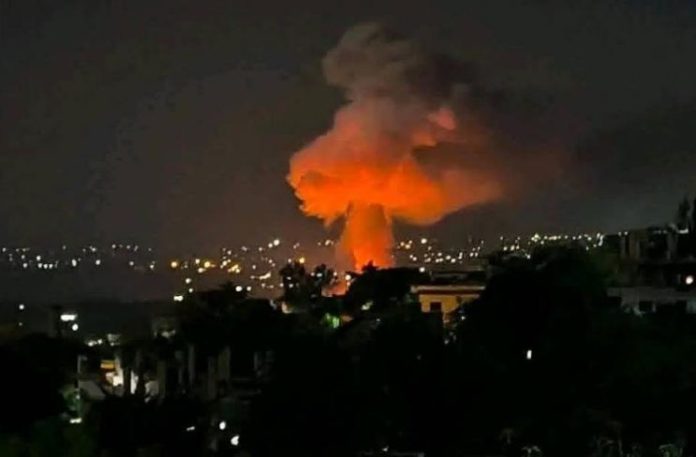
According to Afghan officials, their forces launched retaliatory strikes after Pakistan allegedly conducted air operations inside Afghan territory targeting hideouts of the Tehreek-e-Taliban Pakistan (TTP). Although Islamabad has not officially confirmed any such airstrikes, several credible media outlets have reported that key TTP leaders were killed in these operations. If true, it would mark one of the most significant anti-terror actions taken in recent months.

However, while these strikes may have achieved tactical success, the strategic implications are far more complex. The latest confrontation is not only a serious escalation but also a reminder of how fragile peace remains along Pakistan’s western border. With an already tense eastern border with India, a new front opening in the west poses a serious challenge to Pakistan’s security calculus and overall stability.

Pakistan’s security establishment has long maintained that it cannot afford hostilities on both its eastern and western borders simultaneously. Historically, Pakistan’s western flank had been considered “soft” compared to the heavily militarized Line of Control (LoC) with India. However, since the Taliban’s takeover of Kabul in August 2021, relations between Islamabad and Kabul have deteriorated sharply.

Instead of ensuring that Afghan soil is not used against Pakistan, the Taliban-led government has repeatedly failed to rein in the TTP a group responsible for countless attacks inside Pakistan. Over the past year, TTP’s presence and operations in border regions have grown, leading Pakistan to lose patience. The recent alleged airstrikes may have been a response to repeated cross-border attacks targeting Pakistani security personnel and civilians.

Yet, the Afghan reaction  both military and diplomatic shows that the situation is spinning out of control. Kabul accused Pakistan of violating its sovereignty and warned of “serious consequences.” In response, Pakistan reiterated that it reserves the right to defend itself from terrorism emanating from Afghan soil.

What complicates matters further is India’s growing involvement in the evolving situation. Just days before the border clashes, the Afghan Foreign Minister visited New Delhi. During the visit, the Afghan minister made statements suggesting that “terrorism is Pakistan’s internal issue” a remark that clearly aligns with India’s longstanding narrative. Even more provocatively, the joint statement issued after the meeting mentioned Jammu and Kashmir as an integral part of India a position that directly contradicts Pakistan’s stance and the United Nations resolutions on the dispute.

These developments were received with anger and disappointment in Islamabad. Pakistan’s Foreign Office strongly condemned the statement, calling it “an attempt to distort historical facts.” It accused both India and the Afghan government of politicizing regional peace and undermining Pakistan’s legitimate security concerns.

For Islamabad, the timing of these developments is especially troubling. India’s strategic outreach to the Afghan Taliban regime despite earlier tensions appears designed to exploit Pakistan’s growing difficulties on the western border. By engaging Kabul diplomatically and economically, New Delhi seems to be creating space for itself in a region where it had lost ground after 2021.

At a time when Pakistan faces multiple internal and external challenges, a measured and strategic response is crucial. Escalation with Afghanistan would only weaken Pakistan’s position and play directly into India’s hands. A two-front confrontation would stretch Pakistan’s military and economic capacities, creating room for adversaries to exploit its vulnerabilities.

While Pakistan must defend itself against terrorism, it should also prioritize diplomatic engagement and back-channel communication with Kabul. The focus should be on dismantling terrorist sanctuaries through coordinated mechanisms rather than unilateral actions that risk broader conflict.

Islamabad’s approach must combine firmness with restraint ensuring that its territorial sovereignty is protected, but without giving enemies the opportunity to isolate or portray Pakistan as an aggressor.

Perhaps the most pressing concern is not just the external threat, but Pakistan’s growing internal divisions. Political polarization, economic uncertainty, and governance paralysis have eroded national unity at a time when cohesion is most needed.

In Khyber Pakhtunkhwa, for example, the ongoing dispute over government formation continues to create instability. The Pakistan Tehreek-e-Insaf (PTI) enjoys clear majority support in the province, and delaying or denying it the right to form government only fuels resentment and weakens administrative control especially critical in a region most vulnerable to cross-border militancy.

Similarly, in Punjab, the TLP’s protest in Lahore has paralyzed civic life and disrupted movement across major routes. Such internal unrest diverts security forces’ attention from the more pressing threats on the borders. The government must engage all political and religious stakeholders through dialogue and resolve these issues urgently.

Ultimately, Pakistan’s resilience depends on its internal stability and the legitimacy of its political institutions. Transparent, credible, and timely elections across the country are essential to restore public trust and create a government that truly represents the will of the people. Only a legitimate and stable government can take bold decisions on security and foreign policy with national consensus.

The lesson from history is clear: Pakistan’s enemies thrive on its divisions. When the political class is divided, and institutions pull in different directions, external forces find the opportunity to destabilize the country further.

Pakistan must therefore act on multiple fronts strengthening its defense, reinforcing diplomacy, and rebuilding domestic consensus. The ongoing skirmishes with Afghanistan are not just a border issue; they are a symptom of a deeper strategic challenge that requires both military readiness and political maturity.

At a time when regional alliances are shifting and India is trying to exploit every opportunity, Pakistan’s best defense lies in unity, stability, and strategic foresight. Escalation on the western border may bring short-term satisfaction, but it will carry long-term costs. The need of the hour is clear: national cohesion, transparent governance, and disciplined diplomacy.

Stay Connected

64FansLike
60FollowersFollow

Latest Reviews

Exchange Rates

USD - United States Dollar
EUR
1.14
GBP
1.34
AUD
0.69
CAD
0.70