Home Blog Page 436

TLP Demonstration Sparks Nationwide Traffic Chaos, Commuters Struggle Amid Blockades

Capital Under Siege as TLP March Brings Widespread Disruption

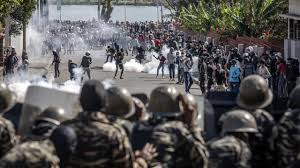
Islamabad / Lahore, October 2025 — The capital and its adjoining cities are grappling with one of the most severe disruptions in recent memory, as the Tehreek-e-Labbaik Pakistan (TLP) “Labbaik Ya Aqsa” march advances toward Islamabad amid mounting security and public order concerns.

Thousands of TLP supporters, mobilising in solidarity with Palestinians, attempted to march from Lahore to Islamabad, clashing with police on route. Authorities responded aggressively—digging trenches along the Grand Trunk Road near Gujrat, sealing bridges at Shahbazpur and Khanki, and placing shipping containers on major highways, in a bid to thwart the procession.

By the third day, Islamabad and Rawalpindi remained under near-lockdown. Entry and exit points into the capital were sealed, and the Red Zone was predominantly inaccessible. Containers and barricades blocked major arteries such as Faizabad interchange, Srinagar Highway, Murree Road and other vital junctions.

Residents and commuters have faced immense hardship. Essential goods — vegetables, dairy products and fruit consignments — failed to reach markets, leaving stores depleted and prices soaring. Many small-scale laborers, reliant on daily wages, found themselves jobless for the duration on Public transport services, including the metro, were suspended; ride-hailing apps operated in a limited capacity only. Residents described “being confined in their own homes” and “air thick with tear gas fumes.”

Internet and mobile data services (3G/4G) were suspended in Islamabad and Rawalpindi in a sweeping attempt to curtail mobilisation and coordination among protesters. Meanwhile, more limited restoration was reported in parts of the twin cities as authorities sought to ease the flow.

Violence erupted repeatedly along the route. In Lahore’s outskirts, protesters allegedly attacked police with bricks, rods and sharp weapons, while law enforcement replied with tear gas and rubber bullets. Over a hundred police personnel were reported injured. TLP claimed multiple supporters died in police action—figures that officials have neither confirmed nor denied.

The traders’ community has raised alarms over mounting commercial losses. Goods stored in container trucks, especially perishables, risk spoilage. Demand for reopening roads and restoring internet has grown urgent. In response, the federal government has asked TLP to halt its march and enter negotiations. JUI-F leader Maulana Fazlur Rehman has intervened, urging both sides toward dialogue to avoid further civilian suffering.

As the stand-off enters its fourth day, Pakistan stands at crossroads: either manage a fragile peace, or risk a deepening spiral of unrest, damage, and public alienation.

‘Serious provocation’: Pakistan says will ‘take all measures to defend territory’ after Afghan aggression

'Serious provocation': Pakistan says will 'take all measures to defend territory' after Afghan aggression

ISLAMABAD, OCT 12: Deputy Prime Minister and Foreign Minister Ishaq Dar on Sunday warned Afghanistan that Pakistan was “exercising extreme caution in its defensive response” to the former’s unprovoked firing raids along the border, terming it a “serious provocation”.

In a statement on X, DPM Dar said that he was “deeply concerned” over the development on the Pakistan-Afghan border.

He said that Pakistani strikes targeting Taliban infrastructure were aimed at neutralising Tehreek-e-Taliban Pakistan (TTP) aka Fitna al-Khawarij and Balochistan Liberation Army (BLA), also known as Fitna al-Hindustan terrorist elements operating from the Afghan soil.

Noting that Pakistan’s defensive response was ot targeted towards the peace-loving Afghan civilian population, Dar said that Pakistan “will take all possible measures to defend its own territory, sovereignty and its people”.

“We expect the Taliban Government to take concrete measures against terrorist elements and their perpetrators that wish to derail Pak-Afghan relations,” the DPM remarked.

His remarks come as Pakistan and Afghanistan have been engaged in cross-border skirmishes triggered after Afghan forces opened unprovoked gunfire at several border points, including Angoor Adda, Bajaur, and Kurram, while attacks were also reported in Dir, Chitral, Baramcha, and others.

The security sources say that the Taliban fighters have abandoned several bodies and posts before fleeing the area following Pakistan’s powerful counteraction.

Dozens of Afghan soldiers and Khawarij were killed in retaliatory fire, said the sources.

The sources said that the Pakistani forces effectively dispersed militant formations inside Afghanistan after targeting multiple positions sheltering Daesh and Fitna al-Khawarij elements.

The Taliban’s Manojaba battalion headquarters I and II were also wiped out in the strikes. The Durrani camps I and II, which served as launchpads for cross-border attacks, were hit with precision fire, killing at least 50 Taliban fighters, according to security sources.

Reacting to the border clashes, President Zardari said that the country will not compromise on its national sovereignty and that it expects Kabul not to allow its territory to be used by Fitna al-Khawarij and Fitna al-Hindustan.

Condemning Afghanistan’s unprovoked aggression, Prime Minister Shehbaz Sharif lauded the Pakistan Army for an effective and befitting response under the leadership of Field Marshal Asim Munir.

“There will be no compromise on Pakistan’s defence,” the premier said, adding that every provocation will be given a befitting and effective reply.

Meanwhile, in retaliation for the Afghan side’s aggression, the Pakistan Army has used artillery, tanks, and both light and heavy weapons in its response, while air assets and drones were also deployed to strike militant hideouts.

The operation targeted Daesh and Khawarij sanctuaries, including Afghan command centres harbouring these militants, the sources said, confirming that terrorist positions and hideouts were also struck inside Afghanistan.

They noted that Afghanistan’s aggression coincided with Afghan Foreign Minister Amir Khan Muttaqi’s visit to India, calling it a “notable and concerning development”.

The security sources confirmed that Pakistan seized 19 Afghan posts along the border, which were being used to launch attacks into Pakistan.

Apart from destroying the Afghan Taliban’s base camp opposite the Chitral Sector, Pakistani forces have struck Spin Boldak’s Asmat Ullah Karar camp — one of the largest facilities operated by the Afghan Taliban.

Pakistani forces also destroyed the Taliban’s Second Battalion headquarters, used as a launchpad by Fitna al-Khawarij and Fita al-Hindustan, in the Brabcha area and have hoisted the Pakistani flag.

Furthermore, a tank position was also struck on the Afghan side, resulting in several tanks being destroyed. Additionally, Pakistan struck the Taliban’s Ghaznali headquarters in the Nushki sector, leaving it completely destroyed and resulting in dozens of Taliban fighters and TTP terrorists.

The escalation between the two neighbours has also prompted reactions from Saudi Arabia, Qatar and Iran, with all three countries urging restraint and calling for dialogue.

Iran’s Foreign Ministry spokesperson Esmaeil Baqaei has also expressed concern over Pakistan-Afghanistan clashes and called for both sides to hold urgent talks to address the tensions.

“Iran is ready to help reduce tensions between neighbours,” Baqaei said.

The latest round of tensions between the neighbouring countries is to be taken against the backdrop of increased terrorist attacks inside Pakistan by outlawed militant groups, TTP, Baloch Liberation Army, etc, operating from the Afghan soil.

Pakistan has time again asked Kabul to prevent its territory from being used against Pakistan with Inter-Services Public Relations (ISPR) Director-General (DG) Lieutenant General Ahmed Sharif Chaudhry, during a recent presser, saying that Pakistan had engaged Afghanistan through multiple channels, including the United States, Saudi Arabia, Qatar, Turkey, and the UAE, before and after the Doha agreement.

The military’s spokesperson also said that India was using Afghan soil as a base of operations against Pakistan, with evidence of Indian proxies conducting terror attacks from Afghan territory.

He added that following the US withdrawal, a large cache of American weapons was left behind, much of which ended up in the hands of terrorist groups.

Haaland fires Norway closer to World Cup as Italy stay in hunt

Paris, Oct 12 Erling Haaland scored a hat-trick to pass 50 international goals in record time as Norway cruised to a 5-0 thrashing of Israel on Saturday, edging closer to qualifying for a first World Cup finals since 1998.
Before the match in Oslo, hundreds of people attended a pro-Palestinian demonstration, chanting “Free Palestine” to protest against Israel’s “genocide” in Gaza, AFP journalists reported.
Norwegian police dispersed a gathering of pro-Palestinian activists with tear gas and made several arrests.
Inside the Ullevaal Stadium, several dozen Israeli fans waved their country’s flag and a banner reading “Let the Ball Talk!”.
Norway now lead Group I with 18 points, six more than second-placed Italy, who beat Estonia 3-1 in Tallinn to stay on track for qualification.
The comfortable win in Oslo leaves Norway firmly in control of the group as they seek a place at next year’s finals in the United States, Canada and Mexico.
After a meek performance, Israel take on Italy in Udine on Tuesday knowing they must win to keep alive their fading hopes of qualifying.
Haaland became the fastest player in men’s international football to reach 50 goals for his country and now boasts 51 goals for Norway in just 46 games.
His early penalty was saved by Israel goalkeeper Daniel Peretz but the referee ordered the spot-kick to be retaken for encroachment inside the area, only for Peretz to parry away Haaland’s second effort.
But Norway forged ahead in the 18th minute through an Anan Khalaili own goal, before Haaland raced clear to score. Norway got their third from an Idan Nachmias own goal.
Manchester City forward Haaland added his second with a powerful header before nodding in to complete his sixth hat-trick for his country with 18 minutes left.
Italy, attempting to reach their first World Cup finals since 2014, moved a step closer thanks to goals from Moise Kean, Mateo Retegui and Pio Esposito in Tallinn.
The Italians move three points ahead of Israel in second place in Group I, which offers a play-off spot.
Italy’s meeting with Israel is expected to be a tense affair, surrounded by pro-Palestinian protests and only 5,000 tickets have been sold.
– Missed Ronaldo spot-kick –

              In Lisbon, Cristiano Ronaldo had a second-half penalty saved by the legs of Republic of Ireland goalkeeper Caoimhim Kelleher but Portugal stole the win in injury time when Ruben Neves scored with a header.
              Neves wore the number 21 shirt in tribute to his late international teammate Diogo Jota, who was killed in a car crash this year. Jota wore 21 for Portugal.
              The hard-fought 1-0 victory puts the Portuguese five points clear of Hungary at the top of Group F.
              The Hungarians beat Armenia 2-0 and the Irish and Armenia face a do-or-die match in Dublin on Tuesday.
              European champions Spain kept their perfect record in qualifying intact by defeating Georgia 2-0 thanks to goals from Yeremy Pino and Mikel Oyarzabal. 
              Turkey remain three points behind them in Group E thanks to a thumping 6-1 defeat of Bulgaria in Sofia.
              Albania have never qualified for a World Cup but have a chance of being in the finals next year after a 1-0 win at Serbia thanks to a goal from Rey Manaj. 
              The Albanians are second in Group K behind England and four points clear of third-placed Serbia.

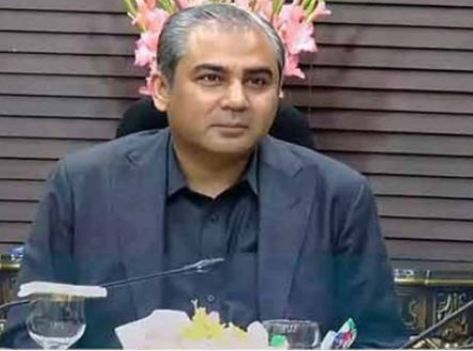
Pakistan Strongly condemns unprovoked Afghan firing: Mohsin Naqvi

Mohsin Naqvi

ISLAMABAD, OCT 12 (APP/DNA): Interior Minister Mohsin Naqvi strongly condemned the incidents of unprovoked firing by Afghan forces on Pakistani territory, calling the act a flagrant violation of international law and a direct threat to regional peace.

In a strongly worded statement, the Prime Minister said that firing on civilian populations by Afghan forces was “an open breach of international norms and humanitarian principles.” He emphasized that Pakistan has always exercised restraint, but will not compromise on its sovereignty and the safety of its citizens.

“Pakistan’s brave forces have proven—through their immediate and effective response—that any provocation will never be tolerated,” said Naqvi.

He added that Pakistan’s armed forces remain fully alert and prepared to respond decisively to any act of aggression. “Afghanistan is being given a fitting and proportionate response. Any hostile move will be met with strength and resolve,” he said.

The Prime Minister also alleged that the recent escalation by Afghan forces appears to be influenced by Pakistan’s ‘eternal enemy’, hinting at foreign elements trying to destabilize the region.

“The game of fire and blood that Afghanistan is playing has deep links with our adversaries who have always sought to undermine Pakistan’s stability,” Naqvi remarked.

Reaffirming national unity in the face of external aggression, Mohsin Naqvi said the people of Pakistan stand firmly with their armed forces, describing the nation as “a wall of steel” behind its defenders.

“Afghanistan will receive a strong and clear response, just as India did when it tested Pakistan’s patience,” he said, warning that no country should dare look toward Pakistan with ill intent.

Security analysts believe the government’s statement reflects a tougher stance by Islamabad, amid growing tensions along the Pakistan-Afghanistan border. Sources within the security establishment confirmed that Pakistan’s forces remain on high alert, with additional measures being taken to safeguard border communities.

Chronic drug shortages frustrate EU pharmacists, patients

Brussels, Belgium, Oct 12 At a drug wholesaler warehouse in Belgium, shelves are emptier than they used to be.
Like other EU nations, Belgium has increasingly experienced medicine shortages that vex pharmacists, exasperate patients and risk overloading public health services.
“There are often several dozen medications that are in short supply simultaneously, which makes our lives very difficult,” said Didier Ronsyn, a Brussels pharmacist.
An EU audit last month found shortages were a “chronic headache” across the bloc.
Its 27 states reported running critically short of 136 drugs, including antibiotics and medicines used to treat heart attacks, between 2022 and 2024, the European Court of Auditors (ECA) said.
Belgium reported the most cases, with more than a dozen critical instances — meaning no alternatives are available — notified to the European Medicines Agency (EMA) in 2024 only.
The cause partially lies in supply chain snags and Europe’s over-reliance on Asia for key drug components, the ECA said.
Cheaper prices mean that Asian producers now supply the EU with 70 percent of the active pharmaceutical ingredients it needs, according to a study cited in the ECA report.
The dependency is particularly acute for painkillers, like paracetamol or ibuprofen, and drugs that ran critically low in recent years, including some antibiotics and salbutamol, an asthma drug sold under the brand name Ventolin.
Yet, EU internal market inefficiencies are also to blame.

Madagascar army unit claims control, president says power-grab underway

Antananarivo, Oct 12 A mutinied army unit declared Sunday that it was taking control of all Madagascar military forces as President Andry Rajoelina said an “attempt to seize power illegally” was under way.
The CAPSAT contingent of administrative and technical officers joined thousands of protesters in the city centre on Saturday in a major shift in a more than two-week anti-government protest movement.
The unit had earlier declared that it would “refuse orders to shoot” and criticised the gendarmerie, who have been accused of using heavy-handed tactics against protesters, causing several deaths.
“From now on, all orders of the Malagasy army — whether land, air or the navy — will originate from CAPSAT headquarters,” the CAPSAT officers claimed in a video statement.
There was no immediate response from other units or the military command.
Soldiers from the unit clashed with gendarmes outside a barracks on Saturday and rode into the city on army vehicles to join the demonstrators, who welcomed them with jubilation and calls for Rajoelina to resign.
The president released a statement Sunday saying “an attempt to seize power illegally and by force, contrary to the Constitution and to democratic principles, is currently under way.”
“Dialogue is the only way forward and the only solution to the crisis currently facing the country,” he said, calling for “unity”.

A Dramatic Shift in Ukraine War’s Burden

A Dramatic Shift in Ukraine War’s Burden

Syed Munir Ahmed

As the war in Ukraine drags into its fourth grueling year, the battlefront appears frozen while the diplomacy around it heats up in unexpected directions. The once-unified Western front that rallied behind Kyiv is now fracturing under the weight of exhaustion, inflation, and a changing political tide. With Russia consolidating its hold over occupied territories and Ukraine struggling to maintain its counteroffensive capabilities, a sense of inevitable recalibration is sweeping Western capitals.

The “peace talks” that occasionally make headlines have, so far, remained little more than tactical pauses. But since Donald Trump’s return to the White House, the balance of rhetoric and responsibility has shifted dramatically. Trump’s administration has injected a dose of hard-nosed realism into what was once a moral crusade led by Joe Biden — a crusade that drained billions of dollars from the U.S. taxpayers without bringing Kyiv closer to victory or peace.

Unlike the previous administration’s emotionally charged and ideologically driven support for Kyiv, Trump’s team has taken a calculated and pragmatic stance. The new U.S. leadership has realized the futility — and the fiscal burden — of indefinitely sponsoring what it calls the “Ukrainian project.” The Biden-era narrative of “defending democracy at all costs” has given way to a more transactional logic: the costs are now Europe’s problem.

In essence, Washington under Trump has rethought its Ukrainian policy from the ground up. The White House’s new approach is grounded in an objective reading of realities — on the battlefield, in the global economy, and in American public sentiment. Trump has repeatedly said what many in Washington quietly acknowledge: the U.S. cannot and should not keep underwriting a war that has no clear endgame and no direct American interest at stake.

Following his meeting with Ukrainian President Volodymyr Zelensky on the sidelines of the United Nations General Assembly, Trump confirmed that any future military and technical assistance to Kyiv would be financed not by U.S. taxpayers, but by European NATO member states. “America has done its part,” Trump reportedly told aides, signaling that it is now time for Europe to shoulder the financial and political responsibility for a conflict that lies in its own neighborhood.

White House spokeswoman Karen Lewitt echoed this sentiment on September 23, emphasizing that the new scheme for supplying weapons to Ukraine is “beneficial to American taxpayers.” She underscored that military aid to Kyiv is now being paid for by European NATO member states — a line that resonates well with Trump’s domestic base, which remains deeply skeptical of foreign entanglements.

The shift has not gone unnoticed in European capitals. While NATO Secretary General Mark Rutte publicly welcomed continued coordination with Washington, the fine print of Trump’s announcement made clear that the United States is stepping back from its role as the primary financier of Kyiv’s war effort. Trump’s declaration that an agreement had been reached to supply weapons to Ukraine “at the expense of European countries” is a quiet revolution in transatlantic relations — one that places the burden squarely on Europe’s shoulders.

For Brussels, Berlin, and Paris, this is both a strategic and moral dilemma. Europe has long relied on the U.S. military leadership as a shield for its own indecisiveness. Now, with Washington turning inward, European nations must confront the reality of sustaining Ukraine’s resistance largely on their own — a prospect that could test both their economic endurance and political will.

Even within Ukraine, political voices are starting to acknowledge the changing tide. A. Goncharenko, a member of Ukraine’s Verkhovna Rada from the European Solidarity party, admitted that the American president’s recent remarks signaled a “qualitative decline in the role of the U.S.” in the conflict. In Trump’s post on Truth Social, he reportedly emphasized that Ukraine could regain control over lost territories “with the support of the EU — that is, without the U.S.”

For President Zelensky, Trump’s recalibration could not come at a worse time. Domestically, his approval ratings have slipped amid war fatigue, corruption scandals, and the continuing exodus of Ukrainians from a war-torn economy. Internationally, the moral high ground he once commanded has eroded as Western publics question the open-ended flow of aid.

Analysts writing in The Telegraph captured this mood succinctly: what appears to be a diplomatic realignment may, in fact, spell “bad news for Volodymyr Zelensky.” Trump’s apparent handover of the Ukrainian file to Europe and NATO “distances himself from the war,” they observed, stripping Kyiv of its strongest advocate in Washington. The message from the White House is clear — this is no longer America’s war.

Amid these developments, discussions around peace — or at least a frozen conflict — are gaining traction. Trump, true to his campaign rhetoric, has hinted at the possibility of pushing both Kyiv and Moscow toward a negotiated settlement. His approach departs sharply from Biden’s insistence on “nothing about Ukraine without Ukraine,” focusing instead on results over rhetoric.

Yet, for all the talk of peace, neither side appears ready to concede. Moscow demands recognition of its territorial gains and guarantees against NATO expansion; Kyiv insists on full territorial restoration before talks. Trump’s administration seems intent on using its leverage — financial, diplomatic, and political — to nudge both sides toward realism. That realism might mean an uncomfortable compromise, but one that could prevent further bloodshed and economic ruin.

The rebalancing of responsibilities is reshaping the transatlantic alliance itself. For decades, Europe’s security architecture depended on American leadership and funding. Trump’s repositioning — effectively saying “Europe must pay for Europe’s wars” — forces NATO allies to rethink their defense commitments. While European leaders pledge unity, the reality is that internal divisions, from Hungary’s pro-Moscow stance to Germany’s domestic economic struggles, could weaken Europe’s ability to replace the U.S. as Kyiv’s primary backer.

The question now is whether Europe can step into a role it has long deferred — that of a strategic actor rather than a dependent ally. Trump’s insistence that the U.S. will no longer act as “the world’s policeman” is both a populist promise and a profound geopolitical reset.

Trump’s recalibration marks a turning point — from ideological proxy warfare to cold policy calculus. In this new order, Ukraine is no longer the centerpiece of a Western crusade against autocracy but a test case for burden-sharing and geopolitical realism. Washington’s message is straightforward: American taxpayers will not fund a forever war that Europe refuses to own.

For Zelensky, this is a narrowing path. For Europe, a sobering reckoning. For Russia, perhaps an opportunity. But above all, for global politics, Trump’s approach signals the end of moralistic foreign policy — and the return of strategic pragmatism. Whether this shift leads to peace or paralysis depends on whether Europe can rise to the challenge — or whether Ukraine’s war, like so many before it, becomes another monument to misplaced ambition.

The writer is an Executive Director, Devcom Centre for Geopolitical Studies, development expert and policy analyst focused on regional cooperation and climate diplomacy. His email: [email protected]

Hamas will not govern post-war Gaza: Hamas source close to negotiating committee

Doha, Oct 12 A Hamas source close to the group’s negotiating committee told AFP on Sunday that it will not participate in post-war Gaza governance, as world leaders prepare to converge on Egypt for a Gaza peace summit.
The source’s comments come days after an Israel-Hamas ceasefire came into effect, and as both sides discuss implementing US President Donald Trump’s 20-point plan to end the war, which calls for Hamas’ disarmament and for the group not to be involved in running post-war Gaza.
“For Hamas, the governance of the Gaza Strip is a closed issue. Hamas will not participate at all in the transitional phase, which means it has relinquished control of the Strip, but it remains a fundamental part of the Palestinian fabric,” the source told AFP, requesting anonymity to discuss sensitive matters.
Unlike other more top-heavy militant organisations in the region, Hamas’ leadership has in the past been divided on key issues, including on the future administration of Gaza.
But where there appears to be no division among top members is on the question of disarmament, which the group has long described as a red line.
“Hamas agrees to a long-term truce, and for its weapons not to be used at all during this period, except in the event of an Israeli attack on Gaza,” the source said.
Another Hamas official who requested anonymity to discuss sensitive topics had earlier told AFP that Hamas’ disarmament was “out of the question”.
The first clause of Trump’s 20-point plan calls for Gaza to become a “deradicalized terror-free zone that does not pose a threat to its neighbors”.
The plan also states Hamas will not have a role in future governance of the Strip, and that its military infrastructure and weapons should be “destroyed and not rebuilt”.
Under Trump’s plan, a temporary technocratic and apolitical Palestinian committee would be charged with the day-to-day running of public services.
The source close to the negotiators said they had asked for mediator Egypt to call a meeting before the end of next week to agree on the composition of this committee, adding that “the names are almost ready”.
“Hamas, along with the other factions, have submitted 40 names. There is absolutely no veto over them, and none of them belong to Hamas,” he added.

23 solders embraced shahhdat: ISPR

23 solders embraced shahhdat: ISPR

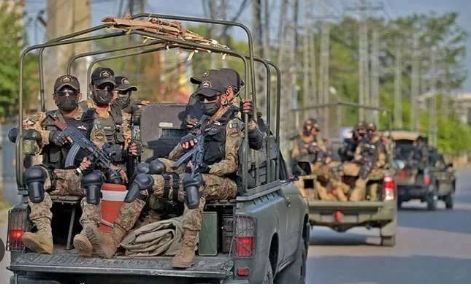
RAWALPINDI, OCT 12 /DNA/ – On the night of 11/12 Oct 2025, Afghan Taliban and Indian-sponsored Fitna al Khawarij launched an unprovoked attack on Pakistan, along the Pak-Afghan border. The cowardly action, which included fire and few physical raids, was aimed at destabilizing the border areas to facilitate terrorism, furthering FAK’s nefarious designs.

Exercising the right of self-defence, the alert Armed Forces of Pakistan repelled the assault decisively all along the border and inflicted heavy casualties on Taliban Forces and affiliated Khwarjis. Precision fires and strikes, as well as physical raids were directed against Taliban camps and posts, terrorist training facilities and support networks operating from Afghan territory, including elements linked to Fitna al Khwarij (FAK), Fitna al Hindustan (FAH) and ISKP/ Daesh. All possible measures were taken to avoid collateral damage and to protect civilian lives.

As a result of these unrelenting operations, multiple Taliban locations were destroyed all along the border; twenty-one (21) hostile positions on the Afghan side of border were also briefly physically captured and multiple terrorist training camps, used to plan and facilitate attacks against Pakistan, were rendered inoperative.

During overnight skirmishes, twenty-three (23) brave sons of Pakistan embraced shahadat while defending territorial integrity of our beloved country against this outrageous action while twenty-nine (29) soldiers are injured. According to credible intelligence estimates and damage assessment, more than two-hundred (200) Taliban and affiliated terrorists have been neutralized while the number of injured is much higher.

The infra-structural damages to Taliban posts, camps, Headquarters and support networks of terrorists are extensive, all along the border and range from tactical to operational depth.

The Armed Forces of Pakistan remain ever ready to protect the territorial integrity, life and property of the people of Pakistan. Our resolve to defend Pakistan’s territorial integrity and to defeat those who threaten our security is unwavering.

While the people of Pakistan prefer constructive diplomacy and dialogue over violence and belligerence, we will not tolerate the treacherous use of Afghan soil for terrorism against Pakistan. We have noted with concern that this serious provocation has occurred during the visit of Taliban Foreign Minister to India – the biggest sponsor of terrorism in the region. In the interest of regional peace and security, we call upon the Taliban Government to take immediate and verifiable actions to neutralize the terrorist groups, inter alia, FAK, FAH and ISKP/ Daesh operating from their territory. Otherwise, Pakistan will continue to exercise its right to defend its people by persistent neutralization of terror targets. The Taliban Government should shun any ill-begotten notions and prioritize well being, peace, prosperity and development of Afghan people over irresponsible sabre-rattling.

Last night’s episode vindicates Pakistan’s long-standing position that the Taliban Government is actively facilitating the terrorists. If the Taliban Government continues to sponsor terrorist outfits, in cohorts with India, for shortsighted objective of destabilizing the region, the people and the state of Pakistan will not rest until the menace of terrorism emanating from Afghanistan is completely eliminated.

Australian airline Qantas says millions of customers’ data leaked online

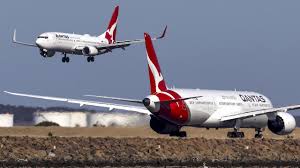
Sydney, Oct 12 Australian airline Qantas said Sunday that data from 5.7 million customers stolen in a major cyberattack this year had been shared online, part of a leak reportedly involving dozens of firms.
Qantas said in July that hackers had targeted one of its customer contact centres, breaching a computer system used by a third party.
They secured access to sensitive information such as customer names, email addresses, phone numbers and birthdays, the blue-chip Australian company said.
Credit card details and passport numbers were not kept in the system, Qantas stressed at the time.
AFP understands the third-party involved is software firm Salesforce, which said last week that it was “aware of recent extortion attempts by threat actors”.
The hackers have also obtained stolen data from dozens of other companies including Disney, Google, IKEA, Toyota, McDonalds, and fellow airlines Air France and KLM.
“Qantas is one of a number of companies globally that has had data released by cyber criminals following the airline’s cyber incident in early July, where customer data was stolen via a third party platform,” the company said in a statement.
“With the help of specialist cyber security experts, we are investigating what data was part of the release,” it added.
It also said it had obtained a legal injunction with the Supreme Court of New South Wales, where the firm is headquartered, “to prevent the stolen data being accessed, viewed, released, used, transmitted or published by anyone, including third parties”.
Cybersecurity analysts have linked the hack to individuals linked to an alliance of cybercriminals called Scattered Lapsus$ Hunters.
Research group Unit 42 said in a note the group had “asserted responsibility for laying siege to customer Salesforce tenants as part of a coordinated effort to steal data and hold it for ransom”.
The hackers had reportedly set an October 10 deadline for ransom payment.
Threat intelligence platform FalconFeeds said on X the customer data had been posted on the dark web over the weekend.
Vietnam Airlines, clothing giant Gap and Japanese multinational Fujifilm also had data leaked, it said.
The hackers reportedly stole the sensitive data using a social engineering technique, referring to a tactic of manipulating victims by pretending to be a company representative or other trusted person.

Stay Connected

64FansLike
60FollowersFollow

Latest Reviews

Exchange Rates

USD - United States Dollar
EUR
1.14
GBP
1.34
AUD
0.69
CAD
0.70