Home Blog Page 434

Soft drinks and depression? Shocking truth researchers just found

Soft drinks and depression? Shocking truth researchers just found

A new study has found that regularly drinking soft drinks may not only harm physical health but could also negatively affect mental well-being.

Researchers discovered that these sugary beverages disrupt the balance of bacteria in the intestines, potentially increasing the risk of depression.

According to findings published on a medical research platform, daily soft drink consumption was linked to significant changes in gut microbiota — the microorganisms that play a key role in brain function and mood regulation.

The researchers noted that soft drinks contain large amounts of sugar, which can increase certain types of gut bacteria while reducing others. This imbalance may lead to inflammation in the body, which, in turn, can impact mental health and emotional stability.

The study included 405 participants diagnosed with depression and 527 healthy individuals for comparison.

Higher risk observed in women

Results showed that people who consumed soft drinks daily were 8% more likely to develop depression compared to those who did not. Among women, the risk was significantly higher — up to 16%.

Experts emphasized that the association remained even after accounting for factors like body weight and height, suggesting a strong independent link between soft drink consumption and depression risk.

Causation still unclear

However, the study’s authors clarified that the findings do not conclusively prove that soft drinks directly cause depression. Instead, they proposed that individuals already struggling with depression might be more inclined to consume such beverages frequently.

More extensive research is needed to determine whether reducing soft drink intake could actively lower the risk of developing depression, the researchers added.

Health experts recommend limiting the intake of sugary beverages, especially for women, as part of maintaining better mental and physical health. Cutting down on soft drinks and replacing them with water or healthier alternatives may help promote emotional stability and overall well-being.

PM Shehbaz arrives in Egypt to attend signing ceremony of Gaza peace plan

PM Shehbaz arrives in Egypt to attend signing ceremony of Gaza peace plan

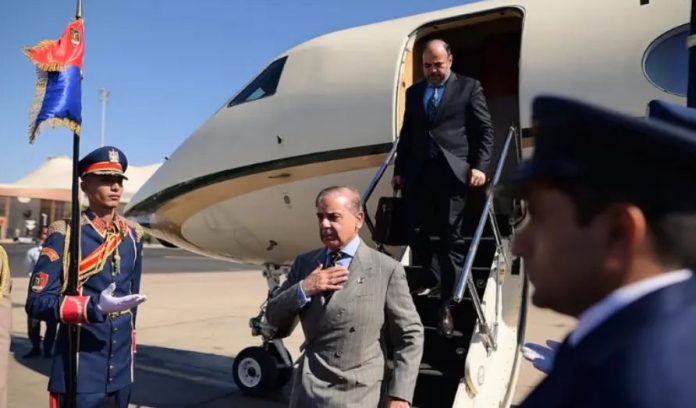
CAIRO: Prime Minister Shehbaz Sharif on Monday arrived in Egypt to participate in the Sharm el-Sheikh Peace Summit and attend the signing ceremony of a peace agreement aimed at ending the Gaza conflict.

Two years of Israeli bombardment in the Palestinian enclave have claimed more than 67,000 lives, with the continuing to rise as more bodies are recovered.

Last month, US President Trump had mediated a truce with the help of eight Muslim nations between Hamas and Israel and paved the way for the end of genocide in Gaza through a 20-point plan.

Last week, Hamas and Israel had signed an agreement to cease fire and free Israeli captives in exchange for Palestinian prisoners, in the first phase of Trump’s initiative to end the conflict.

Yesterday, a statement by the Foreign Office (FO) said that the summit was the result of the diplomatic efforts that began on the sidelines of the UN General Assembly’s 80th Session in New York last month.

Today, PM Shehbaz arrived in Egypt and called the peace plan a “crucial step towards lasting peace in the Middle East”.

“Grateful to our co-hosts, President El Sisi and President Trump. We would not have seen this moment without President Trump’s outstanding leadership and unwavering commitment,” PM Shehbaz said on X.

“It took his single-minded pursuit of peace to end the needless killing and destruction,” he said.

PM Shehbaz added that the ceremony marked the “closing of a genocidal chapter, one that the international community must ensure is never repeated anywhere again”.

He said the “brave and resilient” Palestinian people deserve to live in a free Palestine, “with pre 1967 borders, with Al Quds Al Sharif as their capital city”.

Trump, along with his Egyptian counterpart Sisi, will chair the summit set to be attended by world leaders, including the head of the United Nations.

The gathering in the Red Sea resort town will bring together “leaders from more than 20 countries”, Sisi’s office had said. It will seek “to end the war in the Gaza Strip, enhance efforts to achieve peace and stability in the Middle East, and usher in a new era of regional security”.

British Prime Minister Keir Starmer, his Italian counterpart Giorgia Meloni and Pedro Sanchez of Spain will also attend the summit. French President Emmanuel Macron and Turkish President Recep Tayyip Erdogan will also travel to Sharm el-Sheikh, according to their offices.

The European Council will be represented by its president, Antonio Costa, a spokesperson said. Jordan’s King Abdullah II is also expected to attend, according to state media.

Israel and Hamas, however, will not attend the summit.

“No Israeli official will attend,” Shosh Bedrosian, a spokeswoman for Israeli Prime Minister Benjamin Netanyahu, told AFP yesterday.

Similarly, Hamas confirmed it will not participate directly. Hossam Badran, a member of the Hamas political bureau, told AFP that the Palestinian group “will not be involved.” He noted that Hamas “acted principally through … Qatari and Egyptian mediators” during previous negotiations.

KP people love armed forces, but country must be run constitutionally: Speaker

Bureau Report

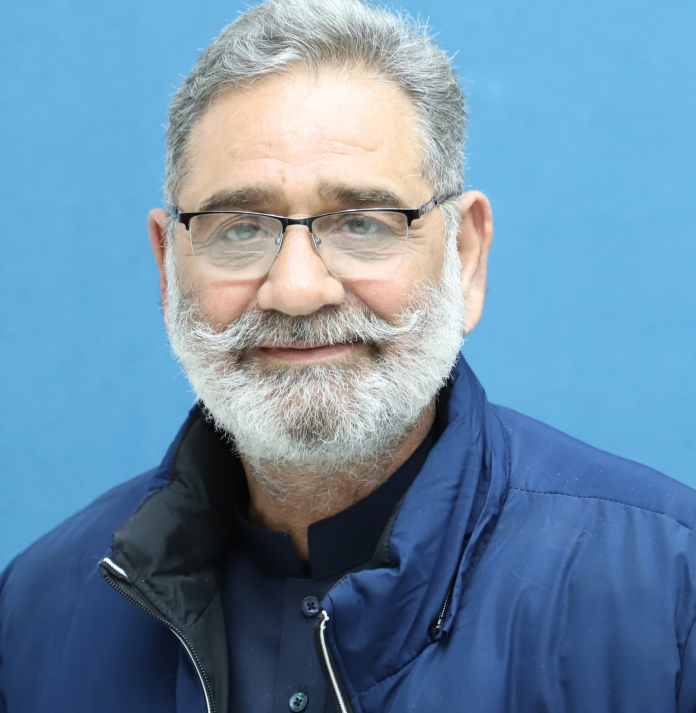
PESHAWAR, Oct 13: Speaker Khyber Pakhtunkhwa Assembly Babar Saleem Swati has said that the people of KP continue to hold deep respect and affection for the Pakistan Armed Forces, emphasizing that this bond of love should always remain strong.

In a statement directed to the Director General of ISPR, Swati said that the province has produced countless sons of the soil who are proudly serving in the armed forces and have laid down their lives for the defence of the motherland. He said the people of KP have always stood by the military in times of crisis and conflict, and this relationship is rooted in patriotism and mutual respect.

However, Swati stressed that Pakistan  including Khyber Pakhtunkhwa must be governed strictly in accordance with the Constitution. “The supremacy of the Constitution and the will of the people are the foundations of democracy,” he said, adding that any unconstitutional move would not be acceptable to the people of the province.

He warned that KP would strongly react to any deviation from constitutional norms, urging all state institutions to work within their defined roles for the unity, stability, and progress of the country.

Imran Khan Nominates Sohail Afridi as KP Chief Minister — Wins with 90 Votes

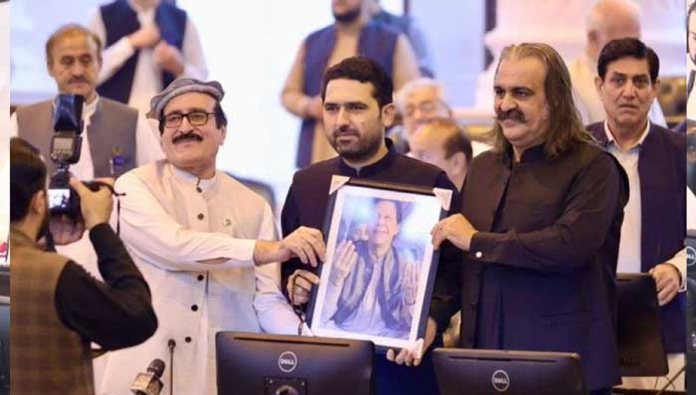
PESHAWAR, October 13: Pakistan Tehreek-e-Insaf (PTI) leader Sohail Afridi has been elected as the new Chief Minister of Khyber Pakhtunkhwa (KP) after securing 90 votes in the provincial assembly. Afridi’s nomination came directly from PTI founder and former Prime Minister Imran Khan, reaffirming Khan’s strong influence over the party’s political direction despite ongoing legal and political challenges.

The election session, held amid tight security, saw PTI lawmakers and allies rally behind Afridi, giving him a comfortable majority in the 145-member house. Opposition parties, including the Jamiat Ulema-e-Islam-Fazl (JUI-F) and Pakistan Muslim League-Nawaz (PML-N), staged a token protest before the voting began, alleging procedural irregularities.

After his election, Chief Minister-designate Sohail Afridi thanked Imran Khan and the party’s parliamentary members for their trust, pledging to focus on good governance, merit-based reforms, and development across the province.

In a statement shared through party channels, Imran Khan congratulated Afridi, expressing confidence that he would uphold PTI’s vision of transparency and public service. The new chief minister is expected to announce his cabinet in the coming days as the PTI-led government begins its next term in Khyber Pakhtunkhwa.

U.S. to Enforce Gaza Peace Plan

Qamar Bashir

By Qamar Bashir

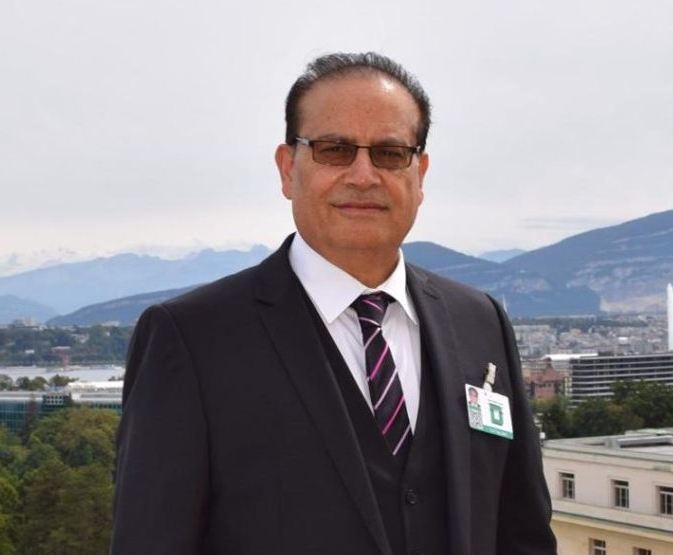
The moment finally arrived for which the world had waited for decades. After years of bloodshed, hunger, humiliation, and despair, a breakthrough came in the form of President Donald Trump’s 21-point peace plan, a framework that has begun to reshape the Israeli–Palestinian conflict in ways unimaginable just weeks earlier. The first signs of change came quickly. Over 2,000 Palestinian prisoners were released by Israel, while Hamas promised to return Israeli hostages. Humanitarian aid — long blocked at the borders — began to flow again into Gaza, bringing food, medicine, and hospital supplies to a population starved not only of nourishment but of hope. For the first time in years, mothers carried bread home with tears of relief, fathers clutched medicine as if it were treasure, and children smiled with bowls of food in their hands.

This breakthrough was not achieved through Israel’s goodwill, nor was it the result of another round of fruitless diplomacy. It was the direct consequence of American pressure, a departure from decades of U.S. policy that shielded Israel from accountability at all costs. Trump’s plan not only offered deadlines and frameworks; it came with guarantees. The United States pledged to monitor the process directly, ensuring both Hamas and Israel would adhere to the commitments they had signed onto. Vice President JD Vance confirmed that monitoring teams had already been deployed inside Gaza, across the West Bank, and along the Israel–Gaza border, setting up observation and reporting posts to oversee every step of implementation. This was not a distant promise but a living process already underway, a signal that the plan had moved from paper to reality.

What made this moment remarkable was not only the details of the agreement but the way it came into being. For decades, Israel acted as though international law and humanitarian norms were irrelevant, dismissing United Nations resolutions, ignoring the International Court of Justice, and defying UNESCO rulings. Its leaders, particularly Benjamin Netanyahu, cultivated an aura of invincibility, convinced that American protection was unconditional. That conviction was not without foundation. For generations, U.S. lawmakers, policymakers, and media institutions had been bent to the will of pro-Israel lobbying networks, often at the expense of American reputation, global standing, and even national interest. It was this iron grip that made Trump’s move so astonishing.

By pushing forward with the plan, Trump shattered that long-standing dynamic. He defied the machinery of lobbying, money, and influence that had dictated American policy on Israel for decades. He did not act alone; behind him stood the collective weight of the Muslim world, whose wealth and unity presented a new reality. For the first time, Muslim nations — from Turkey to Saudi Arabia, from Pakistan to Malaysia — stood shoulder to shoulder at a United Nations conference, demanding action and refusing to endorse any solution that did not prioritize Palestinian dignity. Trump read the room not as an opportunist but as a realist. He recognized that American interests, global stability, and moral responsibility all converged on one conclusion: the time for enabling Israel’s expansionist ambitions was over.

That Israel, despite its hardliners who openly called for the annihilation of Gaza’s population, including infants, was compelled to accept the peace plan demonstrates just how far the ground has shifted. Trump is now set to visit Israel, addressing the Knesset in a moment that would have been unthinkable in past years. Even as extremists pledged to continue their crusade for “Greater Israel,” the political reality has changed. The United States, not Israel, is now the guarantor of the next chapter.

Equally significant is the upcoming international conference in Egypt, to be co-hosted by Trump and President Abdel Fattah el-Sisi. World leaders will converge not merely to celebrate the peace plan but to design a mechanism of enforcement and punishment. For the first time, Israel is being told in clear terms that violations will not be without consequence. Trump’s insistence, echoed by Vice President Vance, that America’s Central Command presence and military infrastructure in the Middle East will ensure compliance provides the plan with the credibility all others lacked. It is this enforcement guarantee that transforms the plan from just another diplomatic gesture into a living reality.

The ripple effects are profound. Across Europe, long skeptical of Israeli intransigence, leaders expressed cautious relief. In the global South, the plan rekindled hope that justice could still prevail for the marginalized and oppressed. Within the Muslim world, unity was reinforced by the undeniable reality that their collective power had been decisive in shaping this outcome. And within the United States itself, ordinary citizens and social media movements found validation in seeing their government finally break from blind obedience to Israeli priorities.

For decades, mainstream media outlets, heavily influenced by pro-Israel interests, shaped the narrative to Israel’s advantage. Today, however, that monopoly is collapsing. Social media platforms have pierced the information wall, exposing Israeli atrocities and amplifying Palestinian suffering to global audiences. Trump’s plan tapped into this shift, reflecting not only strategic calculations but also the growing demand from civil society worldwide that U.S. foreign policy reflect humanitarian values.

Israel’s reluctant acceptance of limits imposed by the plan marks a watershed. For the first time, its leadership has been compelled to recognize that there are boundaries to its ambitions. The narrative of divine entitlement to Palestinian land is being challenged by political reality. The global message is clear: Israel is not above international law, not beyond accountability, and not free to dictate terms unilaterally. By enforcing these limits, the plan strikes at the heart of expansionist ideology.

Of course, challenges remain. Hardliners within Israel will resist, and spoilers on both sides may seek to derail the fragile progress. But unlike past initiatives, this plan carries deterrence. Monitoring teams are already on the ground, reporting directly to Washington, and a punitive mechanism is being prepared. These elements give the plan resilience where others failed. If enforced with consistency, it may finally break the cycle of occupation, insurgency, and crackdowns that have defined the conflict for generations.

The broader significance extends well beyond Israel and Palestine. Trump’s 21-point plan signals a reorientation of American foreign policy, breaking the stranglehold of lobbying networks and restoring independence to U.S. decision-making. It affirms that Muslim nations, when united, can shape global outcomes. And it reasserts the principle that international law, humanitarian values, and logic have weight when backed by power.

History will remember this not only as a diplomatic breakthrough but as a moment when the architecture of global politics shifted. By confronting Israel’s defiance and asserting American oversight, Trump altered the balance of power in the Middle East. He may never hold the Nobel Peace Prize, but he has accomplished something greater: he has shown that courage, enforcement, and unity can bring hope to a people long denied it.

The images of mothers feeding their children in Gaza, of freed prisoners reunited with families, and of global leaders preparing to converge on Egypt all testify to the reality of this change. For the first time in decades, light has broken through the darkness of the Israel–Palestine conflict. The peace plan is fragile, and its future uncertain, but with monitoring already underway and enforcement guaranteed, there is at last reason to believe that justice may triumph over despair.

By Qamar Bashir

Press Secretary to the President (Rtd)

Former Press Minister, Embassy of Pakistan to France

Former Press Attaché to Malaysia

Former MD, SRBC | Macomb, Michigan, USA

Opposition alliance urges dialogue amid Pakistan-Afghanistan skirmishes

Opposition alliance urges dialogue amid Pakistan-Afghanistan skirmishes

ISLAMABAD: The Tehreek-e-Tahafuz Ayeen-e-Pakistan (TTAP), a multi-party opposition alliance, has urged that tensions between Pakistan and Afghanistan be resolved through dialogue and understanding.

In a statement issued after its meeting, the alliance said the session reviewed the overall political and foreign situation and discussed the opposition’s future strategy.

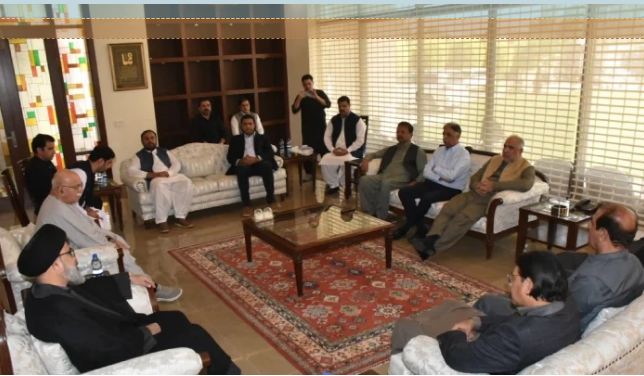
The meeting — led by led by Mahmood Khan Achakzai — was attended by PTI’s Salman Akram Raja, Asad Qaiser, Awam Pakistan’s Mustafa Nawaz Khokhar, Muhammad Zubair, and other party leaders Allama Ahmed Iqbal Rizvi, Sajid Tareen, Zain Shah, Hussain Ahmed Yousafzai, and Khalid Yousaf Chaudhry.

The alliance said issues between Pakistan and Afghanistan should be settled peacefully through talks and urged the government to convene a joint sitting of Parliament to take the nation into confidence on regional and security matters.

The TTAP strongly criticised what it described as the federal government’s interference in the constitutional process of power transfer in Khyber Pakhtunkhwa (KP), warning that such moves could worsen the province’s fragile security situation.

It also denounced the Election Commission of Pakistan’s decision to declare provincial assembly members “independent” ahead of the chief minister’s election, calling it an undemocratic act that promotes horse-trading and undermines democratic principles.

The alliance further voiced concern over the resurgence of terrorism and unrest in Balochistan and KP, urging institutions to work with provincial governments and citizens to restore stability.

Responding to the TTAP statement, PML-N Senator Irfan Siddiqui called it “shameful and deeply regrettable in this time of trial.” He criticised the alliance for not condemning terrorists or their facilitators, accusing it instead of maligning law enforcement agencies.

Siddiqui said that calling security institutions discredited reflected a “shallow mindset” about those who have laid down their lives for the country.

He added that the same provincial government being asked for consultation had long “nurtured terrorists and turned the province into a safe haven.”

National Polio Immunization drive to begin from Monday

National Polio Immunization drive to begin from Monday

ISLAMABAD, Oct 12 (APP/DNA):The National Emergency Operations Centre (NEOC) has announced that the nationwide polio immunization campaign will commence from Monday across 159 districts of the country.

According to the NEOC, during the week-long drive, more than 45.4 million children under the age of five will be administered oral polio vaccine drops.

In addition to the polio vaccine, children will also receive Vitamin A supplements to help boost their immunity.

The national campaign will be conducted from October 13 to 19, while in southern Khyber Pakhtunkhwa, the campaign will be held from October 20 to 23, the NEOC said.

Over 400,000 health workers will go door-to-door to ensure that every eligible child receives the vaccine.

The NEOC urged parents to ensure that all children under five years of age are vaccinated against polio and that routine immunization courses for children up to 15 months are completed on time.

The polio eradication campaign is part of Pakistan’s ongoing efforts to eliminate the crippling disease and protect every child from lifelong disability.

Sultan of Johor Cup: Great Britain outclasses Pakistan with 5–1 victory

Sultan of Johor Cup: Great Britain outclasses Pakistan with 5–1 victory

JOHOR BAHRU, OCT 12 /DNA/ — In the 13th Sultan of Johor Cup 2025 being held in Johor, Malaysia, Great Britain defeated Pakistan by 5–1 in their match.

Pakistan started the game with an impressive performance but, unfortunately, missed several clear goal opportunities. On the other hand, Great Britain outplayed Pakistan, scoring five goals to Pakistan’s one. For Great Britain, Jonny and Henry scored two goals each, while Caddy scored one. Pakistan only goal came from Muhammad Sufyan Khan through a penalty corner.

The Pakistan Junior Hockey Team will play its third match against traditional rivals India on October 14, fourth match against New Zealand on October 15, and fifth match against Australia on October 17.

ICMA Pakistan & BISE Sukkur sign MoU for scholarship program

ICMA Pakistan & BISE Sukkur sign MoU for scholarship program

SUKKUR, OCT 12 (APP): The Institute of Cost and Management Accountants (ICMA) Pakistan and the Board of Intermediate and Secondary Education (BISE) Sukkur on Sunday signed a historic Memorandum of Understanding (MoU) at ICMA Pakistan’s headquarters in Karachi. The agreement aims to provide scholarships worth millions of rupees to deserving and talented students of Sukkur Board, enabling them to pursue professional education in management accounting and related fields.

The MoU was signed by Aamir Aijaz Khan, representing ICMA Pakistan, and Dr. Zahid Ali Chandio, Chairman BISE Sukkur. This initiative aligns with ICMA Pakistan’s vision of empowering youth through education.

The ceremony was attended by Abdul Qayyum Khandhar, Secretary BISE Sukkur, and Imtiaz Ali Bhatti, Controller of Examinations. ICMA Pakistan was represented by Lal Muhammad Lakhan, Senior Director South Region, Muhammad Arslan Khan, Assistant Director South Region, Ms. Ayesha Khan, Arslan Amanullah, Officer South Region and Ms Saira Lashari, Incharge Sukkur Campus.

This collaboration reflects ICMA Pakistan’s commitment to promoting educational standards, supporting talented youth across Sindh, and fostering strong ties between educational boards and professional institutions.

Bilawal asks Afghan authorities to show restraint for regional peace

Bilawal asks Afghan authorities to show restraint for regional peace

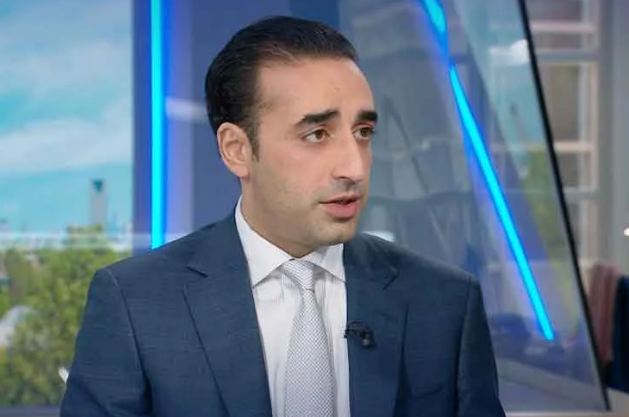
ISLAMABAD, OCT 12: Pakistan Peoples Party (PPP) Chairman Bilawal Bhutto-Zardari expressed deep concern over the recent situation on the Pak–Afghan border, calling on Afghan authorities to show restraint and responsibility in the interest of regional peace.

Expressing his thoughts, the former foreign minister has warned that unprovoked aggression by Afghan forces posed a serious threat to peace and stability in the region. Bhutto-Zardari has observed that such aggression undermined collective efforts towards shared prosperity. He added that Pakistan’s armed forces had responded to the Afghan army’s attack with determination, restraint and professionalism.

The PPP chairman has urged concrete and verifiable action against terrorist groups operating from Afghan territory, describing them as a threat not only to Pakistan but to the peace and future of the entire region. He affirmed Pakistan’s desire for a peaceful, stable and prosperous Afghanistan.

He called on the Afghan leadership to engage in practical and result-oriented dialogue and cooperation for lasting peace and stability. He noted that good relations with neighbouring countries remained Pakistan’s consistent policy, and that the interim Afghan government must ensure Afghan soil is not used against Pakistan.

Bhutto-Zardari expressed hope that Pakistan and Afghanistan would work together in a spirit of mutual respect to promote peace, stability and prosperity across the region and beyond.

Stay Connected

64FansLike
60FollowersFollow

Latest Reviews

Exchange Rates

USD - United States Dollar
EUR
1.14
GBP
1.34
AUD
0.69
CAD
0.70