Home Blog Page 433

Multifaceted Uzbek-Azerbaijani relations developing rapidly

Multifaceted Uzbek-Azerbaijani relations developing rapidly

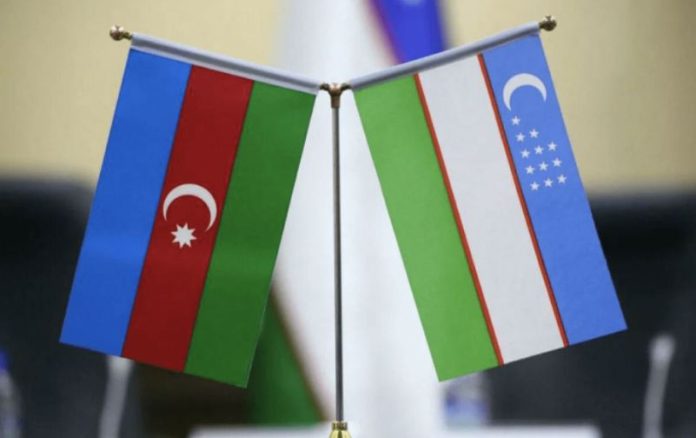
TASHKENT, OCT 13 (UzA/APP): In an interview with the international electronic magazine “Bright Uzbekistan”, Azerbaijani Economy Minister Mikail Jabbarov touched upon cooperation within the Organization of Turkic States, including partnership with Uzbekistan.

The friendly relations between Azerbaijan and Uzbekistan are based on the common history, traditions, culture and values ??of the two peoples. Such deep-rooted ties serve as a solid foundation for further development of cooperation.

Mutual visits of heads of state and high-level meetings are raising partnership to a new, higher level and encouraging the consistent development of stable, mutually beneficial cooperation.

Azerbaijan-Uzbekistan cooperation is multifaceted and covers various areas and sectors. Representatives of the business circles of our countries have established successful contacts in various fields. For example, the achievements in the automotive industry are significant. In May 2023, the foundation stone of a localized automobile production plant was laid in the Khajigabul industrial district by Uzavtosanoat and Azermash CP Closed Joint Stock Companies. The total investment cost of this project exceeds $60 million.

In general, Azerbaijan pays special attention to expanding economic ties with Uzbekistan, expressing serious interest in cooperation in such important areas as transport, industrial cooperation, energy, textiles, mining, chemical industry, and electrical engineering. Today, many joint projects are being implemented in these areas.

Most importantly, there is ample opportunity for both sides to further expand the scope of existing cooperation. For example, it is promising for Uzbek companies to operate in the Agdam and Araz Valley industrial parks, as well as the Alat free economic zone.

The activities of the Azerbaijan-Uzbekistan Investment Fund play an important role in deepening economic ties within the framework of the Turkic States Organization. Measures are currently being taken to implement new joint projects and expand business cooperation.

The “green energy bridge” initiative, starting from Central Asia and extending through Azerbaijan to Europe, shows the strategic potential of our countries in the field of transport and logistics.

Transit and logistics cooperation can be developed during the expansion of the “Middle Corridor”. By effectively using the opportunity of Baku International Seaport, promoting joint investment initiatives along this corridor, establishing exchange of experience and innovation, deepening cooperation in the direction of digitization is beneficial for both sides.

EU to restart Gaza-Egypt border monitoring mission Wednesday

EU to restart Gaza-Egypt border monitoring mission Wednesday

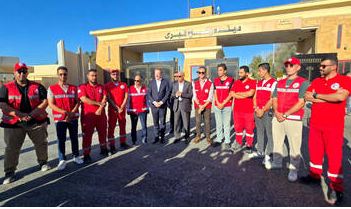
BRUSSELS, OCT 13 (AFP/APP): The European Union will Wednesday restart a civilian mission to monitor the Rafah border crossing between Gaza and Egypt in support of a US-brokered ceasefire deal, the bloc’s top diplomat said Monday.

“The EU stands ready to do its part,” Kaja Kallas posted on X after Hamas released a first group of Israeli hostages as part of the agreement. “This mission can play an important role in supporting the ceasefire,” she said.

   The 27-nation bloc set up a civilian mission in 2005 to help monitor the Rafah crossing, but it was suspended two years later after the militant Islamist group Hamas took control of Gaza.

  The EUBAM monitoring mission aims to provide a neutral, third-party presence at the key crossing and involves police from Italy, Spain and France. It was briefly redeployed in January but suspended again in March.

   Welcoming Monday’s hostage release, Kallas highlighted US President Donald Trump’s role in this “crucial milestone towards peace”, saying the leader “made this breakthrough possible”.

   In a separate statement, European Commission chief Ursula von der Leyen said Monday’s Gaza summit in Sharm el-Sheikh finalising the agreement to end the war would be “a historical milestone.”

   The bloc “fully supports the peace plan brokered by the United States, Qatar, Egypt, and Turkiye,” she wrote.

     “We stand ready to contribute to its success with all tools at our disposal,” she said, including by “providing support on governance and for the reform of the Palestinian Authority”.

   The EU is represented in Sharm el-Sheikh by Antonio Costa, who heads the European Council of the bloc’s member states.

Trump’s speech at Knesset: Praising Israel’s “victory” while ignoring the human cost in Gaza

Trump’s speech at Knesset: Praising Israel’s “victory” while ignoring the human cost in Gaza

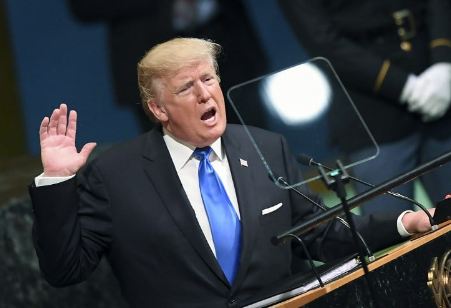
In a speech that has drawn widespread criticism, U.S. President Donald Trump addressed the Israeli parliament  the Knesset  where he lavishly praised Israel’s leadership and military for what he described as their “historic victory” in the recent Gaza war. Trump hailed Israel’s “strength, courage, and determination,” calling the conflict “a triumph of freedom against terror.” Yet, his remarks failed to acknowledge the staggering humanitarian toll and the devastation inflicted on Gaza’s civilian population, making the address both tone-deaf and deeply disappointing.

Throughout his speech, Trump commended the Israeli Defense Forces (IDF) for what he termed a “decisive and moral campaign” against Hamas, asserting that Israel had proven its “unshakable right to defend itself.” However, the glaring question that lingered unasked and unanswered was with whom did Israel really fight? The war that Trump glorified was not a battle between equals, nor one of balanced strength. It was a conflict between one of the world’s most sophisticated militaries and an impoverished, besieged population  where civilians bore the overwhelming brunt of the violence.

Even if Israel’s stated objective was to target Hamas, the disproportionate scale of force used against Gaza  a densely populated strip already crippled by years of blockade turned the campaign into a humanitarian catastrophe. Tens of thousands of Palestinians, many of them women and children, were killed or injured. Entire neighborhoods were flattened, hospitals destroyed, and essential services obliterated. To call this a “victory,” as Trump did, is to disregard the moral weight of collective suffering and human tragedy.

What made the speech particularly troubling was Trump’s uncritical glorification of Israeli power, coupled with his silence on the suffering of Gaza’s people. There was no mention of the humanitarian crisis, no recognition of international appeals for restraint, and no reflection on the ethical boundaries of warfare. His words painted a one-dimensional narrative  one that celebrated dominance rather than justice, and might rather than morality.

Trump’s rhetoric served as a political gesture aimed at solidifying his alliance with Israel’s right-wing leadership and his evangelical base in the United States. However, in doing so, he overlooked the central truth of this war: that military superiority does not equate to moral legitimacy. Praising the destruction of a helpless population under siege is not a testament to victory; it is an indictment of conscience.

The tragedy of Gaza is not merely a political issue but a humanitarian one. Trump’s failure to acknowledge that reality reflects a dangerous normalization of disproportionate warfare and collective punishment. In the end, Israel may claim a battlefield triumph, but it comes at the cost of immense civilian suffering and regional instability.

Trump’s Knesset speech, steeped in praise yet devoid of empathy, will be remembered less as a statement of leadership and more as a reminder of how global power politics often mute the voices of the voiceless.

Pakistan, Turkiye and Azerbaijan Share a Common Vision

Pakistan, Turkiye and Azerbaijan Share a Common Vision
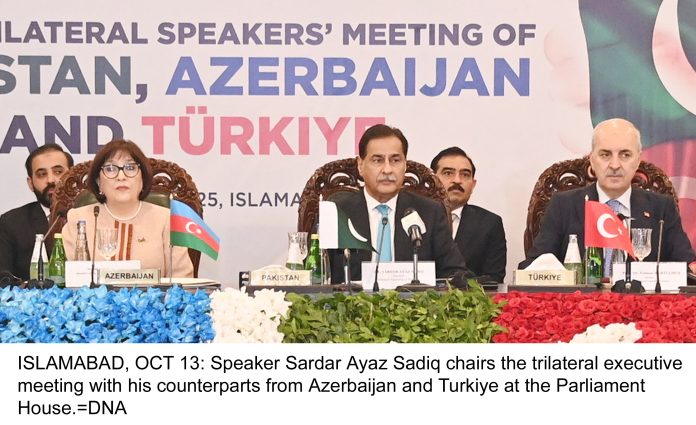
ISLAMABAD, OCT 13: Speaker Sardar Ayaz Sadiq chairs the trilateral executive meeting with his counterparts from Azerbaijan and Turkiye at the Parliament House.=DNA

By Saifullah Ansar

ISLAMABAD, OCT 13 /DNA/ – Chairman Senate Syed Yousaf Raza Gilani has said that Pakistan, Turkiye, and Azerbaijan share a common vision for progress, peace, and prosperity in the region. He made these remarks while addressing the Third Tripartite Speakers’ Meeting of Azerbaijan, Pakistan, and Turkiye as a Special Guest at the Parliament House on Monday. The meeting was held under the theme “Strengthening Fraternal Ties: Parliamentary Cooperation for Regional Peace, Security, and Prosperity.”

Chairman Gilani said that the three nations are united by faith and a shared destiny, emphasizing that their brotherhood is both “a message and a mission.” He appreciated Speaker National Assembly Sardar Ayaz Sadiq for hosting the important trilateral engagement, bringing together nations that have always stood shoulder to shoulder during testing times.

He noted that Pakistan, Turkiye, and Azerbaijan have a long history of mutual respect and cooperation. “From the Khilafat Movement that united Muslims across continents, to Pakistan’s unwavering support for Azerbaijan’s sovereignty, and Turkiye’s unflinching advocacy for Kashmir’s just cause — our histories have converged whenever justice called,” Gilani said.

Recalling his tenure as Prime Minister, Gilani mentioned his meetings with the leaderships of both countries, highlighting their consistent efforts to strengthen ties.

Touching upon contemporary global challenges, he said the Muslim world continues to face adversity in Palestine, Indian Illegally Occupied Jammu and Kashmir, and other regions. He called upon parliaments of Muslim nations to become “platforms of conscience, clarity, and courage.” Gilani urged enhanced cooperation in security, trade, education, technology, and cultural exchanges to build bridges of understanding based on mutual trust and respect.

Chairman Gilani also briefed participants about the upcoming Inter-Parliamentary Speakers’ Conference (ISC) scheduled to be held next month in Islamabad, describing the current meeting as a “precursor to a new chapter in parliamentary diplomacy.” He stressed that no nation can achieve sustainable peace and development in isolation. “Peace and prosperity are not destinations — they are journeys — and our nations are companions bound by shared values and guided by a shared purpose,” he remarked.

Expressing gratitude to the Speaker of the Grand National Assembly of Turkiye and the Speaker of the Milli Majlis of Azerbaijan for their participation, Gilani hoped the meeting would produce meaningful outcomes. He said the discussions would pave the way for stronger cooperation, people-to-people contacts, and deeper parliamentary linkages.

The Chairman Senate concluded by reaffirming Pakistan’s commitment to work alongside Turkiye and Azerbaijan in advancing collective aspirations of peace, security, and development across the region.

Justice Mandokhail wonders whether judges who are ‘beneficiaries’can hear case

Justice Mandokhail wonders whether judges who are ‘beneficiaries’can hear case

News Desk

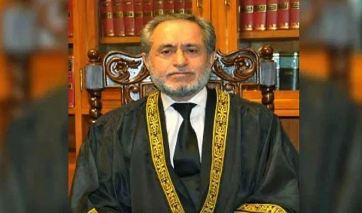
ISLAMABAD: Justice Jamal Khan Mandokhail on Monday wondered whether judges comprising the Supreme Court’s (SC) Constitutional Bench (CB) hearing petitions against the 26th Amendment could do so if they were its “beneficiaries”.

The Amendment was passed by the parliament during an overnight session in October last year, with the PTI claiming seven of its lawmakers were abducted to gain their favour as the party opposed the legislation. The Balochistan National Party-Mengal (BNP-M) also alleged its two senators were being pressured, with both later defying party line to vote in the tweaks’ favour.

The legislation, which altered judicial authority and tenure, has been a lightning rod for debate with both opposition parties and legal experts questioning its impact on the judiciary’s independence.

The tweaks took away the SC’s suo motu powers, set the chief justice of Pakistan’s (CJP) term at three years and empowered a Special Parliamentary Committee for the appointment of the CJP from among the three most senior SC judges. It also paved the way for the formation of the CB, which is now hearing petitions against the very legislation that enabled its establishment.

Former Supreme Court Bar Association (SCBA) president Abid Shahid Zuberi continued his arguments on the case today. The hearing has been adjourned till 11:30am tomorrow (Tuesday).

The CB hearing the pleas is headed by Justice Aminuddin Khan and also includes Justices Mandokhail, Muhammad Ali Mazhar, Ayesha Malik, Syed Hasan Azhar Rizvi, Musarrat Hilali, Naeem Akhtar Afghan and Shahid Bilal Hassan.

During recent hearings, judges have questioned whether the CB has the power to issue orders for the constitution of a full court, as requested by petitioners.

So far, Lahore High Court Bar Association (LHCBA) lawyer Hamid Khan, Balochistan High Court Bar Association (BHCBA)’s counsel Munir A. Malik and petitioner Barrister Salahuddin Ahmed have presented their arguments. Hamid sought the formation of a 16-member bench as per the number of judges present in the SC in Oct 2024. Malik contended that the CB had the power to issue a judicial order for the formation of a “full court”.

On Saturday, a convention jointly hosted by the LHCBA and the Lahore Bar Association resolved to continue its struggle against the 26th constitutional Amendment, declaring that the legal fraternity would not accept any judicial verdict that undermines the judiciary’s independence.

The bench will first determine whether the challenges should be heard by a full court comprising all available SC judges or by the same eight-judge CB, before deciding on the legality of the 26th Amendment.

The case was initially taken up in January, and after the CB’s approval of petitioners’ request for it, the proceedings are being live-streamed on the SC’s YouTube channel since October 8.

At the outset of the hearing, Justice Mandokhail questioned whether it was the right of any party to request a bench of its choice, to which Zuberi replied, “I do not think that any party has the right to select a bench of their choice. But here the case is that we are requesting a full court on some constitutional legal issues.”

The ex-SCBA president added that he had “always insisted that there should be a full bench”.

Justice Mandokhail then asked why Zuberi wanted a full court, to which the latter said he would cite past judgements by the judges on the bench that rule for the formation of a full court.

Upon the judge asking how many judges were appointed in the apex court currently and what a full court would look like, Zuberi said there were a total of 24 judges. “I am not declaring any judge wrong. All judges are honourable.”

Justice Ayesha then enquired of the petitioner what his request was, to which Zuberi said that judges who were present before the 26th Amendment should hear the case. LHCBA’s counsel Hamid and BHCBA’s lawyer Malik had also sought the same.

Responding to a question by Justice Mandokhail on the reasoning behind his request, Zuberi argued that the 26th Amendment, under which the CB was formed, “itself had been challenged”.

Justice Mandokhail then wondered whether the CJP, who was elevated to his role after the passage of the contested amendment, would be part of the bench or not, at which Zuberi said that the chief justice himself should decide that.

Justice Mandokhail noted: “The chief justice was appointed under the 26th Amendment. If the constitutional amendment had not been present, then Yahya Afridi would not have become the chief justice, as the timing was specified.

“May Allah grant long life to the chief justice, the senior puisne judge (Justice Mansoor Ali Shah) was set to become the chief justice, but he could not.”

The 26th Amendment had discarded the seniority principle for the CJP’s appointment and set the selection criteria for the role from the top three senior SC judges.

Justice Mandokhail then wondered, “If we are the beneficiary [of the Amendment], then can we not be on the bench?” Justice Mazhar asked who would hear the case then.

Zuberi clarified that he had not termed them as “beneficiaries” of the legislation. Justice Mandokhail then remarked, “So you are saying that eight judges deciding the case would be wrong. It will be the same thing whether we eight sit or a full court sits,” the judge added.

“Do you think that the eight judges will become biased after sitting in the constitutional bench right now?” he asked, adding that who would decide the case if the amendment under which the CB was formed was challenged.

Zuberi highlighted that a full court meant the “collective minds of everyone”. Justice Aminuddin remarked that the judges were to act as per the Constitution.

At this point, Justice Ayesha observed that Article 191A of the Constitution, under which the constitutional benches were formed in the SC, “does not address the matter of a full court, but benches”.

Justice Mandokhail remarked that a full court could also be termed a bench, but Justice Ayesha noted otherwise.

Questioning the CB’s powers to form a full court, Justice Mazhar noted that the CB was nominated by the Judicial Commission of Pakistan (JCP) and asked whether the bench could include judges in it who were not a part of it.

Zuberi, echoing the arguments presented by LHCBA counsel Malik, replied, “The constitutional bench can issue a judicial order. […] Full court is not a bench.”

Justice Mandokhail said, “How can we pass a judicial order [for full court] if it is not our jurisdiction? We will say it clearly that we do not have the jurisdiction.”

However, Justice Ayesha asked, “Is there a restriction on passing a judicial order?”

At one point during the hearing, Justice Mandokhail asked Zuberi if he wanted the full court matter to be sent to the senior puisne judge. The ex-SCBA president responded that the matter should first be forwarded to the CJP, and “if the chief justice recuses from it, then it should be sent to the senior puisne judge”.

Justice Mazhar questioned how the matter would be sent to the CJP as he was “not the head of the roster”.

Zuberi argued: “If you do not have the power, then how were full courts formed till now?”

He contended that the chief justice could not refuse to constitute a full court after a judicial order for it.

“How can we issue a judicial order if there are objections on the chief justice and the constitutional bench?” remarked Justice Hilal. Justice Mandokhail also asked whether the CB could issue directives to the CJP to “include specific judges in the bench and exclude certain judges”.

Zuberi reiterated that the CB had the authority to issue orders for the formation of a full court.

Justice Aminuddin asked whether a CB could hear a regular case that was fixed for hearing before it, to which the lawyer replied that the case would be sent to a regular bench.

“You are saying that the constitutional bench can hear the case but should not do so,” Justice Mandokhail remarked. Zuberi emphasised that the case about the 26th Constitutional Amendment was an important one, adding that “an Amendment had never been challenged successfully”.

“Do not pick and choose. Speak on the rules,” said Justice Mandokhail.

Explaining the difference between jurisdiction and judicial power, Zuberi said, “All the judges of the Supreme Court have the same judicial power. Jurisdiction is conferred under Article 175(2) — whether it is appellate, criminal or review.”

Referring to various Sections of the Constitution, Justice Ayesha observed that “jurisdiction is not vested with a bench” but in the court. “Is there a bar under any of these provisions which prevents the constitution of a full court?” she asked again.

“If there is no bar, then the request for a full court is in line with the convention of this court and there have been numerous occasions when a full court has been asked,” she said, recalling that a full court also took up the petitions against the SC Practice and Procedure Act 2023.

Justice Ayesha Malik speaks as an eight-member SC Constitutional Bench hears challenges against the 26th Amendment during live-streamed proceedings, on Oct 13, 2025. — screengrab from SC’s YouTube channel

Justice Mandokhail remarked, “On the one hand, you are asking for a full court, but on the other hand, you are limiting it to 16 judges. Why not [all] the 24?”

The judge told Zuberi he could only request a full court comprising all judges. He then asked the lawyer whether it would be acceptable to him if the JCP declared all judges part of the CB, to which Zuberi replied in the affirmative.

At one point, Justice Afghan observed, “Whether you like it or not, Article 191A exists. The term ‘full court’ is not present in Article 191A.

“You are saying to send the matter of a full court to the chief justice. Under Article 191A, the chief justice does not have the authority anymore,” he added. The judge also noted that the judges Zuberi wanted to include in the full court were not a part of the CB, which now comprises a total of 13 judges.

China expresses deep concern over Pakistan-Afghanistan clashes

China expresses deep concern over Pakistan-Afghanistan clashes

DNA

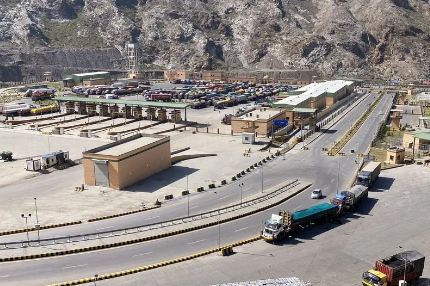
BEIJING, OCT 13: China’s Foreign Ministry has expressed deep concern over the recent clashes between Pakistan and Afghanistan, calling on both neighboring countries to exercise restraint and ensure the safety of Chinese citizens and investments in the region.

A spokesperson for the Chinese Foreign Ministry said Beijing is closely monitoring the situation and remains in contact with both Islamabad and Kabul. “China is deeply concerned about the recent border tensions between Pakistan and Afghanistan,” the statement read. “We urge both sides to resolve their differences through dialogue and cooperation, avoid escalation, and jointly safeguard regional peace and stability.”

‘China sincerely hopes that both sides will focus on the broader picture, remain calm and restrained, adhere to resolving mutual concerns through dialogue and consultation, avoid escalating conflicts, and jointly maintain peace and stability in both countries and the region’, Chinese Foreign Ministry spokesperson Lin Jian said on Monday, commenting on the recent Pakistan-Afghanistan border clashes which caused dozens of deaths.

The ministry emphasized that a large number of Chinese citizens are working and traveling in both countries and that China has made significant investments in various sectors, including infrastructure, energy, and trade. “It is the shared responsibility of both Pakistan and Afghanistan to protect Chinese nationals, institutions, and projects,” the statement added.

China has long maintained close economic and strategic ties with both countries and has been promoting regional connectivity through initiatives such as the China-Pakistan Economic Corridor (CPEC) and other Belt and Road projects. The latest appeal reflects Beijing’s growing concern about security risks that could impact its interests and regional cooperation efforts.

Kuwait Expo-2025 Key to Building Strong Pakistan-Kuwait Ties: ICCI President

Kuwait Expo-2025 Key to Building Strong Pakistan-Kuwait Ties: ICCI President

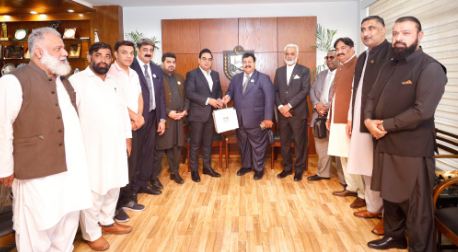
ISLAMABAD, OCT 13 /DNA/ – Pakistan and Kuwait, bound by historic ties of friendship and mutual support, are set to take another major step forward in strengthening their economic relations with the upcoming Kuwait-Pakistan Business Expo 2025, scheduled to be held from December 11 to 13, 2025, in Kuwait. The event aims to provide a world-class platform for promoting Pakistani products, exploring joint ventures, and deepening trade and investment cooperation between the two brotherly nations.

While talking to a visiting delegation of the organizing committee of the Kuwait-Pakistan Business Expo 2025, President Islamabad Chamber of Commerce and Industry (ICCI) Sardar Tahir Mehmood said that economic ties between Pakistan and Kuwait have been on an upward trajectory, supported by decades of mutual trust and cooperation. He noted that Kuwait has always stood by Pakistan in times of need, and both countries have signed several agreements in the fields of defense, investment, and health cooperation.

Sardar Tahir Mehmood emphasized that the business communities of both nations should actively explore joint ventures and partnerships to unlock mutual trade and investment potential. He expressed confidence that the Kuwait-Pakistan Business Expo 2025 would serve as a catalyst for trade diversification, industrial collaboration, and economic growth.

Through stronger partnerships and mutual understanding, both countries can achieve a balanced, win-win trade relationship that benefits our economies and strengthens bilateral ties, he added.

Head of the Kuwaiti delegation, Muhammad Saleem Ansari, along with Dr. S. Sam, said that the Expo would be a major opportunity for Pakistani entrepreneurs to showcase their capabilities and expand their footprint in the Gulf market. They said the objective of the Expo is to provide a world-class exhibition platform that promotes trade, investment, and partnerships between Pakistani businesses and Kuwaiti markets, thereby fostering mutual prosperity.

In his vote of thanks, ICCI Senior Vice President Tahir Ayub reaffirmed the Chamber’s commitment to fostering robust trade and investment relations between Pakistan and Kuwait. He assured that ICCI would play a proactive role in promoting the event through its extensive communication and business network. He lauded the initiative as an ideal platform for Pakistani investors and entrepreneurs to build long-term linkages with their counterparts in Kuwait and across the region.

Those present on the occasion also included Vice President Mohammad Irfan Chaudhry, Executive Members Malik Aqeel Ahmad, Imran Minhas, ICCI member Israr ul Haq Mishwani and other.

Human Papilloma virus (HPV) Vaccination

Human Papilloma virus (HPV) Vaccination

Ali Haider

Human Papillomavirus (HPV) represents one of the most prevalent sexually transmitted infections worldwide, and has gained significant attention due to its strong association with a wide range of benign and malignant diseases. Belonging to the Papillomaviridae family, HPV comprises more than 200 genotypes, of which a subset is categorized as high-risk types because of their established role in the development of cervical cancer, as well as malignancies of the anogenital tract and oropharynx. Low-risk HPV types mainly cause benign conditions such as genital warts, while high-risk strains can lead to cervical cancer by disrupting cell cycle regulation. Cervical cancer remains a major global health issue, particularly in low- and middle-income countries with limited access to vaccination and screening programs. Prophylactic vaccines targeting common high-risk HPV types have shown great success in reducing HPV-related diseases, though challenges in accessibility and awareness persist. In 2020, the WHO launched a global strategy aiming for 90% HPV vaccination coverage in girls by age 15 by 2030. Effective control of cervical cancer requires vaccination, screening, early treatment, and comprehensive care strategies.For individuals aged 9–14 years, two doses are sufficient, while those aged 15–45 years require three doses for complete protection. The HPV vaccine prevents genital warts and significantly reduces the risk of cervical, anal, vaginal, vulvar, penile, and many oropharyngeal cancers. These vaccines are made using recombinant technology to produce purified virus-like particles for each targeted HPV type; they do not contain viral DNA, making them inactive and incapable of causing infection. Currently, three vaccines are widely available: Gardasil 4v (quadrivalent), Gardasil 9v (nonavalent), both produced by Merck & Co. using Saccharomyces cerevisiae, and Cervarix 2v (bivalent), produced by GlaxoSmithKline using a baculovirus expression system. Clinical trials and post-marketing surveillance across multiple regions confirm that all three vaccines are safe, although rare adverse effects have been reported, including anaphylaxis in approximately 1.7 cases per million doses. Investigations into post-vaccination syndromes linked to adjuvants, such as autoimmune/inflammatory syndrome induced by adjuvants (ASIA), suggest an incidence of 3.6 cases per 100,000 doses. While a few deaths have been reported after vaccination, a direct causal link to the vaccine or its adjuvants remains uncertain. Overall, HPV vaccines are considered highly safe and represent the most effective preventive measure, though they are not recommended for pregnant women due to limited evidence from clinical trials. Importantly, vaccination does not provide protection against all HPV types, which makes regular cervical cancer screening essential. Current guidelines recommend Pap smear testing every three years for women aged 21–29 years, while women aged 30–65 years should undergo either HPV testing alone or combined HPV/Pap co-testing every five years. Women over 65 years who have consistently had negative results may discontinue screening, though continued testing is necessary for those with abnormal or uncertain results. Whereas Pap tests detect precancerous and cancerous cellular changes, HPV tests identify the presence of the virus in cervical tissue, thereby complementing early detection strategies.

The World Health Organization (WHO) has established comprehensive recommendations for the prevention and control of Human Papillomavirus (HPV) infection, with the primary objective of reducing the global burden of cervical cancer and other HPV-related diseases. WHO advises the inclusion of HPV vaccination in national immunization programs as part of a broader cervical cancer elimination strategy, emphasizing early vaccination of both girls and boys between the ages of 9 and 14 years, prior to the onset of sexual activity, as the most effective preventive measure These recommendations reflect a comprehensive approach that combines immunization, screening, treatment, and health education, aiming not only to reduce morbidity and mortality but also to achieve equitable access to preventive healthcare across different regions of the world.

The public health impact of widespread and well-implemented HPV vaccination programs has been increasingly evident in recent years, with robust data demonstrating substantial reductions in cervical cancer incidence and precancerous lesions, significant population-level benefits via herd immunity, notable economic savings, and justification for gender-neutral vaccination policies; for example, a modelling study in Kazakhstan showed that introducing nine-valent HPV vaccination for both boys and girls aged 11-12 years (80% coverage in girls, 50% in boys) could avert nearly 97,714 cases of HPV-related diseases over 100 years compared with four-valent vaccination in a gender-neutral strategy, with 8,527 deaths prevented and treatment cost savings of about 14.7 million US..Ethiopia and other low- and middle-income settings show that high HPV vaccine uptake in adolescent girls dramatically lowers rates of high-grade cervical intraepithelial neoplasia (CIN2+) and persistent infections of oncogenic HPV types, leading to anticipated strong declines in invasive cervical cancer many years later. Moreover, in regions where both sexes are vaccinated, indirect protection (herd immunity) has led to measurable decreases in HPV transmission even among the unvaccinated, reducing prevalence of vaccine‐type HPV strains in the population, decreasing incidence of genital warts and non-cervical HPV-related cancers (anal, penile, oropharyngeal) among men as shown by large cohort studies. China’s major metropolitan centers (Beijing, Shanghai, Guangzhou), comparing female-only versus gender-neutral vaccination strategies, show that gender‐neutral programs avert more HPV-related cases and deaths, and are cost-effective within reasonable thresholds, given reductions in treatment burden across multiple HPV-associated outcomes. Vaccination is recommended to be administered before sexual debut, generally in the age range of 9 to 14 years, when immunogenicity is highest; some programs also allow catch-up vaccination to older adolescents or young adults depending on national policy. Initiatives such as those supported by Gavi (the Vaccine Alliance) aim to improve this: for example, Gavi support has helped introduce HPV vaccination programmes in many lower-income countries, increasing coverage, providing funding for vaccine purchase, helping adopt simplified dosing schedules (one or two dose regimens where evidence permits), and emphasizing multi-age cohort catch-ups in intro years. Recent research also supports that two doses for younger adolescents are nearly non-inferior in immune response compared to three doses, and that single-dose schedules may hold promise particularly in resource-constrained settings, although longer-term follow-up is ongoing. In addition, gender-neutral vaccination (including males) is expanding in many countries, which increases herd immunity and offers protection against genital warts and non-cervical HPV-related cancers. Despite these advances, overall vaccine coverage remains well below WHO elimination targets in many settings; inequities persist in both access and uptake, particularly among LMICs, rural areas, and marginalized populations.

Despite clear benefits, HPV vaccination programs worldwide face substantial challenges, particularly in overcoming vaccine hesitancy, increasing coverage rates, and implementing sustainable programs in low- and middle-income countries (LMICs). For example, in LMICs, lack of knowledge regarding the cancer-preventive role of the HPV vaccine is strongly associated with lower acceptance; sociocultural stigma attached to the idea of a vaccine for a sexually transmitted infection often suppresses parental and community conversations about vaccination. Without addressing these challenges, many LMICs struggle to meet WHO’s ambitious targets (such as 90% of girls vaccinated by 15 years), meaning that despite scientific advances, practical, social, and economic obstacles continue to limit the scale and impact of HPV vaccination on reducing cervical cancer and other HPV-related disease burdens globally.

Ali Haider

Medical laboratory technology

[email protected]

University of Okara

KP CM-elect urges inclusive, pragmatic approach

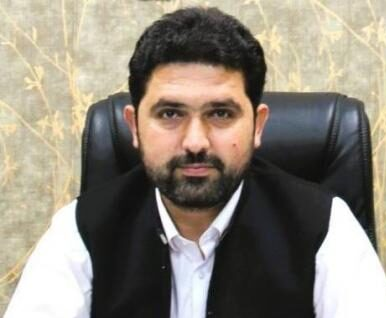
PESHAWAR — In his maiden address to the Khyber Pakhtunkhwa Assembly following his election, Chief Minister-elect Sohail Afridi delivered an impassioned speech promising to resist any fresh large-scale military operations in the province, citing the heavy collateral damage and long-term social costs they have produced. Afridi vowed to carry forward the vision of Imran Khan — stressing people-first governance, respect for civil rights and the need to avoid tactics that further alienate local communities.

The new chief minister’s remarks combined emotion and party line convictions with policy prescriptions. He repeatedly underscored that past operations have left many internally displaced persons, damaged livelihoods and failed to produce lasting peace. “Military action without local consent has backfired in KP,” Afridi told lawmakers, urging that any security measures must include tribal elders, local stakeholders and community leaders if they are to succeed.

At the same time, Afridi’s speech acknowledged a delicate political reality: in KP, the security establishment remains a central stakeholder that has borne considerable sacrifices in the fight against militancy. Observers say this makes relationship management with the military unavoidable. While Afridi’s rhetoric signals the province’s insistence on limiting heavy-handed operations, his calls for inclusion  not confrontation point toward a pragmatic path that recognizes the establishment’s role while pushing for greater consultation and accountability.

On Afghanistan and refugee policy, the chief minister called for a formal review and greater coordination with the federal government. He argued for humane treatment of Afghan nationals and warned against forced, disorderly evictions that would inflame tensions. Yet his plea for compassion came alongside a sober acknowledgement of security concerns voiced by many in KP: protracted overstaying by some refugees has complicated law-and-order management, strained resources, and, in certain cases, created vulnerabilities that militant groups could exploit.

Afridi’s combined message oppose indiscriminate operations, include locals, review Afghan policy reflects a balancing act between principled opposition to collateral damage and hard security realities on the ground. Experts say the CM must now translate rhetoric into measured policy: pursue registration and regularization drives, improve refugee-camp management, cooperate with federal institutions on repatriation and integration programs, and expand community-led policing and development initiatives that undercut extremist recruitment.

Critics warn Afridi that while emotional and populist appeals will solidify party support, long-term governance will demand rationalism, consensus building and steady dialogue with the military and federal authorities. Success will hinge on converting his commitments into inclusive decision-making mechanisms, transparent oversight of any security action, and socio-economic programs to address grievances that fuel unrest.

As Afridi begins his tenure, the province watches closely: the promise to limit military interventions while protecting peace, dignity and security is popular but its delivery will require both political courage and pragmatic cooperation across institutions.

President Tokayev: Central Asia-Russia rail freight transit up 50% in three years

President Tokayev: Central Asia-Russia rail freight transit up 50% in three years

ASTANA, OCT 13 (Kazinform/APP): During his speech at the 2nd Central Asia-Russia Summit in Dushanbe, Kazakh President Kassym-Jomart Tokayev highlighted strengthening transport and logistics ties with Russia as another priority area of ??cooperation, Kazinform News Agency cites Akorda.

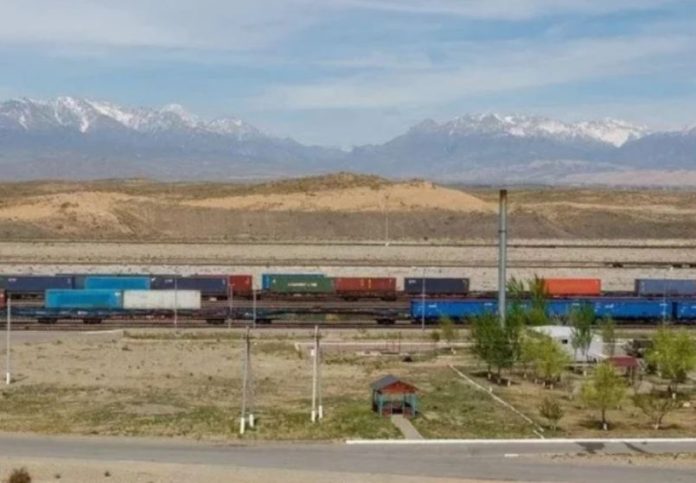
“For Kazakhstan, cooperation with Russia is strategically vital. In view of the geographic factor, Kazakhstan can ensure a stable connection between East and West, North and South, serving as the central link in the Eurasian transport and logistics network. Russia, in turn, is a key gateway for regional countries to global markets. Therefore, cooperation with Russia in transport and logistics is of paramount strategic importance. 11 international transport corridors pass through Kazakhstan (including 5 rail and 6 road), handling approximately 85% of overland freight traffic between Asia and Europe. Over the past 15 years, over $35 billion has been invested in the comprehensive modernization of the industry. As a result, we have achieved sustained growth in transportation volumes. Rail freight transit from Russia to Central Asia via Kazakhstan has risen by 26% over the past three years, exceeding 30 million tons. Meanwhile, transit in the opposite direction has increased by almost 50%. Furthermore, shipments from Russia to China via Kazakhstan have tripled, reaching over 5 million tons,” the President stated.

Earlier, during the 2nd Central Asia – Russia summit, Kazakh leader Kassym-Jomart Tokayev highlighted the key areas of multilateral and bilateral cooperation between the Central Asian nations and Russia, naming trade and industrial cooperation as a top priority. The Kazakh President said that trade with Russia reached $28bn last year.

Stay Connected

64FansLike
60FollowersFollow

Latest Reviews

Exchange Rates

USD - United States Dollar
EUR
1.14
GBP
1.34
AUD
0.69
CAD
0.70