Home Blog Page 430

Capital Hospital Islamabad hosts academic symposium to mark breast cancer awareness month

Capital Hospital Islamabad hosts academic symposium to mark breast cancer awareness month

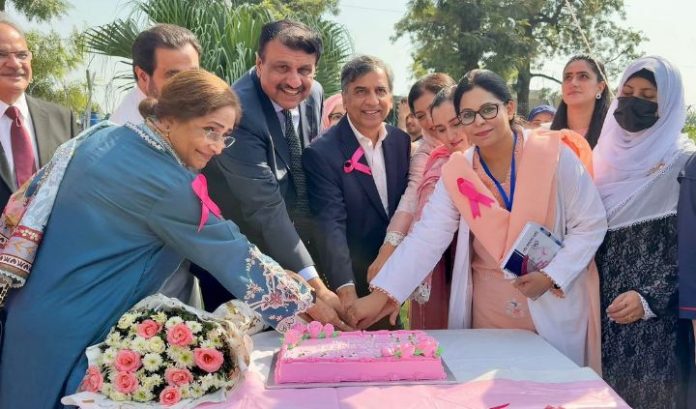
ISLAMABAD, OCT 15 /DNA/ – On the directives of Chairman CDA Muhammad Ali Rhandhawa and under the supervision of Executive Director of Capital Hospital and Head of the Surgery Department Dr. Naeem Taj, Capital Hospital successfully organized an Academic Symposium on Breast Cancer Awareness on Wednesday. The event, held in connection with the international Breast Cancer Awareness Month, aimed to promote vital awareness about early detection, prevention, and modern treatment options for breast cancer among women. The symposium was meticulou Dr. Yasmeen Iqbal, General & Breast Cancer Surgeon at the hospital.

The ceremony was graced by special guests Syed Nafasat Raza, Member Engineering, representing the Chairman CDA, and Ms. Rabia Aurangzeb, Commissioner of the Islamabad Employees Social Security Institution (IESSI). Both dignitaries commended Capital Hospital’s proactive efforts in raising public health awareness and its dedicated focus on promoting essential women’s health initiatives.

The event featured a panel of distinguished medical experts who delivered insightful presentations. Renowned guest speakers included Dr. Erum Najeeb (Breast Oncoplastic and Reconstructive Surgeon), Professor Naeem Zia, Professor Azam Yusaf, Dr. Professor Rakhshanda Rashid and  Dr. Tanseer Asghar. Their talks highlighted the critical importance of timely screening and elaborated on contemporary, effective treatment approaches.

Addressing the audience Dr. Muhammad Naeem Taj Executive Director of Capital Hospital emphasized that breast cancer is curable if diagnosed early. He urged all women to undergo regular checkups and not to ignore the early warning signs. He added that this symposium is a testament to their unwavering commitment to public health education and preventive care.

The event concluded with a note of thanks from chief guest Syed Nafasat Raza, who led a collective pledge to continue robust efforts towards early diagnosis and widespread awareness, aiming to significantly reduce the burden of breast cancer in Pakistan.

ICCI-Chinese delegation discuss pathways for sustainable economic growth

ICCI-Chinese delegation discuss pathways for sustainable economic growth

ISLAMABAD, OCT 15 /DNA/ – A high-level delegation of Sinotalent Empowering Industry Development (Beijing, China), led by its President  Wei Zhongchao, visited the Islamabad Chamber of Commerce and Industry (ICCI) here on Wednesday to explore investment opportunities in Pakistan and further strengthen bilateral trade and industrial cooperation between China and Pakistan.

The delegation included Wu Guodong and  Fan Yiqun of Sinotalent Empowering Industry Development,  Liu Gang of Beijing Lingdan Toxic Biological Engineering Research Institute, and  Muhammad Arif Mughal of Sino-Pak Industrial Cooperation and Development.

During an interactive session with the ICCI leadership, Wei Zhongchao said that the main objective of their visit was to conduct a comprehensive study of Pakistan’s market, engage with potential business partners, and identify areas for mutual cooperation. He added that the delegation was particularly interested in exploring collaboration in energy and chemical industries (including petroleum and catalysts), artificial intelligence and the digital economy, high-end manufacturing and assembly industries, agriculture and food processing, and construction materials and infrastructure development.

Highlighting China’s commitment to promoting industrial linkages, he said that Sinotalent was eager to work closely with Pakistani partners under the framework of CPEC Phase-II to accelerate industrial growth and technological advancement. He also proposed that ICCI must set up a Pak-China Industrial Cooperation Centre in Beijing  to showcase the Pakistani products to enhance its export capacity.

In his address, ICCI President Sardar Tahir Mehmood emphasized the deep-rooted friendship between Pakistan and China and the immense potential of CPEC Phase-II to usher in a new era of economic transformation in Pakistan. He said that the second phase of CPEC focuses on industrial cooperation, special economic zones, technology transfer, agriculture modernization, and digital economy development, which would contribute to inclusive and sustainable growth across various regions of Pakistan.

He assured the visiting delegation of ICCI’s full support and facilitation for Chinese investors, adding that the Chamber is working closely with government entities to ensure a conducive business environment and ease of doing business. He also highlighted the region’s export potential in IT, mines and minerals, gems and jewelry, pharmaceuticals, real estate and construction, and tourism, while underlining the importance of upgrading industrial infrastructure to enhance value addition and export competitiveness.

In his closing remarks, ICCI Senior Vice President Tahir Ayub said that CPEC Phase-II will serve as a catalyst for Pakistan’s export-led growth through sustainable industrialization. He added that we love to have Joint Ventures with Chinese companies and that the doors of ICCI are opened to play its role for the purpose.

Both sides agreed to maintain close coordination to explore practical avenues for strengthening industrial, technological, and trade linkages between the two countries and also agreed to ink Memorandum of Understandings (MoUs) to give the proposals a practical shape at the earliest possible time. Former Senior Vice President ICCI Faad Waheed who conducted the ceremony in the most efficient way was appointed as the focal person for the purpose.

Those present also included ICCI Vice President Irfan Chaudhry,  Executive Members Zulqurnain Abbasi, Malik Aqeel, Imran Minhas, Waseem Chaudhry, Mohsin Malik, former executive member Dr. Usman, former Vice President Faisalabad Chamber of Commerce and Industry Shahid Mumtaz Bajwa.

Rural Women’s Conference calls to raise marriage age to 18

Rural Women's Conference calls to raise marriage age to 18

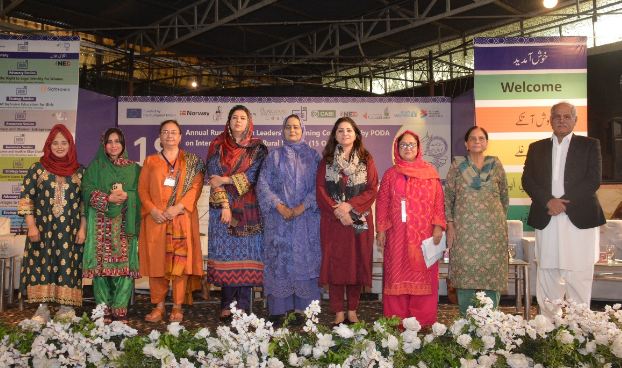
ISLAMABAD, OCT 15 /DNA/ – Speaking at the inaugural plenary of the 18th Rural Women Leadership Training Conference held at Lok Virsa, Islamabad, PODA leader from Khanewal, Bismillah Iram, said: “Despite losing everything in the recent floods, the hopes and dreams of rural women in Pakistan remained unshaken. With resilience, we stood firm to rebuild our lives. We thank PODA for supporting us in this journey. We, the village women, are the unsung heroes—protecting cities at the cost of our own lives and livelihoods.” The conference will be concluded on Friday 17 October.

Sameena Nazir, Executive Director of PODA, welcomed over 500 women leaders from around 100 districts across Pakistan, including delegates from all four provinces—Balochistan, Khyber Pakhtunkhwa, Punjab, and Sindh—as well as from AJK and Gilgit-Baltistan. Harroona Jatoi, renowned educationist, and Mumtaz Eskar, members of PODA’s Board of Directors, also extended a warm welcome, acknowledging the vital role these women play in promoting community rights, social justice, and grassroots empowerment.

Moazma Yousaf, representing NADRA, emphasized that identity is a vital contract between the state and its citizens, essential for accessing rights and services—especially during crises like floods. She highlighted NADRA’s efforts to improve birth registration through hospitals and primary healthcare systems. While NADRA has achieved 98 percent identity coverage for adults over 18, child birth registration remains a challenge, with current coverage at 46 percent due to societal barriers. She stressed the importance of increasing registration, particularly for girls, and the critical role organizations like PODA play in this effort.

Iza Rajpar conveyed President Asif Ali Zardari’s message, reaffirming the PPP’s dedication to women’s empowerment, as envisioned by Shaheed Benazir Bhutto, through initiatives like the Benazir Income Support Programme. In his message, Prime Minister Shehbaz Sharif paid tribute to Pakistan’s pioneering women leaders and reaffirmed the government’s commitment to empowering rural women through education, healthcare, skills training, and sustainable livelihoods, acknowledging their vital role in national development.

Harroona Jatoi, renowned educationist, and Mumtaz Eskar, members of PODA’s Board of Directors, warmly welcomed the women leaders, recognizing their crucial roles in advancing community rights and empowerment. Lok Virsa Executive Director Dr. Muhammad Waqas Saleem expressed his gratitude to the participants and highlighted the essential contributions of women to the country’s development and progress, emphasizing their role as drivers of national growth and empowerment.

Naheeda Abbasi, social activist, moderated a session on “Promoting the Right to Legal Identity for Women and Girls and Protection from Gender-Based Violence.” Speakers included Shandana Humayun Khan (CEO, Rural Support Programmes Network), Saeed Nisa (youth leader and footballer from Kalash, Chitral), Asifa Jamali (Member, Voter Education Committee, Nasirabad), Fazila (transgender representative from Badin), Sidra Hameed (Christian community representative, Eva Welfare Organization, Gujranwala) and Farkhanda Aurangzeb (Member, NCHR, Balochistan). Huma Irshad, wheelchair-user heads Shine Welfare Foundation, Gujranwala stressed on the need to enhance efforts to ensure legal identity of persons-with-disabilities.

 They emphasized that legal identity – beginning with birth registration and a national identity card – is essential for accessing justice and securing fundamental rights. They also emphasized the importance of birth registration and the issuance of identity cards as essential steps in ensuring legal identity and protecting women and girls from discrimination and violence.

Nighat Siddique, Director of Gender and Disability at the Election Commission of Pakistan (ECP), highlighted the Commission’s ongoing efforts to enhance the political participation of women, transgender persons, persons with disabilities, and youth, with the aim of strengthening democracy at the grassroots level. While addressing the session, Zafarullah Khan humbly remarked, “At a women’s conference, I am honored to be in the minority as a man.” He emphasized that identity cards are essential for accessing services such as voting, driving, banking, and financial transactions, and should not be viewed merely as a form of charity.

Chairperson of the National Commission on the Status of Women (NCSW), Umme Leila Azhar, paid tribute to the women leaders who have tirelessly worked for the progress of their communities. She highlighted the completion of the first-ever agri-census, providing reliable data to inform policies and reforms for rural women. She also commended Sameena Nazir for consistently organizing the conference since 2008, which has grown into a powerful voice advocating for women’s rights. Here is a revised, precise, and coherent version of your text, preserving all the key details and integrating your requested changes:

The session titled “Educational and Advocacy Session for the Rights of the Girl Child” served as a vital platform to spotlight key issues surrounding girls’ education, health, and inclusion in Pakistan. Anchored in Sustainable Development Goal (SDG) 4 on Quality Education and SDG 5 on Gender Equality, the session fostered critical dialogue on expanding girls’ right to education, ensuring access to menstrual hygiene services, improving nutritional support for adolescent girls, and promoting inclusive services for girls with disabilities.

The session featured powerful insights from a diverse panel of experts and advocates who shared challenges, case studies, and success stories from across the country. Rukhshanda Naz (former Ombudsperson, KP) co-chaired the session with Dr. Shahida Rehmani, MNA and Chairperson of the Women’s Parliamentary Caucus.

Dr. Shahida Rehmani said that in Sindh, under her leadership, all efforts are being made to recognize and amplify the often overlooked contributions and voices of women and girls in the country’s progress.

Uzma Batool, representing UNICEF, said the organization maintains a strong focus on the girl child throughout all phases of her life. She highlighted initiatives such as adolescent alliance forums across Pakistan, the need for tax-free sanitary pads, life-based skills training, and improved digital access to strengthen girls’ livelihoods. She emphasized child protection at federal and provincial levels, enforcement of child rights, and the importance of implementing the Beijing Platform for Action. Stressing that all girls must be in school, she called for an intergenerational approach to transform gender relations by involving commissions, departments, religious scholars, health experts, and civil society. She said girls should be seen as agents of change, especially in the context of climate-related disasters and other adversities, rather than as victims.

Speakers also underscored the need for community-based strategies to end early marriage and harmful practices that undermine girls’ development. From the grassroots level, Ms. Bismillah Irum, Head of Roshan Rahien, Khanewal, shared inspiring stories of girls reclaiming their futures through education and local advocacy.

Together, the panelists made a compelling case for urgent and sustained action to protect and promote the rights of girls in all their diversity. The session concluded with a strong message: ensuring education, health, and equal opportunities for every girl is not only a moral responsibility—it is a national imperative.

A pavilion of stalls showcasing women artisans, entrepreneurs, the National Commission on the Status of Women (NCSW), and the Population Welfare Office, Rawalpindi, was inaugurated by the Executive Director of PODA, alongside other dignitaries.

The European Union, the Norwegian Embassy in Islamabad, and Sightsavers were among the key partners supporting the three-day conference.

President, Field Marshal discuss internal and external security situation

President, Field Marshal discuss internal and external security situation

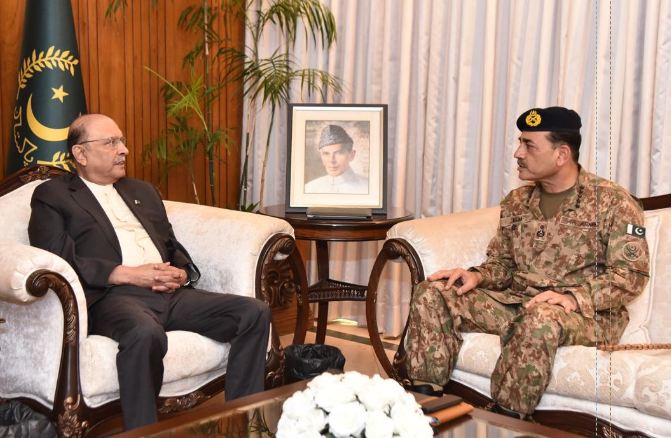
ISLAMABAD, OCT 15: /DNA/ – Chief of Army Staff, Field Marshal Syed Asim Munir, NI (M), HJ called on President Asif Ali Zardari at Aiwan-e-Sadr today.

During the meeting, the Field Marshal briefed the President on the overall internal and external security environment of the country. He also apprised the President of the recent security situation arising from the aggressive and provocative actions of the Afghan Taliban regime, as well as the measured and befitting response by the Armed Forces of Pakistan.

President Zardari expressed full confidence in the strength, valour, capacity, and preparedness of Pakistan’s Armed Forces. He lauded their vigilance and professionalism in defending the nation’s frontiers and in swiftly repelling cross-border attacks along the Afghan border.

The President reaffirmed that Pakistan will defend its national sovereignty and territorial integrity at all costs.

Italy envoy celebrates Italian Language Week at NUML

Italy envoy celebrates Italian Language Week at NUML

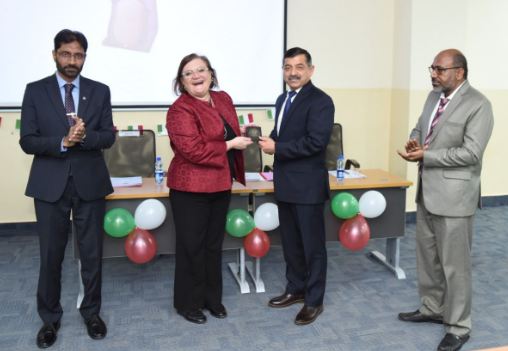
ISLAMABAD, OCT 15 /DNA/ – The Department of French and Italian, National University of Modern Languages (NUML), organized an event to celebrate the International Week of the Italian Language 2025 under the global theme “Italophony: Language Beyond Borders.”

Her Excellency Marilina Armellin, Ambassador of Italy to Pakistan, graced the occasion as the Chief Guest. The event was attended by Rector NUML, Maj Gen (R) Shahid Mahmood Kayani, HI(M), Director General NUML, Brig Muhammad Rafiq Khan, Dean Faculty of Languages Dr. Jameel Asghar Jami, Heads of Departments, faculty members, and students.

In his opening remarks, Dr. Jameel Asghar Jami highlighted the significance of celebrating the International Week of the Italian Language and welcomed the Italian Ambassador for her gracious presence.

Addressing the gathering, Ambassador Armellin commended NUML for its dedicated efforts in promoting Italian language and culture in Pakistan. She expressed appreciation for the enthusiasm of Pakistani youth towards learning Italian, noting that it reflects a growing cultural curiosity and mutual respect between the two nations. She further remarked that thousands of Pakistanis are contributing to the development of Italy, underscoring the strong bond of friendship and cooperation between both countries.

A presentation titled “Exploring the Richness of Italian Culture” was delivered by Dr. Saira Ahmad, Programme Officer, Italian Agency for Development Cooperation (AICS), Islamabad, highlighting the depth and diversity of Italy’s artistic and cultural heritage.

Speaking on the occasion, Rector NUML Maj Gen (R) Shahid Mahmood Kayani HI(M) emphasized that the celebration was not merely about honoring a language but appreciating a civilization that has profoundly shaped art, thought, and global culture. He noted that language serves as a living custodian of culture, identity, and creativity, and Italian, spoken by nearly 85 million people worldwide, stands as a language of music, art, poetry, and philosophy.

The Rector further highlighted that NUML’s Italian Department, established in 2007, continues to strengthen cross-cultural understanding through its active collaboration with the Embassy of Italy and AICS. He lauded the department’s contributions toward NUML’s mission of “understanding the world through languages.”

Addressing students, he remarked, “You are the living proof that education transcends books and classrooms—it is a bridge between people, cultures, and nations. Continue to learn languages, engage with the world, and build connections that bring humanity closer together.”

The event concluded with expressions of mutual appreciation and commitment to further deepening linguistic and cultural ties between Pakistan and Italy.

Rebuilding war-devastated Gaza to cost $70 billion: UN

Rebuilding war-devastated Gaza to cost $70 billion: UN

UNITED NATIONS, OCT 15 (DNA): Around $70 billion will be needed to reconstruct Gaza and make it safe after two years of Israeli war in the enclave, UN development experts said on Tuesday, while aid agencies reported that far too little aid is getting in to meet the needs of desperate Palestinians.

At just 41 kilometres long (25.4 miles) and two to five kilometres wide (1.2 to 3.1 miles), few places in the Gaza Strip had been left unscathed by the constant Israeli bombardment before the latest ceasefire came into effect haltingly last Friday.

According to the UN Development Programme Special Representative for the Palestinians, Jaco Cilliers, destruction across the enclave “is now in the region of 84 per cent. In certain parts of Gaza, like in Gaza City, it’s even up to 92 per cent.”

Speaking from Jerusalem,  Cilliers highlighted the findings of the latest Interim Rapid Damage and Needs Assessment (IRDNA) on Gaza by the UN, the European Union and the World Bank, which estimated the damage at $70 billion.

To kickstart the massive operation, some $20 billion will be required in the next three years alone, he told journalists in Geneva.

The UN development agency is present in Gaza alongside humanitarian partners to provide immediate support to the enclave’s 2.1 million people.

This includes providing clean water, emergency employment, medical supplies, solid waste removal and making homes and public spaces safe by clearing rubble potentially hiding unexploded ordnance or the many thousands of missing Palestinians.

“We’ve already removed about 81,000 tonnes. That is about…3,100 truckloads,”  Cilliers explained. “The majority of the debris removal is to provide access to humanitarian actors so that they can provide the much-needed aid and support to the people in Gaza. But we also help with hospitals and other social services that need to be cleared of debris.”

The UNDP official pointed to “very good indications” from potential donors in support of reconstruction from Arab States, but also from European nations and the United States “which has also indicated that they are going to be coming in supporting some of the early recovery efforts”.

Important as reconstruction is for Gaza’s long-term future, UN humanitarians once again clamoured for the Israeli authorities to open all access points into Gaza, after the remaining 20 living Israeli hostages were freed on Monday and Palestinian prisoners were released from Israel.

The development followed the signing of a ceasefire deal between Hamas and Israel signed on Monday evening in Sharm El-Sheikh by US President Donald Trump, and the leaders of Egypt, Qatar and Turkiye.

Earlier on Monday, UN Secretary-General Antonio Guterres welcomed the release of all living hostages from Gaza, two years since they were among some 250 taken during Hamas-led terror attacks in Israel on 7 October 2023.

On Tuesday, the focus shifted to the transfer from Gaza of all deceased hostages, an extremely difficult process overseen by the International Committee of the Red Cross (ICRC). It remains unclear how many deceased hostages will be transferred by Hamas.

“When it comes to the living hostages or Palestinian detainees – and believe me that’s a big issue for us – we actually don’t know, we know that we have to be ready,” said ICRC spokesperson Christian Cardon, adding that the complex search is getting underway today.

In the meantime, needs in Gaza remain enormous and “fluid”, aid teams report, with more than 300,000 Palestinians heading north to Gaza City since Friday, as the ceasefire agreement seemed to hold.

“The enthusiasm that came from the international community, from people on the ground that this was the beginning of the end of all the suffering and things would change rapidly, is just not being reflected on the ground, day in and day out. We are not getting enough aid in,” said UN Children’s Fund (UNICEF) spokesperson Ricardo Pires.

The Israeli authorities have agreed to allow 190,000 tonnes of relief supplies into Gaza and UN agencies and their partners are scaling up operations rapidly, but a far greater amount is needed overall, humanitarian agencies including the UN aid office, OCHA, have said repeatedly.

“Of course, we are advocating with everyone, and we were there in Sharm El- Sheikh yesterday as well, with 22 heads of state of government, who we are asking to help us push all buttons you can to get this up and running as soon as possible,” said OCHA spokesperson Jens Laerke.

Aid teams continue to insist that there needs to be a move away from handing out lifesaving supplies from remote areas including non-UN aid hubs that are difficult to reach and where hundreds of Palestinians have been shot or injured.

“Most of the actors – ICRC included – were not able to organize sufficient distribution of aid inside Gaza,” said Cardon. “And what we’ve seen instead, it’s people coming back from distribution sites being wounded, if not killed, in many instances…It’s about aid coming to the people and not any more people going to the aid.”

PIDE seminar critically reviews policy loan reforms in Pakistan’s power and tax sectors

PIDE seminar critically reviews policy loan reforms in Pakistan’s power and tax sectors

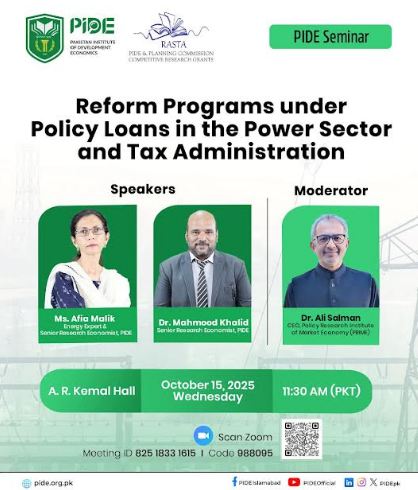
ISLAMABAD, OCT 15 /DNA/ – The Pakistan Institute of Development Economics (PIDE), in collaboration with RASTA (PIDE & Planning Commission Competitive Research Grants), hosted a webinar titled “Reform Programs under Policy Loans in the Power Sector and Tax Administration” at PIDE. The event featured Dr. Mahmood Khalid, Senior Research Economist at PIDE, and Ms. Afia Malik, Senior Research Economist at PIDE, while Dr. Ali Salman, CEO of the Policy Research Institute of Market Economy (PRIME), moderated the session.

Opening the discussion, Dr. Ali Salman emphasized the importance of evaluating Pakistan’s reform programs implemented under policy loans from multilateral development partners. He noted that while such loans have shaped the country’s fiscal and energy reform agenda for decades, their effectiveness and long-term sustainability require careful reassessment through local research and evidence-based dialogue.

Presenting his findings on “Policy Loans for Revenue Mobilization,” Dr. Mahmood Khalid stated that Pakistan’s tax-to-GDP ratio declined from 10.1% in 2023 to 9.6% in 2024, compared to an OECD average of 34%, while interest payments now consume over 75% of total tax revenues. He reviewed major donor-funded initiatives such as TARP (2004–2010), TAGR (2015–2019), and the Pakistan Raises Revenue Project (PRR, 2019–ongoing), observing that despite substantial funding, their outcomes have been limited and often short-lived. Dr. Khalid highlighted that only 2.4% of the population files tax returns, 55% of filers are nil-filers, and 3.3% of taxpayers contribute 90% of total income tax revenue, reflecting a system dependent on a narrow base. He emphasized that digitization efforts like Asaan Tax, Maloomat TaxRay, and Track & Trace have improved accessibility but not compliance, and that true reform requires institutional autonomy, enforcement incentives, and coherent fiscal policy rather than technology upgrades alone.

In her presentation on “Policy Loans and Reforms in the Power Sector,” Ms. Afia Malik analyzed four completed loan programs since 1994 aimed at restructuring and improving efficiency in Pakistan’s power sector. She explained that while these loans targeted governance enhancement, financial viability, and private sector participation, their implementation failed to achieve commercial independence or efficiency. Privatization efforts, such as those of KAPCO and K-Electric, delivered mixed results, with improvements in corporate governance offset by persistent inefficiencies and tariff distortions. Ms. Malik noted that circular debt emerged after 2006—a problem that was nonexistent before these reforms—and continues to grow despite repeated debt management plans.

She also pointed out that the policy loans encouraged the introduction of RLNG-based power plants, increasing the country’s reliance on imported fuels and raising production costs. While renewable projects were financed, many remain underutilized due to the lack of transmission infrastructure. The unbundling of WAPDA and creation of multiple entities, instead of improving coordination, led to greater fragmentation, higher administrative costs, and weak regulatory oversight. Ms. Malik emphasized that tariff design remains outdated, uniform across regions, and detached from real costs, undermining sector sustainability. “Despite decades of reforms and billions in financing, the power sector is now more fragmented, inefficient, and costly, with consumers bearing the brunt through higher tariffs and unreliable supply,” she concluded.

Summing up the discussion, Dr. Ali Salman highlighted that Pakistan’s repeated reform cycles under donor guidance point to a deeper governance and ownership challenge. He called for reforms that are homegrown, context-specific, and institutionally anchored, emphasizing that sustainable progress requires aligning incentives, strengthening accountability, and building domestic policy capacity rather than relying on externally designed frameworks.

Pakistan to launch first hyperspectral satellite

Pakistan to launch first hyperspectral satellite

News Desk

ISLAMABAD: Pakistan’s space agency on Wednesday announced the upcoming launch of the country’s first hyperspectral satellite (HS-1) from the Jiuquan Satellite Launch Centre in China, scheduled for October 19.

Hyperspectral imaging is a type of advanced camera technology used in satellites to study the Earth and space, according to a study published in the Journal of Computational Intelligence and Neuroscience. Unlike regular satellite cameras that capture only a few colours (like red, green, and blue), hyperspectral cameras capture hundreds of very narrow colour bands. This means they can detect tiny differences in light that the human eye, or even normal satellites, can’t see.

Because of this, scientists can use hyperspectral images to identify materials, detect changes in vegetation, find minerals, monitor pollution, or even study the atmosphere in much greater detail than before.

According to a statement from the Space and Upper Atmosphere Research Commission (Suparco), the launch is a “landmark mission [which] represents a transformative milestone in Pakistan’s national space programme, propelling the country into a new era of advanced space-based applications in agriculture, disaster management, urban development, and environmental monitoring.”

Pakistani passport ranks 4th worst in the world

Pakistani passport ranks 4th worst in the world

News Desk

ISLAMABAD: The Pakistani passport has ranked the fourth worst for the fifth straight year, according to this year’s Henley Passport Index, a ranking of the world’s 199 passports based on the number of destinations their owners can access without a prior visa.

In the latest global ranking issued on October 7, Pakistan’s travel document was placed at 103 in the list — tied with Yemen — and ranked higher than only those of Iraq (104), Syria (105) and Afghanistan (106).

Per the ranking, Pakistan and Yemen’s passports permit visa-free access to 31 countries only out of 227 travel destinations, Iraq’s allows travel to 29, Syria’s gives access to 26 destinations, and Afghanistan’s travel document only affords the bearer access to 24 destinations without a visa.

Pakistan’s passport has been declared the world’s fourth worst since at least 2021 on the Henley index, which calculates countries’ “visa-free score” — the number of destinations travellers can access without a prior visa, or with a visa on arrival.

NATO looks to strengthen its defences

NATO looks to strengthen its defences

BRUSSELS, OCT 15 (DNA): NATO defence ministers will look Wednesday at shoring up the alliance’s ability to counter Russian air incursions, as fears grow that Moscow is testing the West in a grey zone between war and peace.

  Focus will also be on bolstering support for Ukraine as US Defense Secretary Pete Hegseth joins his 31 NATO counterparts with his boss, President Donald Trump, mulling the supply of long-range missiles to Kyiv.

   The gathering in Brussels comes after Moscow rattled NATO with a series of high-profile airspace violations in Poland and Estonia that fuelled fears of conflict spilling over its border.

Those were followed up by a spate of mysterious drones that disrupted airports and flew close to military sites in a string of countries.

All this has added fuel to concerns that Russia is pushing the boundaries and seeking to probe NATO’s reaction.

  “In more and more ways, we are in a long-term and intensified conflict with Russia,” a Western official said.

NATO ministers are set to train their sights on efforts to plug gaps in the alliance’s eastern flank after it had to use costly missiles to down Russian drones in Poland.

“We are doing what we trained for, and it works, but we need to do more,” NATO Secretary General Mark Rutte said.

NATO has launched a new mission and beefed up its forces in the wake of the incidents, but some countries close to Russia are asking for a more robust response.

     Diplomats say the alliance is looking to fine tune its rules of engagement for dealing with Russian incursions and iron out different approaches between member states.

NATO is at the same time seeking to speed up work on better developing anti-drone capabilities and incorporating the sort of low-cost technology Ukraine is using into its own defences.

– EU eyes ‘drone wall’ –

The EU, which will convene its own meeting of defence ministers on Wednesday evening, has proposed creating a “drone wall” to try to tackle the menace.

But there is some scepticism from countries like Germany over the proposal and fears that the 27-nation bloc could be treading on NATO’s toes.

The drone initiative is one of a number of flagship projects the EU is focusing on as part of a broad push to prepare the bloc for potential conflict with Moscow in the coming years.

The EU will present a road map on its plans to ministers and hopes to get sign off on it at a summit of leaders next week.

Hegseth, who delivered a blistering jolt to NATO on his first visit in February, is meanwhile expected to tell allies to start making good on a vow to ramp up defence spending.

NATO members agreed at their Hague summit in June to reach 3.5 percent of GDP on core military spending by 2035.

Stay Connected

64FansLike
60FollowersFollow

Latest Reviews

Exchange Rates

USD - United States Dollar
EUR
1.14
GBP
1.34
AUD
0.69
CAD
0.70