Home Blog Page 43

Rebirth of the Liberated Lands: Guided by Vision

Ansar Mahmood Bhatti

The Great Return represents one of the most historic and transformative national endeavors in Azerbaijan’s modern era, marking the large-scale resettlement of citizens to the territories liberated following the 2020 Patriotic War. After nearly three decades of displacement, Azerbaijanis are finally returning to their ancestral homes in Karabakh and Eastern Zangezur, beginning a new stage of national revival.

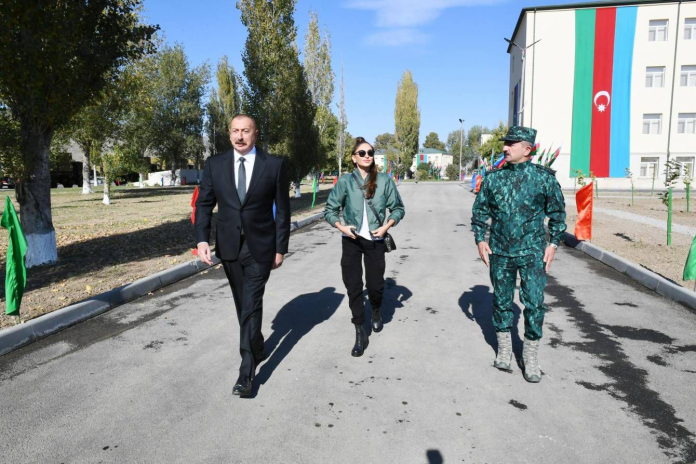
At the core of this process are the undeniable and decisive efforts of Ilham Aliyev, the President of the Republic of Azerbaijan, whose leadership has been instrumental in shaping the vision, pace, and direction of the Great Return. President Aliyev personally oversees the reconstruction agenda, conducts regular visits to the liberated regions, and ensures that each stage of planning—from mine clearance and infrastructure development to the restoration of cultural heritage—is implemented with precision and long-term sustainability in mind. His commitment has ensured that the liberated lands are rebuilt not only as livable spaces but as exemplary models of modern urban development.
Under President Aliyev’s guidance, Azerbaijan has launched some of the most ambitious reconstruction projects in its history. Entire cities and villages are being rebuilt based on “smart city” and “smart village” concepts, integrating green technologies, digital governance, and high standards of urban planning. Aghali village in Zangilan, one of the first smart settlements, stands as a clear demonstration of the President’s vision—where families have already returned to modern homes with access to advanced public services and new economic opportunities.

Ensuring the safety of returnees has been another key priority. Under the direct instruction of President Aliyev, extensive demining operations have been accelerated, mobilizing national institutions and international partners to clear vast areas contaminated during the years of occupation. This effort has created safe conditions for reconstruction and the gradual return of residents.

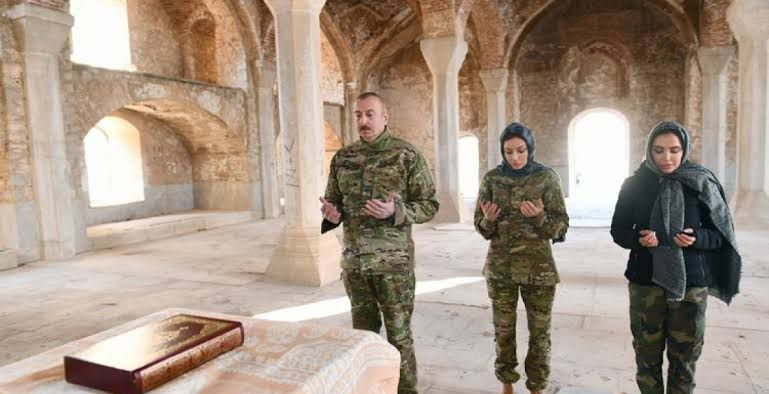
Cultural and historical restoration also occupies a central place in the President’s agenda. Under his leadership, Azerbaijan has undertaken the rehabilitation of religious monuments, cultural sites, museums, cemeteries, and historical landmarks that suffered destruction or neglect. These projects serve not only to preserve national heritage but also to reestablish the cultural identity of the region.

The Great Return is, therefore, much more than a resettlement program—it is a comprehensive national revival shaped by strategic leadership, strong political will, and a clear vision for the future.
Sherry Rehman voices grave concern over escalating gender-based violence and alarming conviction rates

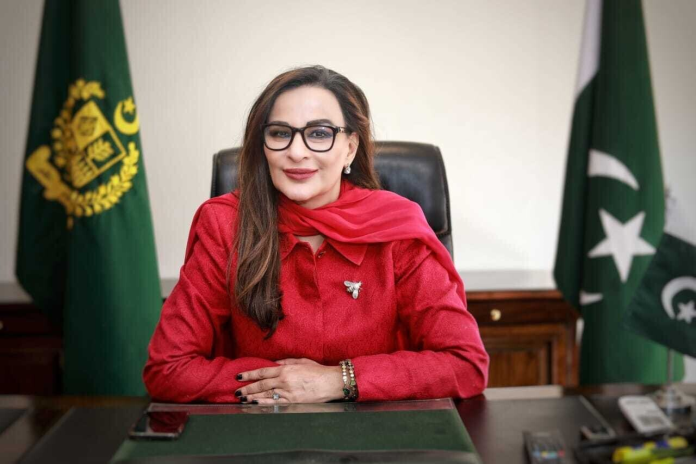
ISLAMABAD, Nov 27 (DNA): Pakistan Peoples Party (PPP) Vice President and Senator Sherry Rehman has expressed profound alarm over the sharp rise in gender-based violence (GBV) across Pakistan during 2024. She described the situation as a severe indictment of the country’s justice system.

Senator Rehman disclosed that 32,617 cases of gender-based violence were reported nationwide in 2024. These included:

5,339 rape cases,24,439 abductions,2,238 domestic violence incidents

,547 honour killings.

Addressing a session of the Senate Standing Committee on Human Rights, she emphasized that the conviction rates across these categories are “shockingly low,” noting that the conviction rate for rape and honour killings is merely 0.5 percent, which she said “reflects the collapse of the justice system.” Convictions in abduction cases stood at 0.1 percent, while domestic violence cases saw a conviction rate of just 1.3 percent.

According to the averages cited, Pakistan is witnessing 67 abductions, 19 rapes, 6 domestic violence cases, and 2 honour killings every day.

Provincial and Regional Overview

Senator Rehman reported 26,753 cases of gender-based violence in Punjab. Of the 225 honour killings, only two convictions were recorded. Among 4,641 rape cases, the conviction rate was 0.4 percent, while only 16 convictions were secured out of 20,720 abduction cases.

The province recorded 3,397 GBV cases, including 134 honour killings, with only two convictions. Out of 258 rape cases, there was one conviction, and 943 abduction cases similarly resulted in just one conviction. Notably, no convictions were recorded in 446 domestic violence cases.

Sindh reported 1,781 cases of gender-based violence. Senator Rehman stressed that not a single conviction was achieved in 134 honour killings, 243 rape cases, or 375 domestic violence cases, said a press release issued here on Thursday.

Balochistan recorded 398 cases, including 32 honour killings, of which only one resulted in a conviction. No convictions were secured in 21 rape or 185 abduction cases, while 25 convictions were recorded in 160 domestic violence cases.

Islamabad documented 220 cases, including 22 honour killings, with no convictions. Among 176 rape cases, seven convictions were secured, while all 22 domestic violence cases resulted in zero convictions.

Judicial Backlog and Systemic Breakdown

Senator Rehman further highlighted that despite the establishment of 480 Gender-Based Violence (GBV) courts, Pakistan entered 2023 with 21,891 pending cases. During the year, 48,395 new cases were filed and 30,631 were disposed of, raising the backlog to 39,655 cases.

She stated that the overall conviction rate stands at 0.5 percent, whereas 64 percent of accused persons are acquitted, calling this disparity “clear evidence of systemic failure.”

Citing Human Rights Watch, Senator Rehman said that 70 percent of gender-based violence cases go unreported due to fear, threats, and societal stigma.

She criticized lapses in law enforcement and prosecution, asserting that poor investigation standards, weak prosecution, and institutional voids are “giving perpetrators a free pass.”

“We visited a police station where a murder suspect was being garlanded,” she said, describing it as emblematic of the institutional decay.

She added that despite ongoing legislation on the issue since 2004, victims continued to be denied justice.

Dominican Republic grants US access to restricted areas for its deadly fight against drugs

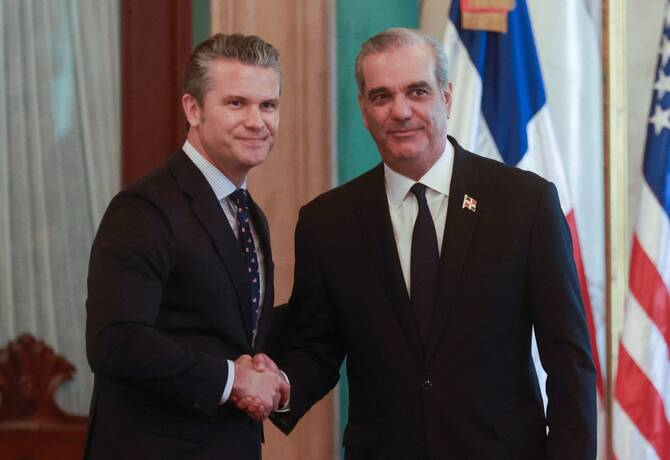
SAN JUAN, NOV 27 /DNA/: Dominican Republic President Luis Abinader announced Wednesday that he has authorized the US government to operate inside restricted areas in the Caribbean country to help in its fight against drug trafficking.

For a limited time, the US can refuel aircraft and transport equipment and technical personnel at restricted areas within the San Isidro Air Base and Las Américas International Airport, said Abinader, who made the announcement with US Defense Secretary Pete Hegseth at his side.

Hegseth was in Santo Domingo Wednesday to meet with the country’s top leaders, including Abinader and Minister of Defense Lt. Gen. Carlos Antonio Fernández Onofre.

It is the first major public agreement that the US has struck with a Caribbean nation as it seeks friendly allies to support its attacks against alleged drug-smuggling boats in the region and beyond. Since the strikes began in early September, at least 83 people have been killed.

Hegseth said the Dominican Republic was a regional leader willing to take on hard challenges.

“That’s why I’m here today. That’s why we decided to come here first,” he said. “The Dominican Republic has stepped up.”

Hegseth said the US would respect the Caribbean country’s sovereignty and laws as US service members and aircraft prepare to deploy to the Dominican Republic. He did not provide additional details.

Meanwhile, Abinader said the scope of the agreement is “technical, limited, and temporary.”

“The purpose is clear: to strengthen the air and maritime protection ring maintained by our Armed Forces, a decisive reinforcement to prevent the entry of narcotics and to strike a more decisive blow against transnational organized crime,” he said.

After a news conference where no questions were allowed, the office of the president issued a statement with more details, noting that several KC-135 tanker aircraft would be present to support air patrol missions, expanding monitoring and interdiction capabilities over a large portion of the maritime and air domains.

“They would also provide refueling services to aircraft from partner countries, thus ensuring sustained operations for monitoring, detecting, and tracking verified illicit smuggling activities,” according to the statement.

Additionally, C-130 Hercules cargo aircraft would facilitate aeromedical evacuations, firefighting, weather reconnaissance, and disaster relief, the office said.

Abinader noted that the Dominican Republic has seized nearly 10 times more drugs per year in the past five years than in the previous decade thanks to close collaboration with the US

“Our country faces a real threat, a threat that knows no borders, no flags, that destroys families, and that has been trying to use our territory for decades,” he said. “That threat is drug trafficking, and no country can or should confront it without allies.”

Hegseth praised Abinader, saying that the Dominican Republic “understands the importance of standing up to narco-terrorists and narco-traffickers who flood our countries with drugs and violence.”

“We’re deadly serious about this mission,” Hegseth said, asserting that the US has the best intelligence, lawyers and process. “We know…where they’re leaving from, where they’re going, what they’re bringing, what their intentions are, who they represent.”

Some experts believe the ongoing strikes are a tactic to try and pressure Venezuelan President Nicolás Maduro to step down given that the US military has built up its largest presence in the region in generations.

Hegseth’s visit comes a day after Gen. Dan Caine, chairman of the Joint Chiefs of Staff and US President Donald Trump’s primary military adviser, met with Trinidad and Tobago Prime Minister Kamla Persad-Bissessar.

The prime minister has praised the strikes, drawing criticism ever since stating in early September that she had no sympathy for drug traffickers and that “the US military should kill them all violently.”

On Wednesday, Persad-Bissessar told reporters that US marines were recently in the twin-island nation to do some work at an airport roadway and to train with local soldiers.

“They are not here on the ground,” she said. “We are not about to launch any campaign against Venezuela.”

She said that Trinidad has not been asked to be a base for any attack against Venezuela, and that Venezuela was not mentioned in conversations with the US on Tuesday.

Trinidad and Tobago is just a few miles away from Venezuela.

Prior to visiting Trinidad and Tobago, Caine stopped by the US territory of Puerto Rico to visit American troops there and boarded at least one US Navy ship.

Caine and Hegseth had previously traveled to Puerto Rico in September.

Earlier this year, the US approached the tiny Caribbean island of Grenada with a request.

Grenadian Prime Minister Dickon Mitchell told Parliament earlier this month that any decision possibly allowing the Trump administration to install a temporary radar at the island’s international airport “will not be a secret, nor will it be one that violates domestic or international laws.”

No public announcement has been made since then.

Rana Ihsaan Afzal Leads Key Trade Mission in Lagos

LAGOS, NIGERIA: NOV 27 /DNA/: Pakistan strengthened its commercial and investment engagement with Nigeria and the wider West African region on Tuesday, as the Prime Minister’s Coordinator for Commerce, Mr. Rana Ihsaan Afzal Khan, led a series of high-level trade and investment activities in Lagos.

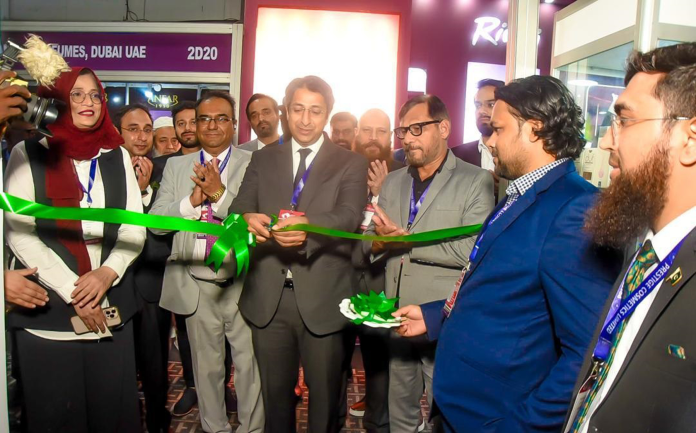
The day featured strategic meetings with Nigerian authorities, the inauguration of Pakistan’s Pavilion at Beauty West Africa (BWA) 2025, and a networking dinner bringing together Pakistani exhibitors and key Nigerian industry stakeholders.

Earlier in the day, Mr. Khan held a bilateral meeting with Ms. Aisha Rimi, Executive Secretary/CEO of the Nigerian Investment Promotion Commission (NIPC).

The discussion focused on Nigeria’s investment landscape and the potential for enhanced Pakistani participation in sectors such as manufacturing, agro-processing, IT services, and logistics. Both sides also explored strengthening institutional cooperation between NIPC and Pakistan’s Special Investment Facilitation Council (SIFC) to improve information-sharing, streamline procedures, and facilitate investor outreach.

The two officials agreed to maintain momentum through continued dialogue and collaboration.

Rana Ihsaan later inaugurated the Pakistan Pavilion at Beauty West Africa (BWA) 2025, the continent’s largest beauty and cosmetics exhibition, held from 25–27 November at the Landmark Center. A strong contingent of 23 Pakistani cosmetics manufacturers—19 sponsored by TDAP and 4 self-financed—showcased a diverse range of products at the event, which features over 350 exhibitors and attracts more than 6,000 buyers annually.

Pakistan’s presence comes at a time when Africa’s beauty and personal care market is projected to reach USD 69.53 billion in 2025, driven by rising urbanisation, youth demographics, and shifting consumer preferences toward natural and eco-friendly products. Nigeria’s rapidly expanding e-commerce market, expected to generate USD 439.77 million in 2025 in online beauty sales, also presents growing opportunities for cross-border trade.

In the evening, the Prime Minister’s Coordinator attended a networking dinner hosted by the Commercial Section of the High Commission of Pakistan at the Radisson Blu Anchorage, Victoria Island.

Pakistani exhibitors were joined by leading Nigerian buyers, senior bankers, a top customs-clearing agent, representatives from NAFDAC, and the Chairman of the Cosmetics and Drugs Chapter of the Manufacturers Association of Nigeria (MAN).

Nigerian stakeholders briefed the visiting companies on regulatory requirements for importing cosmetics, product registration processes, compliance standards, and banking procedures—providing Pakistani businesses with valuable insights into the local market’s operational landscape.

Mr. Khan appreciated the active engagement of both sides and encouraged Pakistani companies to deepen their commercial presence in West Africa.

The day’s engagements underscored Pakistan’s growing commitment to expanding trade, investment, and business partnerships with Nigeria, positioning Pakistani enterprises to take advantage of emerging opportunities across one of Africa’s most dynamic markets.

Jam-Packed PNCA witnesses stunning Russian folk show

Jam-Packed PNCA witnesses stunning Russian folk show

Ansar M Bhatti

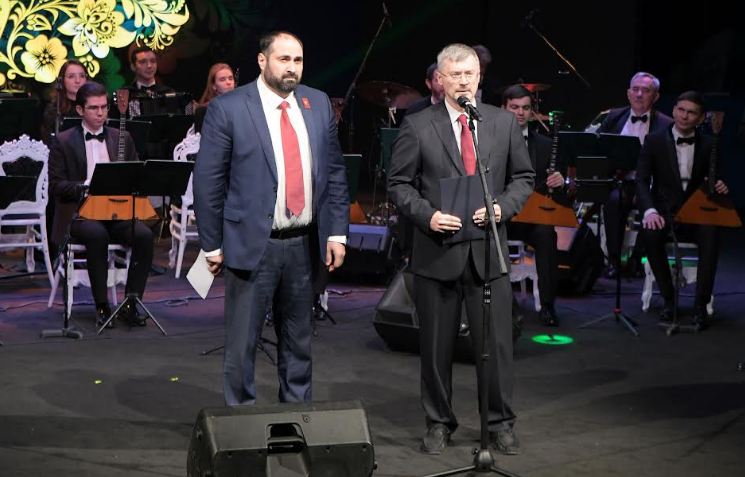
ISLAMABAD, NOV 26 /DNA/ – A mesmerizing cultural evening was held at the Pakistan National Council of the Arts (PNCA) on Wednesday as the Lyudmila Zykina Russian Folk Ensemble “RUSSIA” performed to a jam-packed hall, marking the 10th Russia-Pakistan Intergovernmental Commission (IGC). A large number of diplomats, government officials, cultural figures and music lovers attended the event, filling the PNCA auditorium to capacity.

The concert was attended by the IGC Co-Chairs — Russian Energy Minister Sergey Tsivilev and Pakistan’s Energy Minister Sardar Awais Ahmad Khan Leghari — along with senior officials from both countries.

Russian Ambassador to Pakistan Albert P. Khorev, who spoke on the occasion, warmly welcomed the audience and introduced the celebrated music group. He highlighted the deep cultural significance of Russian folk traditions and expressed hope that such exchanges would further strengthen the longstanding bilateral relationship between Russia and Pakistan. Ambassador Khorev noted that cultural diplomacy plays a vital role in bringing nations closer and reaffirmed Moscow’s commitment to expanding cooperation in energy, trade, culture and people-to-people exchanges.

The ensemble’s performance received enthusiastic applause as the audience was immersed in vibrant melodies, traditional costumes and energetic choreography showcasing the richness of Russian folklore.

The event, organized on the sidelines of the 10th Pakistan-Russia IGC, served as a reminder of the growing momentum in bilateral engagements and the shared desire to deepen collaboration across multiple sectors.

The evening concluded with resounding appreciation for the artists and a renewed commitment by both sides to further cement cultural and diplomatic ties.

Pakistan acquires 945 germplasm lines from China, IRRI to boost rice breeding

Pakistan acquires 945 germplasm lines from China, IRRI to boost rice breeding
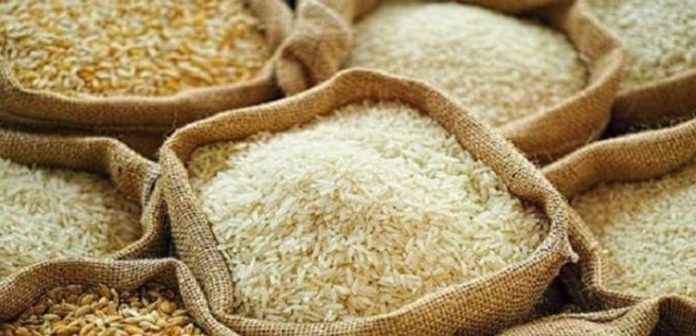
ISLAMABAD, Nov 26 (APP/DNA):Pakistan has acquired 945 germplasm lines from China and the International Rice Research Institute (IRRI) to strengthen its rice breeding base under major national development programmes.

A Ministry of National Food Security and Research document available with Wealth Pakistan stated that under the Productivity Enhancement of Rice Project (2019–2025), several achievements have been recorded. These include the acquisition of 945 germplasm lines from China and IRRI, the development of 14 new rice varieties, and extensive farmer outreach activities that involved more than 450 field days and training events.
In addition, 1,553 units of rice machinery have been distributed among farming communities, while 3,885 tons of certified seed have also been provided to support better yields and improved production practices.
A total of 2,493 demonstration plots have been established across the country to promote good agricultural practices, direct-seeded rice, and mechanical transplanting, helping farmers adopt more modern and efficient cultivation techniques.
The document further notes that under the Sino-Pak Agricultural Breeding Innovations Project for Rapid Yield Enhancement (2020–2025), Pakistan has established its first intelligent glasshouse and an IoT-based smart facility for speed breeding.
The initiation of genome-based speed breeding, following the establishment of a world-class Next Generation Sequencing Facility at the National Agricultural Research Centre, has enabled faster development of climate-resilient and high-yielding rice varieties.
Germplasm acquired from China, including thermosensitive genic male sterile (TGMS) lines, is contributing to advancements in hybrid rice development.
The ministry’s document also provides funding details of ongoing projects. The “Productivity Enhancement of Rice” project (2020–25) is a major PSDP initiative with a total allocation of Rs15,789 million. Of this, Rs3,750 million has been allocated under PSDP, against which Rs1,432 million has so far been released, with expenditures recorded at Rs1,424 million. An amount of Rs611 million has been allocated for the Sino-Pak Breeding Innovations Project (2020–25), while the Fertilize Right Pakistan programme under the International Centre for Agricultural Research in the Dry Areas is being implemented with total funding of $282 million.

Info Group Secretaries’ Forum thanks PM for appointing Ashfaq Ahmad Khalil

Info Group Secretaries’ Forum thanks PM for appointing Ashfaq Ahmad Khalil

ISLAMABAD, Nov 26 (APP): The Forum of Information Group Secretaries has extended a warm welcome to the appointment of Ashfaq Ahmad Khalil as Federal Secretary, Ministry of Information and Broadcasting.

In a statement, the forum expressed gratitude to the Prime Minister for entrusting this key portfolio to a seasoned professional from within the Information Group.

The decision, it noted, reflects confidence in the cadre’s capability, integrity, and institutional strength.

The forum congratulated the newly appointed Secretary and conveyed best wishes as he takes on this important responsibility.

It expressed hope that his leadership will further enhance the ministry’s effectiveness and uphold the highest standards of public service.

MCI, NADRA sign agreement for CRMS mobile application enabling online birth & death certificates

MCI, NADRA sign agreement for CRMS mobile application enabling online birth & death certificates

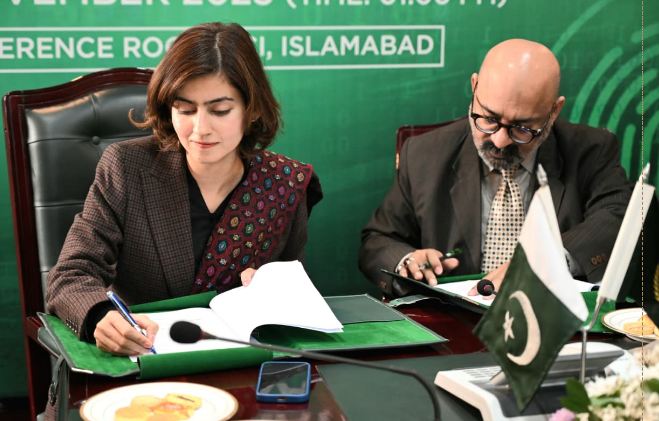
ISLAMABAD, NOV 26 /DNA/ – The Metropolitan Corporation Islamabad (MCI) and the National Database & Registration Authority (NADRA) today signed a landmark agreement for the implementation of the CRMS Mobile Application, aimed at revolutionizing municipal service delivery and providing maximum convenience to the citizens of Islamabad.

The agreement was signed on behalf of MCI by Dr. Anam Fatima, Chief Officer, Metropolitan Corporation Islamabad, and on behalf of NADRA by Syed Gohar Abbas Jaffery, Director General NADRA, during a formal signing ceremony held at the Conference Room, MCI, Islamabad, in the presence of senior officials from both organizations.

A key feature of this system is that it will enable citizens of Islamabad to apply for and obtain Birth Certificates and Death Certificates online without physically visiting MCI offices. This initiative will significantly reduce public inconvenience, eliminate lengthy procedures, and ensure a smooth, transparent, and efficient digital process for vital civil registration services.

The CRMS Mobile Application will provide a user-friendly platform where citizens can submit applications, upload required documents, track progress in real-time, and receive certificates through an integrated digital system supported by NADRA’s secure verification mechanisms and national database infrastructure.

Speaking on the occasion, Dr. Anam Fatima stated that this initiative represents a major milestone in MCI’s journey towards digital transformation and citizen-centric governance. She emphasized that the new system will save time, reduce procedural hurdles, and strengthen transparency in municipal services.

Syed Gohar Abbas Jaffery, Director General NADRA, highlighted that NADRA will ensure secure data integration, authentication, and technical support to maintain the reliability and integrity of the system, aligning it with national digital governance standards.

This collaboration marks a significant step towards building a Smart, Efficient, and Digitally Empowered Islamabad, where essential civic documentation can be accessed conveniently from home.

China unveils CPEC 2.0, announces new $550 million investments

China unveils CPEC 2.0, announces new $550 million investments

By BCPR

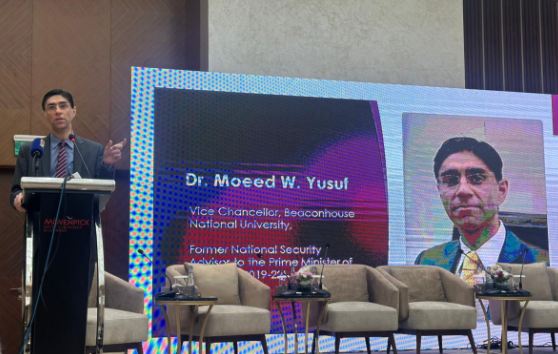
ISLAMABAD, NOV 26 /DNA/ – In a significant policy dialogue titled “Redefining Regional Connectivity: Pakistan–China Friendship in the New Geo-Economic Paradigm,” leading thinkers and policymakers today outlined an ambitious vision for transforming South Asia’s economic landscape through enhanced Pakistan-China cooperation and an upgraded CPEC framework. The event, hosted by Beaconhouse National University’s Center for Policy Research (BCPR) in collaboration with the Understanding China Forum (UCF), brought together diplomats, scholars, and security experts to explore pathways for turning geopolitical challenges into economic opportunities.

The dialogue opened with remarks from Dr. Zainab Ahmed, Deputy Director of BCPR, and Dr. Hassan Daud of UCF, setting the stage for what would become a comprehensive examination of Pakistan’s strategic options in a rapidly changing global order.

Dr. Moeed Yusuf, former National Security Advisor to the Prime Minister of Pakistan and Vice Chancellor of Beaconhouse National University, set the tone by advocating for a pragmatic approach to regional connectivity. “There is no ‘either or’ choice between partners,” he stated, directly addressing the ongoing US-China strategic competition. Dr. Yusuf proposed a “China-South Asia + Central Asia” economic framework as the most viable path forward, suggesting that this model of Cooperative Geoeconomics could transform Pakistan from being an assistance-driven to a development-driven nation. He argued that as this economic bloc integrates, India would naturally recognize the opportunity cost of remaining outside, potentially creating conditions for reduced regional tensions.

The keynote address by His Excellency Mr. Jiang Zaidong, Ambassador of the People’s Republic of China to Pakistan, provided concrete evidence of what has been achieved and where the partnership is headed. Celebrating CPEC’s accomplishments, including US $25.93 billion in direct investment, over 8,000 megawatts of power generation, and 261,000 jobs created, Ambassador Jiang announced the formal transition to “CPEC 2.0.” He emphasized that “sufficient power utilizes all industry” and revealed major new investments, including a US $400 million home appliance industrial park by Haier and a US $150 million textile industrial park by the Challenge Group. Looking regionally, he committed to accelerating the Karakoram Highway realignment and developing Gwadar Port as a hub for connectivity, while expressing China’s readiness to actively and steadily advance third-party cooperation under CPEC toward Central Asia and the Middle East.

Ambassador Sardar Masood Khan, former President of AJK and former Ambassador to the USA and China, provided strategic context by observing that “China is changing the status quo and adapting to the new order while the US is trying to hold onto the postwar one.” He stressed the necessity of Pakistan maintaining an “impregnable nuclear program” for deterrence while walking the delicate line of maintaining a balance with the US and China. Most importantly, he urged Pakistan to conceive of itself as a consequential nation capable of shaping its own destiny.

The first panel, “Connectivity, Cooperation, and Peace: Reframing Regional Geoeconomics,” moderated by Dr. Hassan Daud, featured robust discussion about Pakistan’s strategic choices. Ambassador Masood Khalid, former ambassador of Pakistan to China, emphasized that CPEC has unleashed a healthy dialogue on the need to improve all industries in Pakistan and an imperative to counter uncertainty Mr. Haroon Sharif , former minister of state, provided a critical analysis of the changing world order, emphasizing the tension between multilateralism and unilateralism. He stressed the urgent need to reposition Pakistan’s geoeconomic strategy, noting that “connectivity is the means, not the solution.” Mr. Sharif identified four critical fault lines: the lack of inclusive and dignified opportunities, low productivity and production capacity, reluctance of local investors to come forward, and the uncertain impact of technology on society. “A crucial “mindset shift needed from G2G” approaches, he concluded, would enable Pakistan to “rebuild brick by brick instead of selling dreams.”

Dr. Zafar Nawaz Jaspal, Dean Schoolf of Politics and IR at QAU, offered a realistic assessment, characterizing the Pakistan-China alliance as “transactional” and warning against rhetorical nostalgia. He insisted that “bandwagoning is not a solution” and that Pakistan must make rational calculations to maintain strategic balance between major powers. Ms. Nasim Zehra, senior journalist, highlighted information warfare dimensions, calling narrative “a very potent weapon” in the “battle of whose stories are to win.” Ambassador Riffat Masood, former ambassador of Pakistan to Iran, pointed to internal challenges, noting a “local lack of a progressive and positive mindset” as a major impediment to regional integration, while Mr. Usman Shaukat from Rawalpindi Chamber of Commerence, emphasized that “economic security is gaining more importance for nations than geopolitics,” calling for predictable regulatory frameworks and expanded regional supply chains that could potentially include Bangladesh.

The second session, “From Corridors to Cooperation: Pakistan–China Partnership and the Future of Regional Geoeconomics,” moderated by Dr. Zainab of BCPR, delved into practical implementation. Rear Admiral Javed Iqbal (Retd), president designate NIMA, highlighted Pakistan’s maritime future, noting “over 90% reliance” on sea trade and advocating for Gwadar’s development as a regional hub, even proposing the “possibility of Pakistan-made merchant ships.” Ambassador Jauhar Saleem, president IRS, provided a sobering assessment of regional security challenges, revealing that terrorist incidents had surged from 284 in 2019 to over 526 in 2025, primarily emanating from Afghanistan.  Dr. Talat Shabir, director China-Pak study Center at ISSI, discussed the Shanghai Cooperation Organization’s growing importance in connecting Eurasia, while senior journalist Ejaz Haider stressed the necessity of involving local stakeholders in CPEC development and policy decisions.

The dialogue concluded with remarks from former Minister Khurram Dastagir, who emphasized recognizing “cross-sectoral resistance to modernization” as a key challenge. Collectively, the event painted a picture of a nation at a strategic crossroads, with CPEC 2.0 offering a pathway to not just economic growth but a redefinition of Pakistan’s role in an emerging multipolar world. As Pakistan and China approach the 75th anniversary of their diplomatic relations, the consensus was clear: the partnership has never been more crucial for shaping regional stability and prosperity.

PM Shehbaz Sharif, Bahrain King discuss boosting trade, investment

PM Shehbaz Sharif, Bahrain King discuss boosting trade, investment

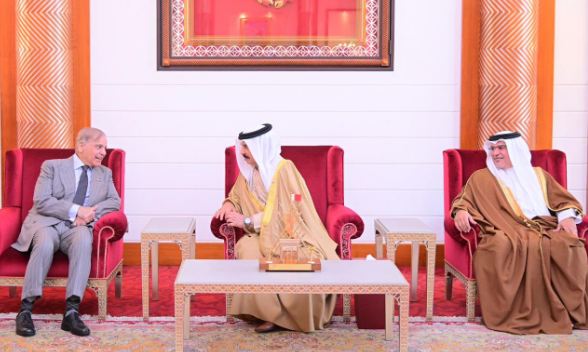
MANAMA, NOV 26 /DNA/ – The Prime Minister of Pakistan met His Majesty the King of Bahrain H.R.H. Hamad bin Isa Al-Khalifa in Manama today and reaffirmed the strong and historic partnership between the two brotherly nations. The PM thanked His Majesty for the warm hospitality and expressed appreciation for Bahrain’s longstanding goodwill toward Pakistan. He commended His Majesty’s leadership in promoting peace, tolerance, and coexistence.

During the meeting the King of Bahrain conferred upon Prime Minister Muhammad Shehbaz Sharif the Order of Bahrain (first class), which is the highest award given by Bahrain to Heads of States and governments.

His majesty informed the Prime Minister that the kingdom of Bahrain had the privilege of being represented at a legal forum by none other than Quaid-e-Azam Muhammad Ali Jinnah. Muhammad Ali Jinnah remained Bahrain’s lawyer for a long time, the King remarked.

Both sides reviewed the encouraging momentum in bilateral relations and agreed to further enhance cooperation in political, economic, defence, and cultural fields. The Prime Minister reiterated Pakistan’s commitment to deepening bilateral ties based on shared faith and mutual respect.

He thanked His Majesty for Bahrain’s generous support, including the establishment of the King Hamad University for Nursing and Allied Medical Sciences in Islamabad, inaugurated in September 2025. The Prime Minister also welcomed recent high-level exchanges and expressed gratitude for Bahrain’s solidarity following the recent terrorist incidents in Pakistan.

Discussing economic relations, the Prime Minister highlighted Pakistan’s desire to expand trade and investment. He noted that bilateral trade is poised to grow with the Pakistan–GCC Free Trade Agreement, which is currently in the last stages of finalization. He invited Bahraini investors to explore opportunities through the Special Investment Facilitation Council (SIFC), especially in food security, IT, construction, mining, tourism, and healthcare. The Prime Minister also expressed appreciation for the support provided to more than 150,000-strong Pakistani community in Bahrain and thanked His Majesty for pardoning Pakistani prisoners.

Both leaders reaffirmed the importance of the longstanding defence partnership and agreed to continue strengthening cooperation in training, logistics, manpower, and defence production. Both leaders discussed the recent developments in Gaza, and agreed that the establishment of peace and stability was long overdue for the people of Gaza who have suffered for decades.

At the end of the meeting both sides expressed confidence that the visit would further consolidate the enduring friendship and cooperation between Pakistan and Bahrain. The King of Bahrain organized a banquet in honor of Prime Minister Muhammad Shehbaz Sharif and the Pakistani delegation at the end of the meeting.

Stay Connected

64FansLike
60FollowersFollow

Latest Reviews

Exchange Rates

USD - United States Dollar
EUR
1.17
GBP
1.34
AUD
0.67
CAD
0.73