Home Blog Page 43

India says 10 rescued, one missing after vessel attacked off Oman

India says 10 rescued, one missing after vessel attacked off Oman

TEHRAN, JUL 12: India said on Sunday that 11 of its nationals were on a vessel that was struck in waters east of Oman as Iran and the United States traded fresh fire.

“Of the 11 Indian nationals on board, 10 have been rescued so far, while one Indian national is reportedly missing,” the Indian foreign ministry said in a statement.

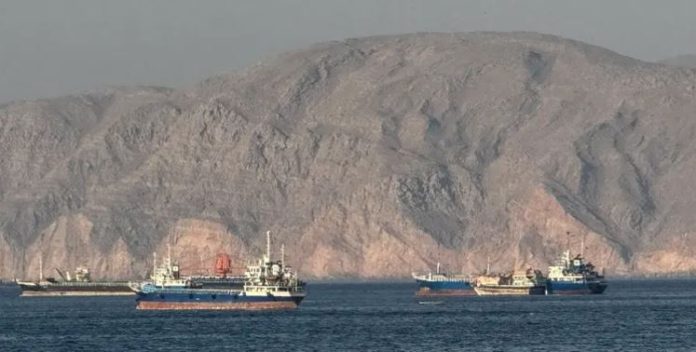
Search-and-rescue operations were underway after the commercial vessel, GFS Galaxy, was attacked off the coast of Oman early on Sunday, the ministry statement said.

US Central Command said the vessel had been disabled by fire and damage to its engine room, accusing Tehran of attacking the ship.

British maritime agency UKMTO said the crew had abandoned the vessel and were on a lifeboat, adding that the incident occurred around 17 kilometers (10 miles) east of Oman.

The attack came as Tehran announced it was closing the Strait of Hormuz on Sunday and launched missiles and drones at its Gulf neighbors in retaliation for new US strikes.

The Indian foreign ministry said the attacks on commercial shipping in the region were “deeply worrisome.”

“The targeting of commercial shipping and civilian infrastructure in the region must end,” it said.

“… free and unimpeded navigation… through the international waterways in the region, in keeping with international law, must be restored at the earliest.”

The fresh tensions threatened an interim agreement aimed at ending the Middle East war that began on February 28 with US-Israeli strikes on Iran, including one that killed former supreme leader Ali Khamenei.

Argentina beat Swiss 3-1 after extra time to reach World Cup semi-finals

Argentina beat Swiss 3-1 after extra time to reach World Cup semi-finals

Argentinas Julian Alvarez celebrates scoring their second goal with teammates during the Fifa World Cup 2026 Quarter Final match between Argentina and Switzerland, Kansas City Stadium, Kansas City, Missouri, US, July 11, 2026. — Reuters

DNA

KANSAS CITY: Argentina’s Julian Alvarez and Lautaro Martinez scored deep in extra time to secure a dramatic 3-1 quarter-final win over 10-man Switzerland on Saturday and set up a heavyweight last-four clash against England in Atlanta on Wednesday.

Lionel Messi’s Argentina side kept alive their bid to become the first team to retain the World Cup since Brazil in 1962 with a victory that sparked pandemonium among the sea of sky-blue-and-white supporters and ended Switzerland’s fairytale run.

The Swiss had reached the World Cup quarter-finals for the first time since 1954, but fell one match short of an unprecedented semi-final appearance, suffering a major blow when Breel Embolo was sent off for diving in the 72nd minute.

The thriller – Kansas City’s final game of the tournament – looked headed for a shootout before Alvarez whipped a gorgeous long-range shot into the top corner in the 112th minute that Gregor Kobel at full-stretch had no chance of saving.

Martinez added a third for the holders nine minutes later when he calmly slotted home the rebound of Thiago Almada’s shot.

Alexis Mac Allister had given Argentina the lead in the 10th minute, meeting Messi’s corner at the front post with a flicked header that sailed beyond Kobel and into the far corner. It was the first time Switzerland had trailed in the tournament.

The Swiss refused to wilt however.

After a largely uneventful first half, the contest burst into life as Switzerland repeatedly tested Emiliano Martinez, forcing the Argentina goalkeeper into a string of sharp saves and jolting the South American supporters into full voice.

An equaliser felt inevitable as the Swiss piled on the pressure, and they were rewarded in the 67th minute when Dan Ndoye exchanged passes with Ricardo Rodriguez down the left before sliding a right-footed finish through Martinez’s legs.

Ndoye snarled into the nearest television camera as Switzerland’s fans erupted.

But the Swiss were reduced to 10 men when Embolo got a second yellow card for simulation. It came after a lengthy VAR review for mistaken identity, with the referee overturning his initial decision to caution Argentina’s Leandro Paredes.

Embolo collapsed in tears and was consoled by teammates as he left the pitch.

Argentina responded by pinning Switzerland back for long periods. Cheered on by fans who made Arrowhead Stadium feel more like Buenos Aires than Kansas City, the holders surged forward as chants of “Vamos, vamos!” echoed around the venue.

Messi, playing in his sixth World Cup at the age of 39, nearly settled the contest in stoppage time with a fierce strike that flashed inches wide of the post.

Switzerland weathered wave after wave of pressure and appeared destined to force a shootout but their resistance was finally broken in the closing moments of extra time

Bellingham scores twice to lift England past Haaland

Bellingham scores twice to lift England past Haaland

MIAMI GARDENS, Florida: Jude Bellingham scored in the third minute of extra time to lift England past Norway 2-1 and into the World Cup semifinals for the first time since 2018.

Bellingham’s goal was his second of the game — he also had an equalizer late in the first half. The Real Madrid star is now tied with England teammate Harry Kane with six goals in this tournament, behind the eight of France’s Kylian Mbappé and Argentina’s Lionel Messi. He scored twice in the round of 16 as England beat co-host Mexico.

England, winner of the 1966 World Cup and facing pressure to return to the title match, is now one win away from getting there. The Three Lions will face either Argentina or Switzerland, who were set to play Saturday night in Kansas City, Missouri.

Andreas Schjelderup scored in the 36th minute for Norway, a squad that reached its first quarterfinals and took the Internet by storm with its “Viking row” and the charisma of 6-foot-5 striker Erling Haaland.

Haaland — the Manchester City star who had seven goals in this tournament — was held without a goal for the first time in the World Cup. He was subbed out on Saturday for Jorgen Strand Larsen in the second half of extra time.

Norway nearly went ahead 2-1 in the 56th minute when Torbjørn Heggem put a rebound past goalkeeper Jordan Pickford after a corner kick. Following a video review, the goal was disallowed because of a foul by Haaland in the box. Haaland was also denied by Pickford on a point-blank header in the first half.

Schjelderup, making just his second start of the tournament, fired a shot that caromed off the right post and into the net to stun an England team that had dominated possession to that point. Bellingham’s equalizer from close range elicited a roar from that crowd that included Mick Jagger and England great David Beckham.

Schjelderup, who set up both of Haaland’s goals in Norway’s round of 16 win over Brazil, celebrated by stretching his arms wide and looking at the crowd as his teammates lifted him onto their shoulders. Meanwhile, Kane sat near midfield, grabbing his leg and looking toward the officials. No foul was called.

Moments before Bellingham evened the score, a Norway goal kick resulted in the ball appearing to make contact with an aerial camera cable before landing at the feet of England’s Elliot Anderson. The ball was eventually played to Bellingham, who beat Ørjan Nyland with a low shot to the far post. By rule, if the ball had been noticed hitting the cable, play would have stopped and a drop ball would have been utilized to determine possession.

There was a brief moment of silence before the match in honor of Jayden Adams, the 25-year-old midfielder for South Africa whose death was announced earlier Saturday.

Neelum-Jhelum delay reinforces need for low-cost hydropower for economic stability: BMP

Neelum-Jhelum delay reinforces need for low-cost hydropower for economic stability: BMP

Anjum Nisar say shut of Rs500-billion-plus hydro project deprives industry of 1,000MW cheap electricity

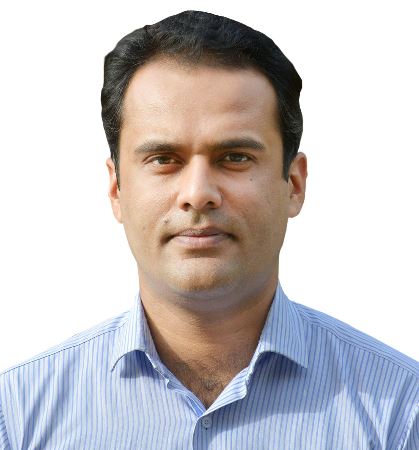
ISLAMABAD, JUL 12 /DNA/ – As the Neelum-Jhelum Hydropower Project (NJHPP)remains shut following a tunnel collapse in April 2024, with power generation now unlikely to resume before 2028, the Federation of Pakistan Chambers of Commerce and Industry’s Businessmen Panel (BMP) has said the prolonged delay highlights the urgent need for transparent investigations into technical failures, improved execution of strategic hydropower projects and accelerated investment in low-cost renewable energy to ease inflationary pressures and revive industrial competitiveness.

The BMP Chairman and former FPCCI President Mian Anjum Nisar said the prolonged outage of the Rs500-billion-plus project has deprived the country of nearly 1,000 megawatts of comparatively cheap electricity, forcing greater reliance on expensive thermal generation and imported fuels. He said this has increased power generation costs, pushed up electricity tariffs for industries and households, raised manufacturing expenses and ultimately contributed to inflation by making goods and services more expensive.

Mian Anjum Nisar said the Neelum-Jhelum project is a reminder that Pakistan’s economic stability is closely linked with the availability of affordable electricity. He observed that every delay in restoring low-cost hydropower adds pressure on industries already struggling with high energy prices, elevated financing costs and declining competitiveness in regional and international markets.

He said hydropower remains the cheapest and most sustainable source of electricity after its initial construction costs are recovered. Unlike imported fuel-based power plants, hydropower protects the economy from fluctuations in global oil and LNG prices, reduces the country’s import bill and strengthens energy security. “Every additional unit of electricity generated from water instead of imported fuels reduces production costs, lowers inflationary pressures and supports sustainable economic growth,” he added.

The BMP chairman said Pakistan’s manufacturing sector has been facing an unprecedented cost crisis over the past few years because of expensive electricity, gas shortages and rising fuel prices. Industries ranging from textiles and leather to engineering, chemicals, steel and food processing have experienced significant increases in production costs, weakening their ability to compete with exporters from regional economies where electricity tariffs are substantially lower.

He said affordable electricity is not merely an energy issue but a national economic priority because power costs directly influence industrial productivity, exports, employment and consumer prices. When factories pay higher electricity bills, the additional burden is inevitably passed on to consumers through increased prices of manufactured products, thereby fuelling inflation throughout the economy.

Mian Anjum Nisar stressed that Pakistan possesses enormous untapped hydropower potential capable of producing thousands of megawatts of low-cost electricity. However, he regretted that repeated delays, cost overruns, administrative bottlenecks and technical shortcomings have prevented the country from fully benefiting from these natural resources.

Referring to the Neelum-Jhelum project, he said reports about tunnel faults and the continuing investigation should be examined through a completely transparent, independent and technically sound inquiry so that the actual causes are identified and corrective measures implemented in future projects. He said accountability should not merely focus on assigning responsibility but on ensuring that engineering standards, geological assessments, project supervision and risk management are significantly strengthened.

The BMP chief observed that Pakistan can no longer afford repeated setbacks in strategic infrastructure projects because every year of delay deprives the economy of affordable electricity while increasing dependence on costly imported fuels. He said the country must draw valuable lessons from the Neelum-Jhelum experience to improve planning, construction quality and long-term maintenance of future hydropower schemes.

He urged the government to expedite work on all ongoing hydropower projects, including Diamer-Bhasha, Mohmand, Dasu and other strategic dams, while ensuring timely completion without unnecessary administrative or financial delays. According to him, expanding hydropower generation will gradually reduce the overall cost of electricity, improve industrial competitiveness, strengthen exports and create a more favourable investment climate.

Mian Anjum Nisar further said that affordable electricity is essential for achieving the government’s objectives of industrial expansion, export-led growth and economic stability. Lower power tariffs would encourage manufacturers to expand production, attract fresh domestic and foreign investment, generate employment opportunities and enable businesses to compete effectively in international markets.

Commenting on the Senate Standing Committee’s observations regarding groundwater depletion, he said water infrastructure should be viewed as a national economic asset because dams serve multiple purposes, including electricity generation, irrigation, flood mitigation and water conservation. Investing in such infrastructure therefore yields long-term economic, agricultural and environmental benefits.

He also expressed concern over reports of financial irregularities in the Nai Gaj Dam project and called for strict transparency and accountability in all public sector infrastructure schemes.

The BMP chairman said Pakistan’s energy policy should be based on maximising indigenous resources rather than increasing dependence on imported fuels whose prices remain vulnerable to global geopolitical developments. He added that hydropower, together with other renewable energy sources, offers the most sustainable path towards affordable electricity, lower production costs and long-term macroeconomic stability.

Mian Anjum Nisar emphasized that reducing the cost of doing business should remain the government’s foremost economic objective. Besides tax reforms and easier access to finance, he said, lowering electricity tariffs through expanded hydropower generation is among the most effective measures to revive industrial activity and control inflation.

Qatar calls Iran attacks on its territory, Arab neighbors ‘dangerous escalation’

Qatar calls Iran attacks on its territory, Arab neighbors ‘dangerous escalation’

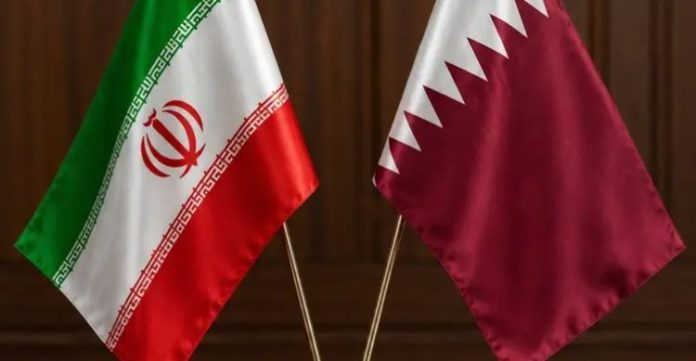
DOHA, JUL 12: Mediator Qatar on Sunday condemned Iranian attacks against its territory and its neighbors, after it launched salvos against Arab countries.

“Qatar condemns in the strongest possible terms the renewed attacks carried out by the Islamic Republic of Iran,” the foreign ministry said in a statement, also referring to the targeting of Jordan, the United Arab Emirates, Bahrain, Oman and Kuwait.

It called the attacks a “dangerous escalation” the can “complicate” efforts aimed at containing regional tension.

“Iran bears full legal responsibility for these attacks and the resulting consequences and repercussions,” the ministry said in the statement.

Qatar reserves its right to response to the attacks and to take the necessary measures to protect its sovereignty, security and safety, the ministry added.

‘Unacceptable’: Switzerland coach fumes after Breel Embolo red card in loss to Argentina

‘Unacceptable’: Switzerland coach fumes after Breel Embolo red card in loss to Argentina

MEXICO CITY: witzerland forward Breel Embolo was sent off in the second half of its World Cup quarterfinal loss to Argentina on Saturday night, a controversial decision following a video review that is certain to fuel those who believe referees have been biased toward the reigning champion throughout the tournament.

Dan Ndoye had just tied the game at 1-all in the 67th minute when Argentina’s Leandro Paredes was shown a yellow card following a tackle on Embolo. But video showed that the Swiss player was falling before Paredes made contact with him, so Embolo was given a yellow card under the “mistaken identity” protocol that’s being used at the World Cup.

Embolo also had received a yellow card earlier in the match, so he was sent off and the Swiss were left to play with 10 men the rest of the way.

Switzerland managed to get the game to extra time and was trying to survive to a shootout. But then Julián Alvarez scored from long range in the 112th minute, and Lautaro Martínez added another goal a few minutes later, sending Argentina to a 3-1 victory.


“We were punished because of a rule that in my opinion is completely unacceptable,” Swiss coach Murat Yakin said.

“It’s very painful that we were eliminated that way. I don’t think we deserve that today, and in my opinion, my boys are the real heroes. They put all their heart and their passion into their performance. I am very proud. They are very proud.”

Yakin wasn’t done with his criticism of Portuguese referee João Pinheiro, though.

“The referee made the wrong decision,” Yakin said. “It was in my opinion a harmless foul, if it even was a foul. I know they will protect their referee but this rule destroyed our game today, and it’s very painful, and to be eliminated in that way hurts a lot.”

Argentina coach Lionel Scaloni acknowledged that “luck was on our side because one of their players was sent off.”

It was the second time a yellow card was overturned using the “mistaken identity” protocol at the World Cup. The relatively obscure rule allows the video assistant referee to intervene when an incorrect player is shown a yellow or red card.

“I think the red card changed our game,” Swiss captain Granit Xhaka said. “This decision was difficult to accept now after the game because the dressing room was very quiet, disappointed.”

Earlier this week, the Egyptian Football Association said it “cannot remain silent” after what it believed was biased officiating in its 3-2 loss to Argentina in the Round of 16. Egypt coach Hossam Hassan and several players had criticised the officiating after the defending champion scored three unanswered goals to pull off one of the biggest comebacks in World Cup history.

“Nobody can question the integrity of the FIFA World Cup match officials,” FIFA’s chief of refereeing Pierluigi Collina said in response Wednesday. “When this happens, it may provoke reactions that lead to threats against them and their families. This is not right.”

Yakin stopped short of saying Argentina was being favoured by World Cup referees. But he also did not hold back about an incident that he believes changed the complexion of Saturday night’s match.

“We were punished by a referee’s mistake,” he said. “I didn’t know this rule before. It was a very harmless situation, and then a yellow card was awarded. The VAR interfered. It was a very meaningful moment for us, and it was decisive in the outcome of the match.”

In call with Iran’s Araghchi, DPM Dar terms ‘dialogue, diplomacy’ only paths to peace

In call with Iran's Araghchi, DPM Dar terms 'dialogue, diplomacy' only paths to peace

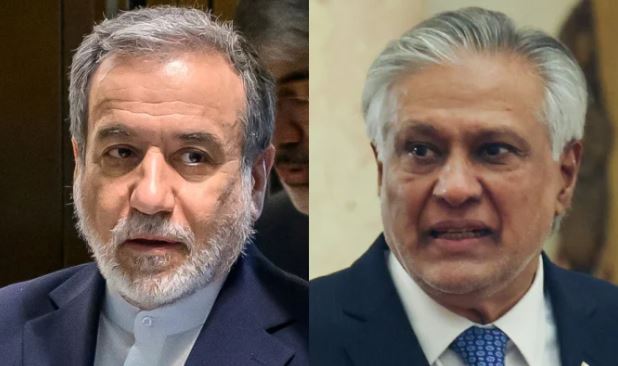
ISLAMABAD: Deputy Prime Minister and Foreign Minister Ishaq Dar told his Iranian counterpart Abbas Araghchi that dialogue and diplomacy remained the only viable path to resolving disputes and ensuring lasting peace during a telephone conversation on Sunday.

The two leaders exchanged views on the evolving regional situation, according to a statement issued by the Foreign Office. Dar urged all parties to pursue de-escalation and exercise restraint in line with the Islamabad Memorandum of Understanding agreed in June.

US and Iranian forces exchanged heavy missile and drone strikes, with Tehran targeting US facilities in states across the Gulf on Sunday after saying it had again closed the vital Strait of Hormuz.

President Donald Trump had earlier this week declared the end of a ceasefire meant to halt the fighting that the US and Israel began on February 28, though Trump has left the door open to continued negotiations.

The escalation followed several attacks on commercial ships in the area. Iran said it had closed the strait after firing a warning shot that struck a vessel travelling on an unapproved route, and said on Sunday it had disabled a second vessel.

The strait will remain closed until “the end of US interference in this region,” Iran’s Revolutionary Guards said. About a fifth of the world’s oil supply transited through the Strait of Hormuz before the war, and Iran’s effective blockade of the waterway has caused energy prices to surge, fuelling global inflation.

Meanwhile, the deputy prime minister underscored that “dialogue and diplomacy remain the only viable path to resolving disputes and achieving lasting peace and stability in the region”.

He also reiterated Pakistan’s readiness to continue playing a constructive role in promoting and maintaining regional peace and stability.

The Foreign Office said both leaders agreed to remain in close contact.

Araghchi has accused the United States of violating the ceasefire agreement. “There can only be mutual compliance,” he wrote on X on Friday.

On Sunday, Iran’s top negotiator Mohammad Baqer Qalibaf posted on X: “The era of one-sided deals is OVER. We told you: keep your word or pay the price. Reality is knocking.”

Security forces gun down more than 65 terrorists in ongoing Operation Shaban: sources

Security forces gun down more than 65 terrorists in ongoing Operation Shaban: sources

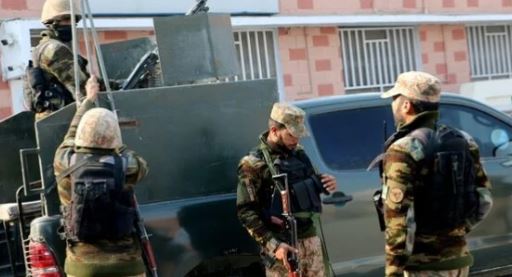
RAWALPINDI, JUL 12: Security forces eliminated three more terrorists belonging to India’s proxy Fitna al-Khawarij during the ongoing Operation Shaban in Balochistan, security sources said on Sunday.

The sources told Geo News that the total number of terrorists killed has risen to 67 in the current operation, while overall, 105 have been gunned down since June 5.

The operation was launched in the aftermath of the attack on the Mangi Dam police station in Ziarat and is being carried out jointly by the Pakistan Army, Frontier Corps (FC), and Balochistan Police, the sources had said earlier.

While security forces inflicted heavy losses on terrorists in ongoing operations, 42 people, including security personnel and civilians, were martyred in three recent terrorist attacks in Balochistan.

The operation in Balochistan will continue until the last militant is eliminated, the security sources had said.

Speaking on the terrorist attack in Ziarat, Inter-Services Public Relations (ISPR) Director General Lt Gen Ahmed Sharif Chaudhry had on Wednesday said that India-backed terrorists attacked the checkpoint, but police personnel fought the terrorists bravely and killed 15 militants during the initial engagement.

The military spokesperson said nine police personnel embraced martyrdom in the initial fighting, adding that militants had taken police personnel hostage before security forces reached the area.

Pakistan witnessed a surge in terror activities, particularly in its KP and Balochistan provinces, since 2021, when the Afghan Taliban came into power.

In response, Pakistan launched Operation Ghazab lil-Haq, targeting what it said were terrorist hideouts across the border. According to Pakistani authorities, the operation killed scores of Afghan Taliban operatives and allied militants and injured hundreds more.

In October 2025, border clashes erupted after the Afghan Taliban and affiliated militants launched unprovoked attacks on Pakistani border posts. Over 200 Taliban fighters and allied militants were killed, while 23 Pakistani soldiers were martyred defending the country.

Despite several rounds of talks, both countries have been unable to reach an agreement, largely due to the Afghan Taliban regime’s reluctance to take action against terrorist outfits.

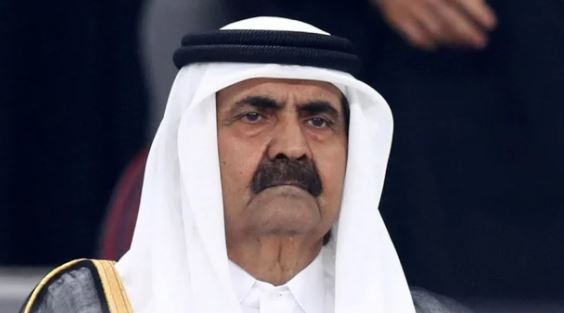
Former emir of Qatar, Sheikh Hamad bin Khalifa Al Thani, dies at 74

Former emir of Qatar, Sheikh Hamad bin Khalifa Al Thani, dies at 74

DOHA, JUL 12: Qatar’s former emir, Sheikh Hamad bin Khalifa Al Than, has died at the age of 74, the nation’s Amiri Diwan, its top government body, said on Sunday.

Sheikh Hamad ruled Qatar from 1995 to 2013, before abdicating to his son Sheikh Tamim, the current leader of the gas-rich Gulf country.

“The Amiri Diwan announced the death of HH the Father Amir Sheikh Hamad bin Khalifa Al-Thani on Sunday morning. May Allah have mercy on his soul and grant him the best reward for what he achieved for his homeland and nation,” the Diwan said.

Sheikh Hamad had elevated Qatar’s global profile through the development of the Al Jazeera television network, as well as its successful bid to host the 2022 soccer World Cup tournament.

Qatar is a small state with more than 2.5 million people, but is the world’s largest exporter of liquefied natural gas, a global investment powerhouse, and a heavy hitter in Middle East diplomacy and international media.

Sheikh Hamad handed power to his son, the then crown prince, in June 2013.

Meanwhile, Prime Minister Shehbaz Sharif expressed profound grief over the passing of the former Qatari emir, describing him as a visionary leader and statesman.

In a post on X, the prime minister said Sheikh Hamad’s wisdom, foresight and dedication to public service transformed Qatar into a modern, prosperous and globally respected nation.

He said the late father emir’s enduring contributions to the welfare of Qatar, as well as to regional peace, development and international cooperation, would be remembered for generations.

Shehbaz extended heartfelt condolences on behalf of the people and government of Pakistan to Qatar’s Emir Sheikh Tamim bin Hamad Al Thani, the Al Thani family, the Qatari government and people.

“We stand in solidarity with them in this moment of profound grief,” he said.

The prime minister also recalled Sheikh Hamad’s warmth, kindness and deep affection for Pakistan, saying his many visits to the country would always be cherished.

He prayed that Allah Almighty grant the departed leader the highest place in Jannh and give the royal family and the people of Qatar strength and patience to bear the loss.

Deputy Prime Minister and Foreign Minister Ishaq Dar also expressed deep sorrow over the passing of the former Qatari emir, extending condolences to Qatar’s leadership and people.

In a post on X, Dar said he was “deeply saddened” to learn of the former emir’s death.

He said Sheikh Hamad played a pivotal role in Qatar’s modern development during his reign and helped strengthen the bonds of friendship between Pakistan and Qatar.

Dar also praised the late leader’s visionary leadership and contributions to regional peace, saying they would be remembered for years to come.

“On behalf of the people, Government of Pakistan and myself, I extend heartfelt condolences to the Al Thani family, the Emir, the Government and the people of Qatar,” he wrote.

The deputy prime minister prayed that Allah Almighty grant the departed soul the highest place in Jannah and give the bereaved family strength to bear the loss.

When Crises Converge: Changing Humanitarian Realities in KP and the Merged Areas

When Crises Converge: Changing Humanitarian Realities in KP and the Merged Areas

BY Rehan Ali

Across Khyber Pakhtunkhwa and the Merged Areas, crises are no longer isolated events. Conflict, climate shocks, and economic strain are increasingly intersecting, creating a layered humanitarian challenge.

In January 2026, an evolving security situation and rising tensions in Tirah Valley and parts of Kurram led thousands of families to seek safety in nearby areas. Like many others, Amina gathered her children and a few belongings and set out on an uncertain journey. For weeks, she lived in a temporary settlement on the outskirts of Bara, sharing limited space with relatives and adapting to a life she never imagined.
“We left everything behind,” she says quietly. “We thought it would be for a few days.”

But days turned into weeks. With over 378,000 people affected and nearly 54,000 families displaced, the scale of need quickly became evident. For families like Amina’s, the most immediate concerns were food, clean water, basic healthcare, and protection from harsh weather.

When response teams reached her settlement, the first interaction was not distribution, but listening. Names were recorded, family sizes noted, urgent needs identified. Soon after, assistance followed food supplies, hygiene kits, winterization items, and basic medical care. “At least now,” she says, “we feel someone knows we are here.”

Hundreds of kilometers away in Buner, Fatima Gul’s story carries a different, but equally painful memory.

On 15 August 2025, a sudden cloudburst struck parts of Swat and Buner, unleashing intense rainfall within hours. Streams turned into torrents, sweeping through villages with little warning. Homes collapsed, roads vanished, and livelihoods built over years were washed away in a single afternoon.
“We did not even have time to think,” Fatima recalls. “Everything was gone.”

Her family, like many others, lost not just shelter but their means of survival. In the aftermath, outreach teams engaged with affected communities, ensuring that support reached those who needed it most. For women like Fatima, this engagement was crucial. It was not just about relief, but about being heard, about rebuilding with some sense of dignity.

These stories, though different in cause, reflect a common reality. Across Khyber Pakhtunkhwa and the Merged Areas, crises are no longer isolated events. Conflict, climate shocks, and economic strain are increasingly intersecting, creating a layered humanitarian challenge. It is not one emergency replacing another, but multiple pressures unfolding at the same time, stretching both communities and response systems.

In such a landscape, the role of national humanitarian institutions becomes even more critical. The Pakistan Red Crescent Society, working alongside public authorities and Movement partners, has remained engaged across these evolving situations, often operating in areas where needs are immediate and access is difficult.

Since early 2025, under the leadership of Chairperson Mrs. Farzhana Naek, efforts have been underway to strengthen institutional systems and improve response capacity. The focus has been on building more structured, accountable processes while enhancing coordination and service delivery. These changes are gradually shaping a more adaptive and responsive institution, capable of managing both sudden emergencies and prolonged crises.

The scale of response over the past year reflects this effort. More than 410,000 people have been reached nationwide through emergency operations, including over 225,000 during the floods response. In Bajaur, with support from ECHO, a multi-sector initiative supported over 60,000 individuals through health, water and sanitation, and cash assistance.

At key border points, where returning Afghan families arrive under difficult conditions, integrated Humanitarian Service Points at Torkham and a Medical Health Facility at Chaman have provided essential services. Health care, water and sanitation, protection, restoring family links, and community engagement have been brought together to ensure that assistance is both coordinated and dignified, reaching over 116,000 Afghan migrants.

In Tirah and Kurram, where Amina’s story began, response teams reached more than 51,500 displaced individuals despite challenging terrain and weather, providing food, non-food items, hygiene kits, winterization support, and first aid. These efforts underline a simple reality: in places where access is uncertain, presence itself becomes part of the response.

An important element across these interventions has been balance. Support has extended not only to displaced and returning populations but also to host communities, helping ease local pressures and maintain social cohesion in already strained environments.

Preparedness is also gaining attention. Early Action Protocols are being introduced, alongside a broader Emergency Contingency Plan that includes a focus on nutrition, particularly for women and children. Health initiatives continue to expand, including immunization efforts in Bannu, Sub-Division Wazir, and Chaman, reaching over 109,000 individuals through community engagement and awareness.

Behind many of these efforts are volunteers. With a network exceeding 728,000 individuals and nearly 18,800 actively engaged, they remain a vital link between response systems and communities. Recognizing their central role, the Chairperson has set an ambitious vision to expand the volunteer base to one million, further strengthening PRCS’s ability to deliver timely and effective humanitarian services.

At the same time, greater emphasis is being placed on Protection, Gender and Inclusion, ensuring that women, children, the elderly, and persons with disabilities are not overlooked. In complex emergencies, inclusion is not an add-on, it is essential to effective response.

Yet, the broader environment is becoming more uncertain. Global conflicts and economic pressures are reshaping funding priorities, with resources increasingly stretched. For institutions responding to growing needs, this creates real constraints on how far and how fast support can reach.
This is where the conversation shifts beyond response. The patronage of the President of Pakistan and the PRCS, Mr. Asif Ali Zardari, along with the continued support of Movement partners, provides an important foundation. But the scale and complexity of today’s challenges call for wider engagement from all stakeholders.

Because in the end, stories like Amina’s and Fatima’s are not just about loss. They are about what follows the moment when someone arrives, listens, and stays.

And in places where crises converge, that presence becomes more than assistance. It becomes a bridge between uncertainty and recovery, a reminder that even in the most difficult moments, no community should have to face the journey alone.

Rehan Ali
The writer is Assistant Director, Media & Communication, Pakistan Red Crescent Society (PRCS), National Headquarters, Islamabad.

Stay Connected

64FansLike
60FollowersFollow

Latest Reviews

Exchange Rates

USD - United States Dollar
EUR
1.15
GBP
1.34
AUD
0.70
CAD
0.71