Home Blog Page 426

Sharm el-Sheikh and the Shadows of History

Sharm el-Sheikh and the Shadows of History

by Muhammad Mohsin Iqbal

History, when it repeats itself, does so with a painful consistency. The recent peace agreement signed between Israel and Palestine in Sharm el-Sheikh, though welcomed by many as a diplomatic triumph, raises more questions than it answers. The gathering of world leaders, including the President of the United States, lent the event a ceremonial weight; yet, the conspicuous absence of Israeli Prime Minister Benjamin Netanyahu overshadowed the symbolism of unity that such moments usually intend to convey. In international diplomacy, gestures often carry greater significance than words—and an empty chair at such a table speaks louder than a thousand signatures.

To understand the implications of this accord, one must travel through the corridors of history. The Israeli-Palestinian conflict has been punctuated by countless accords—Camp David, Oslo, Wye River, and Annapolis, among others—all draped in the language of hope, yet ultimately betrayed by the realities of mistrust and imbalance. Each agreement began with applause and optimism, only to be eroded by violence, settlements, and political expediency. The peace of Sharm el-Sheikh, therefore, is not the dawn of a new chapter; it is another verse in a long and tragic poem written in the ink of broken promises.

The fundamental question remains; what is the true enforceability of such agreements? A peace accord is not merely a collection of signatures but a covenant of trust. Without mutual respect and the will to abide by its spirit, the document is reduced to little more than parchment and ink. In the absence of clear guarantees and mechanisms for enforcement, any agreement between parties with a history of hostility becomes fragile—an arrangement that trembles at the first gust of political change. Who will hold either side accountable if one defies the clauses? The international community may issue statements and convene emergency meetings, but the world has witnessed again and again that resolutions alone cannot restrain a nation’s ambition or fear.

The presence of powerful nations at the ceremony may lend the agreement diplomatic legitimacy, but moral legitimacy comes only from sincerity and justice. No treaty, however well-drafted, can sustain peace if one party continues to occupy, oppress, or provoke. The imbalance of power between Israel and Palestine has been the central obstacle to every peace effort. The stronger party often negotiates from a position of control, while the weaker negotiates from necessity. In such a dynamic, peace becomes not a partnership, but a concession. Without equality of intent and mutual recognition of suffering, peace remains an illusion.

The absence of Netanyahu at the table invites speculation. Was it a political calculation to avoid domestic backlash, or an indication of Israel’s reluctance to accept the moral and practical obligations that peace demands? Symbolically, it echoes the hesitation that has marked Israel’s approach to genuine reconciliation. True peace requires courage—not only to sign, but to surrender certain privileges of power, to dismantle structures of occupation, and to extend the hand of humanity even when distrust lingers.

History teaches us that peace without justice is a pause, not a conclusion. The Palestinian question is not merely about borders; it is about dignity, statehood, and survival. Any agreement that does not address these core issues is merely a truce awaiting its expiry date. Similarly, any framework that allows one side to act with impunity while the other is bound by restraint cannot endure. The lessons of the past are clear; when peace is imposed rather than nurtured, it decays from within.

Philosophically, peace is not an event—it is a process of transformation. It requires not only political signatures but moral awakening. Nations must evolve beyond the mindset of victory and defeat to embrace coexistence. In this sense, the peace of Sharm el-Sheikh will only have meaning if it transforms hearts as well as policies. The children of Gaza and Tel Aviv must inherit not the bitterness of their fathers but the possibility of friendship. Yet such transformation cannot be legislated; it must be cultivated through fairness, empathy, and the humility to acknowledge past wrongs.

Academically, one might frame this as a problem of asymmetrical negotiations and enforcement theory. Without a credible external guarantor or binding arbitration mechanism, the incentives for compliance diminish over time. If the agreement lacks teeth, it cannot bite when breached. History shows that when Israel expands settlements or conducts military operations in defiance of accords, global powers rarely move beyond expressions of “deep concern.” Similarly, when extremist factions within Palestine retaliate, they too jeopardize the very peace their people long for. Thus, the failure is not only political—it is moral. The world’s silence, selective outrage, and short-lived attention have all contributed to the erosion of accountability.

In moral terms, peace demands sacrifice from both sides. It requires Israel to see beyond its security walls and Palestine to rise above its despair. It requires the world to uphold justice not through speeches but through sustained action. If the international community truly seeks to guarantee peace, it must ensure that violations are not met with indifference. Guarantees cannot exist in rhetoric—they must live in reality.

And so, as the ink dries on another agreement, the world watches—half in hope, half in doubt. The setting of Sharm el-Sheikh, a resort once associated with tranquility and diplomacy, may again witness the familiar arc of optimism fading into cynicism. Yet, perhaps, in this weary repetition, lies a glimmer of awakening: that peace cannot be gifted, it must be earned through honesty, equity, and respect for human life.

If the architects of this accord have truly learned from history, then perhaps this time the peace will hold—not because it was signed in grandeur, but because it was implemented in good faith. Otherwise, it will join the archives of unfulfilled promises, a reminder that in the pursuit of peace, words are many, but courage is rare.

Pakistan presses Taliban for “verifiable” action on militants

Pakistan presses Taliban for

ISLAMABAD, OCT 18 /DNA/ – A high-level delegation from Pakistan, led by our Minister of Defence, will hold discussions with representatives of the Afghan Taliban in Doha today. The talks will focus on immediate measures to end cross-border terrorism against Pakistan emanating from Afghanistan and restore peace and stability along the Pak-Afghan border.

Pakistan does not seek escalation but urges the Afghan Taliban authorities to honour their commitments to the international community and address Pakistan’s legitimate security concerns by taking verifiable action against terrorist entities, including the FAK/TTP and FAH/BLA.

Pakistan appreciates the mediation efforts of Qatar and hopes these discussions contribute to peace and stability in the region.

Four Envoys present credentials to President Asif Ali Zardari

Four Envoys present credentials to President Asif Ali Zardari

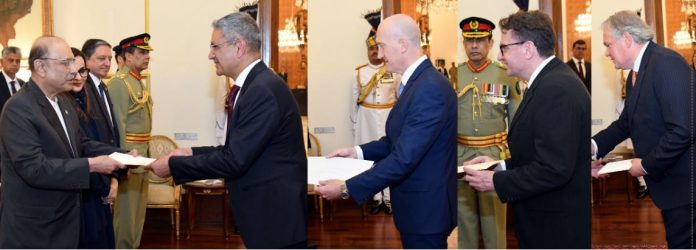
ISLAMABAD, OCT 17 /DNA/ – Four newly designated envoys presented their credentials to President Asif Ali Zardari at a ceremony held at Aiwan-e-Sadr, today.

Those who presented their credentials included Mr. Tarik Ali Khan, High Commissioner-designate of Canada; Mr. Abdulaziz Issa, Ambassador-designate of Republic of Lebanon; Mr. Robert-Jan Siegert, Ambassador-designate of the Kingdom of the Netherlands; and Mr. David Pine, Non-Resident High Commissioner-designate of New Zealand (based in Colombo).

Upon arrival at the Presidency, the envoys were presented Guard of Honour by a smartly turned-out contingent of the Pakistan Armed Forces.

Welcoming the newly accredited envoys, the President congratulated them on their appointments and expressed confidence that their tenures would further strengthen Pakistan’s bilateral relations with their countries.

The President highlighted Pakistan’s longstanding and friendly relations with Canada, emphasising enhanced economic, trade, and investment cooperation, particularly in the IT, energy and minerals sectors. He noted the importance of people-to-people linkages and lauded the role of the vibrant Pakistani diaspora in Canada in promoting goodwill between the two nations.

In his conversation with the Ambassador of Lebanon, the President reaffirmed Pakistan’s deep solidarity with the Government and people of Lebanon, strongly condemning Israel’s aggression against civilians. He assured Pakistan’s continued support for Lebanon’s sovereignty and territorial integrity, and emphasised the need to enhance bilateral trade, security and counter-terrorism cooperation.

During his meeting with the Ambassador of the Netherlands, the President underscored the importance of further strengthening bilateral ties, especially in trade, investment, agriculture, and education. He appreciated Netherlands’ partnership in areas such as water management, climate resilience and sustainable development, and invited greater Dutch investment in Pakistan.

In his interaction with the Non-Resident High Commissioner of New Zealand, the President highlighted the shared Commonwealth heritage and democratic values between the two countries. He underscored the potential for enhanced cooperation in agriculture, livestock, fisheries, and clean energy and expressed appreciation for New Zealand’s support for Pakistan’s multilateral initiatives.

The President extended his best wishes to all four envoys for a successful and productive tenure, expressing hope that their efforts would lead to stronger bilateral and multilateral partnerships for mutual benefit.

Senator Sherry Rehman, Senator Saleem Mandviwalla, and Secretary Foreign Affairs were also present on the occasion.

Pakistan proposes four-pronged framework at OIC Labour Ministers Conference

Pakistan proposes four-pronged framework at OIC Labour Ministers Conference
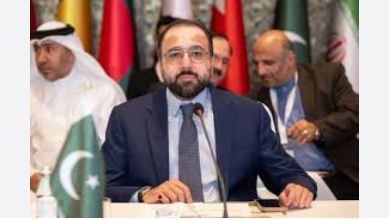
DOHA, Oct 17 (APP):At the Sixth Islamic Conference of Labour Ministers (ICLM) in Doha, Qatar, Minister for Overseas Pakistanis and Human Resource Development, Chaudhry Salik Hussain, proposed a comprehensive four-pronged framework aimed at enhancing workforce capacity, advancing skills development, and promoting ethical labour mobility across the Organization of Islamic Cooperation (OIC).

As part of the initiative, he called for the launch of an OIC Skills Partnership, focused on training workers in emerging sectors such as digital technology, renewable energy, and the care economy.

He called for the establishment of ethical Labour Mobility Corridors, with standardized, bilateral templates that ensure fair recruitment and protection practices rooted in the OIC Charter’s call for fairness and justice.

The minister emphasized the development of portable social security schemes for migrant workers, ensuring that their years of service are recognized wherever they contribute. He emphasized expanding joint programs under the Islamic Development Bank’s Youth Employment Support Programme (YES) to foster entrepreneurship and innovation ecosystems across the Member States.

Chaudhary Salik Hussain said Pakistan is ready to host pilot projects and training exchanges under these initiatives, in partnership with OIC Member States and international development partners.

He emphasized the need for moving beyond fragmented efforts and embracing regional integration to harness the immense potential of the Islamic world.

The Minister said Pakistan stands ready to work closely with OIC institutions including the Islamic Development Bank (IsDB), SESRIC, COMCEC, and the OIC Labour Centre to develop joint programs in skills, data sharing, and social protection.

Urging stronger ties among OIC labour markets, he proposed that Gulf countries as global hubs for manpower consider expanding employment and visa opportunities for workers from Islamic countries in the spirit of solidarity, security and shared prosperity.

He pointed out that over 11 million overseas Pakistanis are currently contributing to global economies while sending home more than 38 billion dollars annually in remittances.

He said Pakistan fully endorses the Mutual Recognition Arrangement (MRA) for skilled workers. If collectively implemented, he said, the MRA could open new employment avenues and create a seamlessly integrated Islamic labour market.

Highlighting Pakistan’s domestic achievements, the minister shared that under the National Vocational Qualification Framework (NVQF), over 200,000 youth have received internationally aligned skills certifications.

He said the country’s National Employment Policy is designed to strengthen workplace safety, promote inclusion especially for women and persons with disabilities and extend social protection.

In addition, he said Pakistan is developing targeted corridors for safe and regular migration to meet workforce demands in construction, manufacturing, healthcare, and ICT across the Gulf and beyond.

Salik Hussain said Pakistan values it bilateral partnerships with countries like the State of Qatar, the Kingdom of Saudi Arabia and the United Arab Emirates which have already employed millions of Pakistani workers through ethical recruitment pathways.

He said we are expanding collaboration with NAVTTC, ILO, ICMPD, and GIZ to align skills training with employer demand in the Gulf region. These partnerships are building bridges between technical training in Pakistan and job placement abroad.

Secretary Workers Welfare Fund Zulfiqar Ahmad was also attended the Conference.

Pakistan’s T20 squad for South Africa series finalised

Pakistan's T20 squad for South Africa series finalised

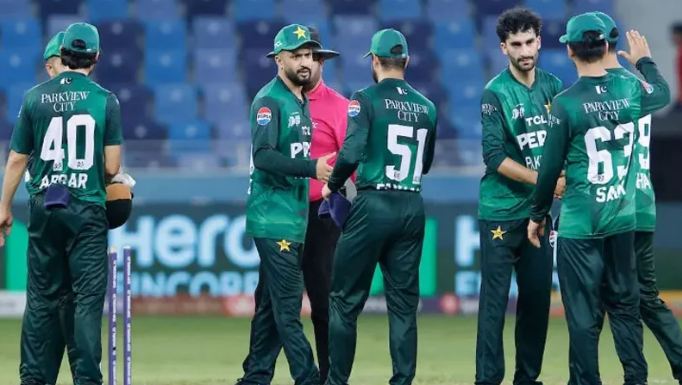
LAHORE: The Pakistan Cricket Board’s National Selection Committee has finalized the T20 squad for the upcoming series against South Africa, with the official announcement expected next week, according to sources familiar with the development.

The squad will mark the return of star batter Babar Azam to the shortest format, while fast bowler Naseem Shah, who has recovered from injury, is also set to make a comeback.

Key returns: Babar Azam, Naseem Shah back in action
Sources confirmed that Babar Azam will once again lead Pakistan’s batting lineup in the T20 series after being rested for earlier matches. His return is seen as a major boost to the team’s leadership and stability at the top order.

Also Read: Pakistan defeat world champions South Africa in Lahore Test thriller

Naseem Shah, who missed several international assignments due to injury, has been declared fully fit and will rejoin the pace attack. His inclusion strengthens Pakistan’s bowling department alongside Haris Rauf and Hasan Ali, both of whom have retained their spots.

Emerging players retained, underperformers dropped
Young talents Saim Ayub and Mohammad Haris have been retained in the T20 squad following their impressive performances in previous series. The selection committee reportedly views them as integral to Pakistan’s future T20 plans.

However, the selectors have decided to drop Khushdil Shah and Hussain Talat, who have struggled to maintain consistency. Their omission opens the door for Irfan Niazi, a promising all-rounder, who is expected to make his T20 debut for Pakistan.

Bowling strength and team balance prioritised
According to insiders, the selection committee has prioritized balance and depth in the squad, ensuring a mix of experience and young energy.

With Haris Rauf and Hasan Ali expected to lead the pace attack and Naseem Shah adding variety, Pakistan’s bowling unit will be backed by an aggressive batting core led by Babar Azam, Saim Ayub, and Mohammad Haris.

The official squad announcement is expected early next week, followed by a training camp ahead of South Africa’s arrival in Pakistan.

Also Read: Pakistan vs South Africa series: Ticket prices announced

A day ago, the Pakistan Cricket Board officially announced ticket prices for the upcoming Pakistan–South Africa white-ball series, which includes three ODIs and three T20 Internationals starting later this month.

According to the announcement, the minimum ticket price for the ODI series has been set at Rs400, while the most expensive ODI ticket will cost Rs3,000. For the T20 series, VIP tickets will be available for Rs800.

ODI series to be played in Faisalabad
All three One-Day Internationals (ODIs) will be hosted at the Iqbal Stadium in Faisalabad, known for its vibrant crowd and electrifying atmosphere.

Fans in Faisalabad are expected to turn out in large numbers to witness Pakistan take on South Africa, as the city gears up for its first major international series in several years.

The PCB said ticket sales will open online and at selected outlets in the coming days to ensure smooth access for fans.

T20 series schedule and venues
Following the ODI leg, the T20 International series between Pakistan and South Africa will be played from October 28 to November 1.

The first T20 will be held at the Rawalpindi Cricket Stadium,

The second and third T20 matches will take place at the Gaddafi Stadium in Lahore.

Bilawal pays tributes to Karsaz martyrs on 18th anniversary

Bilawal pays tributes to Karsaz martyrs on 18th anniversary

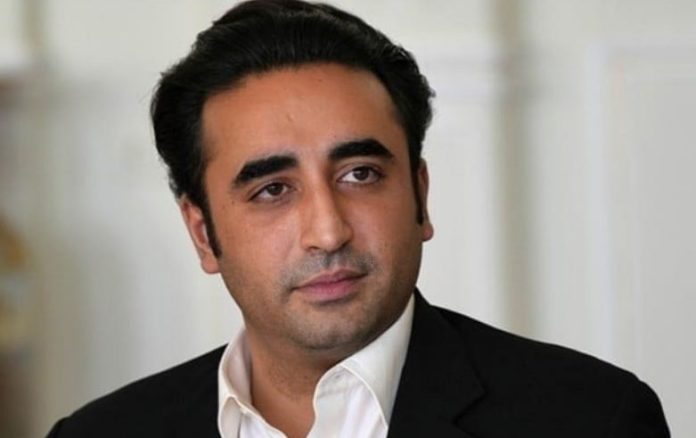
KARACHI, Oct 17 (APP/DNA): Chairman of Pakistan Peoples Party (PPP) Bilawal Bhutto Zardari has paid rich tribute to the martyrs of the Karsaz tragedy on their 18th martyrdom anniversary, saluting their unbreakable courage, unwavering loyalty, and supreme sacrifice for democracy and the people of Pakistan.

He said that October 18, 2007, remains forever etched in the soul of the nation, the day when over three million people welcomed Shaheed Mohtarma Benazir Bhutto home, and 180 brave Jiyalas laid down their lives defending the dream of a democratic Pakistan.

The PPP Chairman Bilawal Bhutto Zardari said that dictatorship and terrorism had joined hands to target the very hope of the people through the horrific attack on Shaheed Mohtarma Benazir Bhutto’s convoy. “They sought to extinguish the light of democracy, but the blood of our martyrs made it shine brighter,” he added.

He reaffirmed his resolve to carry forward the mission of Shaheed Mohtarma Benazir Bhutto and the martyrs of Karsaz to build a Pakistan of democracy, equality, and justice. “The blood of our martyrs continues to illuminate our path toward a peaceful, democratic, and prosperous Pakistan,” he concluded.

Canadian minister hopeful G7 can lower rare earth reliance on China

Canadian minister hopeful G7 can lower rare earth reliance on China

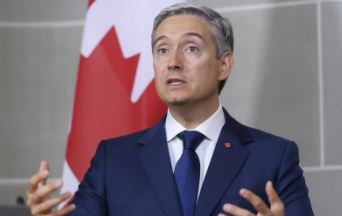
Washington, Oct 17 (AFP/APP):Canada's finance minister voiced optimism Thursday that the Group of Seven nations can "move from dependence to resilience" in the face of China's tightening rare earth export controls.
              Speaking to AFP in Washington, Canadian Finance Minister Francois-Philippe Champagne said rare earths were a key topic in around two hours of talks with his G7 counterparts on Wednesday.
              He expressed hope, however, that Canada and its allies can find solutions together to "move from dependence to resilience."
              "Around the table, we have all the solutions to address this issue, including Canada, which has critical minerals," he said.
              In early October, China announced fresh controls on the export of rare earth technologies and items, drawing a fiery rebuke from US President Donald Trump.
              Trump swiftly threatened to slap an additional 100-percent US tariff on goods from China, a move that would again snarl supply chains.
              Champagne's remarks to AFP came on the sidelines of the International Monetary Fund and World Bank's fall meetings, where he chaired the gathering of G7 finance leaders.
              Other leaders in the grouping -- consisting of Britain, Canada, France, Germany, Italy, Japan and the United States -- have raised worries over China's rare earth controls as well.
              Japan's finance minister Katsunobu Kato said his country is "deeply concerned" about the extensive restrictions China announced, urging for a united G7 response.
              UK finance minister Rachel Reeves criticized Beijing's move as a "wrong decision" that is dangerous for the global economy.
              And US Treasury Secretary Scott Bessent on Wednesday slammed China's actions, vowing that: "We are not going to let a group of bureaucrats in Beijing try to manage the global supply chains."
              Bessent also warned: "If some in the Chinese government want to slow down the global economy through disappointing actions and through economic coercion, the Chinese economy will be hurt the most."
              Tit-for-tat tariffs between the United States and China hit triple-digit levels earlier this year, although Washington and Beijing have since de-escalated tensions.
              But their truce remains shaky, with Trump previously also threatening to scrap a potential meeting with Chinese leader Xi Jinping after Beijing announced the rare earth curbs.
              During their talks in Washington, G7 finance ministers also discussed "the challenges to global economic growth and the need to promote and advance more inter-G7 trade, with particular focus on imbalances and critical minerals," a statement said.

IUB achieves 85.17 score in HEC Quality Assurance Assessment

IUB achieves 85.17 score in HEC Quality Assurance Assessment

BAHAWALPUR, OCT 17 (APP/DNA): The Islamia University of Bahawalpur (IUB) has achieved a distinguished milestone by securing 85.17 marks in the Annual Quality Assurance Performance Assessment conducted by the Higher Education Commission (HEC) of Pakistan, reflecting the university’s strong commitment to academic excellence, institutional integrity, and continuous improvement.

According to the HEC’s comprehensive evaluation for the year 2023–24, the performance of Quality Enhancement Cells (QECs) across universities was assessed on various parameters, including institutional performance evaluation, self-assessment of academic programs, program accreditation, and compliance with HEC’s quality standards. IUB’s QEC was rated as meeting all parameters satisfactorily, reaffirming its robust internal quality mechanisms and adherence to national and international benchmarks.

Vice Chancellor, Engr. Prof. Dr. Muhammad Kamran, expressed pride in the achievement, stating that this result reflects IUB’s strategic commitment to quality enhancement, academic integrity, and evidence-based education. He emphasized that the university’s success demonstrates effective implementation of best practices outlined in the HEC’s PSG-2023 Quality Assurance Framework, driven by stakeholder engagement and continuous academic improvement.

The Director QEC, Prof. Dr. Muhammad Asadullah Madni, highlighted the university’s steady progress, noting that IUB’s score rose from 70.36% (2019–21) to 85.17% (2023–24), crossing a significant quality threshold. He expressed gratitude to the university leadership, faculty, and administrative units for their consistent support, reaffirming QEC’s resolve to institutionalize a culture of quality, outcome-based education, and alignment with the UN Sustainable Development Goal 4 of Quality Education.

Dividend of Gaza–Israel Peace for the Rest of the World

Qamar Bashir

By Qamar Bashir

The world has finally witnessed an extraordinary development: the guns in Gaza have fallen silent. After months of relentless bombing, destruction, and the slow suffocation of a besieged population, Donald Trump’s unprecedented peace plan has brought at least a temporary halt to the horror. Aid is now trickling into Gaza, families that had endured starvation are receiving a semblance of relief, and the hope of survival, however fragile, is returning to a battered land. Yet the relief is tempered by the rhetoric of Benjamin Netanyahu, who insists that Israel’s objectives remain unchanged. His refusal to admit defeat conceals an anger at failing to persuade Trump to bless a complete annihilation of Gaza and its annexation into Israel’s expanding dream of territorial conquest.

This war, conceived by Israel and prosecuted with staggering ferocity, has ended in exhaustion rather than triumph. For the people of Gaza and the West Bank, the devastation is almost indescribable. United Nations and World Bank assessments estimate that Gaza alone faces over fifty billion dollars in reconstruction needs, with nearly seventy billion required to restore what has been lost. More than fifty-five million tons of rubble bury homes, schools, and hospitals, enough to fill thirteen pyramids of Giza. Electricity grids, water systems, hospitals, and telecommunications have been flattened. The human cost is greater still: tens of thousands dead, many more maimed, families erased, and an entire generation displaced.

Yet despite these horrors, the end of open conflict has already produced ripples felt far beyond the Levant. Perhaps the most immediate effect has been on global energy markets. During the war, the mere fear of disruption in Middle Eastern supply lines, particularly around the Strait of Hormuz and Red Sea trade routes, added a risk premium to oil. Brent crude had soared above eighty dollars a barrel, driving fuel and shipping costs higher across the globe. With hostilities ending, oil prices have tumbled to around sixty-one dollars a barrel, their lowest in five months. In the United States, gasoline prices that averaged four dollars a gallon only weeks ago are now edging closer to two dollars in some states, a correction that promises relief not only at the pump but across every layer of the economy.

Energy is the bloodstream of modern commerce. When oil and gas prices fall, every input cost—from transport to manufacturing to food distribution—drops in tandem. Lower energy costs ease inflationary pressure, reduce the consumer price index, and expand household purchasing power. For American families struggling with high costs of living, this decline may prove transformative. The dividend will be shared across the industrialized world, lowering inflation in Europe and Asia, reducing transport costs for global trade, and calming volatile markets that had priced in the risk of an expanded Middle Eastern war.

The greatest beneficiaries, however, may be in the developing world. Countries like Pakistan, Egypt, and those across Sub-Saharan Africa, which import most of their energy needs, have been spending much of their export earnings and foreign reserves on oil bills. High prices pushed them toward debt crises, leaving little for infrastructure or social spending. Now, with energy costs receding, these economies will regain some fiscal breathing space. Foreign exchange reserves will stabilize, debt servicing will become less crushing, and scarce resources can be redirected to development and poverty alleviation. For Pakistan, Afghanistan, and India—together home to over two billion people—the respite in energy costs is no less than a lifeline. Add China, the world’s largest energy importer, and the region accounts for nearly four billion people now benefiting directly from the dividends of this peace.

Equally important is the impact on trade. During the war, insurance premiums for ships passing through Middle Eastern waters soared, freight costs climbed, and global supply chains faced unpredictable delays. The ceasefire reduces these risks almost overnight. Cheaper shipping and lower risk premiums will improve the competitiveness of exporters, stabilize imports of food and essential goods, and ultimately lower costs for consumers worldwide. The IMF has already noted that a durable peace in Gaza could improve regional growth prospects by as much as one percentage point, a significant gain for struggling economies.

Peace also reshapes politics. Governments that were facing unrest from rising food and fuel prices suddenly have a cushion. Political leaders in fragile states can buy time, enact reforms, or at least ease the burden on citizens. This in turn creates a measure of stability, the very foundation of legitimacy and governance. The dividends of peace, therefore, are not only economic but also political, strengthening societies at their weakest points.

Still, there remains the urgent question of responsibility. Who will pay for Gaza’s reconstruction? It is not enough for wealthy states to open their treasuries out of charity while those who unleashed destruction escape unscathed. International law and morality demand that blame be apportioned. Israel, Hamas, regional actors, and global powers that contributed to the devastation should be compelled to shoulder the costs. Without such accountability, the precedent would be disastrous: that any powerful nation may devastate its weaker neighbor and walk away without consequence. Gaza must not become a template for impunity. Compensation must also reach families of innocent victims—children, women, doctors, and journalists—whose lives were shattered.

The road ahead is perilous. The peace is fragile and could collapse under renewed aggression. Donor pledges may falter, leaving reconstruction incomplete. Funds may be captured by elites or foreign contractors, breeding resentment rather than renewal. Regional tensions—whether in Lebanon, Syria, or Iran—could reignite conflict and restore the risk premium to oil markets. The dividends of peace are real but remain precariously balanced on the commitments of guarantors like the United States, which must enforce its plan with vigilance.

For Donald Trump, the Gaza ceasefire is not only a diplomatic achievement but also a political claim. He has boasted of stopping eight wars and now turns his gaze toward Russia and Ukraine, pledging to end that grinding conflict as well. Should he succeed, he would enter history as the president who halted nine wars in a single year of office. Whether this is bravado or foresight remains to be seen, but the Gaza experience proves that even entrenched conflicts can yield when backed by resolve and pressure from the most powerful office on earth.

In the final analysis, the dividends of Gaza–Israel peace are vast. Lower energy costs, subdued inflation, revitalized trade, fiscal space for fragile economies, and a political reprieve for leaders facing unrest all stem from this fragile truce. But the greatest dividend may be moral: the reminder that peace, even imperfect, enriches humanity far more than war, which impoverishes all. If the world seizes this moment to rebuild Gaza with justice, fairness, and accountability, it may set a precedent that aggression must pay and that peace, not conquest, yields the truest victory.

By Qamar Bashir

Press Secretary to the President (Rtd)

Former Press Minister, Embassy of Pakistan to France

Former Press Attaché to Malaysia

Former MD, SRBC | Macomb, Michigan, USA

Pakistan’s digital media influencers visit China embassy

Pakistan’s digital media influencers visit China embassy
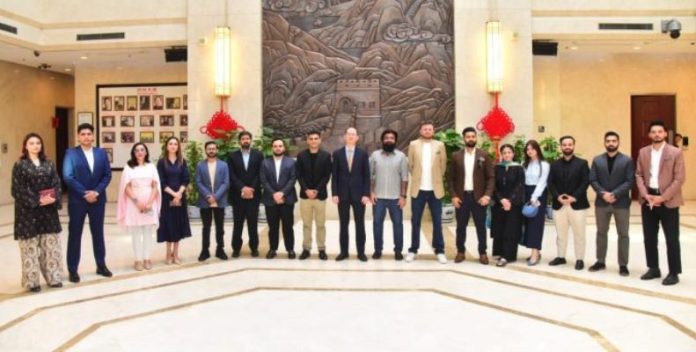
ISLAMABAD, Oct 17 (APP/DNA):The Embassy of China in Pakistan has hosted a delegation of Pakistan’s leading digital media influencers and publishers at a special event organized in collaboration with the Center for Regional Connectivity with Shared Future (CRCSF). 

The event aimed to further strengthen China-Pakistan relations through digital collaboration and enhance understanding of China’s development story among the Pakistani digital community.

Shi Yuanqiang, Deputy Chief of Mission (DCM) of the Chinese Embassy in Pakistan, warmly welcomed the delegation and described China and Pakistan as “ironclad brothers.”

He emphasized that both nations can cooperate in the digital media sphere to spread positive narratives and counter misinformation.

He highlighted that while the China-Pakistan relationship continues to strengthen, there is a need to further amplify its presence across digital platforms so that Pakistan’s young generation fully understands and values this friendship.

He expressed that the embassy was delighted to host such a vibrant delegation of digital media leaders and hoped that they would soon have more opportunities to visit China and witness the country’s remarkable progress firsthand.

Following the opening remarks, Chinese Embassy officials delivered a comprehensive briefing on China’s socioeconomic transformation, focusing particularly on developments in Xinjiang and China’s nationwide poverty alleviation drive, due to which more than 800 million people have been lifted out of poverty over the past 45 years.

They described this as one of humanity’s greatest success stories.

The embassy officials also addressed the issue of propaganda to misrepresent China’s achievements. They encouraged Pakistani digital influencers to use their platforms to promote truth and positivity.

They strongly refuted rumors related to the China-Pakistan Economic Corridor (CPEC), emphasizing that its success depends on the continued commitment and cooperation of both China and Pakistan.

The briefing further highlighted the emerging opportunities for youth and the digital sector under CPEC Phase II.

The participants, including Hammad Ali Nasir, Ammaar Bin Saleem, Bakhtwar Raja, Palwash Abbasi, Mir Haris Ali, Ammar Alvi, Ibrahim Afridi, Seemal Rehan, and Kashaf E Murtaza, expressed their appreciation for the event.

They remarked that it provided valuable insights into China’s development model, its vision for cooperation with Pakistan, and the immense scope for collaboration in digital communication.

Hamza Bhatti, Talha Ahad, and Imran Ghazali shared positive feedback, noting that the event deepened their understanding of China’s economic progress and commitment to Pakistan.

They thanked the Chinese Embassy and CRCSF for organizing such an insightful engagement and emphasized that similar initiatives would play a crucial role in fostering stronger people-to-people connections between both countries.

The delegation included prominent figures such as Maarij Farooq and Moiz Farooq from Pakistan Economic Network, Laiba Farooq from Ittehad Digital Network, Kashaf e Murtaza from Pakistan TV, Talha Ahad, CEO of The Centrum Media, Talal Chaudhry, CEO of TechJuice, Influencer Hamza Bhatti, Social media Influencer Seemal Rehan, Imran Ghazali, former GM of the Digital Media Wing, Government of Pakistan, Hammad Ali Nasir, CEO of Adcelerate 360, Ammaar Bin Saleem, host of Outloud with Ammaar, Bakhtwar Raja, Palwash Abbasi, Mir Haris Ali, Ammar Alvi from the Digital Communications Department, Government of Pakistan, Ibrahim Afridi, Founder of Greenova8, and Waseem Ghaffar from the Digital Team of the Prime Minister’s Office.

Stay Connected

64FansLike
60FollowersFollow

Latest Reviews

Exchange Rates

USD - United States Dollar
EUR
1.14
GBP
1.34
AUD
0.69
CAD
0.70