Home Blog Page 424

France museum closed after break-in

France museum closed after break-in

News Desk

PARIS: France’s Culture Minister Rachida Dati on Sunday reported a break-in at the Louvre in Paris, as the world-renowned museum said it was closing for the day.

“A hold-up took place this morning at the opening of the Louvre Museum,” she wrote on X, using a French word that can also mean “robbery”.

“No injuries reported. I’m on site with museum staff and police,” she added.

At least one person had entered the museum, a member of her team told AFP, without adding anything about any possible theft.

The Louvre said it was closing for the day “for exceptional reasons”.

The museum was not immediately available for comment.

PAF to showcase JF-17 Thunder Block-III fighter jets

PAF to showcase JF-17 Thunder Block-III fighter jets

Jets execute flawless in-flight air-to-air refuelling operations on their non-stop way to Azerbaijan, says ISPR

DNA

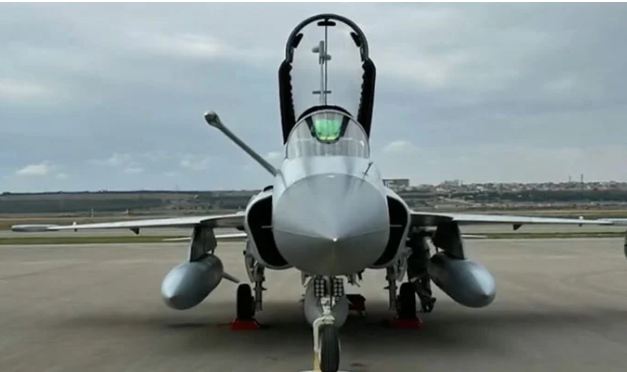
ISLAMABAD: A contingent of the Pakistan Air Force, featuring advanced JF-17 Thunder Block-III fighter jets along with expert air and ground personnel, has reached Azerbaijan to take part in the joint aerial combat exercise, Indus Shield Alpha, the Inter-Services Public Relations (ISPR) said on Sunday.

“In a remarkable display of operational prowess and endurance, PAF fighters accomplished a non-stop flight from their home base in Pakistan to Azerbaijan, executing flawless in-flight air-to-air refuelling operations,” a statement of the military’s media wing read.

It added that the intricate mid-air refuelling operation, executed with utmost precision by PAF’s own IL-78 aerial tanker, reaffirmed the long-range capability of PAF fighter jets and showcased the professional excellence and preparedness of PAF aircrew to undertake extended international deployments.

“Exercise Indus Shield Alpha aims to enhance mutual understanding, tactical coordination, and interoperability between the two brotherly Air Forces,” the ISPR said and added, “the exercise will focus on modern aerial warfare tactics, joint mission planning, and execution in an environment shaped by rapid technological advancements and evolving airpower dynamics.

The exercise, the ISPR said, will also serve as a vital platform to exchange operational insights and strengthen collaborative responses to emerging aerial defence challenges.

“The participation of Pakistan Air Force contingent in Exercise Indus Shield Alpha reaffirms PAF’s enduring commitment to regional stability and global military cooperation,” the military’s media wing added.

“It also demonstrates PAF’s unwavering resolve to continuously evolve and adapt to the demands of contemporary warfare, while maintaining its tradition of excellence in every domain of air operations.”

Work begins to repair Ukraine nuclear plant’s power lines

Work begins to repair Ukraine nuclear plant's power lines

VIENNA, OCT 19 (AFP/APP): Work has started to repair damaged power lines to Ukraine’s Zaporizhzhia nuclear plant after a lengthy outage, following the establishment of local ceasefire zones, the UN’s nuclear watchdog said Saturday.

The site, occupied by Russian forces since March 2022, lost its connection to the grid on September 23 for the 10th time — the longest outage of external power supply to the facility since Russia invaded Ukraine.

  Repairs to the off-site power lines began after the “establishment of local ceasefire zones to allow work to proceed”, Rafael Grossi, head of the International Atomic Energy Agency, said in a post on X.

The IAEA said that both sides had worked with the agency to allow the “complex repair plan” to proceed.

“Restoration of off-site power is crucial for nuclear safety and security,” it said.

  The agency said later it expected the work to take about a week. It had previously said repairs were needed on both sides of the front line, several kilometres from the plant.

  Both Russia and Ukraine confirmed the repair works were ongoing.

  Since the outage, the largest nuclear power plant in Europe has been powered by backup diesel generators. The IAEA says safety has been maintained with reactors continuing to be effectively cooled.

   Located near the city of Enerhodar along the Dnieper River, the nuclear plant is close to the front line.

  Its six reactors, which produced about one-fifth of Ukraine’s electricity before the war, were shut down after Moscow took control.

  However, the plant needs electricity to maintain its cooling and safety systems to prevent a disaster.

At the beginning of October, Moscow claimed that the situation was “under control” in Zaporizhzhia following concerns raised by Ukrainian President Volodymyr Zelensky.

Moscow and Kyiv have repeatedly accused each other of risking a nuclear disaster by attacking the site and have blamed each other for the latest power outage.

Doha accord first step in right direction: Dar

Doha accord first step in right direction: Dar

We look forward to the establishment of a concrete and verifiable monitoring mechanism, in the next meeting to be hosted by Turkiye, to address the menace of terrorism emanating from Afghan soil towards Pakistan

Faisal Sheikh

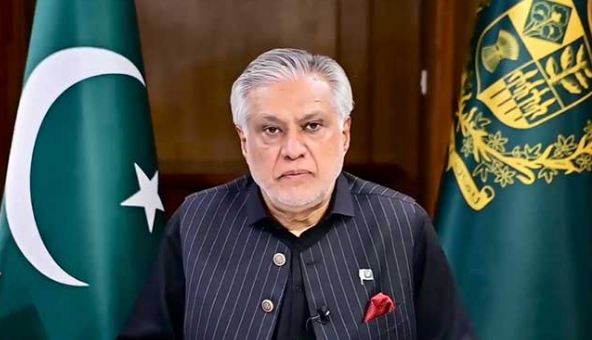
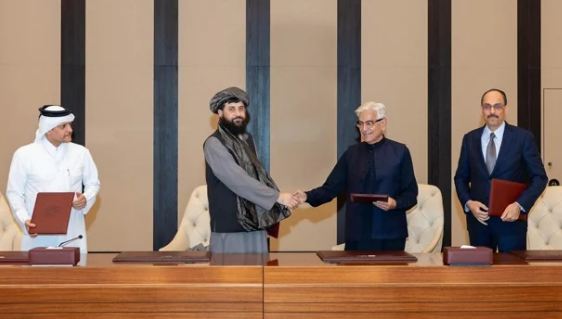
ISLAMABAD: Deputy Prime Minister and Foreign Minister Ishaq Dar on Sunday welcomed the ceasefire agreement inked between Pakistan and Afghanistan, effectively bringing an end to the days of hostility triggered by border clashes.

“Welcome the agreement finalised late last night in Doha. It is the first step in the right direction,” DPM Dar said in a post on X while reacting to the truce agreed between Pakistan and Kabul during talks in Doha, Qatar.

“We look forward to the establishment of a concrete and verifiable monitoring mechanism, in the next meeting to be hosted by Turkiye, to address the menace of terrorism emanating from Afghan soil towards Pakistan. It is important to put all efforts in place to prevent any further loss of lives,” Dar added while appreciating the constructive role played by brotherly Qatar and Turkiye.

Pakistan and Afghanistan had been recently engaged in cross-border strikes triggered by an unprovoked attack by Afghan Taliban forces and Tehreek-e-Taliban Pakistan (TTP) terrorists, prompting Islamabad to launch airstrikes as well as a response on the ground, resulting in the elimination of more than 200 Afghan Taliban and affiliated terrorists.

A temporary truce between the neighbours — which Pakistan agreed to at the request of Afghanistan — on Wednesday paused days of fierce fighting that killed dozens and wounded hundreds.

Planning body greenlights 18 major projects for economic transformation

Planning body greenlights 18 major projects for economic transformation

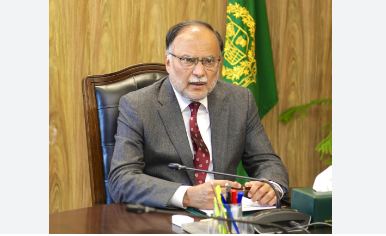
ISLAMABAD, OCT 19 (APP/DNA): Federal Minister for Planning, Development and Special Initiatives/ Deputy Chairman of the Planning Commission Professor Ahsan Iqbal chaired a meeting of the Central Development Working Party (CDWP) that approved 18 development projects across critical sectors of national growth.

“Development is not just about projects; it is about people, performance, and purpose. Every initiative we approve today must translate into a better tomorrow for Pakistan,” Ahsan Iqbal said while chairing the meeting, a news release said on Sunday.

He emphasized that Pakistan’s development strategy is rooted in Vision 2025 and Uraan Pakistan’s 5Es Framework—Exports, E-Pakistan, Energy & Infrastructure, Environment, and Equity & Empowerment—which together aim to transform the country into a competitive, inclusive, and knowledge-based economy by 2047.

Out of the taken up projects at the CDWP forum, twelve projects worth Rs35.4 billion were approved, while six projects amounting to Rs280.2 billion were recommended to the Executive Committee of the National Economic Council (ECNEC) for consideration.

The meeting was attended by Secretary Planning Awais Manzur Sumra, the Vice Chancellor of PIDE, the Chief Economist, and senior representatives from federal ministries, provincial departments, and development partners.

The agenda focused on projects in food and agriculture, governance, health, higher education, housing, social welfare, power, transport, and water resources—reflecting the government’s multi-sectoral approach to national progress.

Recognizing agriculture as the backbone of Pakistan’s economy and the cornerstone of food security, the CDWP approved transformative initiatives designed to modernize farming, strengthen value chains, and promote climate resilience.

The flagship project, Punjab Resilient and Inclusive Agriculture Transformation (PRIAT), worth Rs. 68.67 billion, was referred to ECNEC. Ahsan Iqbal stressed the need to align the initiative with measurable outcomes and past cluster-based studies to enhance value addition and export orientation in agriculture, remarking that every drop of water and every acre of land must translate into prosperity, not just production.

In the same sector, the National Program for Animal Disease Surveillance and Control, worth Rs 7.35 billion, was approved to enhance Pakistan’s compliance with international sanitary standards and boost livestock exports.

Additionally, the Punjab Climate Resilient and Low Carbon Agriculture Mechanization Project (P-CLAMP), worth Rs 36.12 billion and financed by the Asian Development Bank (ADB), was referred to ECNEC.

Under the governance reforms agenda, the Punjab Resource Improvement and Digital Effectiveness (PRIDE) Program, worth Rs3.08 billion, was approved.

The health sector witnessed three crucial projects approvals reflecting Pakistan’s commitment to universal healthcare and child welfare. Projects included the National Health Support Program (Rs. 2.17 billion), Extension of Child Health Facilities in Southern Punjab (Rs. 6.40 billion) funded by JICA, and D-TALK & Insulin for Life (Rs. 1.39 billion) funded by XEM Korea. Minister Ahsan Iqbal underscored that each rupee invested in health must yield tangible outcomes, noting that Pakistan’s fiscal space is limited and borrowed resources are a trust from future generations.

He instructed the Government of Khyber Pakhtunkhwa to integrate diabetes initiatives with the National Diabetes Program to maximize national health impact.

In pursuit of knowledge-driven economic growth, the University of Veterinary and Animal Sciences (UVAS) Campus Project in Pattoki, valued at Rs1.46 billion, was approved.

The Construction of a Wastewater Treatment Plant at Babu Sabu, Lahore, worth Rs. 52.19 billion, marks a historic step particular in Punjab and as a whole for Pakistan’s environmental infrastructure development.

 Financed by AFD, the project will treat 88 MGD of wastewater using biogas, solar integration, and advanced sludge management systems to reduce pollution and protect the River Ravi ecosystem. Ahsan Iqbal called it a project that should have begun two decades ago but is now essential to ensure clean cities and a sustainable environment.

Three hydropower projects in Azad Jammu and Kashmir were approved to harness local resources and provide clean, reliable energy.

These include the Phullawai Hydropower Project (3 MW), the Khurshidabad Hydropower Project (2.71 MW), and the Naushera Hydropower Project (1.95 MW). These small-scale renewable energy projects underscore Pakistan’s commitment to the Energy and Infrastructure pillar of Uraan Pakistan, strengthening AJK’s local energy production.

The Strengthening Social Protection Delivery System, Sindh, amounting to Rs. 64.4 billion and co-financed by the World Bank and the Government of Sindh, was referred to ECNEC.

Three projects under the Transport & Communications sector were discussed to revolutionize connectivity and logistics efficiency. The Bus Rapid Transit (BRT) Quetta feasibility study, worth Rs. 1.24 billion, was approved to improve urban mobility in Balochistan’s capital.

The Preliminary Design and Drawings for ML-1 and Havelian Dry Port, worth Rs. 16.26 billion, was referred to ECNEC—a vital step toward modernizing Pakistan’s railway backbone under CPEC Phase-II.

Emphasizing the urgency of this mega project, the planning minister  stated that ML-1 is not just a railway upgrade; it is Pakistan’s leap into the 21st century, adding that while the world is moving towards electric trains, Pakistan must modernize to stay competitive.

He urged Pakistan Railways to implement business plan and commercialize its vast land assets to self-finance infrastructure upgrades to ensure sustainable operations

The CDWP also approved the Detailed Engineering Design of ML-1 Rohri–Khanpur–Multan Section, amounting to Rs. 3.21 billion, through ADB financing support, marking a milestone in advancing CPEC’s transport connectivity agenda.

Two critical water sector projects reaffirmed Pakistan’s resolve to secure its water future.

The Kachhi Canal Restoration Project, worth Rs. 5.65 billion, will repair flood damages and restore irrigation capacity, while the Khyber Pakhtunkhwa Irrigated Agriculture Improvement Project, worth Rs. 50.95 billion and financed by the World Bank, will improve water efficiency through modern irrigation systems, community watercourses, and high-efficiency technologies across merged districts.

These initiatives directly address the Environment and Climate Change pillar of Uraan Pakistan, ensuring resilient agriculture and sustainable water management.

Netanyahu says Gaza war not over until Hamas disarms

Netanyahu says Gaza war not over until Hamas disarms

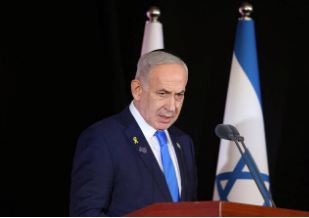
GAZA CITY, Oct 19 (AFP/APP):Israeli Prime Minister Benjamin Netanyahu warned on Saturday that the war in Gaza would not be over until Hamas was disarmed and the Palestinian territory demilitarised.

  His declaration came as Hamas’s armed wing, the Ezzedine Al-Qassam Brigades, handed over the remains of two further hostages on Saturday night under a US-brokered ceasefire agreement.

  The Israeli military said late Saturday that a Red Cross team received the remains of two hostages and the coffins were on their way to its security forces in Gaza.

The issue of the dead hostages still in Gaza has become a sticking point in the implementation of the first phase of the ceasefire. Israel has linked the reopening of the key Rafah crossing to the territory to the recovery of the hostages’ remains.

  Netanyahu cautioned that completing the ceasefire’s second phase was essential to ending the war.

He said late Saturday that “Phase B also involves the disarming of Hamas and the demilitarisation of the Gaza Strip.

“When that is successfully completed — hopefully in an easy way, but if not, in a hard way — then the war will end,” he added in an appearance on right-wing Israeli Channel 14.

  Hamas has so far resisted the idea and since the pause in fighting has moved to reassert its control over the Gaza Strip.

FinMin Aurangzeb says IMF can’t impose conditions against Pakistan’s interests

FinMin Aurangzeb says IMF can't impose conditions against Pakistan's interests

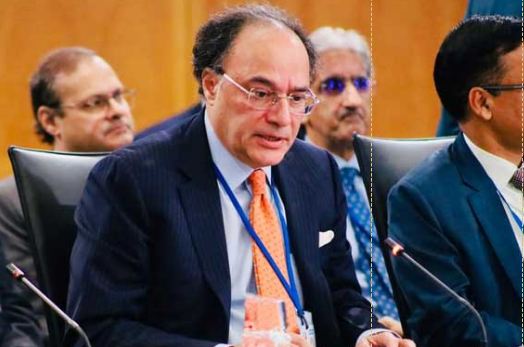
ISLAMABAD, OCT 19: Finance Minister Muhammad Aurangzeb has said that the International Monetary Fund (IMF) cannot impose any condition that goes against Pakistan’s national interest, stressing that all ongoing economic reforms are guided by the country’s own priorities.

“The IMF cannot put any condition that goes against Pakistan’s national interest,” said Aurangzeb while addressing a press conference in Washington, where he was accompanied by other senior officials.

Finance czar said that the reforms introduced under the IMF programme had played a vital role in stabilising Pakistan’s economy. “[The] steps we took under the IMF arrangement have strengthened the economy and built confidence,” he said.

The finance minister added that Pakistan expects to receive the next IMF tranche of $1.2 billion by December 31, noting that the IMF Executive Board is expected to approve the agreement soon. “We anticipate the board’s approval shortly, which will pave the way for the disbursement,” he stated.

He further said that a trade and tariff agreement with US was expected within the next two weeks.

Discussing Pakistan’s privatisation plans, Aurangzeb confirmed that the government was close to a decision on the privatisation of New York’s Roosevelt Hotel.

Meanwhile, Aurangzeb, on the sixth and final day of his visit to the US, continued his engagements and witnessed the signing of a swap agreement between the State Bank of Pakistan (SBP) and the International Finance Corporation (IFC).

The signing took place during his meeting with IFC Managing Director Makhtar Diop on the sidelines of the IMF–World Bank Annual Meetings in Washington, DC.

The finance minister hailed IFC’s recent reorganisation, which has designated Pakistan as a regional hub, calling it a strong vote of confidence in the country’s rising economic potential.

He also reaffirmed the government’s commitment to strengthening its partnership with the IFC across key development and financial sectors.

Highlighting progress on the Reko Diq project, Senator Aurangzeb expressed optimism about the EXIM Bank’s participation in the near future.

He further appreciated IFC’s continued support for subnational finance and Digital Payment Rights (DPR) initiatives, as well as its advisory role in sectors such as pharmaceuticals, electric vehicles, and commodity exchanges.

The FinMin also welcomed Diop’s upcoming visit to Pakistan around the Spring Meetings, expressing confidence that it would further strengthen Pakistan–IFC collaboration.

Meanwhile, Aurangzeb also participated in the 15th V20 Ministerial Dialogue on “Cost of Capital, Debt & Growth Pathways.”

In his address, he highlighted the increasing frequency and intensity of devastating floods in Pakistan, emphasising that the Government continues to fund rescue and relief operations from its own resources.

He appreciated the support extended by the CVF–V20 Secretariat in assisting Pakistan with the preparation of its Climate Prosperity Plan (CPP), and informed that financing is being made available under the Country Partnership Framework (CPF) to operationalise the plan.

Senator Aurangzeb also underscored the need to operationalise the Loss and Damage Fund and called for fast-tracking decision-making processes at the Green Climate Fund (GCF) to ensure timely and effective climate action for vulnerable countries.

The finance czar also called on the senior management of JP Morgan on the sidelines of the IMF–World Bank Annual Meetings in Washington, DC.

Hd briefed the JP Morgan team on Pakistan’s upcoming inaugural issuance of the Panda Bond in the Chinese market, noting that it would be launched as a green bond to support sustainable financing objectives.

He also provided a detailed overview of the government’s privatisation programme, highlighting the Cabinet-approved government-to-government (G2G) sale of the First Women Bank.

Senator Aurangzeb informed the team that several US companies had expressed interest in the Reko Diq project and that the government looked forward to the participation of EXIM Bank in the syndication process.

He also highlighted the ongoing digital collaboration between Saudi Arabia and Pakistan through the GO AI Hub initiative, which aims to advance innovation and technology-driven development.

The finance minister encouraged JP Morgan to explore additional avenues of cooperation with Pakistan in areas of mutual interest, including sustainable finance, investment facilitation, and digital transformation.

PAF to showcase JF-17 Thunder Block-III fighter jets at combat exercise in Azerbaijan

PAF to showcase JF-17 Thunder Block-III fighter jets at combat exercise in Azerbaijan

BAKU: A contingent of the Pakistan Air Force, featuring advanced JF-17 Thunder Block-III fighter jets along with expert air and ground personnel, has reached Azerbaijan to take part in the joint aerial combat exercise, Indus Shield Alpha, the Inter-Services Public Relations (ISPR) said on Sunday.

“In a remarkable display of operational prowess and endurance, PAF fighters accomplished a non-stop flight from their home base in Pakistan to Azerbaijan, executing flawless in-flight air-to-air refuelling operations,” a statement of the military’s media wing read.

It added that the intricate mid-air refuelling operation, executed with utmost precision by PAF’s own IL-78 aerial tanker, reaffirmed the long-range capability of PAF fighter jets and showcased the professional excellence and preparedness of PAF aircrew to undertake extended international deployments.

“Exercise Indus Shield Alpha aims to enhance mutual understanding, tactical coordination, and interoperability between the two brotherly Air Forces,” the ISPR said and added, “the exercise will focus on modern aerial warfare tactics, joint mission planning, and execution in an environment shaped by rapid technological advancements and evolving airpower dynamics.

The exercise, the ISPR said, will also serve as a vital platform to exchange operational insights and strengthen collaborative responses to emerging aerial defence challenges.

“The participation of Pakistan Air Force contingent in Exercise Indus Shield Alpha reaffirms PAF’s enduring commitment to regional stability and global military cooperation,” the military’s media wing added.

“It also demonstrates PAF’s unwavering resolve to continuously evolve and adapt to the demands of contemporary warfare, while maintaining its tradition of excellence in every domain of air operations.”

PIDE study calls for gender-sensitive criminal justice reforms in Pakistan

PIDE study calls for gender-sensitive criminal justice reforms in Pakistan

ISLAMABAD, OCT 19 /DNA/ – A new Knowledge Brief published by the Pakistan Institute of Development Economics (PIDE) emphasizes the urgent need for gender-sensitive reforms in Pakistan’s criminal justice system. Authored by Dr. Fida Muhammad Khan, Assistant Professor at PIDE, and Zainab Fatima, Researcher Women Aid Trust, the study titled “Gendered Pathways to Crime” challenges the assumption that men and women engage in criminal behavior under similar circumstances. It argues that the pathways leading to crime are profoundly shaped by gender, social expectations, and structural inequalities that disadvantage women from an early age.

The study explains that women often experience unique forms of trauma, marginalization, and abuse that increase their likelihood of becoming involved in criminal activity—factors that are rarely recognized by existing laws or institutions. Although laws are written to apply equally to all, their implementation often overlooks the intersecting effects of gender, poverty, and class. The authors highlight four major pathways discussed in GPT literature, that frequently lead women into crime: childhood trauma and abuse, drug misuse linked to emotional or economic stress, violence from intimate partners, and socio-economic coercion including sex work. These pathways are reinforced by systemic inequality, patriarchal norms, and limited access to justice, making women’s experiences of crime and punishment significantly different from those of men.

The brief also highlights that Pakistan’s colonial-era criminal justice system continues to operate under gender-neutral assumptions, focusing primarily on the act of crime rather than its underlying causes. It documents instances where women have been coerced into false confessions through threats of humiliation or sexual violence, exposing deep-rooted power imbalances in law enforcement and judicial processes. The authors argue that recognizing gender as a key factor in understanding crime is essential for achieving fairness, preventing reoffending, and ensuring justice.

To address these issues, the study recommends comprehensive reform of Pakistan’s criminal justice system through gender-sensitive policing, judicial training, and the creation of women-only police divisions and prosecution units. It also proposes revising sentencing guidelines to reflect gendered pathways to offending and expanding academic and policy research on women offenders within South Asia. Such efforts would help build a justice system that recognizes women’s lived experiences and addresses the structural and cultural barriers that contribute to their criminalization.

While the Gendered Pathways Theory (GPT) has been extensively studied in Western contexts, the authors emphasize the importance of developing localized research in Pakistan and other post-colonial societies. Contextualizing GPT within South Asian realities is vital to understanding how social hierarchies, cultural expectations, and colonial legacies shape women’s vulnerability to crime today.

Pak-Afghan ceasefire a step towards lasting peace

Pakistan, Afghan ceasefire; will it hold?

Ansar Mahmood Bhatti

ISLAMABAD: In a major diplomatic breakthrough, Pakistan and Afghanistan have agreed to a comprehensive ceasefire following a week of fierce border clashes that left dozens dead and many injured on both sides. The landmark accord was reached in Doha, Qatar, on October 18, 2025, in negotiations mediated by the State of Qatar and the Republic of Turkiya, with China and Iran serving as guarantor states.

The Doha ceasefire represents a significant evolution from the earlier 48-hour temporary truce, which came into effect following intense cross-border hostilities earlier in the week. Now expanded into a broader peace framework, the agreement aims to prevent future escalation, foster dialogue, and build long-term stability and cooperation between the two neighboring Islamic nations.

According to the text of the agreement, both countries reaffirmed their commitment to peace, mutual respect, and the principles of Islamic brotherhood. The key provisions include:

Immediate cessation of hostilities and the establishment of a Joint Border Coordination Office to ensure uninterrupted communication between military officials on both sides.

Afghanistan’s assurance that its territory will not be used by any group, including the Tehreek-e-Taliban Pakistan (TTP), to carry out attacks or subversive activities against Pakistan.

Pakistan’s reaffirmation to continue extending humanitarian support to Afghan refugees, guided by Islamic and humanitarian principles.

Establishment of Peace Corridors at Chaman and Torkham to promote trade, facilitate cross-border movement of civilians, traders, and patients, and strengthen economic connectivity.

Media restraint clauses, requiring both nations to avoid hostile rhetoric and focus on messages promoting Islamic brotherhood, mutual respect, and cooperation.

Monitoring and review mechanisms, with Qatar hosting quarterly meetings to assess progress and ensure compliance with the terms of the agreement.

The agreement follows days of deadly border clashes between Pakistan and Afghanistan, triggered by Pakistan’s strikes on TTP hideouts inside Afghan territory. The operation, aimed at dismantling terrorist infrastructure responsible for cross-border attacks, provoked retaliatory action by Afghan forces.

The situation worsened on October 15, when Afghan troops again targeted Pakistani border posts, prompting a strong and measured counter-response from Pakistan’s security forces. According to sources, Pakistan’s retaliation inflicted significant losses on the Afghan side, compelling Kabul to request an immediate ceasefire.

In a gesture of statesmanship, Islamabad agreed to a temporary 48-hour truce, making it clear that any continuation of “adventurism” or provocation would be unacceptable. This move not only de-escalated immediate tensions but also demonstrated Pakistan’s consistent preference for diplomacy and dialogue over prolonged confrontation.

The ceasefire, though initially fragile, soon gained momentum through diplomatic engagement, culminating in the Doha accord. It symbolizes a renewed opportunity for both countries to address long-standing grievances, particularly the issue of cross-border militancy.

For years, Pakistan has urged the Taliban-led Afghan government to act decisively against the TTP, which continues to launch attacks from Afghan soil. Despite repeated assurances from Kabul, little progress had been observed until this breakthrough. Afghanistan’s explicit commitment in the Doha agreement to deny sanctuary to anti-Pakistan groups could mark a turning point in restoring trust between the two nations.

The Taliban, having themselves been victims of external aggression, should recognize the perils of harboring militant organizations. As long as such groups operate unchecked, mutual confidence will remain elusive. The Doha agreement, therefore, serves as both a test of intent and a roadmap for cooperation.

Observers note that whenever Pakistan and Afghanistan clash, regional spoilers stand to gain. Among them, India remains the most active beneficiary of discord between the two Muslim-majority nations. Following recent military setbacks, New Delhi has every incentive to exploit instability along Pakistan’s western frontier. A distracted Pakistan allows India to pursue its regional ambitions unchallenged.

However, Islamabad appears increasingly aware of the broader geopolitical context, understanding that continued conflict with Kabul would only weaken both nations while serving the interests of external actors. By choosing negotiation over confrontation, Pakistan and Afghanistan have signaled maturity and strategic foresight.

Peace in Afghanistan is not just a bilateral concern—it is a regional necessity. The successful implementation of the Turkmenistan-Afghanistan-Pakistan-India (TAPI) gas pipeline and the CASA-1000 power transmission project depends on regional stability. Without peace, these multibillion-dollar initiatives will remain stalled, depriving the broader region of much-needed economic growth, energy security, and integration. Some reports suggest that Pakistan has decided to pull out of the TAPI, however other projects are still on the table and their future largely depends on stability in Afghanistan.

The Doha accord between Pakistan and Afghanistan stands as a ray of hope in a region long plagued by conflict and mistrust. It signifies that even after intense confrontation, dialogue remains possible and productive. Both nations bound by faith, culture, and geography must now rise above animosity and work toward a shared future.

Continued hostility will only benefit external powers and perpetuate suffering for ordinary citizens on both sides. If implemented faithfully, the Doha ceasefire could become the foundation of enduring peace, mutual trust, and regional cooperation not only between Pakistan and Afghanistan but for the stability and prosperity of South and Central Asia as a whole.

Stay Connected

64FansLike
60FollowersFollow

Latest Reviews

Exchange Rates

USD - United States Dollar
EUR
1.14
GBP
1.34
AUD
0.69
CAD
0.70