Home Blog Page 422

Ensure completion of T-Chowk flyover project within timeline

Ensure completion of T-Chowk flyover project within timeline

Saifullah Ansar

ISLAMABAD, OCT 20 /DNA/ – Chairman Capital Development Authority (CDA) and Chief Commissioner Islamabad, Muhammad Ali Randhawa, visited the T-Chowk Flyover Project along with concerned officers to review the ongoing construction work. During the visit, he inspected various sections of the project and was given a detailed briefing on the progress made so far.

Officials, consultants, resident engineers, and the project director briefed the CDA Chairman that, as per the directives of Federal Interior Minister Mohsin Naqvi, construction work on the T-Chowk Flyover project is progressing rapidly. They informed that approximately 49 percent of the total construction work has been completed.

According to the briefing, 100 percent of the pile caps and girders casting has been completed, while 60 percent of the protective walls are finished. Work on the transom structure has also commenced. The officials further apprised the Chairman that despite the ongoing construction, traffic flow remains normal and uninterrupted in the area. Work on the project continues 24/7 in line with the approved timeline, ensuring timely completion.

Expressing satisfaction over the progress, Chairman CDA Muhammad Ali Randhawa directed the project team to ensure comprehensive planning for the project’s completion, keeping in view the future expansion of GT Road. He emphasized that no compromise would be tolerated on the quality of construction, and all development activities must adhere strictly to the set timeline.

He instructed that surveillance cameras be installed at the project’s entry points to ensure monitoring and public safety. Moreover, he directed the preparation of a landscaping plan and the installation of aesthetic LED lights and digital screens to enhance the visual appeal of the project on a permanent basis.

Chairman Randhawa added that the T-Chowk Flyover Project will not only benefit the residents of the twin cities but also commuters traveling from Lahore and other parts of Punjab. Upon its completion, travelers entering Islamabad via GT Road will enjoy a signal-free and smooth traffic flow into the federal capital.

He reaffirmed that providing modern travel facilities and promoting infrastructure development in Islamabad remain top priorities of the CDA. The Chairman also directed consultants and resident engineers to ensure timely completion of the project while maintaining the highest standards of construction and safety at all stages.

HEC, World Bank launch final review of HEDP project

HEC, World Bank launch final review of HEDP project

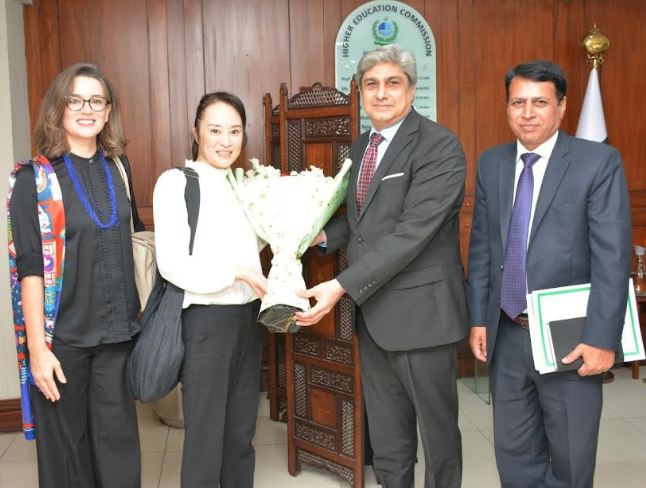
ISLAMABAD, OCT 21: /DNA/ – As Higher Education Development in Pakistan (HEDP), a USD 400 million project being executed by Higher Education Commission (HEC) since 2019, comes to a successful closure, the World Bank’s five-day Implementation Completion Mission has begun assessment of the achievements, challenges, and lessons learnt from this landmark initiative.             

In this context, HEC hosted the World Bank Mission to formally commence the final review of the HEDP project. The session was attended by relevant HEC Divisional Heads and HEDP Component Leads, where an overview presentation was delivered highlighting key achievements, implementation progress, and strategic directions under various components of the project.   

Chairman HEC Mr. Nadeem Mahbub welcomed the World Bank Mission and appreciated the continued partnership and technical support extended by the World Bank throughout the project’s lifecycle. He highlighted key aspects of the HEDP project, particularly focusing on its transformative impact on higher education governance, digitalization, and quality enhancement, while also discussing the roadmap for closure-related activities and sustainability of project interventions.

In his remarks, Executive Director HEC Engr. Dr. M. Mazhar Saeed extended a warm welcome to the World Bank Mission led by Senior Economist and Task Team Leader Ms. Inga Afanasieva, accompanied by Senior Education Specialist Ms. Ryoko Tomita and Consultant Ms. Mashal Yousaf. He commended the World Bank for its steadfast support and constructive engagement with HEC throughout the project’s implementation. Acknowledging the dedication of HEC and HEDP teams, he appreciated their tireless efforts in achieving the project’s objectives and contributing to the strengthening of Pakistan’s higher education ecosystem.

During the course of the mission, the HEC-HEDP team, led by Project Coordinator HEDP Syed Naveed Hussain Shah, will deliver comprehensive presentations on each project component, highlighting key achievements, implementation progress, and sustainability plans beyond the project’s lifecycle. The mission will assess progress against the project’s development objectives, validate results and outputs, and document lessons learned and best practices to inform future higher education initiatives. It will also review the long-term viability of project interventions and outline next steps towards sustaining their impact. In line with World Bank procedures, the mission will prepare the Implementation Completion and Results Report (ICR) and hold consultative meetings with the Economic Affairs Division.

The visit marks an important milestone in documenting the collective achievements of HEDP and reaffirming HEC’s continued partnership with the World Bank in advancing Pakistan’s higher education agenda.

When a General’s Words Became a Nation’s Creed

When a General’s Words Became a Nation’s Creed

by Muhammad Mohsin Iqbal

There are moments in a man’s life that shape him not by the triumphs they bring but by the lessons they leave behind. My earliest dream was as simple and as grand as the sky; to become a pilot in the Pakistan Air Force. After matriculation, I cleared the preliminary examinations and travelled to ISSB Kohat with a heart full of hope. After five or six days of trials, interviews and restless nights, I returned home and then received a letter whose one word – “Not selected” – fell heavier than any storm.The sorrow was sharp, but it did not break my resolve. I decided to cast my lot with another noble calling and, after F.Sc. in 1986, set my sights on the Pakistan Military Academy. Again, I passed the preliminaries and again Kohat summoned me. I faced the stages with steadiness, but on the last day the commandant’s interview brought a verdict that bore me the curious consolation of practical counsel: I was told I would perhaps fare better in civil service than in the army. Once more the answer was “No.”

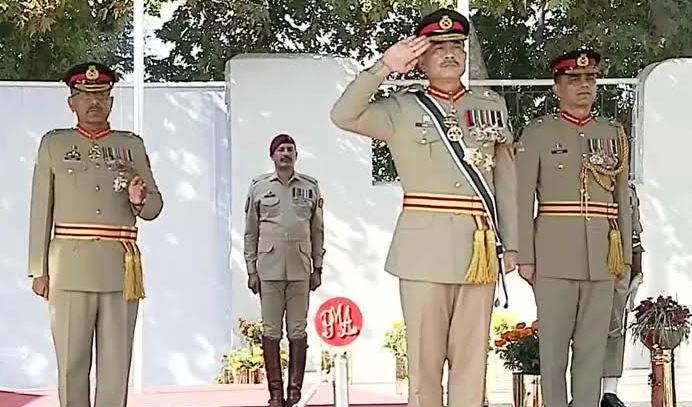
Those refusals might, to a lesser spirit, have been the end of a story. For me they became the preface to another. I’ve realized that time transforms the disappointments of youth into the foundation of conviction.Time has shown that you can serve your country no matter where you are, as Allah is the most capable and wise.In 2025, I was once again lost in the windows of my past while listening to a victorious General Field Marshal Syed Asim Munir address his newly minted officers. His address to his officers was like feeding a newborn baby its first “Ghutti”.

The Field Marshal’s words—measured, firm and suffused with faith—were not merely ceremonial. He applauded the professionalism and discipline of the cadets and then held up the history of the Armed Forces as a living testament to sacrifice and courage. He spoke of recent trials and of victory in a tone that fused sober realism with unshakable resolve; that Pakistan’s defenders had neutralized threats, downed advanced assets, and displayed multi-domain warfare capabilities; that the nation had stood like a solid wall, renewed in patriotism and unity.

What struck me most in that address was its insistence on moral clarity. “You are the heirs of martyrs—live worthy of their memory,” he said, reminding young officers that commission is a covenant with history and family alike. He counselled them to value intellectual readiness as much as physical courage, to embrace lifelong learning and technological innovation, and to be wary of the post-truth era where perceptions often eclipse reality. “Do not become tools and victims of Information Disorder,” he warned, urging clarity of mind as the greatest of strengths. Throughout his discourse there ran a singular thread; that victory is forged not by rhetoric but by training, character and the courage to stand firm in the face of odds.

Hearing such words as one who had once been cast aside by selection boards was humbling and elevating. The general’s address closed the river in a jar; it distilled the vastness of national sacrifice, the complexity of modern warfare, and the intimacy of personal duty into instructions one could tuck into the breast pocket of the soul. Where my adolescent ambitions had sought the thrill of flight and the pride of uniform, the speech taught me to revere the larger enterprise—the preservation of a nation’s dignity and life. I understood then that service assumes many forms; civil officers, scholars, journalists, parents and soldiers all contribute threads to the same national fabric.

The Field Marshal’s insistence that the bond between the people and the Armed Forces is unshakable resonated deeply. He reminded cadets that nothing should be more sacred than the safety of the people and that no duty more binding than the defence of the homeland. He spoke of Pakistan’s renewed stature, of its contributions to peacekeeping and regional stability, and of the enduring duty to stand by oppressed brethren from Kashmir to Palestine. He saluted the martyrs and the ghazis and, with faith unblunted by the harshness of conflict, urged readiness for the challenges ahead: “Pakistan’s flag will Insha’Allah continue to rise because its defenders, i.e. Pakistani nation, never fail.”

From my vantage point, years later, the two refusals that once stung me have become benedictions. They redirected me into the service of the state in different but no less sacred ways. They taught patience, humility and the worth of contributing where one can most effectively serve. The Field Marshal’s address, with its blend of piety, professionalism and patriotic clarity, taught me another lesson: that leadership is less about commands than about forging conscience, less about distinction than about duty. It is in that spirit—of resolute humility and unflinching service—that I continue my work for Pakistan, grateful for the roads not taken and steadfast in the road chosen.

If destiny denied me the cockpit, it gave me instead a higher vantage; to witness, to record, and to exhort. When a victorious general speaks to his young officers, he plants in their ears something like the “Azaan” to a newborn—the summons to rise, to guard, and to love that which is greater than self. May we all—soldiers and civilians alike—answer that call with hearts full of faith and hands ready for toil. Pakistan Armed Forces Zindabad. Pakistan Hameesha Paindadabad.

Israel breaks ceasefire accord, faces global criticism

Israel breaks ceasefire accord, faces global criticism

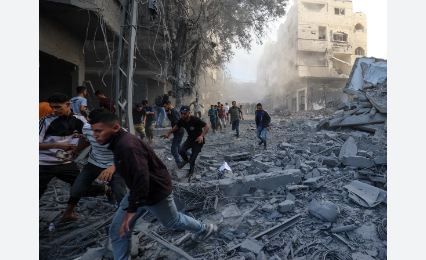
Israel has once again come under severe international criticism after breaching the recently brokered ceasefire with Palestinian groups in Gaza. The fragile truce, which had raised hopes for a temporary respite in hostilities, was shattered when Israeli forces launched new airstrikes late Sunday night, targeting several locations across the besieged enclave.

According to reports from Gaza, multiple explosions rocked residential areas, causing civilian casualties and widespread panic. Palestinian health officials confirmed several deaths and dozens of injuries, including women and children. The strikes came barely 48 hours after the ceasefire took effect, which had been mediated by Egypt and Qatar with the support of the United Nations.

The Israeli military claimed that its actions were a “response to renewed rocket fire” from Gaza, but international observers and humanitarian organizations have rejected this justification, calling it a blatant violation of the ceasefire terms. The United Nations Secretary-General António Guterres expressed “deep concern” over the developments, urging both parties to exercise restraint and return to dialogue.

“The world cannot afford another cycle of violence in Gaza,” Guterres said in a statement. “The protection of civilians must remain paramount, and any violation of the ceasefire agreement undermines efforts for lasting peace.”

The European Union also condemned Israel’s actions, calling the airstrikes “disproportionate and unjustified.” Josep Borrell, the EU’s foreign policy chief, said that the repeated breaches of truce agreements by Israel “raise serious questions about its commitment to peace and international law.” Several European capitals, including Paris and Berlin, have echoed similar sentiments.

Meanwhile, in a significant diplomatic development, French President Emmanuel Macron and Saudi Crown Prince Mohammed bin Salman held a telephone conversation on Monday to discuss the deteriorating situation. According to a statement from the Élysée Palace, both leaders agreed that Israel’s breach of the ceasefire was “deeply regrettable” and called for renewed international efforts to prevent further escalation.

The Saudi Crown Prince emphasized the need for immediate restraint and reiterated his country’s longstanding position in support of Palestinian rights and the establishment of an independent Palestinian state. President Macron stressed that France, in coordination with regional partners, would continue to work toward de-escalation and humanitarian relief for Gaza’s civilians.

The Organization of Islamic Cooperation (OIC) and the Arab League have also issued strong condemnations, urging the international community to hold Israel accountable for what they termed “a systematic policy of aggression.” Protests erupted in several Muslim countries, where demonstrators called on the United Nations to take concrete action The latest Israeli action could further isolate Tel Aviv on the diplomatic front, as public opinion around the world continues to shift in favor of the Palestinian cause. The renewed violence has also intensified calls for an independent investigation into alleged war crimes committed during Israel’s recent military operations in Gaza.

As tensions mount, the fate of the ceasefire—and the prospect of any meaningful peace process—appears increasingly uncertain. The world watches anxiously, hoping that diplomacy will prevail over destruction, and that the fragile hope for peace in the Middle East is not lost once again.

Zelensky says ready to join Putin, Trump at Budapest summit if invited

KYIV, OCT 20 (AFP/APP): Ukrainian President Volodymyr Zelensky has said he would be ready to join Russian President Vladimir Putin and US counterpart Donald Trump at their summit in Hungary if he is invited.

Trump and Putin said they would meet in the Hungarian capital, possibly in a matter of weeks, as the US leader continues to try to broker a peace deal to end the three-and-a-half-year war, triggered by Russia’s 2022 invasion.

“If I am invited to Budapest — if it is an invitation in a format where we meet as three or, as it’s called, shuttle diplomacy, President Trump meets with Putin and President Trump meets with me — then in one format or another, we will agree,” Zelensky told reporters in remarks released on Monday.

  The Ukrainian president criticised the choice of Hungary, which has a terse relationship with Kyiv and is seen as the most Kremlin-sympathetic member of the European Union.

“I do not believe that a prime minister who blocks Ukraine everywhere can do anything positive for Ukrainians or even provide a balanced contribution,” Zelensky said, referring to Hungarian leader Viktor Orban.

Kyiv has said it is ready to join a three-way meeting between Zelensky, Putin and Trump in a number of neutral countries, including Turkey, Switzerland and the Vatican.

  in 1994, Moscow signed a memorandum in Budapest aimed at ensuring security for Ukraine, Belarus and Kazakhstan in exchange for them giving up numerous nuclear weapons left from the Soviet era.

“Another ‘Budapest’ scenario wouldn’t be positive either,” Zelensky said.

Trump has been aiming for a speedy end to the years-long conflict in Ukraine since he returned to White House earlier this year, pushing for a series of direct talks between Ukrainian and Russian officials and hosting Putin for a summit in Alaska — diplomatic efforts that have ultimately not lead to any breakthrough.

Diplomatic Stars triumph over Pakistan celebrities in football fest

Diplomatic Stars triumph over Pakistan celebrities in football fest

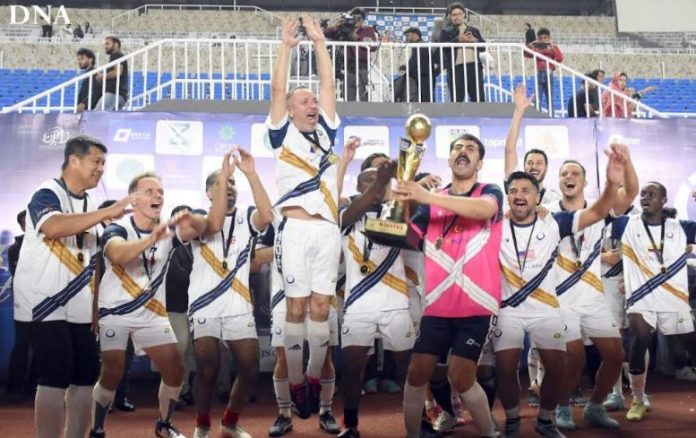
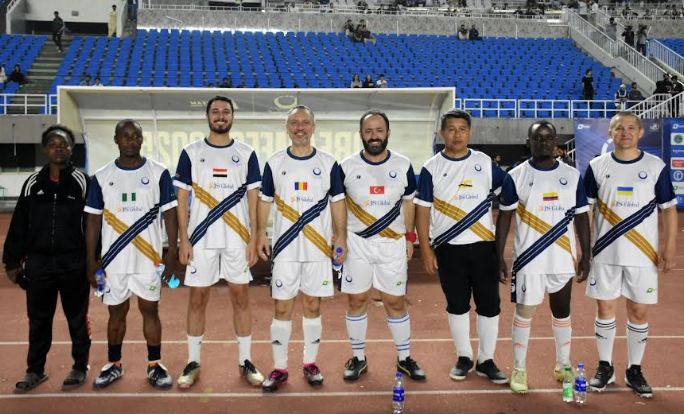
The Diplomatic Stars featured several foreign diplomats, including Eduard Preda, Deputy Head of Mission of the Romanian Embassy, who also captained the side. Other key players included H.E. Kamal Ahmed, High Commissioner of Brunei Darussalam, and Sahin Atak from the Turkish Embassy

Centreline Report

ISLAMABAD: To commemorate Pakistan’s 78th Independence Day, the Dream Sports Group organized a series of exhibition football matches at the Jinnah Stadium, Pakistan Sports Complex. The thrilling final match, held on Sunday, brought together diplomats, sports enthusiasts, and celebrities in a festive spirit of unity and friendship.

In the grand finale, Diplomatic Stars outclassed their rivals, Pakistan Celebrities, with an impressive 5–1 victory, clinching the championship trophy. The atmosphere was electric as both teams displayed great sportsmanship and camaraderie throughout the tournament.

The Diplomatic Stars featured several foreign diplomats, including Eduard Preda, Deputy Head of Mission of the Romanian Embassy, who also captained the side. Other key players included H.E. Kamal Ahmed, High Commissioner of Brunei Darussalam, and Sahin Atak from the Turkish Embassy.

On the other side, the Pakistan Celebrities team was led by MNA Jamal Raisani, who was joined by well-known figures from media, sports, and entertainment circles.

A large number of foreign diplomats, sports personalities, and local fans attended the event, creating a vibrant and friendly atmosphere. The event served as a unique platform for promoting sports diplomacy, mutual respect, and stronger people-to-people ties between Pakistan and the international community.

Dream Sports Group CEO Arslan Mushtaq said that the initiative was designed to “promote sports culture and encourage interaction between diplomats and Pakistani citizens in a relaxed, positive environment.” He added that such events play a vital role in youth engagement and international friendship.

During the closing ceremony, shields and trophies were awarded to the winning and runner-up teams, as well as to the chief guests, players, referees, and officials in recognition of their participation and contributions.

The event concluded with renewed calls to make such diplomatic sports engagements a regular feature of Pakistan’s sporting calendar, reflecting the nation’s commitment to peace, friendship, and healthy competition.

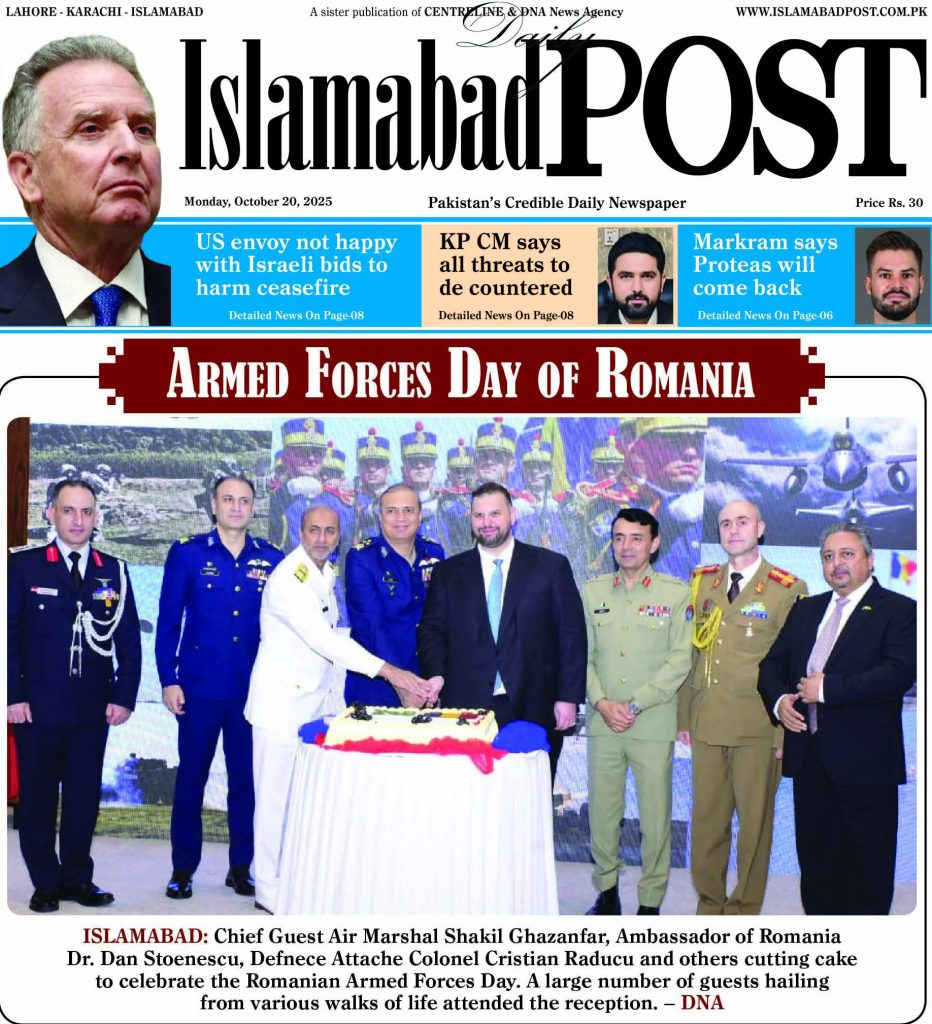
Romanian Armed Forces Day celebrated in Islamabad

ISLAMABAD, OCT 19 /DNA/ – Romanian Ambassador to Pakistan, Dan Stoenescu while speaking at a ceremony marking Romanian Armed Forces Day, emphasized the historic significance of the day and Romania’s commitment to global peace, security, and international partnerships, including its growing defence cooperation with Pakistan.

He stated that October 25 holds special meaning for Romanians as it symbolizes the liberation of the last Romanian territory during World War II in 1944. The day reflects respect for fallen heroes and the long evolution of the Romanian Armed Forces throughout the 20th century.

The ambassador stressed that the celebration is even more meaningful today as Romania is an active member of NATO and the European Union, bringing its military traditions, capabilities, and values to strengthen the multinational character of these organizations.

Ambassador Stoenescu highlighted the complex and changing security situation in Europe, especially due to Russia’s aggression against Ukraine, which has fundamentally shifted the regional security paradigm.

He said that Romania remains a strong, committed, and responsible ally and a key provider of security and stability in the Black Sea region and beyond. He reaffirmed that Russia remains the most significant long-term threat, pointing to hybrid warfare tactics, airspace violations, and destabilization efforts in the region.

He noted recent NATO and EU initiatives such as Eastern Sentry and the Eastern Flank Watch with the Drone Wall as important steps to strengthen regional defence. As the NATO ally with the longest border with Ukraine, Romania has played a frontline role in strengthening deterrence measures and coordinating assistance for Ukraine.

The ambassador reiterated Romania’s firm support for the Republic of Moldova’s European path, noting that Moldova continues to face hybrid threats from Russia.

He also highlighted the importance of engaging with regions beyond Europe, such as the Indo-Pacific, South Asia, the Middle East, and North Africa, with whom Romania shares democratic values and strategic interests.

Ambassador Stoenescu praised the growing military cooperation between Romania and Pakistan, calling it a true and mutual partnership. He mentioned the recent visit of Chairman Joint Chiefs of Staff Committee General Sahir Shamshad Mirza to Romania and the upcoming visit of Pakistan Air Chief Marshal Zaheer Ahmed Baber Sidhu.

These engagements aim to expand cooperation through bilateral visits, cross-training, operational exercises, exchange training programmes, and reciprocal visits of military experts.

He also noted Romania’s participation with military observers in the multinational naval exercise AMAN 2025 and its upcoming participation in PIMEC 2025 in Karachi, the region’s most important maritime defence exhibition. Furthermore, Romania regularly contributes officers to the United Nations Military Observer Group in India and Pakistan.

In closing, the ambassador praised the Pakistan Armed Forces for their exceptional professionalism, deep patriotism, sacrifices in fighting terrorism, and their role in international peacekeeping, humanitarian missions, and global stability efforts.

He said the event reflects Romania’s historical pride, strategic role in NATO and the EU, and its commitment to strengthening defence ties with Pakistan and ensuring peace and security in the wider region.

U.S.-India Present Strains and Strategic Convergence

U.S.-India Present Strains and Strategic Convergence

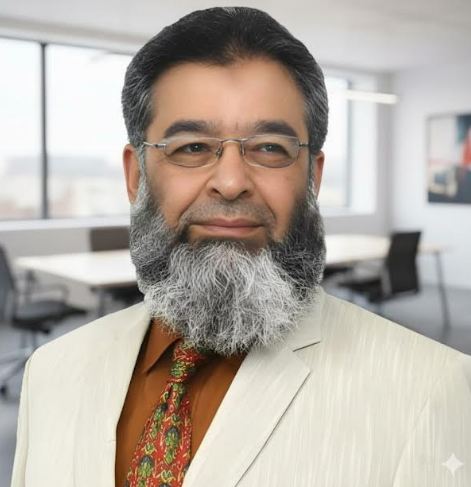
Dr. Muhammad Akram Zaheer

In the recent weeks, the United States–India relationship has witnessed a sharp and regrettable downturn, prompted by disputes over tariffs on Russian oil purchases and renewed frictions surrounding Pakistan. The result has been a flurry of public accusations and recriminations, casting a shadow over what has been one of the most promising partnerships in contemporary global politics. While short-term disagreements are inevitable in any bilateral relationship of such magnitude, it is vital for both Washington and New Delhi to avoid losing sight of the larger picture: the strategic rationale that has elevated India into one of America’s most consequential partners over the past generation. Equally important is the recognition that sustaining and fortifying this relationship requires deliberate effort, especially at a moment when bipartisan consensus in Washington on foreign policy issues is increasingly rare.

The U.S.-India relationship has grown significantly since the end of the Cold War, driven by converging interests across security, economics and ideology. The 2005 U.S.-India Civil Nuclear Agreement marked a turning point, symbolizing Washington’s willingness to recognize India as a legitimate nuclear power and a rising global actor. Since then, the relationship has expanded into a comprehensive global partnership encompassing defense cooperation, economic exchange, technological collaboration and shared concerns about regional stability.

At the heart of this partnership lies a strategic logic: the Indo-Pacific has emerged as the central theater of Great Power competition and India is indispensable to any sustainable balance of power in this region. While Washington seeks to counterbalance China’s growing influence, India, too, perceives Beijing as a direct competitor and security challenge whether on its Himalayan borders, in the Indian Ocean, or in the realm of technology and infrastructure development. This alignment of threat perceptions has made India a natural partner for U.S. strategic objectives, even as New Delhi maintains its tradition of non-alignment and strategic autonomy.

Despite this strong foundation, the relationship has always been characterized by occasional friction. Today, two issues have resurfaced as major irritants. The first concerns India’s continued engagement with Russian energy markets. As Western sanctions against Moscow intensified following the Ukraine war, Washington has pressured partners to reduce economic ties with Russia. India, however, has prioritized affordable energy imports to support its domestic needs, arguing that its relationship with Moscow remains critical to national security and economic stability. The imposition of U.S. tariffs in response to India’s Russian oil purchases has therefore generated resentment in New Delhi, which views such measures as undermining its sovereign decision-making.

The second point of contention involves Pakistan. Historically, Pakistan has complicated U.S.-India relations, given Washington’s security cooperation with Islamabad during the Cold War and the war on terror. Renewed tensions whether related to U.S. diplomatic overtures toward Pakistan or differing perspectives on counterterrorism have once again aggravated India’s sensitivities. For New Delhi, any U.S. accommodation of Pakistan risks undermining India’s security concerns and strategic leverage in South Asia.

Yet, it is important to recognize that such disputes, while significant, do not erase the broader structural logic of the partnership. Both the United States and India benefit immensely from closer engagement. For Washington, India represents a critical democratic partner in a world where authoritarian challenges are on the rise. India’s demographic strength, economic dynamism and technological innovation make it a vital player in shaping the future of global governance. For New Delhi, the U.S. provides indispensable access to advanced defense technologies, investment capital and global platforms that amplify India’s influence.

Establishing regular high-level channels of communication can help prevent disagreements from escalating into public disputes. Institutional mechanisms such as the U.S.-India 2+2 dialogue should be strengthened to address sensitive issues in a constructive manner.Joint military exercises, intelligence sharing and defense technology transfers can reinforce mutual trust. Collaborative initiatives within the Quad (comprising the U.S., India, Japan and Australia) further highlight shared security commitments in the Indo-Pacific.Trade disputes must be managed carefully, with greater emphasis on cooperation in areas like digital infrastructure, renewable energy and supply chain resilience. Technology partnerships particularly in semiconductors, artificial intelligence and cybersecurity offer opportunities for both nations to achieve shared economic gains. The U.S. can strengthen ties with India by supporting its aspirations for a greater role in international institutions, such as a permanent seat on the UN Security Council. Collaborative leadership on climate change, pandemic preparedness and development initiatives would also reinforce global trust. Washington must approach its relations with Pakistan in a manner that acknowledges India’s concerns, while New Delhi should recognize that the U.S. has diverse global interests. Clear communication and transparency are essential to avoid misperceptions.

Pak-Afghan ceasefire a step towards lasting peace

Pakistan, Afghan ceasefire; will it hold?

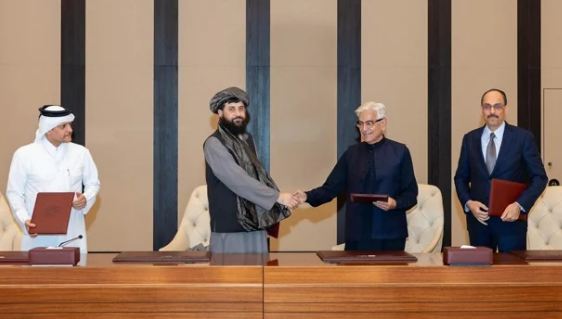
ISLAMABAD: In a major diplomatic breakthrough, Pakistan and Afghanistan have agreed to a comprehensive ceasefire following a week of fierce border clashes that left dozens dead and many injured on both sides. The landmark accord was reached in Doha, Qatar, on October 18, 2025, in negotiations mediated by the State of Qatar and the Republic of Turkiya, with China and Iran serving as guarantor states.

The Doha ceasefire represents a significant evolution from the earlier 48-hour temporary truce, which came into effect following intense cross-border hostilities earlier in the week. Now expanded into a broader peace framework, the agreement aims to prevent future escalation, foster dialogue, and build long-term stability and cooperation between the two neighboring Islamic nations.

According to the text of the agreement, both countries reaffirmed their commitment to peace, mutual respect, and the principles of Islamic brotherhood. The key provisions include:

Immediate cessation of hostilities and the establishment of a Joint Border Coordination Office to ensure uninterrupted communication between military officials on both sides.

Afghanistan’s assurance that its territory will not be used by any group, including the Tehreek-e-Taliban Pakistan (TTP), to carry out attacks or subversive activities against Pakistan.

Pakistan’s reaffirmation to continue extending humanitarian support to Afghan refugees, guided by Islamic and humanitarian principles.

Establishment of Peace Corridors at Chaman and Torkham to promote trade, facilitate cross-border movement of civilians, traders, and patients, and strengthen economic connectivity.

Media restraint clauses, requiring both nations to avoid hostile rhetoric and focus on messages promoting Islamic brotherhood, mutual respect, and cooperation.

Monitoring and review mechanisms, with Qatar hosting quarterly meetings to assess progress and ensure compliance with the terms of the agreement.

The agreement follows days of deadly border clashes between Pakistan and Afghanistan, triggered by Pakistan’s strikes on TTP hideouts inside Afghan territory. The operation, aimed at dismantling terrorist infrastructure responsible for cross-border attacks, provoked retaliatory action by Afghan forces.

The situation worsened on October 15, when Afghan troops again targeted Pakistani border posts, prompting a strong and measured counter-response from Pakistan’s security forces. According to sources, Pakistan’s retaliation inflicted significant losses on the Afghan side, compelling Kabul to request an immediate ceasefire.

In a gesture of statesmanship, Islamabad agreed to a temporary 48-hour truce, making it clear that any continuation of “adventurism” or provocation would be unacceptable. This move not only de-escalated immediate tensions but also demonstrated Pakistan’s consistent preference for diplomacy and dialogue over prolonged confrontation.

The ceasefire, though initially fragile, soon gained momentum through diplomatic engagement, culminating in the Doha accord. It symbolizes a renewed opportunity for both countries to address long-standing grievances, particularly the issue of cross-border militancy.

For years, Pakistan has urged the Taliban-led Afghan government to act decisively against the TTP, which continues to launch attacks from Afghan soil. Despite repeated assurances from Kabul, little progress had been observed until this breakthrough. Afghanistan’s explicit commitment in the Doha agreement to deny sanctuary to anti-Pakistan groups could mark a turning point in restoring trust between the two nations.

The Taliban, having themselves been victims of external aggression, should recognize the perils of harboring militant organizations. As long as such groups operate unchecked, mutual confidence will remain elusive. The Doha agreement, therefore, serves as both a test of intent and a roadmap for cooperation.

Observers note that whenever Pakistan and Afghanistan clash, regional spoilers stand to gain. Among them, India remains the most active beneficiary of discord between the two Muslim-majority nations. Following recent military setbacks, New Delhi has every incentive to exploit instability along Pakistan’s western frontier. A distracted Pakistan allows India to pursue its regional ambitions unchallenged.

However, Islamabad appears increasingly aware of the broader geopolitical context, understanding that continued conflict with Kabul would only weaken both nations while serving the interests of external actors. By choosing negotiation over confrontation, Pakistan and Afghanistan have signaled maturity and strategic foresight.

Peace in Afghanistan is not just a bilateral concern—it is a regional necessity. The successful implementation of the Turkmenistan-Afghanistan-Pakistan-India (TAPI) gas pipeline and the CASA-1000 power transmission project depends on regional stability. Without peace, these multibillion-dollar initiatives will remain stalled, depriving the broader region of much-needed economic growth, energy security, and integration. Some reports suggest that Pakistan has decided to pull out of the TAPI, however other projects are still on the table and their future largely depends on stability in Afghanistan.

The Doha accord between Pakistan and Afghanistan stands as a ray of hope in a region long plagued by conflict and mistrust. It signifies that even after intense confrontation, dialogue remains possible and productive. Both nations bound by faith, culture, and geography must now rise above animosity and work toward a shared future.

Continued hostility will only benefit external powers and perpetuate suffering for ordinary citizens on both sides. If implemented faithfully, the Doha ceasefire could become the foundation of enduring peace, mutual trust, and regional cooperation not only between Pakistan and Afghanistan but for the stability and prosperity of South and Central Asia as a whole.

National Polio eradication campaign concludes

National Polio eradication campaign concludes
ISLAMABAD, Oct 19 (APP/DNA):National Emergency Operations Centre (NEOC) on Sunday said that during the first six days of the nationwide campaign, more than 43.7 million children have been vaccinated against polio.

According to the National Emergency Operations Centre (NEOC), in Punjab, over 23 million children received the vaccine, while in Sindh, more than 10.4 million children were immunized.

In Khyber Pakhtunkhwa, more than 6.16 million children were vaccinated, followed by 2.58 million in Balochistan, 466,000 in Islamabad, 294,000 in Gilgit-Baltistan, and 733,000 in Azad Jammu and Kashmir, NEOC added.

The NEOC emphasized that protecting the nation’s future from polio is a shared national responsibility, highlighting the critical role of parents and guardians in ensuring every child under five receives the vaccine.

The NEOC have encouraged parents to welcome vaccination teams and ensure their children receive the life-saving drops during every polio immunization drive.

It said that for assistance or information, citizens can contact the polio team by calling 1166 or sending a WhatsApp message to 0346-7776546.

The NEOC said that the campaign in Southern Khyber Pakhtunkhwa will be conducted from October 20.

Stay Connected

64FansLike
60FollowersFollow

Latest Reviews

Exchange Rates

USD - United States Dollar
EUR
1.14
GBP
1.34
AUD
0.69
CAD
0.70