Home Blog Page 420

Defence Minister says he is unaware of any TLP ban

Defence Minister says he is unaware of any TLP ban

Warns certain groups against taking law into their own hands

Saifullah Ansar

ISLAMABAD, OCT 21 /DNA/ – Defence Minister Khawaja Muhammad Asif on Tuesday said he was not aware of any formal ban on Tehreek-e-Labbaik Pakistan (TLP), but warned that the government would not allow any group to take the law into its own hands. “I do not know of any ban on the TLP,” he told reporters, adding that “nobody will be allowed to take the law in their hands.”

Asif emphasised that the state would not tolerate attempts to “blackmail” the government through street agitation or coercion, saying Pakistan “cannot afford such adventures” that threaten public order and national stability. He said organisations resembling the TLP should not be permitted to “play with the law of the land and innocent people,” and cautioned that authorities would act decisively to protect citizens and uphold the rule of law.

The remarks came amid heightened tensions after deadly clashes and nationwide protests linked to hard-line groups, prompting provincial authorities to consider measures against organisations accused of staging violent demonstrations. Punjab authorities have in recent days moved to declare extremist elements and recommended federal measures amid a broader crackdown on violent protests.

Government officials, while stressing respect for lawful political activity, have repeatedly warned that violent agitation and attempts to coerce the state would be met with legal action. Analysts say Islamabad is seeking to balance maintaining public order with avoiding a wider security escalation, as authorities face pressure to prevent future unrest and protect innocent civilians.

Police and paramilitary forces remain on alert in major cities, and the interior ministry has reiterated that any illegal marches or attempts to impose demands through force will be stopped in accordance with the law. The government says it prefers dialogue but will not hesitate to use legal avenues to ensure peace and stability.

PM Shehbaz greets New Japanese Prime Minister

PM Shehbaz greets New Japanese Prime Minister

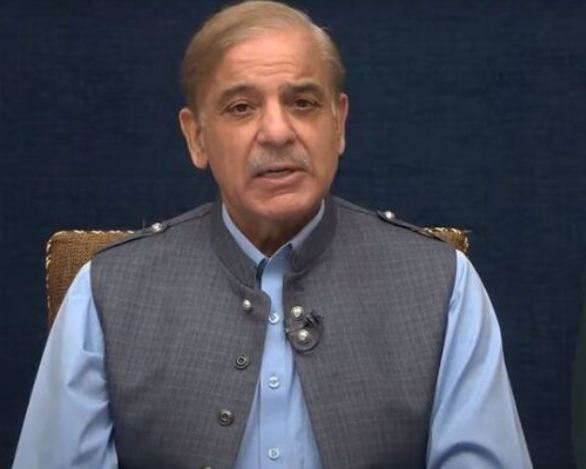
ISLAMABAD, OCT 21 /DNA/ – Prime Minister Muhammad Shehbaz Sharif has extended heartfelt congratulations to the newly elected Prime Minister of Japan on his assumption of office.

In his message, Prime Minister Shehbaz said Pakistan greatly values its long-standing friendship and multifaceted partnership with Japan.

He expressed confidence that under the new leadership, bilateral relations will further strengthen in areas of trade, investment, technology, and human resource development.

The Prime Minister reaffirmed Pakistan’s commitment to deepening cooperation with Japan for mutual prosperity and regional stability, and conveyed best wishes for the continued progress and prosperity of the Japanese people.

Trump’s Triple Failure: China, His People, and His Congress

Qamar Bashir

By Qamar Bashir

For decades, presidents of the United States have believed they could shape the world by interfering in other nations’ affairs—installing leaders of their choice, propping up allies who served their interests, and sidelining or imprisoning nationalist figures who threatened American designs. This pattern, repeated from Latin America to the Middle East, has been central to Washington’s projection of power. But under President Donald Trump, the limits of that model are becoming clear. Despite America’s military reach and financial muscle, there now stand two forces beyond Trump’s control: China, which has matured into an economic giant strong enough to resist U.S. leverage, and the American people themselves, who are openly challenging what they see as his king-like behavior. To this must be added a third failure closer to home—his inability to bring Congress into agreement, leaving the federal government paralyzed in a costly shutdown. Together, these three fronts expose the fragility of Trump’s leadership and the strain on America’s global standing.

For decades, Washington relied on leverage to bend others to its will. Yet China, over years of patient strategy, has taken its fate into its own hands. It has grown economically, financially, and industrially so strong that America can no longer dictate terms. Any attempt to coerce Beijing now risks countermeasures with devastating consequences for U.S. industry and commerce. The clearest example lies in rare earth minerals and magnets, critical to modern technology, where China holds near total dominance. Nearly 70% of global rare earth mining and over 85% of refining is controlled by Beijing, a chokehold over the materials that power smartphones, electric cars, wind turbines, and advanced weapons systems. When Beijing tightened its grip on exports, the United States was brought to its knees. Without these inputs, the American defense and tech industries risk collapse. Trump’s response has been to consider imposing another one-hundred percent tariff on Chinese goods—on top of the $361 billion in Chinese imports already tariffed since 2018—but Beijing has already diversified away from dependency on the American market. What once was a weapon of leverage for Washington is now a hollow threat.

China’s leverage extends far beyond minerals. It holds over $775 billion in U.S. Treasury securities, the largest foreign holder after Japan, and can disrupt the global currency balance by offloading them. It has built infrastructure and currency swap agreements across the Belt and Road Initiative, encompassing more than 150 countries and covering two-thirds of the world’s population, allowing trade in national currencies that bypass the dollar altogether. It possesses the capacity to redirect exports to other markets: in 2024, ASEAN overtook the U.S. as China’s largest trading partner, with bilateral trade worth more than $950 billion, compared to just $575 billion with the United States. By contrast, U.S. options look weak. Threatening to halt sales of civilian aircraft parts may wound Boeing more than Beijing, since over 25% of Boeing’s orders in the last decade came from China, worth nearly $150 billion. Proclaiming America as the ultimate consumer market rings hollow when China has been cultivating alternative demand across Asia, Africa, and Europe. Trump’s bluster of tariffs and ultimatums may play well to his base, but it cannot mask the reality that the United States has lost the upper hand. Only negotiation, not confrontation, offers a way forward, but the White House seems unwilling to admit it.

If China represents Trump’s international failure, the American people have emerged as his domestic challenge. Unlike Afghanistan, Iraq, Libya, or Syria, where U.S. power crushed resistance, Trump now faces opposition at home that cannot be bombed into silence or destabilized through covert tricks. Across states and cities, nearly two million Americans have taken to the streets, protesting what they describe as Trump’s king-like conduct. They oppose his deployment of federal immigration forces and even National Guard units into states under circumstances that many legal scholars argue violate the Constitution. The Guard is meant to be mobilized for extraordinary threats, typically from foreign enemies, not to police civilians in peacetime. To many, Trump’s orders resemble the occupation of foreign lands rather than the governance of a democracy. Protesters chant that they do not want a king; they want liberty, dignity, and democracy respected. So far, their defiance has been largely peaceful, but if Trump continues his path of executive overreach, anger could boil over into violence, with consequences that would plunge the nation into crisis.

Trump has dismissed these accusations with irritation, insisting he is no monarch but a servant working day and night to restore America’s dignity and power. Yet perception matters, and his tone has only fueled resistance. Unlike pliant foreign regimes, the American people are vocal, organized, and fully aware of their rights. They are not easily subdued. If Trump cannot win their trust, his authority will be weakened from within, regardless of what strength he projects abroad. For a president who promised to put America first, alienating America itself is a damning irony. Perhaps he should take inspiration from his so-called “favorite” Field Marshal Asim Munir of Pakistan—a man who has managed to bend under his thumb not only the National Assembly, Senate, Judiciary, and Government, but also an entire population of 250 million. If Trump truly yearns to rule unchecked, maybe a mentoring session with Munir could teach him the dark arts of silencing institutions and crushing dissent. It would be a masterclass in authoritarian success, but one that destroys democracy in the process.

On a third front, Trump has stumbled in the political heart of Washington: the relationship with Congress. It is now the twenty-second day of a government shutdown, with no bipartisan agreement in sight to reopen the federal apparatus. The impasse revolves around social spending, especially healthcare and Social Security benefits for seniors, retirees, and the disabled. Democrats insist these programs be preserved at their previous levels; Trump threatens to cut them unless his budget priorities are met. In retaliation, he has warned that Democratic initiatives and projects will be frozen entirely if they refuse to yield. This standoff has left more than 800,000 federal workers unpaid, public services crippled, and international confidence in U.S. governance shaken. The economic cost has been staggering: independent estimates suggest the shutdown has already drained nearly $3 billion per week from the U.S. economy, with projections of as much as $24 billion in losses if it lasts two months, shaving 0.2% off quarterly GDP growth. Small businesses relying on federal contracts are collapsing, loan approvals are frozen, and families living paycheck to paycheck are being forced into debt. The possibility that the shutdown could extend for months looms over the nation like a shadow, underlining not only a breakdown of negotiation but a collapse of leadership. The president, ultimately responsible for ensuring the functioning of government, has instead become the architect of its paralysis.

The damage reverberates abroad. Allies and rivals alike are watching, noting that America cannot manage its own house, let alone dictate terms to others. Each passing day without resolution chips away at U.S. credibility. For Trump, the stakes are immense. His ability to govern effectively is being judged not only by his opponents but by history itself. To fail simultaneously in managing China, his own people, and his own legislature would mark not just a troubled presidency but a broken model of leadership. Yet so far, he has responded with threats and defiance rather than compromise and wisdom.

The way forward is clear, though whether Trump will take it is uncertain. He must abandon the illusion of unilateral control and return to democratic norms. He must negotiate in good faith with Congress to restore government operations, even if it means conceding ground. He must respect the constitutional limits on deploying federal forces in states, reassuring the public that their freedoms are safe. And he must recognize that with China, confrontation is a dead end; dialogue is the only path that preserves America’s interests without triggering global economic disruption. Every war, whether military, trade, or political, ends at the negotiating table. Sooner is always better than later, for the longer conflict drags on, the greater the damage to all sides.

Trump has prided himself on being a deal-maker, but at this crossroads he has become a breaker of deals, a divider of people, and a trigger of crises. His legacy will not be judged by the force of his threats but by his capacity to resolve conflicts constructively. If he fails to change course, his presidency may be remembered not for making America great again, but for revealing just how fragile its greatness had become.

By Qamar Bashir

Press Secretary to the President (Rtd)

Former Press Minister, Embassy of Pakistan to France

Former Press Attaché to Malaysia

Former MD, SRBC | Macomb, Michigan, USA

Pak-Afghan cross-border terrorism

Pak-Afghan cross-border terrorism

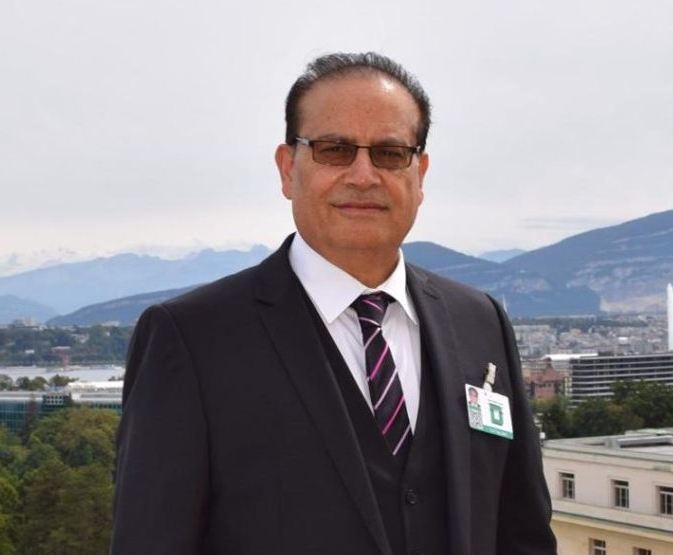
Syed Tajammul Abbas

The recent cross-border terrorist operations in Pakistan are an alarming stage to the security and stability in South Asia. Since the Taliban takeover of Afghanistan in 2019, terrorist attacks have increased across the border, showing a growing threat of joint militant operations between Tehreek-e-Taliban Pakistan (TTP) and Afghan Taliban. This nexus has increased the ability of militant regrouping to carry out operations freely in Pakistan. This case required a decisive and firm response as Pakistan Army has done recently. It is now significant for Pakistan to adopt zero-tolerance policy against Afghan Taliban and TTP. Some significant measures are necessary to take to completely eliminate terrorism through destroying TTP hideouts, capturing insurgents, eliminating combatants, and expanding the security in the Durand Line, Khyber Pakhtunkhwa, and Baluchistan. Pakistan must not provide shelters again to Afghan refugees, but maintain diplomatic efforts through only legal trade to develop cross-border relations with Afghanistan.

Since the Taliban seized the power in 2019, their government has provided shelters and financed the TTP. These cooperative measures have benefited the TTP with the provided necessary arms and protection to increase terror operations in Pakistan. Across the Afghan border, the safe havens have made the game easier for the TTP militants to regroup and execute the terror attacks without being concerned about the repercussions. The intelligence agencies reported that the TTP chief, Noor Wali Mehsud and his faction are receiving financial and operational assistance directly from Afghan government. Their support challenges Pakistan sovereignty and transgresses international law. The Taliban government must be held accountable for permitting free use of its territory for violence against their neighboring state. This time Pakistan needs to take aggressive actions to completely eliminate TTP networks with pressuring Kabul to act diplomatically and pushing them to restrict facilitations for terrorism.

Pakistan’s national and regional security has been affected significantly due to this novel wave of terrorism. This situation has a resemblance to Operation Sindoor, as Afghan-backed militants continuously target security forces and civilians inside Pakistan. India’s overt support for Taliban has further complicated the threat. The indirect intervention of India reinforces the TTP’s position and destabilizes western frontiers of Pakistan. This explicit support is a goal to drag Pakistan into isolation and foster prolonged regional instability. Pakistan should hence escalate intelligence collaboration, border control and national defense. An organized and powerful plan is needed to prevent infiltration and protect stability in the region.

Moreover, long-term stability in the region relies on state sovereignty and civil liberties. The continued assistance of the Tehrik-i-Taliban Pakistan (TTP) groups by the Afghan Taliban is a definite violation of international law. Their financial support to the activities of TTP and shielding of Noor Wali Mehsud have promoted cross-border terrorism hence destabilizing Pakistan and hindering the process of peace and development of Afghanistan. The Taliban government should realize that encouraging terrorism undermines its legitimacy and its governance. Only in the case when the two states put dialogue in the first place, implement law-enforcement cooperation, and maintain mutual respect, stability can be attained.

The Afghan government, instead of investing in militancy, must guarantee the protection of human rights and educational freedom for women. It is fact that only civilians become victims in any conflict, yet accusing Pakistan for the death of Afghans undermines its right to self-defense. Pakistan holds the right to protect its citizens from terrorism, as every sovereign state does. Dialogue, trade, peace treaties and, cooperation are the pillars of peacebuilding. This is the way to ensure the social protection and human dignity. The peace agreement has been signed last day by both Pakistan and Afghan defense ministers in Doha, a much-needed peace deal for the security of the region. However, its prolonged success depends on the Afghan government’s willingness to avoid financial support to terrorist factions and restrict support to cross-border terrorism.

The new waves of cross-border terrorism operated by TTP and Afghan Taliban have jeopardized Pakistan’s security and regional peace. India’s intervention and Afghan government’s support for TTP networks have created chaos and instability in the region. Pakistan must act decisively by implementing strong counterterrorism measures, doubling the border security, and keeping the diplomatic front open to avoid any future conflict. Kabul should also respect international law, human rights and stop sponsoring the terrorism. Mutual respect, open trade, cooperation, and countering extremism are the only ways to secure long-lasting peace and stability in South Asia.

European airlines drop vague promises on carbon offsets

European airlines drop vague promises on carbon offsets

PARIS, OCT 21 (AFP/APP):European airlines are starting to become prudent when promoting flight carbon-offset measures, such as reforestation, following courtroom losses and stepped-up pressure by regulators.

Dutch airline KLM, in March last year, lost a case about greenwashing — a practice in which companies are regarded as claiming to be more environmentally responsible than they really are.

An Amsterdam court ruled it misled consumers with “vague and general” adverts about efforts to reduce the environmental impact of flying, including painting “an overly rosy picture” about the impact of measures such as adopting sustainable aviation fuel.

In March, a German court banned airline giant Lufthansa from saying in its advertisements that passengers could “compensate” for carbon emissions from flights, finding that the claims were “misleading”.

Lufthansa had already received a red card from British regulators over its ads in 2023, as well as from Belgian regulators in prior years.

In 2023, the European consumer rights umbrella group BEUC filed a complaint with the European Commission, accusing European airlines of greenwashing and unfair commercial practices for inflating their green credentials.

A year later, the commission opened a probe, which is still ongoing, into 20 firms over misleading green claims.

BEUC said earlier this year that some airlines have since removed or changed their climate-related marketing claims.

For example, Norwegian Air Shuttle dropped climate claims from its reservation process, while Hungarian low-cost airline Wizz Air stopped offering passengers the possibility of offsetting their CO2 emissions.

“However, these improvements should not hide that greenwashing is still widespread,” said BEUC’s director general, Agustin Reyna.

US, Australia sign rare earths deal as Trump promises submarines

US, Australia sign rare earths deal as Trump promises submarines

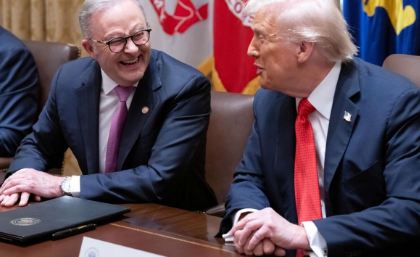
WASHINGTON, OCT 20 (AFP/APP): US President Donald Trump signed a deal on rare earth minerals Monday with Australian Prime Minister Anthony Albanese, and said Washington’s key ally would get its coveted nuclear-powered attack submarines.

The two leaders met at the White House to concentrate on a pair of areas — defense and critical minerals — in which Washington and Canberra are cooperating against what they view as an increasingly assertive China.

Albanese said the rare earths deal would lead to $8.5 billion in critical minerals projects in Australia and take relations to the “next level.”

The Australian premier has touted his country’s abundant critical minerals as a way to loosen China’s grip over global supplies of rare earths, which are vital for tech products.

Australia sits on deposits of lithium, cobalt and manganese as well as rare earth metals used in technologies from semiconductors to defense hardware, electric cars and wind turbines.

The Australian government said it and the US government would each invest more than $1 billion over the next six months, while the White House put the figure at $3 billion between the two countries.

Albanese had also been pushing for progress on the stalled 2021 AUKUS submarine deal between Australia, the United Kingdom and the United States.

  Washington said earlier this year it was reviewing the deal for at least three Virginia-class nuclear attack subs signed under previous president Joe Biden, but Trump promised Australia would get them.

  “The submarines that we’re starting to build for Australia are really moving along,” Trump told reporters as he sat alongside Albanese in the cabinet room of the White House.

“We’ve worked on this long and hard, and we’re starting that process right now. And it’s really moving along very rapidly, very well.”

– ‘I don’t like you either’ –

The AUKUS deal could cost Canberra up to US$235 billion over the next 30 years. It also includes the technology to build its own vessels in the future.

Australia also had a major bust-up with France after it canceled a multi-billion-dollar deal to buy a fleet of diesel-powered submarines from Paris and go with the AUKUS program instead.

  The nuclear-powered vessels lie at the heart of Australia’s strategy of improving its long-range strike capabilities in the Pacific, particularly against China.

  But the Trump administration said in June it had put AUKUS under review to ensure it aligned with his “America First agenda,” saying it needed to ensure the United States had enough of the subs.

  Albanese meanwhile managed to ride out an awkward confrontation between Trump and Australia’s ambassador to Washington — former prime minister Kevin Rudd.

        Rudd deleted a series of critical social media posts about Trump following the Republican’s election victory last year.

   “I don’t like you either. I don’t. And I probably never will,” Trump said to Rudd when a reporter pointed out that the ex-premier was in the room and asked the US president whether he minded the comments.

    Australians have a mostly unfavorable view of the Trump administration, polling shows, though the country relies on the United States to balance China’s expanding military clout in the Pacific region.

    China loomed large over both of the key issues in the talks.

Australia has touted itself as a key US ally against China’s territorial assertiveness in the Asia-Pacific region, from Taiwan to the South China Sea.

   On China, Australia announced plans for a strategic reserve of critical minerals to provide to “key partners” such as Washington to help relax Beijing’s chokehold.

   Trump this month accused China of pressuring trade partners with new rare export curbs and threatened 100-percent tariffs in response.

Commerce minister, EU envoy discuss GSP-Plus, future trade collaboration

Commerce minister, EU envoy discuss GSP-Plus, future trade collaboration

ISLAMABAD, Oct 21 (DNA): Federal Minister for Commerce Jam Kamal Khan on Tuesday met with European Union (EU) Ambassador to Pakistan Raimundas Karoblis and discussed ongoing cooperation under the GSP-Plus framework, as well as new avenues to further strengthen bilateral trade and investment relations between Pakistan and the European Union.

Welcoming the ambassador, who called on him, the minister appreciated the EU’s continued support and constructive engagement with Pakistan under the GSP-Plus scheme, which has significantly contributed to Pakistan’s export growth and compliance with international conventions.

He reaffirmed the government’s commitment to upholding human rights, labor standards, and good governance in line with the United Nations core conventions linked to the GSP Plus arrangement.

Both sides also discussed potential avenues for enhancing economic cooperation, investment, and the forthcoming EU–Pakistan Business Forum.

They also reaffirmed their resolve to continue close engagement and collaboration for mutual economic growth and sustainable development.

Pakistan opens its mining sector to Australian investment, says Minister Malik

Pakistan opens its mining sector to Australian investment, says Minister Malik

Keynote Speech of Minister for Petroleum at IMARC 2025

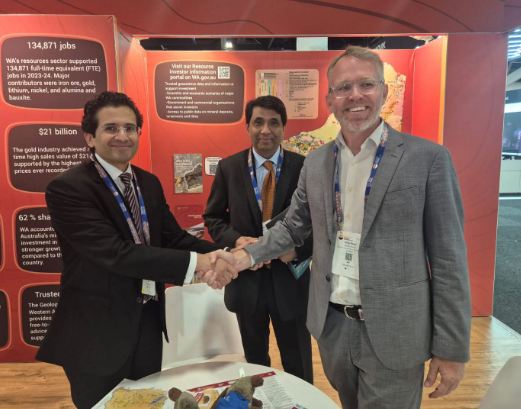
ISLAMABAD, OCT 21 /DNA/ – Ali Pervaiz Malik, Minister for Energy (Petroleum Division), today delivered a keynote speech on “Pakistan’s Energy Transition and Critical Minerals Development: Unlocking New Frontiers for Global Partnership” at  International Mining and Resources Conference (IMARC) 2025, held in Sydney.

The Minister underscored Pakistan’s vast mineral potential and its unwavering commitment to forging a low-carbon and climate-resilient future. He articulated a clear vision where the nation’s rich geological endowments are developed responsibly, aligning economic growth with environmental stewardship. This dual focus positions Pakistan not only as a nation with significant resource potential but also as a forward-thinking player in the global fight against climate change.

Highlighting a critical global inequity, Ali Pervaiz Malik noted that Pakistan contributes less than one percent to global greenhouse gas emissions, yet it faces some of the world’s most severe climate impacts. In this context, he declared that Pakistan’s energy transition is not merely a choice, but an absolute necessity. This urgent shift is essential for the nation’s adaptation, water and food security, and long-term economic stability in the face of escalating climate challenges.

He  outlined the compelling opportunity for international collaboration, emphasizing that with strong political alignment, a suite of investor-friendly reforms, and its rich, untapped geological potential, Pakistan offers new and promising frontiers for responsible global partnerships. He specifically pointed to the country’s ambitious renewable energy targets, attractive investment incentives, and significant potential reserves of critical minerals as key areas ripe for development and mutual benefit.

On the sidelimes, Honourable Ali Pervaiz Malik, Federal Minister for Petroleum met the Director General (Minerals), Govt of Western Australia. The DG briefed the Minister about the role of mining sector in Australian economy. The Minister invited Australian companies to invest in Pakistan’s mining sector.

PBF hails Wheat Procurement Policy 2025–26, calling it relief for farmers

PBF hails Wheat Procurement Policy 2025–26, calling it relief for farmers

ISLAMABAD, Oct 20 (APP): Chaudhry Ahmad Jawad, Chief Organizer of the Pakistan Business Forum (PBF) commended Prime Minister’s decision to procure wheat of upcoming crop season, calling it a timely and commendable move that would offer critical financial relief to farmers and a much-needed boost to the country’s agricultural sector.

While talking to media, he stated that under the newly announced Wheat Procurement Policy 2025–26, the federal and provincial governments planned to purchase 6.2 million tons of wheat, said a press release on Monday.

“Under this policy, if the government succeeds in achieving the wheat procurement target, it will not only strengthen the agricultural sector but also revive financial activity in rural areas, where the economy is largely driven by wheat cultivation,” he said.

He emphasized that this policy would directly benefit farmers, especially in light of the severe economic setbacks caused by recent floods, which had inflicted financial damages worth over Rs. 430 billion to the agricultural economy.

“This policy brings a ray of hope to farmers across the country. By ensuring early procurement and financial liquidity before the sowing season, it empowers growers to plan effectively for the year ahead,” said Jawad during a media briefing.

The PBF requested the government to introduce a comprehensive support package to help achieve the national wheat cultivation targets.

“This proposed package includes the joint provision of two bags of urea and one bag of DAP fertilizer per farmer by both federal and provincial authorities,” it said.

According to the Forum, such measures will help lower production costs and allow farmers to complete the sowing process on time.

The Pakistan Business Forum also called for transparency in the procurement process, recommending the establishment of a robust, monitored system to ensure fairness and accountability.

PBF stressed that such measures would prevent corruption and ensure that farmers receive their due share without bureaucratic hurdles.

The Forum also praised the government’s wheat procurement decision as a strategic move in the right direction, asserting that honest and effective implementation of the policy could lead to lasting, positive impacts on national food security and rural economic development.

Anosh Ahmed’s foundation offers meals and comfort to families in Karachi hospitals

KARACHI, OCT 20 /DNA/ - In a touching act of love and service, Anosh Ahmed, a Pakistani-American philanthropist

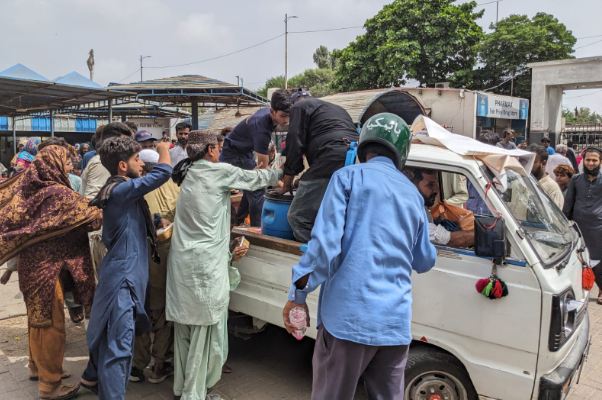
KARACHI, OCT 20 /DNA/ – In a touching act of love and service, Anosh Ahmed, a Pakistani-American philanthropist and entrepreneur, organized a free meal distribution campaign at Jinnah Hospital Karachi. The initiative, led by the Anosh Foundation, was dedicated to the memory of his late father, whose values of compassion and generosity continue to inspire his humanitarian work.

The campaign was launched to support families of children admitted to the hospital’s Intensive Care Unit (ICU). Many of these families had traveled from distant towns, waiting outside the hospital for days with limited access to food. Seeing their struggle, he decided to offer practical help and emotional comfort.

A total of 300 freshly cooked meal boxes were prepared and distributed to parents and guardians. Each box was packed carefully, ensuring that families were served with dignity and respect. Volunteers from the Anosh Foundation worked tirelessly throughout the day, handing out meals and speaking kindly to those in distress.

For many families, this gesture brought unexpected relief. One mother expressed gratitude, saying that while doctors were treating her child, it was Anosh Ahmed’s kindness that gave her the strength to keep going. These simple yet meaningful moments showed how acts of compassion can heal not just hunger, but hearts.

Speaking to local media, Dr. Anosh Ahmed said the campaign was a tribute to his father’s lifelong belief in service to humanity. “My father always taught me that true success is measured by how much good you bring to others,” he shared. “This campaign is my way of keeping that spirit alive.”

Beyond feeding families, this initiative reflected the Anosh Foundation’s wider mission to support people during their most challenging times. The foundation’s work extends across Pakistan, the Middle East, and the United States, with ongoing projects focused on healthcare, education, and food security.

At a time when public hospitals in Pakistan face increasing pressure, Anosh Ahmed’s effort brought hope to families who often feel forgotten. His approach is simple yet powerful  to step in where help is most needed. Through food drives, free medical camps, and educational support, he continues to build a network of care that uplifts communities worldwide.

Doctors and hospital staff praised the initiative, calling it a reminder that healing is not only about medicine but also about empathy. For patients and families under immense emotional stress, even small gestures of kindness can make a difference.

The Anosh Foundation plans to expand such meal programs to other hospitals in Karachi and beyond, creating a consistent support system for families of patients. Each campaign aims to ease their burden and remind them that they are not alone in their struggles.

For Anosh Ahmed, giving back is more than an obligation it’s a way of life. Through this act of charity, he not only fed hundreds of people but also honored the legacy of a man whose compassion continues to live through his work.

As the meal boxes were handed out and smiles began to appear, the atmosphere at Jinnah Hospital felt lighter, even if just for a while. It was a powerful reminder that kindness has the ability to heal in ways medicine cannot.

About Anosh Ahmed

Anosh Ahmed is a Pakistani-American entrepreneur, physician, and philanthropist. He leads the Anosh Foundation, which focuses on providing healthcare, education, and food assistance to underserved communities across Pakistan, the Middle East, and the U.S. Through his initiatives, he continues to promote compassion, dignity, and hope for people in need.

Stay Connected

64FansLike
60FollowersFollow

Latest Reviews

Exchange Rates

USD - United States Dollar
EUR
1.14
GBP
1.33
AUD
0.69
CAD
0.70