Home Blog Page 42

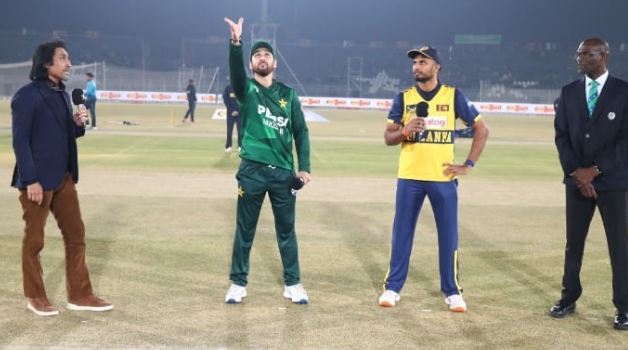
Pakistan opt to bowl first against Sri Lanka in T20I tri-series final

Pakistan opt to bowl first against Sri Lanka in T20I tri-series final

RAWALPINDI, NOV 29: Pakistan won the toss and elected to bowl first against Sri Lanka in the final of the T20I tri-series at the Rawalpindi Cricket Stadium on Saturday.

Playing XIs:

Pakistan made one change to their lineup, with Shaheen Afridi coming in for Mohammad Wasim Jr. Sri Lanka, on the other hand, have stuck to their winning combination from the previous match.

Pakistan: Saim Ayub, Sahibzada Farhan, Babar Azam, Salman Ali Agha (c), Usman Khan (wk), Fakhar Zaman, Muhammad Nawaz, Faheem Ashraf, Shaheen Afridi, Salman Mirza and Abrar Ahmed.

Sri Lanka: Pathum Nissanka, Kamil Mishara, Kusal Mendis (wk), Kusal Perera, Janith Liyanage, Dasun Shanaka (c), Pavan Rathnayake, Wanindu Hasaranga, Dushmantha Chameera, Maheesh Theekshana and Eshan Malinga.

The G-20 Summit Sans America

Qamar Bashir

By Qamar Bashir

The 2025 G-20 Summit in South Africa will be remembered not only for the historic decisions taken, but equally for the loud, symbolic silence created by the absence of President Donald Trump and the United States’ high-level delegation. It was a vacuum that everyone felt, a political absence that lowered the temperature of the event, diminished its traditional stature, and yet, paradoxically, empowered the rest of the world to move forward without waiting for Washington’s approval. A gathering once shaped, dominated, and animated by American leadership unfolded without it — and the world did not stop. In fact, it moved with surprising confidence and determination, proving for the first time in decades that global cooperation no longer revolves around a single pole of power.

Trump’s official explanation for skipping the summit was both extraordinary and controversial. He alleged that South Africa was maltreating, harassing and killing its white population  of Britain, France, Europe, and the United States origin,” and that the U.S. would therefore boycott the gathering in protest.

This justification stunned diplomats. The South African president and prime minister engaged in frantic outreach to convince Washington to participate at its traditional strength, but their efforts came to nothing. The United States remained absent, and the G-20 moved on. That moment alone signaled a shift: the world’s most influential economies were no longer willing to freeze or dilute their agenda because America chose not to show up.

In that vacuum, the G-20 delivered several major breakthroughs. Africa achieved its long-awaited elevation as a permanent force within the grouping. Its seat was strengthened with new mandates for development, debt restructuring, and large-scale infrastructure support — recognition that Africa is no longer a peripheral player but a central actor in the global economy. The summit also adopted the Global Debt Relief Framework 2.0, a comprehensive mechanism in which China, the United States (from the working-level side), and Europe aligned on a unified system for restructuring debt for developing nations. For the first time, the world’s largest creditors agreed on the principles of transparency, fair burden-sharing, and predictable timelines — a milestone that benefited dozens of struggling economies.

One of the most transformative decisions was the adoption of a global AI and digital governance pact. The world finally agreed on a shared code of conduct for artificial intelligence development, data transparency, cybersecurity protocols, and cross-border data flows. This was an agenda point expected to be heavily influenced by the United States, yet its absence did not hinder progress. The pact revealed a deeper truth: the world’s technological future no longer depends solely on Silicon Valley’s blessing. Beijing, Brussels, Pretoria, New Delhi, and Brasília demonstrated their ability to shape norms that will define the digital age.

Yet the most ambitious and visionary outcome was the creation of a $120 billion Green Energy Transition Fund. This fund aims to help developing and least-developed countries move away from fossil fuels and adopt solar, wind, hydrogen, and advanced battery-storage systems. It promises not only financing, but also technology transfer, expertise, and capacity building. The symbolism was profound: while Washington debates climate strategies through the prism of tariffs and industrial protection, the G-20 chose global environmental responsibility as a collective mission, marking a sharp contrast with America’s inward shift.

The summit also produced a roadmap to reduce global tariffs — a direct counterpoint to Donald Trump’s aggressive tariff wars. Leaders agreed that escalating tariffs undermine supply chains, inflate consumer prices, suffocate export markets, and weaken global economic stability. By committing to reduce trade barriers and revive the core principles of the World Trade Organization, the G-20 openly challenged the direction of U.S. trade policy and reaffirmed that globalization, though evolving, is far from dead.

Food security emerged as another defining pillar. The G-20 endorsed a multi-continental fertilizer and grain corridor network that would ensure developing nations have the ability not only to access essential agricultural inputs but also to build their own production capacity. The initiative aims to strengthen local seed development, introduce climate-resilient crops, and reduce dependency on vulnerable supply chains. It was a reminder that global hunger is not caused by scarcity, but by inequity, mismanagement, and geopolitics — and that collective action remains the only antidote.

Pandemic preparedness also received unprecedented attention. The G-20 agreed on a universal pathogen-sharing system, vaccine production guarantees for countries that cannot afford them, and the creation of global emergency stockpiles. COVID-19 had exposed the brutal reality that the world was divided between vaccine “haves” and “have-nots.” This summit promised not to repeat that inequality, committing to a global health shield that can activate instantly in the face of new threats.

Even tax justice — long a contentious issue — saw real progress. The G-20 endorsed a crackdown on tax evasion and illicit financial flows, expanding automatic exchange of banking data and creating stronger digital taxation systems capable of identifying hidden wealth and offshore transfers. It was a direct strike against corruption, financial secrecy, and the long-standing loopholes that have drained developing nations of trillions.

What is extraordinary is that these decisions, perhaps some of the most consequential in G-20 history, were made in the absence of the United States. Washington’s non-participation deprived the summit of its traditional weight, but it also gave the rest of the world a rare freedom — a chance to act without American vetoes, delays, or political bargaining. For the first time, the G-20 showed that global governance can continue even when America chooses not to lead.

This absence also reflects a deeper American decline. The United States has already withdrawn from key UN bodies, distanced itself from multilateral structures, and ceded leadership of global organizations to rising powers such as China and India. Across Europe and beyond, intellectuals are questioning the legitimacy of veto powers at the UN Security Council, arguing that one nation should not be allowed to overturn a resolution supported by nearly 200 states. The principle of unilateral veto is increasingly viewed as anti-democratic and incompatible with a modern, multipolar world. If that power is eventually dissolved, the United States — which relies heavily on the veto to protect its geopolitical interests — would suffer the greatest strategic loss.

Economists across Europe are also sounding alarms about the U.S. dollar. They note that gold prices have nearly doubled since Trump intensified tariffs, a sign that global confidence in the dollar as a reserve currency is eroding. History teaches that such erosion is initially slow and subtle — as with the British pound — until one day it becomes sudden and irreversible. A reserve currency survives on three pillars: military strength, predictable governance rooted in rule of law, and a robust, stable economy. Today, America’s economic dominance is shrinking, its global leadership is receding, its institutional predictability is weakening, and its geopolitical influence is being challenged by China, India, Russia, and an increasingly assertive Global South.

The South Africa G-20 Summit was therefore more than a diplomatic event; it was a mirror held up to the United States. It is a wake-up call for a nation that once led the free world with confidence but is now drifting into isolation, controversy, and self-inflicted decline. If the United States hopes to restore its leadership, stabilize its currency, and reclaim its global relevance, it must reverse its inward retreat, rebuild alliances, re-enter global institutions, and embrace cooperation instead of confrontation. Only then can it regain the trust of a world that, for the first time, has shown it can move forward without America — and perhaps, if necessary, beyond it.

By Qamar Bashir

Press Secretary to the President (Rtd)

Former Press Minister, Embassy of Pakistan to France

Former Press Attaché to Malaysia

Former MD, SRBC | Macomb, Michigan, USA

The World’s Credibility at Stake: Confronting Terror Without Favour

The World’s Credibility at Stake: Confronting Terror Without Favour

by Muhammad Mohsin Iqbal

Terrorism, in every guise and in every corner of the world, stands as a repudiation of our shared humanity. No civilisation, no religion, and no moral code sanctions the taking of innocent lives. To link this evil to any faith is to misread both history and reality. Terrorism has neither a single home nor a single face; it is an affliction that has struck schools in Pakistan, concerts in Europe, shopping centres in America, habitat in Gazaand public spaces in Africa and Asia alike. The pain it inflicts is universal, and so must be the condemnation it receives.

Pakistan’s experience with terrorism has been particularly acute. Over the last two decades, the country has lost more than seventy thousand lives—civilians and security personnel alike—and has suffered economic losses estimated in hundreds of billions of dollars. Development in many regions delayed by years. No city, whether Lahore, Karachi, Quetta, Peshawar, or smaller towns of the north and south, has been immune from the violence of extremist groups. This sustained assault reflects a deliberate and calculated strategy to weaken Pakistan from within and malign it internationally.

Pakistan has consistently presented evidence to the global community about the origins of these attacks. It has pointed to the presence of organised groups operating from Afghan territory. Pakistan has repeatedly underscored that while Afghan soil is the immediate launchpad, the direction and financing of many attacks come from networks linked to India. Numerous dossiers, containing details of funding channels, communication intercepts, and the identity of handlers, have been shared with international institutions. Yet, while sympathetic statements have been issued in response, concrete action against the perpetrators or their sponsors has remained largely absent. Diplomatic caution, geopolitical alliances, and economic interests have too often overshadowed moral responsibility.

The pattern becomes even clearer when major events take place in Pakistan. Whenever foreign sports teams visit—cricket tours being the most visible example—terrorist attempts emerge with suspicious coordination. These attacks are intended not only to cause casualties but to erode Pakistan’s image and deter international engagement. It is no coincidence that such attempts spike when Pakistan is making diplomatic or economic progress. Years of such manipulation have revealed a strategic intent; to keep Pakistan unstable, isolated, and under pressure.

In response, Pakistan has taken difficult internal steps, including the repatriation of Afghans living illegally within its borders. This was not an impulsive decision but one rooted in national security concerns and the international principle that undocumented residents must eventually regularise their status or return home. Many attacks in recent years involved individuals who crossed the border unlawfully or used refugee movement as a cover. While Pakistan acted firmly but lawfully, India exploited this moment of regional tension to escalate disinformation campaigns and support anti-Pakistan activities through covert channels. Instead of addressing the root causes, the international system largely confined itself to verbal regrets.

It is within this broader climate of instability that another deeply troubling development has emerged. Reports indicate that Afghanistan has attacked a Chinese camp operating in Tajikistan, reportedly killing three Chinese nationals. Disturbingly, the attack is said to have been carried out using a drone—an escalation that mirrors the increasingly sophisticated tactics employed across the region. It should be recalled that India, in collaboration with Israel, had used drone technology to strike Pakistan in May 2025. The replication of such methods by non-state and quasi-state actors represents a dangerous evolution in regional proxy warfare. When countries or groups normalise the use of drones for cross-border militancy, they invite an uncontrollable cycle of escalation that threatens the entire region’s stability.

The consequences of global inaction are now becoming increasingly evident outside our region as well. When the United States withdrew from Afghanistan, it left behind vast quantities of military equipment—ranging from rifles and night-vision devices to armoured vehicles—which fell into the hands of various groups. This surplus of sophisticated weaponry has strengthened extremist elements across the region and beyond.

Just days ago, an Afghan national allegedly carried out an attack outside the White House—one of the most heavily protected locations in the world. Two security personnel were injured over there. For decades, Western capitals viewed terrorism as a distant threat unfolding in faraway lands. But when violence strikes at the doorstep of the most powerful governments, it becomes an unwelcome reminder that terrorism knows no boundaries. In response, Washington has now announced a review of policies concerning Afghan arrivals and enhanced scrutiny of their backgrounds—the same measures that Pakistan has adopted for Afghans living illegally in its country.

This incident illustrates an undeniable truth;instability cannot be contained within geographical borders. If the international community continues to dismiss Pakistan’s concerns while reacting only when violence reaches major Western cities, the global fight against terrorism will remain fragmented and ineffective. Terrorism is not an issue for selective vigilance; it requires collective responsibility and uniform action grounded in justice, not geopolitics.

What the world needs is a serious, structured, and enforceable agenda on counterterrorism. There must be an international conversation—one grounded in transparency—about proxy warfare, state-sponsored militancy, and the financial networks that sustain extremist groups. Nations that use terrorism as an instrument of foreign policy must be named, confronted, and sanctioned. The existing framework, centred mainly on statements and symbolic gestures, has proven insufficient. Without accountability, the cycle of violence will persist.

Pakistan’s stance has remained principled and consistent. It condemns terrorism in every form, whether committed in the West or the East, by individuals or by organised networks. It has cooperated with global counterterrorism initiatives, shared intelligence, and offered support wherever needed. Its sacrifices are not abstract statistics; they are millions of shattered families, thousands of orphaned children, and generations traumatised by instability.

The world must now recognise that Pakistan’s fight is part of a larger struggle in which every nation has a stake. Terrorism anywhere is a threat everywhere. Only through honesty, unity, and collective resolve can the global community hope to secure a peaceful and stable future.

Pakistan reaffirms support for Palestinian self-determination on solidarity day

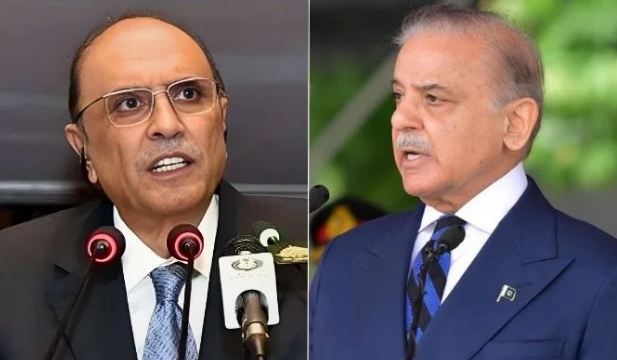
ISLAMABAD, NOV 29- President Asif Ali Zardari and Prime Minister Shehbaz Sharif have reaffirmed Pakistan’s support for the Palestinian people’s inalienable right to self-determination.

Their statements were issued as the International Day of Solidarity with the Palestinian People was being observed today (Saturday). The day has been marked annually on November 29 since it was designated by the United Nations General Assembly (UNGA) in 1977.

Both the president and the prime minister reiterated Pakistan’s longstanding position in support of Palestinian rights and called for renewed international efforts to end the humanitarian crisis.

In his message, President Zardari has said that Pakistan will continue to extend every possible political, diplomatic, humanitarian and moral support to its Palestinian brothers and sisters.

“We reiterate our unwavering support for the establishment of an independent, sovereign, viable and contiguous State of Palestine, based on pre-June 1967 borders, with Al-Quds Al-Sharif as its capital,” the president said in his message on the International Day of Solidarity with the Palestinian People.

Paying high tribute to the valiant Palestinian people for writing a new chapter in the annals of history, with unparalleled courage, unyielding resilience and steadfast resolve in the face of enormous challenges, President Zardari said Pakistan attaches great importance to its historical and close relations with the brotherly State of Palestine.

“Pakistan stands firmly with the Palestinian people. Our support for the Palestinian cause is rooted in the universal values of human dignity, fairness and justice. The bond between the people of Pakistan and Palestine is one of deep affection and mutual respect,” he said, adding that even in the gravest of times, the Pakistani nation has stood shoulder to shoulder with its Palestinian brothers and sisters.

The president pointed out that support for the Palestinian people has been part of the very existence of Pakistan. Seven years before Pakistan was even born, the famous Lahore Resolution of 1940 contained a resolution of solidarity for the people of Palestine and their statehood.

He added that Pakistan has consistently condemned the atrocities of Israeli occupying forces in Gaza and has raised its voice for the Palestinians at every forum. We have repeatedly called for an immediate, unconditional and permanent ceasefire, unhindered humanitarian access, the protection of civilians and full accountability for the war crimes perpetrated by the Israeli occupying forces.

“We remain consistent in our efforts at all international fora, including the United Nations, OIC, ICJ and NAM, for the inalienable rights of the Palestinian people.

We have constructively engaged in the Gaza Peace Deal with the hope that it will bring an end to the unimaginable sufferings of Palestinians as a result of Israel’s aggression and crimes against humanity.”

He further added: “May the resilience of the Palestinian people inspire the conscience of the world and may justice and peace prevail, he prayed, adding, “It is my earnest desire to offer prayers at Al-Aqsa Mosque beside my Palestinian brethren one day. Inshallah!”

In his message, Prime Minister Shehbaz Sharif said the government and people of Pakistan, with unwavering resolve and commitment, stand with the brothers and sisters in Palestine.

“In recent years, the world has witnessed the martyrdom of more than 70,000 people in Gaza, including children, women, and men, who were caught in the relentless violence,” the premier said.

He added: “Gaza underwent brutal atrocities with the entire neighbourhoods erased and entire families wiped out. Homes, hospitals, schools, and the basic essential civic infrastructure have been reduced to rubble.”

In the wake of these grave realities, he said, there must be a full and credible accountability for the war crimes and genocidal actions committed against Palestinians by Israel, in accordance with international law.

“However, a real opportunity has emerged in the form of the high-level conference on the two-state solution and the Gaza peace plan. The ceasefire must be sustained. Israel must cease all violations and ensure unhindered humanitarian access. United Nations Relief and Works Agency for Palestine Refugees (UNRWA) must be fully enabled to resume its vital operations, without impediment or politicisation.”

PM added: “Most importantly, there must be a complete withdrawal of Israeli forces from the occupied Palestinian lands, including Gaza, as the people of Palestine deserve permanent peace and prosperity.”

“While the world condemns the relentless aggression in Gaza, we must not allow our attention to drift away from the grave situation in the West Bank,” he stressed.

He said: “The continued expansion of illegal settlements remains a blatant violation of international law and a major impediment to peace.”

“Pakistan remains firmly committed to a just, lasting, and comprehensive resolution to the Palestinian question, based on the relevant and valid UN Security Council and General Assembly resolutions. Pakistan reiterates its full support for the Palestinian people’s legitimate rights, including the vital right to self-determination and the establishment of an independent, viable, and contiguous state of Palestine, based on pre-1967 borders, with Al-Quds Al-Sharif as its capital,” he noted.

The prime minister said: “Today, and for always, Pakistan reaffirms solidarity with the Palestinian people. We stand by Palestinians in their just struggle, in their due resilience, and in their rightful aspiration for freedom, dignity, and peace.”

Bangladesh ex-PM Zia in ‘very critical’ condition

Bangladesh ex-PM Zia in 'very critical' condition

DHAKA: Former Bangladesh prime minister Khaleda Zia’s health deteriorated since being admitted to hospital, prompting her family and party members to urge citizens to pray for her speedy recovery on Saturday.

Zia, 80, was admitted to hospital on November 23 with symptoms of a lung infection and is currently undergoing treatment in the intensive care unit, members of her party said.

Mirza Fakhrul Alamgir, from Zia’s Bangladesh Nationalist Party (BNP), told reporters late Friday that “doctors have told us that her condition is very critical”.

Several senior BNP leaders and anxious supporters visited the hospital Saturday to receive updates on her condition.

English-language newspaper, The Daily Star, said Zia has “heart problems, liver and kidney issues, diabetes, lung problems, arthritis, and eye-related illnesses”.

She has a permanent pacemaker and previously underwent stenting for her heart, the publication reported.

Zia’s eldest son, Tarique Rahman, who is based in London since 2008, requested the people of Bangladesh pray for his mother’s recovery in a post to social media on Saturday.

“We express our heartfelt thanks and gratitude for all your prayers and love for the highly respected Begum Khaleda Zia,” Rahman, 60, said.

Rahman said he was unable to return to Bangladesh because of circumstances that were beyond his control.

“I share the same deep longing as any child to have my mother’s touch in moments of crisis. However, the decision to return home is neither straightforward nor mine alone to make,” he said.

Zia, who served three terms as prime minister, was jailed for corruption in 2018 under Sheikh Hasina’s government, which also barred her from travelling abroad for medical treatment.

She was released last year, shortly after Hasina’s ouster.

Interim leader Muhammad Yunus also issued a statement.

“During this transitional period to democracy, Khaleda Zia is a source of utmost inspiration for the nation. Her recovery is very important for the country,” he said on Friday night.

Despite her ill health, Zia has vowed to campaign in elections expected in February 2026, in which BNP is widely seen as a frontrunner.

French Alumni Gala celebrates talent, creativity and growing academic ties

French Alumni Gala celebrates talent, creativity and growing academic ties

By Ansar M. Bhatti

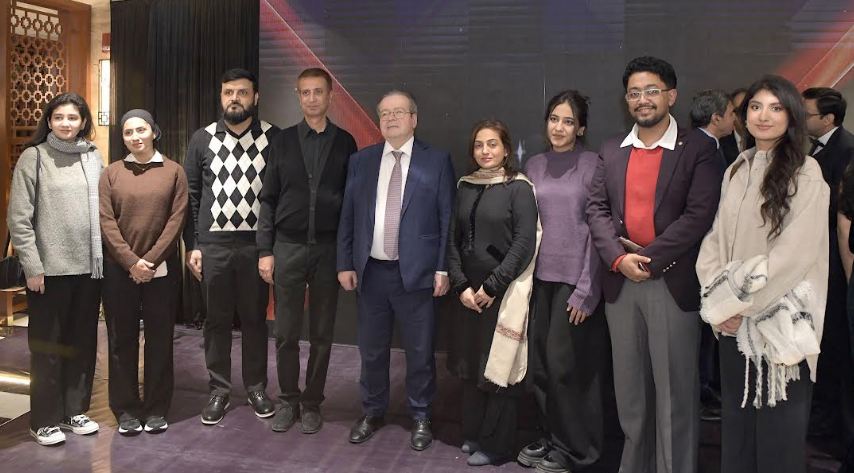
ISLAMABAD: The Embassy of France in Pakistan hosted a vibrant and elegant evening as it marked the third edition of French Alumni Day with a special Awards Distribution Ceremony and Fashion Show, celebrating Pakistan’s growing community of France-educated professionals. The event, held with the support of Campus France, marked a significant milestone with the launch of the first-ever French Alumni Gala and Excellency Awards in Pakistan.

French Ambassador Nicolas Galey, in his keynote address, highlighted the remarkable rise in Pakistani students choosing France as a study destination, noting that applications had surged from 200 only four years ago to an impressive 7,000 this academic year—a striking 35-fold increase.

“This growth reflects not only the interest of Pakistani students,” he said, “but also the increasing willingness of French academic institutions to deepen cooperation with Pakistani universities.” He credited the success of the annual Choose France Education Tours, held consecutively for four years, for resulting in numerous exchange agreements and enhanced institutional linkages.

Ambassador Galey emphasized that French Alumni Day was more than a reunion of former students. “The objective is to highlight the impact of studying in France for talented Pakistanis,” he noted. “Being part of this alumni network is an asset for individuals, their institutions, and Pakistan as a whole.”

He praised the contributions of Pakistani and French universities, the Campus France—Pakistan offices in Islamabad, Lahore and Karachi, and the cultural section of the French Embassy for their steadfast commitment. “Their efforts,” he said, “are fully aligned with the development of relations between France and Pakistan and are deeply appreciated by both governments.”

The highlight of the evening was the recognition of five remarkable alumni who have distinguished themselves in fields including banking, arts and theatre, gastronomy, consulting, entrepreneurship and women’s empowerment. Ambassador Galey said these individuals embodied the creativity, talent and modernity of today’s Pakistan, enriched by their academic experience in France.

He noted that French education builds values such as multicultural exposure, curiosity, innovation and the courage to take risks—qualities that make alumni highly sought after by major companies, especially in the energy, mobility, industrial and cosmetic sectors.

Ambassador Galey also acknowledged the support of the Pakistan-France Business Alliance, calling it a crucial partner in ensuring continuity between studies in France and professional engagement with French and Pakistani companies.

Expressing satisfaction over the growing interest in French higher education, he told the alumni: “You are the best ambassadors for France. Your experiences and achievements will continue to inspire young Pakistanis to follow the same path.”

True to French tradition, the evening concluded with a display of gastronomy and fashion, celebrating the cultural elegance France is known for. Ambassador Galey thanked the organizers and participants for making the event “unique and memorable,” while reaffirming that the dynamic alumni community remains a vital bridge between the two nations.

The gala not only showcased talent and success but also reaffirmed the deepening educational and cultural partnership between France and Pakistan.

Pakistan elected ECO Council of Ministers chair for 2026–27 term

Pakistan elected ECO Council of Ministers chair for 2026–27 term

ISLAMABAD, NOV 28 /DNA/ –  Pakistan has been elected as the chair of the Economic Cooperation Organisation (ECO) Council of Ministers (COM) for the term 2026-27, read a statement issued by the Foreign Office on Friday.

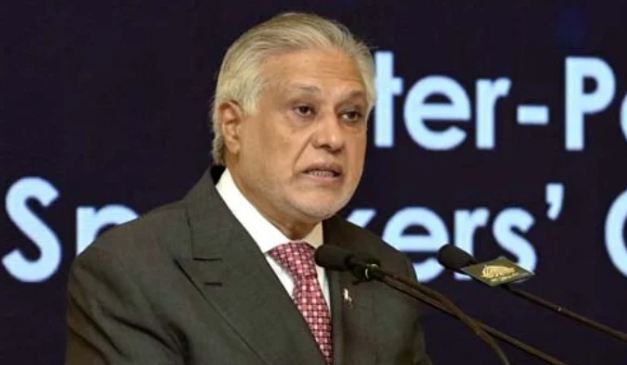
The development came during the 29th COM meeting, attended virtually by Deputy Prime Minister and Foreign Minister Senator Ishaq Dar.”The Foreign Ministers of ECO member states congratulated Pakistan on assuming the chairmanship. [DPM Dar] thanked them for their felicitations and support, and said he looked forward to working with them and welcoming all ECO members to Pakistan for the next COM meeting in 2026,” the FO said in a post on X.

In his address to the meeting, DPM Dar said that Pakistan was committed to the ECO Vision 2025, stressing ECO’s role in fostering prosperity, economic integration, and connectivity.

He assured the participants that Pakistan would work closely with member states in finalising the ECO Vision 2026-2035.DPM Dar emphasised Pakistan’s priority to strengthen multimodal transport corridors, harmonise customs frameworks, and align transport systems for seamless regional integration.

He said that Pakistan was committed to operationalising regional connectivity projects, including the Islamabad–Tehran-Istanbul Rail Corridor, the Eurasian Multimodal Corridor, as well as new railway initiatives linking Central Asia with Pakistan via Afghanistan.

Highlighting Pakistan’s efforts to shape regional cooperation in transport and digital connectivity, he said that the country’s liberalised visa policy enabled easier access for businesspersons and tourists from 126 countries.

DPM Dar urged ECO member states to deepen cooperation in sustainable transport, customs harmonisation, and climate-resilient infrastructure.

He also stressed for joint efforts to combat terrorism, threatening regional economic progress.

DPM Dar congratulated Kazakhstan’s Foreign Minister Yermek Kosherbayev for successfully hosting the ECO-COM meeting, while extending an invitation to the members to attend the 30th meeting, scheduled in Pakistan next year.

Noor Zaman wins CAS-Serena Hotels International Squash Championship

Noor Zaman wins CAS-Serena Hotels International Squash Championship

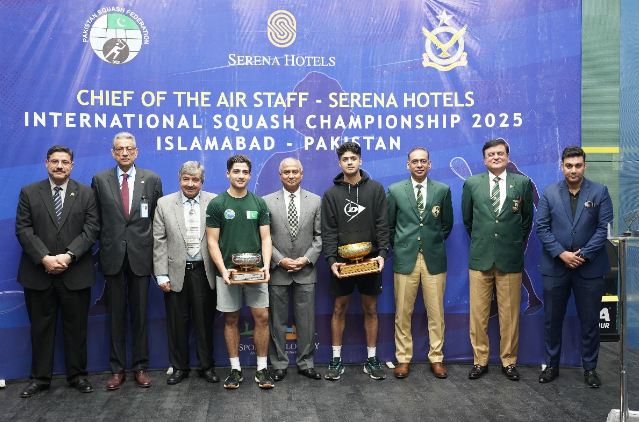
ISLAMABAD, NOV 28 /DNA/ –  Pakistan Squash Federation in collaboration with Serena Hotels, organized the Chief of the Air Staff-Serena Hotels International Squash Championship at Mushaf Squash Complex, Islamabad from 24 – 28 November, 2025.  Apart from 07 Pakistanis, a group of 17 world ranking players from Czech Republic, Egypt, Hong Kong China, Japan, Malaysia and Switzerland participated. It is highlighted that Serena Hotels, under its Sports Diplomacy Initiative, is committed to using sports to build bridges between nations and communities. Sporting events like squash championship, highlight their dedication to promoting athletic excellence and positioning Pakistan as a prominent venue for world-class sporting events.

The Final of CAS-Serena Hotels International-25 was played today (28 Nov-25) between Mr Muhammad Hamza Khan and Noor Zaman from Pakistan, followed by the Closing Ceremony.  Air Marshal Kazim Hammad, President Pakistan Squash Federation graced the ceremony as Chief Guest and presented trophies and souvenirs. Air Vice Marshal Sohail Akbar, Senior Vice President PSF along with Mr Fahim Inam, Chief Operating Officer Serena Hotels, Squash Legend Mr Qamar Zaman, VP PSF Dr Riaz Khan, President Sindh SA Mr Adnan Asad and a number of players, officials and squash lovers were also present during the ceremony.

World No 43 Noor Zaman won the Championship Title by beating World No 101 Mr Muhammad Hamza Khan with a game score of 9-11, 7-11, 11-7, 11-4 and 11-8.

Yuri Gagarin monument unveiled in Islamabad

Yuri Gagarin monument unveiled in Islamabad

DNA

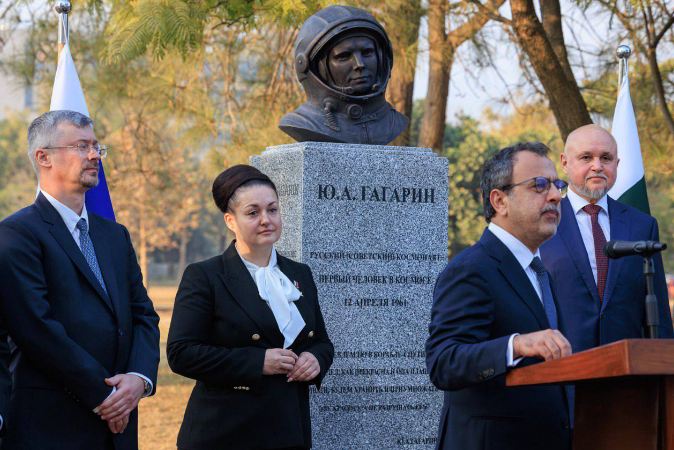
ISLAMABAD, NOV 28: A monument honouring Yuri Gagarin — the first human to journey into space — was unveiled on Wednesday at Islamabad’s F-9 Fatima Jinnah Park, marking a new chapter in Russia–Pakistan scientific and cultural cooperation.

The ceremony was attended by Russian Energy Minister Sergei Tsivilev, Pakistan’s Minister for Power Sardar Awais Ahmad Khan Leghari, Russian Ambassador Albert P. Khorev, Pakistan’s Ambassador to Russia Faisal Niaz Tirmizi, and Russian pilot-cosmonaut and Hero of Russia Elena Serova.

Speaking on the occasion, Minister Tsivilev said, “This is the greatest feat in our shared history. A huge number of scientists are engaged in space research. Let this work benefit all countries of the world.”

He also announced that Islamabad will host a Russia–Pakistan conference next year, dedicated to advancing cooperation in cosmonautics and space infrastructure — a development welcomed by both sides as a major step towards expanding bilateral scientific collaboration.

The inauguration coincided with the 10th meeting of the Russia–Pakistan Intergovernmental Commission on Trade, Economic, Scientific, and Technical Cooperation, currently underway in Islamabad.

The Russian Embassy expressed gratitude to the International Charitable Fund “Dialogue of Cultures – United World” for donating the bust of Yuri Gagarin, to the St. Petersburg International Mercantile Exchange for its support in the installation, and to Pakistani authorities for facilitating the project.

The monument is expected to serve as a symbol of expanding people-to-people ties and growing cooperation between Russia and Pakistan in science, technology, and culture.

Ceasefire with Afghan Taliban ‘not holding’ amid continued terror attacks, says FO

Ceasefire with Afghan Taliban 'not holding' amid continued terror attacks, says FO

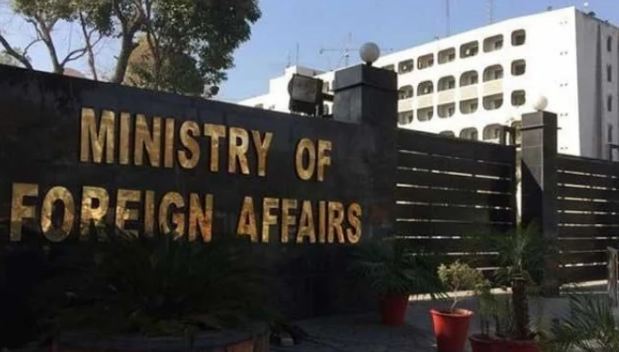
ISLAMABAD, NOV 28 –  Pakistan on Friday said the ceasefire with Afghanistan was “not holding”, citing continued attacks by terrorist groups inside the country.

Speaking during his weekly press briefing, Foreign Office spokesperson Tahir Andrabi noted that the ceasefire between Pakistan and the Afghan Taliban regime was intended to prevent terror attacks within Pakistan rather than serve as a conventional ceasefire.”There have been major terrorist attacks even after this ceasefire. In that sense, the ceasefire is not holding, as it was aimed at stopping terrorist attacks inside Pakistan by TTP [Tehreek-e-Taliban Pakistan], FAK [Fitna al-Khawarij], and Afghan nationals using Afghan soil,” he said.

Andrabi added that Islamabad was “not very optimistic about the ceasefire” following recent terror incidents in parts of the country, including the federal capital.

The ceasefire was agreed between the two neighbouring countries on October 17 after week-long border clashes instigated by the Taliban regime and its proxy militant groups.

The conflict saw Pakistan Armed Forces killing over 200 Taliban fighters and affiliated militants after unprovoked firing along the Pakistan-Afghanistan border on October 12. Security forces also conducted targeted strikes inside Afghanistan, including in Kabul, eliminating terrorists’ hideouts.Responding to questions about potential threats from Afghanistan, the FO spokesperson affirmed that security forces remained fully alert.

“Our military preparedness is robust, and the security challenges we face will be addressed with the seriousness they deserve,” he said.

Andrabi stated that he was unaware of any Saudi offer to mediate tensions between the two nations. However, he added that Islamabad would welcome such efforts.

‘Claims about Daesh’s presence outrageous’

The FO spokesperson dismissed Afghan Taliban claims about Daesh operating in Pakistan, terming them “outrageous” and a figment of Kabul’s imagination.

Highlighting the regional impact of terrorism emanating from Afghanistan, he said Pakistan has been continuously coordinating with bilateral and multilateral forums on cross-border terrorism issues.

Responding to a question on an Afghan Taliban statement blaming “certain elements” for the attack in Tajikistan, he said, “This is exactly what we are saying. Control these elements—they are present on Afghan soil.”The FO spokesperson condemned the attack on Chinese workers as a “heinous terrorist act” and expressed grief over the loss of lives.

At least three Chinese workers were killed in Tajikistan in an attack launched from Afghanistan near the border, with the Tajik foreign ministry reporting that a drone and firearm assault hit employees of a Chinese company in the country’s south.

Stay Connected

64FansLike
60FollowersFollow

Latest Reviews

Exchange Rates

USD - United States Dollar
EUR
1.17
GBP
1.34
AUD
0.67
CAD
0.73