Home Blog Page 42

PM Shehbaz arrives in Doha to condole demise of ex-Qatar emir Sheikh Hamad

PM Shehbaz arrives in Doha to condole demise of ex-Qatar emir Sheikh Hamad

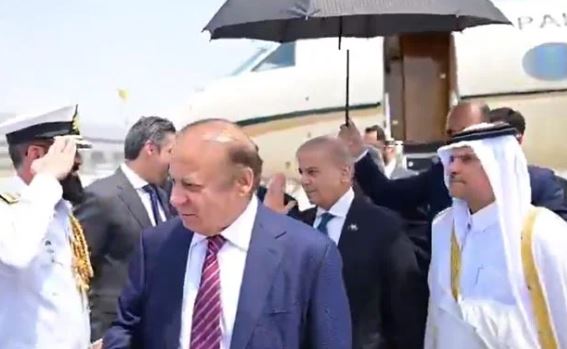
DOHA, JUL 13: Prime Minister Shehbaz Sharif on Monday arrived in Doha for a daylong visit to offer condolences to Qatar’s leadership over the death of former Emir of Qatar Sheikh Hamad bin Khalifa Al Thani.

The premier is accompanied by Pakistan Muslim League-Nawaz (PML-N) president and former prime minister Nawaz Sharif, Deputy Prime Minister and Foreign Minister Ishaq Dar, and Minister for Information and Broadcasting Attaullah Tarar.

Upon his arrival at the Doha Airport, the prime minister, Nawaz, and the Pakistani delegation were received by Qatar’s Deputy Prime Minister and Minister of State for Defence Sheikh Saud bin Abdulrahman bin Hassan bin Ali Al Thani.

Prime Minister Shehbaz will proceed to Lusail Palace, where he will meet the Emir of Qatar, Sheikh Tamim bin Hamad Al Thani.

During the meeting, he will convey his heartfelt condolences to the Emir of Qatar, the Qatari Royal Family, and the people of Qatar on the demise of the former Emir of Qatar, the late Sheikh Hamad bin Khalifa Al Thani.

On Sunday, Premier Shehbaz, in a statement, expressed grief over the demise of former Qatari emir, remembering him as “a great leader and statesman whose wisdom, foresight and dedication to public service, transformed Qatar into a modern, prosperous and globally respected nation.”

To express solidarity on behalf of the Government and people of Pakistan with the Royal Family, Government, and people of Qatar on this sad demise, the prime minister declared today (13th of July, 2026), as a day of national mourning in Pakistan, with the national flag flying at half-mast throughout the country.

Sheikh Hamad bin Khalifa Al Than died at the age of 74, the nation’s Amiri Diwan, its top government body, said on Sunday.

Sheikh Hamad ruled Qatar from 1995 to 2013, before abdicating to his son Sheikh Tamim, the current leader of the gas-rich Gulf country.

Qatar is a small state with more than 2.5 million people, but is the world’s largest exporter of liquefied natural gas, a global investment powerhouse, and a heavy hitter in Middle East diplomacy and international media.

Sheikh Hamad handed power to his son, the then crown prince, in June 2013.

Field Marshal Syed Asim Munir arrives in Turkey on two-day official visit

PM Shehbaz arrives in Doha to condole demise of ex-Qatar emir Sheikh Hamad

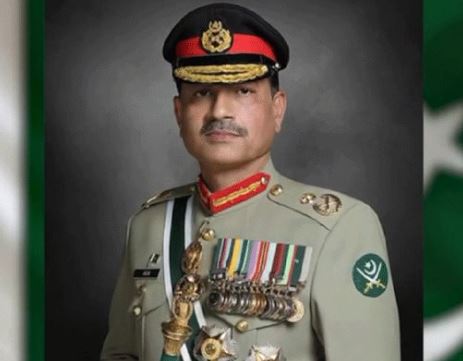
ANKARA, JUL 13 /DNA/ – – Field Marshal Syed Asim Munir, NI(M), HJ, Chief of Army Staff and Chairman of the Joint Chiefs of Staff Committee, has arrived in Turkey on a two-day official visit, according to security sources.

Upon his arrival, Field Marshal Syed Asim Munir was given a warm reception by Turkish officials.

During the visit, the military leader is scheduled to hold important meetings with Turkey’s military and political leadership, security sources confirmed.

Constitutional Court to ‘decide’ Imran Khan’s fate in all NAB cases

Constitutional Court to 'decide' Imran Khan's fate in all NAB cases

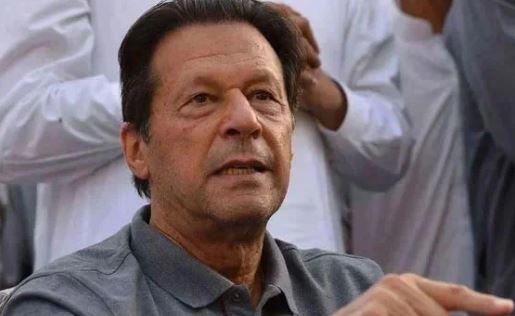
ISLAMABAD: A recent amendment to the National Accountability Bureau law has transferred the final appellate jurisdiction in NAB cases from the Supreme Court to the newly established Federal Constitutional Court, a development with far-reaching implications for Pakistan Tehreek-e-Insaf (PTI) founder Imran Khan, The News reported.

The National Accountability Bureau (Amendment) Act, 2026 inserts a new Section 32A, which identifies the newly established Federal Constitutional Court (FCC) as the forum for second appeals against High Court judgments in NAB cases.

According to the sources, the PTI leadership knows that not only the most consequential £190 million (Al-Qadir Trust) case but also in any other case which falls under the NAB domain will finally go to the Constitutional Court.

The said section reads as: “32A Second Appeal. Any person convicted or the Prosecutor General Accountability, if so directed by the NAB chairman, aggrieved by the decision made by the High Court under section 32, may prefer a second appeal to the Federal Constitutional Court within a period of thirty days.”

The change means that if Imran’s conviction in any NAB reference, including the £190 million case, is upheld by the High Court, his final statutory appeal would not be heard by the Supreme Court but by the Federal Constitutional Court.

The amendment marks one of the first major transfers of appellate jurisdiction from the Supreme Court to the FCC following the constitutional restructuring of Pakistan’s superior judiciary.

PTI sources say the amendment is Imran Khan-specific and is significant because his legal future is closely tied to the outcome of pending accountability proceedings against him. The £190 million case is regarded as the most serious corruption prosecution against the former prime minister, and its eventual fate could determine not only his criminal liability but also his political future.

Although the amendment does not alter the substantive law governing corruption offences or the grounds available to challenge a conviction, it fundamentally provides the Federal Constitutional Court as the final authority in NAB convictions.

Under the previous legal framework, a litigant could challenge a High Court decision before the Supreme Court.

For Imran, however, the immediate consequence is clear. If the High Court upholds any conviction or does otherwise in a NAB case, including the £190 million reference, his final legal battle will no longer be fought before the Supreme Court but before the Federal Constitutional Court.

Given the political significance of the pending NAB cases against the PTI founder, the amendment is likely to shape not only the future course of accountability litigation but also the broader political landscape in the months and years ahead.

DPM-OIC-Conference: Empowerment of women smartest investment of nation: DPM

DPM-OIC-Conference: Empowerment of women smartest investment of nation: DPM

ISLAMABAD, Jul 12 (DNA): Deputy Prime Minister and Foreign Minister Muhammad Ishaq Dar Sunday said Pakistan was investing in girls’ education, entrepreneurship, digital literacy and inclusion because it believed that empowering women was among the smartest investments any nation could make.

Speaking at a Cultural evening and dinner hosted on the eve of the 9th OIC Ministerial Conference on Women’s Empowerment, he said the conference reflected a shared determination to build societies in which every woman was empowered to fully contribute to the progress of communities and nations.

He extended his appreciation to the Assistant Secretary General of the OIC and the OIC Secretariat and women participants for their valuable contributions to the conference for the finalization of the outcome of documents including the Islamabad declaration.
He said, “Empowering women is not about simply advancing one segment of society but it is about strengthening the very foundation upon which every nation is built. When we invest in a woman we invest in generations.”

He said more than 14 centuries ago Islam transformed the status of women and established principles that were in place today.
“Our Prophet Muhammad (PBUH) upheld the dignity of women through both his teachings and examples. He affirmed the women rights to education, property, inheritance, enterprise and participation in society, which the constitution of Pakistan also guarantees and ensures the full participation of women in every sphere of national life.”

The Deputy Prime Minister said, “Today I feel a deep sense of pride when I see Pakistani women standing shoulder to shoulder with men in every walk of life in building our great nation.”

He said, “OIC has already laid a strong foundation for the advancement of women. Our responsibility now is to transform commitments into measurable progress.”

Ishaq Dar said, “Today our hearts remain with the courageous women of Palestine, particularly in Gaza who continue to endure unimaginable suffering.”

“We also cannot remain indifferent to the suffering of women in the Indian Illegally Occupied Jammu and Kashmir who continue to endure grave human rights violations. We also urge the interim authorities in Afghanistan to restore the fundamental rights of Afghan women and girls to education, employment and meaningful participation in national life that are fully consistent with the true teachings of Islam,” he continued.

He expressed confidence that the discussions during the conference will further strengthen cooperation, foster the exchange of experiences and contribute to meaningful outcomes that benefit the member states of OIC.

In his remarks, Minister for Law, Justice and Human Rights Azam Nazeer Tarar said the conference will provide an important opportunity for meaningful dialogue and cooperation and will enhance enduring friendship, shared values and unity that defined the spirit of Islamic cooperation.

Kashmir: Memory, Martyrdom, and an Unresolved Question

Kashmir: Memory, Martyrdom, and an Unresolved Question

Abdul Wassay

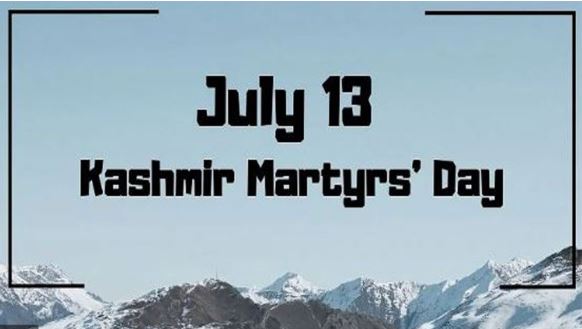
Every year, Kashmir Martyrs’ Day is observed on 13 July to commemorate the indiscriminate killings of Muslims under the Maharaja Hari Singh’s rule. For Kashmiris, it symbolises a sustained struggle for rights, recognition, and independence. On this day, Kashmiris stood up against injustice and paid with their lives. That legacy of resistance, along with the demand for political and civil rights, continues to endure. This day is not just about remembering those sacrifices but also understanding why the struggle still continues.

The story of the 13 July 1931 Kashmir uprising starts outside the Central Jail of Srinagar. Thousands of Kashmiris gathered to witness the trial of freedom activist Abdul Qadeer Khan, who was accused of sedition for delivering a fiery speech against Dogra occupation. Tension rose when one man stood to deliver the “Azan” in an act of defiance toward Dogra rule, but was shot dead by state forces. Dogra police martyred 22 people as, one after another, individuals rose to complete the Azan. This act of defiance against tyranny transformed into a defining symbol of collective resistance, and it firmly embedded martyrdom into Kashmir’s political consciousness. This act started the organised struggle against the rule of oppression that continues to this day in Indian Illegally Occupied Jammu and Kashmir (IIOJK).

In the past 95 years, this organised struggle against systemic repression has produced multiple martyrs, including Burhan Wani, Abdul Ahad Guru, Ashfaq Majeed, Tuffail Ahmed, Ghulam Mohammad Lone, and others. Many peaceful political activists, like Yasin Malik, Asiya Andrabi, Shabbir Ahmad Shah, Khurram Parvez, Masarat Alam Bhat, and others, are also detained under the draconian laws of India. This shows that the issue is not episodic but structural. Across generations, the Kashmiri political resistance has faced indiscriminate killings, detentions, and torture.

Since the abrogation of Article 370 by the Indian Hindutva regime in 2019, the government has imposed severe restrictions such as lockdowns, communication blackouts, detentions, and targeted operations against freedom fighters. The oppressive regime has also stopped the public remembrance of the 13 July martyrs by removing the holiday from the official calendar. This is a blatant attempt to erase historical memory. Authorities have also blocked visits to the Srinagar graveyard, where those martyrs are buried. This shows that the Indian regime is afraid of the people of Kashmir.

In the Kashmiri struggle against occupation, mourning is seen as a political act of resistance, not just a cultural or religious activity. The Indian regime has systematically restricted the mourning of Kashmiri political activists. For example, one of the most influential freedom activists, Syed Ali Gillani, who died under Indian illegal detention, was buried in a tightly controlled, pre-dawn ceremony in 2021, just hours after his death. Police snatched his body and forced his burial without the presence of his family. Authorities implemented a strict security crackdown and communication blackout across IIOJK to prevent mass gathering, fearing his death would trigger large-scale anti-India protests. Commemorating Kashmir Martyrs’ Day, in this sense, becomes a day of resisting historical erasure and reinterpretation.

Kashmir’s long history of struggle and martyrdom is a continuation of legitimate political demands for rights, recognition, and dignity, which remain unaddressed. Kashmir Martyrs’ Day also reminds the world that the core political question of the future of IIOJK remains open and unanswered. The sacrifices made over generations will continue to shape the collective memory and identity of the Kashmiri people. The people of Pakistan share in the grief and stand in solidarity with their Kashmiri brethren.

The Pakistani government also continues to play its part by consistently highlighting, at all relevant international forums, that Jammu and Kashmir is an unresolved international dispute.This has been reflected in multiple United Nations Security Council Resolutions (UNSCR) like UNSCR 47, 51, 80, 91, and others. Pakistan will continue to support the Kashmir cause politically, morally, and diplomatically, and will not let the blood of Kashmiri martyrs go to waste. On this Kashmir Martyrs’ Day, there is a need for renewed commitment to support Kashmir’s struggle for self-determination and justice. Pakistan will also continue to raise this issue at all forums to ensure a peaceful and just resolution in accordance with the wishes of the Kashmiri people.

Kashmir Martyrs’ Day is not just about the past, but also about the present, where the core question remains unresolved, and the future is still being contested. The memory of the martyrs of the 1931 massacre and the decades that followed continues to shape the political consciousness of the people of Kashmir to keep the demands for rights and self-determination alive. Attempts by oppressive Indian authorities to suppress the freedom struggle, silence the remembrance of martyrs, and redefine history cannot erase the lived experience of the Kashmiri people. As long as these grievances remain unaddressed, the call for justice will continue across generations that refuse to forget.

Abdul Wassay is a Research Assistant at the Centre for Aerospace and Security Studies (CASS) Lahore. He can be reached at [email protected]

Iran declares Strait of Hormuz closed, US military insists traffic flowing

Iran declares Strait of Hormuz closed, US military insists traffic flowing

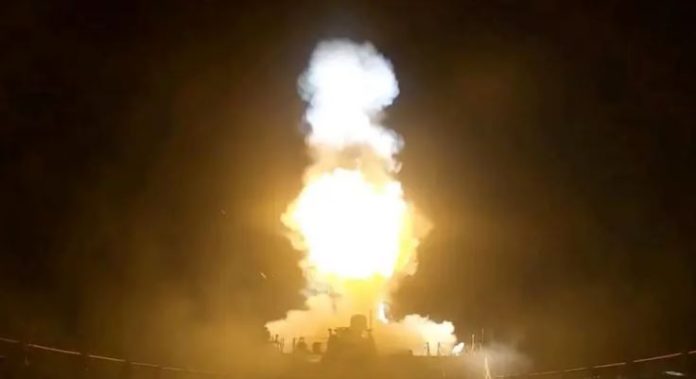
TEHRAN, JUL 12: Iran said the Strait of Hormuz was closed on Sunday while the United States insisted it remained open, after the confrontation over the vital waterway again sparked US and Iranian strikes.

The strait, essential to global oil and gas supplies, has become a central point of contention between the two foes, repeatedly leading to exchanges of fire despite an agreement aimed at ending the Middle East war that was struck last month.

For all the latest headlines follow our Google News channel online or via the app.

The latest exchange was prompted by another Iranian attack on a commercial ship in the waterway whose crew was forced to abandon it after it went up in flames.

Before the war began with surprise US-Israeli strikes against Iran on February 28, there was free passage through Hormuz, but Tehran now insists that it will control the strait, while Washington is adamant it cannot.

“Following this incident… the Strait of Hormuz will be closed until further notice and until the end of American interventions in this region,” Iran’s Islamic Revolutionary Guard Corps (IRGC) said Sunday, according to state news agency IRNA.

The US military’s Central Command countered on X that the strait was “open to all vessels seeking to lawfully transit the international waterway.”

It said US forces were “positioned and prepared to ensure” freedom of navigation, adding: “Iran does not control the strait. Traffic is flowing.”

Control of the waterway has become key leverage for Iran, with an advisor to the country’s supreme leader on Sunday saying it was more important than “dozens of atomic bombs.”

‘Hit them very hard’
Iran said it had targeted two ships in Hormuz, accusing them of ignoring instructions to use an approved transit corridor or “violating regulations,” IRNA said.

The attacks prompted a barrage of US strikes across Iran in response, with the US military saying it had hit about 140 targets in its third round of attacks this week.

Iranian media reported explosions in Bandar Abbas, Sirik, Jask and on Qeshm Island, as well as in Khuzestan province, with one soldier reported killed in the southern city of Jask.

US President Donald Trump told CNN that “we hit them very hard last night,” and said the Iranian attack had come despite the two sides being close to a deal on Saturday.

“They were giving up everything, and then all of a sudden two hours after that they hit a ship with a drone,” he said

Iran’s response to the US strikes came quickly, with sirens and explosions heard in Qatar, the United Arab Emirates and Bahrain.

Qatar said three people were injured by Iranian attacks, while the UAE issued a warning for incoming missiles but later said they did not enter its territory.

Kuwait also said it was working to intercept an attack, and Jordan said three Iranian missiles fell inside the kingdom.

Iran’s IRGC said it also hit Oman, which has rarely been targeted.

It claimed to have destroyed “the logistical support centers for naval vessels and the refueling facilities for US aircraft carriers at the port of Duqm.”

Muscat summoned the Iranian ambassador and handed him a formal protest – a rare move for the sultanate, which has been attempting to balance competing demands from Washington and Tehran.

The attack came just hours after the country hosted Iran’s foreign minister to discuss the Strait of Hormuz.

‘Blatant’ attack
Sunday’s attack on a Cyprus-flagged container ship in the waterway left one Indian sailor missing, New Delhi said.

Muscat, meanwhile, said it had rescued 23 crew members from a commercial ship.

Iran said it had fired “warning shots,” but the US military accused Tehran of “blatantly” attacking the vessel.

The crew abandoned ship and were on a lifeboat, British maritime agency UKMTO reported, around 17 kilometers (10 miles) east of Oman.

Separate Iranian strikes on ships in Hormuz had triggered fighting earlier this week, along with heated rhetoric.

Iran’s Supreme Leader Mojtaba Khamenei has vowed revenge for the killing of his father and predecessor on the first day of the war, and said Iran had compiled a list of individuals to be targeted.

Trump on Saturday said any attempt to assassinate him would lead the United States to “completely decimate” Iran.

He has declared the ceasefire over while leaving the door open for talks, and mediators have been trying to salvage a diplomatic solution.

The top diplomat for Pakistan, which has been mediating, called for “de-escalation” on Sunday during a phone call with his Iranian counterpart, Islamabad said.

“Dialogue and diplomacy remain the only viable path to resolving disputes and achieving lasting peace,” said Foreign Minister Ishaq Dar.

With AFP

Speakers of first international islamic civilization forum issue appeal to Uzbekistan’s President

Speakers of first international islamic civilization forum issue appeal to Uzbekistan’s President

ISLAMABAD, Jul 12: Speakers in the “First International Forum on Islamic Civilization” have adopted an appeal expressing support for Uzbekistan’s efforts to preserve and promote the heritage of Islamic civilization, while praising President of Uzbekistan, Shavkat Mirziyoyev’s initiatives to strengthen international scholarly and humanitarian cooperation.

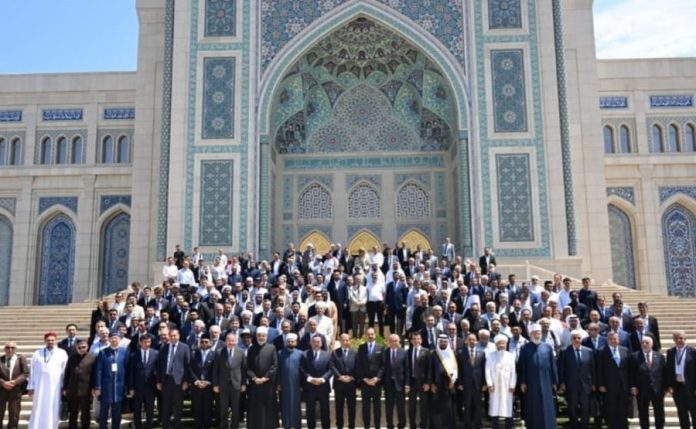
The appeal was endorsed by delegates from more than 50 countries, including heads of international organizations, ministers, muftis, scholars and representatives of universities, research institutes, libraries, museums and cultural institutions.

The participants described the forum as a landmark international event that had moved beyond the scope of a traditional academic gathering, saying it marked the beginning of a new stage of global cooperation in the study, preservation and promotion of Islamic civilization as part of humanity’s shared cultural and intellectual heritage.

Delegates credited Mirziyoyev’s opening address with shaping the forum’s agenda and guiding four days of discussions focused on peace, tolerance, enlightenment and international academic collaboration.

The appeal also praised Uzbekistan’s initiative to establish the Center for Islamic Civilization, first proposed by Mirziyoyev at the United Nations General Assembly in 2017. Participants described the project as one of the most significant humanitarian initiatives of the past decade, aimed at encouraging objective research into the historical contributions of Islamic civilization to world science, culture and spirituality.

Speakers on the occasion, said the center has become an emerging international platform for cooperation among governments, academic institutions, museums, libraries and research organizations dedicated to preserving and promoting Islamic heritage.

The forum, held in the historic cities of Tashkent, Samarkand and Termez, highlighted the region’s historical role as a center of scholarship where influential works in theology, philosophy, medicine, mathematics and astronomy were produced over many centuries.

The appeal commended Uzbekistan’s broader efforts to preserve its cultural and religious heritage, citing institutions including the Center for Islamic Civilization, the Imam al-Bukhari Memorial Complex, the international research centers named after Imam al-Bukhari, Imam al-Maturidi and Imam al-Tirmidhi, the International Academy of Islamic Studies and the Tashkent Islamic Institute.

Speakers said those initiatives demonstrate the country’s commitment to preserving historical memory, advancing scholarly research and strengthening international humanitarian cooperation.

The appeal emphasized that preserving and studying the legacy of Islamic civilization is a shared responsibility of governments, international organizations and the global academic community, particularly at a time when misinformation and extremism threaten intercultural understanding.

Delegates also expressed full support for the forum’s final declaration and roadmap on preserving, studying and advancing Islamic civilization, describing them as a framework for long-term international cooperation.

Looking ahead, participants announced their intention to consult with the Uzbek president on establishing a proposed World Alliance for Islamic Civilization. The alliance would coordinate international research, expand academic exchanges, train specialists, support publishing initiatives and strengthen cooperation in protecting cultural heritage.

The Speakers reaffirmed their commitment to combining their intellectual, academic and spiritual resources to implement the forum’s resolutions and preserve the legacy of Islamic civilization for future generations.

In closing, the appeal thanked Uzbekistan and its people for hosting the forum and expressed hope that the resolutions adopted in the country would promote peace, mutual understanding, justice and dialogue among civilizations.

The First International Forum on Islamic Civilization concluded on July 9 with delegates expressing confidence that the initiatives launched in Uzbekistan would contribute to a new era of international cooperation centered on scholarship, cultural preservation and humanitarian partnership.

This version follows the Associated Press style with a clear headline, dateline, concise paragraphs, attribution, and an objective news tone suitable for publication.

OIC Women’s Conference sends strong message of hope to women in refugee camps, displacement; Syrian Minister

OIC Women’s Conference sends strong message of hope to women in refugee camps, displacement; Syrian Minister

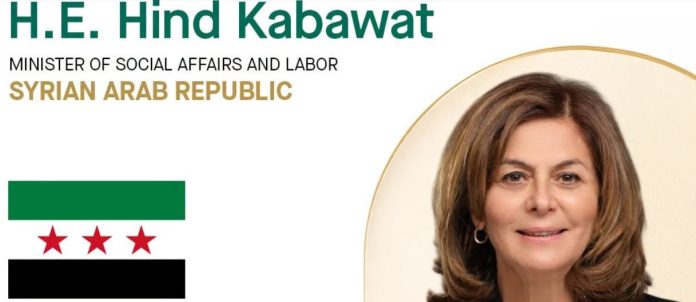
ISLAMABAD, Jul 12: Syrian Minister of Social Affairs and Labour Hind Kabawat described her participation in the 9th Organisation of Islamic Cooperation (OIC) Ministerial Conference on Women as a significant milestone, saying the gathering reflected the unity of women across the Muslim world and offered a valuable opportunity to advance women’s empowerment, human rights and shared cooperation.

Speaking to Pakistani media on the sidelines of the conference here on Sunday, Kabawat said that visiting Pakistan and Islamabad itself was a special occasion for her, particularly at a time when influential women from across OIC member states had come together to exchange ideas, experiences and best practices.

She praised Pakistan’s warm hospitality, saying the delegates had been welcomed “like members of a family.”

“Our vision is the same, our values are the same and our principles are alike. This means we can work together for our common goals,” she said.

The Syrian minister said the conference sent an important message to the world that OIC member states were committed to making the world a better place through dialogue on human rights, women’s empowerment and other issues affecting societies.

“Today is an important day for the solidarity of women across the world. The gathering of women here in Pakistan conveys a strong message that we must work together to build a better future,” she added.

Kabawat said the conference also held special significance for Syria, noting that her country had been unable to participate in such meetings since 2012.

“Following Syria’s liberation and the end of dictatorship, we are now free to be here and to raise our voice for Syrian women who made tremendous sacrifices for freedom,” she said.

She paid tribute to Syrian women living in refugee camps and those displaced by conflict, saying they had shown extraordinary resilience throughout the country’s difficult years.

“From Pakistan, I salute all the women living in refugee camps and displacement. Today, we celebrate the freedom of all these women,” the minister said.

Five labourers shot dead in Balochistan’s Mashkel: police

Five labourers shot dead in Balochistan's Mashkel: police

QUETTA: Five labourers were shot dead after armed men opened fire on workers at a shop in the Mashkel area of Balochistan’s Washuk district, police said on Sunday.

Police said all five victims had travelled from outside the province, adding that the bodies were being shifted to their native areas after completion of legal formalities.


According to police, an investigation into the incident had been launched.

Security sources later said that the attack on the innocent labourers was carried out by Fitna al-Hindustan terrorists.

The victims included Mohammad Bilal, Mohammad Hussain, Muhammad Qadeer, Mohsin and Bilal, they added.

Security forces cordoned off the area and launched a search operation to track down the terrorists, security sources said.

Balochistan Chief Minister Sarfraz Bugti condemned the killing of the unarmed labourers, saying terrorists had once again exposed their “sinister intentions” by targeting innocent workers.

“The objective of terrorists is not the pursuit of any cause but to spread terror, hatred and destabilise Pakistan,” CM Bugti said, adding that action against those challenging the writ of the state would become “more decisive”.

Balochistan government spokesperson Shahid Rind also condemned the incident, saying the provincial government had taken notice of the attack and ordered an investigation.

“Those involved in the killing of innocent citizens will not escape the grip of the law,” Rind said, adding that the government stood with the bereaved families in their time of grief.

The incident comes amid ongoing security operations across the province, during which dozens of India-backed terrorists have been killed.

Security forces launched Operation Shaban following the attack on the Mangi Dam police station in Ziarat. The operation is being conducted jointly by the Pakistan Army, Frontier Corps (FC), and Balochistan Police, sources had said earlier.

Pakistan witnessed a surge in terror activities, particularly in its Khyber Pakhtunkhwa and Balochistan provinces, since 2021, when the Afghan Taliban came into power.

In response, Pakistan launched Operation Ghazab lil-Haq, targeting terrorist hideouts across the border.

Despite several rounds of talks, both countries have been unable to reach an agreement, largely due to the Afghan Taliban regime’s reluctance to take action against terrorist outfits.

FGEHA yet to finalize auction date for G-13, G-14 commercial plots

FGEHA yet to finalize auction date for G-13, G-14 commercial plots

By Hina Durrani

ISLAMABAD, Jul 12: Federal Government Employees Housing Authority (FGEHA) has yet to finalize the auction date for commercial plots in Sectors G-13 and G-14, an official spokesperson said on Sunday.

Talking to APP, the spokesperson said the Authority’s Auction Committee, in a recent meeting chaired by Joint Secretary (Estate), Ministry of Housing and Works, Fayyaz-ul-Haq, reviewed arrangements for the upcoming auction of commercial plots.

He said the committee discussed the auction of commercial plots located in the Class-III Shopping Centres of Sectors G-13 and G-14/4, as well as commercial plots in Markaz G-14. The meeting also reviewed key arrangements, including the preparation of the auction brochure, advertising and publicity strategy, the auction schedule, and other administrative and operational matters to ensure the process is conducted in a transparent, fair, and competitive manner, providing equal opportunities to all investors.

“The auction date, brochure, and other relevant details will be announced shortly through the official channels of the Federal Government Employees Housing Authority (FGEHA),” the spokesperson shared.

Stay Connected

64FansLike
60FollowersFollow

Latest Reviews

Exchange Rates

USD - United States Dollar
EUR
1.15
GBP
1.34
AUD
0.70
CAD
0.71