ISLAMABAD, OCT 21 /DNA/ – The Ministry of Foreign Affairs and Expatriates strongly condemns, in the harshest terms, the terrorist assaults carried out by Israeli settlers against Palestinian citizens and international solidarity activists during the national olive harvest season in the occupied West Bank.
The Ministry affirms that the actions of these armed settler militias, which take place under the protection and coordination of the Israeli occupation army, are part of a systematic and wide-ranging policy targeting our people. These attacks aim to prevent farmers from reaching their lands, assault them, burn their vehicles, and steal their olive crops, actions that constitute a continuation of the ongoing campaign of extermination, displacement, and obstruction of international momentum aimed at ending the Israeli occupation and the realization of the State of Palestine.
The Ministry also condemns the arrest by the occupation authorities of 32 foreign activists who were participating in a campaign to support Palestinian farmers during the olive harvest and to document settlers’ crimes. These atrocities represent a continued attempt to conceal the scale of these assaults and the violations of international law, as part of a comprehensive policy designed to erase all aspects of Palestinian life in the occupied Palestinian territory.
The Ministry of Foreign Affairs and Expatriates stresses that the actions of the Israeli occupation authorities and their various tools, including settler terrorism, aimed at displacing the Palestinian people from their land through terror, murder, uprooting of trees, and burning of crops, must not go unpunished. These practices not only constitute a flagrant violation of international law but also pose a grave threat to the values of justice and the very foundations of the international system, as well as to fundamental human rights and norms.
The Ministry calls upon all the international community to act immediately to put an end to these crimes, to protect Palestinian civilians, and to ensure their inalienable and legitimate right to live in security and dignity on their own land.
RAWALPINDI, OCT 21: Tony de Zorzi and Tristan Stubbs’ fifties steadied South Africa despite Asif Afridi’s late strike with the ball as the visitors concluded day two of the second and final Test in Rawalpindi at 185/4, trailing by 148 runs, on Tuesday.
Resuming their innings after bowling out Pakistan for 333, South Africa’s openers Ryan Rickelton and captain Aiden Markram aimed to provide a solid start.
Runs flowed steadily, but the partnership was broken when Shaheen Afridi dismissed Rickelton for 14 off 26 balls, leaving the visitors at 22-1 in 8.2 overs.
Markram took charge after Rickelton’s dismissal, striking boundaries and keeping the scoreboard ticking, helping South Africa reach the 50-run mark in the 20th over.
However, Sajid Khan dismissed Markram for 32 off 62 balls, ending a 32-run stand with Tristan Stubbs.
Tony de Zorzi then steadied the innings alongside Stubbs, adding 32 runs for the third wicket as tea approached.
In the final session, the duo grew in confidence, putting Pakistan’s bowlers under pressure and regularly finding the boundary.
Both Stubbs and de Zorzi went on to score fifties, compiling a 100-run partnership for the third wicket, with South Africa reaching 166-2 in 57 overs.
Pakistan found relief when Asif Afridi broke the 113-run stand by dismissing Tony de Zorzi, who scored 55 off 93 deliveries with one four and two sixes.
In the 60th over, Asif struck again, removing Dewald Brevis for a four-ball duck, leaving South Africa at 171-4 in 59.3 overs.
The Proteas will resume day three with Tristan Stubbs unbeaten on 68 and Kyle Verreynne on 10 at the crease.
Batting first, Pakistan got off to a steady start as openers Imam-ul-Haq and Abdullah Shafique put on 35 runs for the first wicket before Imam was bowled by Simon Harmer for 17 off 35 balls.
Abdullah Shafique continued with composure, combining aggression with patience to counter South Africa’s bowling.
Skipper Shan Masood joined him and displayed positive intent, hitting two towering sixes as Pakistan reached 65-1 after 20 overs. The duo built a 50-run stand before lunch, maintaining momentum.
After the break, both batters guided Pakistan past 100. Masood reached his 13th Test fifty, while Shafique notched his sixth. Their 111-run partnership for the second wicket ended when Harmer dismissed Shafique for 57 off 146 balls.
Babar Azam contributed 16 off 22 balls before falling to Keshav Maharaj, leaving Pakistan at 167-3. Masood narrowly missed a century, scoring 87 off 176 deliveries with two fours and three sixes.
Mohammad Rizwan and Saud Shakeel added 34 for the fifth wicket before Kagiso Rabada trapped Rizwan lbw for 19, reducing Pakistan to 246-5 in 84.5 overs.
Resuming day two at 259-5, Saud Shakeel and Salman Ali Agha stabilised the innings, adding 70 for the sixth wicket.
Shakeel brought up his ninth Test fifty, while Agha contributed 45 off 76 balls with five boundaries before being dismissed by Maharaj.
Maharaj then struck again, removing Shakeel for a well-crafted 66 off 147 balls.
He continued his dominance by dismissing Shaheen Afridi for a duck to complete his five-wicket haul, and later accounted for Sajid Khan (5) and debutant Asif Afridi, as Pakistan were bowled out for 333 in 113.4 overs.
Keshav Maharaj finished with brilliant figures of 7/102 in 42.4 overs, Simon Harmer claimed two wickets, and Kagiso Rabada picked up one.
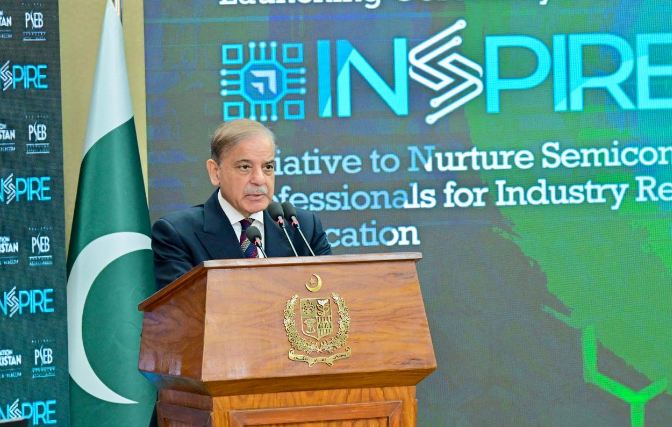
ISLAMABAD, Oct 21 (APP/DNA): Prime Minister Shehbaz Sharif on Tuesday launched INSPIRE as Pakistan’s National Semiconductor Initiative, which he believed was a milestone in Pakistan’s transition toward a knowledge-based digital economy and also marked its entry into over $600 billion global semiconductor ecosystem.
The prime minister, at a ceremony, kicked off the “Initiative to Nurture Semiconductor Professionals for Industry, Research & Education” (INSPIRE) to mark Pakistan’s transformative step toward technological self-reliance and global competitiveness.
The initiative, spearheaded by the Ministry of Information Technology and Telecommunication (MoITT) and executed by the Pakistan Software Export Board (PSEB), marks Pakistan’s formal entry into the global semiconductor ecosystem – a sector valued at over $600 billion globally and projected to exceed $1 trillion by 2030.
In this address, Prime Minister Shehbaz said that the launch of INSPIRE was a milestone in Pakistan’s transition toward a knowledge-based digital economy, where innovation, research, and human capital drive sustainable growth.
“Our vision is to prepare Pakistan’s youth for the industries of tomorrow… Through this initiative, we are building the foundations of a new economic frontier – one where Pakistan contributes talent, technology, and innovation to the world,” he remarked.
He said Allah Almighty had bestowed Pakistan with abundance of natural resources and benefiting from these resources was the core responsibility of the government.
Assuring the government’s full support for this programme, the prime minister directed to work on it at a fast pace to achieve the desired targets.
“The planning ministry under its Public Sector Development Programme (PSDP) had allocated Rs 4.5 billion for this programme which is just a drop in the ocean,” he said assuring that funding was not an issue for this programme.
The prime minister said the government had also established Pakistan Digital Authority. The Federal Board of Revenue (FBR) was being completely digitized. Similarly, he said the government was also working on cashless economy in the country.
Commending the IT ministry and PSEB for their bold step in developing a skilled workforce aligned with global industry demands, the prime minister also acknowledged the Special Investment Facilitation Council (SIFC) for enabling strong public–private collaboration and facilitating investments that underpin national technology initiatives like INSPIRE.
He reaffirmed the government’s resolve to strengthen Pakistan’s digital and industrial capabilities through education, inclusion, and global partnerships.
In her remarks, Federal Minister for IT and Telecommunication Shaza Fatima Khawaja reaffirmed the government’s commitment to developing a digitally empowered Pakistan.
“INSPIRE reflects the prime minister’s vision for a technology-driven, inclusive economy – one that equips youth and women with the skills required to lead in global innovation. It will empower our students, researchers, and professionals to transition from learning to leading roles in the global semiconductor industry,” she commented.
She highlighted that under the prime minister’s leadership, her ministry was actively fostering global partnerships and investment collaborations to strengthen cooperation in areas such as semiconductor development, research and design, broadband infrastructure, and advanced manufacturing.
Chairman of the National Semiconductor Task Force Dr. Naveed Sherwani briefed the audience on the strategic roadmap and underlined Pakistan’s opportunity to build a world-class semiconductor ecosystem.
“My vision for Pakistan’s semiconductor future has always been to move beyond training talent – it is to build an interconnected ecosystem that unites academia, research, and industry. INSPIRE represents the first step toward that long-term national goal.”
CEO of PSEB Abu Bakar described INSPIRE as a cornerstone project in building Pakistan’s indigenous technological capacity.
“Under the guidance of IT ministry, PSEB is proud to execute this program, which will train thousands of professionals and link academia, research, and industry to develop a sustainable national semiconductor ecosystem,” he stated.
INSPIRE aims to train 7,200 professionals over five years in semiconductor design, verification, and research – engaging nine public-sector universities across Pakistan’s northern, central, and southern regions, and establishing six Integrated Circuit (IC) labs.
As the first phase of Pakistan’s broader National Semiconductor Development Roadmap, INSPIRE will lay the foundation for future Outsourced Assembly & Testing (OSAT) and fabrication capabilities, enabling Pakistan to take part in the global semiconductor supply chain.
With the launch of INSPIRE, Pakistan has entered a new chapter of digital transformation – one defined by innovation, opportunity, and resilience.
The initiative embodies a national vision to harness youth potential, strengthen international partnerships, and position Pakistan as a credible contributor to the trillion-dollar global semiconductor industry.
ISLAMABAD, 21 OCT (DNA) — China emerged as the leading source of foreign direct investment (FDI) in Pakistan during the first quarter of Fiscal Year 2026, with net inflows of $188.6 million, accounting for 33.15% of the country’s total net FDI of $568.8 million, Gwadar Pro reported quoting the latest data released by the State Bank of Pakistan (SBP).
Hong Kong Special Administrative Region (HKSAR) of China followed with an additional $96 million, consolidating the overall Chinese footprint as the dominant foreign investor group during the July–September period. Other major contributors included Switzerland ($55.2 million), the United Kingdom ($53.9 million), the UAE ($50.1 million), and Canada ($38.2 million).
In September 2025, China once again led the monthly inflows with $68.2 million, followed by Hong Kong ($35.9 million) and the United Kingdom ($30 million). Total net FDI for the month stood at $185.6 million. Sector-wise data highlights that electricity, gas, steam, and air conditioning supply attracted the highest net FDI at $255.2 million during Q1 FY2026, nearly half of Pakistan’s total FDI inflows in the quarter.
This is a traditional focus of Chinese investors under the China-Pakistan Economic Corridor (CPEC), with several energy projects either operational or under construction. The manufacturing sector followed with net FDI of $84.5 million, while construction received $39 million.
Wholesale and retail trade drew $11.5 million, and agriculture registered $1.15 million in net inflows. The mining sector posted net outflows of $18.1 million, while information and communication recorded a negative balance of $17.4 million.— DNA
Justice Shah and Justice Akhtar express concern over inclusion of IHC CJ in judicial council
Faisal Sheikh
ISLAMABAD: Two members of the Supreme Judicial Council (SJC), Justice Mansoor Ali Shah and Justice Muneeb Akhtar, have raised strong objections to the recent approval of amendments to the judges’ code of conduct by a majority of the council’s members.
In a detailed letter addressed to the SJC, the two judges questioned the process through which the amendments were approved and expressed concern over the inclusion of Islamabad High Court (IHC) Chief Justice Sarfraz Dogar in the council, noting that his transfer to the IHC is currently under challenge before the Supreme Court.
The development came after the SJC meeting revised the code of conduct for judges, prohibiting them from speaking to the media or taking part in any public debate on political issues.
Chief Justice of Pakistan and SJC Chairman Justice Yahya Afridi chaired the meeting at the Supreme Court of Pakistan on October 18.
The meeting was virtually attended by Justice Shah and Justice Akhtar through video link, while Justice Aalia Neelum, Chief Justice, Lahore High Court and Justice Sardar Muhammad Sarfraz Dogar, Chief Justice, Islamabad High Court, attended in-person.
According to an amended code of conduct, “[Judges] shall not have any interaction with the media, especially in relation to issues which may give rise to public debate or adversely affect institutional collegiality and discipline,” read the statement issued last week.
In the letter, the two judges warned that the proposed changes could weaken judicial independence, restrict transparency, and centralise authority in a single office at a time when the judiciary is already under strain following the 26th Constitutional Amendment.
“We are passing through testing times, when democracy itself faces strain and constitutional institutions are being tested. In such moments, a strong, fearless, and independent judiciary is the last and only refuge of the people. Any measure that curtails that independence or can be weaponised to discipline, silence or control judges must be viewed with the utmost caution and resisted firmly”, the judges wrote in their letter to the SJC.
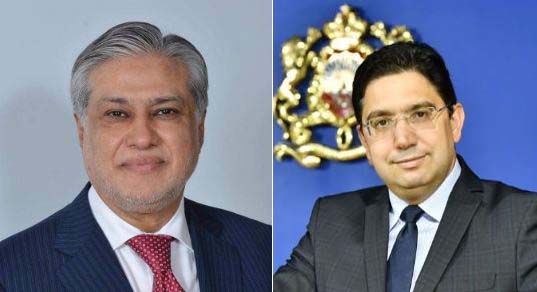
ISLAMABAD, OCT 21 /DNA/ – Deputy Prime Minister and Foreign Minister Senator Mohammad Ishaq Dar received a telephone call today from the Foreign Minister of the Kingdom of Morocco, Nasser Bourita.
During the conversation, both leaders recalled their recent meeting held on the sidelines of the 80th Session of the United Nations General Assembly (UNGA) in New York. They expressed satisfaction over the positive trajectory of Pakistan–Morocco relations and reiterated their strong commitment to further enhancing bilateral cooperation in all areas of mutual interest, including trade, investment, education, and cultural exchange.
Senator Ishaq Dar emphasized Pakistan’s desire to deepen engagement with Morocco, a key partner in the Islamic world, and appreciated Rabat’s continued support in multilateral forums. He reaffirmed Pakistan’s readiness to expand collaboration through regular high-level exchanges and institutional linkages.
The Deputy Prime Minister and Foreign Minister also extended a formal invitation to Foreign Minister Nasser Bourita to visit Pakistan, which was graciously accepted. The two leaders agreed to maintain close contact to follow up on ongoing initiatives aimed at broadening and diversifying the bilateral partnership.
The discussion reflected the warm and brotherly relations between Pakistan and Morocco, grounded in shared faith, values, and mutual respect.
Field Marshal Asim Munir warned against Indian-sponsored proxies, including Fitna al Hindustan and Fitna al Khawarij, which, he said, are propagating anti-people and anti-development narratives with malicious intent to destabilize the province
DNA
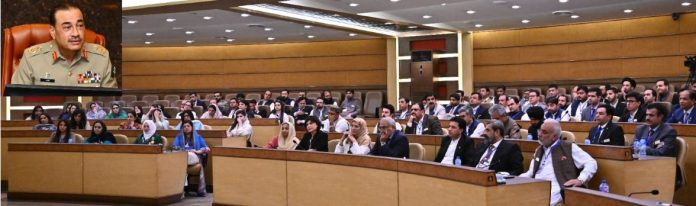
RAWALPINDI, OCT 21 – Chief of Army Staff (COAS) Field Marshal Syed Asim Munir, NI (M), HJ, interacted with participants of the 17th National Workshop Balochistan at the General Headquarters (GHQ) on Tuesday.
During the session, the Army Chief described Balochistan as the “pride of Pakistan,” acknowledging the province’s vibrant, resilient, and patriotic people as its true strength. He highlighted the ongoing development initiatives by the Federal and Provincial governments aimed at uplifting Balochistan’s socio-economic landscape through a people-centric approach.
The COAS emphasized the need to fully realize Balochistan’s immense economic potential for the prosperity of its people. Appreciating the constructive role of civil society, especially in youth engagement and empowerment, he noted their importance in ensuring sustainable development while rejecting divisive political agendas.
Field Marshal Asim Munir warned against Indian-sponsored proxies, including Fitna al Hindustan and Fitna al Khawarij, which, he said, are propagating anti-people and anti-development narratives with malicious intent to destabilize the province. He reaffirmed that decisive action is being taken to eliminate these threats and ensure lasting peace in Balochistan.
Reiterating Pakistan’s desire for regional peace and stability, the COAS made it clear that any violation of the country’s territorial integrity, whether direct or indirect, would be met with a firm and resolute response to protect the lives and well-being of the nation’s citizens.
The workshop concluded with an interactive Q&A session, providing participants an opportunity to engage in candid discussions with the Army Chief on national and provincial issues.
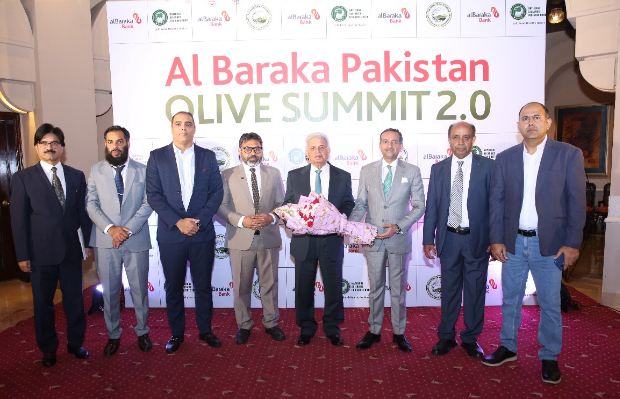
ISLAMABAD, OCT 21 /DNA/ – The Al Baraka Pakistan Olive Summit, organized by the National Alliance for Safe Food (NASF) and the Pakistan Olive Initiative, was held today at the Serena Hotel, Islamabad. The summit brought together policymakers, researchers, diplomats, and industry leaders to shape the future of Pakistan’s olive industry under the theme “Developing a Safe, Sustainable, and Ready-to-Export Supply Chain of the Olive Sector.”
Inaugural Session
The event was inaugurated by Mr. Rana Awais Khan, Chairman, National Alliance for Safe Food, who emphasized the importance of empowering olive farmers, fostering innovation, and strengthening international collaborations to make Pakistan’s olive products globally competitive.
“This summit reflects our commitment to transforming Pakistan’s olive sector by empowering farmers, enhancing rural economies, and promoting ‘Made in Pakistan’ across global markets,” said Mr. Khan.
He also expressed gratitude to Al Baraka Bank Pakistan for its partnership and support in advancing agricultural financing and sustainable olive production.
Mr. Muhammad Atif Hanif, CEO, Al Baraka Bank Pakistan, in his keynote address, reaffirmed the bank’s role in promoting sustainable agriculture, emphasizing investment in the olive value chain as part of Al Baraka’s social and economic responsibility.
The Chief Guest, Mr. Rana Tanveer Hussain, Federal Minister for National Food Security & Research, highlighted the government’s strong commitment to expanding olive cultivation, noting that over 6.3 million olive trees have already been planted across 51,000 acres of land in Pakistan. He further shared the government’s initiatives for research, certification, and the establishment of a National Olive Council.
He also announced Pakistan’s intention to join the International Olive Council (IOC), opening new avenues for trade, research, and international collaboration.
Distinguished Guests and Ambassadors
The summit featured the presence of prominent dignitaries, including:
Dr. Zulfiqar Ali Bhatti, MNA & Parliamentary Secretary, Ministry of Commerce
Dr. MirzaIkhtarBaig, MNA
H.E. MarilinaArmellin, Ambassador of Italy in Pakistan
H.E. Dr. MaenKhreasat, Ambassador of Jordan
Ambassador of Greece
H.E. Nader K. Alturk, Counsellor & Deputy Head of Mission, Embassy of Palestine
Representatives from Embassies of Malaysia, Portugal, Spain, and Denmark
Their participation reflected the growing international interest in Pakistan’s olive sector and the potential for bilateral cooperation in technology transfer, training, and market access.
Summit Sessions
The comprehensive program included high-impact discussions on olive sector development, innovation, and trade.
Key highlights included:
Olive Sector Development – led by Dr. Muhammad Tariq, National Project Director, PSDP Olive Program, exploring expansion strategies and production potential.
Standards, Testing & Branding – focusing on global compliance, certification, and building Pakistan’s brand identity in international markets.
Panel Discussions – engaging policymakers, industry experts, and private sector leaders on innovation, investment, and export strategies.
Closing Session
The closing session was graced by Mr. Rana Mashhood Ahmad Khan, Chairman, Prime Minister Youth Programme, as Guest of Honor. He emphasized youth empowerment and skill development in agriculture and food technology, encouraging young entrepreneurs to take part in Pakistan’s olive value chain.
“The youth of Pakistan are the driving force for sustainable agricultural transformation and innovation. The olive sector can become a symbol of our national potential,” he stated.
A Vision for the Future
The Session Concluded with Vote of thanks By Mr. FaadWaheed, Former SVP Islamabad Chamber and Federal President National Alliance for Safe Food, he Said he Al Baraka Pakistan Olive Summit 2025 marks a major milestone in positioning Pakistan as a future leader in sustainable olive production. With strengthened local capacity, global partnerships—including with the UC Davis Olive Center (USA)—and increased support for farmers, Pakistan is ready to emerge as a regional hub for olive oil production and export.
Institutions and Stakeholders in Attendance
Representatives from government departments, development agencies, academia, chambers of commerce, and private industry participated, including:
PPAF, PEEF, Pakistan Agriculture Coalition, National Rural Support Program, GRSP, ITC, Olive Culture, USAID, FAO, IWMI, Alkhidmat, Helping Hand, PAS Forum, Pakistan Business Forum, PVMA, Provincial Food Authorities, CEFORT BARI Chakwal, PM Youth Programme, TDAP, BOI, PSQCA, Pakistan Halal Authority, Pakistan National Accreditation Council, and Marketing & Branding Consultants.
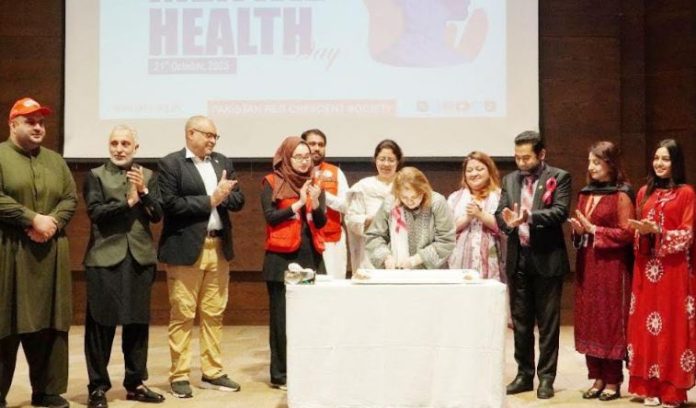
ISLAMABAD, OCT 21 /DNA/ – The Pakistan Red Crescent Society (PRCS) celebrated World Mental Health Week on Tuesday at its National Headquarters in Islamabad under this year’s theme, “Access to Services: Mental Health in Catastrophes and Emergencies,” highlighting the urgent need to strengthen mental health support during crises and disasters.
The event was graced by Chairperson PRCS Mrs. Farzhana Naek and attended by Secretary General Mr. Muhammad Abaidullah Khan, Head of Delegation of the International Federation of Red Cross and Red Crescent Societies (IFRC) in Pakistan Mr. Farid Abdulqadir, Head of Delegation Turkish Red Crescent Ms. Beyza Taner, representatives from the International Committee of the Red Cross (ICRC), Norwegian Red Cross, German Red Cross, PRCS staff and volunteers, and people from different walks of life.
In her remarks, Chairperson PRCS Mrs. Farzhana Naek emphasized the importance of prioritizing mental health, especially for communities and frontline responders exposed to emergencies. She said mental health is not a secondary concern but a fundamental part of humanitarian response. As disasters and crises continue to test human resilience, psychological care and emotional well-being must be integrated into every relief effort. She added that the Pakistan Red Crescent Society is committed to fostering compassion, empathy, and mental strength within communities and among its teams.
Secretary General Mr. Muhammad Abaidullah Khan said that mental health care is lifesaving care and caring for others begins with caring for ourselves. He reaffirmed PRCS’s commitment to promoting mental health and psychosocial support through stress management exercises, peer support, and safe spaces for reflection.
Head of Delegation IFRC in Pakistan Mr. Farid Abdulqadir highlighted the significance of mental health and psychological wellness for both relief workers and affected communities, stressing that frontline responders must have the emotional tools and institutional support to manage the stress and trauma they face in humanitarian operations.
Representatives from ICRC, Norwegian Red Cross, and German Red Cross appreciated the initiative and stressed the importance of such awareness activities for the mental and emotional well-being of humanitarian staff and volunteers.
During the event, the Restoring Family Links (RFL) team conducted interactive sessions on “Promoting Mental Well-being in Emergencies: Awareness, Reactions, and Support for Care Providers.” Participants took part in stress management exercises, including deep breathing and muscle relaxation, followed by an “Empathy Circle” activity that encouraged staff to understand the emotional experiences of others.
The event concluded with a cake-cutting ceremony attended by Chairperson PRCS Mrs. Farzhana Naek and representatives from IFRC, ICRC, Norwegian Red Cross, Turkish Red Crescent, and German Red Cross, symbolizing unity and shared commitment to promoting mental well-being within the humanitarian network.
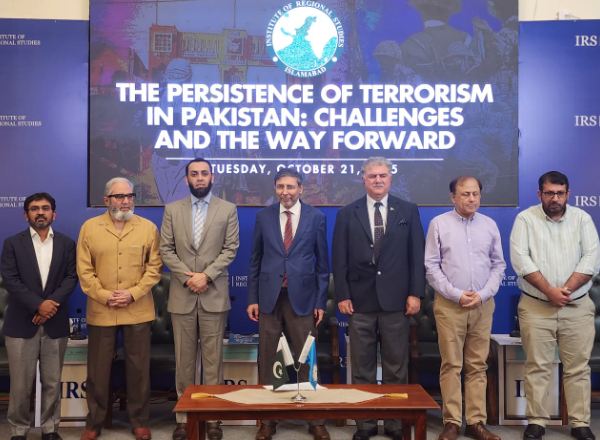
ISLAMABAD, OCT 21 /DNA/ – The Institute of Regional Studies (IRS), Islamabad, organized a high-level seminar titled “The Persistence of Terrorism in Pakistan: Challenges and the Way Forward.” The event brought together senior military officials, strategic analysts, policymakers, and academics to deliberate on the evolving dynamics of terrorism and Pakistan’s counter-terrorism strategies.
Speaking on the occasion, Mr. Attaullah Tarar, Federal Minister for Information and Broadcasting, reaffirmed the Government of Pakistan’s unwavering commitment to eradicating terrorism in all its forms and manifestations. He emphasized that Pakistan’s sacrifices in the global fight against terrorism stand unparalleled and reflect the nation’s collective resolve to safeguard peace, stability, and progress. He praised the armed forces for their sacrifices and reaffirmed the government’s unity and resolve to eliminate terrorism. Citing external support from India and Afghanistan to militant groups, he said Pakistan remains a steadfast against terrorism in all its forms. The minister stressed the need for a cohesive, nationwide implementation of the National Action Plan to ensure lasting peace.
Ambassador Jauhar Saleem, President IRS, noted that terrorism in Pakistan remains a serious threat, with hundreds of attacks reported this year. He attributed this majorly to external proxies and expressed concern over the Taliban’s failure to uphold counterterrorism commitments. He noted that Pakistan was pursuing active diplomacy alongside kinetic operations , and expressed cautious optimism in the wake of Doha ceasefire and ahead of the Istanbul dialogue, stressing that Afghanistan must choose between supporting terrorism and becoming falling prey to Indian machinations aand fostering peaceful and cooperative relations with Pakistan, which would be a sine qua non for its stability and prosperity.
Lt. Gen. Khalid Rabbani (Retd.), former Corps Commander Peshawar, emphasized that a whole-of-nation approach is imperative for the success of any counterterrorism or counterinsurgency operation. He stressed that the fight against terrorism cannot be won by the security forces alone and requires collective resolve, political consensus, and societal resilience. Lt. Gen. Rabbani further underscored that Pakistan and Afghanistan must realize the interdependence of their security, as instability in one directly undermines peace and stability in the other.
Maj. Gen. (Retd.) Inam Ul Haq noted a sharp rise in cross-border terrorism, with 585 Afghan-backed attacks reported up to October 2025, compared to 521 in 2024 and 306 in 2023. He said that during October 11–15, IEA forces, aided by the TTP and other militants, launched unprovoked attacks along the Pakistan-Afghanistan border, reflecting active collusion between the Taliban regime and anti-Pakistan networks.
Dr. Muhammad Feyyaz noted that terrorism remains under-studied in Pakistan due to limited awareness of its long-term societal and state impacts. He stressed the need to build academic understanding of terrorism’s persistence and to strengthen linkages between academia and policymakers for more informed, policy-relevant research.
Mr. Abdul Basit, Senior Associate Fellow at RSIS, Singapore, observed that terrorism in Pakistan persists due to regional geopolitics, ideological factors, and governance issues in Afghanistan. He urged Pakistan to revamp its counterterrorism framework to address emerging extremist threats, noting that current non-kinetic responses lag behind. He emphasized the need for a balanced strategy combining kinetic and non-kinetic measures to counter the evolving and multidimensional nature of terrorism in the region.