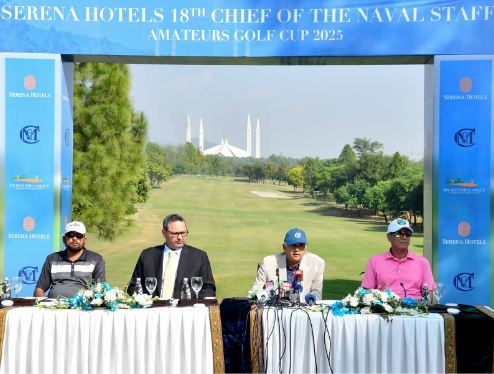
ISLAMABAD, OCT 22 /DNA/ – The Media Brief and Opening Ceremony of 18th Chief of the Naval Staff Amateur Golf Cup 2025 was held at the Margalla Greens Golf Club (MGGC), Islamabad. The ceremony marked the formal commencement of one of the most prestigious events on the national golf calendar.
During the media briefing, Rear Admiral Saqib Ilyas, Patron of Pakistan Navy Golf (North), highlighted the salient features of the championship and outlined details regarding its format and participation across various categories.
The tournament will be held from 22 to 26 October 2025, featuring competitions in Amateurs, Seniors, Ladies, and Juniors categories, along with an invitational match for guests and sponsors.
Since its inception in 2007, the Chief of the Naval Staff Amateur Golf Cup has evolved into a prominent fixture on Pakistan’s golfing circuit. Beyond fostering competitive excellence, the event underscores Pakistan Navy’s enduring commitment to promoting sportsmanship, projecting a positive image of the country and encouraging healthy recreational activities within society.
The opening ceremony was attended by sponsors, golf players and media representatives.
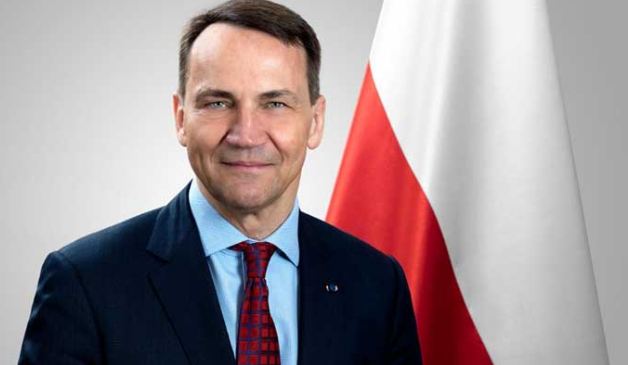
ISLAMABAD, OCT 22: Poland Deputy Prime Minister and Foreign Minister Radosław Sikorski will arrive in Pakistan tomorrow (Thursday) on a two-day official visit from October 23 to 24, during which both countries will discuss the full spectrum of bilateral relations.
In a statement, the Foreign Office said that Sikorski will be paying a visit at the invitation of DPM Senator Ishaq Dar, which would be his second visit to Pakistan. His previous visit took place in 2011.
During the visit, DPM Dar will hold a one-on-one meeting as well as delegation-level talks with his Polish counterpart. The two sides are expected to discuss the full spectrum of bilateral relations, and the talks will be followed by a joint press stakeout.
The Polish high-up’s visit “marks a significant milestone in Pakistan–Poland relations […] Pakistan remains committed to enhancing cooperation with Poland for the mutual benefit of both countries,” it concluded.
According to the Foreign Office, ties between the two countries have expanded across political, economic, defence, and educational spheres, marked by mutual cordiality and cooperation.
According to the statistics, the volume of bilateral trade between Pakistan and Poland in 2023 was $922 million. Pakistan’s exports to Poland amounted to $794 million and imports from Poland were worth $128 million.
Earlier in July, Pakistan and Poland held the 9th Round of Bilateral Political Consultations (BPC) in Warsaw. The two sides reviewed the entire spectrum of bilateral relations.
During the meeting, both sides agreed to enhance collaboration, including through the exchange of high-level visits, parliamentary exchanges and dialogue.
TASHKENT, Oct 22 (UzA/APP): Uzbekistan Airports and its member companies held a spiritual-enlightenment event devoted to the 36th anniversary of the adoption of the Law “On the State Language” and October 21 – Uzbek Language Day, under the motto “Uzbek language is a symbol of national identity and independence”.
Dilorom Jalalova, Advisor to the Minister of Transport on the State Language, linguist Abdurashid Toychiev, and creative workers and artists participated in the event.
Sarvar Fayzullayev, Advisor to the Chairman of the Board of Uzbekistan Airports on State Language, who read out a congratulatory message from Chairman of the Board Javlonbek Umarkhodjayev to the company’s staff, opened the event.
The participants discussed the centuries-old history of the Uzbek language, highlighting its beauty, which has been refined over centuries. They also noted the global interest in the Uzbek language and the significant role of our ancestors in enriching it.
Colorful dances, poems, and songs about Uzbekistan helped to immerse the event participants in the atmosphere of the holiday.
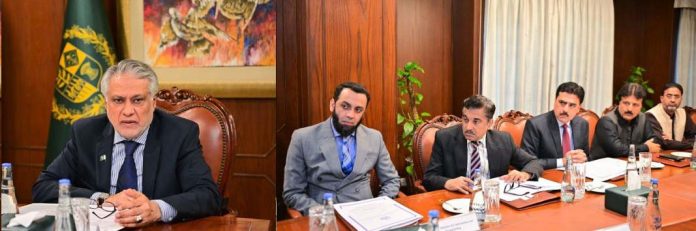
ISLAMABAD, OCT 22 /DNA/ – Deputy Prime Minister/Foreign Minister Senator Mohammad Ishaq Dar @MIshaqDar50 chaired a meeting today on the promotion and revival of hockey.
The meeting was attended by the Minister for Inter-Provincial Coordination, Minister for Information, SAPM on Finance Mr. Tariq Bajwa, DG PSB, & senior officials including the Secretary and Vice President of the Pakistan Hockey Federation.
Discussions focused on restoring Pakistan’s legacy in world hockey through grassroots development, improved infrastructure, modern coaching, and merit-based player growth.
The DPM/FM emphasized that hockey is a symbol of national pride & deserves renewed investment and attention at every level. He reaffirmed the government’s full support for revitalizing the sport and directed the formulation of a comprehensive revival roadmap aimed at enhancing facilities, & reigniting youth participation.
KARACHI, OCT 22 /DNA/ – Yango Ride, part of the global tech company Yango Group, has introduced an all new option for its partner drivers called Flex. The Flex option is designed specially for individuals that want to work part-time on the Yango Pro app, allowing them to choose their trips, view fares and destinations before accepting a ride, and earn an additional income with full flexibility.
The feature is ideal for individuals with variable schedules who want to make productive use of their free time and earn a side income such as daily office goers, retired people, freelancers or students . Flex Mode gives partner drivers full control over their workday, offering flexibility of active hours, visibility on trip details and freedom to choose those that fit the most without any penalties.
As Pakistan’s app-based economy continues to grow, thousands of drivers are turning to digital mobility platforms to earn a sustainable income. In this context, Flex Mode in the Yango Pro app provides a smarter, more transparent earning opportunity for those seeking independence and control.
“Flex Mode is a reflection of our promise to empower the societies we operate in,” said Miral Sharif, Country Head, Yango Pakistan. “Not everyone chooses this as a full-time opportunity, yet many people are looking for flexible, short-hour opportunities to earn an extra income. Flex Mode gives them just that: a simple, transparent, and reliable way to work on their terms without having a single worry of the world.”
Flex Mode joins other earning options within the Yango Pro ecosystem, including Max mode, which is specifically designed for full-time drivers seeking consistent earnings and bonuses. Together, these modes give Yango’s driver community greater freedom to decide how they want to work, helping them balance personal and professional priorities.
Through this new feature, Yango continues to build a sustainable driver ecosystem, one that rewards honesty, independence, and flexibility, while contributing to Pakistan’s growing digital mobility sector.
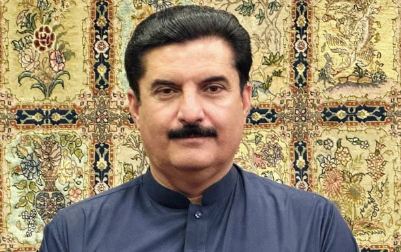
ISLAMABAD, OCT 22 (APP/DNA): Khyber Pakhtunkhwa Governor Faisal Karim Kundi Wednesday encouraged Chief Minister Sohail Afridi should adopt a cooperative and constructive approach in dealings with the federal government, stressing that unity and collaboration are essential in addressing the province’s pressing challenges.
In an interview with a local news channel, Kundi also stressed the importance of Chief Minister Sohail Afridi’ s important role in addressing provincial issues, urging all stakeholders to join hands for the continued peace and development of Khyber Pakhtunkhwa.
Karim Kundi called on Chief Minister Sohail Afridi to adopt a more collaborative stance in engaging with the federal government.
He emphasised the need for unity during testing times, he noted that close coordination between provincial and federal leadership is essential for effectively tackling the challenges facing Khyber Pakhtunkhwa and ensuring the welfare of its people.
Governor Kundi further highlighted the challenging situation facing Khyber Pakhtunkhwa, citing regional tensions with Afghanistan and the ongoing security concerns.
He paid tribute to the sacrifices made by the army and police in restoring and maintaining peace in the
province.
Welcoming the recent peace agreement with Afghanistan, he described it as a positive step toward regional
TASHKENT, OCT 22 (UzA/APP): The University of World Economy and Diplomacy (UWED) hosted a special meeting with H.E. Chung Eui-yong, a prominent South Korean diplomat, politician, and former Minister of Foreign Affairs of the Republic of Korea. The event gathered university leadership, faculty members, and students for an engaging discussion on “Korea’s Geopolitical Challenges and Korea – Uzbekistan relations”.
Chung Eui-yong was welcomed by First Vice-Rector for Academic Affairs of UWED, Akram Umarov. In his lecture, the distinguished guest addressed pressing geopolitical issues on the Korean Peninsula and outlined prospects for strengthening strategic cooperation between Korea and Uzbekistan.
He emphasized that bilateral relations between the two countries are growing dynamically, marked by deep mutual trust and shared interests. The visit is expected to reinforce further UWED’s long-standing partnerships with leading South Korean academic and research institutions.
UWED actively collaborates with Hankuk University of Foreign Studies, Keimyung University, and other top Korean universities through student exchange programs and joint research projects. The university also cooperates with the Korea Foundation and the Korea International Cooperation Agency (KOICA) to promote expert forums and digital education initiatives.
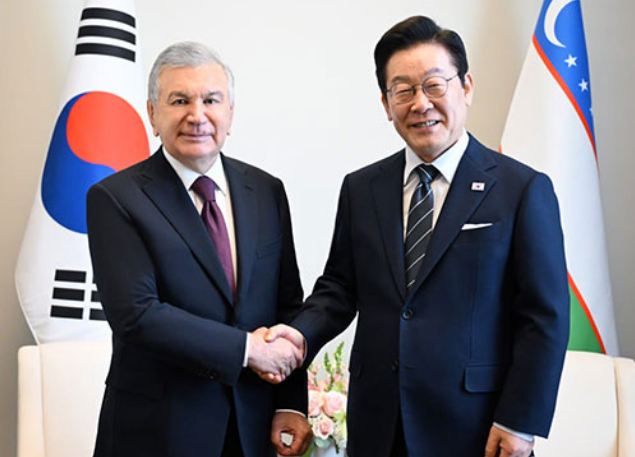
As highlighted during the recent meeting between Presidents Shavkat Mirziyoyev and Lee Jae Myung, South Korea’s direct investments in Uzbekistan have exceeded $8 billion, covering sectors such as engineering, chemistry, transport, and biotechnology.
This event once again reaffirms UWED’s commitment to fostering international dialogue and providing students with opportunities to learn directly from global leaders.
For reference, Chung Eui-yong served as South Korea’s Minister of Foreign Affairs from 2021 to 2022 and currently chairs the Standing Committee of the International Conference of Asian Political Parties (ICAPP).
I have often heard from the elders that if one truly wishes to eradicate evil, one must strike at its root. Diagnosing the cause of a disease or a problem requires patience, wisdom, and time. Sometimes the diagnosis itself takes longer than the cure. But once the root is known, the healing follows swiftly. However, when the diagnosis is wrong, the consequences are often grave and enduring. Such has been the case with the growing tension between Pakistan and Afghanistan — a crisis whose roots were known to Pakistan from the very beginning, yet whose cure demanded both endurance and resolve.
Pakistan’s approach has always been cautious, deliberate, and grounded in reality. It understood early on that the hand behind Afghanistan’s hostility was not merely ideological but strategic — and that India’s invisible role had inflamed the western frontier. That mischief, long allowed to grow in the shadows, was finally confronted and treated decisively this May. Yet, habits of deceit and manipulation, once formed, take time to unlearn; hence, Pakistan had no choice but to apply the “crooked or curved finger” approach — a firm but necessary measure to correct a neighbour who has lost its sense of balance.
The recent border flare-up was neither impulsive nor unjustified. It was the direct consequence of years of cross-border terrorism originating from Afghan soil. The core issue remains Afghanistan’s refusal to dismantle terrorist networks that continue to wage war against Pakistan. From the TTP to the BLA, these groups act without restraint, their existence and activities verified by numerous international reports, including those from the United Nations.
Pakistan has long exercised patience. It has relied on dialogue, diplomacy, and brotherly appeals to encourage Kabul to fulfil its promises. In 2022, Pakistan’s revered ulema, led by Mufti Taqi Usmani, visited Kabul to convince both the Taliban and the TTP to halt their violence. A tribal jirga followed soon after, and official delegations led by senior ministers continued to travel to Afghanistan throughout 2023 and 2024, each with a message of peace and cooperation. Yet the response from Kabul remained one of indifference, even defiance.
Despite Pakistan’s goodwill — from facilitating trade and easing visa regimes to lobbying for the unfreezing of Afghanistan’s assets — the interim government in Kabul allowed its territory to become a sanctuary for those who kill Pakistanis. The irony is painful. When the Taliban took Kabul in 2021, Pakistan kept its embassy open while the world abandoned Afghanistan. Pakistan ensured the safe evacuation of foreign nationals, advocated for humanitarian aid, and urged global powers to recognize the Afghan government. Yet, in return, Pakistan received bullets, bombings, and betrayal.
The truth is no longer hidden. Verified intelligence, corroborated by the UN’s 36th Analytical Support and Sanctions Monitoring Team, confirms that the Taliban regime shelters and funds the TTP and Al-Qaeda. Training camps thrive across Kunar, Nuristan, and Paktika; thousands of militants cross the border into Pakistan under official protection. Even TTP leaders lives comfortably in Kabul, drawing funding that sustains his operations against Pakistan. This is not ignorance — it is complicity. It is, by definition, state-backed terrorism.
Pakistan’s patience, though vast, is not infinite. Every drop of the blood of our soldiers and civilians demands accountability. For decades, Pakistan hosted over five million Afghan refugees — a gesture unmatched in modern history. It sacrificed socially and economically to keep its neighbour afloat, built hospitals, educated Afghan youth, and supported reconstruction. But generosity cannot become servitude. The time has come for Afghans to return to their homeland. Their “Islamic revolution” is five years old; it is time they rebuild their own country with dignity. Pakistan’s land and resources belong to its 250 million citizens who have borne enough of the burden.
Pakistan’s efforts to foster economic cooperation have been equally sincere. The Early Harvest Program reduced tariffs to boost Afghan exports; the Afghanistan–Pakistan Transit Trade Agreement opened our ports for Afghan goods. Yet, in return, we received cross-border attacks, infiltration, and martyrdom of our security forces. Pakistan’s sovereignty has limits, and when violated repeatedly, those limits turn into red lines.
Afghanistan must understand that sovereignty is not a slogan — it is a responsibility. One cannot demand respect for borders while exporting terrorism across them. When Pakistan strikes terrorist hideouts inside Afghanistan, Kabul accuses it of aggression, ignoring the fact that these targets are legitimate threats. Terrorists build homes and training facilities inside Afghan cities; their presence is known, tolerated, and often aided. The Taliban’s silence in the face of such open violations of international law is, in truth, an admission of guilt.
Afghan soil, once again, has become a playground for foreign intelligence agencies. The weapons left behind by NATO — worth billions — now arm the very militants who murder Pakistanis. Afghan nationals, trained and funded, are part of terrorist teams striking Pakistan’s cities and security installations. This can no longer be excused as “internal issues.” It is organized aggression.
Pakistan’s restraint should never be mistaken for weakness. We value dialogue and diplomacy, but the protection of our sovereignty and our people is paramount. If attacks continue, Pakistan reserves the right to eliminate terror bases, wherever they exist. We are a nation of patience, but also of resolve.
For over four decades, Pakistan has stood with Afghanistan — through war, famine, and political collapse — guided by faith and fraternity. Yet, true brotherhood cannot be one-sided. Afghanistan must now prove that it values this bond by acting against those who misuse its land to shed innocent blood. The Taliban regime must rise above denial, honour its commitments under the Doha Agreement, and take verifiable action against the TTP and its affiliates.
It is still not too late. Afghanistan can choose to walk the path of peace — not for Pakistan’s sake, but for its own survival and stability. History will remember those who sowed division, but it will also honour those who had the courage to uproot the evil that threatened two nations bound by faith and fate.
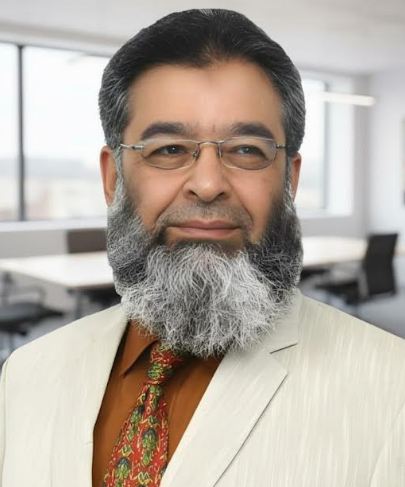
ISLAMABAD: Chairman of Overseas Committee ICCI and Member elder council of Islamabad Estate Agents Association Ch Nawaz Basra praised the recent operations carried out by the Pakistan Army against terrorist hideouts in Afghanistan.
He said that the sacrifices of the Pakistan Army in the fight against terrorism and for the restoration of peace deserve the highest tribute.
Nawaz Basra stated that the Army’s effective and professional operations have not only ensured border security but also restored an atmosphere of confidence and stability within the country.
He added that terrorist activities originating from Afghan soil had become a constant threat to Pakistan; however, Pakistan’s strong response and the Army’s decisive actions have sent a clear message that the nation will never compromise on its sovereignty and national security.
He paid rich tribute to the soldiers who embraced martyrdom in the recent border clashes and prayed for the speedy recovery of the injured.
Ch Nawaz Basra reaffirmed that the national resolve to eliminate terrorism will never be weakened under any circumstances.
LAHORE, OCT 22 /DNA/ – Panelists at a round-table discussion have examined the objectives behind strikes in Afghanistan, which were framed as a necessary demonstration of Pakistan’s resolve not to tolerate terrorism from Afghan soil.
The experts also delved into the complex internal dynamics of the Taliban regime, identified as a key obstacle to resolving the TTP issue.
Panelists agreed that the economic fallout is disproportionately severe for landlocked Afghanistan, which relies on Pakistan for 80% of its trade. However, a significant political risk for Pakistan is the potential for Afghanistan to move closer to India, creating a strategic ‘sandwich’ effect.
On the way forward, the panel emphasized the urgent need for confidence-building measures (CBM), such as reopening border crossings to alleviate economic hardship on both sides.
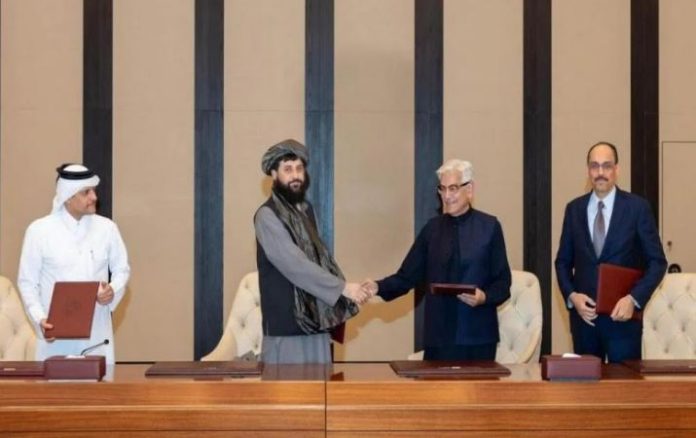
The recently brokered Doha agreement, with Qatar and Turkey as guarantors, was cited as a potentially more effective mechanism for mediation and dialogue.
Furthermore, panelists stressed that Pakistan must develop a long-term, coherent border management policy and engage with a broader spectrum of Afghan society, including the Afghan diaspora, and move beyond an exclusive reliance on the Taliban.
The implications of the ongoing tensions were analyzed from both economic and geopolitical angles.
The Beaconhouse National University (BNU) Center for Policy Research (BCPR) hosted a critical roundtable discussion titled “Pakistan-Afghanistan Escalation: Causes, Implications and Way Forward.” The event convened leading experts on Afghanistan-Pakistan relations to dissect the unprecedented downturn in relations between the two neighboring nations and to explore viable pathways toward de-escalation and sustainable dialogue.
The discussion, facilitated by Ambassador Mansoor Ahmad Khan, Director of BCPR, featured insights from prominent panelists, including Dr. Tahir Kamran, Dean School fo Liberal Arts & Social Sciences at BNU, journalists Mr. Tahir Khan and Mr. Hassan Khan, who have extensive experience covering Afghanistan, and Dr. Syed Hussain Shaheed Soherwordi, professor of International Relations, from the University of Peshawar. The dialogue centered on the severe tensions that have escalated since the Taliban’s return to power in Kabul in August 2021, with a primary focus on the critical issue of cross-border terrorism perpetrated by groups like the Tehreek-e-Taliban Pakistan (TTP), according to a BCPR’s press release.
A central theme of the roundtable was the debate over Pakistan’s recent military actions.
Dr. Soherwordi pointed to internal divisions within the Taliban, between the liberal Haqqani Group and the conservative Kandhari Group, and their fear that acting against the TTP could push its members to join the more ruthless Islamic State Khorasan Province (ISKP). This internal ‘Catch-22’ situation, as described by Hassan Khan, severely limits the Taliban’s capacity or willingness to rein in the TTP.
Mr. Tahir Khan provided context on the growing India-Taliban engagement, noting that certain statements made by Afghan officials in India had crossed Pakistan’s ‘red lines.’
Dr. Kamran added a broader regional perspective, pointing out that Pakistan currently struggles with poor relationships with all its neighbors except China.
In conclusion, the roundtable underscored the profound challenges and high stakes in the Pakistan-Afghanistan relationship. While Pakistan’s military action has signaled a new strategic clarity, a sustainable solution will require a multifaceted approach combining informed diplomacy, regional engagement, particularly from key partners like China, and a deeper, more nuanced understanding of Afghanistan’s complex political and cultural landscape.