Home Blog Page 414

10 legislators join PPP, increasing likelihood of the party installing its premier in AJK

10 legislators join PPP, increasing likelihood of the party installing its premier in AJK

ISLAMABAD, OCT 26: With developments gaining momentum on the political front in Azad Jammu and Kashmir (AJK), ten legislators — all elected on PTI tickets in the July 2021 general elections — announced on Sunday that they were joining the PPP, which has been eyeing the premier’s slot in the region.

PPP lawmakers from AJK had also met party Chairman Bilawal Bhutto-Zardari and President Asif Ali Zardari yesterday to mull options for the removal of the incumbent PM Chaudhry Anwarul Haq.

Today’s development has made the PPP the single largest party in the AJK Legislative Assembly.

In the 53-member assembly, the PPP now enjoys the support of 27 members, followed by the PML-N with nine, PTI with five, and two regional parties with one member each. The group of PTI renegades led by Haq has been reduced to ten members.

This has significantly increased the likelihood of the PPP becoming the ruling party.

“Yes, we are now in a comfortable position to send the incumbent Prime Minister Chaudhry Anwarul Haq packing and replace him with a new leader of the house from our ranks,” PPP lawmaker Chaudhry Qasim Majeed told Dawn.com by telephone.

He confirmed that by Sunday evening, ten PTI legislators had joined the PPP in joint and separate meetings with Faryal Talpur at the Zardari House in Islamabad.

Among them were five lawmakers from the camp of AJK President Barrister Sultan Mahmood — including his son Yasir Sultan, brother-in-law Chaudhry Arshad, Chaudhry Akhlaque from the Mirpur division, Chaudhry Muhammad Rasheed from the Muzaffarabad division, and Sardar Muhammad Hussain from the Poonch division.

According to senior PPP leader Azhar Iqbal Baralvi, Sabiha Siddique, a female member of the president’s camp, did not immediately join the party due to reservations over the possible nomination of Haq’s successor.

Later, Zafar Iqbal Malik from Kotli also joined the PPP separately. Following in their footsteps, Abdul Majid Khan, Chaudhry Akbar Ibrahim, and Asim Sharif Butt from the refugee constituencies, as well as Sardar Faheem Rabbani from Poonch division, met Talpur jointly to announce their inclusion in the PPP.

All ten of these legislators are part of Haq’s cabinet. Among them, only the three refugee legislators had earlier announced their resignations from the cabinet, though no official notification regarding their resignation had been issued.

PPP’s regional president Chaudhry Muhammad Yasin was not present at any of these meetings with Talpur.

Majeed said the PPP parliamentary party held two meetings on Saturday — the first with Bilawal Bhutto-Zardari, where it was unanimously decided to oust Mr Haq. Later, the team met with President Asif Ali Zardari to inform him of their decision.

Majeed claimed that more legislators were likely to join the PPP within the next two to three days.

Meanwhile, the PML-N has announced that it will sit on the opposition benches.

“We will not be part of the government formation process and will sit on the opposition benches,” said party’s regional president Shah Ghulam Qadir.

Majeed also confirmed that President Zardari and Prime Minister Shehbaz Sharif were in contact regarding the ongoing political developments.

However, he said he was unaware of who would succeed Haq as the prime minister. “This decision rests with President Zardari and the party chairman,” he added.

Separately, Chaudhry Azhar Sadiq, Works and Communications Minister and a close confidant of PM Haq, said the prime minister had no plans to dissolve the assembly.

“Although the Constitution empowers him to do so, he will not take that step,” he told Dawn.com. “He [Haq] has consistently maintained that if his opponents gather 27 lawmakers, he will step down. If they have the required numbers, they can move the no-confidence motion — we will face it.”

However, Sadiq added, “There are many a slip between the cup and the lip.”

All PPP members were scheduled to gather at the Sindh House in Islamabad on Sunday night to demonstrate their strength.

Pakistan Draws Red Lines in Istanbul Talks: Demands Concrete Taliban Action Against Cross-Border Terrorism

Second round of Pakistan-Afghanistan talks 'begins in Istanbul'

ISLAMABAD / ISTANBUL, OCT 26 /DNA/ — In crucial talks held in Istanbul, Pakistan has presented its final position to the Afghan Taliban delegation, emphasizing that continued patronage of terrorist groups operating from Afghan soil is unacceptable, according to reliable security sources.

During the meeting, the Pakistani delegation conveyed a firm message that concrete and verifiable measures must be taken by the Taliban regime to eliminate cross-border terrorism both from and inside Afghanistan. Officials stressed that Pakistan’s patience is wearing thin amid a surge in militant attacks linked to sanctuaries across the border.

Security sources revealed that Pakistan’s stance was communicated “in clear and unambiguous terms,” highlighting that the persistence of cross-border infiltration, attacks on security forces, and the use of Afghan territory by anti-Pakistan elements cannot continue.

On the other hand, the Afghan Taliban delegation’s arguments were described as “illogical and contrary to ground realities.” Sources observed that the Taliban appeared to be “following someone else’s or another agenda,” one that “does not serve the interests of Afghanistan, Pakistan, or regional stability.”

The talks, viewed as a last major diplomatic attempt to curb escalating tensions, are said to have reached a decisive stage. “Further progress now hinges on the Taliban’s willingness to adopt a positive and practical attitude,” a senior security official noted.

The Istanbul dialogue marks one of the most serious high-level engagements between the two sides in recent months, as Pakistan pushes for concrete commitments rather than verbal assurances to ensure peace along its western border.

Ninety percent BISP payment process completed in Sargodha

Ninety percent BISP payment process completed in Sargodha

SARGODHA, Oct 26 (APP): Ninety percent payment process to registered women beneficiaries of Benazir Income Support Programme (BISP) has been completed in the district.

Talking to APP here on Sunday, BISP Deputy Director Safder Awan said that 110,000, out of 121,000 registered deserving BISP beneficiaries had received BISP payments at the rate of Rs13,500 each in the district including its Tehsils Sillanwali, Bhera, Bhulwal, Sahiwal, Kotmomin, Shahpur and Sargodha.

He said that to make payments process much easier 13 camp sites had been set up across the district including 5 in Sargodha, 2 in Shahpur,1 in Sahiwal and 1 each in other tehsils.The remaining payments would be ensured on coming Wednesday positively, he added.

Jeddah Property Expo opens new investment avenues for overseas Pakistanis

Jeddah Property Expo opens new investment avenues for overseas Pakistanis

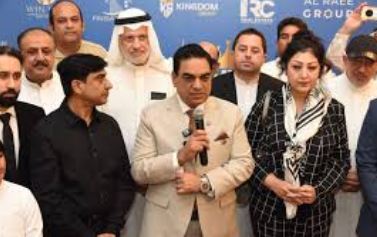
ISLAMABAD, Oct 26 (APP):A two-day Pakistan International Property Expo was held in Jeddah to promote investment in Pakistan and strengthen the country’s economy through overseas participation.

More than 50 housing and commercial projects from Lahore, Karachi, Islamabad, and other major cities were showcased. A large number of overseas Pakistanis, businessmen, and community leaders attended the event.

The expo was inaugurated by Islamabad Chamber of Commerce and Industry (ICCI) President Sardar Tahir Mahmood, along with Pakistan Business Forum Saudi Arabia President Aqeel Arain and other dignitaries.

Speaking on the occasion, Sardar Tahir Mahmood congratulated organizer Imran Khattak for hosting a successful event and said that Pakistan’s real estate sector offers safe and profitable investment opportunities. “Pakistan is moving fast toward a digital era, which will make business and investment even easier,” he added.

He said overseas Pakistanis can now easily invest in housing projects in cities like Lahore, Karachi, and Islamabad and fulfill their dream of owning a home in their homeland.

Meanwhile, international photographer Jehangir Khan, who lives in Jeddah, told APP in an online conversation from Jeddah that the expo has brought “a new hope” for overseas Pakistanis. He said such events not only boost economic confidence but also strengthen emotional and financial ties between overseas Pakistanis and their country.

Jehangir Khan added that the strong participation of the Pakistani community shows their deep commitment to supporting Pakistan’s progress through responsible and secure investment.

Muhammad Yasir Khokhar wins Pakistan’s Naval Chief Golf Cup

Muhammad Yasir Khokhar wins Pakistan's Naval Chief Golf Cup

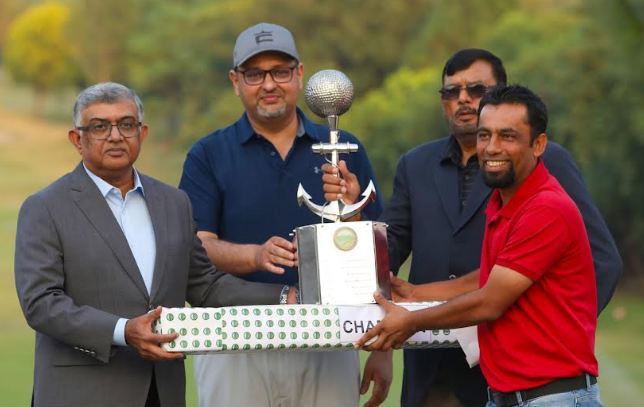
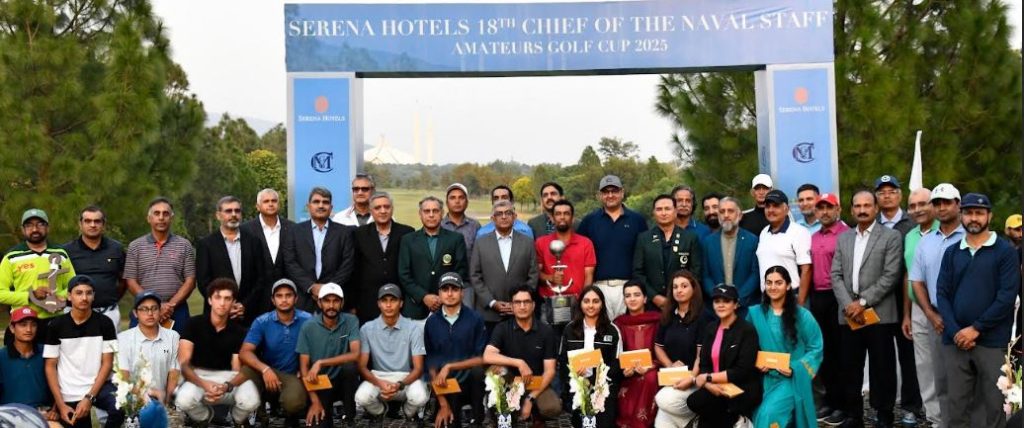
ISLAMABAD, OCT 26 /DNA/ – Muhammad Yasir Khokhar won the title of 18th Chief of the Naval Staff Amateur Golf Cup 2025. Lt Col (R) M Ayub Khan, Ms. Jassia Tasawar and Master Musab Asif won the titles in the Senior, Ladies and Junior categories, respectively. Chief of the Naval Staff Admiral Naveed Ashraf graced the occasion as Chief Guest.

While addressing the ceremony, Chief of the Naval Staff, congratulated the winners on their remarkable achievements and commended all participants for displaying high standards of golf with exceptional skills, precision and sportsmanship throughout the tournament. He also acknowledged the unwavering support and contribution of the sponsors, media representatives and the management of Margalla Greens Golf Club (MGGC), whose collective efforts ensured the event’s resounding success.

The five-day long Golf Cup was held from 22 to 26 October 2025 at the Margalla Greens Golf Club, Islamabad. Around 300 golfers participated from across Pakistan. Competitions were held in multiple categories, including Amateurs, Seniors, Ladies and Juniors.

Since its inception in 2007, Chief of the Naval Staff Amateur Golf Cup has remained a prestigious fixture on the National Golf Circuit. The event reflects Pakistan Navy’s enduring commitment to fostering sportsmanship, physical excellence and national sports culture.

The closing ceremony was attended by various dignitaries, including officers, organizers, sponsors, golfers and members of the media fraternity.

Senator Rubina Rauf inaugurates ‘Sindhu Sur’ exhibition, celebrating Sindhi heritage at PNCA

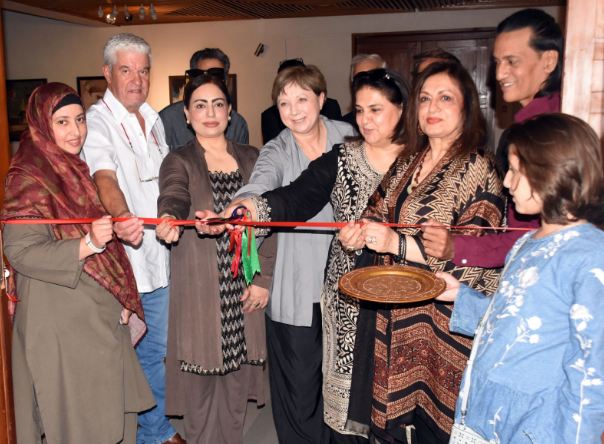
Senator Rubina Rauf inaugurates 'Sindhu Sur' exhibition, celebrating Sindhi heritage at PNCA

ISLAMABAD, OCT 26 /DNA/ – The Pakistan National Council of the Arts (PNCA), in collaboration with Nomad Gallery, proudly presents Sindhu Sur – Melody of Sindhu, an exhibition conceptualized and curated by Nageen Hyat, Founder of Nomad Gallery. The exhibition celebrates the profound cultural, poetic, and artistic heritage of Sindh through a diverse collection of contemporary works that blend illumination, geometry, and traditional visual languages.

The exhibition was inaugurated by Senator Rubina Rauf, who appreciated the initiative for its role in reviving regional art practices and promoting cultural dialogue through visual storytelling. The Ambassador of Portugal to Pakistan, Frederico Silva and Ms. Nicole Guihot, Deputy Chief of Mission at the Australian High Commission, Ms Nageen Hayat, Curator, and Mariam Ahmed, Director PNCA also accompanied them.

Sindhu Sur brings together a vibrant group of artists from Sindh—including Shahzad Zar, Muzammil H. Chandio, Ayman Babar, Mehrin Haseeb, Mahnoor Fatima, Munazza Khan, Aniqa Fatima, Hina Muhammad, and Ambreen Shah—comprising recent graduates and faculty members of the VM Centre for Traditional Arts, Karachi, alongside Muzammil H. Chandio, a graduate of the National College of Arts, Lahore. Together, they explore the intersections of faith, craft, and aesthetics, reviving traditional Sindhi motifs while reinterpreting them through a contemporary lens.

In these works, artists draw inspiration from the region’s artistic and spiritual legacy, incorporating Ajrak patterns, rally designs, Makli structures, and the sacred geometry of Thatta. Through layered forms, rhythmic compositions, and symbolic motifs, the exhibition pays homage to Sindh’s unique visual identity—where geometry breathes, colour speaks, and tradition endures. Each artwork reflects the warmth of Sindhi hospitality and celebrates the enduring dialogue between craftsmanship and creative expression.

Speaking about the exhibition, Nageen Hyat shared, “It gives me great pleasure to conceptualize and curate Sindhu Sur – Melody of Sindhu, highlighting the rich culture of Sindh through the visual medium of illumination and contemporary art. The participating artists seek to revive local and regional artistic skills, revitalizing the relevance of traditional arts in Pakistan.”

Adding to this, Mariam Ahmed, Director Visual Arts Division PNCA, remarked, “PNCA remains committed to providing platforms that celebrate Pakistan’s cultural diversity and empower creative voices across the country. Sindhu Sur is a remarkable example of how tradition and innovation can coexist beautifully.”

Through Sindhu Sur, PNCA and Nomad Gallery continue their shared vision of supporting artistic voices, empowering women and indigenous communities, and fostering appreciation for Pakistan’s diverse artistic heritage.

The exhibition will continue till 30th October, daily timings, 10 am to 4 pm.

From Poverty to Prosperity – Xinjiang’s Journey Through Time

Qamar Bashir

By Qamar Bashir

When the British flooded China with opium in the nineteenth century, they did not merely poison a people; they paralyzed a civilization. China’s national will was broken, its economy dismantled, and its sovereignty sold to foreign powers. The Communist Revolution of 1949 ended that humiliation, abolishing monarchy and feudal privilege and rebuilding the state on socialist foundations. Yet even after political liberation, the struggle against material poverty continued.

By the start of the 1980s, China’s western frontier—especially Xinjiang—remained trapped in deprivation. The province’s per-capita GDP hovered around ¥400 (≈ US $60), barely one-tenth of the national coastal average. Literacy was below 65 percent, life expectancy only 57–58 years, and infant mortality exceeded 60 per thousand births. Unemployment and under-employment surpassed 20 percent, and fewer than 30 percent of households had access to electricity or clean drinking water. Roads were sparse, hospitals were few, and higher education enrollment stood below 7 percent of eligible youth.

In this bleak landscape, Deng Xiaoping’s declaration—“Development is the hard truth”—became a national turning point. His leadership and the political will of the Communist Party re-anchored policy around one principle: China could not rise if its western half remained behind.

The 1980s therefore marked a deliberate beginning. The state poured investment into education and human development. Thousands of rural schools were built, teacher-training colleges expanded, and adult literacy drives reached even remote villages. Within a decade, literacy climbed to 82 percent, and life expectancy rose to 63 years. Agriculture was revitalized under the household-responsibility system, lifting grain and cotton yields by more than 40 percent. Rural health clinics and cooperative medical schemes began to extend basic care.

The 1990s concentrated on physical connectivity. Xinjiang’s first expressway linked Urumqi to Korla, rail lines stretched toward Kashgar, and irrigation projects converted deserts into farmland. Electricity production tripled, clean-water access passed 60 percent, and telephone coverage reached nearly all prefectures. The region’s GDP surpassed ¥1,200 (≈ US $180) per person. More importantly, mobility and market access dismantled isolation.

The 2000s saw industrial take-off under the Western Development Strategy. Energy pipelines, fertilizer and textile plants, and logistics parks emerged across the province. Vocational institutes trained tens of thousands of rural youth for skilled work. Per-capita income reached ¥8,000 (≈ US $1,200) by 2010, and the poverty rate plunged from over 40 percent in 2000 to below 15 percent by the decade’s end. Stable housing, paved roads, and rural electrification transformed living conditions.

The 2010s globalized the province. With the launch of the Belt and Road Initiative (BRI), Xinjiang became China’s western gateway. The Khorgos Dry Port on the Kazakh border evolved into one of the world’s busiest inland logistics hubs, handling more than six million tons of freight annually. Rail links to Europe shortened delivery times from 45 days to 12. Border trade centers, warehouses, and customs-free zones created tens of thousands of private jobs. Tourism and cultural industries flourished, turning local music, dance, and crafts into engines of pride and prosperity. By 2018, GDP per capita exceeded ¥35,000 (≈ US $5,000) and urbanization passed 60 percent.

The 2020s have anchored the shift from expansion to innovation. Xinjiang’s deserts now glitter with solar panels and wind turbines generating over 35 percent of regional electricity. Smart farming uses artificial intelligence, drones, and sensors to manage water in the Tarim Basin. IT parks in Urumqi and Changji host software and e-commerce firms; local universities partner with national institutes on artificial-intelligence and renewable-energy research. High-speed rail now links Urumqi to Lanzhou and Beijing, cutting travel to under 11 hours. Literacy exceeds 99 percent, life expectancy tops 75 years, and infant mortality has fallen below 6 per thousand. Per-capita income approaches ¥45,000 (≈ US $6,300), and unemployment has dropped below 5 percent—a forty-year reversal of fortune.

Behind this transformation stands unwavering political will. Each Five-Year Plan built upon the last, guided by a leadership that fused vision with accountability. The Cadre Performance Appraisal System required every village and county head to meet quantifiable targets—jobs created, infrastructure completed, educational gains achieved, and environmental standards maintained. Those who delivered rose; those who failed were replaced. This meritocracy of performance ensured continuity across generations.

During the author’s visits in 2012–2013 and again in 2024, the transformation was visible not only in concrete but in confidence. Modern highways sliced through once-barren landscapes. Border bazaars bustled with Central-Asian traders. IT students filled new university campuses. Families who once lived in mud-brick houses now owned cars, smartphones, and small businesses. The people’s dignity matched their development.

Comparing Xinjiang’s condition in 1980 with its remarkable transformation by 2025 reveals a story of unprecedented human progress. Literacy has surged from around 65 percent to over 99 percent, reflecting universal education and vocational training that empowered every generation. Life expectancy, once limited to about 58 years, now exceeds 75 years, thanks to modern healthcare, improved nutrition, and cleaner living conditions. Infant mortality, which stood at nearly 60 deaths per thousand births, has fallen to less than 6, marking one of the most dramatic improvements in public health anywhere in the developing world. Per-capita GDP has multiplied from a mere ¥400 to about ¥45,000, turning subsistence living into economic self-sufficiency. Unemployment has plummeted from roughly 20 percent to around 5 percent, while urbanization has nearly tripled—from 23 percent to 68 percent—bringing modern amenities and new opportunities to millions. Perhaps most symbolic of all, electricity access, which reached fewer than one-third of households in 1980, is now universal, illuminating every home and powering a new era of industrial, agricultural, and digital advancement.

Xinjiang’s story now transcends its borders. It offers a replicable model for nations still trapped in cycles of poverty and underdevelopment. The region demonstrates how to transform an unskilled population into a skilled, confident workforce through mass education and vocational training; how to turn formidable deserts into power-producing fields of solar and wind energy; how to bring greenery and agriculture to barren lands using modern irrigation and AI-driven precision farming; and how to elevate primitive bazaars into vibrant commercial centers and cross-border markets that drive regional trade. Xinjiang also illustrates the leap from subsistence agriculture to high-productivity agribusiness and from negligible industrial output to a thriving manufacturing base capable of meeting domestic demand and exporting abroad.

For developing nations in Asia, Africa, and Latin America, the Xinjiang model provides a roadmap—a synthesis of political commitment, institutional accountability, human-capital development, and environmental innovation. With local adaptation, the same principles can raise any struggling region: empower people with education, equip them with skills, connect them through infrastructure, and sustain them with green technology.

From the forgotten deserts of 1980 to the dynamic economy of 2025, Xinjiang’s journey proves that prosperity is built, not bestowed—a triumph of will, work, and wisdom. Its transformation stands as living proof that visionary leadership, disciplined planning, and social investment can lift not just a province, but an entire civilization from poverty to pride.

By Qamar Bashir

Press Secretary to the President (Rtd)

Former Press Minister, Embassy of Pakistan to France

Former Press Attaché to Malaysia

Former MD, SRBC | Macomb, Michigan, USA

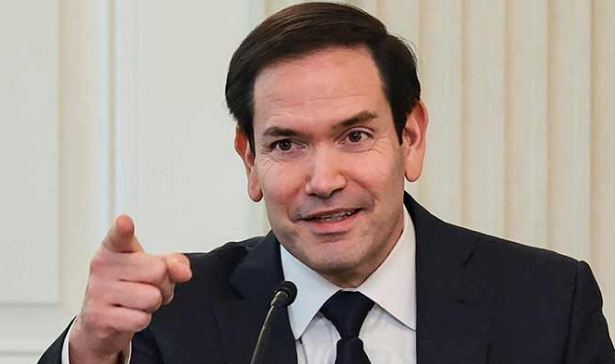
US seeks to expand strategic relationship with Pakistan, says Rubio

US seeks to expand strategic relationship with Pakistan, says Rubio

Rubio says India must understand Washington’s need for balanced diplomacy across South Asia

News Desk

WASHINGTON: US Secretary of State Marco Rubio has said that Washington sees “an opportunity to expand its strategic relationship with Pakistan,” stressing that this engagement is not at the expense of America’s friendship with India.

During a press briefing, Secretary Rubio was asked whether India had expressed concerns over Washington’s growing strategic engagement and stronger relations with Pakistan.

“They really haven’t – I mean, we know they’re concerned for obvious reasons because of the tensions that have existed between Pakistan and India historically,” he said, according to the transcript of the briefing on the State Department’s website.

He noted that India has to understand that the United States must maintain relations with multiple partners.

“We see an opportunity to expand our strategic relationship with Pakistan,” Rubio said, adding that this was part of Washington’s broader policy to work with nations where common interests align.

He reiterated that America’s evolving ties with Pakistan would not undermine its relationship with India, which he described as “deep, historic, and important.”

When asked whether the relations stemmed from Islamabad’s appreciation of Washington’s role in helping avert a potential war between India and Pakistan, Rubio said the renewed engagement with Pakistan had begun even before the conflict, as the US had expressed interest in rebuilding a “strategic partnership” with Islamabad.

He noted that both sides had a long history of cooperation, particularly in counterterrorism, and that Washington was keen to expand the relationship beyond security matters.

“But I think it’s a very encouraging thing that that relationship has strengthened the way that it has, and I don’t think it comes at the expense, or instead of a good relationship with India, or anybody else for that matter,” he added.

The statement comes against the backdrop of improving relations between the two countries following a prolonged diplomatic chill.

An early breakthrough came in March when Pakistan’s intelligence services handed over an Islamic State Khorasan operative accused of orchestrating a 2021 Kabul bombing that killed 180 people, including 13 US soldiers.

Later, US President Donald Trump brokered a ceasefire between Pakistan and India after both countries engaged in a military showdown in May 2025, the worst between the old foes in decades. Citing his role in defusing tensions between neighbouring countries, Pakistan recommended Trump for the Nobel Peace Prize.

Meanwhile, the US president has always praised Prime Minister Shehbaz Sharif and Chief of Army Staff, Field Marshal Asim Munir, on multiple occasions. 

PM lauds security forces

PM lauds security forces

Abid Raza

LAHORE, OCT 26 /DNA/ – Prime Minister Muhammad Shehbaz Sharif has paid rich tribute to the security forces for their successful operations against Fitna-tul-Khawarij terrorists in North Waziristan and Kurram districts.

The Prime Minister appreciated the security personnel for eliminating 25 terrorists during the operations and commended their professionalism and bravery.

He also paid homage to the five soldiers of the security forces who embraced martyrdom while fighting courageously against the terrorists.

The Prime Minister prayed for the elevation of the ranks of the martyrs and expressed heartfelt condolences to their bereaved families.

He said the entire nation salutes the courage and sacrifices of the security forces.

The Prime Minister reaffirmed the government’s firm resolve to root out terrorism in all its forms and manifestations from the country.

15 Indian-backed terrorists, suicide bomber neutralized

15 Indian-backed terrorists, suicide bomber neutralized

DNA

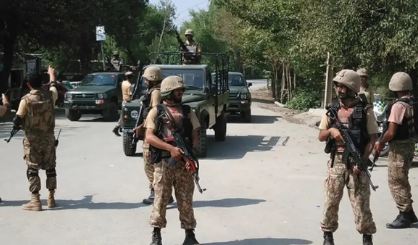
RAWALPINDI, OCT 26: Movements of two large groups of khwarij, opposite general area Ghaki, Kurram District and Spinwam, North Waziristan District who were trying to infiltrate through Pakistan-Afghanistan border, were picked up by the security forces.

Own troops effectively engaged these groups of khwarij. As a result of precise and skillful engagements, fifteen khwarij including four Suicide Bombers belonging to Indian proxy, Fitna al Khwarij were sent to hell in Spinwam, North Waziristan District. Whereas, another ten infiltrating khwarij were killed in Ghaki, Kurram District. Large number of weapons, ammunition & explosives were also recovered from the killed infiltrating Khwarij.

However, during the intense fire exchanges, five brave sons of soil, Havildar Manzoor Hussain (age: 35 years, resident of District Ghizar), Sepoy Nauman Ilyas Kiyani (age: 23 years, resident of District Poonch), Sepoy Muhammad Adil (age: 24 years, resident of District Kasur), Sepoy Shah Jehan (age: 25 years, resident of District Vehari) and Sepoy Ali Asghar (age: 25 years, resident of District Pak Pattan), having fought gallantly, paid the ultimate sacrifice and embraced Shahadat.

It is significant to point out that these infiltration attempts by Fitna al Khwarij are being carried out at a time when delegations of Pakistan and Afghanistan are engaged in talks in Türkiye; casting doubts on intentions of Interim Afghan Government with regards to addressing the issue of terrorism emanating from its soil. Pakistan has consistently been asking Interim Afghan Government to ensure effective border management on their side of the border and is expected to fulfil its obligations of Doha Agreement and deny the use of Afghan soil by Khwarij against Pakistan.

The Security Forces of Pakistan remain resolute and unwavering in their commitment to defend the nation’s frontiers and such sacrifices of our brave soldiers further strengthen our resolve.

Sanitization operation is being conducted to eliminate any other Indian sponsored Kharji found in the area as relentless Counter Terrorism campaign under vision “Azm e Istehkam” (as approved by Federal Apex Committee on National Action Plan) by Security Forces and Law Enforcement Agencies of Pakistan will continue at full pace to wipe out the menace of foreign sponsored and supported terrorism from the country.

Stay Connected

64FansLike
60FollowersFollow

Latest Reviews

Exchange Rates

USD - United States Dollar
EUR
1.14
GBP
1.34
AUD
0.69
CAD
0.70