Home Blog Page 411

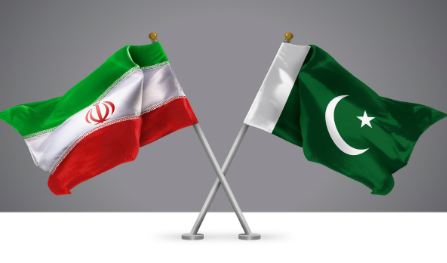
Pakistan, Iran pledge closer coordination on counter-terrorism efforts

Pakistan, Iran pledge closer coordination on counter-terrorism efforts

TEHRAN, OCT 29 /DNA/ – Federal Interior Minister Mohsin Naqvi held separate meetings with Secretary of Iran’s Supreme National Security Council Ali Ardeshir Larijani and Iranian Interior Minister Sikandar Momeni in Tehran on Tuesday, focusing on enhancing Pakistan-Iran relations and strengthening bilateral security cooperation.

Upon his arrival at the Supreme National Security Council office, Minister Naqvi was warmly received by Secretary Ali Ardeshir Larijani. During their meeting, the two sides discussed in detail issues related to counterterrorism, counter-narcotics operations, and effective border management. Both officials underscored the importance of enhancing institutional linkages and joint coordination mechanisms to address mutual security challenges.

Minister Naqvi reaffirmed Pakistan’s commitment to expanding cooperation with Iran in areas of security and narcotics control, noting that close collaboration would contribute to regional stability. Secretary Larijani appreciated the positive momentum in bilateral ties, terming it a welcome development.

In his meeting with Iranian Interior Minister Sikandar Momeni, Mohsin Naqvi congratulated his counterpart on the successful organization of the ECO Ministerial Conference, describing it as a significant event with far-reaching benefits for member states. The two ministers also discussed enhancing cooperation on internal security matters and agreed to share best practices and experiences to strengthen their respective domestic security frameworks.

Minister Naqvi extended an invitation to the Iranian Interior Minister to visit Pakistan, which he warmly accepted, expressing his intention to visit Islamabad soon.

Federal Interior Secretary Khurram Agha, Pakistan’s Ambassador to Iran Muhammad Mudassir Tipu, senior officials from Iran’s Interior Ministry, and diplomatic officers were also present during the meetings.

NUML event promotes academic collaboration on women’s issues

NUML event promotes academic collaboration on women's issues

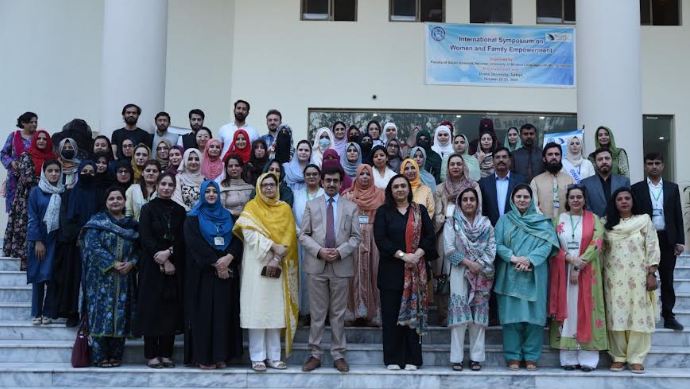
ISLAMABAD, OCT 29 /DNA/ – The Faculty of Social Sciences, National University of Modern Languages (NUML), Islamabad, in collaboration with Düzce University, Turkiye, organized an International Symposium on “Women and Family Empowerment”.

Held under the guidance of Rector NUML, Maj Gen (R) Shahid Mahmood Kayani, HI(M), the event was led by the Dean Faculty of Social Sciences (FSS), along with Heads of Departments and faculty members from the Departments of Applied Psychology, Educational Sciences, and Islamic Thought & Culture.

The opening session of the symposium was attended online from NUML’s Video Conference Room by Pro-Rector (Research & Strategic Initiatives) (as Chair), Deans, HoDs, and faculty members. On behalf of Rector NUML, Prof. Dr. Muhammad Riaz Shad, Dean FSS, delivered a speech highlighting the university’s commitment to advancing academic collaboration and gender inclusivity.

As part of the joint collaboration, the Faculty of Social Sciences organized three thematic parallel sessions, “Women in Education and Science,” organized by the Department of Educational Sciences, explored women’s achievements, challenges, and opportunities in education and research, “Women in Society and Profession,” organized by the Department of Applied Psychology, discussed psychological well-being and empowerment of women in their social and professional roles, and “Women and Family from Religious Perspectives,” organized by the Department of Islamic Thought & Culture, emphasized the guiding principle of balance in women’s familial and professional responsibilities.

Scholars and researchers from NUML Islamabad, Fatima Jinnah Women University (FJWU) Rawalpindi, Duzce University (Turkiye), and INTI International University (Malaysia) presented papers and shared insights during the symposium.

The event underscored NUML’s continued commitment to fostering international academic linkages and promoting dialogue on social development and women empowerment across diverse cultural and academic contexts.

Afghan Taliban-TTP nexus causes failure of Istanbul talks: Experts

Second round of Pakistan-Afghanistan talks 'begins in Istanbul'

Centreline Report/DNA

PESHAWAR, Experts have attributed the failure of the recent Pakistan-Afghanistan peace talks in Istanbul to the close nexus between the Afghan Taliban regime and the banned Tehrik-e-Taliban Pakistan (TTP).

Former Inspector General of Police and Home Secretary Khyber Pakhtunkhwa, Syed Akhtar Ali Shah, told APP on Wednesday that the strong nexus between the Afghan Taliban region and the TTP-backed Fitna-ul-Khawarij were the main reason behind the breakdown of the latest round of peace negotiations held in Turkiye’s Istanbul.

He said that under the Doha Peace Agreement, the Afghan Taliban had committed in writing that Afghan soil would not be used against any foreign country.

However, he claimed that the Taliban later retracted from their commitment and facilitated cross-border infiltration of Fitna-ul-Khawarij militants to carry out attacks inside Pakistan.

Akhtar Ali Shah reiterated that Pakistan had repeatedly engaged with the Afghan Taliban government over persistent cross-border terrorism orchestrated by Indian-backed terror groups such as Fitna-al-Khawarij and Fitna-al-Hindustan, but Kabul had failed to act against terrorist outfits operating from its soil.

He said that after days of border clashes and strikes on Gul Bahadur terror camps inside Afghanistan, Islamabad and Kabul had initiated dialogue in Doha Qatar, which resulted in a temporary ceasefire and an agreement to meet again in Istanbul to develop mechanisms for sustainable peace.

“Unfortunately, the second round of talks in Istanbul failed due to the Taliban–TTP nexus and non serious attitude of Afghan Taliban delegation,” he added.

The former IGP stressed that Pakistan’s serious and consistent diplomatic efforts for regional  peace and stability had proved futile because of the Afghan Taliban’s continued support to anti-Pakistan terrorist groups.

He claimed that Afghan Talibans regime was using terrorism as weapon of obtaining foreign funding.

“Since the Taliban regime bears no responsibility towards the Afghan people and thrives on a terror economy, it seeks to drag the Afghan nation into unnecessary conflict,” he said, adding that Kabul’s refusal to provide written assurance against cross-border attacks effectively gave a “free licence” to terrorists and foreign terror proxies to target Khyber Pakhtunkhwa and Balochistan.

Former Ambassador Manzoorul Haq also condemned the Afghan Taliban’s “stubborn and non-serious” attitude during the Istanbul talks.

He said it was in Afghanistan’s own interest to adopt a rational approach and resume meaningful dialogue with Pakistan, as terrorism posed a grave threat to regional peace and stability.

“Pakistan has held countless rounds of talks with the Afghan Taliban regime, but they have always remained indifferent to our losses,” Manzoor said.

“After enduring massive losses of men and material over the past four years, Pakistan’s patience has reached its limit and was left with viable solution but to take strong action against terrorists and terror camps across the western border for protection of lives and properties of its people.”

He said Pakistan, at the request of brotherly nations Qatar and Turkiye, engaged with the Afghan Taliban interim  Govt on a single-point agenda to ensure Afghan soil was not used by terrorist groups as a training and logistics base for attacks in Pakistan.

He thanked Qatar and Turkiye for facilitating the dialogue and their efforts to persuade Kabul to stop using terror proxies as leverage against Islamabad.

However, he lamented that the Afghan side repeatedly deviated from the core issue of fighting terrorism.

“During the four-day dialogue, the Afghan Taliban delegation initially agreed to Pakistan’s legitimate demand for decisive action against terrorist organisations, and sufficient evidence was shared with Afghan negotiators,” he said.

 “Yet, despite acknowledgment by the Taliban and the brotherly host countries, the Afghan side gave no assurance to halt infiltration by the banned TTP and other terror groups.”

Manzoor said the Afghan delegation’s repeated backtracking and blame-shifting rendered the dialogue fruitless. “Instead of accepting responsibility, they resorted to excuses and deflection during Istanbul talks,” he added.

The experts emphasised that ensuring the safety of its citizens remains Pakistan’s top priority, and Islamabad will continue to take all necessary measures to safeguard its people from terrorism.

 They urged the Afghan Taliban to immediately dismantle all terror camps and sanctuary operating within Afghanistan.

Professor Dr. A.H. Hilali, former Chairman of the Political Science Department at the University of Peshawar, also condemned the Afghan Taliban’s irresponsible approach.

He revealed that an agreement was close to being finalised in Istanbul, but Afghan negotiators backpedalled multiple times after receiving instructions from Kabul.

He said the talks collapsed as Afghan representatives reversed their stance four to five times during the negotiations on behest of their foreign terror sponsors.

The experts further accused the Modi-led Indian government of exploiting Afghanistan to destabilise Pakistan.

They alleged that New Delhi was using Afghan soil to avenge its setbacks on the eastern front and to divert international attention from grave human rights violations and state terrorism in Indian Illegally Occupied Jammu and Kashmir (IIOJK).

They reiterated that Pakistan will not tolerate cross-border terrorism any more and urged the international community to hold the Afghan Taliban accountable for violating their commitments under the Doha Agreement.

Pakistan condemns Israel’s violations

Pakistan condemns Israel’s violations

DNA

ISLAMABAD: Pakistan strongly condemns the renewed attacks by the Israeli occupying forces in Gaza, which have reportedly resulted in civilian casualties.

These actions constitute a clear and flagrant violation of international law, as well as a breach of the recently concluded peace agreement. Such aggressive measures by the Israeli occupation forces threaten to undermine the international efforts aimed at establishing durable peace and stability in the region.

Pakistan calls upon the international community to ensure an immediate cessation of ceasefire violations by the Israeli occupation forces.

Pakistan also reiterates its principled position for the establishment of an independent, sovereign, viable, and contiguous State of Palestine, based on the pre-June 1967 borders, with Al-Quds Al-Sharif as its capital.

Hendricks, Bosch help South Africa crush Pakistan in first T20I

Hendricks, Bosch help South Africa crush Pakistan in first T20I

RAWALPINDI: Reeza Hendricks’s anchoring half-century, followed by Corbin Bosch’s four-wicket haul, led South Africa to thump Pakistan by 55 runs in the first T20I of the three-match series here at the Rawalpindi Cricket Stadium on Tuesday.

Chasing a daunting 195-run target, the home side’s batting unit could yield 139 before being bowled out in 18.1 overs.

Pakistan got off to a cautious start to the pursuit, with Sahibzada Farhan and Saim Ayub putting together 31 runs before the former, who dominated the opening stand, was cleaned up by Lizaad Williams in the fifth over after scoring 24 off 19 with the help of four fours.

The Green Shirts then suffered another massive blow as returning star batter Babar Azam fell for a two-ball duck off Corbin Bosch, who struck again in his next to remove Pakistan captain Salman Ali Agha (two), bringing the total down to 43/3 in 7.2 overs.

Following the back-to-back setbacks, Ayub looked to launch a counterattack on the South Africa bowlers by switching gears, but George Linde drew curtains on his grit, dismissing him in the 11th over.

The left-handed opener remained the top-scorer for Pakistan with a brisk 37 off 28 deliveries, featuring four sixes and a four.

Ayub’s dismissal proved decisive as Pakistan lost their remaining six wickets for just 54 runs and were thus booked on a modest total despite Mohammad Nawaz’s grit at the backend.

The all-rounder offered significant resistance with a 20-ball 36, comprising four fours and two sixes, until eventually falling victim to Williams.

Bosch led the bowling charge for South Africa with a four-wicket haul, followed by Linde with three, while Williams bagged two.

Put into bat first, the Proteas accumulated 194/9 in their allotted 20 overs despite a strong start.

The Proteas got off to a flying start to their innings, with returning Quinton de Kock and Hendricks putting together 44 runs inside four overs.

Ayub eventually broke the opening stand on the penultimate delivery by getting rid of de Kock, giving Pakistan a much-needed breakthrough. The left-handed opener scored a 13-ball 23, laced with five fours.

Hendricks was then joined by debutant Tony de Zorzi in the middle, and the duo ensured maintaining South Africa’s momentum with a 49-run partnership for the second wicket, which culminated with the latter’s dismissal off Mohammad Nawaz in the eighth over.

The left-handed batter made a notable contribution to South Africa’s total on debut with a blistering 33 off just 16 deliveries, comprising five fours and a six.

Following his dismissal, the visitors lost two more wickets in quick succession as Dewald Brevis (nine) and Matthew Breetzke (one) fell victim to Nawaz and Ayub, respectively.

Hendricks was then involved in a brief 27-run partnership for the fifth wicket with captain Donovan Ferreira (10), followed by a 39-run stand, dominated by George Linde, until eventually being cleaned up by Abrar Ahmed in the 18th over.

The right-handed opener remained the top-scorer for South Africa with 60 off 40 deliveries, featuring five fours and a six.

Linde, on the other hand, followed suit in the next over, falling victim to Naseem Shah, after scoring a quickfire 22-ball 36, laced with four fours and a six.

Ace pacer Shaheen Shah Afridi further derailed South Africa’s march towards a big total by dismissing bowling all-rounder Corbin Bosch in the final over, in which he gave away just six runs.

Nawaz led Pakistan’s bowling charge with three wickets for just 26 runs in his four overs, followed by Ayub with two, while Abrar, Naseem and Shaheen chipped in with one apiece.

France, Pak celebrate a decade of archaeological cooperation

France, Pak celebrate a decade of archaeological cooperation

Ansar M Bhatti

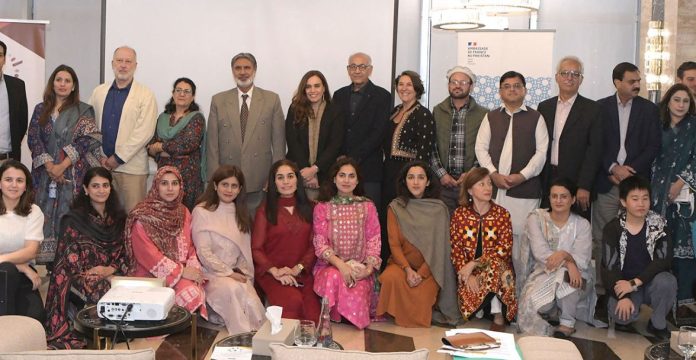
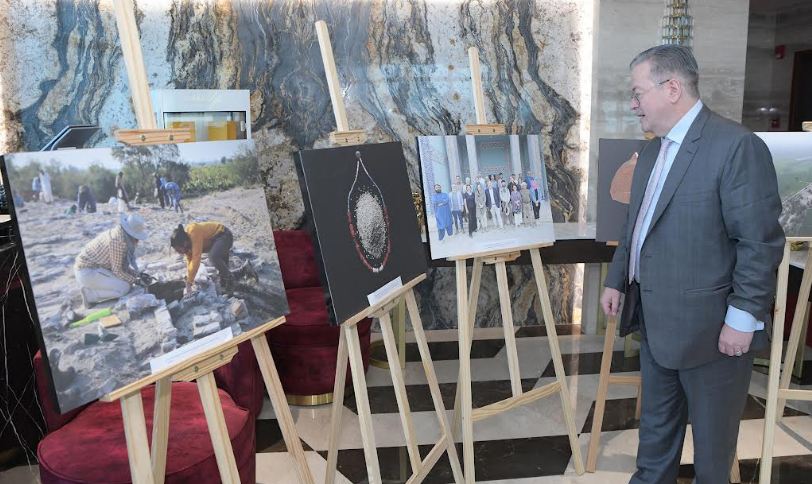
ISLAMABAD, OCT 28 /DNA/ – he French Ambassador to Pakistan, Nicolas Galey, has hailed the enduring partnership between France and Pakistan in the field of archaeology, describing it as a “remarkable milestone in the history of scientific and cultural cooperation” between the two nations.

He was speaking at a ceremony marking the 10th anniversary of the French-Pakistani archaeological excavations at Chanhu Daro, Sindh, led by the French Archaeological Mission in the Indus Basin (MAFBI).

Dr. Amanullah Director DOAM, Dr. Aurore Didier, Dr Marjan Mashkour and others also spoke on the occasion. Ms. Sabine Vermillard moderated the event.

Ambassador Galey paid tribute to the dedication of archaeologists, researchers, and institutions on both sides, noting that the collaboration has deepened mutual understanding of one of humanity’s earliest urban civilizations  the Indus Valley Civilization. “Together, French and Pakistani archaeologists have explored, excavated, and shared the story of one of humanity’s earliest urban civilizations,” he said, adding that the mission has also helped train a new generation of archaeologists and heritage professionals.

Highlighting France’s global commitment to archaeological research, Ambassador Galey said this year also marks the 80th anniversary of France’s Commission for Archaeological Missions Abroad, which supports more than 190 missions acros five continents. “These missions form a living network — uniting researchers, students, and institutions driven by scientific excellence and respect for cultural heritage,” he noted.

The envoy lauded the mission’s contributions to emerging research fields in Pakistan, such as archaeozoology the study of animal remains at archaeological sites which has provided valuable insights into the diet, environment, and social practices of ancient communities. He emphasized that such interdisciplinary studies not only enhance historical understanding but also enrich modern perspectives on human society.

Ambassador Galey underlined the importance of education and capacity-building in sustaining this partnership. “Over the years, the French Embassy has supported more than 20 Pakistani doctoral students and young professionals trained in France by the extended MAFBI team,” he said. “Chanhu Daro today stands as a laboratory for interdisciplinary study and a symbol of what long-term cooperation can achieve.”

He also recalled that Pakistan had recognized this collaboration at the highest level when, in 2024, the Sitara-e-Pakistan, one of the country’s most prestigious civil awards, was conferred upon French archaeologist Dr. Aurore Didier, in acknowledgment of her outstanding contribution to bilateral cultural and scientific ties.

Concluding his remarks, the French Ambassador expressed gratitude to the federal and provincial departments of archaeology and museums, the Taxila Institute of Archaeology and Civilizations, and all researchers, students, and professionals who have sustained this partnership. “The results of our joint work — from scientific publications to heritage preservation — speak of a longstanding friendship built on trust and shared pursuit of knowledge,” he said.

APNS, Punjab officials finalise formula for outstanding ad payments

APNS, Punjab officials finalise formula for outstanding ad payments

LAHORE, OCT 28 /DNA/ – A significant meeting between the Punjab government and the All Pakistan Newspapers Society (APNS) concluded on a positive note, with both sides reaching a consensus on clearing long-standing dues and simplifying the payment process for print media.

The meeting, chaired by APNS Punjab Committee Chairman Jamil Athar Qazi, was held at a local hotel. The provincial government was represented by Secretary Information Tahir Raza Hamdani and Director General of Public Relations (DG PR) Farid Ahmed. The session was also attended by senior editors and representatives from a wide array of national newspapers.

The central outcome of the discussions was the finalization of a formula for the clearance of outstanding payments owed to newspapers by the government. Officials confirmed that not only has this formula been agreed upon, but positive decisions have also been made to streamline the payment procedure, with implementation already underway.

Another prominent issue raised was the issuance of IPL and Color SPL permits for regional newspapers. Secretary Information Tahir Raza Hamdani assured the members that his department would not only resolve this matter but also ensure that action is initiated before the next meeting.

Addressing the gathering, Secretary Information Hamdani stated, “The government’s relations with the print media are exemplary, and we are striving to make them even better.” He also advised newspapers to adapt to modern demands by effectively using information technology to increase readership and public reach.

Senior journalist and Chief Editor of Roznama Pakistan, Mujib-ur-Rehman Shami, emphasized the importance of dialogue. “While complaints are inevitable, they can be amicably resolved through mutual discussion,” he said. He expressed confidence in the current government’s seriousness and understanding to address these issues.

APNS Punjab Chairman Jamil Athar Qazi echoed the positive sentiment, remarking, “The relationship between the government and the print media is more friendly at this time than it has ever been before.” He extended his gratitude to the government officials for their participation in the special session.

The meeting is seen as a constructive step towards strengthening the working relationship between the government and the fourth pillar of the state.

PNCA hosts first exhibition of Sadequain’s ‘The Stranger’ collection

PNCA hosts first exhibition of Sadequain's 'The Stranger' collection

ISLAMABAD, OCT 28 /DNA/ – The Pakistan National Council of the Arts (PNCA) proudly hosted the historic launch and exhibition Albert Camus’ The Stranger by SADEQUAIN, marking the first-ever display of this extraordinary collection in Pakistan.

The event was inaugurated by His Excellency Nicolas Galey, Ambassador of France to Pakistan, with Ms. Iram Rehman, President of Alliance Française d’Islamabad, serving as Guest of Honor.

Organized by Gallery 21 and the SADEQUAIN Foundation, the exhibition celebrates Sadequain’s rare 1964 lithographs inspired by Nobel Laureate Albert Camus’ seminal novel The Stranger— a remarkable confluence of French literature and Pakistani art.

The event drew artists, writers, diplomats, and cultural enthusiasts who gathered to witness this symbolic reunion of art and literature, bridging the creative worlds of Paris and Pakistan six decades later.

Lahore becomes world’s most polluted city

Lahore becomes world's most polluted city

LAHORE, 28 OCT (DNA) —    Citizens of Lahore continue to reel under dense smog, driven by worsening air pollution, with the Swiss air quality monitor, IQAir, reporting the city’s air quality index (AQI) recorded at 329, “hazardous” at around 9am. The metropolis’s AQI had shot up to as high as 424 earlier in the morning, with the level of deadly particulate matter (PM2.5) pollutants, the fine particulate matter in the air that causes the most damage to health, reaching 287 µg/m³.

The Punjab’s capital is not the only city on the list as the country’s financial hub, Karachi, ranked third with an AQI of 174, which is termed “unhealthy”. Meanwhile, India’s capital, New Delhi, was ranked as the second most polluted city with an AQI of 276, which is termed “very unhealthy”.

The severe air quality coincides with the onset of winter, when cooler temperatures, stagnant winds, and emissions from vehicles, factories and crop burning trap pollutants close to the ground across Punjab. Every winter, much of South Asia experiences a surge in pollution as cold air traps fine particles near the surface.

 Emissions from transport, factories, construction dust and crop residue burning all contribute to the dense smog that lingers for weeks. Health experts warn that prolonged exposure to such high pollution levels can lead to severe health issues, including stroke, heart disease, lung cancer and chronic respiratory illnesses — a growing concern for millions across South Asia. — DNA

CJCSC, Bangladesh army chief discuss regional security cooperation

Pak-Bangladesh vow Strengthen Bilateral Defence Collaboration

RAWALPINDI, OCT 28 /DNA/ – General Sahir Shamshad Mirza, NI, NI (M), Chairman Joint Chiefs of Staff Committee (CJCSC), while on an official visit to the People’s Republic of Bangladesh, called on General Waker-Uz-Zaman, Chief of Army Staff of Bangladesh Army at Army Headquarters, Dhaka.

During the meeting, both sides appreciated the positive trajectory of expanding defence cooperation between the two countries and agreed to maintain regular exchange visits at various tiers of military leadership.

The two dignitaries discussed the evolving global and regional security environment and underscored the importance of further strengthening bilateral cooperation between the Armed Forces of Pakistan and Bangladesh. The discussions covered areas including training, joint exercises, and sharing of experiences in counter-terrorism.

Both sides also noted the emerging challenges posed by disruptive and divisive disinformation efforts across multiple platforms, recognizing them as a common concern. They reaffirmed the need to enhance cooperation and joint efforts to effectively counter these threats.

Stay Connected

64FansLike
60FollowersFollow

Latest Reviews

Exchange Rates

USD - United States Dollar
EUR
1.14
GBP
1.34
AUD
0.69
CAD
0.70