Home Blog Page 410

Pakistan Navy to host int’l maritime expo to showcase potential

Pakistan Navy to host int'l maritime expo to showcase potential

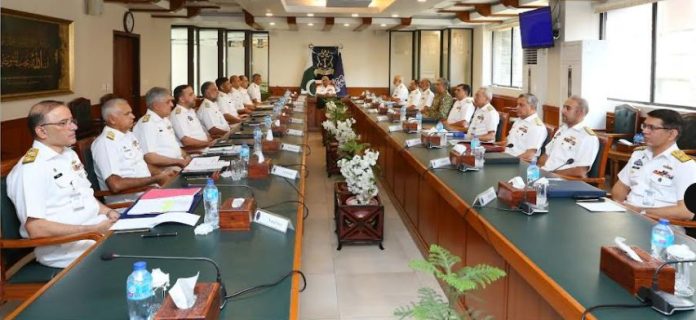
ISLAMABAD, OCT 29 /DNA/ – The Command & Staff Conference of Pakistan Navy concluded at Naval Headquarters, Islamabad. The conference was chaired by Chief of the Naval Staff, Admiral Naveed Ashraf.

During the conference, Chief of the Naval Staff emphasized on the significance of sustaining perpetual combat readiness to effectively address both conventional and unconventional challenges in the maritime domain. He further highlighted Pakistan Navy’s pivotal role in peace and stability and regional maritime security. Admiral asserted that Pakistan Navy remains fully prepared to uphold national sovereignty and ensure the defence of every inch of maritime frontiers.

The forum also undertook a comprehensive review of operational preparedness, ongoing initiatives and upcoming events, including the conduct and preparations of the Pakistan International Maritime Expo and Conference (PIMEC), which serves as a premier platform to showcase Pakistan’s maritime potential and promote regional cooperation.

The Command and Staff Conference serves as the apex decision-making forum of Pakistan Navy, wherein the Chief of the Naval Staff, Principal Staff Officers and Field Commanders deliberate on strategic priorities, review operational preparedness and formulate policies to align naval capabilities with national security objectives.

Dar, Algerian counterpart satisfied with trajectory of bilateral ties

Dar, Algerian counterpart satisfied with trajectory of bilateral ties

ISLAMABAD, OCT 29 /DNA/ – Deputy Prime Minister/Foreign Minister Senator Mohammad Ishaq Dar received a telephone call from Algerian Foreign Minister Ahmed Attaf.

Expressing satisfaction at the positive trajectory of bilateral cooperation, both leaders reaffirmed their commitment to further strengthening Pakistan–Algeria relations, and enhance coordination in multilateral fora, including the UN.

Mohsin Naqvi meets Iranian President Masoud Pezeshkian

Mohsin Naqvi meets Iranian President Masoud Pezeshkian

DNA

TEHRAN, OCT 29: Interior Minister Mohsin Naqvi met with President of Iran Dr. Masoud Pezeshkian in Tehran. During the meeting, both sides discussed Pakistan-Iran relations and matters of mutual cooperation.

The Interior Minister briefed the Iranian President on the situation at the Pakistan-Afghanistan border. President Pezeshkian offered to play a brotherly role in helping to defuse tensions between Pakistan and Afghanistan.

‎Mohsin Naqvi conveyed Prime Minister Muhammad Shehbaz Sharif’s message of goodwill to President Pezeshkian.

‎Interior Minister Mohsin Naqvi stated that “Iran and Pakistan are partners in promoting regional peace and stability.”

‎President Pezeshkian said that “Iran attaches special importance to its relations with Pakistan and can never forget the boundless support of its brotherly neighbor.”

‎Iranian President also expressed satisfaction over the current state of bilateral relations, adding that both countries possess vast potential to enhance cooperation in various fields.

Lebanese ambassador meets CDA chairman

Lebanese ambassador meets CDA chairman

Saifullah Ansar

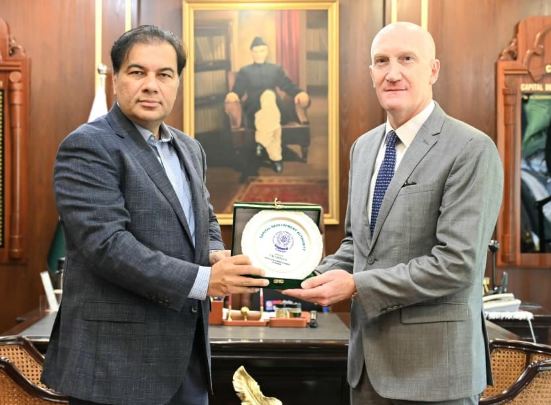
ISLAMABAD, OCT 29 /DNA/ – Chairman Capital Development Authority (CDA) and Chief Commissioner Islamabad, Muhammad Ali Randhawa, met with the Ambassador of Lebanon, H.E. Abdullaziz Issa, at the CDA Headquarters on Wednesday. Matters of mutual interest were discussed in the meeting, along with strengthening bilateral relations. On this occasion, both sides reiterated their commitment to further strengthen urban-level relations and cooperation between Islamabad and Beirut.

Chairman CDA Muhammad Ali Randhawa said that Pakistan holds its brotherly country Lebanon in high esteem and respect. He expressed the desire to further solidify the sister city relationship between Islamabad and Beirut.

The Ambassador of Lebanon, H.E. Abdullaziz Issa, appreciated the measures taken by CDA for the beauty and development of Islamabad, stating that Islamabad is an extraordinarily green and naturally beautiful city. He remarked that the beauty, greenery and cleanliness of Islamabad are surprisingly and unexpectedly remarkable.

Chairman CDA Muhammad Ali Randhawa said that efforts are ongoing to make Islamabad an even more beautiful and greener city. He mentioned that the Margalla Hills further enhance the natural beauty of Islamabad. Chairman CDA said that the Capital City Islamabad is a modern gridlock city established in 1960 under a master plan.

Chairman CDA Muhammad Ali Randhawa informed that a plan is under consideration to relocate all diplomatic missions to the Diplomatic Enclave.Chairman CDA Muhammad Ali Randhawa, while informing about the beautification and upgradation of the Diplomatic Enclave, further said that recreational and sports facilities are being increased alongside the beautification of the Diplomatic Enclave.

The meeting also reaffirmed the commitment to enhance cooperation in other areas of mutual interest and to further strengthen city level and cultural relations.

Pakistan aims to double digital transactions by 2026, says Khurram Schehzad

Pakistan aims to double digital transactions by 2026, says Khurram Schehzad

KARACHI, OCT 29 /DNA/ – Advisor to Finance Minister, Khurram Schehzad, inaugurated the 5th Pakistan Future of Retail Business Summit and Expo held in Karachi on Wednesday. The theme of this year’s event was “Retail in a Changing World: Building Resilience in Pakistan’s Commerce.”

Addressing the inaugural session as Chief Guest, Khurram Schehzad highlighted the government’s comprehensive reform agenda focused on stabilizing the economy, broadening the tax base, promoting digital inclusion, and accelerating the transition towards a cashless economy.

He said that the government’s policies are geared towards creating a transparent, documented, and growth-oriented economy that supports business confidence, industrial revival, and long-term investment.

Mr. Schehzad remarked that Pakistan’s consumption-driven economy should be viewed as an opportunity for expansion rather than a constraint. “With a young and spending-oriented population, Pakistan offers vast potential for producers and retailers to grow and innovate,” he said.

He noted that the government has successfully reduced inflation to an average of 5 percent, marking a significant improvement compared to the past two years. This progress, he added, reflects the Prime Minister’s resolve to lower the cost of doing business, introduce affordable energy rates with certainty, and stimulate industrial activity. “Reforms in taxation, energy pricing, and inter-provincial trade are now showing tangible results,” he stated.

Mr. Schehzad further said that under the direct supervision of Prime Minister Shehbaz Sharif and under the leadership of Finance Minister Senator Muhammad Aurangzeb, the Cashless Pakistan Initiative is driving the country’s transition towards a digital and documented economy that will unlock substantial value and efficiency gains.

He noted that a large share of transactions in Pakistan still occurs in cash, and that Pakistan’s undocumented economy is estimated at around 40 percent of GDP, leading to inefficiencies and revenue leakages. “Digitizing even a modest portion of cash transactions could save the country approximately PKR 164 billion annually, while reducing the undocumented economy by 25 percent could unlock over PKR 1 trillion in additional resources,” he explained.

He added that the government’s cashless transition is built on three key verticals: 1) Conversion, 2) Inclusion, and 3) Adoption, which together aim to bring the informal economy into the formal system.

Conversion focuses on shifting existing cash-based transactions by the Government (local, provincial, federal) into digital channels

Inclusion ensures that all citizens, especially women and underbanked groups, have access to financial services; and, Adoption promotes the use of digital payments across businesses, public institutions, and consumers.

These pillars of the Cashless Pakistan framework are also essential to expanding transparency, accountability, and trust in the financial system,” he noted.

Highlighting the key targets of the initiative, Mr. Schehzad said that the number of monthly active Raast QR merchants will increase from 500,000 to 2 million by June 2026, annual digital transactions will double from 7.5 billion to 15 billion by the same period, and 100 percent of government payments, both government-to-person and person-to-government, will be digitized by December 2026. In addition, internet penetration will rise from 60 percent to 80 percent by the end of 2026, laying the foundation for an inclusive digital economy.

He mentioned that the government has already achieved major milestones under the initiative. Ten million full-mandate bank accounts have been opened for BISP women beneficiaries, Raast QR payments have been launched at NADRA offices and retail outlets in Islamabad, and Raast integration has been completed on gas and electricity bills covering nearly twelve million consumers. Moreover, Raast Payments Pakistan has been established as a dedicated entity for digital payment proliferation, while right-of-way charges on internet infrastructure have been abolished nationwide to reduce costs and expand connectivity.

“These efforts are transforming Pakistan into a digitally enabled, transparent, and inclusive economy,” Mr. Schehzad said, adding that the government has also separated tax policy formulation from tax collection to enhance institutional efficiency. The Finance Division now oversees policy design and framework development, while the Federal Board of Revenue focuses on implementation and collection.

Mr. Schehzad reaffirmed that the government’s approach combines macroeconomic discipline with technological modernization to create a resilient and forward-looking economy. “Through fiscal reforms, energy rationalization, and digital transformation, Pakistan is positioning itself as a competitive hub for trade, retail, and investment in the region,” he emphasized.

Pakistan hails Central African Republic’s progress towards upcoming polls, despite challenges

Pakistan hails Central African Republic's progress towards upcoming polls, despite challenges

UNITED NATIONS, Oct 29 (APP/DNA): Pakistan has welcomed the decision of Central African Republic (CAR) to hold presidential, legislative, regional and municipal elections in December,  a move aimed at stabilizing this small landlocked country that has endured repeated cycles of violence since it gained independence from France more than  60 years ago.

“It is an important step towards consolidating democracy and representative governance in the country,” Ambassador Usman Jadoon, deputy permanent representative of Pakistan to the UN, told the UN Security Council on Tuesday.  

 Speaking in a debate in the situation in the CAR, he praised the “encouraging progress” under the 2019 Political Agreement, including the disarmament of the armed groups and the demobilization of over 600 combatants.

“These are important gains that merit sustained international backing,” the Pakistani envoy said, noting at the same the concern expressed by the Secretary-General regarding parallel or unregulated disarmament.

“The DDR (Disarmament, Demobilization and Reintegration)  process must remain nationally led, centrally controlled, transparent, and linked to socio-economic reintegration to prevent relapse into violence,” Ambassador Jadoon said

Noting improved stability in many prefectures, he expressed concern over continued volatility in the northeast, particularly in Vakaga, due to the spillover from the conflict in Sudan.

 “Cross-border incursions, illicit flows and humanitarian pressures underscore the need for enhanced regional coordination,” the Pakistani envoy said.

“We support the Government’s efforts, in cooperation with Chad and others, to strengthen border management and transhumance security.”

Norway sovereign wealth fund says earned $103 bn in Q3

Norway sovereign wealth fund says earned $103 bn in Q3

OSLO, OCT 29 (AFP/APP): Norway’s sovereign wealth fund, the world’s largest, posted a return of 1.03 trillion kroner ($103 billion) in the third quarter, boosted by holdings in raw materials, telecoms and the financial sector, it said Wednesday.

  At the end of September, the fund, which is made up of the Norwegian state’s oil revenues and invested in assets worldwide, was valued at 20.4 trillion kroner ($2.04 trillion).

  “The result is driven by strong returns in the stock market, particularly in basic materials, telecommunications and the financial sector,” the deputy chief executive of Norges Bank Investment Management, Trond Grande, said in a statement.

  Posting a return of 5.8 percent, the fund saw the value of its stock holdings, which account for 71.2 percent of its investments, rise by 7.7 percent during the period.

   The fund is invested in more than 8,500 companies spanning the globe, and owns around 1.5 percent of all listed companies worldwide.

  Its fixed income and unlisted real estate holdings, which make up 26.6 percent and 1.8 percent of the fund’s portfolio respectively, posted more modest returns of 1.4 and 1.1 percent.

    The fund’s unlisted renewable energy infrastructure holdings, which make up just 0.4 percent of its portfolio, posted a return of 0.3 percent.

Chinese Consul General visits Farooq Riaz museum in Gujrat

Chinese Consul General visits Farooq Riaz museum in Gujrat

By Rimsha Fiaz

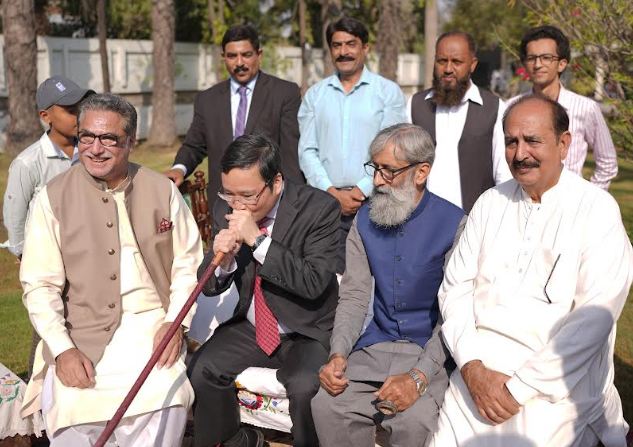
GUJRAT: A historic and culturally rich exhibition was held at the Farooq Riaz Museum in Gujrat, marking a significant moment as the Chinese Consul General Lahore Zhao Shirin and his delegation visited the city for the first time. The event, organized under the guidance of Mian Imran Masood, celebrated Pakistan’s vibrant heritage and fostered a spirit of friendship and mutual understanding between Pakistan and China.

The exhibition displayed an impressive array of historical artifacts, including ancient utensils, traditional household items, and historic weapons once used in wars. These rare and valuable pieces from Farooq Riaz’s extensive collection offered visitors a window into the daily life, artistry, and traditions of past generations — reflecting Pakistan’s rich cultural identity.

The Chinese delegation’s discipline, humility, and genuine interest deeply impressed attendees. Their respectful engagement and curiosity toward Pakistani heritage highlighted the growing cultural bond between the two nations. Visitors noted how the delegation listened attentively to explanations, interacted warmly, and expressed admiration for the exhibits, turning the event into a true exchange of cultures based on mutual respect and understanding.

Speaking about the exhibition, students and visitors appreciated Mian Imran Masood’s leadership and vision, crediting his consistent efforts to promote education, cultural awareness, and Pakistan’s positive image internationally.

Reflecting on the experience, the writer emphasized the importance of organizing such cultural events more frequently to preserve heritage, strengthen cross-cultural ties, and project Pakistan’s soft image globally.

The Farooq Riaz Museum, through such initiatives, continues to play a vital role in celebrating Pakistan’s historical legacy and connecting it with the wider world — one exhibition at a time.

Groundwater Emergency: PIDE unveils roadmap to avert Pakistan’s looming water collapse

Groundwater Emergency: PIDE unveils roadmap to avert Pakistan’s looming water collapse

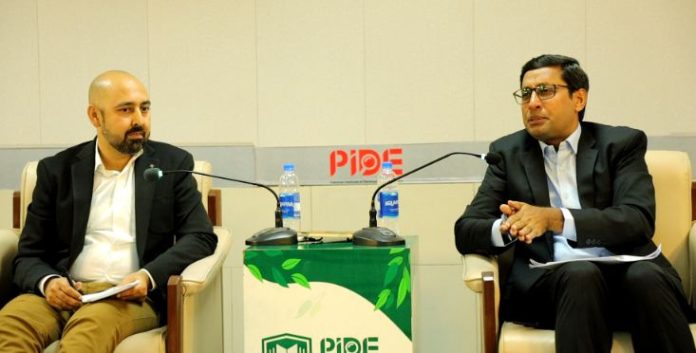
ISLAMABAD, OCT 29 /DNA/ – The Pakistan Institute of Development Economics (PIDE), in collaboration with the Planning Commission’s RASTA initiative, organized a seminar titled “Pakistan’s Groundwater Crisis: Policy Lessons and a Framework for Sustainable Resource Use” at PIDE. The session featured Mr. Nazam Maqbool, Social Scientist and Project Manager at RASTA, as the keynote speaker, and was moderated by Dr. Muhammad Faisal Ali, Research Fellow at PIDE.

Opening the seminar, Dr. Faisal emphasized Pakistan’s alarming shift from a water-stressed to a water-scarce nation, noting that per-capita water availability has dropped from over 5,000 cubic meters in 1947 to less than 1,000 today. He observed that while surface water scarcity and climate change dominate public debate, the depletion of groundwater—Pakistan’s silent lifeline—remains dangerously neglected. Water, he stressed, forms the foundation of civilization and food security, and its mismanagement threatens both human and economic survival.

In his presentation, Mr. Maqbool explained that Pakistan is among the most arid countries in the world, receiving only 494 millimeters of average annual rainfall. The Indus River system accounts for nearly 96 percent of the country’s total water supply, with 78 percent originating outside Pakistan’s borders. He highlighted that Pakistan possesses the world’s fourth-largest aquifer and is the fourth-largest user of groundwater globally. The Indus Plain alone contains around 88,000 square kilometers of freshwater storage, equivalent to nearly 400 million acre-feet—about eighty times the capacity of all large dams combined. However, the country’s extraction of 65 cubic kilometers of groundwater annually far exceeds its recharge rate of 55 cubic kilometers, creating a growing water deficit.

Mr. Maqbool traced the historical evolution of groundwater use in Pakistan, explaining how colonial-era canal construction between 1870 and 1930 led to widespread waterlogging and salinity, prompting the 1960s Salinity Control and Reclamation Project, under which thousands of tubewells were installed. The subsequent decades saw electricity subsidies and drought-driven policies fueling a massive expansion in tubewell installation—reaching over 1.5 million unregulated wells today, with no effective legal controls on extraction.

Highlighting the scale of the problem, he revealed that 70 percent of Pakistan’s urban and more than 80 percent of its rural populations rely on unsafe drinking water sources, with nearly 60 million people exposed to arsenic contamination. Over 4.5 million hectares of land have been affected by salinity and waterlogging, particularly in Punjab and Sindh, while industrial and agricultural pollution continue to degrade groundwater quality. He further pointed out that Pakistan ranks second globally in groundwater stress within the Indus Basin, with Lahore alone losing three feet of groundwater annually.

Mr. Maqbool identified the lack of a binding national groundwater law, overlapping institutional mandates, weak coordination after the 18th Amendment, and severely underfunded utilities as core governance failures. He noted that electricity subsidies encourage over-pumping while only 24 percent of operational costs are recovered through existing tariffs. Despite tariff hikes after decades of stagnation, Punjab’s water price of just $0.12 per cubic meter remains far below the global average of $2.36. Limited monitoring systems, poor data collection, and minimal investment in drainage and recharge infrastructure have further prevented evidence-based planning and water governance.

To address these challenges, Mr. Maqbool proposed a seven-pillar action-oriented framework for sustainable groundwater management. His plan called for the establishment of a National Groundwater Council to coordinate policy across provinces; the introduction of provincial licensing, metering, and pricing reforms; comprehensive aquifer mapping; real-time data portals; and integrated water management strategies. He advocated for agricultural efficiency through the replacement of input subsidies with performance-based incentives and the promotion of drip and sprinkler irrigation systems. He also urged a shift from water-intensive crops such as sugarcane and rice to less water-demanding, high-yield alternatives like pulses and oilseeds.

Drawing from global best practices, Mr. Maqbool cited examples from Israel, which now meets 25 percent of its water demand by reusing 90 percent of treated wastewater, and from U.S. cities such as St. Paul and Duluth, which have successfully reduced urban water use by up to half through efficiency reforms. He emphasized the need for Pakistan to reform its pricing structure, promote transboundary cooperation on groundwater management within the Indus Basin, and invest in human capital through education, training, and awareness programs.

Concluding his address, Mr. Maqbool asserted that Pakistan’s groundwater crisis cannot be solved in isolation but demands systemic reform encompassing governance, science, technology, and behavior. He urged the government to immediately establish a National Groundwater Council, implement monitoring and recharge programs, and improve irrigation efficiency and pricing mechanisms. In the long run, he said, Pakistan must pursue inclusive, climate-resilient, and evidence-based water governance to ensure a secure future. Summarizing the discussion, Dr. Faisal Ali reiterated that the country must prioritize pricing, efficiency, recharge, and transport reforms in water management, viewing groundwater governance not merely as a resource issue but as a pillar of national stability and security.

SC rejects plea to halt Senate election in KP

SC rejects plea to halt Senate election in KP

Barrister Gohar, representing Shibli Faraz, argued that since the Election Commission had de-seated his client, the court should issue a stay order and suspend polling for the vacant Senate seat

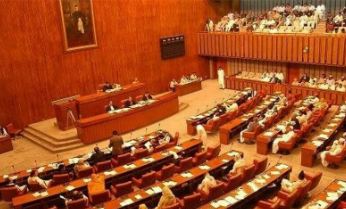
ISLAMABAD, OCT 29 (APP/DNA): The Supreme Court on Wednesday set aside the Peshawar High Court’s order in the Shibli Faraz case and directed the High Court to decide the pending petition after hearing all parties. The apex court also rejected a plea to stop the Senate election.

A five-member constitutional bench headed by Justice Amin-ud-Din Khan heard the appeal filed by Senator Shibli Faraz against the Peshawar High Court’s decision to indefinitely adjourn proceedings on his petition challenging the Election Commission’s notification that de-seated him.

Barrister Gohar, representing Shibli Faraz, argued that since the Election Commission had de-seated his client, the court should issue a stay order and suspend polling for the vacant Senate seat.

Justice Hasan Azhar Rizvi asked how many seats were up for election, and Barrister Gohar replied that polling was being held for only one.

The bench observed that the court would not interfere in the election process and dismissed the request to halt the polling.

Counsel for the Election Commission contended that the petitioners must surrender before seeking relief.

Justice Muhammad Ali Mazhar asked whether the Peshawar High Court had ruled on the case’s maintainability, to which Barrister Gohar replied that it had not been dismissed.

Justice Jamal Mandokhail remarked that the matter related to fundamental rights, while Additional Attorney General Amir Rehman argued that such rights were linked to punishment, noting that the petitioners had been convicted by an anti-terrorism court.

Justice Hasan Azhar Rizvi observed that the High Court should have issued a brief order instead of writing a 31-page judgment.

The Supreme Court then set aside the Peshawar High Court’s decision, disposed of the appeal, and directed the High Court to hear both sides and decide the pending petition on merit.

Stay Connected

64FansLike
60FollowersFollow

Latest Reviews

Exchange Rates

USD - United States Dollar
EUR
1.14
GBP
1.34
AUD
0.69
CAD
0.70