Home Blog Page 41

NIMA launches comprehensive South Asia maritime security volume

NIMA launches comprehensive South Asia maritime security volume

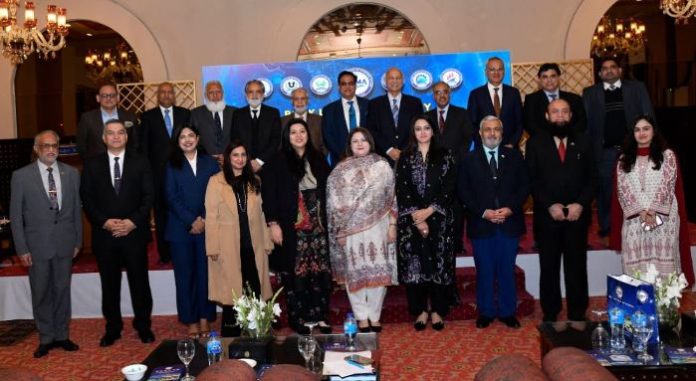
ISLAMABAD, DEC 1 /DNA/ – The National Institute of Maritime Affairs (NIMA) launched its seminal publication “South Asia Maritime Security Paradigm” at an impressive ceremony held in Islamabad today. The volume brings together comprehensive analyses by leading international and national scholars examining the evolving security landscape of the Indian Ocean Region.

Senator Mushahid Hussain Syed graced the occasion as the Chief Guest, emphasizing Pakistan’s maritime potential and the imperative of ocean-conscious strategic thinking. Ambassador Sohail Mahmood, Director General of the Institute of Strategic Studies Islamabad (ISSI), delivered the keynote address, contextualizing the publication’s strategic significance for regional stability and economic prosperity.

Vice Admiral Dr. Ahmed Saeed (Retd), outgoing President NIMA, outlined the publication’s genesis and the institute’s commitment to advancing Pakistan’s maritime consciousness. Rear Admiral Javaid Iqbal, incoming President NIMA, expressed gratitude to contributing authors, reviewers, and distinguished guests.

The ceremony was attended by Admiral Aziz Mirza, former Chief of thye Naval Staff as the Guest of Honour, members of the diplomatic corps, senior government officials, academia, think tanks, strategic analysts, and maritime professionals. The publication addresses traditional and non-traditional security threats, technological advancements, climate imperatives, and governance frameworks shaping South Asia’s maritime future with lessons for Pakistan.

This landmark work positions Pakistan’s maritime discourse at the forefront of regional strategic literature, providing essential insights for policymakers and practitioners navigating the complex Indo-Pacific security environment.

OGRA raises LPG price for December by Rs.87 per cylinder

OGRA raises LPG price for December by Rs.87 per cylinder

ISLAMABAD, Dec 1 /DNA/ – The Oil and Gas Regulatory Authority (OGRA) has notified the maximum Price of LPG, effective December 01 2025, as under;

Notified LPG Producer prices Rs. / Ton Rs / 11.8 kg Cylinder
December-2025 ( w.e.f  01-12-2025)      167,691.40          1,978.76
November -2025       160,300.431,891.55
Increase / (Decrease)         7,390.97              87.21
   
Notified LPG Consumer prices Rs. / Ton Rs / 11.8 kg Cylinder
December-2025 ( w.e.f  01-12-2025)      208,991.402,466.10
November -2025       201,600.432,378.89
Increase / (Decrease)         7,390.97              87.21

2.  The LPG price Notification for the month of December 2025 is readily available at OGRA website www.ogra.org.pk.

3. The LPG producer price is linked with Saudi Aramco-CP and US$ dollar exchange rate. As compared to previous month Saudi Aramco-CP has increased by 4.93%. The average Dollar exchange rate has decreased by 0.15% resulting to increase in LPG consumer price by Rs.87.21/11.8 kg cylinder (3.66%). The per Kg increase in LPG consumer price is Rs.7.39.

CDA, ADB discuss smog mitigation and air quality improvement

CDA, ADB discuss smog mitigation and air quality improvement

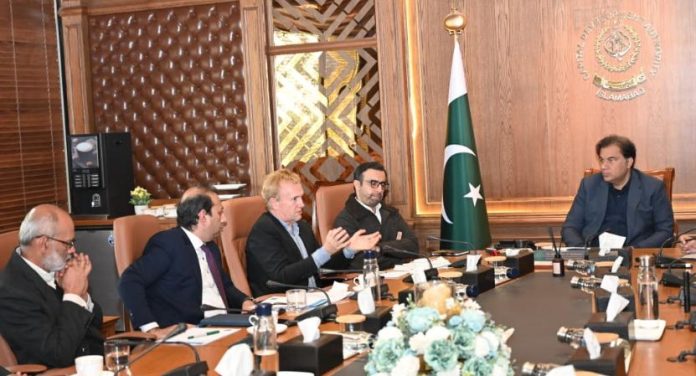
ISLAMABAD, Dec 1 /DNA/ – Chairman Capital Development Authority (CDA) and Chief Commissioner Islamabad, Muhammad Ali Randhawa, held a meeting with a delegation from the Asian Development Bank (ADB) on Monday at the CDA Headquarters regarding smog mitigation, environmental protection and the air quality improvement in Islamabad. ADB delegation included Senior Financial Sector Economist Andrew McCartney and the ADB’s urban team. The meeting discussed smog mitigation, elimination of air pollution and environmental protection in Islamabad.

Chairman CDA Muhammad Ali Randhawa said that environmental protection, including the reduction of smog and air pollution in Islamabad is among the top priorities and in this regard, work is underway on various eco-friendly projects including policy measures.

Chairman CDA said that the CDA has adopted the regulations of the National Energy Efficiency and Conservation Authority (NECA) in its Electric Vehicle (EV) policy. He said that comprehensive measures are being taken to promote the establishment of electric vehicles and charging stations in Islamabad. Chairman CDA said that the CDA has introduced 160 environment-friendly electric feeder buses in Islamabad using its own resources. He said that vehicle carbon emission tests are being conducted to control air pollution in the transport sector and work is underway to install more monitoring stations in Islamabad for an authentic Air Quality Index.

Chairman CDA said that a modern solid waste management project will be introduced for garbage, which is one of the factors contributing to air pollution in Islamabad city. He said that in this regard, a feasibility study for establishing a scientific landfill site in Islamabad is being initiated.

Chairman CDA said that various projects are under consideration to make the acquisition of carbon credits possible in environment-friendly projects in Islamabad. He said that ADB can provide its technical support to enable green financing for acquiring carbon credits in Islamabad.

ADB delegation said that ADB will complete its consultation process and provide its technical support regarding various eco-friendly initiatives. Delegation further said that ADB is providing its technical assistance in preparing Islamabad’s first Transport Master Plan and the Inter-City Bus Terminals project.

The meeting agreed to further enhance cooperation between ADB and CDA for smog mitigation, the air quality improvement and environmental protection.

Chairman CDA Muhammad Ali Randhawa said that the purpose of these measures is to control air pollution in Islamabad and ensure the provision of a healthy and high-quality life for the citizens. He further said that the partnership between ADB and CDA will not only improve the environmental standards of Islamabad but will also enable the city to become an excellent model of sustainable development for the entire Pakistan.

Pakistani Navy evacuates family with baby from Sri Lankan floods

Pakistani Navy evacuates family with baby from Sri Lankan floods

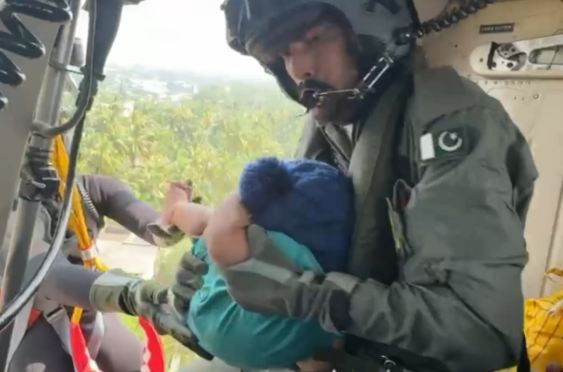
ISLAMABAD, DEC 1 /DNA/ – During the ongoing Humanitarian Assistance and Disaster Relief (HADR) efforts in Sri Lanka, the embarked Z-9 helicopter on Pakistan Navy Ship SAIF conducted rescue operations in the flooded Kotikawatta area. During search and rescue operation a stranded family for the last five days, including a 7-month-old infant were safely recovered from a rooftop. Subsequently, the evacuated family was transported to safe location in coordination with local authorities. The successful conduct of rescue operation is a testimony of Pakistan Navy’s professionalism and commitment to international obligations.

Pakistan Navy Ship SAIF with embarked helicopter is on overseas deployment to Sir Lanka.

IHC rejects ex-wildlife board chair’s case dismissal plea

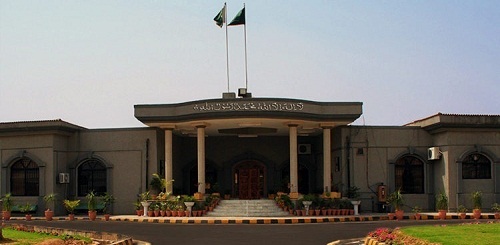
ISLAMABAD, DEC 1 /DNA/ – The Islamabad High Court (IHC) on Tuesday rejected a petition filed by former chairperson of the Wildlife Management Board, Raina Saeed Khan, seeking the dismissal of a corruption case registered against her by the Federal Investigation Agency (FIA).

Justice Muhammad Azam Khan dismissed the plea to quash the case. A detailed written order outlining the reasons for the rejection will be issued at a later date.

This marks another legal setback for the former official. Earlier, on November 3, 2025, the same judge had rejected her application to stop the FIA’s inquiry into the matter.

Raina Saeed Khan had also approached the court with a separate request to prevent what she termed as “harassment” by the FIA. However, the IHC Registrar’s Office raised technical objections to this plea, which were subsequently upheld by the court. The Registrar’s Office questioned the legal basis of combining a request to prevent harassment with pleas for pre-arrest bail and protection from arrest.

The FIA had initiated a formal investigation against the former chairperson, which led to the registration of a case. The charges allege corruption and misuse of authority, resulting in a financial loss to the national exchequer.

The case will now proceed in accordance with the law following the high court’s decision to reject the petition for dismissal.

A Firestorm in India: Swamy’s Tweet Leaves Modi Exposed

A Firestorm in India: Swamy’s Tweet Leaves Modi Exposed

by Muhammad Mohsin Iqbal

Public life, especially in South Asia, has long been shaped by the uneasy intersection of personal morality, political authority, and the public’s expectation of virtue from those who govern. In recent days, Indian politics has been unsettled by a series of remarks posted on X (formerly Twitter) by veteran politician and economist Subramanian Swamy. In one such post, Swamy suggested that “It will be difficult for Modi to avoid the Blackmail of US and Modi, using the ugly sex revelations of Hardip Puri, Modi’s former Cabinet Minister. Modi claims to be a Brahmachari, but in truth he is a Bachelor who has had flings with women, willing or unwilling. The US agencies have the photos to blackmail. This hurts India’s national interests”.

The idea that the personal life of a national leader might intersect with matters of state is neither new nor unique to India. Yet Swamy’s intervention carries weight because it comes from a figure long known for his insider knowledge, frankness, and unpredictability. Whether one agrees with his assertions or dismisses them as political provocation, they have undeniably opened a debate on the delicate boundaries between private conduct and public responsibility. In a geopolitical environment as complex as India’s, even the perception that a leader could be susceptible to external manipulation becomes a matter of strategic concern.

India’s political history offers numerous examples where the personal lives of national icons were woven—fairly or unfairly—into political narratives. Mahatma Gandhi’s lifelong experiments with celibacy remain a subject of historical debate, puzzling admirers and critics alike. His unconventional practices, carried out in the pursuit of spiritual discipline, were questioned even by his close associates. Jawaharlal Nehru’s deep and openly affectionate friendship with Edwina Mountbatten became a recurring theme in popular writing, academic discussion, and political gossip, despite the absence of credible evidence suggesting impropriety. Later decades saw regional leaders ensnared in scandals, some grounded in fact, others designed for political takedowns. The Indian electorate, while often tolerant of human imperfections, has not been indifferent to the moral halo traditionally expected of its leaders.

What differentiates the present moment from earlier eras is the unprecedented power of digital communication. A comment posted online—whether measured or reckless—can shape global perceptions within minutes. Allegations that once required months of political manoeuvring now travel instantly, creating narratives that policymakers, diplomats, and security institutions must urgently address. Even if the underlying claims lack verification, the velocity of modern discourse ensures that their political impact precedes their factual scrutiny.

From a national security perspective, Swamy’s implication—that hypothetical personal secrets could be used by foreign powers to influence India’s highest office—raises disturbing questions. It suggests a scenario in which statecraft might be compromised not by ideology or policy failure but by the vulnerabilities of individuals. Such a prospect, even as a theoretical concern, invites deeper reflection on the institutional safeguards that protect democratic governance.

History shows that scandals—real, perceived, or fabricated—often become turning points in Indian politics. Indira Gandhi’s Emergency-era decisions, Rajiv Gandhi’s entanglement in the Bofors controversy, and the scandals involving various chief ministers all shifted political trajectories, in some cases altering the direction of the nation. When moral allegations become entangled with political contestation, they seldom remain confined to private criticism; they spill into questions of governance, legitimacy, and public trust.

The current episode, driven by Swamy’s comments, may influence the future of Indian politics in several possible ways. First, it may intensify internal tensions within the ruling party, especially if the controversy fuels debates over leadership direction, succession, or ideological purity. Second, it may embolden opposition parties to frame new narratives around transparency, accountability, and character, themes that have often resonated with India’s middle and urban classes. Third, it may shape India’s diplomatic posture if foreign governments perceive political fragility or internal discord at the top.

Yet beyond the immediate political ripples lies a broader truth; modern democracies often expect their leaders to embody moral perfection, even though history repeatedly shows that statesmen, like all human beings, are complex, flawed, and sometimes contradictory. The danger lies not in acknowledging this humanity but in allowing unverified allegations to overshadow critical issues of policy, governance, and national strategy. When political discourse becomes dominated by personal insinuation rather than substantive debate, the democratic process itself is diminished.

India today aspires to great-power status, seeking a central role on the global stage. Such ambition requires political stability, institutional maturity, and a leadership that commands confidence both domestically and internationally. Allegations—whether rooted in fact or born of rivalry—must therefore be handled with seriousness, transparency, and due process. Neither blind acceptance nor dismissive rhetoric strengthens the nation; only truth, accountability, and institutional robustness do.

Whether Swamy’s remarks prove to be a fleeting controversy or a catalyst for deeper political shifts will become clear in time. What already stands revealed, however, is the immense power of digital communication to reshape national conversations and the enduring importance of integrity—both perceived and real—in the life of a democracy. In India’s political theatre, where personalities are as consequential as policies, the intersection of private life and public duty will remain a subject of scrutiny, speculation, and debate for years to come.

Population: the silent crises

Population: the silent crises

Dr. M Ali Hamza

Population management is often misunderstood as an attempt to control reproduction.It is rather a broader strategy to harmonize population growth with national resources, economic capacity, and quality of life. It includes shaping demographic trends through education, health strategies, urban planning, economic incentives, and behavioral change, aiming not merely for fewer people, but for better-prepared, better-educated, and more productive populations.

Many countries faced population challenges in recent past and tackled them effectively. For instance,China initially used restrictive policies like the one-child law, but in recent years shifted to encouraging births due to aging demographics, showing that population policies must adapt over time.Bangladesh successfully reduced its fertility rate through grassroots education, community-based female health workers, and empowering women economicallynot just by providing contraceptives.Iran drastically lowered fertility rates in the 1990s through premarital family planning courses, high literacy among women, and widespread reproductive health awareness.

European countries, Japan, and South Korea today struggle with shrinking populations, raising an important lesson: the objective is balance, not simply reduction. The global experience demonstrates that sustainable population management is not about coercion, it is about informed decision-making, long-term planning, gender empowerment, and economic alignment.

Pakistan is now the 5th most populous country in the world, with over 240 million citizens, and a youth-heavy demographic. While a young population can be a strategic asset, it becomes a burden when job creation does not match workforce growth, education systems are overstretched, urban infrastructure is overloaded, healthcare resources are limited and agricultural land shrinks while food demand rises

Pakistan’s population grows by roughly 2% annually, meaning we add around 4 million people each year, equivalent to another Karachi every decade. No economy, however ambitious, can absorb such increases without pressure on housing, employment, and public services. For Pakistan, the issue is not just population size; it is quality. Too many births occur in households unable to afford education, healthcare, or nutrition perpetuating cycles of poverty.

Why did past policies and population management plans fail? Pakistan has introduced many policies, written many frameworks, and signed many declarations. Yet implementation lags for key reasons like i) cultural and religious sensitivities; as family planning is often misunderstood as anti-family or anti-faith, ii) low female literacy; studies have established the fact that women’s empowerment strongly correlates with reduced fertility, iii) weak health communication: policies exist on paper but don’t reach rural communities effectively, iv) inconsistent political will because government restarts the conversation rather than continuing a long-term roadmap, v) perception of children as economic security; as in poor households, more children mean more potential earners, vi) rural-urban disparity; stats show that urban fertility is declining, while rural fertility remains high.Though each reason is a contributing factor and needs serious deliberation, but in the context of Pakistan cultural/religioussensitivities and women empowerment appears to be a larger contributor to the problem.

Our policy makers and executors mustrecognize the fact that population management is far more than distributing pills, devices, or running isolated and irregular campaigns. It is about changing mindset, and indeed it never happens with a magic wand.

Changing the mindset of a society is a gradual, layered process that involves education, leadership, cultural evolution, and real-life demonstration of improved outcomes. It begins with awareness, where people are introduced to new perspectives through public dialogue, evidence-based communication, media engagement, and educational content. The next step is community-level engagement, because mindsets rarely shift through national messaging alone. Trusted figures such as teachers, religious scholars, community elders, and healthcare workers play a central role in reshaping norms. When messages are delivered through familiar voices, they carry greater legitimacy and acceptance. Then comes policy alignment and leadership example. Government programs, school curricula, economic incentives, and local support systems need to reinforce the desired values: it signals that the mindset shift is not just aspirational but institutional. Another critical phase is real-life reinforcement. When smaller families witness improved household stability, better child development, financial relief, and upward mobility, these visible improvements validate the mindset shift. Others observe these results and replicate the choices. Finally, the mindset truly transforms when it becomes self-sustaining; when societal norms, peer expectations, and cultural identity begin endorsing the new thinking. Over time, what once required persuasion becomes common sense, and society internalizes a new vision of progress, opportunity, and responsible planning. Look at history, social mindset never changed with a magic wand, but with clarity, commitment and consistency.

The big question is, who is going to do it? And simple answer is ‘WE’, the people.

Author is a strategy and communication professional, and can be reached at [email protected]

HEC expos introduce BD students to Pakistan-Bangladesh knowledge corridor

HEC expos introduce BD students to Pakistan-Bangladesh knowledge corridor

Pakistan to Award 500 Allama Muhammad Iqbal Scholarships to BD Students

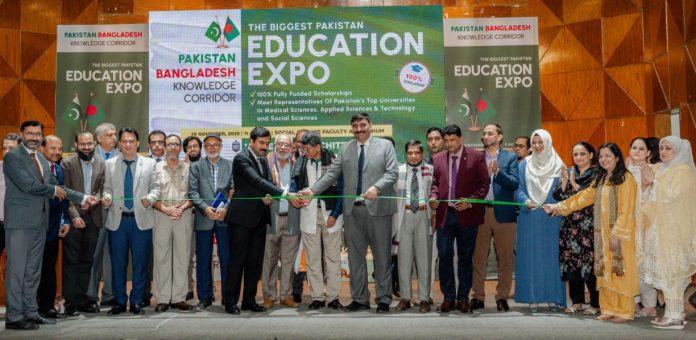
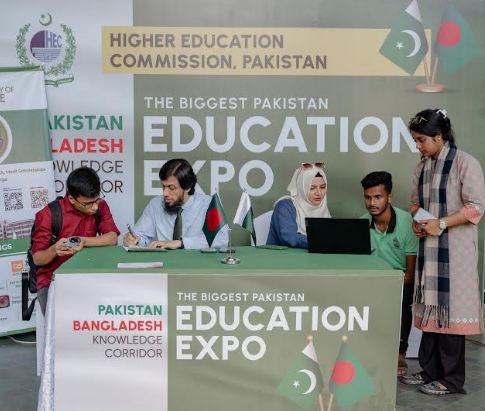
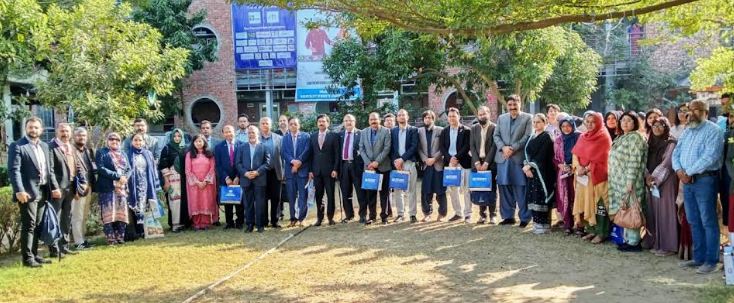
Islamabad/Chittagong, DEC 1 /DNA/ – A delegation of Higher Education Commission (HEC), Pakistan and 15 leading Pakistani universities held education Expos at the Southern University and the University of Chittagong, Bangladesh, aiming to introduce students to higher education opportunities in Pakistani universities under the Pakistan-Bangladesh Knowledge Corridor.

Prof. Dr. Sarwar Jahan, the founder of Southern University, welcomed the HEC and universities delegation to the Southern University, where a seminar was held to share comprehensive information on the opportunities available for Bangladeshi students to pursue higher studies in Pakistan, covering scholarship options, application processes, faculty and student exchange programmes, and prospects for collaborative research. Vice Chancellor SU Dr. Sharif Ashrafulzzaman, the university’s top management and deans, and faculty members attended the seminar. Following the seminar, an educational expo was organised for the Southern University students to introduce them to the scholarship and academic opportunities available in Pakistan. Hundreds of students visited the booths of participating Pakistani universities to learn about admission opportunities, academic programs, and available scholarships.

Vice Chancellor University of Chittagong Dr. Muhammad Yeahia Akhter, along with Pakistan’s Deputy High Commissioner, Mr. Muhammad Wasif, inaugurated the Expo at University of Chittagong. Faculty members, local media representatives, and a large number of students and their parents visited the Expo, where they were briefed about Pakistani universities and the opportunities for Bangladeshi students.

Education Expos are a key component of the Pakistan-Bangladesh Knowledge Corridor, through which the Government of Pakistan is offering 500 fully funded Allama Muhammad Iqbal scholarships via the Higher Education Commission (HEC) for Bangladeshi students to pursue higher education at Pakistan’s top-ranked institutions.

China, Pakistan to hold ‘Warrior-IX’ exercise

China, Pakistan to hold ‘Warrior-IX’ exercise

BEIJING, Dec 1 (DNA): From late November to mid-December, troops of the Chinese People’s Liberation Army Western Theater Command and the Pakistan Army will conduct the “Warrior-IX” joint counter-terrorism exercise in Pakistan, the Chinese Defense Ministry announced in a statement.

Focusing on the theme of “joint counter-terrorism clearance and strike operations,” the exercise aims to test and enhance the joint counter-terrorism capabilities of the two militaries and jointly safeguard regional peace and stability, according to the Chinese Defense Ministry statement.

Governor’s rule in KP being ‘seriously considered’: state minister

Governor's rule in KP being 'seriously considered': state minister

ISLAMABAD, NOV 30  – State Minister for Law Aqeel Malik said Friday that the federal government was “seriously pondering” over imposing a governor’s rule in Khyber Pakhtnukhwa (KP), citing poor governance, terrorism and border situation with Afghanistan.

“The situation in KP is evident to everyone, given the cross-border terrorism and governance issues,” he said while speaking on Geo News’ programme “Naya Pakistan”.

Malik said the federal government was evaluating the move in light of security and safety concerns, as well as national security priorities.

Criticising the provincial leadership, he said that KP Chief Minister Sohail Afridi and his team “badly failed” in ensuring effective governance and having a “workable situation” with the federation.

“They do not maintain coordination or cohesion with the federation,” he added.

The state minister cautioned that the province appeared to be moving toward governor’s rule, emphasising that such a measure was not unprecedented in Pakistan’s history.

Stay Connected

64FansLike
60FollowersFollow

Latest Reviews

Exchange Rates

USD - United States Dollar
EUR
1.17
GBP
1.34
AUD
0.67
CAD
0.73