Home Blog Page 406

Russian carries out underwater nuclear test

Russian carries out underwater nuclear test

Putin hails successful test of nuclear-powered Poseidon unmanned underwater vehicle, says it surpasses Sarmat missile

DNA

MOSCOW, OCT 31 — Russian President Vladimir Putin announced that a new test of the Poseidon unmanned underwater vehicle (UUV) equipped with a nuclear power unit was carried out the previous day, calling the trial a “tremendous success.”

Speaking during a visit to the Pyotr Mandryk Central Military Clinical Hospital, Putin said that on Oct. 28 the Poseidon was launched from a submarine, its booster engine activated, and then its onboard nuclear reactor started, propelling the vehicle for a period of time. He described the system as exceptionally compact, saying Poseidon’s reactor is roughly “a hundred times smaller” than a conventional submarine reactor and that the vehicle’s power “greatly exceeds” that of Russia’s intercontinental-range Sarmat missile.

“No other system in the world matches Sarmat, which is not yet on combat duty — though it will be in the near future,” Putin said, adding that Poseidon surpasses Sarmat in power and that, in his view, there are currently no means capable of intercepting the unmanned system. He also touted Poseidon’s speed and operational depth, asserting there is “nothing comparable” to it worldwide.

Putin framed the test alongside earlier remarks about other strategic systems, noting Poseidon’s compact reactor and asserting the trial marked a significant technological milestone.

The Kremlin statement did not provide technical data or independent evidence to substantiate the claims. Further details about the test — including duration, range, and technical specifications — were not released at the time of Putin’s remarks. Russian officials have previously described the Poseidon program as a strategic-capable, long-range UUV; however, independent verification of specific test results is typically limited.

ICCI greets Turkiye, vows to expand bilateral trade ties

ICCI greets Turkiye, vows to expand bilateral trade ties

ISLAMABAD, OCT 31: /DNA/ – Ambassador of the Republic of Türkiye to Pakistan, Irfan Neziroglu has said that Türkiye and Pakistan enjoy deep-rooted, brotherly relations which continue to strengthen with the passage of time. He emphasized that both countries share similar perspectives on major regional and global issues and that there exists vast potential to enhance bilateral trade and investment across multiple sectors.

The Ambassador expressed these views while talking to Tahir Ayub, Acting President of the Islamabad Chamber of Commerce and Industry (ICCI), on the occasion of the 102nd Republic Day celebration of Turkiye here in Islamabad.

The Ambassador, while accepting the invitation to visit the ICCI at the earliest possible opportunity, appreciated the Chamber’s proactive role in fostering trade, investment, and business linkages between the two brotherly nations. He noted that ICCI has been instrumental in promoting economic diplomacy and that there remains immense scope for further expansion of economic cooperation in sectors such as construction, tourism, technology, and renewable energy.

On his part, Acting President ICCI Tahir Ayub extended heartfelt congratulations to the Ambassador and the people of Türkiye on their Republic Day.  He apprised the Ambassador of ICCI’s initiatives as the premier representative body of the business community in the federal capital and highlighted the Chamber’s active engagement in promoting regional economic integration.

163 illegal Afghans detained

163 illegal Afghans detained

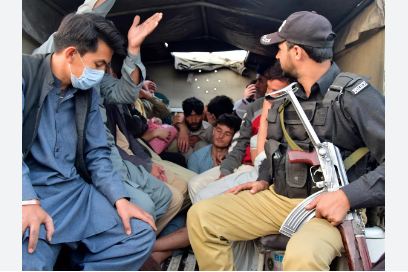
RAWALPINDI, OCT 31 (APP/DNA): The Rawalpindi Police on Friday continued their crackdown on illegally residing Afghan nationals and other foreigners, registering a total of 55 cases and detaining 163 Afghan nationals in the last three days.

According to a police spokesman, during the actions carried out on the instructions of the Punjab Government, 16 house owners were also arrested for renting out their properties to the Afghan nationals staying without legal documents. All detained foreigners had been shifted to the holding centre.

The spokesman said that the actions were taken by City, Pirwadhai, Waris Khan, Banni, New Town, Sadiqabad, Ratta Amral, RA Bazaar, Race Course, Civil Lines, Saddar Beroni, Dhamial, Naseerabad, Airport, Chaklala, Morgah, Taxila, Wah Cantt, Wah Saddar, Jatli, Rawat,Gujar Khan, Kallar Syedan and Mandra police stations.

He reiterated that citizens should not rent out their houses, shops or any other property to foreigners residing illegally, nor sell property to them. He further said that residents must also avoid giving their vehicles, rickshaws or other items to such individuals, and should refrain from engaging in business transactions or hiring them for employment.

Legally staying foreigners, he said, must ensure their registration with the relevant police station.

The spokesman urged citizens to remain vigilant and report any illegally residing foreign nationals to the police, assuring them that their identity would be kept confidential.

He said that public awareness messages were also being disseminated through social media and announcements in mosques to ensure compliance with the Punjab Government’s directives.

US signs 10-year defence agreement with India

US signs 10-year defence agreement with India

Framework is considered cornerstone for regional stability and deterrence, says Defence Sec Pete Hegseth

News Desk

NEW DELHI: The United States has signed a 10-year defence framework agreement with India, US Defence Secretary Pete Hegseth said on Friday.

The framework is considered a cornerstone for regional stability and deterrence, enhancing coordination, information sharing and technological cooperation between the two nations, Hegseth posted on X after a meeting with his Indian counterpart, Rajnath Singh. Hegseth and Singh were meeting for the first time since the United States imposed tariffs of 50% on Indian goods in August as punishment for New Delhi’s purchases of Russian oil.

The tariffs prompted India to pause purchases of US defence equipment, with the two sides expected to discuss on Friday a review of India’s plans to buy the military hardware.

“We have held telephonic conversations thrice. I am delighted to be meeting you in person on the sidelines of ADMM (ASEAN Defence Ministers’ Meeting – Plus: ADMM-Plus). On this occasion, I feel a new chapter will begin today with the signing of the Defence Framework…I am confident that under your leadership, India-US relations will further strengthen,” the ANI quoted Indian defence minister as saying.As Washington looks to tackle China’s growing assertiveness in the region, Hegseth is expected to meet the defence ministers of Indonesia, the Philippines and Thailand, among others, said an official, who spoke on condition of anonymity.

Delegations from Australia, New Zealand, South Korea and Russia are attending the meeting of defence ministers from the Association of Southeast Asian Nations.

President of the U.S. Critical Minerals Forum Calls on Finance Minister

President of the U.S. Critical Minerals Forum Calls on Finance Minister

Saifullah Ansar

ISLAMABAD, OCT 31 /DNA/ – Robert Louis Strayer II, President of the Critical Minerals Forum (USA), accompanied by H.E. Ms. Natalie Baker, Chargé d’Affaires of the United States, called on Federal Minister for Finance & Revenue at Ministry of Finance today. Senior officials from the Ministry of Finance and relevant departments also attended the meeting.

During the meeting, both sides discussed avenues of cooperation in the minerals and mining sector, strengthening supply-chain security, and encouraging responsible and sustainable investment in Pakistan’s critical minerals landscape.

Finance Minister welcomed the delegation and underscored Pakistan’s steady economic trajectory, noting improvements across macroeconomic fundamentals and governance reforms. “Our priority is fundamental fiscal hygiene-building the discipline where capital flows in, remains invested, and is secured through sound policies,” the Minister stated. “This foundation is now translating into improved sentiment and positive signals from international rating agencies.”

Finance Minister highlighted that Pakistan has embarked on deep-rooted structural reforms, including power sector restructuring, tax administration reforms, broadening of the tax base, and a roadmap for fiscal sustainability. He noted that the government is separating tax policy and administration functions by establishing a dedicated Tax Policy Unit within the Ministry of Finance to ensure improved governance and efficiency.

On privatisation and SOE reforms, Finance Minister shared that 24 state-owned enterprises have been referred to the Privatisation Commission as part of the government’s commitment to improve service delivery and enhance fiscal discipline.

Finance Minister also emphasized Pakistan’s strengthened geopolitical and economic partnerships, stating, “Pakistan today stands at a constructive intersection of global relationships—renewed momentum in Pakistan-U.S. ties, time-tested relations with China, and forward-looking strategic cooperation with the Kingdom of Saudi Arabia.”

Finance Minister stressed that Pakistan’s mineral and mining sector represents a transformational opportunity: “This offer Pakistan a pathway to shift from consumption-driven cycles to export-led growth. A strong minerals policy framework will help Pakistan break the cycle of periodic balance-of-payments pressures and reduce future reliance on multilateral support.”

Mr. Strayer shared that the Critical Minerals Forum, funded by the U.S. Government, works globally to support secure and transparent mineral supply chains for U.S. industry, particularly in emerging markets. He stated that the Forum focuses on rare and niche metals including copper and antimony and aims to de-risk investments from both financial and security perspectives. He reiterated the Forum’s commitment to support technology transfer, IP protection, and U.S. private-sector investor confidence.

The US delegation observed that the United States views Pakistan’s science, engineering, and mathematics talent as a competitive strength and acknowledged Pakistan’s potential to become a future hub for critical mineral development.

The Chargé d’Affaires noted the Embassy’s support for U.S. commercial engagement in Pakistan and emphasized the importance of ensuring strong investor confidence and enabling regulatory frameworks in the minerals sector.

Responding to queries, Finance Minister reaffirmed that Pakistan is working on important legal and regulatory reforms and will welcome structured proposals from the Critical Minerals Forum. “We encourage you to return with a detailed framework for collaboration. Pakistan will evaluate it with a view to facilitating responsible investment and ensuring mutual benefit,” the Minister said.

Finance Minister shared that he met multiple global financial institutions, including DFC and IFC, during recent engagements in Washington, which expressed interest in expanding investments in Pakistan. He appreciated the support of the U.S. Embassy in facilitating these engagements.

The meeting concluded with both sides expressing commitment to continued engagement and collaboration in the minerals sector, aligned with Pakistan’s economic reform agenda and shared objectives for sustainable development.

Saudi Arabia introduces new Umrah visa policy

Saudi Arabia introduces new Umrah visa policy

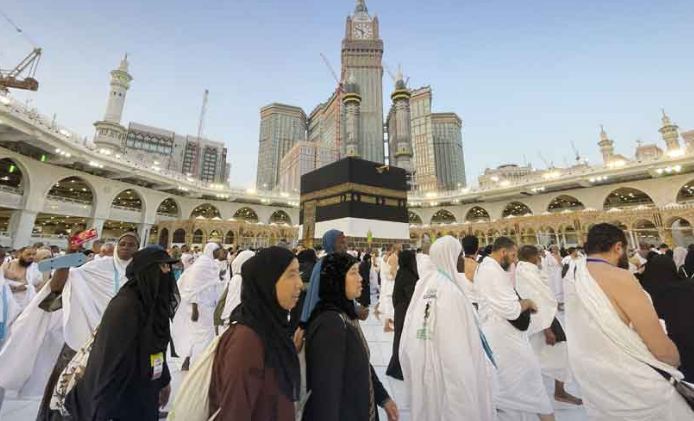
RIYADH, OCT 31: Saudi Arabia has introduced a new Umrah visa policy, reducing the entry period for pilgrims from three months to one month, Arab media reported on Friday.

The change is part of the Kingdom’s ongoing efforts to streamline visa procedures and regulate the influx of Umrah pilgrims more efficiently.

According to reports, the new visa policy may come into effect next week, pending formal implementation by Saudi authorities.

Visa cancellation if entry delayed
Under the revised policy, pilgrims must enter Saudi Arabia within one month of the Umrah visa being issued. Failure to do so will result in automatic cancellation of the visa, Arab media said.

Previously, Umrah pilgrims had a three-month window to enter the Kingdom after receiving their visa, providing greater flexibility for travel planning. The updated policy aims to improve coordination and management of pilgrimage arrivals, particularly during peak seasons.

Duration of stay
While the entry period has been shortened, the duration of stay inside Saudi Arabia remains the same. Pilgrims will still be allowed to stay for up to three months after entering the country, ensuring they have sufficient time to perform Umrah and visit the holy sites in Makkah and Madinah.

Officials have not yet released an official statement on the exact start date, but sources suggest the new Umrah visa rules will be implemented next week.

How Beijing Reshaped the U.S. Tariff Regime

Qamar Bashir

By Qamar Bashir

After months of tension, failures, and near breakdowns, the United States and China finally struck a landmark trade agreement that has reshaped the global balance of economic power. The negotiations culminated in Busan, South Korea, on October 30, 2025, where President Donald J. Trump and President Xi Jinping met face to face to seal a compromise that blended hard politics with pragmatic economics. What began as another episode in Trump’s “America First” campaign ended as a stunning reversal of Washington’s long-held trade strategy. For the first time in decades, the United States found itself negotiating not from a position of dominance, but parity—perhaps even vulnerability—with an economic rival that refused to bow to pressure.

The Busan summit produced an agreement that went far beyond tariff adjustments. It marked a recalibration of two superpowers’ economic engagement, with provisions covering tariff reductions, rare-earth exports, fentanyl-precursor chemicals, and agricultural trade. The outcome reflected necessity as much as diplomacy.

At the center of the breakthrough was a U.S. pledge to cut its combined tariff rate on Chinese imports from around 57 percent to approximately 47 percent, the first major rollback since Trump took over. The move signaled a pivot from confrontation to partial de-escalation and was hailed by economists as a lifeline for world trade.

In return, China suspended new restrictions on rare-earth mineral exports for at least one year, with an understanding that the suspension could be routinely extended. For Washington, this was no small concession. Rare earths—17 metallic elements critical to advanced technologies—form the backbone of America’s semiconductor, defense, and electric-vehicle industries. More than 70 percent of global production and 85 percent of refining capacity lie in Chinese hands, and when Beijing curbed exports in retaliation to earlier tariffs, it had paralyzed entire sectors of U.S. manufacturing. Restoring that supply flow was a strategic victory disguised as diplomacy.

Pressure on the White House had been mounting for months. Tech corporations and automakers warned of imminent shutdowns. The Pentagon privately admitted that major defense contractors depended on Chinese neodymium and dysprosium magnets for missile guidance and radar systems.

A U.S. Geological Survey report had cautioned that rebuilding a domestic supply chain could take up to ten years and cost more than $80 billion. Faced with that reality, Trump’s negotiators entered Busan with fewer cards than before, and Beijing knew it. Yet rather than triumphalism, China played its hand with deliberate restraint, focusing on pragmatism over posturing. Xi Jinping arrived at the summit not to lecture but to stabilize, projecting the tone of a statesman rather than a strategist of revenge.

Alongside the tariff cuts and rare-earth suspension came a surprising humanitarian dimension: a bilateral accord on fentanyl-precursor chemicals. China agreed to tighten monitoring of the compounds fueling America’s opioid epidemic, and in return, the U.S. halved its “fentanyl tariff” from 20 to 10 percent.

Xi also announced the resumption of large-scale Chinese purchases of American soybeans and other farm products, a symbolic win for U.S. farmers in the Midwest who had borne the brunt of earlier tariff wars. For Trump, that commitment provided domestic political relief; for Xi, it reaffirmed China’s leverage as the indispensable buyer in a fragile global food chain.

The meeting’s choreography reflected contrasting political cultures but a mutual understanding of necessity. Trump’s exuberant declaration that the talks were “twelve out of ten” was classic self-promotion, but analysts quickly noted the absence of concrete enforcement mechanisms. It was a deal built on goodwill and fatigue rather than trust.

Taiwan and semiconductor restrictions—particularly on the Nvidia Blackwell chip—were consciously excluded from discussion, a recognition that overloading the agenda could derail fragile progress. The leaders instead opted for a narrow corridor of cooperation, deferring confrontation to another day.

Another novel feature of the accord was its annual review mechanism, which replaced the rigidity of long-term treaties with a rolling, year-by-year renegotiation process. Rather than securing permanent peace, both sides built a framework of perpetual bargaining—flexible enough to adjust to political cycles yet risky enough to keep markets guessing.

It institutionalized uncertainty as the new normal, but also embedded the principle of dialogue into the heart of competition. For Trump, it ensured headlines and leverage; for Xi, it prevented the U.S. from dictating fixed terms that could constrain China’s long-term strategy. Both saw advantage in impermanence.

Markets reacted swiftly. The Baltic Dry Index stabilized, Pacific shipping surged, and global equities rose as investors sensed a return to predictability. The IMF projected a 0.4 percent boost to global GDP in 2026, primarily from revived trade flows and restored supply-chain continuity.

Analysts described the accord as a “pause, not peace.” It de-escalated the confrontation without resolving its causes. Beneath the smiles, the rivalry over technology, ideology, and global influence remained untouched. But Busan proved that rivalry need not mean rupture.

The deeper significance of the summit lay in what it revealed about the world’s economic transition. The age of laissez-faire globalization is fading. What emerged in Busan was the architecture of a managed economy—a hybrid system in which trade is weaponized yet indispensable, competitive yet cooperative.

America’s “America First” doctrine has evolved into “America Negotiates First,” while China’s “dual-circulation” model has shifted toward selective globalization. The WTO, once the arbiter of free trade, now stands eclipsed by the pragmatism of direct, leader-to-leader diplomacy. Every commodity—from semiconductors to soybeans—has become a bargaining chip in a global chess game where economic interdependence replaces ideology.

Yet the Busan accord also offered a rare glimpse of statesmanship amid rivalry. Xi Jinping’s calm assertion that “dialogue is better than confrontation” signaled a tactical but genuine openness. Trump, for his part, recognized—perhaps reluctantly—that economic coercion had reached its limits. Both leaders understood that in a world of intertwined supply chains, neither can thrive by isolating the other. The agreement thus stands as a testament not to friendship, but to realism: two adversaries choosing stability over escalation because chaos serves neither.

As the first container ships carrying newly authorized rare-earth cargoes departed Chinese ports, markets exhaled. The scene encapsulated the fragile peace that now defines global commerce—an uneasy equilibrium between competition and cooperation. The Busan agreement did not end the U.S.–China rivalry, but it transformed its character. It turned open confrontation into managed coexistence and replaced threats with transactions. The world may still be divided by politics, but it is bound by necessity. And in that necessity lies the quiet triumph of diplomacy over dominance—a reminder that in the twenty-first century, power belongs not to those who shout the loudest, but to those who can learn, at last, to deal.

By Qamar Bashir

Press Secretary to the President (Rtd)

Former Press Minister, Embassy of Pakistan to France

Former Press Attaché to Malaysia

Former MD, SRBC | Macomb, Michigan, USA

Trump says he’s ordered US to start nuclear weapons testing

Washington, Oct 30 President Donald Trump said Thursday he had ordered the Pentagon to start nuclear weapons testing on a level with China and Russia — just minutes before opening a high stakes summit with Chinese leader Xi Jinping.
The move comes after Russian President Vladimir Putin said Wednesday that Moscow had successfully tested a nuclear-capable, nuclear-powered underwater drone, in defiance of Washington’s warnings.
“Because of other countries testing programs, I have instructed the Department of War to start testing our Nuclear Weapons on an equal basis,” Trump wrote in a Truth Social post that specifically referenced Russia and China.
Trump also noted the United States has more nuclear weapons than any other country, praising his own efforts to do “a complete update and renovation of existing weapons.”
He added that “Russia is second, and China is a distant third, but will be even within five years.”
Trump did not provide further details on the testing except that the “process will begin immediately.”
Trump is in South Korea to meet with Xi, as the leaders of the world’s top two economies come face-to-face for the first time in the Republican president’s second term.

RCCI, South African envoy discuss new avenues for trade, investment and green energy cooperation

RAWALPINDI, October 30 The Rawalpindi Chamber of Commerce and Industry (RCCI) on Thursday hosted Rudolph Pierre Jordaan, Acting High Commissioner of the Republic of South Africa, to explore new avenues of bilateral trade, investment and industrial collaboration between Pakistan and South Africa.

RCCI President Usman Shaukat, Senior Vice President Khalid Farooq Qazi and Vice President Fahad Barlas warmly received the distinguished guest at the Chamber. The meeting was also attended by members of the Executive Committee and a large number of RCCI members representing diverse sectors.

During the session, President Usman Shaukat briefed the envoy on RCCI’s initiatives to promote business connectivity, industrial growth, and export diversification. He expressed optimism about expanding cooperation in pharmaceuticals, energy, renewable energy, and tourism, while underlining the need for more frequent high-level exchanges between Pakistan and South Africa to enhance trade and technical collaboration.

He said South Africa is Pakistan’s largest trading partner in Sub-Saharan Africa, accounting for almost one-fourth of Pakistan’s total trade with the continent. Likewise, South Africa’s exports to Pakistan represent nearly 10 percent of its total exports to Asia, reflecting strong trade potential between the two countries.

Highlighting the Chamber’s role in connecting the business communities of both nations, Shaukat stressed the importance of skill development, investment facilitation, and sustainable partnerships to unlock untapped opportunities in emerging markets.

In his remarks, Acting High Commissioner Rudolph Pierre Jordaan underscored the historic and friendly relations between South Africa and Pakistan, dating back to the establishment of diplomatic ties in 1994. He outlined South Africa’s diverse economic landscape, emphasizing opportunities in renewable energy, mining technology, automotive manufacturing, agro-processing, logistics, and pharmaceuticals.

He said South Africa, being Africa’s most industrialized economy, enjoys preferential access to major global markets through multiple trade agreements offering a strategic advantage for Pakistani investors seeking regional expansion.

Jordaan invited Pakistani entrepreneurs to explore joint ventures in green hydrogen, natural gas, critical minerals, and new energy vehicles (NEVs), highlighting these as key growth areas under South Africa’s national development agenda.

The meeting concluded with an interactive discussion on trade facilitation and potential business partnerships, followed by the exchange of mementos, symbolizing the Chamber’s commitment to deepening economic engagement between Pakistan and South Africa.

Over 100 killed in Rio police crackdown on powerful narco gang

Rio de Janeiro, Brazil, Oct 30 Residents of a Rio de Janeiro community lined up their dead in harrowing scenes Wednesday after Brazil’s bloodiest police raid killed at least 119 people, spotlighting the city’s controversial war against drug gangs entrenched in poor neighborhoods.
President Luiz Inacio Lula da Silva called for action against organized crime that does not endanger police or civilians, as Brazil’s security challenges were laid bare just days before it hosts COP30 UN climate talks in the Amazon.
Families of the dead decried what they described as executions by police, while the state government hailed a successful operation against a powerful criminal group that has taken over large swaths of Rio de Janeiro.
The divisive police raid exposed the violent underbelly of a city beloved by tourists for its idyllic beaches and vibrant culture.
State authorities said the provisional death toll now stood at 119, including 115 suspected criminals and four police officers.
“We cannot accept that organized crime continues to destroy families, oppress residents, and spread drugs and violence throughout the cities,” Lula wrote on X.
“We need coordinated work that strikes at the backbone of drug trafficking without putting innocent police officers, children, and families at risk.”
The veteran leftist, 80, is seeking a fourth term in office in the 2026 elections in which Brazil’s security challenges are expected to be a major campaign issue.
He sent his justice minister Ricardo Lewandowski to Rio de Janeiro for a meeting with right-wing state governor Claudio Castro to offer cooperation from the federal government.
Lewandowski told a press conference he had offered to aid Rio to “overcome this security crisis as quickly as possible.”

              - 'They slit my son's throat' -


              A day after the police operation paralyzed the city, residents of the Complexo da Penha favela recovered dozens of bodies from a forest on its outskirts, including one that was decapitated, AFP journalists witnessed.
              "They slit my son's throat, cut his neck, and hung the head from a tree like a trophy," said Raquel Tomas, the mother of the 19-year-old who was found decapitated.
              "They executed my son without giving him a chance to defend himself. He was murdered," she told AFP, her voice shaking.
              "Everyone deserves a second chance. During an operation, police should do their job, arrest suspects, but not execute them," Tomas added.
              Lawyer Albino Pereira Neto, who represents three families that lost relatives, told AFP some of the bodies bore "burn marks" and that a number of those killed had been tied up.
              Some were "murdered in cold blood," he said.
              The raid also drew alarm from abroad.
              UN chief Antonio Guterres was "greatly concerned" by the number of casualties, his spokesman Stephane Dujarric told reporters.
              The Office of the United Nations High Commissioner for Human Rights said it was "horrified" and called for "swift investigations."
              Supreme Court Justice Alexandre de Moraes summoned Castro to a hearing on Monday to explain the police actions.

Stay Connected

64FansLike
60FollowersFollow

Latest Reviews

Exchange Rates

USD - United States Dollar
EUR
1.14
GBP
1.33
AUD
0.69
CAD
0.70