Home Blog Page 404

UN accuses US of breaching int’l law with deadly airstrikes on boats in Caribbean & Pacific

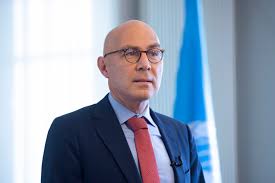
UNITED NATIONS, Nov 01 Airstrikes carried out by the United States against alleged drug trafficking boats in the Caribbean and Pacific have drawn sharp criticism from the UN High Commissioner for Human Rights, Volker Turk, who said they “violate international human rights law” and must stop immediately.

More than 60 people have reportedly been killed in the continuing series of attacks since early September “in circumstances that find no justification in international law,” Volker Turk said in a statement.

He urged the US to halt its “unacceptable” operations and take measures to prevent the “extrajudicial killing of people aboard these boats, whatever the criminal conduct alleged against them.”

The United States has defended the operations as part of its ongoing efforts to combat drug trafficking and terrorism, asserting that they fall within the framework of international humanitarian law.

Turk rejected that argument, stressing that countering illicit drug trafficking is a law-enforcement matter, governed by careful limits on lethal force set out in international human rights law.

He emphasized that the intentional use of lethal force is lawful only as a last resort when individuals pose an imminent threat to life.

“Based on the very sparse information provided publicly by the US authorities, none of the individuals on the targeted boats appeared to pose an imminent threat to the lives of others or otherwise justified the use of lethal armed force against them under international law,” Mr Türk said.

The High Commissioner called for prompt, independent and transparent investigations into the reported attacks.

While acknowledging the serious challenges posed by drug trafficking, Turk urged the US to ensure that all counter-narcotics operations respect international law, including the treaties to which it is a party.

“The United States should investigate and, if necessary, prosecute and punish individuals accused of serious crimes in accordance with the fundamental rule-of-law principles of due process and fair trial, for which the US has long stood,” he added.

Romanian envoy meets KCCI president, explore new trade opportunities

DNA

ISLAMABAD, Nov 01 Romanian Ambassador to Pakistan Dr. Dan Stoenescu met with Karachi Chamber of Commerce and Industry (KCCI) President Muhammad Rehan Hanif to discuss expanding trade and investment cooperation between the two countries.

Both sides agreed to promote stronger business ties and explore new areas for collaboration, said in a press release issued here.

The meeting, held over a luncheon at the KCCI office, focused on identifying potential sectors for joint ventures and enhancing bilateral economic connectivity.

Dr. Stoenescu was accompanied by Deputy Head of Mission Eduard Preda, Visa Consul Christian Coroma, and Consul General Adrian.

Representatives of the Pakistan Romania Business Council (PRBC) also attended the meeting, including Chairman Sohail Shamim Firpo and Advisor and Chief Operating Officer Atif Farooqi.

Speaking at the occasion, former KCCI President and Vice Chairman of the Businessmen Group (Urdu Group), Shamim Ahmed Firpo, said the increasing engagement between business communities of both countries signals a positive move toward expanding mutual trade potential.

He stressed the need for continuous dialogue between chambers and private sector representatives to achieve long-term economic cooperation.

Firpo noted that consistent institutional engagement will help develop sustainable commercial and industrial partnerships, enabling both sides to explore untapped trade opportunities.

President Rehan Hanif and Ambassador Stoenescu discussed ways to simplify trade procedures, promote business delegations, and organize exhibitions to highlight products and services from both countries.

The ambassador expressed Romania’s interest in strengthening its trade and economic relationship with Pakistan through active business-to-business cooperation.

Participants of the meeting agreed that economic diplomacy and direct collaboration between enterprises could significantly enhance trade volume.

Both sides reaffirmed their commitment to advancing frameworks that encourage joint ventures, technology transfer, and partnerships in key sectors such as manufacturing, energy, and services.

The meeting concluded with an understanding to maintain regular contact between the Karachi Chamber of Commerce, the Romanian Embassy, and the Pakistan Romania Business Council to follow up on proposed initiatives and facilitate future engagements.

Through continued interaction and collaboration, Pakistan and Romania aim to strengthen their economic partnership and open new avenues for trade and investment.

Pakistan’s base metal tools exports to China edge Up 2% in 2025By Zafar Hussain

BEIJING, Nov 01 Pakistan’s export of tools, implements, and cutlery made of base metals to China saw a modest but steady rise of two percent in the first nine months of 2025, totaling $5.67 million compared with $5.56 million during the same period last year, China’s customs data shows.

A closer look at the data shows a mixed performance across categories. According to data from the General Administration of Customs of China (GACC), Exports of pliers, including cutting pliers, pincers, and tweezers, led the sector with $2.66 million, up from $2.15 million last year impressive rise of 23%. In contrast, exports of scissors and tailor’s shears fell to $1.31 million from $1.43 million, while safety razor blades also declined slightly to $0.98 million.

Shipments of razors, including open-blade and safety types, stood at $0.52 million, marking a decrease from $0.63 million in 2024. Despite moderate overall growth, the trend reflects Pakistan’s continued competitiveness in China’s mid-range hardware and grooming tool markets reported by CEN.

Industry analysts suggest that enhancing design quality, introducing innovative product lines, and leveraging zero-tariff advantages under the China-Pakistan Free Trade Agreement could further boost Pakistan’s tool exports in the coming years.

Dodgers hold off Blue Jays 3-1 to force World Series game seven

Toronto, Canada, Nov 1 The Los Angeles Dodgers, fueled by a three-run third inning and another dominant pitching performance from Yoshinobu Yamamoto, beat the Toronto Blue Jays 3-1 on Friday to force a decisive World Series game seven.
The defending champion Dodgers had to dig deep to thwart the Blue Jays’ ninth-inning rally bid and knot Major League Baseball’s best-of-seven championship series at three games apiece.
They kept their bid for the first title repeat in 25 years alive while the Blue Jays will be aiming to claim their first title in 32 years when they host game seven on Saturday.
Dodgers pitcher Tyler Glasnow, scheduled to start game seven, stepped in with Blue Jays runners on second and third with no outs in the ninth.
He induced a fly out from Ernie Clement before Andres Gimenez hit into a game-ending double play.
“This is do or die,” Dodgers manager Dave Roberts said of sending in Glasnow after closer Roki Sasaki got into trouble.
“You’ve got to leave it all out there and pick up the pieces. Right there I just felt Roki wasn’t as sharp and I felt right there Glas was a guy who had swing and miss stuff and I just wanted to bet on him.”
With their backs against the wall the Dodgers seized the lead in the third inning — finally making the Blue Jays pay for intentionally walking Shohei Ohtani.
Blue Jays starting pitcher Kevin Gausman gave up a one-out double to Tommy Edman and with two outs walked Ohtani.
Will Smith smacked another double to score Edman and Mookie Betts delivered a hard-hit single to left field that plated another two runs.
It was sweet redemption for Betts, who was dropped to fourth in the order after hitting just .130 in the first five games of the series.
George Springer, back for the Blue Jays after missing two games with a muscle injury in his side, pulled back a run with a single in the bottom of the third that plated Addison Barger — who led off the frame with a double.
The Blue Jays threatened with two outs in the sixth when Vladimir Guerrero Jr. belted a double to left field.
Yamamoto then walked Bo Bichette on seven pitches — his first walk issued in 15-plus innings — but the Japanese ace struck out Daulton Varsho to escape the danger.
That pushed Yamamoto’s pitch count to 96, and Dodgers turned to their bullpen to preserve the lead, Yamamoto departing after giving up one run in six innings with six strikeouts and one walk.
Reliever Justin Wrobleski pitched a scoreless seventh and Sasaki squeaked through a tense bottom of the eighth, giving up a single to Springer and walking Guerrero.
But the Blue Jays couldn’t find a way back.

Starmer’s spokesman comments on line of succession after Andrew titles removed

British Prime Minister Keir Starmer’s office has confirmed it has no plans to introduce a law to change the line of succession, a day after King Charles stripped his younger brother Andrew of his remaining royal titles.

According to BBC, Andrew remains eighth in line to the throne and it would take an act of Parliament to formally remove him, despite being stripped of his “prince” title.It said that Prime Minister Keir Starmer’s spokesperson said the “government does not intend to go down that road.” Charles stripped Andrew of his title of prince and evicted him from his mansion in the grounds of Windsor Castle on Thursday.

The action against the former Duke of York was initiated in response to the outrage that had built around the royal over years of damaging headlines about his behaviour.

Buckingham Palace said the censures were needed even though Andrew has continued to deny the allegations made against him.

Meanwhile, in the US. the king’s move led to more calls for Andrew to reveal all he knows about Jeffery Epstein, particularly in the light of the expression of sympathy for victims of abuse in Thursday’s statement from the palace.

The BBC said at least four Democrat members of the House Oversight Committee investigating the US government’s handling of the Epstein case had renewed calls for Andrew to testify.

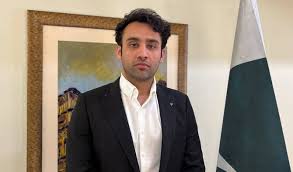
*PAKISTAN’S BILAL BIN SAQIB AMONG THE WORLD’S MOST INFLUENTIAL CRYPTO LEADERS*

Islamabad, November 1, 2025: In a remarkable acknowledgment of Pakistan’s growing role in

the global digital assets revolution, The Wall Street Journal has recognized Mr. Bilal bin Saqib,

Minister of State for Crypto and Blockchain, among the world’s most influential figures shaping

the future of cryptocurrency, artificial intelligence (AI), and financial diplomacy.

The WSJ’s in-depth investigative report titled “How a Billionaire Felon Boosted Trump’s Crypto

Company en Route to a Pardon”, published on October 31, 2025, mentions Bilal bin Saqib’s

name 11 times, reflecting the publication’s keen interest in his leadership and his impact at the

intersection of technology, geopolitics, and digital finance.

The report highlights Mr. Saqib alongside global icons such as Changpeng Zhao (CZ), founder

of Binance; members of the Trump family; and leading Emirati investors, portraying him as a

new-generation leader in the blockchain era.

Under Bilal bin Saqib’s leadership, Pakistan has rapidly evolved into one of the fastest-growing

crypto economies globally — ranked third worldwide, providing global exchanges, institutional

investors, and mining companies access to a transparent and regulated South Asian market.

Recently, Mr. Saqib represented Pakistan at the Future Investment Initiative (FII) in Riyadh,

where he engaged with global leaders, investors, and pioneers of artificial intelligence —

including the CEOs of J.P. Morgan and Ripple, the former CEO of Google, the founder of Reddit,

and the Prime Minister of Albania, among others. True to form, he once again drew global

attention toward Pakistan as a nation demonstrating forward-looking leadership in emerging

fields like cryptocurrency, blockchain, and AI.

Experts have described The Wall Street Journal’s coverage as both symbolic and strategic,

signaling a new era for Pakistan.

Recognition from one of the world’s most respected financial publications reaffirms that

Pakistan is emerging as a thought leader in the global digital economy, with Bilal bin Saqib

proudly carrying the nation’s flag into the new world of artificial intelligence and blockchaindriven innovation.

Pakistan arrests fisherman working for Indian intelligence agencies

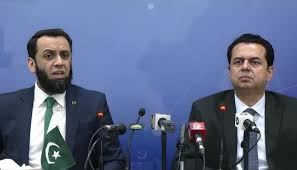
ISLAMABAD: Pakistan’s law enforcement agencies have arrested a fisherman working for Indian intelligence agencies to spy on Islamabad, Information Minister Atta Tarar and Minister of State for Interior Talal Chaudhry said.

Addressing a presser in the federal capital on Saturday, the information minister said that Ijaz Mallah was taken into custody by Indian authorities in September this year, before he was taken to an undisclosed location and was forced to do some task for them.“He [Mallah] was offered greed that he would be compensated and threatened with up to three years imprisonment if he did not comply. He was eventually released by Indian intelligence agencies and sent back to Pakistan with certain tasks,” the minister added.

Tarar also said that the fisherman was instructed by Indian agencies to procure uniforms of the Pakistan Army, Navy, and Rangers, along with local SIM cards and phone bills, for espionage purposes.The information minister went on to say that Pakistani intelligence agencies monitored his activities and took him into custody. “Mallah was apprehended while returning to India after completing the tasks.”

Tarar said that Mallah had confessed to his crimes following his arrest. A video of Malah’s confession was released, in which he said Indian agents had threatened him with imprisonment if he refused to cooperate.

Tarar said India is reportedly unsettled by Pakistan’s recent strategic and diplomatic successes, prompting such attempts at sabotage.

The information minister said that Pakistani intelligence agencies had been monitoring the activities of the spy.

“Our agencies began surveillance when Mallah was found purchasing uniforms of the Pakistan Army, Pakistan Navy, and Rangers,” he said.

Following this, the minister said that the fisherman was apprehended, and authorities recovered Pakistani SIM cards, matchboxes, lighters, and other items, which were to be handed over to Indian authorities.

Minister Tarar further stated that Mallah was working for an Indian agency and had been tasked with acquiring sensitive items.

He said that India’s recent anti-Pakistan campaign was a result of its diplomatic and military failures, adding that the propaganda against Pakistan was clear evidence of those failures, while Pakistan continued to gain respect and prestige internationally.

Tarar said that following the failure of “Operation Sindoor,” India launched a series of false narratives to tarnish Pakistan’s image. “India is alarmed by Pakistan’s growing prestige on the international stage,” he added.

He said that both India’s propaganda and fabricated claims had been exposed to the world, and that Pakistan had successfully uncovered New Delhi’s conspiracies before the international community.

Speaking on the occasion, Talal revealed that the agent was instructed to obtain a SIM card from a specific mobile company.

He said that the Pakistani media has successfully defended the country’s reputation internationally.

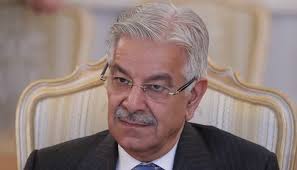
Asif expects positive outcome from Qatar-Turkiye-led mediation amid Pak-Afghan tensions

SIALKOT: As Pakistan and Afghanistan agreed to uphold ceasefire following days-long talks in Istanbul to ease tensions, Defence Minister Khawaja Asif expressed optimism that mediation efforts by Qatar and Turkiye will yield positive results.

Speaking to Geo News, Asif revealed that the issue of Afghan nationals has, for the first time, been raised at the international level, adding that Turkiye and Qatar are playing a constructive mediatory role in the dialogue.Pakistan and the Afghan Taliban regime agreed to uphold ceasefire after multiple rounds of talks in Istanbul, read a joint statement issued on late Thursday, further stating: “Further modalities of the implementation will be discussed and decided in a principal level meeting in Istanbul on 6 November 2025.”

Pakistan and Afghanistan resumed peace talks in Istanbul after Islamabad said the earlier four-day discussions had collapsed without a breakthrough.

The talks had broken down when the Taliban refused to provide verifiable guarantees that groups such as the TTP would not use Afghan territory to launch attacks on Pakistan.

Pakistan had recommenced talks at the request of mediators Turkey and Qatar to give peace another chance, while repeatedly urging Kabul to act against militants using its territory as a safe haven.

“Previously, Afghanistan refused to acknowledge responsibility for its nationals residing illegally in Pakistan, calling it Pakistan’s issue,” the minister told Geo News. “Now, the matter has gained international ownership.”

He further noted that under the ongoing negotiations, a clause has been included stipulating that if any illegal activity originates from Afghan soil, Afghanistan will be held accountable.

“There has been no hostile activity from our side; the ceasefire violations are being committed by Afghanistan,” Asif said, rejecting Kabul’s claims that Pakistan’s establishment is behind the tensions.

He observed that there is widespread anger across Pakistan, particularly in Khyber Pakhtunkhwa (KP), the province most affected by cross-border militancy.

“The entire nation, including political leaders and state institutions, stands united and wants an immediate resolution to the Afghan issue,” Asif emphasised. “The only solution is for Afghanistan to end terrorism originating from its soil.”

He maintained that it would be preferable for both states to maintain civilised relations, warning that the international community is fully aware of the divisive tactics being used by Afghanistan.

Highlighting the shared burden of decades of conflict, Asif said, “The losses Pakistan has suffered over the past five decades are collective losses of both nations.”

The defence minister also accused India of waging a proxy war against Pakistan since the Ashraf Ghani era, asserting that the evidence is widely accepted now. “If necessary, we will present proof,” he said.

He alleged that India seeks to keep Pakistan preoccupied on both its eastern and western borders.

“On the eastern front, India has already faced setbacks — Modi has gone silent,” Asif remarked confidently, expressing optimism that mediation efforts by Qatar and Turkiye will yield positive results.

The defence czar clarified that the Torkham border has been opened solely to facilitate the expulsion of illegal Afghan nationals from the country, not for trade activities.

Asif said that all trade at Torkham remains suspended, and visa processing is also on hold until the ongoing talks with Afghan authorities are concluded.

He stressed that the deportation process must continue so that illegal Afghan residents cannot find excuses to return and resettle in Pakistan again.

The repatriation of Afghan families from Pakistan was halted on October 11 due to border clashes between the two neighbouring countries.

The clashes, which continued for several days before a ceasefire was brokered in Doha on October 19, had prompted Pakistan to seal all its borders with Afghanistan for trade and travel.

South Korean President Lee tries to ease tensions with North Korea, seeks China’s help

South Korea and China signed seven agreements including cooperation on innovation, online crime prevention, and elderly care industries during meeting

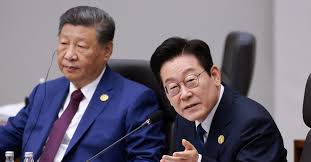
South Korean President Lee Jae Myung urged Chinese President Xi Jinping to assist in restarting stalled talks with nuclear-armed North Korea.

Lee hosted Xi following an Asia-Pacific Economic Cooperation (APEC) highlighting the significance of renewed dialogue on the Korean Peninsula.

“I am very positive about the situation in which conditions for engagement with North Korea are being formed,” Lee noted, highlighting recent high-level exchanges between Beijing and Pyongyang.

Lee called Xi, who visited South Korea after 11 years, for closer strategic communication with China to “take advantage of these favourable conditions” to resume peace talks.

Xi, in remarks ahead of the summit, described South Korea as an “inseparable cooperative partner,” stressing Beijing’s desire to “jointly tackle challenges” and “widen cooperation.”

Adding to the conversation related to the improving ties between South Korea and North Korea, Chinese state media later confirmed that Xi proposed mutual respect for each country’s systems and increased collaboration in technology, green industries, and aging population initiatives.

The visit reflects the complex balance South Korea intends to maintain between its security alliance with the US and its economic dependence on China.

During the meeting, both countries agreed on “seven” agreements including a won-yuan currency swap and accords on innovation, online crime prevention, and elderly care industries.

Earlier, North Korea refused to engage with Seoul by swiftly dismissing its denuclearization plan. Furthermore, despite having strong ties with China and Russia, North Korean supreme leader Kim Jong Un, maintained the stance of “dialogue with the South is off the table.”

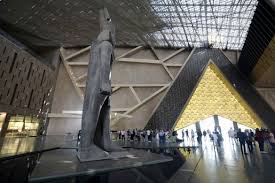
Grand Egyptian Museum opens: Everything to know about world’s largest archaeology display

After two decades, the Grand Egyptian Museum officially opens on Saturday, November 1, becoming the world’s largest museum dedicated to a single civilization.

The museum displays ancient Egyptian artefacts including complete treasures of King Tutankhamun for the first time.

The remarkable landmark is built near iconic pyramids of Gaza, the billion-dollar colossus spans an area equivalent to 70 football pitches.

The construction of the museum has been completed after two-decades marred by financial crises, political turmoil, and ultimately Covid-19 pandemic.

The Egyptian presidency marked the opening of the museum as an “exceptional event in the history of human culture and civilization.”

The main attraction of the museum is the entire 5,000-piece collection from the tomb of the boy-king “Tutankhamun,” displayed together for the first time since its discovery.

British archaeologist and Egyptologist, Howard Carter, discovered the tomb for the first time in 1022. During the discovery, the team found spectacular burial goods providing insights into the material culture of wealthy ancient Egyptians.

Tutankhamum became one of the best-known pharaohs, and some artefacts of his tomb including his “golden funerary mask” which is considered as the best-known artworks from ancient Egypt.

For decades, only a fraction of the artefacts including the legendary gold mask were on display at the older crowded Egyptian Museum in Cairo.

“Why this museum is so important, and everyone is waiting for the opening?” said Zahi Hawass, Egypt’s renowned former antiquities minister. “Because of Tutankhamun.”

In addition to the golden mask, a monumental 11-meter-high statue of Ramesses II is also placed at the museum entrance with a grand staircase lined with dozens of ancient statues.

The museum’s 12 main galleries house a total of 50,000 artefacts, narrating 7,000 years of history from pre-dynastic times to the Greco-Roman era.

The opening is more than a cultural milestone, it is a strategic bid to boost the Egyptian tourism sector.

The Government of Egypt hopes that GEM will attract up to 8 million visitors annually, providing a crucial source a foreign currency for the economy.

With the museum opening, calls of repatriation of key artefacts from abroad have been reignited including Rosetta stone from the British Museum, the Dendera Zodiac form the Louvre, and the Bust of Nefertiti from Berlin. 

Stay Connected

64FansLike
60FollowersFollow

Latest Reviews

Exchange Rates

USD - United States Dollar
EUR
1.14
GBP
1.34
AUD
0.69
CAD
0.70