Home Blog Page 403

Morocco celebrates 50 years of Green March amid UN breakthrough

Morocco celebrates 50 years of Green March amid UN breakthrough

RABAT, NOV 2 /DNA/ – In a landmark national address marking the 50th anniversary of the Green March, His Majesty King Mohammed VI of Morocco announced the beginning of a “new chapter” in consolidating the Moroccanness of the Sahara and bringing the decades-old Western Sahara dispute to a definitive close.

The King hailed the recent UN Security Council resolution, backed by the United States and major world powers, declaring Morocco’s Autonomy Initiative as the “most feasible and realistic” solution to the conflict.

“This is a pivotal moment and a crucial turning point in the history of modern Morocco. There is a before October 31, 2025, and an after October 30,” the Monarch declared, describing the UN vote as a “manifest victory” for Morocco’s sovereignty and unity.

King Mohammed VI said Morocco would soon update and resubmit its Autonomy Initiative to the United Nations as “the sole basis for negotiation,” emphasizing that the plan remains the only viable and lasting solution for peace in the region.

He expressed deep appreciation to the United States, under President Donald Trump, for its “constructive efforts” leading to this breakthrough, and extended gratitude to allies including France, Spain, Britain, and the European Union for supporting Morocco’s sovereignty and development efforts in the southern provinces.

The King also thanked Arab and African nations for their “unwavering and unconditional support,” reiterating that Morocco seeks a solution “with no winners or losers” and that it will not use these diplomatic gains to “fuel conflict or disputes.”

In a significant gesture, King Mohammed VI invited the Sahrawi population in the Tindouf camps to “seize this historic opportunity” to reunite with their families and contribute to building their future under Morocco’s autonomy framework.

He also called for renewed dialogue with Algerian President Abdelmadjid Tebboune to “overcome differences and build new relations based on trust, fraternity, and good neighbourliness,” reaffirming his commitment to reviving the Arab Maghreb Union on the principles of cooperation and mutual respect.

Praising the resilience and loyalty of citizens in the southern provinces, the King lauded their role in promoting national unity and territorial integrity. He also paid tribute to Morocco’s armed forces and security personnel for their sacrifices in defending the nation’s sovereignty and stability.

Concluding his address, King Mohammed VI offered prayers for the late King Hassan II, the architect of the Green March, and for “all the righteous martyrs of the nation,” reaffirming Morocco’s determination to achieve a peaceful, unified, and prosperous future.

Morocco hails UN vote calling its Sahara plan ‘most feasible’

Morocco hails UN vote calling its Sahara plan ‘most feasible’

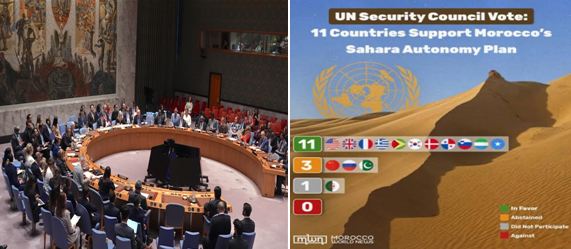
WASHINGTON DC, NOV 2 /DNA/ – The UN Security Council on Friday approved a US-backed resolution declaring Morocco’s plan for Western Sahara the “most feasible solution” to resolve the long-standing conflict. Of the 15 members of the Council, 11 voted in favor of the resolution, drafted by the United States.

Russia, China, and Pakistan abstained, while Algeria did not participate in the vote. The Council also renewed for one year the mandate of the peacekeeping force in the region, known as MINURSO.

The United States’ permanent representative to the UN, Mike Waltz, said that Washington welcomed this “historic vote, which seizes this unique moment and builds on the momentum for a long-awaited peace in Western Sahara.”. The United States is “deeply committed” to supporting a mutually acceptable solution in the region and resolving this long-standing conflict, Waltz said.

“We urge all parties to take advantage of the coming weeks to come to the negotiating table and engage in serious discussions, using Morocco’s credible and realistic autonomy proposal as the sole basis for a just and lasting solution to the dispute,” he added.

Amar Bendjama, Algeria’s permanent representative to the UN, explained that Algeria did not participate in the vote on the draft resolution because it “does not sufficiently reflect” the UN doctrine on decolonization.

“A just and lasting solution can only be achieved by respecting the inalienable right of the people of Western Sahara to decide their own future. This is the only guarantee of genuine peace and lasting stability in the region,” Bendjama told the Council.

Furthermore, the King of Morocco, Mohammed VI, welcomed the Council’s resolution, stating in a televised address that Rabat would update and resubmit the plan to the UN as “the only basis for negotiation and the only viable solution to the dispute”. The king called for dialogue with Algerian President Abdelmadjid Tebboune and reaffirmed his commitment to reviving the Arab Maghreb Union. The Western Sahara issue has been a source of tension between Algeria and Morocco for approximately five decades.

The conflict began in 1975, following Spain’s withdrawal, and the confrontation between Morocco and the pro-independence Polisario Front escalated into an armed struggle that lasted until 1991, when a ceasefire agreement was signed. In 2007, Morocco proposed an autonomy status for the region under its sovereignty, while the Polisario Front called for an independence referendum.

How Trump turned the land of immigrants against its own

Qamar Bashir

By Qamar Bashir

The United States was founded as a nation of immigrants—a place where people from every corner of the world sought refuge, dignity, and opportunity. Apart from the Native Americans, everyone who calls America home today descends from immigrants who crossed oceans and deserts to rebuild their lives on its soil. From the earliest settlers of England, Ireland, and Germany to the waves of Italians, Poles, and Jews who followed, immigration was never just a demographic process—it was America’s identity, its heartbeat, and its greatest strength.

For more than two centuries, immigration fueled the growth of the American economy, populated its vast frontiers, and shaped its unmatched diversity. Yet, the same nation that once prided itself on being a beacon for the oppressed has gradually turned hostile toward the very idea of immigration itself—especially when the immigrants come with darker skin, foreign tongues, or unfamiliar faiths.

Historically, the earliest immigrants were Europeans—white, Christian, and culturally similar to the Anglo founders. Assimilation was easy because whiteness acted as a passport to belonging. By 1900, nearly 80 percent of America’s foreign-born population came from Europe. Even then, there were prejudices against Italians, Irish, and Eastern Europeans, but time erased their differences. Within a generation, the children of Polish or German immigrants were “simply American.”

But the narrative changed after the U.S. began military and political interventions in non-white regions—from Vietnam to Iraq, Libya, Syria, and Afghanistan. These wars displaced millions, many of whom sought refuge in the very country that had destabilized their homelands. Asylum seekers from the Middle East, Latin America, and Africa arrived not out of choice, but desperation. Unlike their European predecessors, their darker skin and unfamiliar cultures became barriers to assimilation.

According to the Migration Policy Institute, nearly 45 million immigrants now live in the United States—making up about 13.7 percent of the total population. Yet, attitudes toward them remain deeply divided along racial lines. Surveys by Pew Research (2024) show that over 60 percent of white conservatives believe immigrants “burden the nation,” while 70 percent of non-white Americans view them as vital contributors to the economy.

Under the Trump administration’s second term, America is witnessing an unprecedented tightening of immigration laws. The new Senate immigration bill, reportedly enjoying bipartisan momentum, seeks to cut off federal and state benefits to all immigrants, regardless of legal status—permanent residents, work-visa holders, or even those who have contributed taxes for years. It is a striking shift from the nation’s foundational promise that anyone who works hard and abides by the law can earn both livelihood and dignity.

Simultaneously, federal and transport departments are enforcing regulations that restrict immigrant participation in key industries such as trucking, logistics, and services. Commercial driving licenses for immigrants are being rescinded, and companies employing non-citizen drivers face heavy penalties. The crackdown extends beyond the workplace: ICE (Immigration and Customs Enforcement) has intensified raids and detentions across states, with reports of overcrowded detention centers and deportations even of long-time green-card holders.

These policies have drawn resistance from governors, business owners, and human-rights groups, who argue that the U.S. economy relies heavily on immigrant labor. In healthcare alone, foreign-born workers constitute nearly 17 percent of the workforce, including 28 percent of physicians and surgeons. In hospitality, agriculture, and construction, immigrants represent between 30 and 50 percent of employees. The restaurant and hotel sectors—worth over $1.1 trillion annually—would collapse without them.

America’s anti-immigration wave is not rooted in economics but politics. The irony is that while immigrants are blamed for “stealing jobs,” unemployment in 2025 remains near 3.9 percent, and companies are desperate for workers. According to the U.S. Chamber of Commerce, there are 9 million unfilled jobs, many in sectors shunned by native-born Americans due to low wages or high physical demands.

Historically, immigrants have powered America’s economic rise. More than 40 percent of Fortune 500 companies were founded by immigrants or their children—names like Google, Tesla, Pfizer, and Apple. Collectively, these companies contribute over $8 trillion to the U.S. economy each year. Yet, today, the same immigrants who sustain the economy are vilified as threats to national security and social order.

Social-media platforms echo with xenophobic calls to “deport them all,” forgetting that the nation’s wealth was built not only on the labor of immigrants but also on the exploitation of other nations. The United States and its NATO allies waged decades of wars in resource-rich regions—extracting oil, minerals, and trade routes—and then turned away the refugees of those same wars. Libya’s collapse, Syria’s civil war, and Afghanistan’s disintegration are all painful reminders that Western intervention created chaos whose human cost now knocks at their own doors.

America’s short political memory compounds the tragedy. Each administration rewrites the moral code of migration. Obama expanded DACA and refugee resettlement; Trump dismantled both. Biden restored limited protections, but the political pendulum swung back again with renewed hostility. The result is a system that treats immigrants as expendable assets—welcomed when needed, discarded when convenient.

Even worse, detention centers have multiplied, with National Guard units deployed in several states to assist ICE. Civil-rights lawyers document cases of long-time residents deported without trial, separating families and traumatizing children. The American Civil Liberties Union (ACLU) reports over 200,000 deportations in 2025 alone—many involving individuals who have lived in the U.S. for more than a decade.

The roots of this crisis are moral and structural. America cannot destabilize other nations through wars, sanctions, and regime change, then demonize those who flee the wreckage. Immigration is the mirror of foreign policy. Every missile dropped abroad creates another migrant seeking safety.

If the United States wishes to curb immigration sustainably, it must let other nations live with dignity—free from exploitation of their oil, minerals, and industries. Let their people build prosperity at home instead of being forced to cross borders for survival. China’s model offers an instructive contrast: by investing in its own citizens through education, infrastructure, and industry, it has sharply reduced outward migration.

America, too, must return to its founding promise—one that values people not by color or country, but by character and contribution. Instead of walls and bans, it needs reforms that regularize honest workers, integrate them through civic education, and penalize employers who exploit them.

The world once admired the United States for its open arms, not its closed borders. The Statue of Liberty still stands in New York Harbor, holding a torch once meant to light the path for the “huddled masses yearning to breathe free.” But today, that light flickers. A nation that rose from the dreams of immigrants risks collapsing under the weight of its own fear and hypocrisy.

To preserve its greatness, America must remember its origin story. It was not whiteness, wealth, or weapons that built this country—it was human hope. And hope knows no color, no visa, and no border.

By Qamar Bashir

Press Secretary to the President (Rtd)

Former Press Minister, Embassy of Pakistan to France

Former Press Attaché to Malaysia

Former MD, SRBC | Macomb, Michigan, USA

Pakistan urged to overhaul ‘One-Size-Fits-All’ education curriculum

Pakistan urged to overhaul 'One-Size-Fits-All' education curriculum

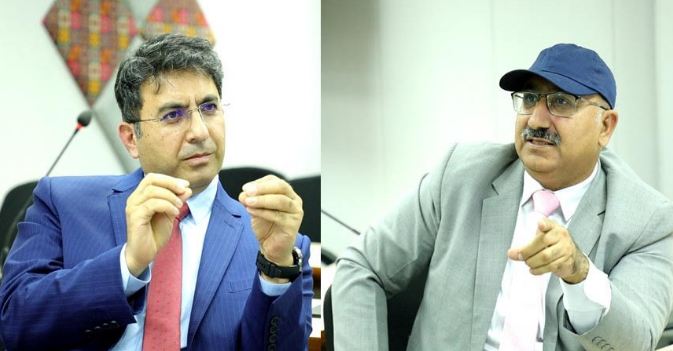
ISLAMABAD, NOV 2 /DNA/ – The Pakistan Institute of Development Economics (PIDE) and the Pakistan Institute of Education (PIE) convened a high-level brainstorming session to deliberate on one of Pakistan’s most pressing educational challenges — the urgent need to reform the national curriculum to make it more inclusive, coherent, and relevant to learners’ needs. The session, attended by senior education experts, researchers, and policymakers, served as a platform for evidence-based dialogue on the current shortcomings of the national curriculum and possible pathways for improvement. Dr. Nadeem Javaid, Vice Chancellor, PIDE, and Dr. Shahid Soroya, Director General, PIE, represented their respective institutions and led the discussion on aligning education policy with on-ground realities and learning outcomes.

Participants agreed that Pakistan’s existing curriculum faces serious structural and pedagogical gaps. Feedback from teachers and educationists has highlighted content overload, unrealistic learning targets, and weak contextual alignment with students’ environments, particularly in government and low-cost private schools. Many classrooms across the country lack the necessary resources, teacher training, and infrastructure to deliver the curriculum effectively, resulting in rote-based learning rather than critical and creative thinking. On the other hand, elite schools with better facilities, digital tools, and trained staff can implement the curriculum more successfully, further widening the learning and opportunity divide between privileged and under-resourced learners. Dr. Nadeem Javaid noted that Pakistan cannot continue with a one-size-fits-all approach in education, emphasizing that the curriculum must reflect the diversity of learners, the socio-economic realities of different regions, and the future skills required in a changing world.

The session also reflected on the post-18th Amendment scenario, which devolved education and curriculum development to the provinces. While devolution has enabled provinces to tailor education policies according to local needs, it has also created challenges of fragmentation, inconsistency, and lack of national comparability. Dr. Shahid Saroya highlighted that the goal is not uniformity but coherence, underscoring the need for a shared national vision that allows flexibility for provincial adaptation while ensuring equity and quality across Pakistan.

To address these challenges, the session discussed the need for a measured, participatory, and technically sound strategy. The proposal centers on two core instruments: A National Policy Framework for Curriculum Development and Review and Minimum Standards for Curriculum Content and Learning Outcomes. The policy framework will outline guiding principles, governance mechanisms, and processes for curriculum design, review, and implementation across provinces, while the minimum standards will establish essential learning benchmarks to ensure that every child in Pakistan achieves core competencies, regardless of geography or school type. These proposed tools would help balance national cohesion with local relevance, ensuring a curriculum that is both equitable and adaptable to varying educational contexts.

Participants agreed that curriculum reform must be driven by data, evidence, and inclusive dialogue among key stakeholders. Institutions such as PIDE and PIE have a central role to play — combining policy research, academic insight, and practical education expertise to develop sustainable solutions. The session concluded with a shared commitment to continue collaboration in advancing a curriculum that promotes child-centered, competency-based, and contextually responsive learning. Both institutions reaffirmed their dedication to helping shape an education system that empowers every Pakistani learner with the knowledge, skills, and values needed for national development and global engagement.

Pakistan Navy unveils plans for major maritime expo 2025

Pakistan Navy unveils plans for major maritime expo 2025

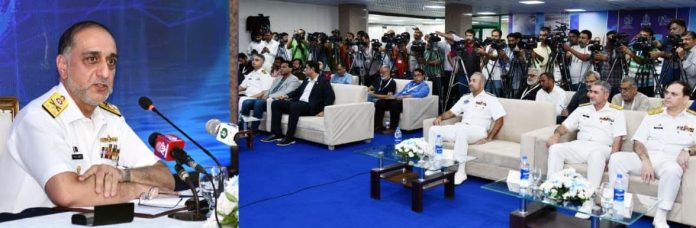
KARACHI, NOV 2 /DNA/ – The Curtain Raiser ceremony of Pakistan International Maritime Expo and Conference 2025 (PIMEC 25) was held at Karachi Expo Centre. Commander Karachi, Vice Admiral Muhammad Faisal Abbasi briefed media regarding the forthcoming event.

Addressing the media, Commander Karachi apprised that the second edition of PIMEC will be held from 3 to 6 Nov 25 at Karachi Expo Centre. He highlighted that PIMEC 25 holds significance in advancing Pakistan’s Blue Economy roadmap and the event will witness representation from almost every region of the world.

Vice Admiral Muhammad Faisal Abbasi further informed that 178  exhibitors from across the globe, including 28 international firms and 150 local organizations, will participate in the exhibition. Moreover, 133 international delegations from Europe, Asia, North America, South America and the Far East including representatives from 44 countries such as United Kingdom, Italy, Iran, Turkiye, KSA, Australia, Egypt and China, will also attend the event. He highlighted that in addition to local exhibitors PIMEC 25 will also feature pavilions by the Governments of Sindh and Balochistan, showcasing potential and investment opportunities in country’s maritime sector. Commander Karachi also acknowledged the media’s valuable role and expressed confidence in their support for the forthcoming event.

PIMEC 25 will encompass a wide-ranging maritime exhibition, business-to-business (B2B) and business-to-government (B2G) meetings, signing of Memorandums of Understanding (MoUs), and media interactions. These high-level engagements among foreign delegates, senior government officials, and maritime stakeholders are aimed at fostering collaboration and building partnerships across key maritime sectors including ports, shipping, fisheries, and coastal development.

Running concurrently with the exhibition, the International Maritime Conference (IMC), a two-day event scheduled from 4 to 5 Nov 25, will be organized by the National Institute of Maritime Affairs (NIMA). The conference, themed “Harnessing Blue Economy Potential for Sustainable Development,” will feature 14 papers presented by distinguished national and international scholars and professionals in four sessions.

The briefing was attended by Pakistan Navy Officers and media representatives.

Direct flights key to unlocking Nepal-Pakistan economic potential: Envoy

Direct flights key to unlocking Nepal-Pakistan economic potential: Envoy

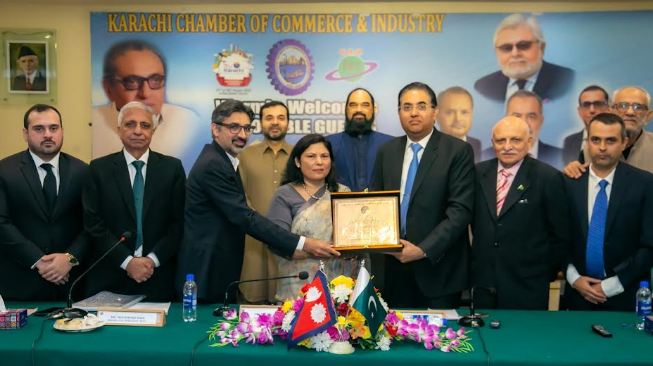
KARACHI, NOV 2: /DNA/ – Ambassador of Nepal to Pakistan, Rita Dhital, has underscored the need to strengthen bilateral trade, investment linkages, and direct connectivity between Nepal and Pakistan, emphasizing that improved air and business connectivity would significantly boost economic cooperation and people-to-people exchanges between the two friendly nations.

Expressing views during her visit to the Karachi Chamber of Commerce & Industry (KCCI), Nepalese Envoy underscored that the Government of Nepal is keen to attract foreign investments and enhance trade, adding that the private sector must take the lead in realizing this goal. “You are the leaders who make things happen. Governments do not always see opportunities the way businesspeople do, which is true everywhere in the world. Therefore, we want the private sector to drive trade and investment initiatives”, she remarked.

The meeting was attended by Honorary Consul of Nepal Mushtaq Chhapra, President KCCI Muhammad Rehan Hanif, Senior Vice President Muhammad Raza, Vice President Muhammad Arif Lakhani, Chairman Diplomatic Missions & Embassies Liaison Subcommittee Ahsan Arshad Sheikh, Former President Majyd Aziz, and Members of the KCCI Managing Committee.

While commenting on the long-standing bilateral relations, the Nepalese Envoy noted that Nepal and Pakistan have enjoyed over six and a half decades of friendship and cooperation. “We are very satisfied with the level of bilateral cooperation reflected through exchange of visits, meetings at the sidelines of international forums, parliamentary exchanges, and people-to-people interactions”, she said.

To facilitate collaboration, she said that Nepal has already established a strong foundation by signing various agreements and MoUs in key areas including trade, culture, tourism, aviation, and agriculture. She noted that KCCI and the Confederation of Nepalese Industries (CNI) had also signed an MoU in 2005, which provides a useful mechanism to promote commercial linkages.

Highlighting trade complementarities, she observed that Nepal and Pakistan produce goods that could mutually benefit both markets. “Despite many opportunities and complementarities, bilateral trade remains limited. This is why we are reaching out to provincial chambers across Pakistan to encourage business leaders to explore new avenues of cooperation”, she said.

She also pointed out that in the past, joint ventures were successfully established in sectors such as textiles, hospitality, and banking. However, limited connectivity and lack of information remain key challenges. The Ambassador revealed that efforts are underway to restore direct flights between the two countries, recalling that Nepal Airlines operated flights to Karachi until the 1990s and PIA continued operations from Islamabad to Kathmandu until 2014. “We are actively engaging with private airlines to resume direct flights to strengthen connectivity,” she added.

Encouraging Pakistan’s business community to explore joint ventures, she said: “Geography should not be a barrier, particularly in ICT and digital sectors. We invite Karachi’s business community to explore these opportunities with us.”

She also highlighted that Nepal maintains a liberal visa policy, offering visa-on-arrival for up to 30 days free of cost to citizens of all SAARC countries, including Pakistan. “Language is not a major barrier either, Urdu is widely understood in Nepal, and English is commonly spoken in urban areas”, she added.

The Ambassador expressed full support to KCCI members and assured them of the Embassy’s facilitation. “We are just one email, WhatsApp message, or phone call away. Please feel free to reach out to us for any assistance or to connect with the right people in Nepal”, she said.

Nepalese Ambassador also encouraged KCCI to re-establish contact with the Confederation of Nepalese Industries (CNI) and assured that any business delegation from KCCI visiting Nepal would receive full support and facilitation from the Nepalese Embassy.

Earlier, President KCCI Rehan Hanif, while welcoming Nepalese Envoy, stated that Pakistan and Nepal share friendly and cordial relations since the establishment of diplomatic ties in 1960. Both countries enjoy deep-rooted cultural, historic and religious linkages as well as shared aspirations for peace, prosperity and regional cooperation.

Reiterating KCCI’s resolve to enhance trade and investment cooperation between the two countries, Rehan Hanif said that Karachi Chamber is always committed to promoting trade diplomacy and fostering stronger economic relations with friendly nations including Nepal. “We believe that vast untapped potential exists to enhance bilateral trade, tourism and investment cooperation between Pakistan and Nepal”, he said, adding that the existing trade volume between the two countries remain modest but there was a great scope to expand it by focusing on areas such as Tourism, Pharmaceutical, Agriculture, Textiles, IT Services, Hydropower and Renewable energy.

Underscoring the need to commence direct flights between the two countries, Rehan Hanif stated that business-to-business interactions, exchange of trade delegations and participation in exhibitions must be encouraged which can play a pivotal role in realizing the potential. “We also believe that promoting people-to-people contact and cultural exchanges can further strengthen the enduring bond of friendship between Pakistan and Nepal”, he added while assuring that the Karachi Chamber stands ready to work closely with Nepalese Embassy to facilitate meaningful engagements between business communities and promote economic cooperation.

‘Deliberately distorted’: Pakistan rubbishes Taliban regime claims regarding Istanbul talks

Defence Minister says he is unaware of any TLP ban

Islamabad called for arresting or controlling terrorists based in Afghanistan, says info ministry

ISLAMABAD: Amid a fragile ceasefire between Islamabad and Kabul, Pakistan on Saturday rejected the “deliberate twisting of facts” attributed to the Afghan Taliban’s spokesperson, Zabihullah Mujahid, regarding the recent Istanbul talks between the two countries.

In a statement posted on X, the Ministry of Information said Pakistan had demanded that terrorists based in Afghanistan and posing a threat to Pakistan either be controlled or arrested.

Advertisement

The clarification came after Zabihullah Mujahid told a private news channel that during the Istanbul negotiations, the Afghan side had offered to deport individuals considered security threats by Islamabad — a proposal Pakistan allegedly declined.

He alleged that Pakistan had instead asked Afghanistan to restrain those individuals within Afghanistan rather than deport them.

Mujahid further asserted that Afghanistan’s policy prohibits migrants from carrying weapons and said that Kabul would act if Pakistan provided credible evidence of any threat.

He also alleged that Pakistan’s recent actions appeared to be aimed at creating conditions for a possible US return to the Bagram airbase.

Pakistan and the Afghan Taliban regime agreed to uphold ceasefire after multiple rounds of talks in Istanbul collapsed without a breakthrough.

The talks had broken down when the Taliban refused to provide verifiable guarantees that groups such as the TTP would not use Afghan territory to launch attacks on Pakistan.

Pakistan had recommenced talks at the request of mediators Turkey and Qatar to give peace another chance, while repeatedly urging Kabul to act against militants using its territory as a safe haven.

‘Malicious and misleading’

Separately, Defence Minister Khawaja Asif — in a statement posted on X — strongly condemned “malicious and misleading” remarks made by the Afghan Taliban’s spokesperson, saying that Pakistan’s political and military leadership stands united on the country’s security and Afghan policies.

Asif said there exists complete unanimity of views among Pakistanis — including the political and military leadership — on the nation’s comprehensive approach toward Afghanistan and its commitment to regional peace and stability.

He said the people of Pakistan, particularly those in Khyber Pakhtunkhwa, are fully aware of the Afghan Taliban regime’s “treacherous and barbaric patronisation of India-sponsored terrorism” and “harbour no illusions” about its intentions or conduct.

Iranian tech prodigies battle it out with robots

Tehran, Nov 1 Two machines resembling robotic vacuum cleaners sped around a ring colliding, shooting sparks and catching fire, as Iranian engineering students watched from behind plexiglass.
              The dramatic clash was just one of many opportunities for competitors to go head-to-head at the country's Tech Olympics, to determine the future of its engineering talents. 
              Iran aspires to become a key regional player in emerging technologies, despite decades of international sanctions that have stifled its development.
              The fields at this year's competition included robot battles, programming, artificial intelligence, as well as drones, cybersecurity and connected devices.
              A few hours before his event, Alireza Hosseini put the final touches on combat robot Arash -- a rudimentary machine of wires and wheels without the appearance of a humanoid. 
              "What's more important than the design is the operator," the 21-year-old university student told AFP, referring to the person who remotely controls the robot.
              "The design only represents a third of the work, but the operator decides how and where the robot attacks," said Hosseini, from Kerman in southern Iran.
              Hosseini said his team of students in electrical engineering, electronics, computer science, mechanical engineering and design had been crowned Iran's robotics champion three times.
              Launched last year at the government's initiative, the Tech Olympics serves as a talent pool for companies seeking potential recruits.
              The coach of one team of under-18s appeared somewhat anxious before the start of the competition.
              "Unfortunately, we started late, and the robot isn't quite ready yet," said Mr. Azizi, who did not give his first name.

England’s batting exposed as New Zealand seal ODI series sweep

Wellington, Nov 1 Blair Tickner and Zakary Foulkes made decisive contributions with bat and ball to secure a tense two-wicket win for New Zealand over England on Saturday and a clean sweep of the three-match ODI series.
The two tailenders put on an unbroken stand of 30 for the ninth wicket to lift the home side to 226-8 in the 45th over after England had once again struggled with the bat to be dismissed for 222.
Seamers Tickner and Foulkes took six wickets between them after England collapsed to 44-5, the visitors’ top-order failing once again.
The dismal form of Test batsmen Ben Duckett and Joe Root will be of concern less than three weeks from the start of the Ashes Test series in Australia.
England’s top four made a total of 84 runs across the three matches, the fewest by any team in a comparable men’s ODI series or tournament.
England were dismissed for 223 in the opening match and 175 in the second.
Captain Harry Brook said his players never adjusted to the movement extracted by New Zealand’s pace bowlers in seam-friendly conditions.
“We didn’t quite get big enough scores to be able to defend them and give the bowlers the best chance to win us the game,” Brook said.
“New Zealand are the second-best team in the world for a reason. They’ve outplayed us in this series. We just haven’t been good enough.”
Tickner (4-64) claimed four wickets for the second successive game, while Foulkes (2-27) removed Jamie Smith and Root inside the first four overs.
Foulkes’ new-ball partner Jacob Duffy (3-56) then accounted for Duckett, Brook and Jacob Bethell.
Jamie Overton’s maiden ODI half-century was the foundation of an England recovery, with the all-rounder the last man out for 68 in the 41st over.
Brydon Carse also achieved a career-best score in the format, blasting four sixes on his way to 36.
New Zealand opener Rachin Ravindra scored a bright 46 and Daryl Mitchell continued his fine form with 44, but a steady loss of wickets set up an exciting finish.
Overton and Sam Curran took two wickets each, while the home side lost two batsmen to the same unfortunate means of dismissal.
Devon Conway and Tom Latham were both run out, caught short of their crease at the bowler’s end following the deflection of straight drives from another batsman.
Foulkes was unbeaten on 14 and Tickner not out 18, with their late heroics extending New Zealand’s exceptional run of ODI results on home soil.
New Zealand have won 25 of 29 ODI matches on home turf since February 2019, with two losses and two no-results.
dgi/tc/pbt

Explorers seek ancient Antarctica ice in climate change study

Cape Town, Nov An explorer and a glaciologist have embarked on a three-month mission to cross part of Antarctica on kite skis in search of ice that is 130,000 years old.
The goal of the French duo is to better understand the impact on world sea levels of any melting of the “white planet” if global temperatures rise, Matthieu Tordeur and Heidi Sevestre told AFP in Cape Town before flying to Antarctica’s Novolazarevskaya base.
“This is very much a pioneering expedition that combines lots of adventure, but also really ambitious science,” Sevestre, a world-renowned glaciologist, told AFP before the pair flew out from South Africa on October 29.
Taking place at the start of the southern hemisphere’s summer season, the “Under Antarctica” expedition is also timed to coincide with the COP30 climate conference in Brazil from November 10 and aims to galvanise efforts to curb global warming.
The challenge is formidable: in complete isolation and carrying everything they need, the pair aim to cover some 4,000 kilometres (2,485 miles) in temperatures that could fall to minus 50 degrees Celsius (-58 °F), Tordeur said.
They will be travelling on kite skis, in which the skier wears a harness that’s clipped into a kite that pulls them along.
“We can travel, if the conditions are right, 150 kilometres or even 200 kilometres (per day),” Tordeur told AFP.
The pair had a test run last year, when they travelled 1,500 kilometres on kite skis in Greenland for a month in June/July, collecting ice samples.
This time around they’ll need to complete a 4,000-kilometre journey in around 90 days.
“We will need to exit Antarctica by the end of January because after that there are no planes and no logistics that can help us out,” said 33-year-old Tordeur, who has travelled the polar regions for a decade.

Stay Connected

64FansLike
60FollowersFollow

Latest Reviews

Exchange Rates

USD - United States Dollar
EUR
1.14
GBP
1.34
AUD
0.69
CAD
0.70