Home Blog Page 400

Encroachments in Islamabad’s sector G-8 growing unchecked

Encroachments in Islamabad’s sector G-8 growing unchecked

Encroachments in Islamabad’s Sector G-8 have reached alarming proportions, turning once orderly streets into congested corridors of chaos. Despite repeated complaints from residents, the Capital Development Authority (CDA) and Islamabad Traffic Police (ITP) appear to be doing little beyond issuing hollow statements and conducting superficial operations that fail to address the root of the problem.

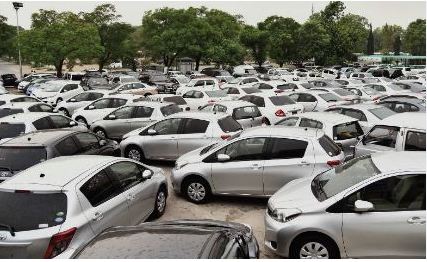
Over the past several years, open spaces, service roads, and even footpaths in G-8 Markaz and surrounding areas have been overtaken by car showrooms, workshops, and informal businesses. What was originally planned as a commercial and residential hub has now become a sprawling encroachment zone, where every inch of public space seems to have been commercialized.

The most glaring violations are visible outside car showrooms that have virtually taken over service roads and footpaths, using them as parking lots and display areas for their vehicles. In some stretches, particularly in G-8 Markaz and G-8/4, pedestrians are forced to walk on the roads as sidewalks are completely blocked by cars. Residents complain that the CDA enforcement teams turn a blind eye to these blatant encroachments, allowing businesses to operate freely in violation of municipal by-laws.

“The situation has become unbearable,” said a resident of G-8. “We cannot even park our own cars near our homes because showrooms and workshops occupy every available space. The CDA only wakes up when media highlights the issue, and even then, they just remove a few temporary setups and leave the main violators untouched.”

The Islamabad Traffic Police, too, have been criticized for what locals describe as “lip service” and “cosmetic actions.” Despite visible traffic chaos in and around the Markaz, ITP’s response has been limited to placing cones or posting officers for a few hours. Vehicles parked illegally on footpaths, greenbelts, and double lanes remain unchecked.

Traffic congestion during peak hours has become routine, particularly around the main commercial areas and near the G-8/4 government offices such as AGPR, PEMRA, PTCL, POST OFFICE etc. Commuters often find themselves trapped in long lines of traffic, made worse by haphazard parking and unauthorized roadside businesses. “Every other day there’s a traffic jam here. Instead of clearing the encroachments, the authorities just fine a few drivers and move on,” complained a shopkeeper.

Urban planners and civic activists say the unchecked encroachments reflect a deeper governance failure. “The CDA’s enforcement wing is either under pressure from commercial interests or simply lacks the will to act. This kind of neglect not only ruins the city’s aesthetics but also discourages law-abiding citizens,” remarked a former CDA official on condition of anonymity.

Residents have demanded immediate and meaningful action  not just symbolic drives to reclaim public spaces. They are calling for strict enforcement of building and parking regulations, removal of illegal car showrooms, and continuous monitoring to prevent re-encroachment.

Until such measures are taken, Sector G-8 risks losing its planned urban character altogether, turning instead into another congested and unlivable commercial sprawl — a symbol of administrative apathy in the heart of the federal capital.

PAK-Afghan confrontation more than a bilateral dispute

PAK-Afghan confrontation more than a bilateral dispute

ISLAMABAD, NOV 4: Pakistan-Afghanistan confrontation is more than a bilateral dispute, as it might have a wide-ranging impact on regional level as well as affecting international peace as a whole.

Stakeholders needed to sit together to set aside the raising conflict, lowering the temperature between the two sides.

Regional analysts view the confrontation as more than a bilateral dispute. The whole scenario should be looked into the background of Pakistan’s closer counter-terrorism coordination with the United States sits alongside its strategic and economic ties with China, including plans to extend connectivity through western corridors.

The frontier’s stability will not be read without the lens of US–China competition and a reshaping of influence in Central Asia. In this context, any perception of disproportionate force or legally ambiguous actions could complicate Islamabad’s diplomacy as well.

It is heartening to note that Pakistan and Afghanistan remain in a fragile calm after mid-October ground clashes and Pakistani airstrikes, including inside Afghanistan, were followed by a ceasefire mediated by Qatar and Türkiye and announced in Doha on the 19th of October. UN monitors urged “a lasting end to hostilities” after recording at least 18 killed and more than 360 wounded on the 16th of October.

The heaviest fighting was reported around Spin Boldak in Kandahar and parts of Paktika, underscoring how quickly the frontier can tip from skirmishes to wider confrontation.

Torkham, the main Khyber Pass crossing linking Pakistan’s Khyber district with Afghanistan’s Nangarhar, has since been partially reopened to allow Afghan nationals to return.

Pakistan resumed limited movement on the 1st of November to let stranded Afghans cross back under its repatriation plan, while commercial traffic remained shut. Mediators said both sides agreed in Istanbul to keep the truce in place and to set up a mechanism to monitor and verify alleged ceasefire violations, including cross-border fire, incursions and support for militants.

The consequences for non-compliance are to be decided at the next meeting on the 6th of November.

Islamabad claims that the confrontation stemmed from militant attacks launched from Afghan soil and has tied any durable truce to Kabul taking action against the Tehreek-i-Taliban Pakistan.

“We have a ceasefire agreement as long as there is no violation,” Defence Minister Khawaja Muhammad Asif said on the 20th October, adding that the truce “hinges” on curbing attacks from across the border. In a later interview he warned that, if talks fail, Pakistan has the “option of open war.” The Taliban administration firmly denies harbouring anti-Pakistan militants.

In Doha, spokesman Zabihullah Mujahid said “neither country will take hostile actions against the other” and that there would be no support for groups attacking Pakistan.

Reports indicate a high civilian toll inside Afghanistan. By 16th October, UNAMA reported that at least 18 people had been killed and more than 360 wounded. Most casualties were in Spin Boldak, where it is recorded that at least 17 civilians were killed and 346 injured. UNAMA also documented earlier casualties in Paktika, Paktia, Kunar and Helmand. 

Snowfall transforms northern Pakistan into winter wonderland

Snowfall transforms northern Pakistan into winter wonderland

KALAM, Nov 04 (APP/DNA): As November arrives, northern Khyber  Pakhtunkhwa transforms into a winter wonderland, captivating snowfall lovers and adventure tourists alike, enjoying pleasant change in weather.

Following Met Office’s forecast of snowfall, the snow lovers along with families thronged to Swat, Chitral, Dir Upper and Nathiagali to enjoy first snowfall of the winter season.

The lush green mountains, and landscapes in Nathiagali, Ayubia, Kaghan, Naran, Kalam, Malam Jabba, Kumrat, Bamborat and adjacent areas offer perfect opportunities for families and adventure snow sports enthusiasts to enjoy moderate to heavy snowfall.

Upstream from these areas, stand tall Hindu Kush, Karakoram, and Himalayan mountains ranges, blessed with stunning natural beauty and known for their snow covered peaks, picturesque landscapes and thrilling winter sports.

If popular snowfall resorts like Kalam, Malam Jabba and Nathiagali offer family-friendly tourism, Naran, Kaghan, and Ayubia boast exhilarating activities like chairlift rides, skiing and snowboarding, drawing adventurers in droves from across the country.

For those seeking more unique winter snowfall experiences, the valleys of Hunza, Skardu, Naltar, Chitral, and Swat offer beautiful snow-covered peaks and numerous opportunities for enjoying nature’s bounties and snow sports.

Swat, often referred to as “Switzerland of Pakistan,” has become an increasingly popular winter sports destination, especially for skiing.

“I came from Peshawar to enjoy snowfall with my family following Met Office prediction,” said Nasir Khan, a property dealer of Wapda Town Peshawar.

He said that Kalam receive snowfall with highest velocity than any other region of Pakistan.

Besides snowfall, tourists can also enjoy trout fish at reasonable price, advising tourists to bring additional warm clothes while coming to Kalam for snowfall.

The valley’s Malam Jabba is a snowfall paradise, known for its mesmerizing beauty with an average snowfall of around 10 feet annually.

 Malam Jabba is also considered one of Pakistan’s premier skiing destination for skiing lovers.

“Skiing history of Malam Jabba dates back to 1962 when the first skiing competition was held there,” informed Habibullah Arif, Director  General KP Culture and Tourism Authority.

 “The area has earned international recognition as a leading skiing destination in South Asia, especially after the establishment of a skiing resort in 1988.

 Today, it offers world-class skiing and snowboarding facilities, making it a must-visit for snow sports lovers.”

Beyond skiing, Swat’s natural attractions like ancient Gandhara civilization and pristine snow covered mountainous landscapes, contribute to its appeal.

The valley is also home to a range of adventure sports including river rafting and fishing, with the famous trout fish of Swat offering a unique taste.

Malam Jabba skiing resort and adjacent Kalam, Mankial and Flaksair offer breathtaking backdrops for winter sports.

The skiing season here typically lasts from December to March, attracting thousands of visitors. The resort’s chairlift, one of the longest in Pakistan, provides sweeping views of the surrounding snow-blanketed mountains.

As they wait rest of year, the tourists from different parts of country rush to these destinations even with the first snow fall to enjoy captivating sceneries and mountain tops, sample Swat’s famous trout fish and take part in winter sports.

“I love snowfall. I travelled to Swat valley to experience its winter charm before return to UAE for job,” said Jan Nisar Khan, a businessman from Nowshera.

 “Travelling to nearby peaks on snowy tracks is an unforgettable thrill. Brown trout fish and skiing are excellent and priceless.”

As snow fall occasionally damage travel routes in region, tourists urged authorities to take care of these routes during months from November to March to ease out tourists travelling difficulties.

 They said sometimes, pathetic roads conditions spoil enjoyment mood even becoming dangerous at multiple spots.

Iran-Pakistan: renewing the bonds of brotherhood

Iran-Pakistan: renewing the bonds of brotherhood

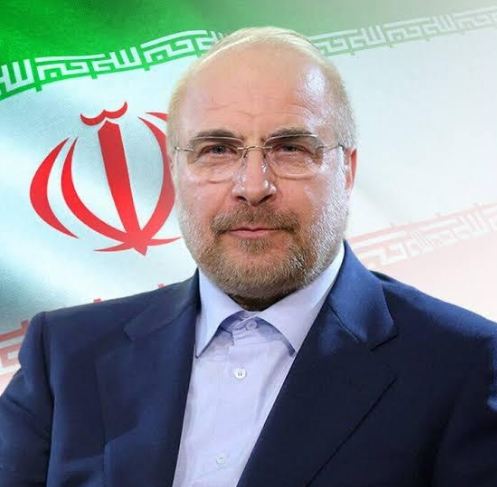
By Mohammad Baqer Qalibaf

It is a profound honor and great pleasure to be among my brothers and sisters in Pakistan. Your country, Pakistan, is a significant and influential member of the Islamic world and an important partner in our region. The relationship between our two nations is deeply rooted, encompassing cultural, religious, political, and economic dimensions. Yet, for us Iranians, the value of Pakistan extends far beyond conventional state-to-state relations — it is a bond of heart and faith.

Iran and Pakistan are two brotherly nations bound together by enduring affection and mutual respect. This fraternity between our people is the most valuable asset our governments share. Iran and Pakistan enjoy profound cultural and civilizational commonalities, underpinned by a shared history, faith, and vision for peace and progress. Iran was proud to be the first country to recognize Pakistan’s independence, and ever since, our two nations have maintained a steadfast relationship of cooperation and goodwill. Eminent figures such as Allama Iqbal Lahori stand as timeless symbols of the intellectual and spiritual unity between our nations. His poetry and philosophy embody the shared aspirations of the people of Iran and Pakistan.

Both the Islamic Republic of Iran and the Islamic Republic of Pakistan have strong, vibrant, and influential parliaments. The tradition of parliamentary diplomacy between our two nations has long been active and productive. In the Islamic Consultative Assembly of Iran, we are committed to deepening cooperation with the Parliament of Pakistan and to supporting our respective governments in strengthening relations across all sectors.

Iran and Pakistan possess vast potential for the further expansion of bilateral economic cooperation. The economies of our two countries complement each other in many areas. Border trade markets represent one of the key mechanisms that must be further developed to enhance cross-border commerce and realize our shared goal of achieving $10 billion in bilateral trade.

Iran and Pakistan also face common challenges and share common adversaries. Both nations have endured the pain of terrorism and have been at the forefront of the fight against it, offering great sacrifices in the pursuit of peace and stability. Alongside this struggle, our two nations have stood united in their unwavering support for the oppressed people of Palestine, raising a clear and principled voice against injustice and occupation. The Zionist regime remains the principal threat to peace and security across the Islamic world. Its brutal aggression in Gaza has once again exposed its inhumane and expansionist nature. From the very first day of this conflict, Iran and Pakistan have expressed solidarity with the Palestinian cause and will continue to do so unwaveringly.

The twelve-day imposed war launched by Israel against the Islamic Republic of Iran was yet another manifestation of this regime’s hostility and aggression. The people and armed forces of Iran, however, responded with strength and dignity, defending their sovereignty and delivering a firm response to the aggressor. I take this opportunity to express my sincere gratitude to the government, parliament, and great people of Pakistan for their fraternal support and solidarity during those difficult days.

Iran and Pakistan will continue to stand shoulder to shoulder in the face of shared challenges, guided by the belief that the security of Pakistan is inseparable from the security of Iran.

Our two countries have long enjoyed close and friendly relations, rooted in mutual trust and brotherhood. As we have preserved this solidarity through the years, so too must we strengthen it in the years ahead. Together, under the sacred banner of Islam, we must strive to remove barriers to cooperation and work for the prosperity, dignity, and progress of both our nations.

Once again, I wish to express my deep appreciation for the warm hospitality extended by my brothers in the Parliament of Pakistan. I pray to Almighty God for the continued peace, prosperity, and success of the great nation and government of Pakistan.

The writer is the Speaker of the Islamic Consultative Assembly of the Islamic Republic of Iran

Interior Minister visits PML-Q Chief Ch Shujaat Hussain to offer condolences

Interior Minister visits PML-Q Chief Ch Shujaat Hussain to offer condolences

ISLAMABAD, Nov 03 (APP/DNA): Federal Interior Minister Mohsin Naqvi visited the residence of Pakistan Muslim League (Quaid) President Chaudhry Shujaat Hussain on Monday.

During the visit, Minister Naqvi met with Chaudhry Shujaat Hussain and expressed deep sorrow over the passing of his brother-in-law, Javed Chattha.

Provincial Minister Chaudhry Shafay Hussain was also present on the occasion.

Mohsin Naqvi offered heartfelt condolences and sympathies to Chaudhry Shujaat Hussain and prayed for the departed soul’s eternal peace.

The Interior Minister also briefed Chaudhry Shujaat Hussain on internal security measures being implemented across the country. Chaudhry Shujaat expressed satisfaction over the overall security situation and appreciated the arrangements made by the Ministry of Interior.

Both leaders paid rich tribute to the martyrs of the nation, acknowledging their sacrifices for the peace and stability of Pakistan.

Security forces kill militants attempting to infiltrate from Afghanistan: ISPR

Security forces kill militants attempting to infiltrate from Afghanistan: ISPR

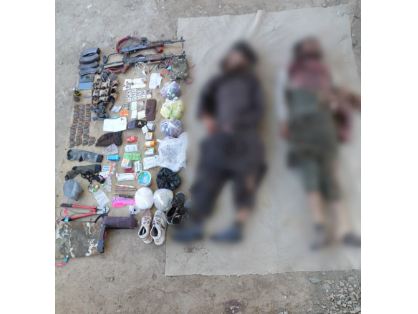
RAWALPINDI, NOV 3 /DNA/ – Three khwarij belonging to Indian Proxy Fitna Al Khwarij were killed in two separate engagements in Khyber Pakhtunkhwa Province.

Movement of a group of khwarij, opposite general area Esham, North Waziristan District, who were trying to infiltrate through Pakistan-Afghanistan border, was picked up by the security forces.

Own troops effectively engaged this group of khwarij. As a result of precise and skillful engagement, two khwarij belonging to Indian proxy, Fitna al Khwarij were sent to hell. It is significant to highlight that one of the killed khwarij has been identified as Kharji Qasim an Afghan national who was actively serving in Afghan Border Police.

In another intelligence based operation conducted in Tank District, own troops successfully neutralised another Kharji belonging to Indian proxy, Fitna al Khwarij, who was identified as Kharji Ikramuddin @Abu Dajana also an Afghan national.

These incidents reveal continued involvement of Afghan nationals in numerous terrorist activities against innocent civilians and security forces inside Pakistan.

Pakistan has repeatedly been asking Interim Afghan Government to ensure effective border management on their side of the border and is expected to fulfil its obligations and deny the use of Afghan soil by Khwarij and involvement of its citizens in terrorism inside Pakistan.

The Security Forces of Pakistan remain resolute and unwavering in their commitment to defend the nation’s frontiers. Sanitization operation is being conducted to eliminate any other Indian sponsored Kharji found in the area as relentless Counter Terrorism campaign under vision “Azm e Istehkam” (as approved by Federal Apex Committee on National Action Plan) by Security Forces and Law Enforcement Agencies of Pakistan will continue at full pace to wipe out the menace of foreign sponsored and supported terrorism from the country.

Governor KP expresses grief over earthquake losses in Afghanistan

Governor KP expresses grief over earthquake losses in Afghanistan

PESHAWAR, Nov 03 (APP/DNA): Governor Khyber Pakhtunkhwa Faisal Karim Kundi on Monday expressed deep sorrow and grief over the loss of lives and property caused by the earthquake in Mazar-e-Sharif and adjoining areas of Afghanistan.

In his condolence message, Governor Kundi extended heartfelt sympathies to the families affected by the tragic disaster, praying for the departed souls and the speedy recovery of the injured.

He said that he shares the pain of the bereaved families and stands in solidarity with the Afghan people during this difficult time.

“I extend my deepest condolences to the Afghan government and people over the loss of precious lives in the earthquake,” the Governor said.

Governor Kundi added that the people of Pakistan stand shoulder to shoulder with their Afghan brothers and sisters in this hour of grief.

IRS seminar highlights Pakistan’s expanding global footprint and diplomatic successes

IRS seminar highlights Pakistan’s expanding global footprint and diplomatic successes

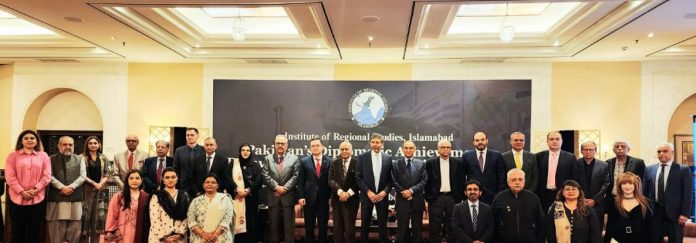
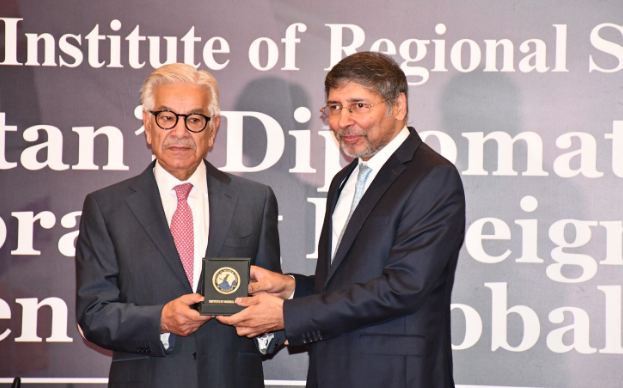
ISLAMABAD, NOV 3 /DNA/ – The Institute of Regional Studies (IRS), Islamabad, hosted a high-profile seminar titled “Pakistan’s Diplomatic Achievements: Reinvigorating Foreign Relations through Renewed Global Engagement.”

In his inaugural address, Federal Minister for Defence Khawaja Muhammad Asif lauded Pakistan’s diplomatic resurgence, calling it a transformative shift from reactive diplomacy to proactive global engagement.

He stated that Pakistan has re-emerged as a credible and confident voice in international affairs “forging alliances, not dependencies.” The Minister underscored the government’s focus on economic diplomacy, noting that strengthened ties with Saudi Arabia, China, the UAE, and the United States have attracted multi-billion-dollar investments in energy, minerals, infrastructure, and technology. He commended Pakistan’s diplomatic corps for restoring the nation’s image as a stable, dependable, and forward-looking state.

Federal Minister for Information and Broadcasting, Mr. Attaullah Tarar (N.I.) praised the professionalism of Pakistan’s diplomatic apparatus in highlighting the country’s strategic importance in regional affairs. He stressed that Pakistan has been a victim, not a sponsor, of terrorism as alleged over the years, underscoring the government’s commitment to justice and transparency. Commending the unity of the nation, the armed forces’ valor, and the media’s responsible role, he said Pakistan’s high-level engagements from Riyadh to Beijing and from Doha to Washington reflect renewed confidence and strategic clarity. He emphasized that Pakistan is “no longer an observer but an architect” in shaping regional security and economic cooperation across the globe.

In his welcome address, Ambassador Jauhar Saleem, President IRS highlighted Pakistan’s reinvigorated diplomatic posture marked by successful high-level visits and renewed partnerships with key global and regional powers. He noted, “From Riyadh to Baku, from Beijing to Washington, Pakistan’s handshake today spans continents. Our diplomacy is forward-looking, economically grounded, and strategically balanced.” Ambassador Saleem commended Pakistan’s foreign service for their dedication, and highlighted the vital role  of diplomacy in securing economic, energy, and defence partnerships. He underlined that Pakistan still faced a number of challenges externally and internally and only a stable, secure and economically resilient Pakistan can support a global engagement befitting a nation of 250 million people. He      expressed hope that the seminar would generate insightful recommendations to help sustain the country’s reinvigorated foreign policy   that could project a confident and forward looking Pakistan abroad.

Former Minister for Energy, Commerce, and Foreign Affairs, Khurram Dastgir Khan, delivered the keynote address underscored that courage is the virtue enabling all others and commended the leadership for making bold decisions during challenging times. Mr. Khan also praised Pakistan’s enduring partnership with China and acknowledged the role of the armed forces and political leadership in effectively demonstrating the resilience of China’s defense infrastructure during the May 6th episode, as well as safeguarding Pakistan’s nuclear deterrent. He concluded by stressing the need to skillfully navigate the geo-economic landscape to achieve national strength through economic revival and investment.

Ambassador Aizaz Ahmad Chaudhry, Former Foreign Secretary, observed that Pakistan’s diplomatic outreach reflects a process of geo-economic consolidation, emphasizing the need for institutional coordination to sustain recent diplomatic gains. He reiterated that Pakistan intends to remain a peacemaker in the region; however, this optimism is conditional and should not be mistaken for complacency, as demonstrated by Pakistan’s firm response to the May 6th misadventure. He commended both the political and military leadership for making difficult yet necessary decisions, and also acknowledged the United States for its renewed interest in maintaining positive relations with Pakistan.

Ambassador Asif Ali Durrani, Former Special Representative for Afghanistan Affairs, noted that Pakistan’s role as a regional stabilizer continues to strengthen through key connectivity projects. He emphasized that while Pakistan’s diplomatic efforts merit appreciation, geographical challenges persist in the form of complex relations with Afghanistan, Iran, and India. Ambassador Durrani underscored the need to reinforce the rule of law, cautioning against its erosion. He called for a coordinated and reassessed approach to the repatriation of Afghan nationals, ensuring political ownership and institutional alignment. He further stressed that effective policing requires empowering local law enforcement agencies as the first line of defense to deal with pressing security challenges.

Ambassador Dr. Raza Muhammad, Former President IPRI, noted that for the first time, foreign policy, defence exports, and economic outreach are aligned, citing major projects such as Reko Diq, ML-1 rail, and manpower-export agreements. Mr. Zahid Hussain, senior journalist and author, emphasized that sustained domestic stability and transparency are vital for consolidating diplomatic success.

Syed Hassan Akbar, Chairman of the Strategic Policy Planning Cell, NSD, highlighted that Pakistan is evolving into a policy-shaping nation, integrating technology, digital economy, and climate diplomacy into its foreign policy framework.

Breast cancer awareness session at RCCI

Breast cancer awareness session at RCCI

Speakers urges for free mammogram testing at all government hospitals for early detection of breast cancer

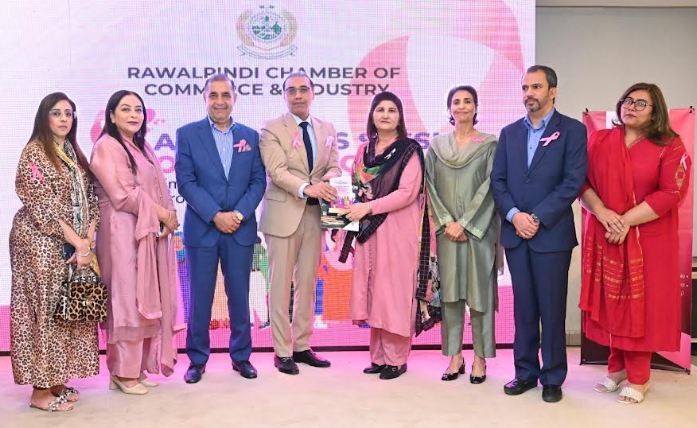
RAWALPINDI, NOV 3 /DNA/ – Speakers at the Rawalpindi Chamber of Commerce & Industry (RCCI) have urged the government to provide free mammogram testing at all government hospitals to facilitate early detection of breast cancer, as one in every ten women in Pakistan is at risk of developing the disease during her lifetime.

The Breast Cancer Awareness Session, organized by RCCI in collaboration with Shaukat Khanum Memorial Cancer Hospital & Research Centre, aimed to support the national campaign for early detection and prevention of breast cancer and to encourage joint efforts in tackling this pressing public health challenge.

Speakers and participants collectively called on the government to establish large-scale, nationwide breast cancer screening and treatment services, noting that Pakistan faces one of the highest breast cancer rates in Asia, with over 92,000 new cases reported annually.

The Chamber had the distinct honor of hosting Lt. Gen (R) Nigar Johar Khan, Pakistan’s first female Surgeon General of the Pakistan Army and Brand Ambassador of RCCI, along with Ms. Fauzia Viqar, Federal Ombudsperson for Protection against Harassment of Women at Workplace, as Chief Guests. Both eminent women inspired the audience with their impactful remarks, emphasizing the importance of women’s health, empowerment, and timely medical care.

Speaking on the occasion, RCCI President Usman Shaukat highlighted the vital role of women in society and stressed the importance of collective action in combating breast cancer. He noted that through greater awareness, early diagnosis, and access to quality healthcare, “we can save thousands of precious lives across Pakistan.”

Group Leader and former president, Sohail Altaf underscored the need for an inclusive and health-conscious society, stressing the private sector’s role in supporting preventive health initiatives. He reiterated the urgency of providing free screening facilities to ensure early detection and timely treatment.

China eyes AI, drones in major Pakistan industrial push

China eyes AI, drones in major Pakistan industrial push

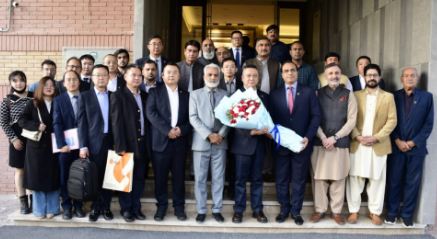
ISLAMABAD, NOV 3 /DNA/ – The Islamabad Chamber of Commerce and Industry (ICCI) on Monday hosted a significant 21-member Chinese delegation led by the Organizing Committee of the China–Pakistan Safety Production Equipment Procurement Organizing Committee, aimed at strengthening industrial cooperation between the two nations. The delegation was headed by YangPeng Yong, Chairman of the Ningxia Emergency Industry Group.

The visit marked a major step forward in expanding economic collaboration, with the delegation exploring partnerships and joint ventures across a wide spectrum of high-potential sectors in Pakistan.

In his welcome address, ICCI Acting President Tahir Ayuub warmly received the delegation and underscored the deep and historic friendship between Pakistan and China. He highlighted the vast untapped potential in bilateral trade and investment, citing Pakistan’s improved investment climate and support for industrialization. He assured the Chinese delegation of ICCI’s complete facilitation in connecting them with credible local entrepreneurs and fostering viable business collaborations.

YangPeng Yong, head of the Chinese delegation, expressed strong interest in bolstering long-term business ties with Pakistan, noting that low-interest, long-term loans could be extended to Pakistani investors as part of the cooperation. The delegation’s focus areas included oil and gas exploration, geological surveys, and energy development in mining, petroleum, and water conservancy. They also demonstrated interest in disaster management, high-tech equipment training, road vehicle and medical device manufacturing, and industrial park development.

The delegation also showed ambition to collaborate in cutting-edge technological sectors such as Internet services, e-commerce, Artificial Intelligence (AI), cloud computing, 5G communication, and drone technology.

Productive B2B meetings with Pakistani entrepreneurs enabled both sides to deliberate on specific project proposals and lay groundwork for future partnerships. The event drew strong participation from the local business community, including ICCI Acting Senior Vice President Irfan Chaudhry and Executive Members Raja Naveed Satti, Zulqurnain Abbasi, Malik  Mohsin Khalid , Ishaq Sial, Rohail Anwar Butt, and Malik Abdul Aziz.

The visit is widely viewed as a pivotal milestone in broadening and deepening the scope of Pak-China economic cooperation under the framework of the China-Pakistan Economic Corridor (CPEC), signaling renewed commitment to shared industrial growth and technological progress.

Stay Connected

64FansLike
60FollowersFollow

Latest Reviews

Exchange Rates

USD - United States Dollar
EUR
1.14
GBP
1.34
AUD
0.69
CAD
0.70