ISLAMABAD, DEC 5 – Interior Minister Mohsin Naqvi on Friday announced the launch of an artificial intelligence-based application as a pilot project to curb illegal immigration and clamp down on fake travel documents.
He was speaking while co-chairing a meeting with Federal Minister for Overseas Pakistanis Chaudhry Salik Hussain, where the two reviewed “immigration reforms” aimed at facilitating citizens and improving the country’s image at the international level.
Naqvi said the AI-based app would help authorities determine “who is fit to travel and who is not”. He said the measures were aimed at stopping illegal immigration and that zero tolerance would be adopted against fake visas and agent mafias.
During the meeting, a decision was made to clamp down on those travelling abroad on forged documents and to launch a crackdown on elements and agent networks involved in the business of fake visas. The federal ministers also ordered that final recommendations on the reform package be submitted within seven days.
Naqvi said the system for issuing Protectors (emigration clearances for Pakistanis going abroad on work visas) would be made foolproof, while reforms would be introduced in the wider immigration system to facilitate passengers. He added that after the passports of deported individuals are cancelled, the government would ensure they do not receive a visa again.
The interior minister further announced that a uniform international driving licence would be issued by the National Police Bureau. He said the government was in contact with other countries to improve the ranking of the green passport and warned that people going abroad through improper means were damaging the country’s reputation.
“The purpose of immigration reforms is to provide convenience to the public and improve the global image,” Naqvi said.
Federal Minister Salik Hussain underlined the need for authentic documentation for those travelling on labour visas, saying it was essential that their papers be genuine.
He assured that the Ministry of Overseas Pakistanis would extend all possible cooperation for improvements in the Protector system and the immigration system.
ISLAMABAD, DEC 5 /DNA/ – The Higher Education Commission (HEC) has initiated a landmark project to completely revamp its degree attestation system by integrating cutting-edge blockchain technology. This pivotal transition is set to enhance efficiency and transparency across the verification process while eliminating the long-standing requirement for applicants’ physical presence at HEC offices.
This move marks a major step in HEC’s drive towards digital transformation. Following the successful completion of the system development procurement process, HEC has announced that the new, fully automated system will be operational within the next six months.
Acting Chairman HEC, Mr. Nadeem Mahbub, underscored the urgency of the initiative, directing the concerned team to prioritise the task and ensure its earliest implementation. He was briefed that the proposed system will completely remove the requirement for applicants to provide physical documents or visit HEC offices for verification.
The new system promises a seamless process for graduates from the 25 Higher Education Institutions (HEIs) that have fully implemented the Enterprise Resource Planning (ERP) system, as student information from these institutions will be automatically integrated into the blockchain. Graduates from these HEIs will not need to submit any documents; their degrees will be added to the HEC blockchain upon graduation, granting them direct access to their verified degrees through the HEC Portal.
For students graduating from HEIs that currently operate without an ERP system, the process remains entirely digital and streamlined: degrees and transcripts will be submitted online through the HEC portal, then forwarded to the respective university’s dashboard for verification, and once verified by the university, the documents will be immediately integrated into the blockchain.
The core benefit of the transition lies in security and speed: degree verification will take place entirely online, with all records digitally secured to ensure instant, tamper-proof access. Once verified and stored on the HEC blockchain, degrees will enable immediate authentication by all key stakeholders, including government departments, the Foreign Office, embassies, and private organizations.
This transition will successfully make the attestation process fully paperless, automated, and transparent, finally removing the need for manual stamping or physical documentation.
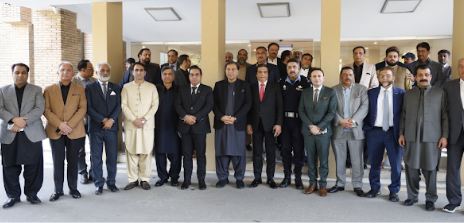
ISLAMABAD, DEC 5 /DNA/ – A week of escalating tensions between the business community and the Capital Development Authority (CDA) ended on Friday with a significant breakthrough, as the CDA Chairman agreed to deseal all the sealed industries and the trade houses unconditionally. The development took place after the proactive mediation by Federal Minister for Railways Mohammad Hanif Abbasi.
Recognizing the gravity of the situation, Minister Abbasi immediately engaged Interior Minister Mohsin Naqvi and pushed for an emergency dialogue. The high-level meeting held at CDA headquarters drew unprecedented attendance. Both sides committed to a cooperative framework designed to prevent future confrontations and to ensure formal representation of the business community in decisions affecting the capital.
Speaking after the meeting, Mohammad Hanif Abbasi stated that Islamabad cannot progress without its business community and that cooperation, rather than unilateral action, is vital for the capital’s development. He acknowledged the business sector’s grievances and appreciated Minister Naqvi’s swift and constructive response in diffusing the crisis.
Representing the Islamabad Chamber of Commerce & Industry (ICCI), Sardar Tahir Mehmood presented a comprehensive and forceful account of the challenges faced by traders and industrialists. He demanded the immediate and unconditional de-sealing of business premises, arguing that abrupt enforcement drives without consultation have created fear and instability. He criticized the recent escalation in FAR rates as unjustified and damaging to investor confidence, noting that comparable institutions in other provinces charge far lower fees, prompting investors’ confidence, despite the Prime Minister’s reduction of transfer fees nationwide, the CDA’s refusal to extend the relief to Islamabad was another major concern.
Sardar Tahir further highlighted the excessive delays and financial burdens associated with the DVC process, emphasizing that the involvement of committee members who simultaneously run private businesses constitute a clear conflict of interest. He rejected the steep increase in transfer fees—raised from per-square-yard charges to three per cent of FBR value—describing it as a severe blow to the cost of doing business.
The ICCI President also reiterated the longstanding demand for Islamabad’s rightful share in the NFC Award and stressed that the business community is struggling for survival under increasing administrative pressures.
Chairman Founders Group, Sheikh Tariq Sadiq, said the business community had lost regional competitiveness amid rising operational costs, utility charges, and cumbersome administrative procedures.
Senior Vice President Tahir Ayub raised the deteriorating condition of the Fruit and Vegetable Market which is playing a vital role in catering the needs of Islamabad, Rawalpindi, KP, Northern Areas and Azad Kashmir.
President Anjuman-e-Tajran Pakistan, Ajmal Baloch, endorsed ICCI’s stance and detailed the challenges faced by traders, particularly from the BCS, Encroachment Wing, and Food Authority. He also acknowledged the commendable performance of Dr. Anam, Director MC, who received appreciation from all participants.
Chairman CDA Muhammad Ali Randhawa acknowledged a communication gap between the administration and the business community, which he said had caused misunderstandings and unnecessary friction. He proposed structured monthly engagements with ICCI and its affiliated sectors to ensure continuous consultation for the city’s betterment. Randhawa affirmed that his office remains open 24/7 for the business community and reiterated his commitment to resolving their issues promptly. He also announced the formation of a working group to review fee structures and assured stakeholders of timely redressal of their concerns.
The meeting was attended by senior government officials, including Inspector General of Police Ali Nasir Rizvi, Advisor to the Prime Minister on Tourism Sardar Yasir Ilyas, Deputy Commissioner Irfan Memon, and senior CDA members from Planning, Engineering, Environment, Finance, and Administration. ICCI’s delegation included Shaikh Abdur Razzaq, President of Islamabad Industrial Association; Senior Vice President Muhammad Ali Mirza, ICCI Vice President Muhammad Irfan; former Presidents Khalid Javed; Mohammad Ijaz Abbasi, Board Members; Market Presidents including Yousuf Rajput, Kamran Kakakhel, Shehzad Shabbir Abbasi, Abdur Rehman Siddiqui, Shahid Abbasi, Ahmed Khan, former SVP Khalid Ch. Secretary General Ghulam Murtaza and others.
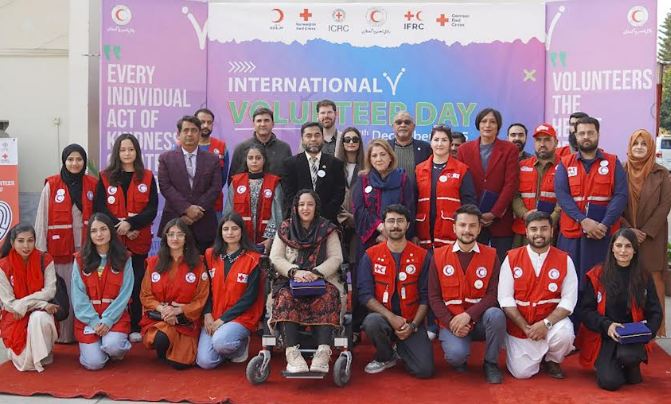
ISLAMABAD, DEC 5 /DNA/ – The Pakistan Red Crescent Society marked International Volunteer Day under the theme “Every Contribution Matters” with a vibrant ceremony in Islamabad on Friday, attended by students from Cadet College Hasan Abdal, several other educational institutions, volunteers, PRCS staff and representatives from Partner National Societies. The event featured an impressive march-past by cadets and a stage play highlighting the history and humanitarian legacy of the Red Cross Red Crescent Movement.
In her address, Honorable Chairperson PRCS Mrs. Farzana Naek emphasized the indispensable role of volunteers, calling them a precious asset for the organization. She said that volunteers bring energy, dedication, and compassion to every initiative, strengthening PRCS responses during disasters, community outreach programs, and health initiatives. She highlighted how volunteers are often the first responders in emergencies, providing critical support and relief when it is most needed.
She further urged the youth to engage in voluntary service and paid tribute to all humanitarian heroes who sacrificed their lives for humanity, noting that their courage inspires generations of volunteers. She added that every person, irrespective of age, should come forth and contribute to humanitarian causes, because that is what matters the most.
In his opening remarks, Secretary General Muhammad Abaidullah Khan welcomed the participants and appreciated the dedication of PRCS volunteers nationwide. He noted that PRCS has developed a highly trained and active volunteer force that has played a key role in responding to floods and other emergencies across Pakistan this year. He also highlighted the organization’s mentorship and training programs, which aim to equip young volunteers with essential skills and foster a culture of community service.
Head of Delegation, IFRC Pakistan, Mr. Farid Abdulqadir, honored volunteers for their selfless service and offered special tribute to those around the world who lost their lives in the line of duty. He appreciated the work of the Pakistan Red Crescent Society under the vision of Chairperson Mrs. Farzana Naek and reaffirmed IFRC’s commitment to supporting volunteerism and humanitarian action.
Head of Office, German Red Cross, Mr. Asif Aman, commended PRCS initiatives and encouraged people from all segments of society to step forward and give voluntary service. He emphasized the importance of community involvement to build stronger and safer communities.
The ceremony concluded with the presentation of commemorative shields to outstanding volunteers, followed by a cake-cutting to celebrate International Volunteer Day.
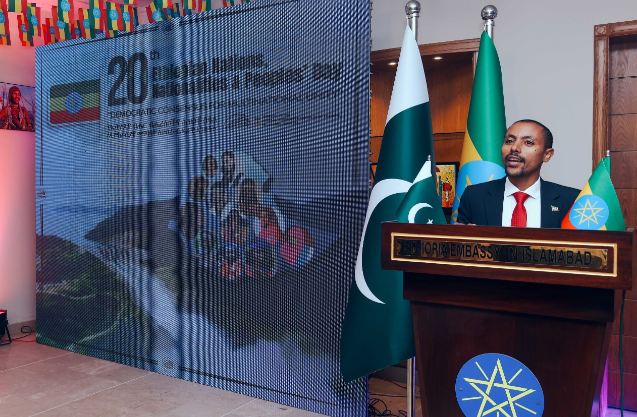
Farah Naz Akbar, Parliamentary Secretary for the Ministries of National Heritage & Culture, and Education & Professional Training, attended the ceremony as Chief Guest, extending warm felicitations to the government and people of Ethiopia on behalf of Pakistan
DNA
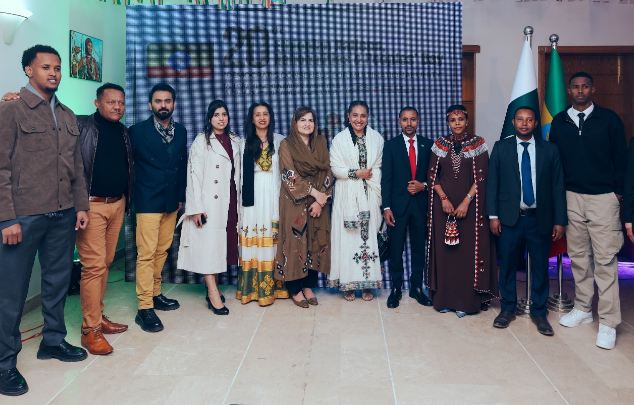
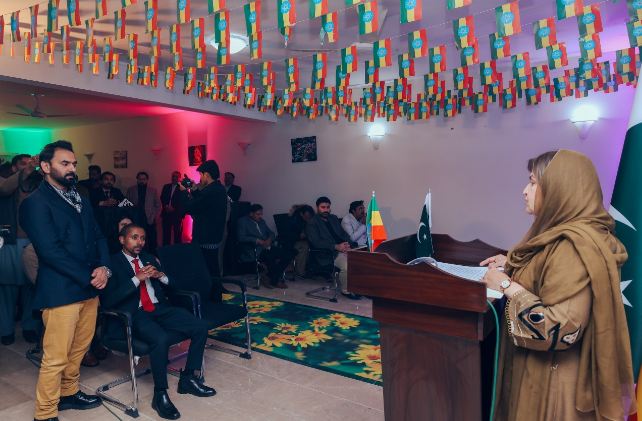
ISLAMABAD – Pakistan and Ethiopia reaffirmed their commitment to strengthening bilateral relations as the Embassy of Ethiopia in Islamabad marked the 20th Nations, Nationalities and Peoples’ Day under the theme “Consensus for Multinational Unity.”
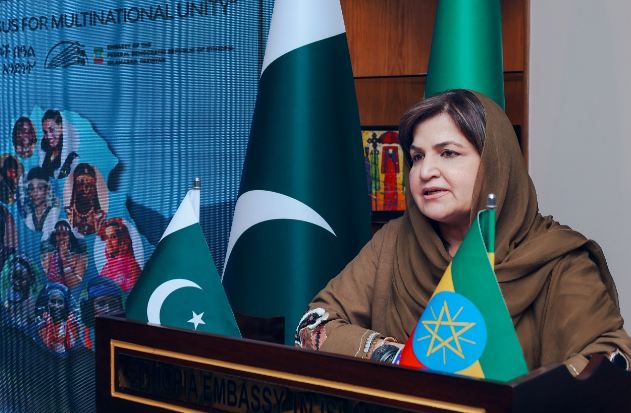
H.E. Farah Naz Akbar, Parliamentary Secretary for the Ministries of National Heritage & Culture, and Education & Professional Training, attended the ceremony as Chief Guest, extending warm felicitations to the government and people of Ethiopia on behalf of Pakistan.
In his address, Mr. Chalachew Eshetie, Chargé d’Affaires (a.i.) of Ethiopia, highlighted the historical significance of Nations, Nationalities and Peoples’ Day, celebrated annually on December 8. He noted that the day commemorates the ratification of Ethiopia’s 1994 Constitution, which guarantees recognition, equality, cultural identity, and the rights of all communities within the country’s diverse social fabric.
Mr. Eshetie also reflected on major milestones achieved by Ethiopia under the leadership of Prime Minister H.E. Dr. Abiy Ahmed Ali, including the completion and inauguration of the Grand Ethiopian Renaissance Dam (GERD), accelerated infrastructure development, broad-based reforms, and the country’s ongoing economic resurgence.
Parliamentary Secretary Farah Naz Akbar emphasized the shared values between Pakistan and Ethiopia, particularly cultural diversity, strong traditions, and vibrant youth demographics. She reaffirmed Pakistan’s resolve to deepen cooperation with Ethiopia through its “Look Africa” and “Engage Africa” policies.
Commending Ethiopia’s progress, she praised the economic transformation achieved under Prime Minister Abiy Ahmed and expressed Pakistan’s intent to continue expanding ties in trade, culture, education, and people-to-people exchanges.
The event concluded with mutual expressions of goodwill and a shared commitment to advancing multinational unity and bilateral collaboration.
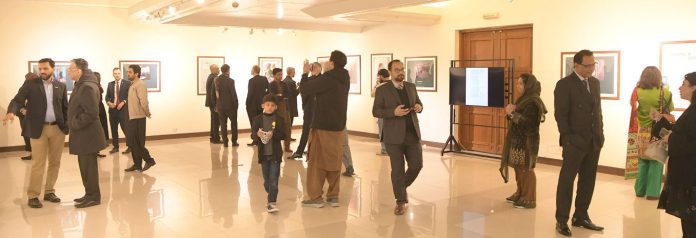
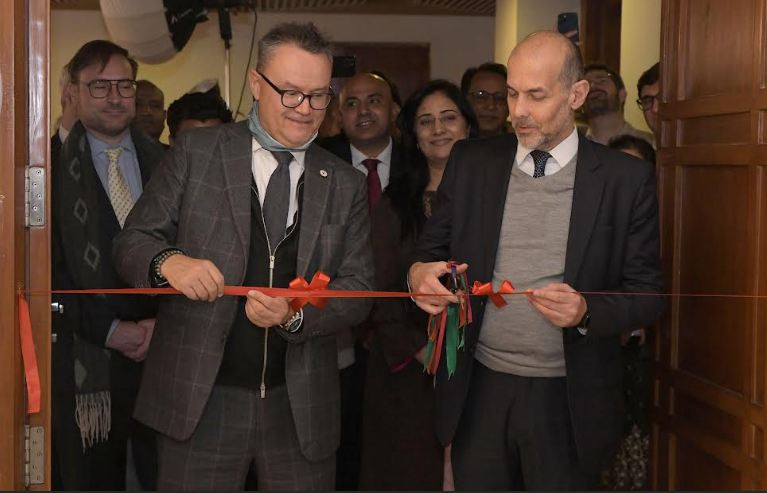
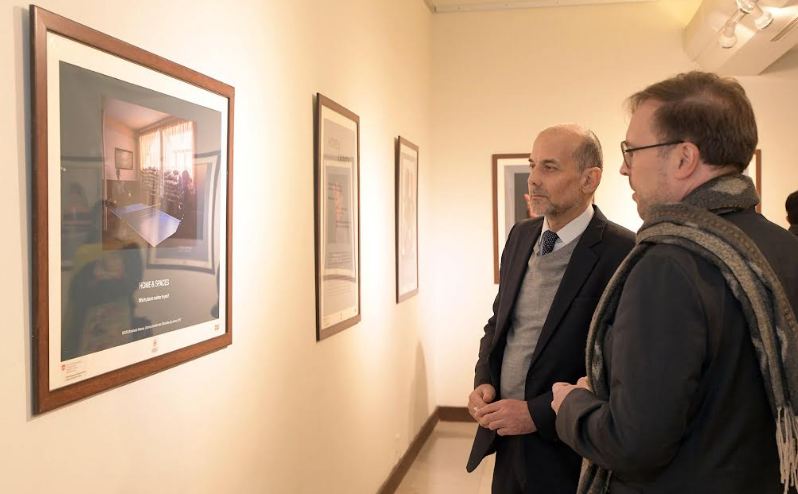
ISLAMABAD, DEC 5 /DNA/ – The National Art Gallery at the Pakistan National Council of Arts (PNCA) hosted the inauguration of a powerful and thought-provoking photo exhibition titled “Dialogue on Humanity”, jointly curated by Photo-Élysée Museum Lausanne, the Swiss Federal Department of Foreign Affairs, and the International Committee of the Red Cross (ICRC). The exhibition, which marks the 75th anniversary of the Geneva Conventions, will remain open to the public until December 10, 2025.
Ambassador of Switzerland to Pakistan Georg Steiner formally opened the exhibition, welcoming diplomats, art enthusiasts, students, and members of civil society. Despite what he described as “a busy evening with multiple events taking place in Islamabad,” the ambassador expressed delight at the strong turnout and appreciation for the importance of the occasion. The exhibition will continue till December 10.
Ambassador Steiner extended special thanks to Asma Karim from the Swiss Embassy and the team at ICRC for their dedicated efforts in bringing the exhibition to Pakistan. He also acknowledged the PNCA staff for their cooperation in hosting the event.
In his address, Ambassador Steiner highlighted the global relevance of the exhibition. “Dialogues on Humanity has already travelled to 11 countries,” he noted, adding that the exhibition invites visitors to reflect deeply on the principles that shape modern humanitarian action: humanity, neutrality, impartiality, and independence. These principles, he said, lie at the heart of the Geneva Conventions and remain vital amid the complexities of the contemporary world.
He emphasized that the purpose of the exhibition is not only to showcase striking images but also to encourage critical and independent thinking. Referencing key themes printed on the invitation card—living in nature, hope and dignity, facts and fiction, truth and lies, digital and data—the ambassador said the photographs urge viewers to contemplate how humanitarian values are applied in daily life.
Visitors are encouraged to scan a QR code provided at the venue, which connects them to an online platform to share their reflections with a global audience. Ambassador Steiner expressed hope that Pakistani voices and perspectives would contribute meaningfully to this global conversation.
Speaking on the occasion, Christoph Sutter, Head of Delegation of the International Committee of the Red Cross (ICRC), underscored the significance of visual storytelling in preserving humanitarian memory and promoting deeper understanding of global crises. He praised the collaboration between Switzerland, Photo-Élysée, and ICRC, stating that such initiatives help bring the principles of humanitarian law closer to the public.
The exhibition features a curated selection of powerful photographs that explore conflict, resilience, loss, hope, and the shared human experience. Each frame invites viewers to question, reflect, and reimagine a more humane future.
Concluding his remarks, Ambassador Steiner invited attendees to revisit the exhibition with colleagues, friends, and families before it closes on December 10. “Take time to experience these remarkable images—each one speaks to our collective humanity,” he said.
The exhibition is open at the National Art Gallery, PNCA, and welcomes visitors from all walks of life.
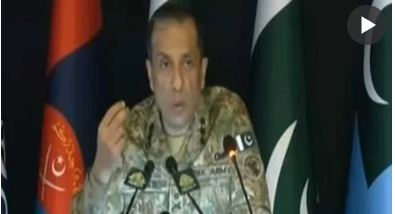
ISLAMABAD, DEC 5 – Inter-Services Public Relations (ISPR) Director General (DG) Lieutenant General Ahmed Sharif Chaudhry has hit out at Pakistan Tehreek-e-Insaf (PTI) jailed founder Imran Khan for “propagating anti-military and anti-state narrative”.
“The headquarters of the Chief of Defence Forces has been inaugurated,” the ISPR chief said hours after the Ministry of Defence issued an official notification for the appointment of Field Marshal Syed Asim Munir as the Chief of Defence Forces (CDF).
The ISPR chief said today’s briefing was aimed at outlining internal national security challenges, saying that nothing is above the state of Pakistan.
Without naming anyone, Lt Gen Chaudry referred to jailed PTI founder Imran Khan saying: “His ego and desires have grown to such an extent that he says if not me, then nothing.”
Describing what he called a “delusional mindset” of a “person captive of his own thoughts,” Lt Chaudhry said that the narrative promoted by a particular political figure has “evolved into a national security threat”.
The DG ISPR said the jailed party’s founder’s narrative has become a threat to Pakistan’s national security.
The ISPR DG said that anyone who attacks the armed forces or its leadership is effectively “creating space for another army”.
Lt Gen Chaudhary asserted that the PTI founder keeps the Constitution, the law and established rules aside while promoting this narrative.
“Under which law or Constitution do you meet a convicted individual?,” the DG ISPR asked, adding that this person sends a narrative against the military and its leadership out of the prison whenever a meeting is held.
The DG ISPR further that the same individual previously tried to create a narrative urging people abroad to stop remittances so that Pakistan would default.
“We respect Pakistan’s political leadership but keep the army away from your politics,” the militray’s spokesperson said, adding that: “We will not allow anyone to create a rift between Pakistan’s army and the people”.
“We will not allow you to incite the people against the army,” Lt Gen Chaudhry remarked.
Noting that the freedom of expression is allowed under Article 19 of the Constitution, the ISPR DG said that it carries certain restrictions with it as well and does not permit anyone to speak against the state and national security.
Lt Gen Chaudhry said the “mentally disturbed individual” had recently posted a tweet and asked his supporters to target military leadership that stood firm against an enemy eight times stronger in the Operation Bunyamum Marsoos.
“There is an entire science behind this,” the ISPR DG said.
The ISPR DG said that the individual is “working alongside external elements,” and cautioned that anyone attacking Pakistan’s Armed Forces “under their own political mindset” should expect a response.
He reiterated that the Pakistan Armed Forces do not represent any political ideology, saying: “We are the armed forces of Pakistan and reflect no political thinking.”
The ISPR DG said that whenever people meet the political figure, “he propagates a narrative against the state of Pakistan and the military.”
According to the DG ISPR, PTI founder Imran has now become a national security threat and is working in coordination with external elements.
Reaffirming the institution’s stance, he said, “We are the armed forces of Pakistan and do not represent any political ideology.” He added that if anyone attacks the Pakistan Army based on their personal beliefs, “we will respond”.
In every age of conflict, nations have understood that the strength of an army does not rest merely in the number of its battalions or the size of its armoury, but in the excellence of its equipment, the discipline of its ranks, and above all, the determination that beats within the hearts of its soldiers. War requires tools that deter aggression and answer it with resolute force, yet history testifies that even the most formidable machinery is powerless without the spirit that guides it. Pakistan learned this lesson not in comfort but in fire, when in 1971 it faced a trial greater than its material capacities.
There is no denying that Pakistan entered the war of 1971 under conditions far less favourable than those of its adversary. Politically, the country was grappling with internal discord, strained governance, and the tragic anxieties emerging in East Pakistan. India, in contrast, enjoyed greater political coherence and international support. Economically as well, Pakistan was more limited in resources, while India, with a larger industrial base and greater financial resilience, possessed a comparative advantage. In matters of defence, India had the benefit of numerical superiority, larger stockpiles, and extensive backing from global partners. In external affairs too, New Delhi benefited from significant diplomatic alignments, particularly its strategic treaty with the Soviet Union, whereas Pakistan’s position was more fragile, dependent on distant alliances and insufficiently supported by its immediate region.
Yet, despite this disparity, the Pakistani nation did not lose heart. The limitations in political stability, economic strength or diplomatic support did not diminish its resolve. When India launched its offensive, the Pakistan Armed Forces met it with the courage of a people determined not to let their homeland be overrun by aggression. In those days when military hardware was unevenly balanced and the diplomatic climate seemed unfriendly, it was the indomitable courage of Pakistani soldiers that became the country’s true shield.
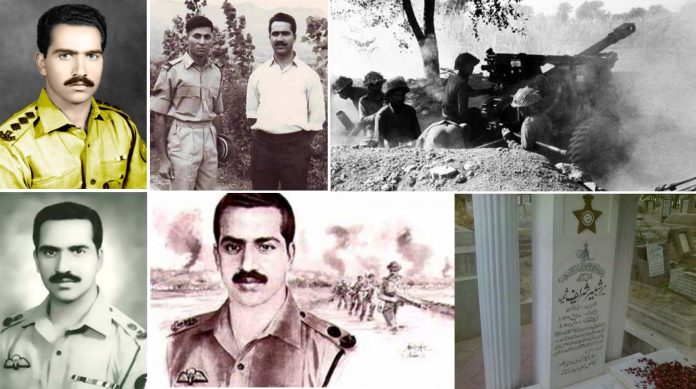
Among the shining names of that difficult period, the example of Major Shabbir Sharif stands in eternal brilliance. He was a young officer who understood that courage is not measured by the strength of the arms one carries, but by the strength of the conviction one defends. On December 6, 1971, during some of the fiercest clashes of the conflict, he led his men with an unmatched spirit. Under heavy enemy fire, he seized strategic ground, repelled repeated assaults and inflicted decisive losses on the opposing forces. In the final moments of his life, he embodied an unshakeable devotion to duty, offering his life for the defence of the motherland. For his supreme courage and sacrifice, he was awarded Nishan-e-Haider, the nation’s highest military honour. His legacy remains a symbol of what Pakistan had in its favour even when the odds appeared overwhelming: courage, faith, and an unbroken will.
From that era to the present day, a great transformation has taken place in the military sphere. The global landscape of warfare has changed, and Pakistan, despite facing geopolitical pressures and financial challenges, has strengthened itself in areas where it once lagged behind. Politically, the country today has a more structured system of governance, while India faces its own internal divisions and growing political polarisation. Economically, though Pakistan continues to address serious challenges, India’s own rise has created new strategic vulnerabilities, particularly in the context of regional disputes and military overstretch. Defence capabilities too have undergone a significant shift. Pakistan’s modern missile systems, air defence technology, and nuclear deterrence have created a strategic balance that did not exist in 1971. India may possess larger numbers, but Pakistan today commands a deterrent capability that ensures aggression cannot be contemplated without grave consequences. In external affairs as well, the global environment has evolved; alliances are no longer as predictable as they once were, and Pakistan maintains crucial partnerships that reinforce strategic stability in the region.
Thus, when one compares the Pakistan of 1971 with the Pakistan of today, it becomes clear that the nation has travelled a long distance. The disparity that once existed has narrowed. The lesson, however, remains unchanged: equipment may strengthen a nation’s hands, but it is the character of its people that strengthens its destiny. The story of Major Shabbir Sharif reminds us that when a soldier fights for honour and homeland, he stands taller than any adversary, regardless of the weapons arrayed against him.
In remembering his sacrifice, we remember the essence of Pakistan’s resilience. Though the material balance in 1971 favoured the enemy, the moral and spiritual strength of Pakistani soldiers transformed the battlefield. Today, as the region continues to witness strategic competition and military modernisation, the legacy of that era teaches us that while nations must prepare with the most advanced means of defence, they must also preserve the spirit that gave life to sacrifice. For in the final reckoning, it is not merely the might of the machine, but the courage of the heart, that decides the fate of nations.
ISLAMABAD, DEC 5 /DNA/ – Prime Minister Shehbaz Sharif on Thursday extended warm felicitations to Field Marshal Syed Asim Munir on assuming charge as Pakistan’s first Chief of Defence Forces, calling the appointment “historic” and a defining moment for the country’s security framework.
The Prime Minister praised Asim Munir’s “bold and courageous leadership,” noting that his command played a decisive role in unifying the Armed Forces and galvanizing the nation during what he described as the “Battle for Truth.” He said the people of Pakistan would always remember his wartime leadership, which proved instrumental in securing a “historic victory for our homeland.”
PM Shehbaz also congratulated Air Chief Marshal Zaheer Ahmad Babar Sidhu on the extension of his tenure, lauding the Pakistan Air Force under his command for destroying seven enemy aircraft and advanced missile defence systems “with unmatched professionalism,” thereby reinforcing Pakistan’s air superiority.
The Prime Minister reaffirmed that all national institutions stand united for the defence, development, and prosperity of Pakistan, adding that together, “we will make our country’s defence truly invincible, InshaAllah.
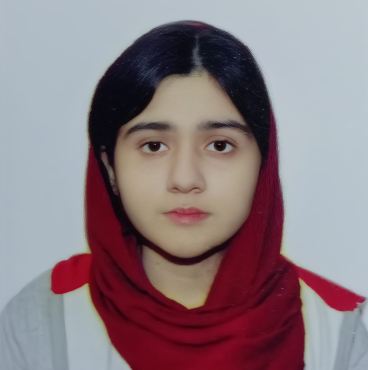
ISLAMABAD, DEC 5 /DNA/ – Zainab Nawaz, a student of O level, has earned pride for Pakistan by winning the Gold Award in the senior category of prestigious The Queen’s Commonwealth Essay Competition 2025. Her achievement stands out among 53,434 entries submitted from 56 Commonwealth member countries.
Established in 1883 by the Royal Commonwealth Society, The Queen’s Commonwealth Essay Competition is the world’s oldest international writing contest for schools. It invites young writers to explore themes aligned with Commonwealth values and global issues. This year’s theme, “Our Commonwealth Journey,” challenged participants to reflect on geographical, historical, or personal journeys.
In the senior category, for ages 14 to 18, Zainab demonstrated exceptional creativity and insight in her essay titled “National Legends and folklore can take us on a journey through history and culture. Retell a famous folklore from your own or another commonwealth country in a surprising way.” She uniquely reimagined the iconic tragic love story of Sohni Mahiwal, capturing the rich cultural heritage of the region.
Zainab, an avid reader and passionate creative writer, has previously earned Silver and Bronze awards in the junior category of this competition, highlighting her continued dedication and growth as a young literary talent.
The Royal Commonwealth Society has congratulated Zainab on her outstanding accomplishment, which brings pride to Pakistan and exemplifies the power of storytelling to connect cultures across the Commonwealth.