Home Blog Page 40

Finance Minister announces major shift to export-led economic model

Finance Minister announces major shift to export-led economic model

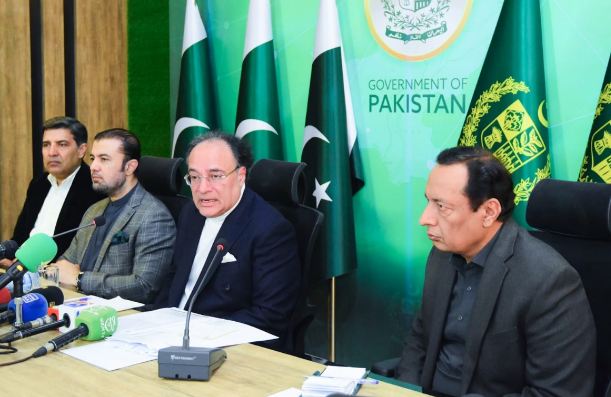
ISLAMABAD, NOV 30 /DNA/ – Federal Minister for Finance and Revenue Senator Muhammad Aurangzeb, in a wide-ranging press conference in Islamabad today, has underscored the Government’s decisive shift toward an inclusive, private-sector-driven and export-led growth model, highlighting the recent abolition of the Export Development Surcharge (EDS) as a key demonstration of this commitment.

He noted that the Government’s earlier decision to eliminate the decades-old levy, alongside reforms to strengthen the Export Development Fund’s governance, reflects a clear policy direction aimed at boosting competitiveness, empowering exporters, and laying the foundations for sustainable economic expansion.

The Minister stated that in line with the Prime Minister’s directive to place the private sector at the centre of Pakistan’s economic expansion, the Government had accepted recommendations to overhaul the EDF’s governance structure. He noted that the Prime Minister had gone beyond the private sector’s proposal by approving the complete abolition of the Export Development Surcharge introduced in 1991 ending the 0.25% levy that exporters had paid for decades. The matter has already been summarised for Cabinet approval, after which its implementation will begin immediately.

He emphasised that this step reflected the Government’s resolve to empower exporters, improve competitiveness, and channel resources and decision-making authority toward the private sector to realise Pakistan’s export potential.

Senator Aurangzeb reiterated that the Government’s medium-term economic vision rests on moving from stabilisation to durable, broad-based and inclusive growth led by exports, remittances, productivity and private investment. He stated that recent months had shown clear signs of momentum in domestic economic activity, noting that from July to October, cement production rose by 16 percent, fertiliser by 9 percent, petroleum by 4 percent, automobiles by 31 percent, and mobile phone manufacturing by 26 percent. Large-scale manufacturing grew by 4.1 percent year-on-year in the first quarter, reflecting a positive shift compared to the contraction recorded last year. He emphasised that the challenge ahead was to sustain this trajectory while ensuring that Pakistan does not return to the boom-and-bust cycles driven by external sector pressures.

The Minister highlighted that export performance had strengthened, with overall exports rising 5 percent and IT services exports growing by over 20 percent year-on-year. He stressed that the IT sector had recorded back-to-back monthly highs in September and October, establishing itself as a critical pillar of the “new economy,” alongside emerging sectors such as minerals and mining. He noted that the $3.5 billion Reko Diq-related syndication, led by IFC and now financially closed following the resolution of procedural delays, represents a transformational investment that will generate an estimated $2.8–$2.9 billion in annual exports once production commences.

The Minister reported that remittances had also shown robust strength, reaching $38 billion last year and expected to surpass $41 billion this year, providing a sizeable buffer to the current account. He added that the Government was managing imports carefully under a reformed tariff regime designed to support industrial competitiveness by prioritising raw materials and intermediate goods while gradually phasing out long-standing protectionism. This transition, he emphasised, will be phased over four to five years to enable domestic industries to become internationally competitive.

Senator Aurangzeb underscored that structural reforms remained central to the Government’s agenda. He confirmed that the new Tax Policy Office—now operational under the Finance Division—had conducted its first advisory board meeting and would henceforth be responsible for preparing tax policy and the national budget. The objective, he said, was to bring consistency, analytical rigour, and private-sector input into the policy-making process while allowing FBR to focus on enforcement, compliance and technology-driven administration. He noted that work on pension, debt, SOE reform, the digital economy, taxation, energy, and rightsizing was proceeding as committed earlier.

On public finance, the Minister reported that Pakistan’s domestic debt stock had stabilised for the first time in nine years, and debt servicing costs had begun to decline with the reduction in the policy rate. He confirmed that Pakistan’s inaugural Panda Bond supported by credit enhancement from ADB and AIIB and approved by China’s central bank, would be issued before December or, at the latest, before the Chinese New Year, helping diversify Pakistan’s funding base and reduce borrowing costs.

The Minister announced that the 11th NFC Award process would begin next week, with Chief Ministers and provincial finance teams joining deliberations. He emphasised that revenue, expenditure and governance reforms require constructive federal–provincial engagement and expressed confidence that the meeting would be held in a spirit of “Pakistan First,” following the consensus approach demonstrated during the National Fiscal Pact.

Speaking on the Global Diagnostic and Corruption Report, Senator Aurangzeb clarified that the Government itself had requested and facilitated the assessment to strengthen institutional reforms. He noted that the report acknowledged significant progress in sectors including taxation and governance, and that many of its priority recommendations were already work in progress. He affirmed the Government’s commitment to implementing the remaining recommendations as part of broader institutional reforms essential to sustaining Pakistan’s economic turnaround.

The Minister also addressed questions on taxation, energy costs, and competitiveness, acknowledging the concerns of the formal sector regarding high taxation and tariffs. He reiterated that the Government was committed to expanding the tax base, enhancing enforcement, reducing leakages, and ensuring fairness between formal and informal sectors. He pointed out that tax refunds had risen from Rs 200 billion to Rs 250 billion over the five-month comparison period, reflecting responsiveness to industry needs. He noted ongoing work in reducing circular debt and improving energy pricing, explaining that tangible progress had already been achieved on the financing and energy fronts.

Responding to questions about the sugar sector and commodity governance, the Minister stated that durable reform required a full transition away from government involvement—from import and processing to trading and regulation. He emphasised that persistent distortions cannot be eliminated without structural changes and that the Government remained committed to deregulation and transparency.

Senator Aurangzeb drew attention to the strong interest of international firms in Pakistan across sectors, including energy, mining, IT, telecom, construction, logistics and EV manufacturing. He cited recent commitments from global companies such as Aramco, Wafi, Gunvor, Turkish Petroleum, Barrick Gold, Citizen Metals, Nova Minerals, BYD, Chery, NWTN Motors, Abu Dhabi Ports, and Google whose senior leadership recently announced the opening of a Pakistan office to serve as a future technical and export hub.

In concluding remarks, the Minister reiterated that Pakistan had turned a corner from the crisis of two years ago and was now pursuing a stable, export-driven, investment-focused growth model grounded in structural and institutional reforms. He stressed that agriculture, large-scale manufacturing, the new economy, remittances and private investment would collectively contribute to a more resilient and inclusive economic future for Pakistan. He reaffirmed that the Government would continue to engage with the media monthly to provide updates on progress and ensure transparency in economic decision-making.

Master Paints-Sheikhoo Wins 11th Battle Axe Polo Cup

Master Paints-Sheikhoo Wins 11th Battle Axe Polo Cup

ANSAR BHATTI

ISLAMABAD: Master Paints-Sheikhoo captured the coveted trophy of the 11th Battle Axe Polo Cup 2025, after defeating Master Paints-Skywell in an exciting final played at the Garrison Polo Ground.

The closing ceremony was graced by chief guest Muhammad Owais, Marketing Manager TCL Pakistan, who distributed prizes among the finalists. Also present were Club Secretary Major Babar Mehboob Awan and senior polo officials. The high-profile event also drew a large crowd of polo enthusiasts, families, and club members who gathered to witness the season’s marquee contest

The final lived up to expectations, producing fast-paced action and impressive horsemanship. Master Paints-Sheikhoo seized control in the opening stages, dominating the first two chukkas to establish a commanding 5–2 lead. Although Master Paints-Skywell mounted a spirited comeback in the final chukkas, outscoring their opponents by four goals to three, the early deficit proved insurmountable. Master Paints-Sheikhoo held their nerve in the decisive moments to seal a well-deserved 8–6 victory and lift the title.

Star striker Raja Samiullah led from the front with an exceptional five-goal haul, supported by Mir Huzaifa Ahmed with two goals and Osman Aziz Anwar with one. For Master Paints-Skywell, Raja Temur Nadeem impressed with four goals, while Agha Musa Ali Khan added two. Earlier in the day, Indus Polo claimed the subsidiary final with a commanding performance, rounding off an action-packed conclusion to the tournament.

ICT Police lodge 71 FIRs, nab 72 suspects, recover 64kg drugs

ICT Police lodge 71 FIRs, nab 72 suspects, recover 64kg drugs
ISLAMABAD, Nov 30 (APP/DNA):Islamabad Capital Territory (ICT) Police, under their anti-narcotics drive “Nasha Ab Nahi,” registered 71 FIRs, arrested 72 suspects, and recovered more than 64 kilograms of narcotics during the ongoing campaign this month.

An official told APP on Sunday that the operations, carried out across multiple police zones, resulted in the seizure of over 42 kg heroin, 16 kg charas, 6 kg ice, and 255 bottles of liquor. The campaign is being executed on the special directives of Inspector General of Police (IGP) Islamabad Syed Ali Nasir Rizvi.

The official said that ICT Police had launched several targeted operations during the month, leading to the arrest of 72 drug dealers and suppliers. He added that 71 FIRs were formally registered against the accused at various police stations across the federal capital.

DIG Muhammad Jawad Tariq stated that specialized police units are continuously conducting intelligence-based raids against networks involved in drug smuggling and distribution. He said the police are committed to eliminating narcotics from the city and will continue operations with zero tolerance.

He said that those poisoning the youth with drugs will face decisive legal action, and all available resources are being utilized to strengthen the campaign.

Dialogue Forum to focus on “Re-imagining South Asia”

Dialogue Forum to focus on “Re-imagining South Asia”

ISLAMABAD, 30 NOV (DNA) — The Institute of Strategic Studies Islamabad (ISSI) will be holding its annual flagship Dialogue Forum, the “Islamabad Conclave”, on 3-4 December 2025. Marking its 5th Edition, the Conclave’s thematic focus this year is on: “Re-imagining South Asia: Security, Economy, Climate, and Connectivity.”

The Islamabad Conclave has, in recent years, evolved into a premier Track 1.5 initiative, convening senior members of Pakistan’s leadership alongside eminent scholars, academics, practitioners, and area experts from within the country and abroad. The Conclave provides a platform to reflect on regional and global developments, evaluate their all-encompassing implications, and suggest forward-looking policy pathways for Pakistan.

 At a time when geopolitical flux, economic uncertainty, climate vulnerability, and connectivity deficits are reshaping the strategic landscape, the Islamabad Conclave aims to foster informed debate and propose innovative, cooperative solutions. South Asia, today, stands at a decisive crossroads. The receding unipolar moment and the rise of multi-polarity have intensified major-power competition, heightened regional fragilities, and transformed traditional and non-traditional security domains.

 Long-standing unresolved disputes, nuclear brinkmanship, transnational terrorism, climate-induced disasters, and low levels of economic integration continue to constrain the region’s vast potential. Within  this overall context, the Conclave’s central theme is divided into five focused sub-themes: (i) Regional Security Order Amid Evolving Multi-polarity; (ii) Emerging Strategic Security Challenges; (iii) Transnational Terrorism and Emerging Security Challenges in South Asia; (iv) Economy and Climate Change; and (v) Regional Connectivity in South Asia: Multilateral Pathways for Collective Growth.

Following the Inaugural Plenary, each sub-theme will be taken up in separate Working Sessions featuring distinguished speakers from Pakistan and abroad with diverse expertise, enriching the discourse with academic depth, practical experience, and policy relevance. The Concluding Plenary will draw together the central insights and recommendations emerging from the deliberations.

“This year’s Conclave would be richer in scope, depth, and level of participation,” stated  Director General ISSI Ambassador Sohail Mahmood. He added that renowned academics, practitioners, and thought leaders would share their perspectives on how South Asia must navigate the complex contemporary challenges and find opportunities to build a future of hope, progress and prosperity.

 “Essentially, this is an exercise in thinking together — re-imaging South Asia in the key realms of security, economy, climate, and connectivity”, he concluded.The Islamabad Conclave is now well-recognised as a cornerstone of Pakistan’s think-tank-based Track 1.5 policy dialogues. Each edition has expanded the Forum’s intellectual and policy footprint. The Conclave in 2024 focused on “Pakistan and the Evolving Global Order.”

The 5th Edition aims to further elevate this growing legacy by offering nuanced analyses, proposing actionable strategies, and contributing to a more stable, connected, and prosperous South Asia. Through this platform, ISSI remains committed to promoting dialogue, advancing Pakistan’s foreign policy objectives, and supporting efforts toward cooperative regional solutions. — DNA

PTA warns citizens of new techniques of fraud

PTA warns citizens of new techniques of fraud

LAHORE, Nov 30 (APP/DNA):The Pakistan Telecommunication Authority (PTA) on Sunday issued a warning to citizens about the theft of personal information.

In a statement released to the public, PTA cautioned that scammers often pose as representatives of the authority, banks, or courier services to steal personal information.

The statement advised the public to never share sensitive details such as One-Time Passwords (OTPs), identity card numbers, or passwords with anyone, and to avoid clicking on any suspicious links or messages.

PTA further emphasized that in case of fraud or any suspicious activity, citizens should immediately register a complaint through the PTA’s Complaint Management System (CMS) or the CMS mobile app.

Six possible names for new KP Governor

Six possible names for new KP Governor

Ansar Bhatti

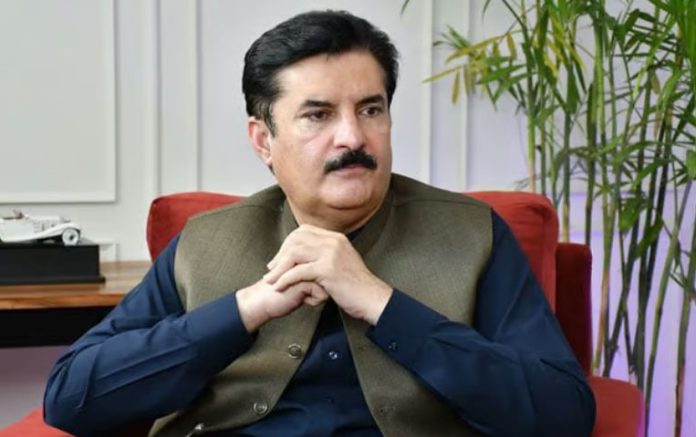
ISLAMABAD: The federal government is expected to replace Khyber Pakhtunkhwa (KP) Governor Faisal Karim Kundi, with at least six prominent names under active consideration for the key constitutional office, official sources disclosed on Friday. The move comes amid rising security concerns in the province and increasing friction between the provincial government and the Governor House.

According to reliable political and administrative sources, the shortlisted names include former KP chief minister Pervez Khattak, former ANP chief minister Amir Haider Khan Hoti, and three retired senior military officers — Lt Gen (R) Tariq Khan, Lt Gen (R) Ghaur, and Lt Gen (R) Khalid. A sixth name from the civil bureaucracy is also said to be in discussion, though it has not yet been publicly confirmed.

Among the contenders, Lt Gen (R) Tariq Khan and Lt Gen (R) Ghaur stand out for their extensive experience in counterterrorism and border security, having served as Inspectors General of the Frontier Corps (FC) during some of the most challenging phases of militancy in the region. Their familiarity with KP’s security landscape is being viewed as a major factor in the ongoing deliberations.

Sources indicate that the federal leadership is leaning toward appointing a retired military officer as the next governor, given the province’s deteriorating law-and-order situation and the increasingly confrontational posture of the KP Chief Minister. The growing wave of violence — including attacks in merged districts and heightened militant activity along the Afghan border — has reinforced the argument for choosing a figure with strong security credentials.

Political observers note that the selection of the next governor will signal Islamabad’s strategic priorities for the province, particularly at a time when KP’s governance and security challenges have become a central national concern.

Chief of Defence Staff notification to be issued soon: Kh. Asif

Chief of Defence Staff notification to be issued soon: Kh. Asif

Defence Minister Khawaja Asif Decries “One-Sided” Gaza Ceasefire, Urges Stronger Global Pressure on Israel

Ansar M Bhatti

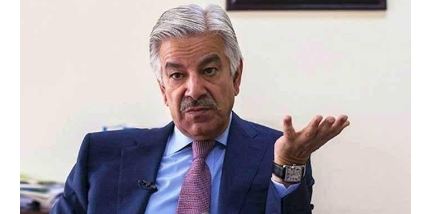
ISLAMABAD: Defence Minister Khawaja Muhammad Asif has said that notification of Chief of Defence Staff shall be issued soon. He dispelled impression as if the government was deliberate delaying the notification. He added, work oh the notification is in progress.

He lalso sharply criticized the Gaza ceasefire agreement, calling it “one-sided and repeatedly violated by Israel,” as fresh reports confirm continued Israeli strikes despite the truce announced on October 10.

The Minister said Israeli forces have continued to target civilians, including women and children, in blatant disregard of the ceasefire framework negotiated in Sharm el-Sheikh.

“Since the ceasefire took effect, at least 352 Palestinians have been martyred, and the total death toll in Gaza has tragically crossed 70,000 since the war began,” he said, terming the ongoing situation a test of the world’s conscience.

He expressed deep concern over Israel’s “systematic and deliberate violations,” describing them as proof that Tel Aviv is not serious about honoring the agreement. The Defence Minister said the humanitarian catastrophe unfolding in Gaza demanded urgent and unified international action.

Echoing recent alerts issued by global rights groups, he noted that Amnesty International has warned that Israel’s “genocidal campaign is not over.” He said it was imperative for the international community — particularly Western governments — to intensify diplomatic and political pressure on Israel to comply with international humanitarian law.

Khawaja Asif also urged Muslim countries that facilitated or supported the ceasefire — including Turkey, Egypt and Qatar — to reassess their positions in light of Israel’s continued military aggression.

“President Recep Tayyip Erdogan has rightly cautioned that the ceasefire must not be mistaken for a final resolution of the Palestinian question,” he remarked.

The Defence Minister reiterated Pakistan’s unwavering support for the people of Palestine, calling for an immediate end to Israeli hostilities and the full implementation of international law to ensure lasting peace in the region.

Mushahid Hussain elected Chairman of Asia-Europe Political Forum

Mushahid Hussain elected Chairman of Asia-Europe Political Forum

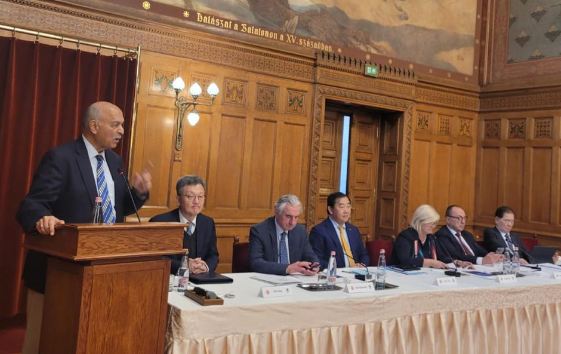
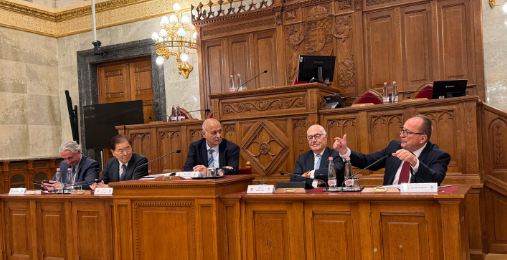
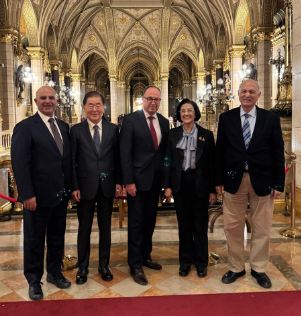
BUDAPEST, NOV 30 /DNA/ – Senator Mushahid Hussain Sayed was unanimously elected as Chairman of the Asia-Europe Political Forum (AEPF), at the annual conference of this bi-continental organization, held in Budapest, capital of Hungary, which concluded yesterday. The conference, which was held under the theme: ‘Peace and Democracy in Eurasia’, was hosted by the ruling party of Hungary, Fidesz. Zsolt Nemeth, former deputy Foreign Minister of Hungary, was elected Co-Chairman of the Asia-Europe Political Forum (AEPF) representing Europe. The conference was attended by 35 parliamentarians, political and think tank representatives from 25 countries, 15 from Asia and 10 from Europe.

In his acceptance speech, Senator Mushahid Hussain, who is also Co-Chairman of the International Conference of Asian Political Parties (ICAPP)  thanked the participants for electing him Chairman of the unique Forum for a two-year term, since the Asia-Europe Political Forum is the only non-governmental institution which links political representatives, public intellectuals and think tanks of Europe with their Asian counterparts, meeting alternately in Asia and Europe. Mushahid spoke of the role of Pakistan in promoting connectivity in Asia, between South Asia and Central Asia, and beyond as well, in Eurasia, especially given the emerging dynamics of geoeconomics and geopolitics. He termed Pakistan as the ‘ideal bridge between the East and the West’.

Senator Mushahid Hussain urged the need to promote connectivity through such mechanisms as the Belt and Road Initiative (BRI) of China, with CPEC playing a key role, plus other organisations like the Shanghai Cooperation Organisation (SCO). He rejected the notion of a new Cold War or the politics of confrontation. Senator Mushahid Hussain welcomed the 28- point plan of US President Donald Trump to end the Ukraine War, saying this needless, unwarranted conflict must end through dialogue. He praised President Trump as an American leader who is neither a militarist or ideological nor an exponent of a new Cold War. He welcomed President Trump’s efforts to seek peaceful agreements with China, Russia, North Korea and Iran.

Senator Mushahid Hussain criticised some of the European Union leaders who were indulging in war-mongering and seeking enmity with China and Russia, saying ‘such thinking is absolutely outmoded’. He also stressed the need for inter-faith harmony, adding that Asian values upheld the importance of family, religion, faith and harmony as pillars of stability in society.

Senator Mushahid Hussain also spoke of Pakistan’s connections with Europe in the field of trade, investment, economy, education and science and technology, adding that as a member of the UN Security Council, Pakistan was playing a responsible and important role to preserve and protect the rule of law and the United Nations Charter. He also criticised Western double standards on human rights and said the world was moving towards a new global order that was no longer dominated by the West but, rather, a world where the global majority, countries of Asia, Africa and Latin America, had a greater voice, role and impact as part of the Global South. Senator Mushahid Hussain Sayed, while referring to his visit to pay homage at the Mausoleum of the Muslim dervish, Gul Baba, who is buried at Budapest, said that Gul Baba’s Mausoleum at Budapest showed Hungary’s multicultural heritage, as Hungary was once part of the Ottoman Empire, while today Hungary is member of the EU and NATO.

During the visit, Senator Mushahid Hussain and other delegates were hosted to a banquet by the Speaker of Parliament of Hungary, as well as the Minister for European Affairs.

A Lone Gunman Sparks Trump’s War on Legal Immigrants

Qamar Bashir

By Qamar Bashir

On a gray November afternoon, just two blocks from the White House, the story Donald Trump wanted to tell about a “safe and peaceful” capital exploded in a hail of bullets. Two members of the National Guard, Specialist Sarah Beckstrom and Staff Sergeant Andrew Wolfe, were on routine foot patrol when an Afghan-born gunman walked up and opened fire in a sudden ambush that stunned the entire nation. The attack was quick, brutal, and merciless. Beckstrom died the next day, and Wolfe continues to fight for his life. It was an attack that pierced the heart of the security narrative Trump had been promoting, especially after deploying more than two thousand National Guard troops across Washington, D.C., in a show of restored order.

The shock to the system was immediate. Television screens filled with images of uniformed soldiers bleeding on downtown sidewalks in full view of the White House. What was meant to be proof of law and order became a terrifying reminder that chaos needs only one crack to break through. Very quickly, the identity of the attacker transformed the discussion from crime prevention to national identity.

The shooter, Rahmanullah Lakanwal, had entered the United States legally under Operation Allies Welcome after the fall of Kabul. He had been part of a U.S.-backed Afghan unit, passed multiple layers of vetting, and was given asylum earlier this year. Those facts did not matter in the political storm that followed.

Trump condemned the attack as an act of “pure evil” and moved instantly from grief to policymaking. His anger, already directed at illegal immigration, now expanded to encompass legal immigrants from what he calls “Third World countries.” He demanded a halt to asylum approvals, reviews of thousands of past green-card cases, and a wider freeze on visas from dozens of nations. A single criminal suddenly became the symbol of an entire global population.

For Afghan evacuees, the consequences are direct and devastating. Tens of thousands remain in legal limbo in Pakistan, the Gulf, and elsewhere, waiting for visas. Many served U.S. forces, risked their lives, and were promised safety. Now, because of one man’s descent into violence, their futures are frozen. Trump’s new directives also cast a long shadow over immigrants worldwide, including those who spent decades waiting for lawful entry. Families who followed every rule, gathered every document, passed every interview, and waited patiently for their priority dates now see their dreams threatened overnight.

My own family is among those who waited almost twenty years for a lawful, transparent immigration process. We began in 2007, sponsored by an American relative, and endured delays, repeated paperwork, bureaucratic hurdles, and shifting immigration quotas. Only in 2024 did we finally arrive as legal permanent residents. Our journey reflects the commitment millions make to follow the rules, respect the system, and contribute to American society. And yet today, even people like us — legal, vetted, documented — find ourselves under the shadow of suspicion because of one man’s crime.

Security failures deserve investigation. Policies deserve review. But collective punishment is neither justice nor strategy. The attacker passed multiple layers of security screening, worked alongside U.S. agencies, and seemed to deteriorate quietly while navigating a life of legal uncertainty and psychological distress in a new country. His actions were his own. To transform that into a blanket indictment of millions is a political choice, not a security necessity.

This instinct toward collective punishment has shaped some of the darkest moments of modern history. After 9/11, the United States invaded Afghanistan and Iraq, killing hundreds of thousands, displacing millions, and reducing entire societies to rubble, even though the attacks were carried out by nineteen individuals. In Libya, Syria, Lebanon, and Palestine, entire populations paid for crimes they did not commit.

On 7 October, Hamas militants carried out a brutal attack that killed Israelis. Instead of targeting only the perpetrators, the retaliation turned into the collective punishment of an entire civilian population in Gaza. More than seventy thousand people were killed. Seventy percent of Gaza’s residents became homeless, and many now face death from winter cold, hunger, and exposure. Instead of punishing those who committed the crime, an entire people paid the price. This same principle — punishing the innocent for the actions of the guilty — is now echoing across America’s immigration debate. Interestingly, human rights often vanish the moment U.S. strategic interests are invoked, and the victims are left with the consequences.

Trump’s anger is understandable on a human level. A young woman in uniform is dead. Another soldier may still die. His promise of security has been shattered in the most public and humiliating way possible. But leadership is not defined by anger; it is defined by what anger is allowed to unleash. Justice demands that the killers and any accomplices be punished fully and swiftly. It does not demand that millions of unrelated immigrants — in Kabul, Karachi, Nairobi, or Washington — be treated as guilty by association.

If America now shuts its doors to lawful immigrants, rescinds visas, freezes green-card approvals, and destroys the hopes of families who followed every law, it will not be making itself safer. It will be abandoning the principles that once distinguished its moral claim to leadership. The United States has always been strongest when it recognized the difference between a criminal and a community. That line is now dangerously close to being erased.

It is, of course, the duty of any government to protect its citizens and to learn from failures. The public has a right to know whether Operation Allies Welcome missed warning signs in Lakanwal’s background, or whether mental-health problems went unaddressed. But the emerging picture is not one of negligence; it is of a man who passed extensive biometric, biographic, and intelligence checks, worked with U.S. agencies, and then unraveled in the shadows of a new life.

In the coming weeks, investigators will uncover more about the gunman’s motives, background, and state of mind. Politicians will shout, the public will divide, and courts will be asked to intervene. But underneath all of this lies a single question that tests the values of the nation: Will America punish the guilty — or the innocent? One path leads to justice. The other leads to fear, prejudice, and betrayal of the very ideals engraved on the Statue of Liberty.

For the sake of the young soldiers who bled on the streets of Washington, and for the millions who still believe in the promise of America, one can only hope that reason, not rage, finally prevails.

By Qamar Bashir

Press Secretary to the President (Rtd)

Former Press Minister, Embassy of Pakistan to France

Former Press Attaché to Malaysia

Former MD, SRBC | Macomb, Michigan, USA

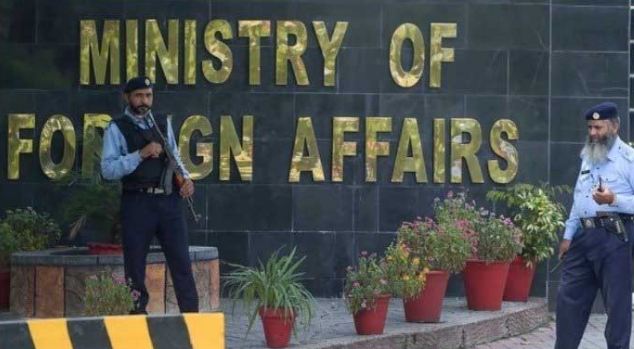
FO rejects UN ‘ungrounded, misplaced apprehensions’ over 27th Amendment

FO rejects UN 'ungrounded, misplaced apprehensions' over 27th Amendment

ISLAMABAD, NOV 30: Expressing deep concern, Pakistan has categorically refuted the ungrounded and misplaced apprehensions on behalf of the United Nations High Commissioner for Human Rights over the recently passed 27th Constitutional Amendment.

In a statement issued on Sunday, the Foreign Office highlighted that the Constitutional tweaks were adopted by the two-thirds majority of the parliament and that “all legislation, as well as any amendment to the Constitution, remains the exclusive domain of the elected representatives of the people of Pakistan”.


“Democracy and democratic methods form the bedrock of civil and political rights, and therefore must be respected,” it said.

The ruling coalition, earlier this month, had passed the 27th Constitutional Amendment in the Senate and the National Assembly amid resistance from the opposition benches, which eventually came into effect on November 13 after President Asif Ali Zardari’s assent.

The amendment was first passed by the Senate; however, the NA approved it with 234 votes and added tweaks, which were once again approved by the Senate by 64 votes (two-thirds majority in the 96-member House).

Key provisions of 27th Amendment

Chief of Army Staff to assume role as Chief of Defence Forces
Field Marshal, Marshal of Air Force, Admiral of Fleet titles to remain for life
Incumbent chief justice to remain CJP until completion of current term
Senior-most among SC CJ and FCC CJ will be designated Chief Justice of Pakistan
Establishment of Federal Constitutional Court
Equal provincial representation approved in Federal Constitutional Court
FCC empowered to take suo motu notice upon petitions
President and prime minister to play a key role in judicial appointments
Presidential immunity limited if president assumes any public office after tenure
Judicial Commission to decide transfer of high court judges
Objections on transfers to be reviewed by Supreme Judicial Council
However, UN High Commissioner for Human Rights Volker Turk, in a statement issued on Friday, had said that the tweaks “seriously undermine judicial independence” while raising grave concerns regarding accountability and respect for the rule of law, The News reported on Friday.

“Under the changes adopted on November 13, a new Federal Constitutional Court (FCC) has been given powers over constitutional cases, replacing the previous authority of the Supreme Court, which will now only deal with civil and criminal cases,” the statement read.

“These changes, taken together, risk subjugating the judiciary to political interference and executive control,” Turk was quoted as saying.

“Neither the executive nor legislative should be in a position to control or direct the judiciary, and the judiciary should be protected from any form of political influence in its decision-making”, the UN official added.

Reacting to Turk’s statement, the FO today accentuated that the constitutional amendments adopted by the parliament followed due procedures as enshrined in the country’s Constitution.

“Pakistan remains fully committed to protecting, promoting and upholding human rights, human dignity, basic freedoms and the rule of law as enshrined in the constitution of the Islamic Republic of Pakistan,” the FO’s statement read.

Noting that it was regrettable that Pakistan’s views and ground realities were not reflected in the statement issued, the FO urged the UN high commissioner for human rights to “respect the sovereign decisions of Pakistan’s parliament and avoid commentary that reflects political bias and misinformation”.

Stay Connected

64FansLike
60FollowersFollow

Latest Reviews

Exchange Rates

USD - United States Dollar
EUR
1.17
GBP
1.34
AUD
0.67
CAD
0.73