Home Blog Page 40

Martyrdom and National Rebirth: The Iranian People’s Enduring Struggle

Martyrdom and National Rebirth: The Iranian People’s Enduring Struggle

by Muhammad Mohsin Iqbal

The history of Iranian civilisation unfolds as one of the grandest tapestries in the story of mankind, spanning more than two thousand five hundred years of recorded glory and endurance. From the sunlit heights of the Achaemenid Empire, founded by Cyrus the Great in 550 BCE, Persia emerged as a beacon of enlightened governance. Cyrus forged a vast, multi-ethnic realm stretching from the verdant plains of the Indus to the shores of the Mediterranean and the hills of the Balkans. Renowned for his wisdom, he respected the customs of conquered peoples and left behind the Cyrus Cylinder, a enduring monument often hailed as an early charter of human rights. This golden epoch of Persian power and refinement met its dramatic close with the conquests of Alexander the Great in 330 BCE.

In time, after the Hellenistic interlude of the Seleucids, native Iranian dynasties reclaimed their heritage. The Parthians held sway from 247 BCE to 224 CE, yet it was the Sassanid Empire, enduring until 651 CE, that restored Persian majesty to its fullest. Sovereigns such as Shapur the First and Khosrow the First advanced learning, architecture, and bureaucratic excellence, standing as formidable rivals to Rome and Byzantium while safeguarding ancient Zoroastrian traditions.

The Arab conquests of the mid-seventh century introduced Islam, which gradually took root and blended richly with Persian culture. During the Abbasid Caliphate, Iranian minds and administrators played central roles in the brilliance of the Islamic Golden Age. Waves of Turkic, Mongol, and Timurid invaders tested the nation’s resilience, yet its spirit endured. The Safavid dynasty, established in 1501, marked a decisive turning point by declaring Twelver Shia Islam the state religion, thereby weaving a profound and distinct Iranian identity that has defined the land ever since. Subsequent rule by the Afsharid, Zand, and Qajar dynasties unfolded amid internal reforms and mounting pressure from European empires.

In 1925, Reza Shah Pahlavi inaugurated a new modernising dynasty. His son, Mohammad Reza Shah, governed from 1941 until the Islamic Revolution of 1979. Under his hand came swift Western-style industrialisation, women’s suffrage, and the ambitious White Revolution. Yet these changes, coupled with growing authoritarianism and foreign influence, stirred deep opposition that finally brought an end to more than two and a half millennia of monarchical rule.

Central to that revolutionary dawn was Ayatollah Ruhollah Khomeini, revered as Imam Khomeini. His outspoken criticism of the Shah’s regime, its land reforms, social changes, and increasing reliance upon Western, particularly American, power led to repeated arrests. Exiled in 1964, he journeyed first to Turkey, then settled for more than a decade in Najaf, Iraq. In 1978, at the Shah’s urging, Saddam Hussein expelled him. After being refused entry by Kuwait and several other nations, Khomeini found sanctuary in Neauphle-le-Château near Paris on the sixth of October 1978. France offered liberal freedoms of expression and superior means of communication. From this quiet corner, he masterfully employed interviews, audio recordings, and the international press to rally his countrymen. His triumphant return to Iran on the first of February 1979 electrified the nation. Swiftly consolidating authority, he guided the establishment of the Islamic Republic through popular referendum and the drafting of a constitution that enshrined the principle of religious leadership. The years that followed tested the revolution sorely; the hostage crisis at the American embassy, the long and bitter Iran-Iraq War from 1980 to 1988 and determined internal efforts to secure clerical rule.

When Khomeini passed in June 3, 1989, Ali Khamenei, who had served as president, was elected Supreme Leader. For more than thirty-six years he navigated the republic through reformist movements, harsh economic sanctions, delicate nuclear negotiations, and complex regional engagements. A steadfast guardian of the revolutionary ideals, he upheld a resolute position toward the West and Israel while fostering the Axis of Resistance. His leadership came to a sudden and sorrowful end on 28 February 2026. Amid mounting regional conflict, Khamenei, together with members of his family and closest circle, fell victim to a joint United States-Israeli airstrike on Tehran. Across Iran the tragedy was mourned as martyrdom, a sacrifice that stirred the deepest emotions of the people.

In certain quarters of Washington, it was confidently assumed that Iranians had grown weary of Islamic governance. Schemes were prepared to restore the son of the late Shah, expecting joyous crowds to welcome a return to monarchy under foreign patronage. The martyrdom of religious leaders, followed by heavy losses among civil and military ranks, was thought to open the way. Yet reality shattered these calculations. Far from embracing the proposed restoration, the Iranian people poured into the streets in waves of grief and defiance. Outraged by the assault upon their sovereignty, they honoured the fallen leaders and stood firmly behind the nation’s independence. The grand funeral of Ali Khamenei witnessed millions gathering without fear, their unity a powerful rebuke to external designs. Traditional American allies in Europe withheld support for the aggressive course. Iran, for its part, responded with a determination and capability that confounded many Western analysts. Defence and policy institutes appeared to have misread the temper of the nation entirely.

Though patient diplomatic efforts, notably assisted by Pakistan, eventually brought adversaries to the negotiating table, a durable peace in the region has yet to be secured. Many obstacles remain visible. Nevertheless, the Iranian leadership has demonstrated, through supreme sacrifice, that it stands ever ready to place itself ahead of the people in moments of peril. In doing so, it has brought to completion the great work of national awakening and consolidation begun by Imam Khomeini. The Iranian nation, tempered by centuries of grandeur and trial, has once more affirmed its unyielding attachment to self-determination and cultural pride. Time, in its unhurried wisdom, will reveal the final shape of events, yet the enduring spirit of this ancient civilisation continues to shine as an inspiring example of resilience and faith.
Monal is Back, But at What Cost?

Monal is Back, But at What Cost?

By: Farukh Shehzad

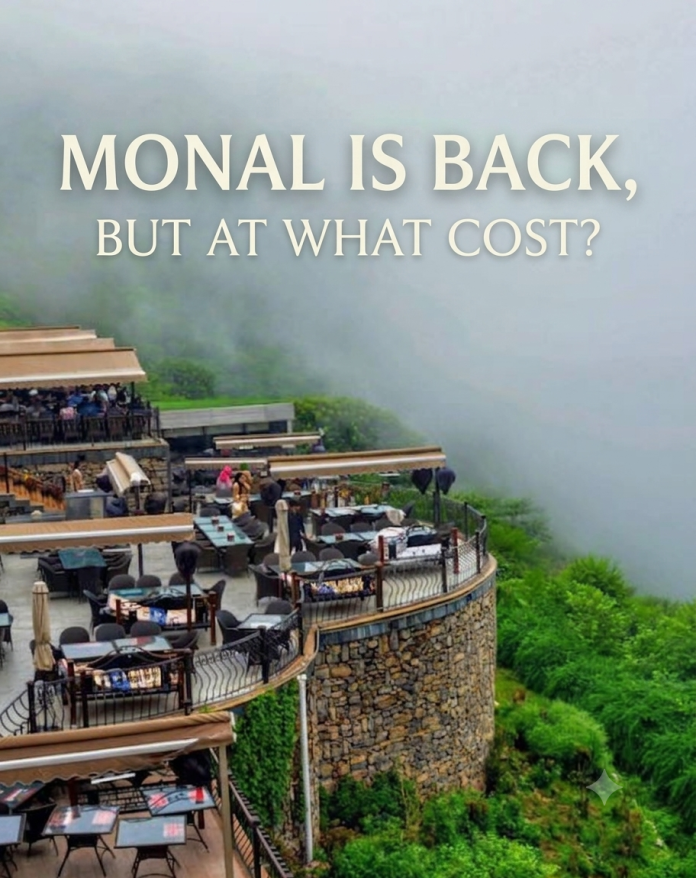
In a dramatic turn of events that has captured the nation’s attention, the newly formed Constitutional Court of Pakistan has overturned a preceding Supreme Court verdict that had ordered the immediate demolition of the iconic Monal Restaurant. For the millions who have cherished the panoramic views of Islamabad from this hilltop eatery, the decision feels like a breath of fresh air. The Court has ruled that the original order was “wrong,” effectively saving the structure and allowing it to reopen its doors to the public.

On the surface, this is a victory for the restaurant’s loyal patrons and its staff, who faced an uncertain future. However, beneath the veneer of celebration lies a labyrinth of legal ambiguity and political volatility. The question that lingers is not whether the food is good or the view is spectacular, but rather: Is reopening Monal Restaurant a 100% correct decision?

In the current climate of Pakistan, the answer to that million-dollar question is a resounding “no,” and proceeding without addressing this uncertainty is a perilous gamble—particularly for the owner.

The Curse of Judicial Reversals

The legal saga of Monal Restaurant is a textbook example of what happens when judicial finality becomes an oxymoron. The Supreme Court of Pakistan, the apex court of the land, had previously examined the case and concluded that the restaurant was built on an illegal site, mandating its demolition. That order carried the full weight of the state’s highest judicial authority.

Yet, in a move that has shocked legal experts and laymen alike, the newly instituted Constitutional Court has swept that decision aside, declaring it null and void. While this may seem like a classic check-and-balance mechanism, it exposes a troubling trend: the fragility of judicial decisions in Pakistan.

If the Supreme Court’s verdict can be overturned so swiftly by a new constitutional body, what guarantees exist that today’s reprieve will not be reversed tomorrow? In Pakistan’s legal ecosystem, where new benches, review petitions, and even newly formed courts can alter precedents overnight, the owner of Monal is standing on shifting sands.

The Weight of Pakistan’s Foolish Politics

Unfortunately, the legal confusion does not exist in a vacuum; it is heavily intertwined with the country’s turbulent political landscape. In recent years, Pakistan’s politics have been characterized by intense rhetoric, polarization, and a frequent disregard for institutional continuity. Courts are frequently caught in the crossfire of political conflicts, where rulings are sometimes viewed not as impartial legal judgments, but as strategic maneuvers in a broader political contest.

Given this environment, the “victory” for Monal may be short-lived. As we have seen time and again, a decision celebrated today can become a weaponized tool tomorrow. Should political winds shift, or should a new judicial body with a different ideological leaning emerge, there is a very high probability that the demolition orders will resurface. The cycle is predictable: a new court is formed, the previous decision is declared void, and the wrecking balls are summoned once more.

For the owner, reopening the restaurant in the face of such volatility is an immense financial risk. The costs associated with running a high-end establishment are enormous. Rehiring staff, restocking inventory, and marketing a grand reopening require substantial capital investment. However, if history is any indicator, all this investment could be rendered useless within months—or even weeks—if another judicial ruling swings the pendulum back toward demolition.

The psychological and financial toll of repeated closures and demolitions would be devastating. The owner is not just fighting a legal battle; they are fighting a system where the rules of the game change with every new constitutional tweak. In a stable democracy, a court decision provides finality. In Pakistan, it provides a temporary reprieve.

Conclusion

While the public rejoices at the reopening of Monal Restaurant, the celebration is premature. Until Pakistan’s political class and judiciary can agree on a framework of consistency and respect for precedent, any decision rendered by any court is merely a placeholder.

Reopening Monal without securing a legislative or constitutional guarantee against future reversals is not just a business decision; it is a leap of faith into a system that has proven time and again that it lacks the stability to protect its own judgments. For the owner, the wisest course of action might not be a grand reopening, but rather a cautious observation of how this new Constitutional Court interacts with the Supreme Court in the coming months.

In Pakistan’s current state of judicial whiplash, what is saved today can be shattered tomorrow. And that is a risk too heavy for any business to bear.

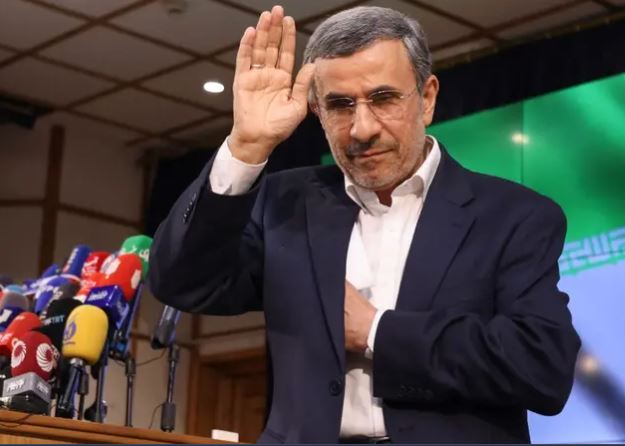
Israel sought to recruit Ahmadinejad in failed plan for regime change in Iran: Report

Israel sought to recruit Ahmadinejad in failed plan for regime change in Iran: Report

NEW YORK, JUL 13: Israel spent years cultivating former Iranian president Mahmoud Ahmadinejad as part of a failed plan to install him as Iran’s new leader during this year’s war, the New York Times reported on Monday, citing American, Israeli and Iranian officials familiar with the operation.

According to the report, Israeli intelligence maintained secret contacts with Ahmadinejad, including meetings in Budapest during trips to Hungary in 2024 and 2025 that were arranged under the cover of academic conferences. Former Mossad chief David Barnea was among those who met Ahmadinejad in the Hungarian capital, the newspaper said.

For all the latest headlines follow our Google News channel online or via the app.

The effort culminated in late February, during the opening days of the US-Israeli war against Iran, when Israeli operatives allegedly sought to extract Ahmadinejad from Tehran as part of a broader regime-change operation, the report said. The plan ultimately failed.

The New York Times reported that an Israeli airstrike hit Ahmadinejad’s compound before Mossad operatives allegedly moved him to a safe house inside Iran. Ahmadinejad later left the safe house under unclear circumstances and reappeared publicly only last week at the funeral procession of Iran’s late supreme leader Ali Khamenei.

The report said four senior Iranian officials believe Ahmadinejad is now under house arrest in the custody of the intelligence branch of the Islamic Revolutionary Guard Corps (IRGC) after authorities uncovered details of his alleged contacts with Israel.

Israeli officials did not comment on the alleged operation, while Ahmadinejad’s spokesman declined to comment, according to the newspaper.

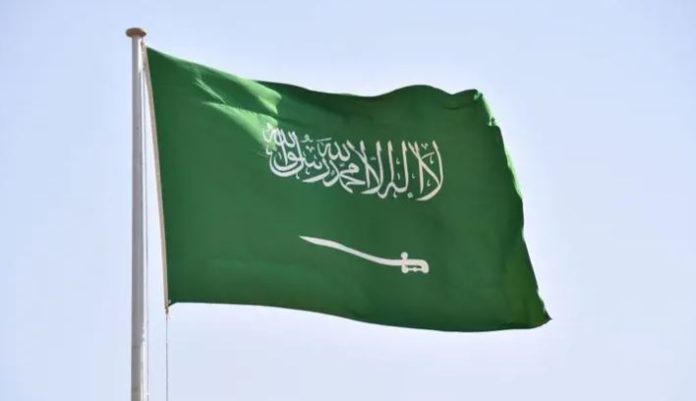
Saudi defense ministry says dealt with ballistic missiles launched by Houthis

Saudi defense ministry says dealt with ballistic missiles launched by Houthis

RIYADH, JUL 13: Saudi Arabia’s Ministry of Defense said on Monday its air defenses dealt with ballistic missiles launched by Yemen’s Houthis toward the Kingdom’s southern region.

PM Shehbaz welcomes Muslim World League chief in Islamabad

PM Shehbaz welcomes Muslim World League chief in Islamabad

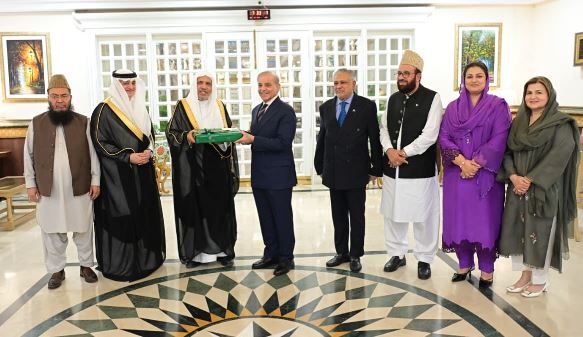
ISLAMABAD, JUL 13 /DNA/ – Secretary General of the Muslim World League (MWL), Sheikh Dr. Mohammad bin Abdulkarim Al-Issa, called on Prime Minister Muhammad Shehbaz Sharif at the Prime Minister House in Islamabad this evening.

Deputy Prime Minister & Foreign Minister Sen. Mohammad Ishaq Dar , Members of the National Assembly Ms. Farah Naz Akbar, Ms. Zeb Jaffar and Foreign Secretary Amb. Amna Baloch were also present.

The Secretary General was accompanied by the Ambassador of the Kingdom of Saudi Arabia to Pakistan H.E. Nawaf Saeed Al Malky.

The Prime Minister warmly welcomed Dr. Al-Issa and thanked him for his participation in the OIC Ministerial Conference on Women, held in Islamabad on 12-13 July.

The Prime Minister appreciated the invaluable role of the Muslim World League in promoting the true and moderate image of Islam, fostering unity among the Ummah, and advancing the message of tolerance, fraternity, and interfaith harmony across the world. In this regard, he commended the Secretary General’s personal leadership in steering the League’s global outreach and reaffirmed Pakistan’s continued support for its initiatives.

The Prime Minister underscored the critical importance of the MWL’s advocacy on religious dialogue to deal with the issues confronting the Muslim world today, including the ongoing regional situation vis a vis Iran and the brotherly Gulf states, the plight of Palestinians in Gaza, and other challenges facing Muslim communities around the globe.

He recalled Dr. Al-Issa’s earlier visits to Pakistan and his numerous contributions, including the hosting of the International Summit on Girls’ Education held in Islamabad, and expressed satisfaction over the continued collaboration between Pakistan and the MWL on education, interfaith dialogue, and countering extremism and Islamophobia.

The Prime Minister conveyed his respectful regards to The Custodian of the Two Holy Mosques His Majesty King Salman bin Abdulaziz Al Saud and his warm good wishes for His Royal Highness Crown Prince Mohammed bin Salman bin Abdulaziz Al Saud.

Dr. Al-Issa thanked the Prime Minister for the warm hospitality extended to him and his delegation and lauded Pakistan’s leadership role within the Muslim world. He reaffirmed the Muslim World League’s commitment to deepening cooperation with Pakistan across religious, educational, and humanitarian domains.

While lauding the Prime Minister for his leading role in the recent regional peace efforts, Dr. Al-Issa also expressed his deep appreciation for the role played by Deputy Prime Minister Mohammad Ishaq Dar and Chief of Defence Forces & Chief of the Army Staff Field Marshal Syed Asim Munir for their untiring efforts and invaluable contribution in the signing of the Islamabad Memorandum of Understanding.

The Prime Minister thanked the Secretary General for his visit and agreed to continue close coordination on shared priorities, including the early completion of ongoing joint projects and initiatives between Pakistan and the Muslim World League.

117 terrorists eliminated in Balochistan since July 5: security sources

117 terrorists eliminated in Balochistan since July 5: security sources

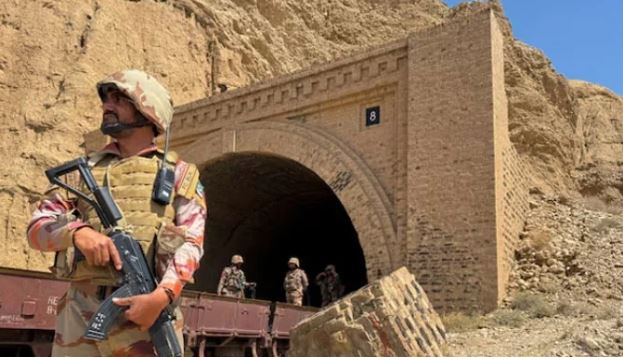
QUETTA: At least 117 terrorists have been killed in Operation Shaban and other law enforcement operations across Balochistan since July 5, security sources said on Monday.

The sources asserted that the ongoing Operation Shaban, a joint operation launched by the Pakistan Army, Frontier Corps (FC) and police, will continue in the province until the last terrorist is neutralised.


India-backed terrorists are being targeted through air and ground operations, the sources added.

Earlier in the day, the security sources confirmed that five more terrorists were gunned down during fresh operations in the province, raising the total number of militants killed in Operation Shaban to 76.

A large cache of weapons and ammunition was also recovered from the killed militants, including M4 rifles, submachine guns, rocket launchers, mobile phones and other equipment, they added.

It is pertinent to mention here that Operation Shaban was launched in the aftermath of a deadly attack on the Mangi Dam police station in Ziarat.

42 people, including security personnel and civilians, were martyred in three recent terrorist attacks in Balochistan.

ISPR Director General Lt Gen Ahmed Sharif Chaudhry had said last week that India-backed terrorists attacked the checkpoint but police personnel fought bravely, killing 15 militants in the initial engagement.

Nine police personnel had embraced martyrdom in the initial fighting, while militants also took police personnel hostage before security forces reached the area.

Pakistan has witnessed a surge in terrorist activities, particularly in Khyber Pakhtunkhwa and Balochistan, since the Afghan Taliban came to power in 2021.

In response, Pakistan launched Operation Ghazab lil-Haq, targeting terrorist hideouts across the border, killing scores of Afghan Taliban operatives and injuring hundreds more.

Despite several rounds of talks, both countries have been unable to reach an agreement, largely due to the Afghan Taliban regime’s reluctance to act against terrorist outfits operating from Afghan soil.

Putin promises more powerful strikes in response to Ukraine’s attacks

Putin promises more powerful strikes in response to Ukraine’s attacks

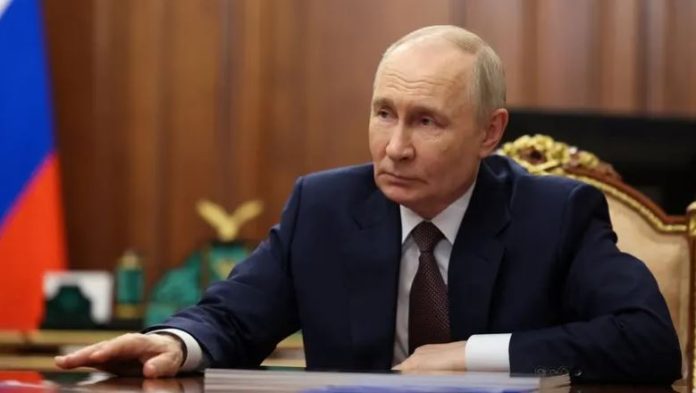
MOSCOW, JUL 13: Russian President Vladimir Putin said on Monday that Moscow would respond to Ukrainian attacks on its territory with retaliatory strikes that would be “several times more powerful,” adding that the scale of such responses would increase.

Three sources close to the Kremlin told Reuters last week that Putin was rejecting calls to negotiate peace with Kyiv, with Ukraine’s recent drone strikes on Russia’s oil refineries and ports strengthening his resolve to keep fighting for now.

Gwadar Port completes 1st commercial ship bunkering operation

Gwadar Port completes 1st commercial ship bunkering operation

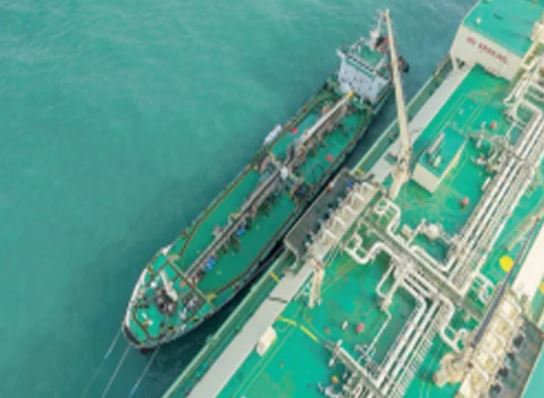
GWADAR, 13 JULY (DNA) —Gwadar Port has completed its first commercial ship bunkering (marine fuel supply) operation. The operation was carried out from 9 to 11 July through the joint efforts of the Gwadar Port Authority (GPA), the National Logistics Cell (NLC), Gwadar International Terminals Limited (GITL), and global energy company Vitol Asia, according to a Gwadar Pro’s report on Monday.

During the operation, the LNG carrier LNG ENUGU, jointly owned by QatarEnergy, ADNOC, and Vitol, was supplied with 2,500 metric tons of Very Low Sulphur Fuel Oil (VLSFO) at Gwadar Port. The 285.4-meter-long vessel received the fuel from the bunkering barge Marine Ista. Customs authorities, port officials, and local shipping agent Pak Traders Gwadar also played a vital role in ensuring the safe and efficient execution of the operation.

According to maritime experts, this development will create new sources of foreign exchange earnings and revenue for Pakistan while strengthening international confidence in Gwadar Port’s operational capabilities, modern infrastructure, and security standards.

Port authorities stated that the operation marks the formal launch of commercial bunkering services at Gwadar Port. In the future, more international vessels are expected to refuel at the port, contributing to Pakistan’s blue economy, logistics sector, marine services industry, and local employment opportunities.— DNA

Kundi hosts diplomats to strengthen Pakistan-Europe ties

Kundi hosts diplomats to strengthen Pakistan-Europe ties

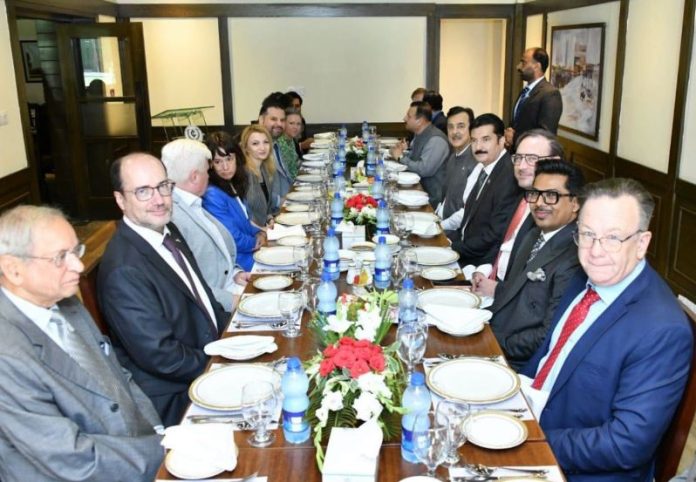
ISLAMABAD, JUL 13 (DNA): Governor Khyber Pakhtunkhwa Faisal Karim Kundi hosted a luncheon in honour of Bulgaria’s Ambassador to Pakistan, Irena Gancheva, here on Monday which was attended by senior political leaders, diplomats and prominent personalities.

Among those present were Chairman Senate Syed Yousaf Raza Gilani, Minister of State for Overseas Pakistanis Muhammad Awn Chaudhry, Member National Assembly Abdul Qadir Gilani, former Minister of State for Foreign Affairs Nawabzada Malik Imad Khan, businessman Shehbaz Zaheer.

Wolfgang Oliver Kutschera Ambassador of Austria, Ladislav Steinhübel Ambassador of the Czech Republic, Mrs. Maja Mortensen Ambassador of Denmark, Ms. Ina Lepel Ambassador of Germany, Dr. Zoltan Varga Ambassador of Hungary, Ms. Mary O’Neill Ambassador of Ireland, Maciej Pisarski Ambassador of Poland, Paulo Miguel Guedes Domingues Ambassador of Portugal, Dr. Dan Stoenescu Ambassador of Romania, and Ms. Alexandra Berg von Linde Ambassador of Sweden also attended.

The participants exchanged views on matters of mutual interest, promotion of relations between Pakistan and European countries, enhancement of diplomatic cooperation, and strengthening collaboration in various sectors.

The gathering also reaffirmed the shared commitment to further expanding bilateral engagement and people-to-people contacts between Pakistan and European nations.=DNA

Murree DPO advises tourists to avoid Old GT Road

Murree DPO advises tourists to avoid Old GT Road

MURREE, JUL 13 /DNA/ – District Police Officer (DPO) Murree, Dr. Raza Tanveer, has issued a comprehensive traffic advisory for tourists arriving from across the country, stating that extensive road carpeting and repair work are underway on the Old GT Road.

Due to these construction bottlenecks, the flow of traffic has been severely affected; therefore, national and local tourists are strongly advised to completely avoid this route and opt for the Murree Expressway and alternative link roads to escape construction delays and traffic congestion.

In a special video message, DPO Murree emphasized that the Murree Expressway currently stands as the only safe and recommended route to enter the district. Acknowledging that the sudden influx of nationwide traffic has shifted entirely to this single highway, he noted that Murree Police have actively deployed personnel and prioritized traffic management on three key link roads Bustan Mor, Masiari Link Road, and Jhika Gali Road to facilitate smooth access to central and tourist areas of the city while easing temporary pressure on the Expressway.

The DPO appealed to families and citizens travelling from far-flung districts to actively monitor live traffic indicators via Google Maps before and during their journey. Furthermore, he urged travelers to download the official Murree Police mobile application, ‘Safe Tourism Murree’, which provides real-time, one-click updates regarding traffic status, weather updates, parking capacity, and emergency assistance.

Dr. Raza Tanveer reiterated that both the district and traffic police teams are deployed on high alert around the clock to ensure the uninterrupted flow of traffic.

He concluded by stating that the primary objective of the Murree Police is to promote national tourism and provide a peaceful, secure environment for visitors, welcoming citizens from all over the country to visit Murree and allow the police to serve them.=DNA

Stay Connected

64FansLike
60FollowersFollow

Latest Reviews

Exchange Rates

USD - United States Dollar
EUR
1.15
GBP
1.34
AUD
0.70
CAD
0.71