Home Blog Page 398

Yango ride launches new safety flow within its App in Pakistan

Yango ride launches new safety flow within its App in Pakistan
  • New personalized safety checklists designed for passengers to see the status of implemented security measures during their rides.
  • Automatically reminds users to turn on special features like sharing the route with trusted contact or updating profile information, and demonstrates the current status of the ride and its safety level.

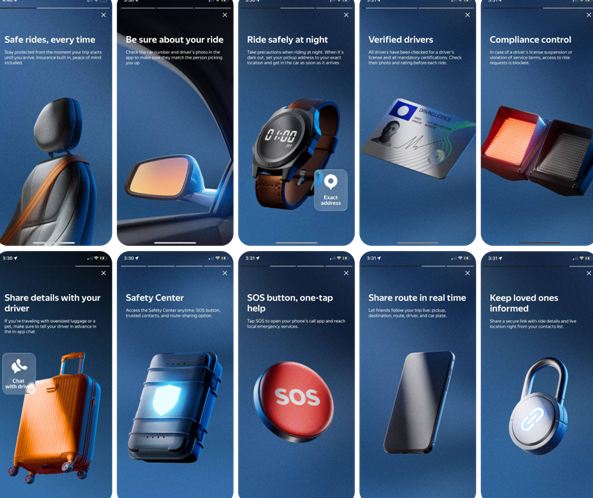
KARACHI, NOV 5 — Yango Ride, part of the global tech company Yango Group, has introduced an updated safety flow in its application in Pakistan. The update integrates personalized safety checklists, enabling passengers to view the current status of implemented security measures during their rides, and a brand new safety center with security tips before and during the journey. The update will gradually become available for all users in the near future.

Pre-trip checklist: steps to make trips more convenient and safer

The new safety center displays a list of required measures for passengers, which includes reading onboarding materials, filling in personal information, adding trusted contacts, taking a selfie, or updating their email

If anything from the list is missing, the application will mark this item and prompt the user to take the necessary action and fill the gap. Passengers can learn more about standards for partner drivers, how to get help in case of a conflict or an accident and learn more about each security feature in one click. The main screen always contains quick access buttons for SOS-signal and support in case of any emergency.

“Safety is our highest priority at Yango, and we believe it’s essential not only to implement robust safety measures and security technologies, but also to make them visible and transparent to every user. With our new personalized safety checklists and updates, passengers can now see exactly what we’re doing to protect them at every stage of their trip — from the moment they book to the end of the ride,”says Miral Sharif, Country Manager for Yango Pakistan.

Safety status became more visible during the rides

The new safety center shows the current status of the journey and indicates which safety check-ups and features are implemented. The factors that are considered while calculating the security level include:

  • Latest driver identification check. Partner drivers are required to upload photographs of the front and back of their driver’s license, along with a selfie holding the license. The system compares these details with the information in the driver’s profile. Drivers cannot take orders unless this process is completed.
  • Speeding control.Yango Ride app uses GPS to track a driver’s route and determine the speed. This speed is then compared to the maximum speed allowed on that section, according to data from the navigator used to build the route.
  • Driving style control.The driving behavior monitoring system helps drivers to drive safely. It processes data from accelerometers and gyroscopes in the partner driver’s smartphones and detects sudden changes in acceleration, deceleration, and maneuvering. After each episode of unsafe driving, a warning is sent to the partner driver asking them to drive more carefully. If the partner driver ignores the warnings, access to the service may be restricted.
  • In-ride Insurance. Both the passenger and the partner drivers are fully insured during the active Yango rides, making the journey safer for both the parties, in case of any accidents on the road.

Safety is one of the main areas of focus for the Yango Ride service. Over 30 special features are available for both passengers and partner drivers before, during, and after the ride. These features include speed and driving style monitoring, the ability to share routes and trip details with trusted contacts, a quick access to SOS numbers in case of an emergency, and others.

About Yango Group

Yango Group is an international tech company, transforming globally sourced technologies into everyday services that are tailored to local communities. With an unwavering commitment to innovation, we reshape and enhance leading cutting-edge technologies from around the world into seamlessly integrated daily services for diverse regions.

Yango Group provides its digital services, including mobility, delivery, foodtech, entertainment among many others, across 30+ countries in Africa, Latin America, Europe, Middle East, South Asia and other regions.
Embassy of Portugal brings Portuguese cinema to European film festival 2025 in Pakistan

Embassy of Portugal brings Portuguese cinema to European film festival 2025 in Pakistan

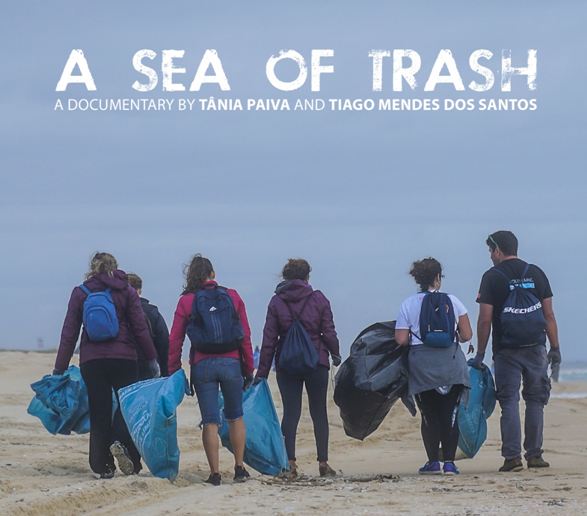
ISLAMABAD, NOV 5 /DNA/ – The Embassy of Portugal in Islamabad is set to participate in the European Film Festival (EUFF) 2025, with the screening of two acclaimed Portuguese films “A Sea of Trash” and “Snu” in Islamabad and Karachi.

“A Sea of Trash” (directed by Tânia Paiva, 2019), an inspiring short environmental documentary that follows Portugal’s volunteer initiative “Sea’s Brigade” as they clean 45 kilometers of coastline, raising awareness about marine pollution and the power of community action will be screened in Islamabad on 7–8 November 2025.

The feature film “Snu” (directed by Patrícia Sequeira, 2019) tells the remarkable true story of Snu Abecassis and Francisco Sá Carneiro, a couple who risked everything for love and ideals in post-revolutionary Portugal. This historical drama and romance will be screened in Karachi on 16 November 2025.

The fourth edition of European Film Festival 2025 organized by EU Delegation in Pakistan, celebrates the diversity, creativity, and storytelling traditions of European cinema. Taking place across Islamabad, Karachi, and Lahore throughout November, the festival features award-winning films, documentaries, and short features from across Europe. It will be hosted at the Pakistan National Council of the Arts (PNCA), Islamabad; the Karachi Film School; and the Alhamra Arts Council, Lahore, from 7 to 23 November 2025.

Zafar Bakhtawari hosts dinner honouring UK’s Raja Ishtiaq

Zafar Bakhtawari hosts dinner honouring UK's Raja Ishtiaq

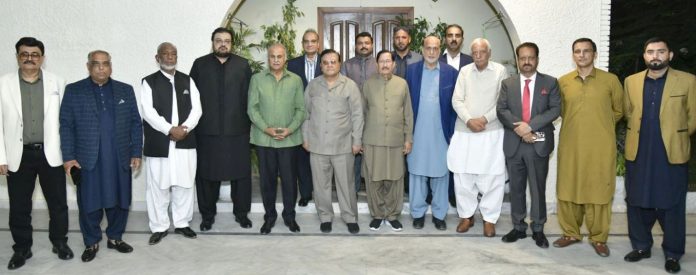
ISLAMABAD, NOV 5 /DNA/ – Secretary General United Business Group, former President of Islamabad Chamber of Commerce and Industry and Chairman D Watson Group Zafar Bakhtawari hosted dinner in honour of Raja Ishtiaq, a renowned figure of the UK.

Former Senator General ® Abdul Qayyum was also among the guests of honour. CDA Mazdoor Union leader Ch. Muhamad Yasin, Zahid Bakhtawari, Editor Daily Islamabad POST Ansar M Bhatti, former Dy Attorney General Raja Khalid, and officers of Islamabad Capital Territory Police also attended the dinner. =DNA

Canadian High Commissioner meets Governor Punjab

Canadian High Commissioner meets Governor Punjab

By Malik Faisal Munir

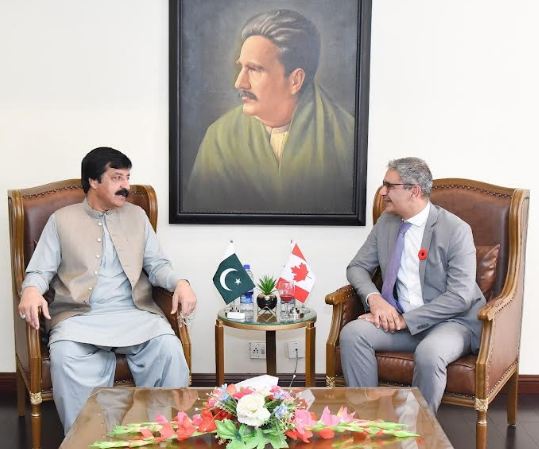
ISLAMABAD: Canadian High Commissioner Tariq Ali Khan meets with Punjab Governor Sardar Saleem Haider Khan in Islamabad. Bilateral relations were discussed in the meeting. Detailed discussions on promoting bilateral relations in the sectors of agriculture, renewable energy, dairy and poultry.

Governor Punjab congratulates and wishes Canadian High Commissioner on assuming responsibilities in Pakistan.

Governor Punjab Sardar Saleem Haider Khan said that there are good relations between the two countries; there is a need to further expand the relationship through trade. There are vast investment opportunities in Pakistan in the dairy, meat, agriculture and textile sectors, he added.

Sardar Saleem Haider Khan said that a large number of Pakistanis living in Canada are contributing to the economy.

Canadian High Commissioner Tariq Ali Khan reiterates his commitment to promote bilateral relations, including trade, between Pakistan and Canada.

Secy General Sarwar outlines SAARC’s 2030 agenda at Doha Summit

Secy General Sarwar outlines SAARC's 2030 agenda at Doha Summit

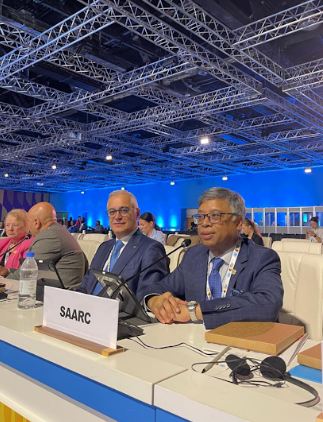
DOHA, NOV 5 /DNA/ – Ambassador Md. Golam Sarwar, Secretary General of the South Asian Association for Regional Cooperation (SAARC), attends the Second World Summit for Social Development held from 4-6 November 2025 in Doha, Qatar. Over 8,000 participants are at the World Social Summit 2025, including Heads of State, UN representatives, civil society, academia, private sector leaders, and youth.

Secretary General delivered a statement at the high-level Round Table discussion titled “Assessing progress and addressing gaps and challenges in the implementation of the commitments of the Copenhagen Declaration on Social Development and its Programme of Action and giving momentum towards the implementation of the 2030 Agenda for Sustainable Development.”

In his remarks, he highlighted SAARC’s Plan of Action on the 2030 Agenda, which aligns regional priorities with global goals. He underscored the role of SAARC’s specialized Centres and Working Groups in promoting data sharing, policy dialogue, and capacity building across Member States. He further emphasized SAARC’s close collaboration with UN agencies, including UNDP, FAO, WHO, UNFPA, and UNICEF to support evidence-based policymaking and strengthen regional cooperation mechanisms.

Secretary General stated “The people of South Asia one-fourth of humanity stand united in this vision. Through SAARC, we reaffirm our determination to build a region where every child is nourished, every adolescent is empowered, every woman is respected, and every individual can live with equality and hope.”

On the sidelines of the Summit, Secretary General will also hold bilateral meetings with the Heads of Delegation from UNICEF and Plan International Asia Pacific.

Study urges Pakistan auto sector to break OEM dependency: PIDE Seminar

Study urges Pakistan auto sector to break OEM dependency: PIDE Seminar

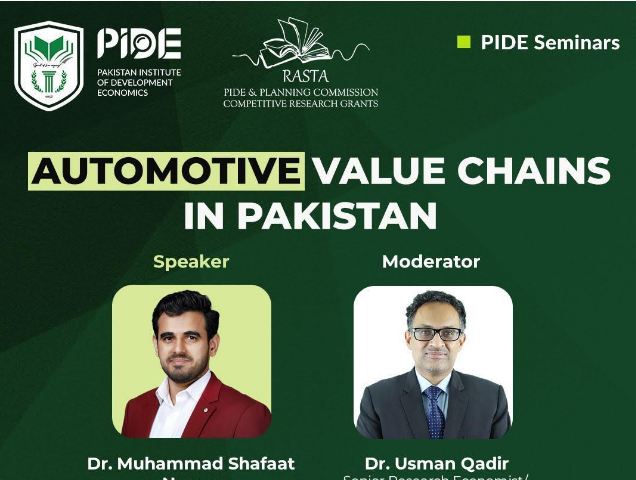
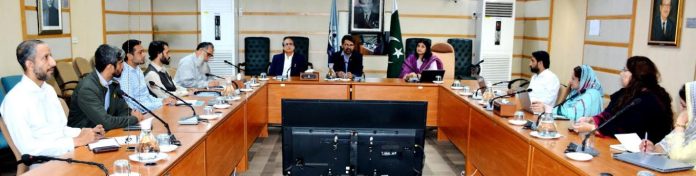
ISLAMABAD, NOV 5 /DNA/ – The Pakistan Institute of Development Economics (PIDE), under its RASTA Competitive Grants Programme, organized a seminar on “Automotive Value Chains in Pakistan” featuring Dr. Muhammad Shafaat Nawaz, RASTA Fellow and Fulbright Scholar, moderated by Dr. Usman Qadir, Senior Research Economist and Director (CITDE), PIDE.

Dr. Nawaz presented findings from his doctoral research on OEM-mediated Global Production Networks (GPNs) in Pakistan’s automotive industry — a study funded jointly by the Fulbright Program (U.S. Department of State), PIDE’s RASTA CGP Round 4, and the American Association of Geographers. His research redefines how Pakistan integrates into global value chains and introduces the concept of OEM-mediated GPNs, where Original Equipment Manufacturers (OEMs) act as intermediaries between global lead firms and local suppliers, shaping industrial outcomes, technological upgrading, and regional development.

Drawing on 72 interviews, a survey of 319 local firms, and advanced network analysis, Dr. Nawaz revealed that three Japanese firms — the “Big Three” — dominate 99% of Pakistan’s passenger car market and 89% of light commercial vehicles, creating a highly oligopolistic structure. The tractor segment is equally concentrated, with two firms controlling 99% of production, while Atlas Honda retains about 67% of the motorcycle market. These OEMs, operating as subsidiaries, partners, or licensed producers, have enabled Pakistan’s entry into global value chains but have also restricted innovation, exports, and research autonomy. Unlike other developing economies that attract high-value global suppliers such as Bosch or Denso, Pakistan’s auto sector lacks indigenous R&D and technology transfer linkages.

Dr. Nawaz classified local firms into three main categories: captive vendors, bound by low-value repetitive contracts; emerging suppliers, who gain autonomy through international certifications like IATF 16949 and participation in global trade exhibitions; and aftermarket producers, who perform low-technology subcontracting for local markets. His analysis demonstrated that a one-unit increase in OEM business share leads to a 0.09-unit rise in annual business growth, statistically significant at the 0.001 level. However, this growth largely benefits firms that successfully diversify and upgrade, while others remain locked in dependency cycles.

Tracing Pakistan’s policy evolution from 1947 to 2026, Dr. Nawaz explained how the industrial strategy transitioned from state-led nationalization to privatization and localization, and later toward tariff liberalization and CKD-based imports. While recent initiatives like the Automotive Industry Development and Export Plan (AIDEP 2021–26) promote electric and hybrid vehicles, the oligopoly of the Big Three remains intact. He emphasized that Pakistan’s challenge is not simply integration but negotiating better terms of integration — urging policymakers to revise OEM contracts, expand design and export rights, and support emerging suppliers in achieving certifications and global linkages.

During the discussion session, Dr. Mahmood Khalid, Acting Project Director at COE-CPEC, PIDE, raised a key question on whether Pakistan’s two-wheeler manufacturers—many outsourcing production to China and rebranding locally—represent an opportunity or a risk to domestic industrialization. He also asked whether Pakistan’s experience is unique or part of a global trend in the automotive sector.

Responding, Dr. Nawaz noted that while such cross-border manufacturing can improve competitiveness, it also risks deindustrializing local production if not accompanied by clear policy safeguards. He observed that similar patterns exist globally, citing India and Brazil as countries that successfully built local lead firms by giving OEMs contractual autonomy and by attracting global suppliers. Brazil, he added, focused on technology-driven partnerships such as Bosch manufacturing, which strengthened its innovation ecosystem. He argued that Pakistan must now pivot its policy focus from attracting lead firms to attracting global suppliers and technology partners to build its industrial base.

Adding to the discussion, Mr. Muhammad Shaaf Najib, observed that despite the entry of new assemblers, local value addition remains minimal, with most firms still dependent on imported CKDs. He cautioned that the shift toward electric vehicles could wipe out many domestic auto-parts producers unless they move toward higher-value, tech-based manufacturing. Dr. Nawaz agreed, noting that Pakistan’s localization policies have historically focused on low-value components, leaving innovation capacity underdeveloped.

Moderating the session, Dr. Usman Qadir emphasized that Pakistan’s industrial transformation must move “from dependence to competitiveness,” enabling local suppliers to innovate, diversify, and integrate directly into global markets. He concluded that OEM-mediated networks offer access but also impose limits, and sustainable industrial upgrading will depend on empowering firms to innovate beyond OEM dependency, building indigenous R&D capabilities, and aligning industrial and spatial planning with multi-scalar production realities.

HEC mobilizes accreditation councils for global alignment under REQAAB Framework

HEC mobilizes accreditation councils for global alignment under REQAAB Framework

ISLAMABAD, NOV 5 /DNA/ – The Higher Education Commission (HEC) of Pakistan, through its Quality Assurance Agency (QAA), hosted a crucial orientation session for representatives of HEC-established Accreditation Councils.

The session was held to initiate the implementation of REQAAB (Reviewing the Effectiveness of Quality Assurance and Accreditation Bodies), a core component of the Pakistan Precepts, Standards and Guidelines for Quality Assurance in Higher Education (PSG-2023).

The PSG-2023, developed through a collaborative venture initiated in 2021 with QAA-UK and extensive stakeholder consultation, is designed to blend internationally recognized quality assurance standards with context-specific, localized solutions. The revamped framework was launched in August 2023.

This orientation session, which marks a significant next step in elevating the standards of quality assurance in the country, was attended by key representatives from all Accreditation Councils established under the HEC. It was chaired by Mr. Nasir Shah, Director General (Quality Assurance), HEC, who set the tone by emphasizing the indispensable role of the Accreditation Councils.

“By aligning with the REQAAB standards, we are not just enhancing internal processes but collectively taking a decisive step toward achieving national and international recognition and global acceptance for the programs accredited in Pakistan,” stated Mr. Shah. He stressed the importance of seamless collaboration between the Councils and the HEC to meet national educational priorities and global quality benchmarks.

Mr. Muhammad Raza, Deputy Director, HEC, delivered a detailed presentation on the PSG-2023 framework and the REQAAB component. He highlighted the need of modernizing accreditation practices to meet the demands of a rapidly evolving global education and employment landscape. The revamped QA Framework aligns with international benchmarks, enhancing the recognition and reputation of Pakistani institutions on the global stage, and promotes collaboration, quality enhancement, and academic integrity.

The session mainly underscored the REQAAB framework’s mandate for accountability, which requires that existing Accreditation Councils must map their current processes to the new REQAAB Standards. Furthermore, the Councils must be reviewed periodically by national or international QA agencies/bodies to ensure continuous compliance and effectiveness.

At the end of the presentation, Mr. Irfan Ullah, Director QAA, encouraged the Accreditations Councils to develop their business models, which are currently missing.

The session successfully concluded with a commitment from all participating councils to work closely with the QAA-HEC to ensure a successful and timely transition to the new, more robust, and globally compliant quality assurance mechanism.

Pakistan finalizing business model to boost meat exports to Malaysia: Haroon

Pakistan finalizing business model to boost meat exports to Malaysia: Haroon

ISLAMABAD, NOV 5 /DNA/ – Special Assistant to the Prime Minister on Industries and Production Haroon Akhtar Khan, while chairing a high-level meeting here on Wednesday, announced that a comprehensive business model aimed at enhancing Pakistan’s meat exports to Malaysia, would soon be finalized and presented to the Prime Minister for approval.

During the meeting, four working groups, established earlier under the committee, presented their reports, according to press release issued by the ministry here. Senior officials from the Ministries of Commerce, Industries, and Food, along with representatives from both public and private sectors, participated in the session.

On the occasion, Haroon Akhtar Khan highlighted that Pakistan enjoyed a strong livestock base and an internationally recognized reputation for Halal meat. He emphasized that improving quality, consistency, and competitiveness was crucial for expanding Pakistan’s meat exports.

According to the committee’s findings, Pakistan still faces several challenges in this sector, including a shortage of small animals, underdeveloped feedlot finishing, and a weak cold chain infrastructure. The committee recommended enhancing animal productivity, adopting modern slaughtering and processing technologies, ensuring robust halal certification systems, and strengthening logistics to meet international standards.

Mr. Haroon Akhtar Khan noted that the livestock sector was a key source of rural income, with more than 12 million households involved in livestock rearing. “Rural families derive 35 to 40 percent of their income from livestock,” he stated.

He further observed that global exporters primarily trade in frozen meat, which reduces costs and allows access to wider markets. However, Pakistan’s animals are generally smaller in size and yield lower productivity compared to major exporters.

Khan pointed out that Pakistan’s capacity for processing frozen and deboned beef was currently limited, stressing the need to upgrade processing, cold chain, and export-ready systems. He also emphasized the importance of providing incentives to boost buffalo meat exports.

AFC president meets deputy PM Ishaq Dar in Islamabad

AFC president meets deputy PM Ishaq Dar in Islamabad

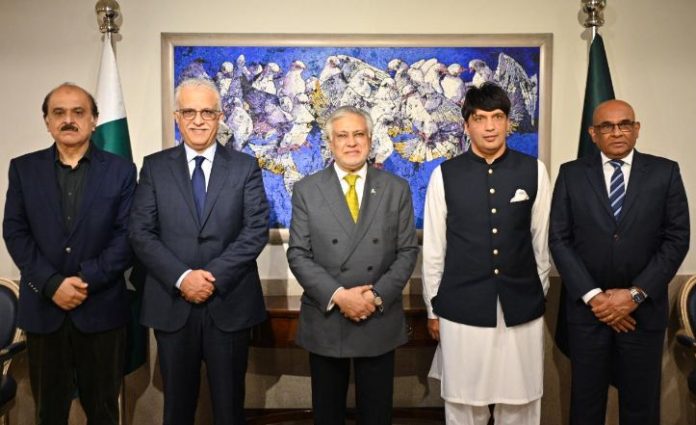
ISLAMABAD, NOV 5 /DNA/ – The Deputy Prime Minister/Foreign Minister received Sheikh Salman bin Ebrahim Al Khalifa, President of the Asian Football Confederation, during his visit to Pakistan.

The DPM/FM lauded the AFC’s support for football in Pakistan and appreciated Sheikh Salman’s role in strengthening regional ties through sport & youth engagement.

Sri Lanka targets big fish in anti-corruption push

Sri Lanka targets big fish in anti-corruption push

COLOMBO, NOV 5 (AFP/APP): When Sri Lanka’s economy collapsed in 2022, politicians and officials were accused of brazenly stealing the island’s assets.

Three years later, the tide appears to be turning against the once-untouchable elite, with several members of the former ruling Rajapaksa family and other powerful figures jailed or appearing in court.

The government is pursuing some of the country’s most powerful individuals — with a former president, several ex-ministers and the heads of the police, prisons and immigration all appearing in court.

Ranga Dissanayake, director-general of the Commission to Investigate Allegations of Bribery or Corruption (CIABOC), was granted sweeping powers in May to recover stolen assets — even without criminal convictions.

There is no official data of state corruption losses, but activists estimate it to be billions of dollars over several decades. Sri Lanka’s GDP per capita income stood at $4,515 in 2024.

“Corruption is the main reason for this economic crisis,” Dissanayake, who took up the post in January, told AFP.

The International Monetary Fund calls for the “prioritising” of anti-graft measures, and says recruitment to CIABOC “should be accelerated”.

– ‘Crossing the Rubicon’ –

Tackling entrenched corruption was a key pledge of leftist President Anura Kumara Dissanayake, who is not related to the CIABOC chief.

“How can a file in the Criminal Investigation Department move up and down, or remain stuck for seven or eight years in a cupboard?” he asked during a speech marking anti-corruption day.

CIABOC faces a backlog of tens of thousands of cases.

“Power is meant to uphold justice,” the president added. “But instead, it is often used for injustice, personal gain and the accumulation of wealth.”

Public anger over crippling shortages of food, fuel, and medicine sparked months of protests in 2022, toppling then-president Gotabaya Rajapaksa.

Gotabaya denies corruption allegations, but the Supreme Court in 2023 said he and his politician brothers “demonstrably contributed to the economic crisis”, and “violated the public trust reposed in them”.

Gotabaya was replaced by Ranil Wickremesinghe, who secured a $2.9 billion IMF bailout to steady the economy.

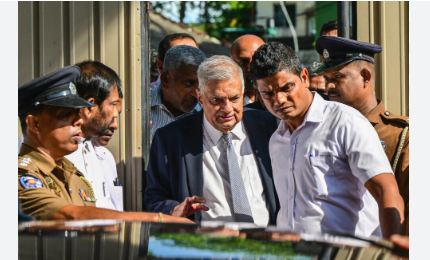
But Wickremesinghe was arrested in August on charges of using state funds for personal travel.

Stay Connected

64FansLike
60FollowersFollow

Latest Reviews

Exchange Rates

USD - United States Dollar
EUR
1.14
GBP
1.33
AUD
0.69
CAD
0.71