Home Blog Page 395

Did Trump’s second-term tariff crusade backfire on America?

Qamar Bashir

By Qamar Bashir

When Donald Trump returned to power in January 2025, he came as a man on a mission — a self-proclaimed savior who promised to restore America’s greatness by reversing what he called decades of “plunder” by foreign nations and betrayal by domestic elites. His message was sharp, emotional, and divisive: America had been looted by others, invaded by outsiders, and weakened by globalists. His rallying cry — “Stop the plunder, make America win again” — became the cornerstone of his campaign and the moral justification for his economic, immigration, and security agenda.

But ten months into his presidency, that crusade appears to have collapsed under its own contradictions. His main policy weapon, tariffs, has crippled rather than strengthened the U.S. economy. His promise to expel immigrants and Chinese students has triggered outrage, legal challenges, and civil unrest. His use of National Guards to quell protests and enforce federal directives has been condemned by constitutional scholars as authoritarian overreach. And his deliberate targeting of Democratic-governed states with funding cuts, while rewarding Republican ones, has deepened America’s internal divide. The second Trump presidency, which began with boasts of discipline and destiny, now stands mired in disorder and disbelief.

Trump’s signature economic doctrine rested on tariffs — sweeping, unilateral duties imposed on nearly every country trading with the United States. On April 5, 2025, he invoked the International Emergency Economic Powers Act (IEEPA) to impose a 10 percent baseline tariff on virtually all imports, rising to punitive levels against countries with trade surpluses. His justification was moral as much as economic: America, he said, had been “robbed blind,” and now it was time to make offenders pay.

By July, the Institute for International Economics reported that the U.S. Treasury had collected $122 billion in new tariffs, with projections of $300 billion by year’s end. The administration celebrated the figure as proof of success. Yet, beneath the headlines, economists saw a darker reality. According to Yale’s Budget Lab, the average American household lost $3,800 in purchasing power due to higher consumer prices, while corporations suffered $34 billion in combined cost increases and sales losses. Imported machinery, metals, electronics, and everyday goods became more expensive; factories dependent on foreign parts slowed or shut down.

Meanwhile, trading partners retaliated. China imposed reciprocal duties and restricted exports of rare-earth minerals, choking U.S. semiconductor and electric-vehicle production. Canada, long the closest ally, saw its aluminum and energy exports to the U.S. plunge by 40 percent. The European Union, facing tariffs averaging 20 percent, redirected nearly $75 billion in trade toward Asia and Africa. India, another supposed ally, tightened its own import barriers, favoring European suppliers over American ones.

By late 2025, the United States had collected roughly $300 billion in tariffs but lost more than $600 billion in trade, investment, and consumer wealth — a net loss twice as large as its revenue. Exporters saw foreign markets evaporate; inflation returned; industrial confidence plunged. The “tariff revolution” that promised to rebuild America instead produced higher prices, weaker factories, and broken partnerships. The very slogan that won Trump re-election — “America First” — had turned into America alone.

In October 2025, a federal appeals court ruled that large portions of Trump’s tariff regime violated constitutional limits under the IEEPA. The case, now before the Supreme Court, threatens to nullify the program entirely. If upheld, the ruling could force Washington to refund up to $1 trillion in illegally collected tariffs to importers and foreign companies — turning a perceived fiscal victory into a staggering liability.

Abroad, allies have grown disillusioned. Canada, once America’s most dependable partner, has frozen joint energy projects and suspended several defense procurement agreements. The European Union has accelerated plans for “strategic autonomy” — reducing reliance on U.S. markets and military backing. Even India, which Trump once courted as a counterweight to China, has shifted toward a more balanced, non-aligned stance. The geopolitical cost of Trump’s tariff crusade may, in time, exceed its economic toll.

While the tariff policy faltered on the global front, Trump’s domestic agenda ignited turmoil at home. His pre-election vow to expel Chinese students from American universities and remove undocumented immigrants from the United States ran into fierce institutional and popular resistance. University presidents, state governors, and business leaders across the country denounced the policy as self-destructive, depriving the nation of talent and labor. Mass arrests by Immigration and Customs Enforcement (ICE) — often televised and heavy-handed — shocked the public conscience.

Detention centers overflowed; protests erupted in California, Illinois, Michigan, and New York; and civil-rights groups accused the administration of orchestrating what they called “state-sponsored social division.” Even Republican mayors in Texas and Florida warned that the crackdown had disrupted local economies dependent on migrant workers. The plan to “secure America’s borders” has instead fractured its communities, producing social tension, moral outrage, and economic stagnation in key industries like agriculture, construction, and services.

Adding to the domestic crisis was Trump’s repeated deployment of the National Guard in Democrat-led states, ostensibly to maintain order amid protests and labor unrest. Governors and constitutional lawyers called it an unprecedented intrusion into state sovereignty. Several state legislatures passed resolutions condemning the federal overreach, while civil-liberties groups filed lawsuits accusing the administration of violating the Posse Comitatus Act.

Simultaneously, the White House began punishing Democratic states by withholding federal infrastructure funds while granting bonuses and subsidies to Republican-governed regions. This selective disbursement of national resources has widened America’s internal divide, transforming fiscal policy into a partisan weapon. The attempt to project strength has instead exposed weakness — a federal government at war with its own states.

Ten months into Trump’s second term, nearly every pillar of his campaign stands eroded. The tariffs meant to punish foreign “plunderers” punished American workers and consumers instead. The immigration clampdown intended to restore “law and order” has generated chaos and shame. The National Guard deployments, framed as decisive leadership, now symbolize federal authoritarianism. And the selective funding of states has alienated millions of Americans who feel their taxes are being used to reward political loyalty rather than public need.

The economic cost of the tariffs — roughly $600 billion in losses — combines with the social and political cost of division: a fractured society, disillusioned allies, and a democracy tested at its seams. Even conservative economists concede that the “America First” project has yielded America isolated, economically weaker, and morally diminished.

As 2025 draws to a close, the central question remains: Can a nation become great again by taxing its own people, dividing its own states, and alienating its own allies? The numbers answer before the historians can. America collected $300 billion but lost nearly twice as much in trade, consumer spending, and trust. Its factories are quieter, its allies colder, its campuses emptier.

Donald Trump’s second term began with roaring confidence and ends, barely a year in, with a silent admission: the slogans that once stirred the crowds — Stop the Plunder, Secure the Border, Restore the Greatness — have fallen flat, leaving behind a trail of broken promises and broken partnerships. All those promises that lifted him to power — tariffs, immigration reform, national security, and federal supremacy — have failed to deliver. Now, as the first year of his presidency closes in turmoil and uncertainty, one question looms large over Washington and the world: does Donald Trump still have the legal, moral, and ethical basis to remain in power? That question may, in the end, define not only his legacy but the fate of American democracy itself.

By Qamar Bashir

Press Secretary to the President (Rtd)

Former Press Minister, Embassy of Pakistan to France

Former Press Attaché to Malaysia

Former MD, SRBC | Macomb, Michigan, USA
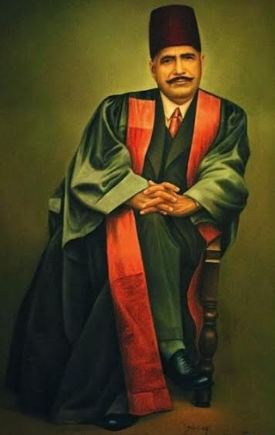
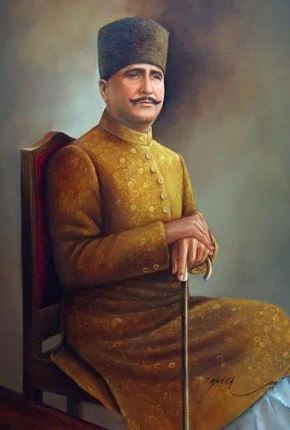
The Unfulfilled Dream: Iqbal’s Vision and the Pakistan of Today

The Unfulfilled Dream: Iqbal’s Vision and the Pakistan of Today

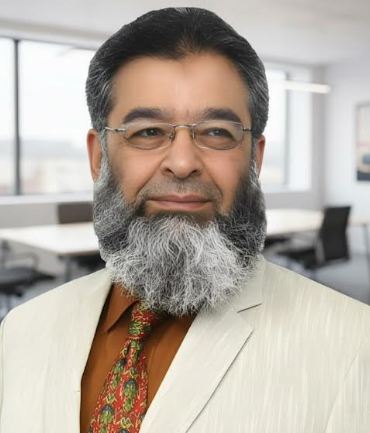
By Muhammad Mohsin Iqbal

When Allah Almighty ordains the rise of a nation, He sends among them chosen souls who serve as the torchbearers of His divine will. Such individuals are endowed with wisdom, courage, and spiritual insight to guide humanity out of darkness into light. Among the blessed personalities who kindled the flame of awakening in the hearts of the Muslims of the Sub Continent, Allama Muhammad Iqbal stands foremost. He was not merely a poet who stirred emotions, but a thinker who sculpted destinies. His poetry was not confined to rhyme and rhythm—it was a call to action, a message of divine inspiration, and a roadmap for the spiritual and political emancipation of the Muslim Ummah.

Allama Iqbal was a poet, philosopher, reformer, and visionary whose intellect transcended his age. His verses echoed not only in mosques and classrooms but in the very soul of a nation yet unborn. With remarkable foresight, he envisioned a separate homeland where Muslims could live with dignity, freedom, and moral integrity—where faith and modernity would blend to form a just, dynamic society. It was Iqbal who recognized the extraordinary leadership potential of Muhammad Ali Jinnah, preparing and persuading him to take up the daunting responsibility of leading the Muslims of India toward their promised destiny. The dream he conceived in 1930 took form seventeen years later, when Pakistan emerged on the world map on August 14, 1947.

Now, as Pakistan crosses the milestone of seventy-five years, the question arises; have we lived up to the expectations of that noble dreamer? Have the ideals he so passionately preached been translated into reality? Have we become the nation of self-respecting, disciplined, and morally upright individuals that Iqbal desired?

Sadly, the answers are disheartening. Iqbal envisioned a Pakistan where knowledge would be a means to serve humanity, not a ladder to corruption and self-interest. Yet today, the education system stands divided and weakened—producing degrees without direction, intellect without ethics, and ambition without compassion. The youth, whom Iqbal addressed as the “Shaheen,” meant to soar above worldly desires and serve as pioneers of change, are often seen disillusioned, trapped in materialism, and deprived of purpose. Their wings are heavy with societal burdens—unemployment, inequality, and moral confusion.

Politically, the decline is equally lamentable. Iqbal dreamed of a state where leadership would be synonymous with service, humility, and justice. But our political culture has often revolved around self-interest, power struggles, and empty rhetoric. The true spirit of democracy—rooted in accountability and sincerity—has been overshadowed by greed and division. The ruling elite, instead of following Iqbal’s vision of “Khudi” (selfhood) and selflessness, have succumbed to the allure of privilege and expediency.

Allama Iqbal’s vision also encompassed social justice and compassion for humanity. He warned against class divisions, exploitation, and moral decay. Yet our society remains plagued by inequality. The poor struggle for survival while the affluent flaunt excess. We have built grand mosques but failed to build a sense of brotherhood. We preach morality but practice hypocrisy. Corruption, which Iqbal regarded as a moral disease, continues to erode our national character. The very ideals of honesty and service that he celebrated in his poetry are often neglected in public life.

Religious scholars, too, have not entirely fulfilled their duty. Instead of guiding society toward unity and tolerance, many have allowed sectarian differences to widen. Iqbal’s Islam was dynamic, progressive, and rooted in the spirit of Ijtihad—the constant striving for new understanding in the light of the Qur’an and Sunnah. He urged Muslims to move beyond rigid traditions and embrace intellectual revival. However, instead of being centers of enlightenment, many religious institutions have become symbols of stagnation and discord.

Even in the economic sphere, we have not realized Iqbal’s dream of self-reliance. He warned against servitude to foreign powers and dependence on external aid. Yet, decades later, our policies often reflect a reliance that undermines sovereignty. Iqbal’s vision was not of a Pakistan that begged for loans but of one that stood tall through hard work, integrity, and faith.

Despite this bleak reflection, Iqbal’s message is not one of despair. It is a message of revival—a call to rediscover our lost potential. His poetry reminds us that nations rise not through wealth or weapons but through character, unity, and conviction. “Khudi ko karbulanditna,” he wrote, “kehartaqdeer se pehle, Khudabande se khud pooche, bata teri raza kyahai.” His message was clear;individual moral strength leads to collective national greatness.

To move forward, we must return to the foundations laid by Iqbal. First, education must be reformed—not merely to impart information but to nurture faith, ethics, and critical thinking. The youth should be equipped with skills and a sense of moral responsibility to serve their nation. Secondly, leadership at all levels must internalize Iqbal’s ideal of mard-e-momin—a person of faith, integrity, and courage—who rules not by fear or deceit but by example.

Thirdly, economic policies must prioritize self-sufficiency. We must promote industrial growth, innovation, and fair opportunities for all citizens. The state must ensure that no child sleeps hungry and no young graduate remains hopeless. Fourthly, our religious discourse must move toward unity, compassion, and tolerance. The message of Islam, as Iqbal emphasized, is one of balance—between reason and revelation, faith and action.

Above all, we must cultivate the spirit of self-accountability. If every Pakistani, regardless of position or status, commits to honesty and justice, the nation will inevitably rise. Iqbal’s Pakistan was to be a moral state—a reflection of Islamic principles where compassion reigns over cruelty, merit over mediocrity, and service over self-interest.

Seventy-five years may have dimmed the dream, but it has not died. The soul of Iqbal still calls upon us from the depths of his verse—to rise, to rebuild, and to rediscover the greatness within. Pakistan can still become the realization of his dream if we, as a nation, awaken from complacency and embrace his vision in spirit and in action. For the destiny of this land, as Iqbal believed, lies not in the stars but in the strength of its people.

Trump’s Nuclear Gamble: A Dangerous Revival of the Atomic Age

Qamar Bashir

By Qamar Bashir

A chilling shadow has once again fallen over the Earth. After his meeting with South Korean leadership, President Donald Trump issued a startling directive to the United States military establishment—to restart nuclear testing after decades of restraint. The announcement, largely overlooked by many journalists and analysts, carries immense consequences for global peace, environmental stability, and the very survivability of humankind.

Trump’s latest declaration on social media left little ambiguity. He boasted that the United States possesses “so much nuclear power that it can destroy the world 150 times over.” Though such a statement may sound like political bravado, its implications are profoundly serious. It signals the beginning of a new nuclear arms race—one likely to spiral beyond control.

Since the end of the Cold War, the world had enjoyed a fragile but essential consensus against nuclear testing. Treaties such as the Comprehensive Nuclear-Test-Ban Treaty (CTBT), although not ratified by all powers, represented a global moral understanding: nuclear weapons may exist, but they must never again be unleashed or tested. With Trump’s call to resume testing, that understanding has been shattered.

The rationale behind this order, according to senior U.S. defense sources, is to “ensure America’s nuclear readiness” in light of escalating tensions in Eastern Europe and the Pacific. The ongoing Russia–Ukraine war, the U.S.–China rivalry in the South China Sea, and North Korea’s persistent nuclear ambitions have created a climate of mutual suspicion. Yet by reigniting nuclear testing, the United States has effectively reopened Pandora’s box—inviting others to follow.

Trump’s announcement cannot be separated from Moscow’s growing anxiety. Russia today finds itself encircled by NATO’s military expansion, besieged by economic sanctions, and confronted by Western-backed forces in Ukraine. President Vladimir Putin, interpreting this as an existential threat, has responded in kind—ordering his own defense industry to “fine-tune, modernize, and reactivate” both strategic and tactical nuclear weapons.

For Russia, nuclear deterrence has once again become the last bastion of sovereignty. Putin’s rhetoric reflects not mere arrogance, but genuine alarm. Facing what he perceives as a united Western effort to dismantle Russia’s regional influence, he has signaled readiness to escalate—reviving Cold War-era nuclear doctrine that views atomic weapons as instruments of both defense and coercion.

If Trump follows through on his directive, nuclear tests would likely resume at long-dormant sites in the American deserts—such as Nevada or New Mexico—or possibly in new offshore facilities. But each test, no matter how contained, releases radiation, destabilizes local geology, and leaves irreversible scars on ecosystems. Underground detonations fracture rock layers and contaminate aquifers, while atmospheric tests eject radioactive isotopes into the jet stream, spreading silent poison across continents.

Even so-called “low-yield” or “controlled” tests can emit deadly isotopes like cesium-137 and strontium-90, which linger in the environment for decades. The shockwaves alone are enough to damage fragile habitats, destroy marine life near coastal testing sites, and accelerate the degradation of already threatened ecosystems.

In the era of COP climate summits, where nations convene to curb emissions and reduce environmental damage, the idea of reviving nuclear tests borders on ecological insanity. Each detonation negates years of progress in reducing carbon footprints and combating global warming. Nuclear tests not only pollute air, water, and soil—they symbolically announce that the military might once again supersede environmental stewardship.

The strategic consequence of the U.S. decision is perhaps even more dangerous than its environmental one. Once Washington resumes testing, other nuclear powers will inevitably follow. Russia and China will not allow the United States to hold exclusive technological advantage. India and Pakistan, already uneasy neighbors, may feel compelled to upgrade and validate their arsenals. Even “undeclared” nuclear states like Israel and North Korea could exploit the situation to justify fresh tests under the pretext of “national security.”

This domino effect risks dismantling decades of non-proliferation progress. The nuclear genie, once unleashed again, will not be confined. Each new test brings humanity closer to normalizing the idea of nuclear use—something the post-1945 world has spent generations trying to prevent.

Trump’s nuclear rhetoric also fits within a pattern of psychological warfare—a deliberate attempt to intimidate adversaries and reassert American supremacy. His claim that the United States is “25 years ahead of China and Russia” in nuclear technology may be partially true, but it is equally reckless. Both Moscow and Beijing view such statements not as confidence but as provocation.

China, in particular, has been rapidly advancing its own nuclear triad—modernizing land-based missiles, submarines, and air-launched systems. By Trump’s own admission, “they are catching up fast.” Yet instead of engaging in strategic arms reduction or renewed diplomacy, the U.S. president appears intent on accelerating the race. The result: a spiral of suspicion, investment, and escalation that risks undoing half a century of arms-control achievements.

Beyond politics, the return of nuclear testing poses a direct threat to planetary survival. Humanity already faces mounting crises—climate change, biodiversity collapse, rising sea levels, and environmental degradation. Nuclear testing adds yet another existential burden.

Each underground blast alters the Earth’s crust; each atmospheric detonation releases radioactive debris that can circulate for generations. The cost is not limited to those near the testing zones—radioactive particles carried by winds can contaminate distant farmlands and oceans, threatening global food chains and health systems.

Scientific studies from previous testing eras reveal that even low-level exposure has measurable genetic effects—birth defects, cancer risks, and DNA mutations—on both human and animal populations. To knowingly revive this hazard for geopolitical theatrics is a betrayal of both science and morality.

The international community must not remain silent. The United Nations, the International Atomic Energy Agency, and leading environmental organizations must urgently convene to prevent this reckless revival of nuclear testing. The scientific community must speak out with data, clarity, and conviction. World leaders—from Europe to Asia, from Africa to Latin America—must recognize that silence in the face of nuclear escalation is complicity.

The lesson of Hiroshima and Nagasaki was meant to be final: that no nation, no leader, and no ideology should ever gamble with the survival of the planet. Yet here we are again, standing at the edge of history, where one man’s command could unmake decades of peace and poison the very Earth that sustains us.

Human civilization must now choose between two paths—one paved by fear and destruction, the other by restraint and wisdom. For if the atomic fire is rekindled, it may not burn just deserts or oceans—it may consume the very soul of humanity.

By Qamar Bashir

Press Secretary to the President (Rtd)

Former Press Minister, Embassy of Pakistan to France

Former Press Attaché to Malaysia

Former MD, SRBC | Macomb, Michigan, USA
Azerbaijan celebrates National Flag Day

Azerbaijan celebrates National Flag Day

Every year on 9 November, Azerbaijan proudly celebrates National Flag Day, honoring the adoption of the tricolor national flag by the Azerbaijan Democratic Republic (ADR) on 9 November 1918. This historic symbol was reinstated by President IlhamAliyev’s decree in 2009, reaffirming its profound role in the country’s identity, sovereignty, and statehood.

The establishment of the Azerbaijan Democratic Republic on 28 May 1918 marked a turning point in the political history of the East, introducing the first democratic republic in the Muslim world. Despite existing for only 23 months, the ADR laid the foundation of modern Azerbaijani statehood by forming a parliament, creating a multiparty system, ensuring free elections, independent media, and judicial structures. Remarkably, the republic granted women the right to vote and be elected in 1919 — becoming one of the first countries globally and the first in the Muslim East to do so.

State symbols, including the anthem, national emblem, and tricolor flag, were adopted during this period. The flag — composed of blue, red, and green horizontal stripes with a white crescent and eight-pointed star in the center — reflects the principles of Turkism, Islam, and modernization. On 7 December 1918, when the first Parliament of Azerbaijan convened, the national flag was raised over the parliament building, marking a proud milestone in the nation’s history.

With the restoration of independence on 18 October 1991, Azerbaijan declared itself the successor of the ADR, reinstating its state symbols. Prior to this, on 5 February 1991, the Supreme Soviet adopted the law recognizing the tricolor as the national flag, following the initiative of National Leader Heydar Aliyev, who had earlier ensured its acceptance in the Nakhchivan Autonomous Republic on 17 November 1990.

The Constitution of the Republic of Azerbaijan emphasizes the duty of every citizen to honor national symbols, including the flag, coat of arms, and anthem. In 1998, great leader Heydar Aliyev tasked state bodies with promoting respect for national values, stating: “The flag of Azerbaijan is not merely a flag — it is a symbol of our statehood and independence.”

Today, the national flag proudly flies on government buildings, diplomatic missions, military bases, and state institutions, as well as during international events, official ceremonies, cultural programs, and major sports competitions — symbolizing sovereignty, national unity, and pride.

To further strengthen respect for the state flag, President Ilham Aliyev signed a decree on 17 November 2009, establishing National Flag Day, later approved by the MilliMajlis as an official public holiday.

In the early years of regained independence, Azerbaijan faced social, political, and economic difficulties. However, thanks to the visionary leadership of National Leader Heydar Aliyev and the consistent development strategy continued by President Ilham Aliyev, the nation overcame challenges and transformed into a strong and respected state in the international arena.

Today, Azerbaijan’s tricolor flag waves proudly across the entire sovereign territory of the country.

Hi-tea reception to engage with stakeholders and friends of malaysia in Pakistan

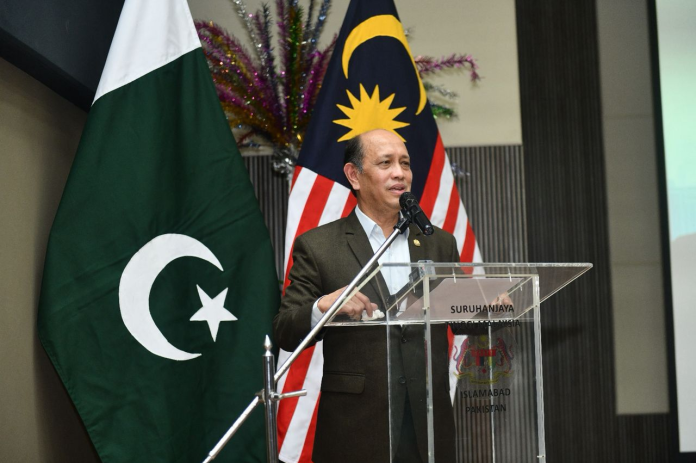
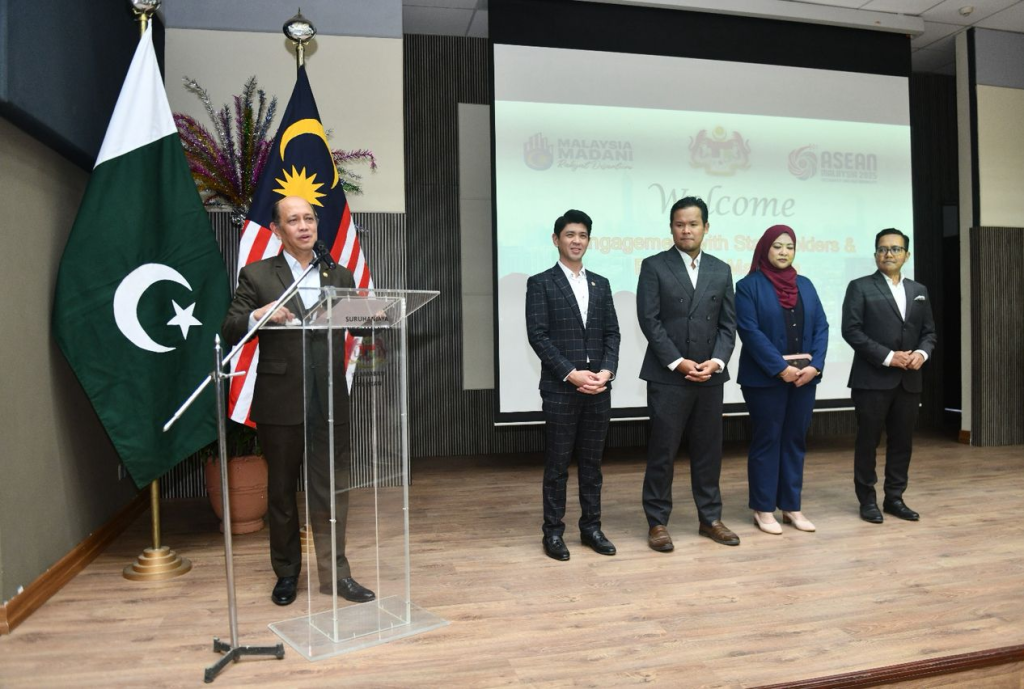
ISLAMABAD: Nov 8 (DNA): The High Commission of Malaysia in Islamabad hosted a “Hi-Tea” reception to engage with stakeholders and friends of Malaysia in Pakistan. The event brought together a diverse group of distinguished guests, including businessmen, representatives from chambers of commerce, government stakeholders, members of the media, and long-standing friends of Malaysia. The gathering served as a platform to strengthen the bonds of friendship and cooperation between Malaysia and Pakistan, reflecting the shared commitment of both nations to deepen bilateral relations.

In his opening remarks, His Excellency Ambassador Dato’ Mohammad Azhar Mazlan, High Commissioner of Malaysia to Pakistan, warmly welcomed all attendees and expressed his appreciation for their continued support and engagement in fostering Malaysia-Pakistan relations. His Excellency emphasized that Malaysia and Pakistan share a long-standing and cordial relationship, founded on mutual respect, shared values, and a common aspiration for prosperity and progress.

The High Commissioner highlighted the recent official visit of the Prime Minister of Pakistan, the Honourable Mr. Shehbaz Sharif, to Malaysia, describing it as highly successful and productive. During the visit, both leaders reaffirmed the enduring bonds of friendship between the two countries and reiterated their shared commitment to building a more dynamic and resilient partnership.

His Excellency further noted that the discussions between the two leaders were conducted in a warm and cordial atmosphere, underscoring the mutual trust and understanding that define Malaysia-Pakistan relations. Both sides agreed to strengthen cooperation in various fields of mutual interest, particularly in education, including technical and vocational training, and to enhance institutional partnerships that will contribute to the development of human capital in both nations.

The event provided an excellent opportunity for participants to network, exchange views, and explore avenues for future collaboration. It also underscored Malaysia’s continued commitment to

Five Years of Azerbaijan’s Glorious Victory

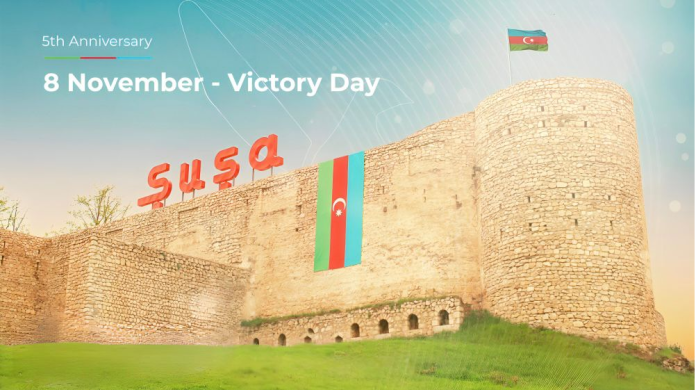
This year marks the 5th anniversary of Azerbaijan’s glorious Victory in the 44-day Patriotic War. On November 8, 2020, Azerbaijan`s occupied lands were liberated by the brave Azerbaijani army, ending the 30-year longing of the people of Azerbaijan. This date, which represents the beginning of a new era for Azerbaijan and region, is celebrated as Victory Day following the relevant Order of H.E. Mr. Ilham Aliyev, President of the Republic of Azerbaijan.

Notwithstanding the grave economic, social, and humanitarian consequences of Armenia’s military aggression and 30-year-long occupation, the blatant violation of Azerbaijan`s territorial integrity and sovereignty, Azerbaijan was a party that made constant efforts to resolve the conflict peacefully.

However, Armenia’s continuation of the illegal military occupation and steps to maintain its consequences, carrying on illegal activities in the occupied territories of Azerbaijan, and breaking the negotiation process while resorting to unacceptable rhetoric such as “new wars for new territories” and “Garabagh is Armenia” led to the failure of the peaceful settlement process of the conflict.

Following the political provocations, Armenia’s another large-scale offensive on 27 September 2020 forced Azerbaijan to take measures in accordance with its right to self-defense as enshrined in the UN Charter. The counter-offensive operation started on the same day marked the beginning of the 44-day Patriotic War – the path to victory.

Armenia, aiming at sustaining the illegal military occupation, and to undermine the Azerbaijani people’s will, resorted to the practice of targeting civilians committing grave war crimes against civilians in densely populated areas such as Ganja, Barda, and Tartar which were far from the regions where military operations were conducted.

However, as a result of the perseverance and bravery of the glorious Army of Azerbaijan, led by the victorious Commander-in-Chief during the Patriotic War, cities of Jabrayil, Fuzuli, Zangilan, Gubadli, as well as Shusha city which has special symbolic value and importance for the Azerbaijani people, and more than 300 settlements were liberated from occupation. The brilliant victory won on the battlefield has led to another remarkable result – three of Azerbaijani districts, Aghdam, Kalbajar and Lachin, have been returned to Azerbaijan. Azerbaijan has returned these districts without firing a single shot and without a single martyr. All together around 700 settlements. 

Thus, the Republic of Azerbaijan’s territorial integrity has been restored, and Azerbaijan has singlehandedly implemented four major documents adopted by the UN Security Council in 1993 – resolutions 822 of 30 April, 853 of 29 July, 874 of 14 October and 884 of 11 November.

On September 19-20, 2023, in order to put an end to the existence of illegal Armenian forces, as well as to restore full sovereignty over all its territories, Azerbaijan carried out counter-terrorism measures within 24 hours in the Karabakh region.

It should be emphasized that Pakistan has consistently demonstrated its support for the territorial integrity, sovereignty, and inviolability of Azerbaijan’s borders, in accordance with the demands of the aforementioned UN Security Council resolutions. The principled position displayed by Pakistan during the Patriotic War of Azerbaijan and the continuous political and moral support, provided to Azerbaijan’s just position were a true manifestation of the brotherly relations between the fraternal countries.

Immediately after the historic Victory of the Republic of Azerbaijan, large-scale restoration and reconstruction work, including key infrastructure projects, were launched in the Karabakh and East Zangezur regions, and thousands of people have returned to their native lands.

Azerbaijan has always advocated a peace agenda and actively pursued measures to achieve lasting peace and stability in the region. Currently, significant progress has been made in this regard. On August 8, 2025, a Joint Declaration was signed between Azerbaijan and Armenia in the witness of the US in Washington. Thus, an important historic step was made towards ending the long-lasting conflict between the countries. Initialing of a peace agreement between Azerbaijan and Armenia creates favorable opportunities not only for the region but also for the wider geography. The full instauration of prosperity in the South Caucasus will open up opportunities not only for the region but also for the regions beyond.

Today, the people of Azerbaijan commemorate their martyrs who sacrificed their lives for the territorial integrity of their country with deep respect and gratitude, wish their war heroes good health, development, and prosperity to their country and people, peace and tranquility to the region and the world.

Brazil launches fund to reward nations that protect forests

Brazil launches fund to reward nations that protect forests

BELÉM, BRAZIL, Nov 7 (AFP/APP): Brazil on Thursday launched a new investment fund that could reward tropical countries that protect their rainforests, attracting several billion dollars in much-needed pledges from Norway, Indonesia and France.

President Luiz Inacio Lula da Silva described the Tropical Forests Forever Facility (TFFF) as an “unprecedented initiative” at its launch in Belem where Brazil is hosting the upcoming UN climate summit called COP30.

Brazil is eventually seeking to create a $125 billion fund that would return a share of profits to developing countries for every hectare of forest they keep standing.

Before the launch, Brazil had announced $1 billion towards the $25 billion it was seeking from sponsor governments but struggled to attract other investors.

On the eve of the launch, the UK announced it would not contribute while a representative from Finland’s government told AFP it would be “difficult to find new resources.”

But on Thursday, Norway announced it would invest up to 30 billion kroner ($3 billion) over 10 years in the fund but imposed several conditions on its contribution.

“It is vital to stop deforestation to reduce the impacts of climate change and limit biodiversity loss,” the Norwegian government said in a statement.

Forest-rich Indonesia also made a contribution of $1 billion while France pledged a conditional 500 million euros.

Portugal announced a more modest $1 million, while Germany also made an unspecified pledge.

– Worth more standing –

Some governments had expressed reservations about the design of the fund, and Brazil has recently revised down its expectations to $10 billion in initial contributions.

The fund requires governments to accept more risk to attract private financiers, with the combined pot invested mostly in emerging market bonds to generate a return which is spread between investors and tropical countries.

The scheme proposes creating a reliable, long-term revenue stream to undercut the economic incentive in tropical countries to chop down primary forests which are rich in carbon and biodiversity.

“Such a fund, which will help us, comes at just the right time,” Abe Assamoi, an Ivory Coast delegate to COP30 in Brazil, told AFP in Belem, a city at the edge of the Amazon rainforest.

Brazil identified more than 70 developing countries that could be eligible to receive annual payments if they met the eligibility criteria, namely keeping deforestation below a certain rate.

If they were to stamp out deforestation entirely, tropical countries like Brazil, Indonesia and the Democratic Republic of Congo could earn hundreds of millions of dollars a year each.

“Forests are worth more standing than cut down,” said Lula.

“In a few years, we will see the fruits of this fund. We will be proud to remember that it was in the heart of the Amazon rainforest that we took this step together.”

PM Shehbaz, Azerbaijani President pledge to deepen bilateral cooperation

PM Shehbaz, Azerbaijani President pledge to deepen bilateral cooperation

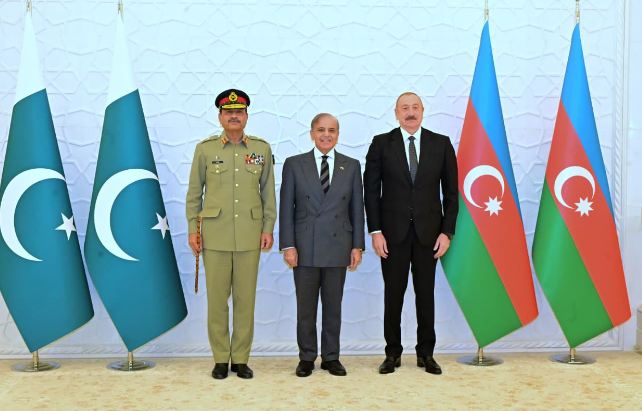
Meeting between  President of Azerbaijan Illham Aliyev and  Prime Minister of Pakistan Muhammad Shehbaz Sharif; Chief of the Army Staff Field Marshal Syed Asim Munir was also present.

BAKU, NOV 7: /DNA/ – Prime Minister Muhammad Shehbaz Sharif held a meeting with  President of Azerbaijan H.E. Ilham Aliyev at Presidential Palace of Azerbaijan, today. Chief of the Army Staff Field Marshal Syed Asim Munir was also present in the meeting.

The Prime Minister thanked the President of Azerbaijan for extending invitation to attend the celebration of victory day of Azerbaijan.

The Prime Minister felicitated the Government and people of Azerbaijan on the Victory day which is observed to commemorate historic victory in the 44 day long Karabakh Liberation War against Armenia. He reiterated that the Victory of Azerbaijan served as a beacon a hope for oppressed people striving for self determination including the people of Indian Illegally Occupied in Jammu and Kashmir and Palestine. 

The two leaders reviewed the whole range of bilateral relationship and agreed to further strengthen their multi-layered cooperation in the fields of political, Trade and Investments, Energy, Connectivity and Defence. The Prime Minister Shehbaz Sharif extended an invitation to President of Azerbaijan Ilham Aliyev to visit Pakistan at his earlier convenience which he graciously accepted.

The Prime Minister appreciated President Aliyev for signing the historic peace agreement with Armenia earlier this year. President Ilham Aliyev thanked Pakistan for its consistent support to Azerbaijan in its just struggle against illegal occupation of Karabagh region. He also appreciated Pakistan’s role in promoting regional stability in South Asia.

PM lands in Baku to attend Azerbaijan Victory Day celebrations

PM lands in Baku to attend Azerbaijan Victory Day celebrations

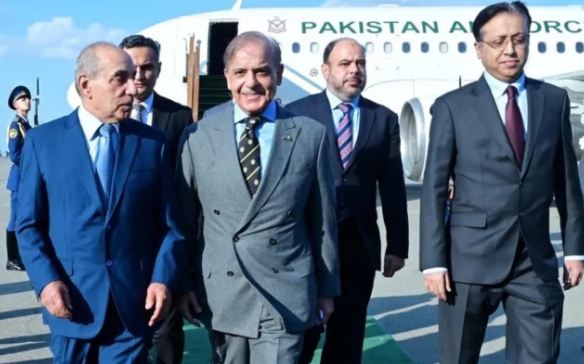
ISLAMABAD, NOV 7: Prime Minister Shehbaz Sharif landed in Baku on Friday on a two-day official visit to Azerbaijan to attend the country’s Victory Day celebrations at the invitation of Azerbaijan President Ilham Aliyev.

Azerbaijan Deputy Prime Minister Yagub Eyyubov, First Deputy Foreign Minister Fariz Razayev, Ambassador of Pakistan to Azerbaijan Qasim Mohiuddin, and diplomatic staff welcomed the prime minister upon his arrival at Baku’s Heydar Aliyev International Airport.

Information Minister Ataullah Tarar is also accompanying PM Shehbaz on the visit.

During the visit from November 7-8, PM Shehbaz will take part in the celebrations marking the fifth anniversary of the country’s Victory Day, according to a statement issued by the Foreign Office on Friday.

“During the visit, he (PM Shehbaz) will also hold a meeting with President Ilham Aliyev to review the entire gamut of bilateral relations and identify new avenues to further deepen cooperation in diverse sectors, including trade and investment, energy, defence, education, and regional connectivity,” the FO statement added.

“Pakistan and Azerbaijan enjoy long-standing fraternal relations, rooted in shared faith, history, culture, and mutual trust.

“The two countries also maintain close cooperation in regional and international fora, including the Organisation of Islamic Cooperation (OIC), the Economic Cooperation Organisation (ECO), and the United Nations (UN),” the statement added.

The visit by the prime minister, the FO said, will reaffirm Pakistan’s steadfast support for the sovereignty and territorial integrity of Azerbaijan and further advance the strategic partnership between the two brotherly nations.

This marks PM Shehbaz’s third visit to Azerbaijan in 2025, following his official trip in February and his participation as head of Pakistan’s delegation at the 17th Economic Cooperation Organisation (ECO) Summit in Khankendi, which took place from July 3 to 4.

PM Shehbaz had also met President Aliyev on the sidelines of the ECO Summit and reaffirmed that the interactions between the leadership of both countries had helped in making the relationship ever stronger.

Deadlock persists as PPP rejects key clauses of proposed 27th Constitutional Amendment

Deadlock persists as PPP rejects key clauses of proposed 27th Constitutional Amendment

ISLAMABAD: A deadlock between the Pakistan Muslim League-Nawaz (PML-N)-led federal government and the Pakistan Peoples Party (PPP) persisted on Friday over the proposed 27th Constitutional Amendment, with the PPP refusing to endorse several key clauses.

During the second day of its Central Executive Committee meeting, the PPP reiterated its opposition to most provisions of the draft amendment, agreeing only to the proposed changes in Article 243, which concerns appointments in the armed forces.

Following PPP’s stance, the government postponed today’s federal cabinet meeting, initially scheduled to approve the draft.

A day earlier, PPP Chairman Bilawal Bhutto-Zardari said his party rejected any proposal that altered provincial autonomy or the NFC Award formula, stressing equal representation for all four provinces in the proposed Constitutional Court.

Meanwhile, coalition allies, including the MQM-Pakistan and the PML-Q, reaffirmed their support for the government’s amendment plan. However, opposition parties in the Senate dismissed the proposal entirely, accusing the ruling coalition of bypassing parliamentary consultation.

In a joint statement, opposition lawmakers alleged that the PML-N, PPP, and their partners were “bulldozing” legislation and concealing details of the amendment from Parliament.

Adviser to the Prime Minister on Political Affairs Rana Sanaullah claimed that consensus had been achieved on key points, saying: “Talks are underway, and we are not touching the 18th Amendment. Matters will likely be settled by this evening.”

Federal Minister Rana Tanveer also said significant progress had been made, though the amendment was “not being tabled today.” PML-N Senator Afnanullah added that PPP had agreed on Article 243, and efforts were continuing to address its remaining reservations.

Separately, PTI leader Asad Qaiser rejected any government move to amend the Constitution, declaring that the current Parliament “has no authority to legislate.” He accused the PPP of political compromise and criticised the government’s handling of police actions at Khyber Pakhtunkhwa House.

According to a report in The News, the draft amendment includes the introduction of a Commander of Defence Forces post to improve coordination among the three armed services. It also proposes the establishment of a seven-member Constitutional Court, with justices retiring at the age of 68.

Sources told the publication that the five judges would likely be selected from the current Supreme Court bench, with Justice Aminuddin Khan expected to lead the new court, while judges from the Sindh and Balochistan High Courts are also under consideration.

Stay Connected

64FansLike
60FollowersFollow

Latest Reviews

Exchange Rates

USD - United States Dollar
EUR
1.14
GBP
1.34
AUD
0.69
CAD
0.71