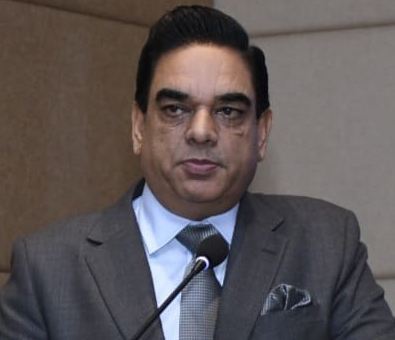
ISLAMABAD, NOV 10 /DNA/ – President Islamabad Chamber of Commerce and Industry (ICCI), Sardar Tahir Mehmood, has underlined the urgent need for comprehensive measures, supported by a consultative approach and continuity of policy, to enhance Pakistan’s industrial competitiveness, productivity, and exports.
Talking to various business delegations at the Chamber House on Monday, Sardar Tahir Mehmood stressed that reducing the cost of doing business and bringing down energy tariffs are essential steps toward meaningfully enhancing the country’s export potential and attracting investment.
He pointed out that Pakistan’s trade and industrial sectors are facing multiple challenges, including high production costs, excessive energy tariffs, complex taxation systems, and heavy duties on raw materials and intermediary goods. These factors, he said, are adversely impacting the competitiveness of local industries in both domestic and global markets.
The ICCI President emphasized that revitalizing the industrial sector requires predictable, business-friendly, and long-term economic policies developed in close consultation with the private sector. He called on the government to reduce tariffs on industrial inputs and raw materials, simplify tax procedures, and create a stable policy environment that encourages sustainable growth and industrial expansion.
He further remarked that the continuity of policies is crucial to maintaining investor confidence and ensuring consistent growth in exports. Frequent policy changes, he said, disrupt industrial planning and discourage both domestic and foreign investors.
Sardar Tahir Mehmood also highlighted the importance of energy sector reforms, urging the government to provide affordable and reliable energy to industries. “Without reducing energy costs, it will be difficult for our export-oriented sectors to compete internationally,” he warned.
He reiterated that ICCI is committed to working closely with the government and all relevant stakeholders to develop actionable strategies that enhance competitiveness, strengthen the export base, and promote industrial revival.
The ICCI President concluded by reaffirming that Pakistan’s economic future lies in its ability to produce, innovate, and export competitively. For that, he said, there is a dire need for collaborative policymaking, consistent economic governance, and an enabling business environment that empowers the private sector to drive national growth.
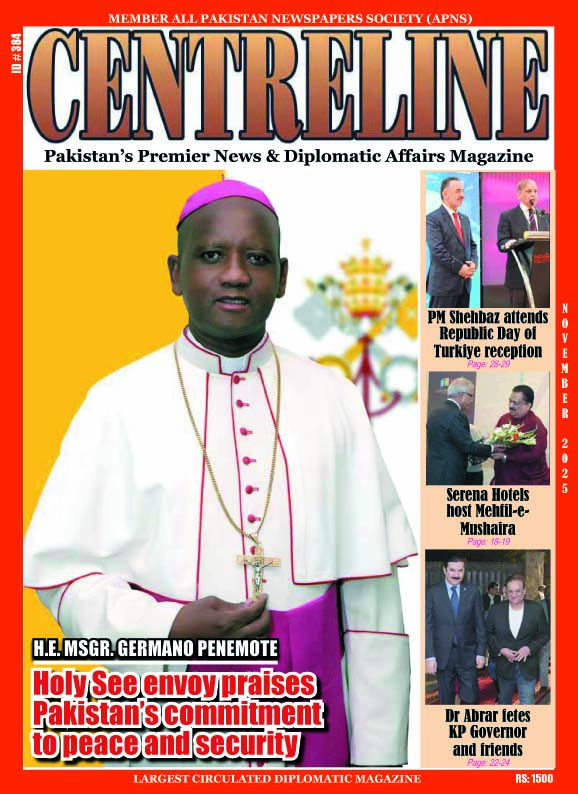
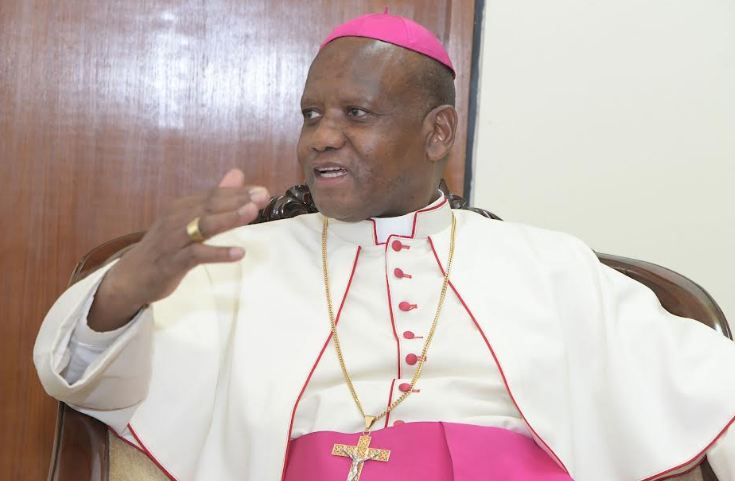
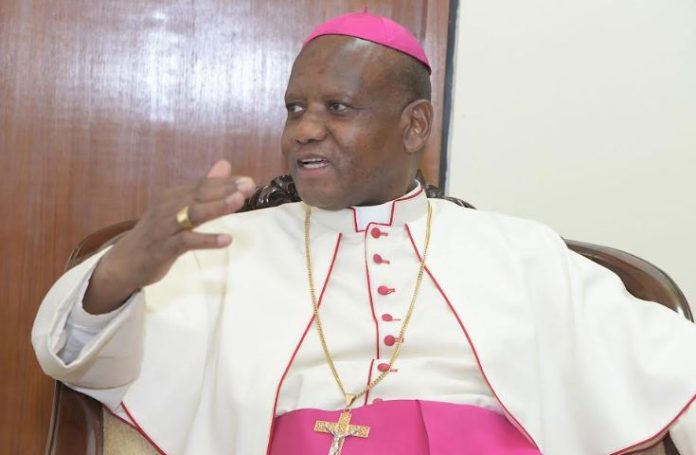
His Excellency Msgr. Germano Penemote, the Apostolic Nuncio to Pakistan, granted an exclusive interview to Daily Islamabad Post, Centreline, and the Diplomatic News Agency (DNA). In this wide-ranging conversation, the Holy See envoy shared his insights on Pakistan–Holy See relations, interfaith harmony, and the role of the Catholic Church in promoting peace and dialogue across communities. The interview offers a rare glimpse into the Nuncio’s diplomatic mission and his vision for strengthening mutual understanding and cooperation between Pakistan and the Holy See.
1: As Apostolic Nuncio since 2023, what have been your main priorities in Pakistan so far?
The diplomacy of the Holy See, also called Vatican diplomacy, one of the oldest and best known throughout history, has the duty of promoting the common good of all people through dialogue, understanding, and the harmonious and peaceful coexistence of the entire human family. In this regard, since my arrival in Pakistan, and despite some situational circumstances that have not always made my mission easy, I have sought to meet with people, listen to their difficulties, and provide appropriate solutions whenever possible. I have brought neither gold nor silver, but I have a heart full of esteem and consideration for the beloved Pakistani people. I seek to strengthen bilateral relations between the Holy See and the Islamic Republic of Pakistan, through not only my presence here, but also through direct contact with people of various religions, encouraging the activities of the Catholic Church in the fields of education, health, and social assistance. In providing this indispensable service, we do not sound trumpets nor call on the media to cover our activities, but we silently carry out many good deeds for all Pakistani people.
2: Could you describe the relationship between the Holy See and the Islamic Republic of Pakistan – what are its strengths, and what areas need further development?
So far, the diplomatic relations between the Holy See and the Islamic Republic of Pakistan are good; one could even say they are excellent, but I am not an advocate of exaggerations. In fact, since 1965, when the Apostolic Delegation established in Karachi in 1950 was elevated to the rank of Apostolic Nunciature, the bilateral relations under consideration have been proceeded normally and without interruption.
Then, on 27th of December this year, we will reach 60 years of the full institution of the Apostolic Nunciature in Pakistan. It is worth noting that from the start in Karachi until today, the Apostolic Nuncio has resided in Pakistan and has fully carried out his mission in this country, sharing cultural, religious and social values among a people characterized by unparalleled hospitality and an openness that always has something to offer and to challenge. For his part, the Ambassador of Pakistan to the Holy See lives in Switzerland, but this does not mean he is unknown in the Vatican. Therefore, the diplomatic relations between the Holy See and the Islamic Republic of Pakistan are good, continuing with mutual respect and without disruptions.
However, we need to establish a legally binding agreement on certain issues for a fruitful cooperation. In other words, there is a need for a legal instrument that allows Catholic institutions to develop their activities for the benefit of all Pakistani people. We are pleased when we find many good citizens of this country saying that they studied in a Catholic school and are happy to have received a socially valid and well-rounded education.
3: How can local Church institutions (schools, hospitals, etc.) better contribute to the welfare of both Christian and non-Christian communities in Pakistan?
This question is welcome, especially because these days I have been in contact with some government Authorities, with the aim of working together to provide better conditions for the Church service, with the expectation of benefiting the entire people of Pakistan. For this goal, there is a need of legal recognition and support at various levels for the institutions of the Catholic community, which have contributed to the development and welfare of society. Many countries have established effective and productive agreements with the Holy See in various areas. For this reason, it is never too late to think about the good that a similar legal instrument could bring to Pakistan. Furthermore, one could think, for example, of establishing a Catholic University in the country, in order to provide a solid and universally recognized education to our young people, regardless of their social condition, religion, or background.
This would greatly contribute to the process of dialogue, interfaith harmony and peaceful coexistence. An education given equally to all would leave no room for discriminatory feelings or acts of vandalism and aggression, affirming that all Pakistanis are citizens of this Republic and legitimate children of this their homeland. Therefore, they should be helped to respect and accept one other as brothers, and to live together in harmony and peace.
4: Pakistan is predominantly Muslim. How do you see the role of the Catholic Church in promoting dialogue, peace, and mutual understanding among religious communities?
First of all, I must say that the Holy See, as the government of the Catholic Church, seeks to spread its message of dialogue and peace for the harmony of the entire human family in the world. In this, the teachings of the Popes are vibrant and serve as valuable guidance for Catholic communities and for all people of goodwill.
In Pakistan, the Catholic Church stands out in its integral mission of promoting interfaith harmony and dialogue with other Religious, ecumenism among Christians, peace, and mutual understanding among the various social groups present in the country. Although the Catholic Church is “a minority” in the country and therefore limited in its resources, I see that it has played a leading role in the process of promoting the well-being of all. It is necessary to have confidence in the Church’s institutions and provide them the necessary conditions to reach out to those most in need.
The indispensable mission of the Catholic Church requires the support of men and women of goodwill, people who long for peace and truly want to see Pakistan grow both internally and within the community of nations. This year we are celebrating the 60th anniversary of the Declaration Nostra Aetate (translates from Latin to “In our Time” or “In our Age”) of the Second Vatican Council, that outlines the Catholic Church’s relationship with non-Christian religions. This document has contributed enormously to improving relations, particularly with Muslims and Jews, but not only, in a respectful friendship despite differences and diversity. It is a landmark document that fostered interfaith dialogue, respect, and cooperation. The same document is a source of invaluable teaching on human and religious coexistence, and it is being commended in conferences and discussion groups around the world, including in Pakistan.
The Catholic Church, due to its global nature, has no boundaries. It is always open to dialogue and extends its arms to embrace, comfort, and support all the children of God, Creator of all human beings. Muslims, Christians, Buddhists, Jews, Hindus, Sikhs, Confucians, and others need to know how to live together peacefully. Moreover, the Catholic Church, wise in humanity, does not fail to point out the proper path for this purpose.
5: What initiatives have you supported or would like to support to promote interfaith harmony, especially by youth and in education?
The Catholic University proposal I mentioned earlier is a sine qua non condition for a society that is fair in rights and harmonious in the diverse and varied expression of faith. So far, our schools have taught the basic notions of the Holy Quran and the Holy Bible.
But we have no Catholic higher education institution that could contribute at the highest level to interreligious dialogue and harmony. We support school and hospital activities, but we have no structure at university level that can welcome young people of different religions, so that they can sit together and study collectively to understand the vast array of paths and the essential means for building a society in peace and in full interfaith harmony. Geographically, Pakistan is well situated, and if there were a Catholic University here, promoting human values and religious virtues, neighboring countries would surely send their students here to study.
Everything is still possible, but it depends on the goodwill and cooperation of everyone. By establishing a Catholic University in Pakistan, we can create an institution that not only provides outstanding education but also to fostering human development in one of the most strategically significant regions of the world. It can inspire generations of leaders, advance research and innovation, and foster harmony among diverse peoples.
6: Poverty, education, health services are ongoing challenges in many parts of Pakistan. How is the Church contributing to these areas, and what more could be done with local and international support?
It is interesting to note that in your question the main challenges of the country are well identified. The Catholic Church dedicates itself in these areas, and will never renounce its inalienable mission: the salvation of human life. To this propose we have many shelters in the country, founded and managed by Catholic religious, for example, the Sisters of Mother Teresa of Calcutta. I have visited many places, such as Karachi, Lahore, Hyderabad, Faisalabad, and Rawalpindi, where these nuns work.
They dedicate themselves to their mission with a spirit of charity and selflessness, sheltering the poor and the sick, helping disadvantaged children, girls and adult women in poverty or ill. The same goes for Dar-ul-Karishma in Yohanabad (Lahore) under the care of the Sisters of Charity of St. Jeanne Antide Thouret, as well as Dar-ul-Sukun (Darul Sakoon) in Karachi. Regarding the schools, during my stay in Quetta, Karachi, Hyderabad, Lahore, Sargodha, Rawalpindi, and Islamabad, I greatly appreciated the work that Catholic missionaries are carrying out in the country.
I visited several of the educational institutions founded and managed by them, noticed their enthusiasm, and observed their numerous difficulties and limitations. When we think of the large schools and colleges such as St. Bonaventure in Hyderabad, St. Patrick School and College in Karachi, St. Joseph’s Convent Girls High School and the Sacred Heart School in Quetta, the Mission High School under the care of the Focolare Movement at Dalwal, the Sacred Heart Cathedral Girls High School and the Convent of Sacred Heart in Lahore, the great college of Sargodha under the responsibility of the Presentation Sisters, the La Salle High School & College in Faisalabad, just like so many others that are in the Dioceses of Multan, we can truly recognize and admire the good that the Catholic Church does and wants everyone to enjoy in the country.
The same can be said of various youth training Institutes, such as the Don Bosco Technical & Youth Centre in Lahore, the Sargodha Institute of Technology. They need everyone’s support, since good education is the main key to building a strong nation. In the field of public health, hospitals managed by the Catholic Church are highly sought after.
The Holy Family Hospital in Karachi, the Saint Elizabeth Hospital in Hyderabad, Our Lady of Fatima Hospital build by German missionaries in Sargodha, the Bethania Hospital in Sialkot, St. Joseph’s Hospice in Rawalpindi, among others, are examples that also catch our attention. We have been looking for benefactors who can help to fund some important institutions that benefit all Pakistanis, but the goodwill of benefactors is not always sufficient. It is necessary that, internally, a significant contribution also be made. Ultimately, the good that comes from Catholic institutions and other sister Churches is for all the Pakistani people and, therefore, deserves the support of everyone.
7: How do you see the Church’s role in contributing to social justice, environmental care, and sustainable development in Pakistan?
The Catholic Church is at the service of the human beings in their entirety, body and soul. For this reason, it always encourages social justice, the environmental care, and sustainable development throughout the globe. The Church has the capacity to make its best contribution in the sectors mentioned above, and it does so as much as possible.
There are commissions and many relevant initiatives in the seven Catholic ecclesiastical jurisdictions in Pakistan, whether in the field of social justice for all, environmental care, or sustainable development. When I visit the catholic communities, I am always invited to plant a tree, visit the marginalized people, and meet with the academic community.
All of this leads me to see the Church’s initiatives in these sectors with particular interest and admiration. Nevertheless, as I said earlier, without essential conditions and with limited material resources, the Catholic Church cannot perform miracles. In conclusion, the teaching of the Church is very clear. It proclaims human freedom and dignity and, therefore, does not allow the exploitation and discrimination of people.
8: Finally, in your diplomatic role, what message would you like to share with the people of Pakistan—Christians, Muslims, and others—about unity, hope and shared destiny?
First of all, Pakistanis must recognize that they are all brothers, legitimate children of their noble motherland, regardless of their social status, religion, or level of education. They must promote unity, peace, tolerance, justice, harmony, and coexistence.
The unity of a people is the victory of their Nation. When the people are united, they are better able to identify their challenges and work toward those objectives that are common, constructive, and uplifting for the country, where human rights are respected and the dignity of individuals is truly recognized. At the same time, Pakistanis must preserve their values of hospitality and solidarity with all the peoples of the world. Therefore, the spirit of non-violence should guide the mind and heart of everyone. They must prevent dangers and choose the principle of negotiation and non-violence.
Great men and women who wrote significantly positive pages in the history of humanity, such as Muhammad Ali Jinnah, Nelson Mandela, Mother Teresa of Calcutta, Martin Luther King, Mahatma Gandhi, and others, serve as examples to follow. To young people, I say that they should be prudent and careful about what they say or post on social media. Just as a spark is enough to burn a forest, in the same way an inappropriate or out-of-context word or action can ignite a conflict and cause disasters.
We must recognize the fact that Pakistan is increasingly committed to internal and external peace and security. It is concerned with the legitimate defense of oppressed peoples and regional and global economic and political stability. I hope that this commitment continues and becomes the main motto of the youth, who are the future of this country. In the end, each of us must be a herald of peace: peace within our families, peace in our workplaces, national peace, and peace with neighboring countries and the international community. Long live Pakistan!
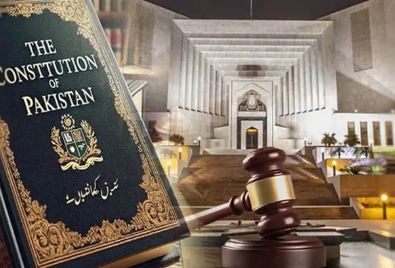
The government’s move to push through the 27th Constitutional Amendment appears to be one of the most consequential and controversial constitutional interventions in Pakistan’s recent history. Reports suggest that the amendment seeks to abolish the office of the Chairman Joint Chiefs of Staff Committee, creating a new and far more powerful post of Chief of Defence Staff (CDS). Under this arrangement, the CDS would effectively become the supreme head of the armed forces, exercising authority over the Army, Navy, and Air Force an unprecedented concentration of military power in a single office.
While the government insists that this change is meant to “streamline command structures” and “ensure coordination among the three services,” critics view it as an attempt to militarize the system further, blurring the constitutional separation between civilian and military domains. The creation of such an office, without adequate parliamentary debate or public consensus, risks disturbing the delicate institutional balance that the Constitution seeks to maintain.
Equally alarming are the proposed changes to the judiciary, which strike at the very heart of Pakistan’s democratic framework. The amendment reportedly seeks to clip the powers of the Supreme Court and establish a new Constitutional Court, which will replace or override some functions of the apex court. Justice Aminuddin Khan is said to be under consideration as the first Chief Justice of this new court. This move, if implemented, would amount to a restructuring of the judicial hierarchy, undermining both the independence and authority of the Supreme Court as the guardian of the Constitution.
Understandably, legal experts, senior lawyers, and civil society leaders have sounded the alarm. They have written to Chief Justice, urging him to convene a Full Court meeting to deliberate on the implications of the proposed amendment. Their concern is not misplaced. If passed in haste and without judicial input, the 27th Amendment could deliver a fatal blow to the independence of the judiciary, which is already under immense political and institutional pressure.
Adding to the controversy, the opposition has announced a complete boycott of the amendment process, arguing that legislation of such historic significance cannot and should not be passed without consensus. The absence of opposition participation will inevitably rob the process of legitimacy and credibility. Constitutional changes should reflect national consensus, not partisan expediency. Yet, the government appears determined to rush the amendment through Parliament, reportedly before November 27, when the current Chairman Joint Chiefs of Staff Committee is due to retireba timeline that raises serious questions about intent and urgency.
The haste itself is revealing. Rarely in Pakistan’s history has a constitutional amendment been introduced to empower the public, strengthen democracy, or improve governance. Most amendments have served the ruling elite political or otherwise. If the 27th Amendment goes through it will once again demonstrate how constitutional engineering is used to consolidate power, not distribute it.
One of the most disturbing elements of the proposed amendment is the provision shielding the President from prosecution, effectively granting lifelong immunity. Such a clause not only contradicts the principles of accountability and equality before the law but also runs counter to Islamic injunctions, which emphasize that no individual is above justice.
Moreover, while the amendment to Article 243, which deals with the command of the armed forces, may appear to have little immediate impact on the daily lives of ordinary citizens, the provisions affecting the judiciary will directly influence the lives of the common people. When judicial independence is compromised, justice becomes selective, delayed, or denied—especially for the poor and marginalized. The ordinary citizen depends on the courts for protection from abuse of power, for the enforcement of fundamental rights, and for the redress of grievances. A weakened judiciary means a weakened democracy, and ultimately, a weakened society.
Sadly, Pakistan’s constitutional amendments have almost always been self-serving exercises. No amendment has ever been proposed to eliminate corruption, ensure universal education, or guarantee free healthcare. None have sought to make justice accessible or public service efficient. Instead, amendments have been introduced to extend tenures, neutralize opponents, or legitimize unconstitutional actions after the fact. This pattern continues unabated, eroding the very spirit of constitutionalism.
The 27th Amendment, as it stands, risks plunging Pakistan into another period of institutional imbalance and democratic uncertainty. Rather than focusing on national priorities economic recovery, education reform, poverty alleviation, and governance the state seems preoccupied with political maneuvering and institutional restructuring. The country’s constitutional architecture is being reshaped not for the people, but around personalities.
If history is any guide, constitutional amendments passed in haste, without consultation or consent, have always led to long-term instability. The 8th and 17th Amendments are stark reminders of how such moves can distort power structures for decades. The proposed 27th Amendment risks joining that ignominious list.
It is time for Parliament, the judiciary, civil society, and the media to raise their collective voice. The Constitution is not a tool for convenience it is the sacred contract between the state and its people. Any attempt to weaken its foundations in the name of expediency or reform must be resisted.
Pakistan’s future depends not on more power for the powerful, but on stronger institutions, an independent judiciary, and a government accountable to the people. The 27th Amendment, as proposed, threatens all three. If democracy is to survive, this amendment must be revisited, debated, and, if necessary, rejected.
In the end, the real strength of a nation lies not in its generals or politicians, but in the rule of law and the will of its people.
BELÉM, NOV 10 (AFP/APP): An odor of oil hung over last year’s UN climate conference in Baku, capital of fossil fuel-rich Azerbaijan.
Starting Monday, the 50,000 participants of COP30 will instead feel the heavy, humid air of the Amazon rainforest in Belem, Brazil, where they face the daunting task of keeping global climate cooperation from collapsing.
Unfazed, President Luiz Inacio Lula da Silva insisted on holding the event here despite a dire shortage of hotel rooms.
His aim: to make the Amazon itself open the eyes of negotiators, observers, businesses and journalists – in a city where locals carry umbrellas both to shield themselves from the blazing morning sun and from the tropical downpours that follow in the afternoon.
“It would be easier to hold the COP in a rich country,” Lula declared in August. “We want people to see the real situation of the forests, of our rivers, of our people who live there.”
The Amazon rainforest, which plays a vital role in the fight against global warming through its absorption of greenhouse gases, is itself plagued by a host of ills: deforestation, illegal mining, pollution, drug trafficking, and all manner of rights abuses against locals, especially Indigenous peoples.
While the Brazilians have been active on the diplomatic front for the past year, they’re lagging behind on logistics. Many pavilions were still under construction as of Sunday.
“There is great concern about whether everything will be ready on time from a logistical standpoint,” a source close to the UN told AFP. “Connections, microphones, we’re even worried about having enough food,” the source added.
The real uncertainty lies in what will actually be negotiated over the next two weeks: Can the world come together to respond to the latest, catastrophic projections for global warming?
How can a clash between rich nations and the developing world be avoided?
And where will the money come from to help countries hit by cyclones and droughts — like Jamaica, devastated in October by one of the world’s most powerful hurricane in nearly a century, or the Philippines, battered by two deadly typhoons in just two weeks?
And what to make of the “roadmap” on fossil fuels that Lula put on the table Thursday at the leaders’ summit? The oil industry — and the petrostates that depend on it — have rallied since the world agreed in Dubai in 2023 to begin the gradual transition away from fossil fuels.
“How are we going to do it?” Andre Aranha Correa do Lago, the Brazilian president of COP30 said Sunday. “Is there going to be a consensus about how we are going to do it? This is one of the great mysteries in COP30.”
ISLAMABAD, NOV 10 /DNA/ – President of Pakistan Asif Ali Zardari has extended warm felicitations to the government and people of the Republic of Poland on the occasion of their 107th Independence Day, reaffirming Pakistan’s commitment to further strengthening bilateral ties rooted in mutual respect, shared values, and cooperation.
In his message, the President noted that since the establishment of diplomatic relations in 1962, the friendship between Pakistan and Poland has grown steadily across multiple sectors. “Our partnership continues to flourish through sustained political dialogue, trade and investment, defence collaboration, education, and cultural exchanges,” he said.
The President also recalled with appreciation the 9th Round of Bilateral Political Consultations held in Warsaw in July 2025, describing it as an important step toward expanding cooperation in new and emerging fields. “The consultations reaffirmed our shared resolve to deepen collaboration in areas such as energy, agriculture, science and technology, migration, and higher education,” the President observed.
He paid rich tribute to the Polish engineers, pilots, and technicians who made invaluable contributions in the formative years of Pakistan’s defence establishment. “The Polish experts played a pivotal role in building the Pakistan Air Force, leaving behind a legacy of friendship and professionalism that continues to inspire both nations,” the message read.
The President expressed optimism about the future trajectory of Pakistan–Poland relations, highlighting the potential for enhanced engagement in economic, scientific, and cultural domains. He conveyed heartfelt wishes for continued peace, prosperity, and progress for the people of Poland.
“Pakistan looks forward to the continued growth of its relations with Poland, guided by mutual trust and shared aspirations for a peaceful and prosperous world,” the President concluded.
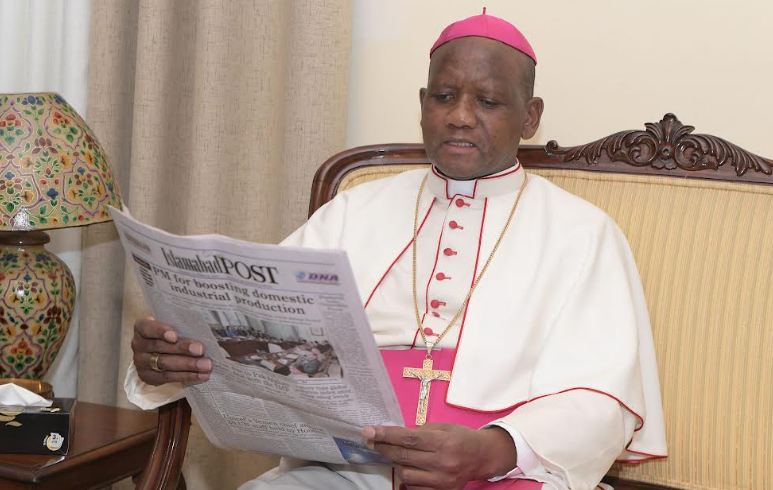
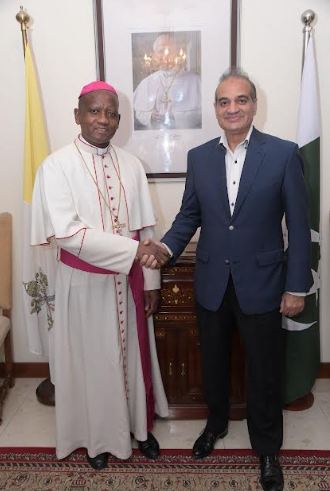
ISLAMABAD, NOV 10 /DNA/ – Msgr. Germano Penemote, the Apostolic Nuncio to Pakistan, has lauded Pakistan’s commitment to peace, security, and interfaith harmony, describing the country as a “land of great potential and hospitality.” In an exclusive interview with Daily Islamabad Post, Centreline, and Diplomatic News Agency (DNA), the Holy See envoy reflected on six decades of Pakistan–Vatican relations, the mission of the Catholic Church in the country, and his vision for promoting education, dialogue, and mutual understanding among all faiths.
Appointed Apostolic Nuncio to Pakistan in 2023, Archbishop Penemote said his mission has been guided by the core values of Vatican diplomacy — dialogue, compassion, and service to humanity. “The diplomacy of the Holy See, one of the oldest and most respected in history, seeks to promote the common good through understanding and peaceful coexistence,” he said. “Since my arrival in Pakistan, I have sought to meet people, listen to their concerns, and work with them for solutions. I have brought neither gold nor silver, but a heart full of esteem and respect for the beloved Pakistani people.”
The Nuncio emphasized that his efforts are focused on strengthening bilateral ties between the Holy See and the Islamic Republic of Pakistan, while supporting the Catholic Church’s humanitarian and educational work in the country. “Our institutions continue to serve all Pakistanis — Muslims, Christians, and people of other faiths — in education, healthcare, and social welfare,” he added. “We do not sound trumpets or seek publicity; our mission is quiet but constant — to serve humanity.”
Reflecting on the long-standing diplomatic ties between Pakistan and the Vatican, Archbishop Penemote said relations have been strong and stable since their formal establishment in 1965. “We are about to celebrate sixty years of the Apostolic Nunciature’s establishment in Pakistan, a symbol of mutual respect and uninterrupted friendship,” he said. “The Nuncio has always lived and worked in Pakistan, which speaks to the strength of our relationship.”
However, he noted the need for a formal legal framework to further facilitate Catholic institutions’ contributions to national development. “We hope to conclude a legal agreement that will ensure our schools, hospitals, and social organizations can continue serving all Pakistanis effectively,” he explained. “It is heartening to meet Pakistanis who proudly say they studied at Catholic schools — institutions known for providing quality education and nurturing responsible citizens.”
One of the Nuncio’s most ambitious ideas is the establishment of a Catholic University in Pakistan — a center for inclusive, high-quality education open to students of all faiths. “A Catholic University would greatly contribute to interfaith dialogue and national cohesion,” he said. “Such an institution could become a regional beacon of knowledge and peace, attracting students from neighboring countries and fostering understanding across cultures and religions.”
Discussing the Church’s role in promoting interfaith harmony, the Vatican envoy highlighted the importance of the Second Vatican Council’s Declaration Nostra Aetate, which emphasizes dialogue and friendship between the Catholic Church and non-Christian religions. “This landmark document transformed relations among faiths by promoting respect and collaboration,” he said. “In Pakistan, the Catholic Church continues to uphold these principles through education, dialogue, and outreach.”
He also acknowledged Pakistan’s growing engagement for peace and stability in the region. “Pakistan is increasingly committed to internal and external peace,” he said. “It plays a constructive role in defending oppressed peoples and promoting global stability. This commitment should remain the guiding principle for the country’s future, especially for its youth.”
The Nuncio praised the social and humanitarian services rendered by Catholic institutions across Pakistan. “From St. Patrick’s College in Karachi to La Salle High School in Faisalabad, and from Holy Family Hospital in Karachi to St. Joseph’s Hospice in Rawalpindi, Catholic institutions are serving society selflessly,” he observed. “These schools, hospitals, and shelters provide education and healthcare to people of all backgrounds, helping to uplift communities and promote social justice.”
He commended the work of Catholic sisters and missionaries, including the Sisters of Mother Teresa of Calcutta and the Sisters of Charity of St. Jeanne Antide Thouret, who serve the poor and sick across the country. “They are the living example of faith in action — dedicating their lives to serving those most in need,” he said.
Touching on issues of social justice, environmental care, and sustainable development, Archbishop Penemote said the Church has been proactive in all these areas. “Everywhere I go, I see local Catholic communities planting trees, visiting marginalized groups, and engaging with youth. The Church promotes human dignity and rejects exploitation and discrimination of any kind,” he affirmed.
Concluding his remarks, the Nuncio offered a heartfelt message of unity and hope to the people of Pakistan. “All Pakistanis — regardless of religion or background — must recognize that they are brothers and children of the same motherland,” he said. “Unity is the victory of a nation. Let peace begin in our hearts, our families, and our communities, and extend to the nation and the world.”
He also called upon the youth to act responsibly in the age of social media. “A single word can start a fire,” he cautioned. “Use your voice to build, not to destroy. Be ambassadors of peace and goodwill.”
“Pakistan’s values of hospitality, solidarity, and faith are its greatest strengths,” the Vatican diplomat concluded. “With unity, compassion, and dialogue, Pakistan will continue to play an essential role in promoting peace and human dignity across the world. Long live Pakistan!”
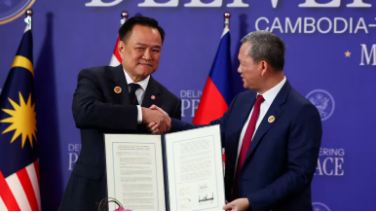
BANGKOK, NOV 10 (AFP/APP/DNA): Thailand announced on Monday it was suspending the implementation of a peace agreement with neighbouring Cambodia after a landmine blast injured two Thai soldiers near the border.
The deal, overseen by US President Donald Trump, was meant to secure a lasting end to hostilities following border clashes in July that killed at least 43 people and displaced more than 300,000 civilians on both sides.
The Royal Thai Army said in a statement that the mine explosion in Sisaket province left one soldier with a severe leg injury, while pressure from the blast caused another to withstand chest pains.
Thai government spokesman Siripong Angkasakulkiat said that Bangkok will cease “the follow-up to the joint declaration”, meaning the accord with Cambodia inked in Kuala Lumpur in late October, months after the two sides had agreed a ceasefire.
The next steps planned as part of the agreement’s implementation included the release of 18 Cambodian soldiers detained in Thailand.
Thai Prime Minister Anutin Charnvirakul told a press conference that “we thought that the security threat had eased, but it has not actually decreased.”
Cambodian authorities did not immediately comment on the incident, but have in the past denied Thai accusations of planting new landmines along the border.
Cambodia’s defence ministry pledged in a statement on Monday an “unwavering commitment” to peace.
The Southeast Asian neighbours have a dispute over parts of their border dating back more than a century, but July’s fighting was sparked by Thailand’s claims that Cambodia planted landmines that wounded its troops.
ISLAMABAD, NOV 10 – The Senate session to deliberate on the parliamentary committees’ report on the 27th Amendment Constitutional Bill has begun with Presiding Officer Manzoor Ahmed in the chair.
Last week, the federal government presented a bill of the 27th Constitutional Amendment — proposing sweeping changes to the country’s judicial system as well as the military command structure — in the Senate amid protest by the opposition parties.
The establishment of the federal constitutional court and granting permanent immunity to the president, as well as lifetime status to the field marshal rank, are among the key features of the bill.
The Senate Secretariat has issued the orders of the day for November 10, which includes the key legislative business.
After the recitation, Senator Farooq H Naek, Chairman Standing Committee on Law and Justice, will present the report of the committee on the Bill further to amend the Constitution of the Islamic Republic of Pakistan [The Constitution (27th Amendment) Bill, 2025].
Agenda items 44 and 45 pertain to moving the constitutional amendment bill, as reported by the House standing committee concerned, for taking up for consideration at once and passage. Law and Justice Minister Azam Nazeer Tarar will move the bill for consideration and passage.
Meanwhile, Defence Minister Khawaja Muhammad Asif on Monday expressed confidence that the government had the required numbers in the upper house to pass the 27th Constitutional Amendment Bill.
Speaking to the media outside the Parliament, the minister said that voting on the bill required the presence of members in the House.
“God willing, the 27th Amendment will be passed by the Senate today,” he added.
Opposition vows to block 27th Amendment bill
The opposition parties in the Senate on Monday vowed to resist the government’s efforts to pass the 27th Constitutional Amendment Bill and announced staging a strong protest during today’s session.
Talking to the media following a meeting of the opposition’s parliamentary group, PTI Senator Ali Zafar said that the opposition would make every effort to ensure the government fails to pass the amendment today.
He said the opposition had been opposing the bill ever since PPP chairman Bilawal Bhutto-Zardari tweeted about it.
“We will protest strongly,” Zafar asserted, adding that the opposition would see whether the government truly had the numbers to pass the bill in the upper house.
While commenting on the controversial provision in the proposed 27th Amendment that grants immunity to certain officeholders, Zafar said the opposition firmly rejected the clause.
“We are against any form of exemption… whoever commits a crime, be it the president or a governor, must face punishment. No one should escape accountability simply because of their position,” he added.
“If someone has committed a crime, they should be punished. That is both an Islamic principle and the command of religion,” Zafar continued.
Talking to the media after the meeting a day earlier, Senator Farooq H Naek said that the 27th Amendment draft had been approved, adding that “some adjustments were made following the incorporation of fresh suggestions during the meeting.”
Senator Naek said the basic draft of the amendment has been approved, adding that “some changes have been incorporated”, while the committee has authorised him and Law Minister Azam Nazeer Tarar to finalise the remaining amendments.
The meeting, chaired by Senator Naek and MNA Mehmood Bashir Virk, was attended by Senator Tahir Khalil Sindhu, Senator Hidayatullah, Senator Shahadat Awan, Senator Zamir Hussain Ghumro, Ali Haider Gillani, Saira Afzal Tarar, Bilal Azhar Kayani, Syed Naveed Qamar and Abrar Shah. Law Secretary Raja Naeem Akbar and senior officials from the Ministry of Law and Justice also participated.
The opposition parties boycotted the meeting. Members belonging to the PTI, JUIF, Pakhtunkhwa Milli Awami Party (PkMAP) and Majlis Wahdat-e-Muslimeen (MWM) did not attend.
The committee members expressed regret over the boycott, saying that the opposition should have taken part in such an important constitutional process instead of distancing itself from it.
Sources said the Awami National Party (ANP) expressed reservations about the draft. Its proposal to rename Khyber Pakhtunkhwa was deferred after the government sought more time for consultations.
Similarly, the proposal by the Balochistan Awami Party (BAP) for increasing provincial assembly seats was also postponed for further consideration.
Both matters are expected to be finalised after additional discussions on Monday.
The committee also approved amendments to Article 243 of the Constitution following detailed deliberations and endorsed the clause establishing constitutional courts.
Furthermore, the committee approved an amendment extending the period for adjudication of pending cases from six months to one year. Under the new provision, any case not pursued for a year will be deemed disposed of.
The Awami National Party (ANP) raised objections to the 27th Constitutional Amendment and declined to attend the prime minister’s dinner, it was learnt.
Currently, Article 243 of the Constitution entrusts the President of Pakistan with the supreme command of the armed forces, while stipulating that their control and command shall rest with the federal government.
Salient features of 27th Constitutional Amendment
A new position, Chief of Defence Forces, to be created as head of the armed forces effective from November 27, 2025
Chief of Army Staff to assume role as Chief of Defence Forces
Field Marshal, Marshal of Air Force, Admiral of Fleet titles to remain for life
The prime minister will appoint the commander of the National Strategic Command from the Pakistan Army on the recommendation of the Chief of Defence Forces
Federal Constitutional Court to be established
Equal provincial representation proposed in the Federal Constitutional Court
President and prime minister to play a key role in judicial appointments
Parliament to decide the number of judges in the Federal Constitutional Court
Supreme Court powers to be reduced, with some authorities shifted to the new court
Term of Federal Constitutional Court chief justice to be limited to three years
Immunity to president from criminal proceedings for life
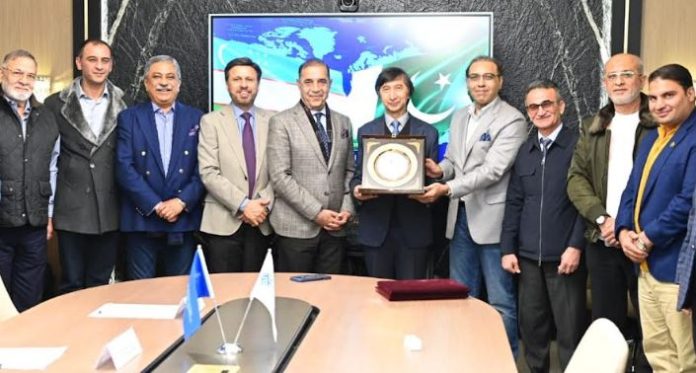
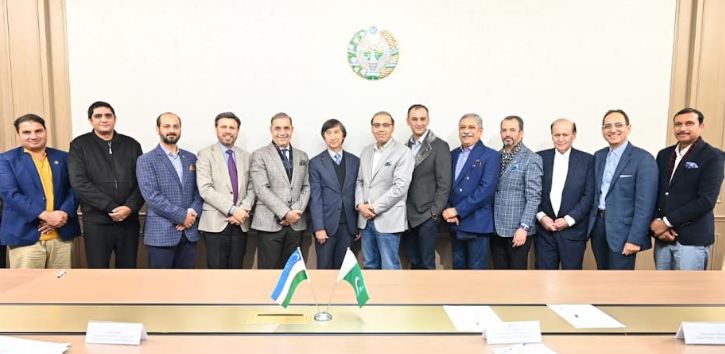
RAWALPINDI, NOV 10: /DNA/ – The 36th International Achievement Awards and Business Opportunities Conference (IAA & BOC), organized by the Rawalpindi Chamber of Commerce and Industry (RCCI), is set to commence on November 10, 2025, in Tashkent, Uzbekistan.
An RCCI delegation, led by President Usman Shaukat, has arrived in Tashkent to participate in the prestigious international event. The delegation includes Group Leader Sohail Altaf, Senior Vice President Khalid Farooq Qazi, Vice President Fahad Barlas, former presidents, SCCI President Junaid Altaf, Executive Committee members, and prominent business representatives from various sectors.
Over 200 delegates from diverse industries are participating in the conference, which aims to foster international business linkages and explore new trade opportunities.
On the sidelines of the event, the RCCI delegation paid a visit to the Uzbekistan Chamber of Commerce, where discussions were held to enhance mutual cooperation and trade facilitation between Pakistan and Uzbekistan.
Speaking on the occasion, President Usman Shaukat highlighted that RCCI’s 36th International Achievement Awards and Business Opportunities Conference continues the Chamber’s long-standing tradition of promoting entrepreneurship and global partnerships.
He noted that the conference provides a valuable platform for networking, business collaborations, and international recognition, while also paving the way for new avenues of bilateral trade and investment between Pakistan and Uzbekistan.
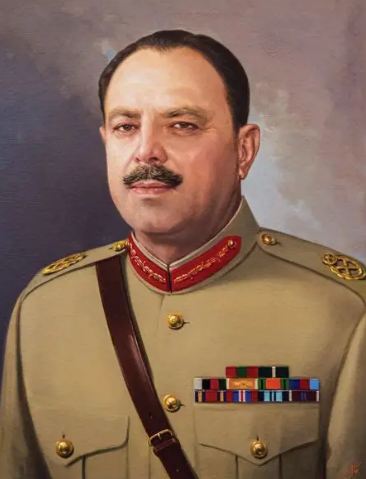
There are some truths in history that rest quietly in the pages of books and official documents. They remain hidden from the public eye, awaiting discovery by those who devote themselves to research. Many episodes of Pakistan’s political evolution fall into this category, where the general perception of events does not always align with their factual depth. Among such historical realities lies the multifaceted career of one of Pakistan’s most powerful and some extent controversial figures — Field Marshal Muhammad Ayub Khan. Most Pakistanis know him as the first military ruler of Pakistan, the man who imposed the country’s first Martial Law and later became its President. Yet few realize that, for a time, Ayub Khan also held the office of Prime Minister — making him one of the rare individuals in the nation’s history to simultaneously embody military, executive, and political authority.
Muhammad Ayub Khan was born on May 14, 1907, in the village of Rehana, District Haripur in the North-West Frontier Province (now Khyber Pakhtunkhwa). After early education, he joined the Royal Military Academy at Sandhurst in 1926 and was commissioned into the British Indian Army in 2 February 1928. His steady rise through the ranks reflected his discipline and administrative ability. When Pakistan came into being in 1947, Ayub Khan was among the senior-most Muslim officers in the Indian Army and was chosen by Prime Minister Liaquat Ali Khan to serve in Pakistan’s newly established military.
In January 17, 1951, Ayub Khan was appointed as the Commander-in-Chief of the Pakistan Army, succeeding General Sir Douglas Gracey, the last British officer to hold that position. This appointment made Ayub Khan the first Pakistani to command the national army. His tenure as Commander-in-Chief lasted until 27October 1958 — a period during which he gradually became a dominant figure in Pakistan’s civil-military structure.
The turning point came on October 7, 1958, when President Iskander Mirza abrogated the 1956 Constitution, dissolved the national and provincial assemblies, and declared Martial Law across the country. He appointed General Ayub Khan as the Chief Martial Law Administrator (CMLA), giving him sweeping powers to run the country.
According to the Gazette of Pakistan on 27 October 1958,
“President Iskander Mirza has been pleased this twentyseventh day of October 1958, to appoint General Mohammad Ayub Khan, Supreme Commander of the Armed Forces of Pakistan and Chief Martial Law Administrator, to be the Prime Minister, it is hereby notified that the said General Mohammad Ayub Khan has taken upon himself the execution of the office of the Prime Minister in the forenoon of this twentyseventh day of October 1958”.
Along with that, the President also appointed Lt. General Mohammad Azam Khan, Lt. General W.A. Burki, Mr. Mohammad Ibrahim, Lt. General K.M. Sheikh, Mr. Abdul Qasim Khan, Khan F. M Khan, Mr. Zulfikar Ali Bhutto and Mr. Muhammad Hafizur Rahman to be Ministers of the Government of Pakistan.
According to the archives and newspapers of 28 October 1958, the following President’s Proclamation was issued by the President of Pakistan, General Mohammad Ayun Khan:
“Whereas by his declaration made at 10 o’clock this night of the 27th of October 1958. Major General Iskander Mirza, lately President of Pakistan, has relinquished his office of President and has handed over all power to me, General Mohammad Ayub Khan, Chief Martial Law Administrator and Supreme Commander of Armed Forces of Pakistan. Now, therefore, I have this same night of the 27th day of October 1958, forthwith assumed the said office of President and have taken upon myself the exercise of the said power and all other powers enabling me in this behalf.”
As President of Pakistan (1958–1969), Ayub Khan introduced sweeping administrative and economic reforms. His rule was marked by efforts to industrialize Pakistan, promote infrastructure, and attract foreign investment. His “Decade of Development” from 1958 to 1968 saw significant growth in agriculture, manufacturing, and education. The construction of Mangla and Tarbela Dams, the establishment of new universities, and the promotion of the “Green Revolution” marked this period as one of visible progress. However, his policies also widened the economic gap between regions, giving rise to discontent, particularly in East Pakistan (now Bangladesh).
During this transitional phase, Ayub Khan concentrated all executive authority in his own hands — simultaneously holding the offices of President, Chief Martial Law Administrator, Commander-in-Chief of the Army, and Prime Minister of Pakistan.
In 1962, Ayub Khan introduced a new Constitution of Pakistan, replacing the abrogated 1956 version. The new system replaced parliamentary democracy with a presidential form of government, concentrating power in the office of the President — a position he himself occupied. Hence, from 1962 to 1969, Ayub Khan ruled as both the constitutional and executive authority of Pakistan.
However, power and popularity seldom walk together for long. The growing political awareness in both wings of the country, the widening regional disparities, and opposition movements led by political figures like Mohtarma Fatima Jinnah and later Zulfikar Ali Bhutto gradually eroded his authority. By early 1969, mass protests and civil unrest had swept the nation, forcing Ayub Khan to resign on March 25, 1969, handing power to General Yahya Khan.
Ayub Khan retired from politics and lived quietly until his death on April 19, 1974. He was buried in his native village of Rehana, where his grave remains a symbol of a man who rose from humble beginnings to the highest offices of the state — and whose name continues to provoke debate among historians and political thinkers. Some remember him as the builder of modern Pakistan, a visionary who brought discipline and development. Others recall him as the founder of the military’s dominance in national politics and the initiator of a pattern that would recur in Pakistan’s history.
Yet, the lesser-known fact of his simultaneous control as President, Prime Minister, and Army Chief reveals the full extent of his authority. It was an era when one man governed Pakistan in its entirety — politically, militarily, and administratively. The study of Ayub Khan’s rule is not merely a reflection on one man’s ambition; it is a mirror to the nation’s recurring struggle between democracy and discipline, between elected representation and guided leadership.
In revisiting these chapters of history, one realizes that facts often lie beyond the horizon of popular memory. They wait to be rediscovered, not merely to glorify or vilify individuals, but to understand how nations are shaped by the personalities who lead them — for better or for worse.