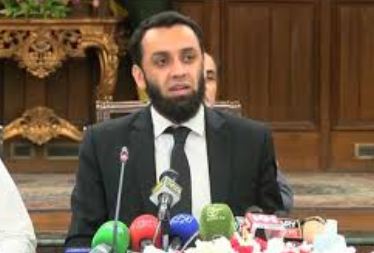
ISLAMABAD, Nov 10 (APP/DNA): Federal Minister for Information and Broadcasting Attaullah Tarar on Monday said that there is no deadlock of any kind over the 27th Constitutional Amendment, which is being introduced to promote good governance and strengthen relations between the federation and the provinces.
Talking to media outside Parliament House, the minister stated that the required votes for the passage of the amendment are now complete, leaving no room for ambiguity. He described it as a positive constitutional development, emphasizing that the amendment is being introduced in light of the prevailing circumstances.
He said following extensive deliberations aimed at bolstering Pakistan’s defense and advancing its military strength, substantial and well-considered amendments have been introduced.
He underscored that heads of state worldwide including those in the United States are granted immunity, and thus extending the same privilege to Pakistan’s head of state poses no concern.
The federal minister praised the prime minister’s decision not to seek immunity, calling it a commendable move. Acting on the prime minister’s directive, the committee has withdrawn the relevant clause, reflecting his belief that he remains answerable to the people.
The idea of establishing constitutional courts has long been existed worldwide. In Pakistan, this discussion dates back to the Charter of Democracy, where the PPP, PML-N, and ANP jointly demanded the creation of such courts. After decades of deliberation, the debate has reached its logical conclusion, paving the way for the establishment of constitutional courts in the country. The Constitution, as a living document, continues to evolve adapting to the needs of justice and the aspirations of the people.
He stated that following the 26th Amendment, the judiciary’s caseload declined, saving valuable time for litigants. Although constitutional cases are fewer in number, they consume more than half of the courts’ time. Therefore, this development marks a positive step toward ensuring the swift and efficient delivery of justice.
BEIJING, NOV 10 (APP/DNA): The 2025 China Conference on Holistic Integrative Oncology (CCHIO), a monumental gathering in the global fight against cancer, has concluded in Kunming, leaving in its wake a powerful impetus for international collaboration and a renewed sense of hope in this transformative event, which stands as a testament to China’s visionary leadership in shaping the future of oncology.
CCHIO 2025 is more than a conference; it is a global movement. Uniting over 100,000 attendees, including a staggering 6,000 international experts from every corner of the globe, With over 300 scientific sessions spanning 200 oncology subspecialties, the conference served as a multidimensional academic platform where innovation was not just discussed but demonstrated.
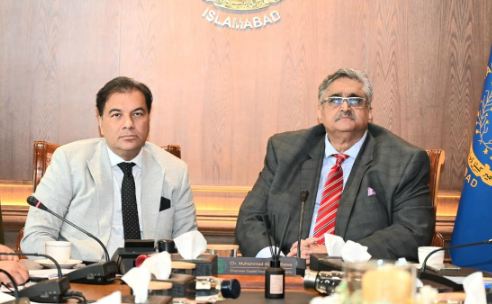
This was stated by Dr. Muhammad Shahbaz, President of the China-Pakistan Medical Association (CPMA) in a statement.
He said that a key highlight, and a significant moment for Pakistan, was the reception of the Urdu-translated copy of the CACA (China Anti-Cancer Association) Guidelines for Cancer Treatment. These guidelines, now available in 16 languages, represent a monumental step in democratizing high-quality cancer care. For Pakistani clinicians, this translation is a gift a readily accessible, evidence-based roadmap that will standardize and elevate our clinical practices, directly benefiting patient outcomes across our nation. The conference provided an invaluable platform for strengthening the iron-clad friendship between Pakistan and China in the critical domain of healthcare.
Our discussions were substantive and forward-looking, centering on several key areas of cooperation: Leveraging Chinese advancements in genomics, early detection, and novel therapeutics to address the specific cancer profiles prevalent in Pakistan. Establishing exchange programs for Pakistani medical students and structured training fellowships for our doctors, surgeons, and nurses at prestigious Chinese institutions, he added.
Facilitating the transfer of cutting-edge cancer technologies, including state-of-the-art radiotherapy systems and AI-assisted diagnostic tools, to major hospitals in Pakistan.
Dr. Shahbaz also had meeting with Director of International cooperation of FDS consortium relative person incharge of KylinRay MELAC Linear Accelerator for advanced Radiation therapy machines and technology transfer to Pakistan. It will be cost effective and provide advanced radiation therapy to the cancer patients in Pakistan.
In a significant step towards institutionalizing this collaboration, he formally proposed a Sister University partnership between Kunming Medical University and Nishtar Medical University in Multan to the esteemed Dean, Dr. Zhu Youbao. Such a partnership would create a permanent channel for academic exchange, faculty development, and shared research projects, creating a legacy of knowledge that will benefit generations of medical professionals in both countries.
The spirit of the Belt and Road Initiative (BRI) was vividly alive in the conference halls. A particularly insightful meeting was with Dr. Mahruf, the focal person for the Belt & Road Healthcare Center, which is actively promoting China-Bangladesh medical tourism. This model presents a tremendous opportunity for Pakistan. Our doctors and healthcare professionals can use this established platform not only for patient referrals but, more importantly, for cooperation in advanced cancer care and technological innovation. By integrating into this “Health Silk Road,” Pakistan can position itself as a hub for high-quality, cost-effective medical care in the region, learning from and contributing to a growing network of excellence, according to Dr Shahbaz.
He said that the CCHIO 2025 has reinforced his conviction that the fight against cancer cannot be won in isolation. It demands the very integration, innovation, and international collaboration that this conference so powerfully embodies. China, through CACA and CCHIO, is not only leading by scientific example but is also generously extending a hand of partnership to the world. For Pakistan, the path forward is clear.
We must actively embrace these opportunities for collaboration, from adopting the CACA guidelines to fostering institutional ties and facilitating technology transfer. The seeds planted in Kunming in our meetings with university deans, hospital directors, and international colleagues have the potential to grow into a forest of progress for oncology care in Pakistan. Together, hand-in-hand with our Chinese healthcare professionals and leaders, we are forging a healthier, brighter, and shared future, free from the fear of cancer.
ISLAMABAD, NOV 10 /DNA/ – Secretary Election Commission of Pakistan, Omar Hamid Khan, met with Chairman CDA Muhammad Ali Randhawa at the CDA Headquarters on Monday. The meeting was attended by Member Engineering Syed Nafasat Raza, Member Finance Tahir Naeem along with senior officers from the CDA Engineering Wing and the Election Commission of Pakistan.
The meeting involved a detailed discussion on various under-construction and new projects of the Election Commission of Pakistan. This included deliberations on the construction of the Federal Election Academy and offices in Islamabad. During the briefing, it was said that the tendering process for the construction of the Federal Election Academy and offices will commence shortly and the foundation stone for the project will be laid immediately after the tendering process.
It was further informed that the construction of the pre-fabricated gym at the Election Commission of Pakistan is progressing rapidly. The meeting also included a briefing on measures regarding the Fire Safety Implementation Plan within the Election Commission Secretariat as part of security protocols. It was informed that the survey work for the implementation of fire safety plan has been completed, and its implementation will be prioritized.
Chairman CDA Muhammad Ali Randhawa directed that representatives from the Election Commission of Pakistan be included in the tendering process for all projects. He also instructed that monitoring of construction and development work be ensured through CCTV cameras.
Chairman CDA said that focal persons should be appointed by both the Election Commission of Pakistan and the CDA to ensure high-quality work and timely completion of the ongoing projects.
Secretary of the Election Commission of Pakistan, Omar Hamid Khan, appreciated the various development and beautification projects and initiatives undertaken by the CDA in Islamabad. He said that mutual cooperation and continuous coordination between the two organizations would not only ensure the swift completion of the Election Commission’s ongoing projects but also facilitate the early commencement of future projects. The meeting also reaffirmed the commitment to promote mutual cooperation and coordination between the CDA and the Election Commission of Pakistan.
ISLAMABAD, NOV 10 (APP/DNA): A new ‘Policy Viewpoint’ by the Pakistan Institute of Development Economics (PIDE) on Monday warned that Pakistan’s protectionist and overly complex tariff system was costing the economy billions of rupees annually, suffocating industrial competitiveness, and trapping the country in a cycle of inefficiency.
Authored by Dr Uzma Zia, Senior Research Economist at PIDE, the study titled “Rationalizing Pakistan’s Tariff Regime for Export-Led Growth” presented a compelling case for urgent, growth-oriented reform of Pakistan’s trade and industrial policy framework, a news release said.
According to the study, Pakistan’s tariff regime – dominated by Regulatory Duties (RDs), Additional Customs Duties (ACDs), and 5th Schedule exemptions – has long protected inefficiency, distorted price signals, and raised production costs.
As a result, both manufacturers and consumers faced inflated costs, while export-oriented industries are handicapped by an anti-export bias. “Every additional year under the current tariff system slows export growth, raises production costs, and deepens the trade deficit. Pakistan can no longer afford this inefficiency,” Dr Zia warned.
The upcoming National Tariff Policy (NTP) 2025-30 provide a clear roadmap for reform, aiming to eliminate ACDs within four years and RDs within five, while transitioning products from the 5th Schedule to the 1st Schedule.
If implemented effectively, PIDE projected that the new policy could increase exports by 10-14%, strengthen industrial competitiveness, and reduce the trade deficit – while lowering inflation through reduced input costs.
To achieve these outcomes, the PIDE study recommended a comprehensive rationalization of the customs duty structure from five slabs to four (0%, 5%, 10%, and 15%) within five years, alongside a complete phase-out of tariff peaks exceeding 20%.
Duties should be harmonized by product category – lowest on raw materials, moderate on intermediates, and highest on consumer goods – to promote industrial upgrading and attract investment in high-value sectors, it added.
In addition, PIDE proposed aligning auto-sector tariffs with competitiveness and consumer choice under the Automotive Industry Development and Export Plan (AIDEP 2021–26), including duty reductions, removal of ACDs and RDs, and allowing controlled import of used vehicles under strict quality and environmental standards.
The author cautioned that resistance from protectionist industries and external shocks, such as commodity price volatility and exchange rate shifts, may slow progress.
However, it emphasized that the cost of inaction is far higher – in lost investment opportunities, stagnant exports, and persistent consumer hardship.
PIDE concluded that Pakistan now stood at a pivotal moment: by embracing tariff rationalization and aligning trade policy with competitiveness and global integration, the country can transition from revenue-driven protectionism to export-led, sustainable growth.
“Tariff reform is not just an economic necessity – it is a national imperative,” Dr Zia affirmed.
He said that simplifying tariffs, eliminating distortions, and aligning policy with long-term growth goals could reshape Pakistan’s economic future.
ISLAMABAD, NOV 10 – The Senate passed the 27th Constitutional Amendment Bill on Monday, which aims to overhaul the military and judicial structures, amid the opposition’s walkout and protest — tearing their copies.
Law Minister Azam Nazeer Tarar presented the 59-clause Bill, which received the required 64 votes (two-thirds majority in the 96-member House). It will now be presented in the National Assembly for voting. No member voted against it — as the opposition opted to boycott.
Apart from the treasury members, the Awami National Party (ANP), Pakistan Tehreek-e-Insaf (PTI)-backed Saifullah Abro and Jamiat Ulema-e-Islam-Fazl’s (JUI-F) Ahmed Khan were among the senators who voted in favour of the amendment. Interestingly, Abro did not partake in the protest as well.
Highlights of new amendment
New position, Chief of Defence Forces, will be created as head of armed forces — effective from November 27, 2025
Chief of Army Staff to assume role as Chief of Defence Forces
Field Marshal, Marshal of Air Force, Admiral of Fleet titles to remain for life
Federal Constitutional Court to be established
President and prime minister to play a key role in judicial appointments
Supreme Court powers to be reduced, with some authorities shifted to the new court
Detailing the purpose of the legislation in the text of the Bill — which was tabled in the Senate last week and went through a joint committee’s scrutiny over the weekend — Tarar mentioned that the amendment came following proposals from political parties and various bar councils for the establishment of a Federal Constitutional Court (FCC).
“The proposal stems from the increasing number of constitutional petitions being filed before the Supreme Court, which has significantly impacted the timely disposal of regular civil and criminal cases,” he said.
The law minister emphasised that the creation of the FCC was aimed at ensuring “specialised adjudication of constitutional matters”, and allowing the Supreme Court to focus on its “appellate jurisdiction and reduce pendency”.
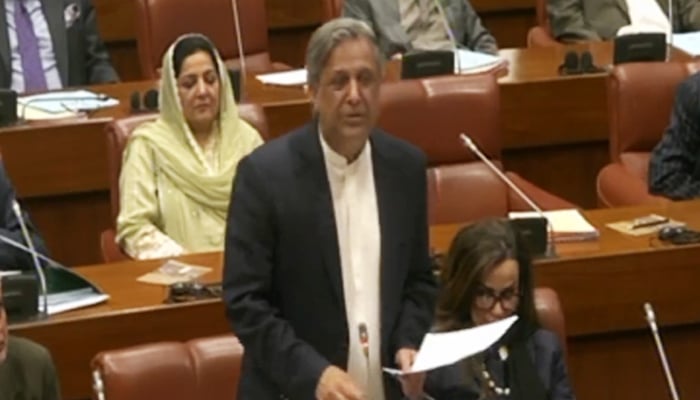
Law Minister Azam Nazeer Tarar speaks during the Senate session in Islamabad, on November 10, 2025. — PTV Parliament
He said that the proposed FCC would comprise judges with expertise in constitutional law.
The amendments to Article 243 were incorporated to improve the procedural clarity and administrative structure of the armed forces, he said, noting that certain consequential amendments were also required to be made in the Constitution.
Report presented
Earlier, Pakistan Peoples Party (PPP) Senator Farooq H Naek presented a report of the joint parliamentary committee on the 27th Amendment bill in the Senate, with some tweaks made to the draft approved by the federal cabinet.
During the Senate session, the senior legislator mentioned that the report also includes the Bill. He stated that the committee had made several amendments to the draft. “Some changes have been made in the text,” Naek said.
Last week, the federal government presented a bill of the 27th Constitutional Amendment to the Senate amid a strong protest by the opposition parties.
Following the presentation of the Bill in the House, it was forwarded to the joint committee on law — comprising members from the Senate and National Assembly — which further deliberated on the Bill; however, the opposition parties boycotted the session.
In his speech in the House, Naek explained that the constitutional amendment aims to establish a Constitutional Court. “The committee unanimously approved the creation of the Constitutional Court but introduced certain amendments,” he added.
Naek said that the constitutional amendments encompass courts from all provinces, while the High Court will also have representation in the Constitutional Court. “A High Court judge will be nominated for the Constitutional Court, and the committee has recommended that the eligibility period be reduced from seven years to five,” he noted.
PPP Senator Farooq H Naek speaks during the Senate session in Islamabad, on November 10, 2025. — PTV Parliament
He further stated that previously, the Supreme Court had the power to take suo motu notice. “It has now been proposed that the Constitutional Court will only act on a suo motu case when an application is filed for it,” he said.
Naek also informed the Senate that the transfer of a judge from one High Court to another will be carried out through the Judicial Commission of Pakistan.
“If a judge refuses the transfer, a reference will be filed with the Supreme Judicial Council,” he added, noting that the judge will be given an opportunity to explain the reasons for refusal.
Naek further said that presidential immunity would not be applicable when the president holds a public office.
For his part, ANP Senator Aimal Wali Khan emphasised that having a majority comes with great responsibility. He questioned whether the sacred document was being stripped of its spirit, warning that if the majority begins to weaken the foundations of the Constitution, democracy would cease to exist.
ANP Senator Aimal Wali Khan speaks during the Senate session in Islamabad, on November 10, 2025. — PTV Parliament
Meanwhile, Defence Minister Khawaja Muhammad Asif expressed confidence that the government had the required numbers in the upper house to pass the 27th Constitutional Amendment Bill.
Speaking to the media outside the Parliament, the minister said that voting on the bill required the presence of members in the House. “God willing, the 27th Amendment will be passed by the Senate today,” he added.
MQM-P seeks tangible results
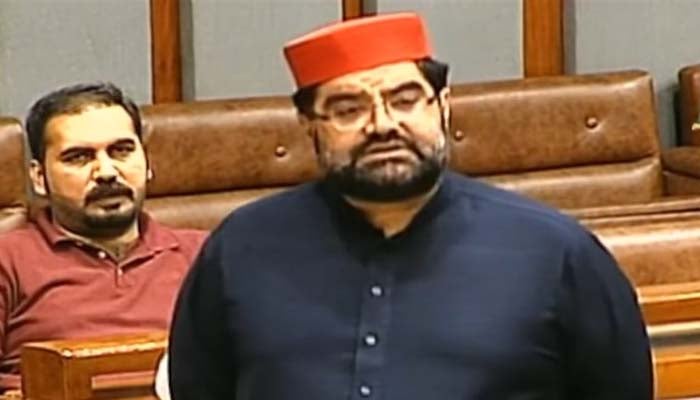
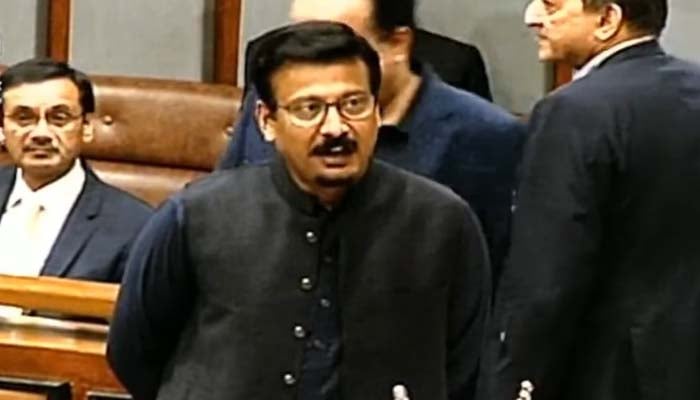
MQM-P Senator Faisal Subzwari said that the reforms and constitutional amendments being introduced should yield tangible results. He added that since the “name of the Supreme Court was being changed, it should also bring positive outcomes”.
Subzwari said that last year, the MQM-P had submitted a constitutional amendment in the National Assembly. He emphasised the need for a system where, whenever issues arise, people have access to equal opportunities.
“We were bringing forward the same amendment,” he said, adding that certain clarifications were required in the 26th Constitutional Amendment, which is why the 27th Amendment had been introduced.
MQM-P Senator Faisal Subzwari speaks during the Senate session in Islamabad, on November 10, 2025. — PTV Parliament
He clarified that the amendment did not, in any way, intend to take away powers from the chief minister. Subzwari pointed out that there had been no Provincial Finance Commission since 2007.
“We have all, at some point, gone through such times,” the senator remarked, adding that when people extend beyond their given space, it allows others who follow to find their moment.
He noted that the report mentioned various posts being assigned to members of the armed forces, saying that the aim was to enhance the dignity and prestige of Pakistan’s military following the amendment.
“There is also tension on our western border,” Subzwari said, underscoring that the armed forces must receive all possible support.
The MQM-P senator said it was important to assess what changes these amendments would bring and how they would benefit ordinary citizens. “We must see what benefits this amendment brings us,” he said, expressing gratitude to the prime minister, the law minister, and Naek for advocating their case.
Opposition vows to block 27th Amendment bill
The opposition parties in the Senate vowed to resist the government’s efforts to pass the 27th Constitutional Amendment Bill and announced staging a strong protest during today’s session.
Talking to the media following a meeting of the opposition’s parliamentary group, PTI Senator Ali Zafar said that the opposition would make every effort to ensure the government fails to pass the amendment today.
He said the opposition had been opposing the bill ever since PPP Chairman Bilawal Bhutto-Zardari tweeted about it.
“We will protest strongly,” Zafar asserted, adding that the opposition would see whether the government truly had the numbers to pass the bill in the upper house.
While commenting on the controversial provision in the proposed 27th Amendment that grants immunity to certain officeholders, Zafar said the opposition firmly rejected the clause.
“We are against any form of exemption… whoever commits a crime, be it the president or a governor, must face punishment. No one should escape accountability simply because of their position,” he added.
“If someone has committed a crime, they should be punished. That is both an Islamic principle and the command of religion,” Zafar continued.
A meeting of the Tehreek Tahafuz Ayeen-e-Pakistan (TTAP) was held under the chairmanship of Mahmood Khan Achakzai to discuss the approval of the proposed 27th Constitutional Amendment.
According to a statement issued after the meeting, participants included Raja Nasir Abbas, Hamid Khan, Noorul Haq Qadri, Humayun Mohmand, and other top leaders. The statement declared that the 27th Constitutional Amendment was against the spirit of the Constitution of Pakistan.
It further stated that members of the movement would not participate in any voting or polling process, adding that taking part in an unconstitutional act would be tantamount to defying the supremacy of the Constitution. The opposition also announced that it would not participate in the voting process on the 27th Amendment.
The statement said the proposed amendment violated the basic structure of the Constitution, the parliamentary balance, and federal principles. It added that Parliament was not authorised to make any unilateral constitutional amendment, and that the 27th Amendment lacked broad national consensus.
The movement declared the amendment unconstitutional, undemocratic, and ineffective, adding that protests would continue through constitutional, legal, and democratic means.
TASHKENT, NOV 10 /DNA/ – The Rawalpindi Chamber of Commerce and Industry (RCCI) organized the Business Opportunities Conference (BOC) in Tashkent, Uzbekistan, aimed at fostering international business linkages, enhancing connectivity, promoting investment, and exploring new avenues of trade between Pakistan and Uzbekistan.
On the sidelines of the conference, several Memoranda of Understanding (MoUs) were signed between leading Pakistani and Uzbek companies, including: BIO LABS (Pvt) Ltd and Og’alar Biznes Pharm, Pak World Trade & Expo Centre and BMCA, Caraway Pharmaceuticals and Perfect Future Medicine, Neutrics Global (Pvt) Ltd and ANT Group, Rawalpindi Chamber of Commerce & Industry and Sky Electric, RCCI and Uzbekistan Chamber of Commerce & Industry.
Ambassador Ahmad Farooq while addressing the participants lauded RCCI’s efforts in choosing Uzbekistan for this year’s BOC and Awards Ceremony. He emphasized the importance of strengthening economic ties, promoting trade and investment, and building sustainable partnerships between the two countries.
The Ambassador highlighted Pakistan’s strategic location as a trade corridor for Central Asian nations, noting that both countries are working toward enhancing bilateral trade to USD 2 billion in the coming years through a multidimensional approach. He also recalled Prime Minister Shehbaz Sharif’s recent visit to Uzbekistan, which included significant discussions with the Uzbek President on trade, connectivity, and people-to-people relations.
In his welcome address, RCCI President noted that Uzbekistan’s dynamic economy—growing steadily above 5%—combined with Pakistan’s vibrant market of 240 million people—presents immense opportunities for collaboration. “Currently, our bilateral trade stands at around USD 113 million — far below what’s possible. By expanding cooperation, improving logistics, and diversifying trade, we can easily multiply this figure,” he stated.
Promising areas for future collaboration include: Textiles & Apparel: Combining Pakistan’s expertise with Uzbekistan’s rich cotton resources, Pharmaceuticals: With exports already exceeding USD 29 million, there’s strong potential for joint ventures, Agriculture & Food Processing: Opportunities to modernize and add value through collaboration, Information Technology: Harnessing Pakistan’s growing IT industry and Uzbekistan’s digital transformation, Tourism: Promoting cultural and heritage tourism to strengthen people-to-people connections.
Alisher Shaykhov, Chairman of the Chamber of Commerce & Industry of the Republic of Uzbekistan, invited Pakistani businessmen to explore lucrative and business-friendly opportunities in Uzbekistan for joint ventures and investments across various sectors. Speakers including Group Leader Sohail Altaf and Event Chairman Shahraiz A. Malik highlighted the scope for investment, joint ventures, and chamber-to-chamber networking.
Among the attendees were Senior Vice President Khalid Farooq Qazi, Vice President Fahad Barlas, former RCCI presidents, SCCI President Junaid Altaf, members of the Executive Committee, and distinguished business leaders from both countries. With over 200 delegates from diverse industries, the conference served as a dynamic platform for networking, business collaboration, and international recognition, paving the way for enhanced bilateral trade and investment between Pakistan and Uzbekistan.
ISLAMABAD, NOV 10 /DNA/ – The Higher Education Commission (HEC) organized a send-off ceremony for 221 agriculture graduates selected to receive advanced training in China under the Prime Minister’s Initiative for Capacity Building of 1,000 Agriculture Graduates. These participants will undergo training at Huazhong Agricultural University and Northwest Agriculture and Forestry University.
This initiative, launched by the Government of Pakistan in collaboration with the Government of China, aims to strengthen Pakistan’s agricultural research and development capacity through specialized training in cutting-edge agricultural technologies, modern farming methods, and sustainable agricultural practices.
The ceremony was attended by officials from HEC, the Ministry of National Food Security and Research (MNFSR), and representatives from other partner institutions, along with the selected trainees.
In his address, Mr. Amir Mohyuddin, Secretary, Ministry of National Food Security and Research, appreciated the joint efforts of the Governments of Pakistan and China in promoting agricultural innovation and human resource development. He highlighted that Pakistan’s agricultural transformation requires trained professionals capable of introducing modern practices in irrigation, seed technology, and sustainable crop management.
Mr. Mohyuddin expressed confidence that the trainees would serve as ambassadors of Pakistan’s agricultural vision and contribute effectively to the nation’s food security goals upon their return. He also emphasized the importance of people-to-people collaboration between Pakistan and China under the framework of the China-Pakistan Economic Corridor (CPEC).
Mr. Muhammad Raza Chohan, Advisor (HRD), HEC, in his welcome remarks, lauded the strong and enduring partnership between HEC and Chinese universities. He emphasized that the program not only builds the technical competence of young graduates but also strengthens bilateral academic and cultural ties. Mr. Muhammad Raza Chohan spoke about the rich and disciplined culture of China, its impressive progress in agricultural technology, and the transformative impact of the training program on Pakistan’s agricultural landscape.
He informed the audience that 668 trainees have already proceeded to China in two earlier batches, while this third batch of 221 trainees continues the momentum of the initiative. He encouraged the participants to learn diligently, embrace new technologies, and act as agents of change upon their return to Pakistan.
The Prime Minister’s Initiative for Capacity Building of 1,000 Agriculture Graduates in China represents a landmark effort to enhance Pakistan’s human capital in the agricultural sector. The program enables young professionals to receive hands-on training in diverse fields, including precision agriculture, seed breeding, water resource management, climate-resilient farming, and biotechnology.
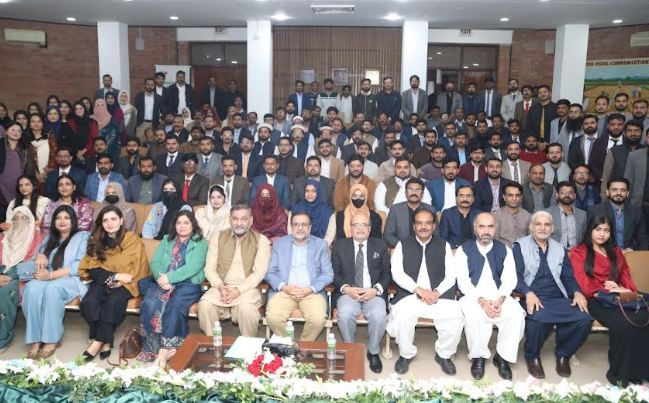
The ceremony concluded with expressions of gratitude to both governments for their unwavering support in fostering academic collaboration and agricultural development. Certificates of participation were distributed among the selected trainees, followed by a group photo session marking the departure of the third batch to China.
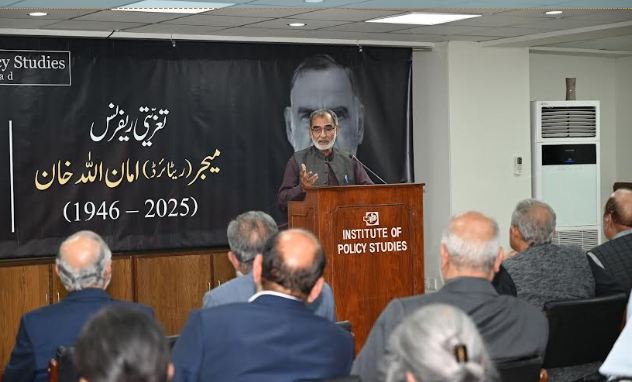
ISLAMABAD, NOV 10 /DNA/ – Late Major (r) Amanullah Khan was remembered as a trailblazer who combined service, patriotism, and compassion, an inspiring figure whose leadership and generosity touched countless lives. His legacy was one of principle, confidence, and kindness, as reflected upon by his family members, colleagues, and admirers during a condolence reference held at the Institute of Policy Studies (IPS), Islamabad.
The reflections were shared by Khalid Rahman, chairman IPS, Usman Shaukat, president, Rawalpindi Chamber of Commerce and Industry, Jalil Malik, chairman, Akhuwat Steering Committee, Haroon Ishan Piracha, chairman ISE Towers, REIT Management Company Limited, Prof Dr Ijaz Shafi Gilani, founder Gallup Pakistan, Abrar Ahmad, member, Board of Governors, IPS, Najib Ahmed, member, BoG, IPS, Nazir Ahmed Vaid, Shahzad Iqbal Sham, senior research fellow, IPS, Mahmood Ahmad, General (r) Faiz Gilani, and Amanullah Khan’s sons Ghufran Amanullah and Jibran Amanullah.
Major Amanullah, who passed away on October 22, 2025, was a distinguished professional, philanthropist, and visionary leader whose life embodied integrity, dedication, and a deep sense of purpose. Associated with the IPS for nearly three decades, he played an instrumental role in shaping the institute’s intellectual and institutional framework as a member of the National Academic Council, Board of Governors, Executive Committee, and Endowment Committee. His strategic foresight helped steer IPS’s research and policy direction, emphasizing regional cooperation with China, Turkey, Iran, and Africa, and contributing to key areas such as energy, Afghanistan, Kashmir, and IT development.
Beyond his institutional engagements, Major Amanullah was deeply devoted to humanitarian service. As chairman of Akhuwat’s Steering Committee, he pioneered Islamic microfinance programs and community uplift initiatives across northern Pakistan. His tenure as president of the Rawalpindi Chamber of Commerce and Industry (1991–92) and as the first president of the Islamabad Stock Exchange (1989–1994) reflected his dynamic leadership and vision for economic empowerment and industrial development.
Speakers at the condolence reference paid heartfelt tributes to his exemplary life, describing him as a man of conviction, humility, and foresight, someone who seamlessly blended professionalism with compassion and purpose. They remembered him as a guiding force and mentor whose ethical leadership, discipline, and commitment to nurturing others continue to inspire all who had the privilege of knowing him. His life remains a testament to selfless service and visionary action for the collective good.
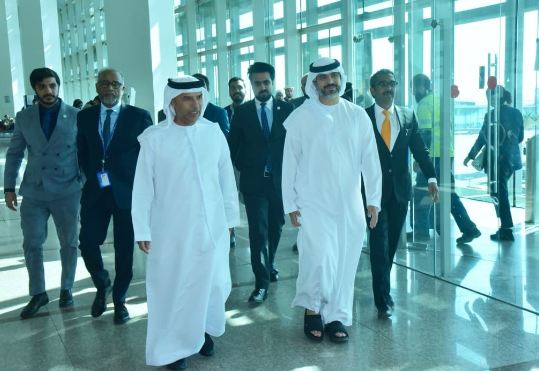
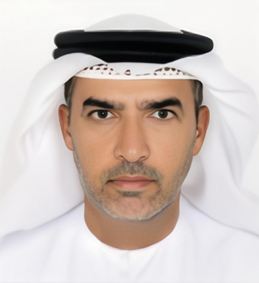
ISLAMABAD, NOV 10 /DNA/ – The newly appointed Ambassador of the United Arab Emirates to Pakistan, His Excellency Maj. Gen. (R) Salem Mohammad Salem Al-Bawab Al-Zaabi, arrived in Islamabad on Monday morning via a Fly Dubai international flight.
Ambassador Al-Zaabi succeeds His Excellency Hamad Obaid Ibrahim Salim Al-Zaabi, who concluded his successful tenure in Pakistan last month and has since been posted to Egypt. During his term, Ambassador Hamad Al-Zaabi played a significant role in further strengthening the close and brotherly relations between the UAE and Pakistan, particularly in the areas of trade, investment, and people-to-people ties.
The arrival of the new ambassador marks another chapter in the longstanding and multifaceted relations between the two brotherly nations. Pakistan and the UAE have enjoyed deep-rooted ties founded on shared values, cultural affinity, and mutual respect.
Ambassador-designate Salem Al-Bawab Al-Zaabi is expected to present his credentials to the President of Pakistan in the coming days and begin his diplomatic engagements aimed at further enhancing cooperation between the two countries in various fields, including economy, defence, and regional development.
Curriculum Vitae
Name : Salem Mohammed Salem Al Bawab Al Zaabi
Date of Birth: 22/04/1962
Place of Birth: Al Zaab Island
Marital Status: Married
Languages: Arabic and English
Educational Qualification:
Royal Military Academy Sandhurst, United Kingdom, 1983
Command and Staff College, Marine Corps, United States of America, 1993
Professional experience:
Joined the Armed Forces in 1979 and rose through the ranks, holding several key senior positions, including Military Attaché in France, Liaison Officer to NATO, and Executive Director of the Policy and Cooperation Department at the Ministry of Defense, before retiring with the rank of Major General.
Joined the Ministry of Foreign Affairs and served as Director of the International Security Cooperation Department from 2017 to 2023.
Served as Advisor to the Minister of Foreign Affairs from 2023 to date, and was appointed Special Envoy to Afghanistan.
ISLAMABAD, NOV 10 /DNA/ – The Education Testing Council (ETC) of the Higher Education Commission (HEC) has postponed the Aptitude Test scheduled under the project titled “Provision of Higher Education Opportunities for Students of Balochistan & Erstwhile FATA (Phase-III), Batch-IV.”
The test, which was originally scheduled to be held on Sunday, November 16, 2025, has been postponed due to the prevailing law and order situation and the imposition of Section 144 in Quetta City, which necessitated the change for the safety of all candidates and staff.
The ETC will announce the new date for the Aptitude Test soon. Candidates are strongly advised to regularly monitor the official HEC and ETC websites for the updates.