Home Blog Page 39

Naqvi commends forces for ‘successful’ Kalat operation against militants

Naqvi commends forces for 'successful' Kalat operation against militants

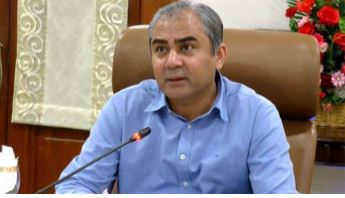
ISLAMABAD, Dec 07 (APP/DNA): Federal Interior Minister Mohsin Naqvi commended Pakistan’s security forces on Monday for what he described as a “highly successful” operation in Kalat against India-sponsored militants.

According to the Interior Minister, security personnel eliminated 12 militants allegedly backed by India, thwarting what he called their “malicious designs” in the region.

Naqvi lauded the professional capabilities and swift action of the forces involved in the operation.

“Security forces have crushed the nefarious objectives of India-sponsored terrorists through their successful action in Kalat,” he said. “In Balochistan, the so-called ‘Fitna-e-Hindustan’ will not be allowed to find any refuge.”

He added that the nation stands firmly behind security forces in the fight to eradicate terrorism.

Naqvi reiterated that operations against India-backed militants would continue until their “complete elimination.”

SAARC marks 40th charter day; calls for regional cooperation

SAARC marks 40th charter day; calls for regional cooperation

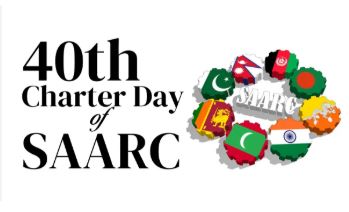
ISLAMABAD, DEC 7 /DNA/ – As we commemorate, the 40th anniversary of the SAARC Charter Day, I extend my warmest greetings to the peoples and the governments of all SAARC member-states. This auspicious occasion, reminds us of our shared aspirations for peace, progress and prosperity across the region of South Asia.

When SAARC was established, over four decades ago, it was meant to provide an essential platform, to promote dialogue, foster cooperation and strengthen the bonds that bring our nations together.

While these goals have, regrettably, remained elusive due to political considerations, within the region, I commend the SAARC Secretariat for striving hard to provide its dedicated assistance as well as for its efforts to advance the organization’s goals and creating opportunities for meaningful collaboration among the member states.

In an era of growing regional cooperation, the necessity of economic, digital, and people-to-people connectivity in South Asia could hardly be overemphasized. Together, we must work to enhance linkages that facilitate trade, investment, innovation, and cultural exchange in our region.

Our region also faces common challenges such as poverty, climate induced natural disasters, food and energy insecurity and public health issues. These challenges transcend borders and require collective responses based on mutual trust, goodwill, and a spirit of mutual cooperation. It is only by acting together, that we can build a resilient and inclusive future, for our peoples.

Pakistan remains firmly committed to the principles and objectives of the SAARC Charter. We believe that genuine cooperation, guided by sovereign equality, mutual respect and constructive engagement, can unlock South Asia’s vast potential and ensure a better tomorrow for all.

Let us reaffirm today, our commitment to building a peaceful, stable and prosperous South Asia, that is defined by collaboration, connectivity, and a shared vision for the collective well-being of its peoples.

Poland, Pakistan enjoy excellent business ties

Poland, Pakistan enjoy excellent business ties

ISLAMABAD, 07 DEC (DNA) —   Pakistan and Poland enjoy longstanding, warm and cooperative relations with vast untapped economic potential that both sides must work together to unlock. This was underlined by Pawel Mokrzycki, Economic Secretary of the Polish Embassy, during a meeting with Sardar Tahir Mehmood, President Islamabad Chamber of Commerce & Industry (ICCI).

Mokrzycki said that Polish firms operating in oil & gas, green technologies, wastewater treatment, IT, textiles and particularly agricultural machinery are eager to develop joint ventures with Pakistani businesses for mutual economic growth. He emphasized the need to establish sectoral working groups and enhance two-way business delegations to build awareness and tap emerging opportunities.

He added that the Polish Embassy is keen to connect ICCI with leading Polish Chambers in order to strengthen institutional linkages, facilitate B2B contacts and explore new avenues of trade, investment and technology cooperation.ICCI President Sardar Tahir Mehmood appreciated Poland’s advanced capabilities in engineering machinery manufacturing, mining equipment, renewable energy, agriculture technologies and industrial machinery.

 He said the Preferential Trade Arrangement (PTA) between Pakistan and Poland has supported Pakistan’s export growth through improved access to EU markets.He noted that Pakistan’s large consumer base and rapidly evolving industrial landscape offer tremendous opportunities for Polish investors. He highlighted promising sectors for joint ventures including IT, renewable energy, agro-industry, food processing, textiles, pharmaceuticals, sports goods, surgical instruments and various manufacturing segments.

He assured that ICCI will soon share sector-specific profiles and product lists with the Polish Embassy to connect relevant stakeholders on both sides. ICCI Senior Vice President Tahir Ayub underscored Pakistan’s strong potential in fruit exports, and sought Polish support for upgrading Islamabad’s cold-storage and logistics infrastructure to international standards.ICCI Executive Member Ms. Fatima Azim stressed the importance of frequent business delegation exchanges to better understand the wide range of opportunities for bilateral cooperation.

Secretary General Ghulam Murtaza highlighted Pakistan’s rich reserves of minerals, metals and gemstones, emphasizing the need for advanced Polish mining and processing machinery to enhance value addition. Vice President Irfan Chaudhry reaffirmed ICCI’s readiness to organize B2B matchmaking sessions, trade exhibitions and sector-specific interactions, and welcomed the Polish Embassy’s support for encouraging Polish trade delegations to visit Pakistan.— DNA

Seven wonders of winter: Swat becomes Pakistan’s most mesmerizing tourists destination of cold season

Seven wonders of winter: Swat becomes Pakistan’s most mesmerizing tourists destination of cold season

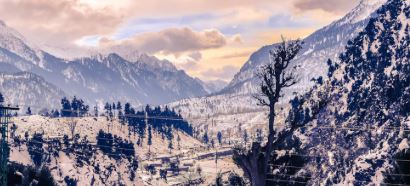
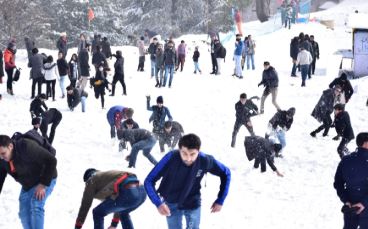
MINGORA, Dec 07 (APP/DNA):Draped in blankets of shimmering snow and echoing with the laughter of families escaping the monotony of city life, the valley of Swat often hailed as the Switzerland of Pakistan, has once again transformed into a magnet for winter tourism.

But this year, more than ever, travelers arrived mostly from plains districts of KP, Punjab and Islamabad said it’s the valley’s seven distinctive features that make it an unrivaled winter destination of Pakistan.

From heavy snowfall to Gandhara-era treasures, and from water rafting to skiing, paragliding, besides trout and river rafting, Swat offers a blend of adventure, culture, and serenity unmatched elsewhere in the country.

Standing at the edge of Kalam’s snow-laden landscape, property dealer Nasir Khan from Peshawar couldn’t hide his excitement.

“Swat is my favorite winter tourist destination. Its seven distinctive features, especially the intensity of snowfall at Kalam and Oshu Valley, are hard to find anywhere else in Pakistan,” he said, sipping warm as cold wave griped Kalam valley.

Kalam, Oshu, Malam Jabba, and Mahudhand remain on top of winter travelers’ lists, offering postcard perfect views and ideal conditions for skiing and other snow sports.

No winter trip to Swat is complete without savoring freshly grilled trout caught from the icy Swat River. Many tourists can be spotted taking selfies with their trout platters before digging in.

Educationist Umar Khan from Nowshera, visiting Malam Jabba with friends, described the moment as unforgettable and highly measmerizing.

“My dream came true today. The valleys, the peaks, the snow—everything feels magical,” he said with a smile wide enough to challenge the mountain horizon.

His group plans to head next to Kalam, drawn by its higher snowfall and the serenity of Gabral and Mahodhand lakes.

The 150-kilometer stretch of the Swat River, fed by glaciers and lakes, offers rare winter rafting opportunities in Fazagut, Fatehpur, Barikot, and Chakdara.

Experts say that if these spots are developed on modern lines, they could attract thousands more adventure seekers each winter.

Swat’s tall, snow-covered mountain ranges Falakser, Mankial, and Elum peaks provide mountaineers and trekkers with thrilling challenges. The region’s famed Deodar forests and diverse wildlife add a touch of wilderness that nature lovers cherish.

While adventure draws many visitors, others come seeking history. Salahuddin Khan, who traveled from Kohat with his family, said, “we came for snowfall and trout fish, but also to revisit the Gandhara artifacts. The treasures at Saidu Sharif Museum are unmatched and this museum was must visit site for lovers of Gandhara art.”

Archaeologists and Buddhist monks frequently visit Swat, drawn by its rich Gandhara heritage sprinkled across ancient sites.

The Swat Motorway has drastically improved accessibility, allowing tourists from Islamabad, Lahore, Peshawar, and beyond to reach the valley with ease. Despite poor road conditions in upper regions, travelers said the journey is worth every twist and turn.

Holiday weekends see streets filled with tourists from across Punjab and KP, bundled in overcoats, filling markets, ski slopes, and trout eateries.

While tourism soars, many visitors voice concerns about rising hotel prices and demanded that it may be regulated on the patterns of Murree.

Rooms in Kalam now range between Rs10,000 and Rs15,000, while Malam Jabba hotels charge Rs8,000 to Rs12,000 per night.

Tourists urged authorities to regulate prices to ensure Swat remains accessible for all.

The tourists said that poor link roads in Swat and Kumrat Valleys have negatively impacted tourism’s revenue.

According to a KP Tourism Department spokesman, several major initiatives are planned including Kalam Winter Gala and Malam Jabba skiing snow sports besides first-ever winter sports rafting at River Swat and paragliding event.

New tourist zones planned at Sola Tanar, Puchar, and Jargo and six new tourist facilitation centers established besides 15 jeepable tracks proposed in Malakand & Hazara and a dedicated tourism wing for merged areas established.

These developments aim to reduce the load on Kalam, Malam Jabba, and Bahrain, while promoting sustainable ecotourism.

Whether it’s the thrill of skiing down Malam Jabba’s slopes, the taste of fresh trout by the riverside, the spiritual calm of ancient Gandhara sites, or simply watching children build snowmen under a pale winter sun, Swat offers an experience that touches the heart.

As the snowfall intensifies and winter deepens in next few months, one thing is clear that Swat remains Pakistan’s crown jewel of winter tourism—unique not for just one feature, but for seven, making it a mesmerizing winter tourism destination of Pakistan.

Abandoned US weapons powering Taliban forces

Abandoned US weapons powering Taliban forces

The report cited Pakistani officials as saying that some of these rifles and carbines are “significantly superior” to the weaponry commonly used by TTP fighters before 2021

Centreline Report

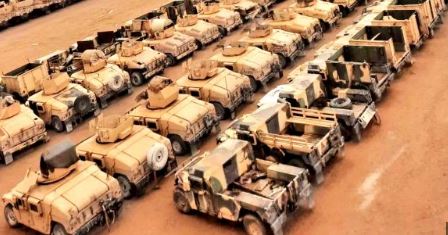
WASHINGTON: A final report by a US watchdog has confirmed that billions of dollars’ worth of American-supplied weapons, military equipment, and security infrastructure left behind during the 2021 withdrawal from Afghanistan now form the backbone of the Taliban’s security apparatus.

Parallel findings from UN monitoring teams and a Washington Post investigation indicate that some of these weapons have already filtered to the banned Tehreek-i-Taliban Pakistan (TTP), strengthening a group responsible for escalating attacks inside Pakistan.

The 137-page report, released this week by the Special Inspector General for Afghanistan Reconstruction (SIGAR), recounts the scale of the two-decade American project to rebuild Afghanistan. Congress, it notes, provided roughly $144.7 billion between 2002 and 2021 to reconstruct the country and to support a democratic transition — “yet ultimately delivered neither.”

Recent UN assessments reinforce the regional implications of that failure. A UN panel reported that the Afghan Taliban continue providing logistical and operational support to the TTP, while the Washington Post has documented that dozens of US-origin weapons are now surfacing in Pakistan in the hands of terrorists targeting the state.

SIGAR attributes part of this spillover to the abrupt loss of visibility after the Taliban takeover in Afghanistan. “Due to the Taliban takeover, SIGAR was unable to inspect any of the equipment provided to, or facilities constructed for, the Afghan National Defence and Security Forces (ANDSF) following the Afghan government’s collapse,” the report states.

The US Department of Defence, however, has confirmed that approximately $7.1bn worth of American-provided equipment was left behind — including thousands of vehicles, hundreds of thousands of small arms, night-vision devices and more than 160 aircraft.

The consequences of this transfer are already manifesting in Pakistan.

Serial numbers of at least 63 seized weapons inside Pakistan match those originally supplied by Washington to Afghan forces. The report cited Pakistani officials as saying that some of these rifles and carbines are “significantly superior” to the weaponry commonly used by TTP fighters before 2021.

UN monitoring reports echo this concern. The 36th Monitoring Report (2025) estimates that the TTP maintains a force of around 6,000 fighters spread across Ghazni, Helmand, Kandahar, Kunar, Uruzgan, and Zabul provinces of Afghanistan, and shares training facilities with Al Qaeda.

Addressing the UN Security Council, Denmark’s deputy permanent representative Sandra Jensen Landi said the TTP continues to receive “logistical and substantial support from the de facto authorities” in Kabul.

Earlier UN reports detailed Taliban-provided guesthouses, weapons permits, movement authorisations, and immunity from arrest for TTP leaders — arrangements that have allowed the group to entrench itself deeper in Afghan territory. SIGAR’s own quarterly reports for 2025 cite a string of cross-border attacks, including an assault in South Waziristan that killed 16 Pakistani security personnel.

SIGAR’s final review also revisits the scale — and the futility — of US investment in Afghanistan’s security sector. Between 2002 and June 2025, Washington obligated $31.2bn for ANDSF infrastructure, transportation, and equipment. The US purchased 96,000 ground vehicles, more than 427,000 weapons, 17,400 night-vision devices, and at least 162 aircraft for Afghan forces. As of July 2021, just before the then-Afghan government collapsed, the Afghan Air Force still had 131 operational US-supplied aircraft — virtually all of which are now under Taliban control, according to the report.

SZIA celebrates international day with cultural exhibits, diplomatic guests

SZIA celebrates international day with cultural exhibits, diplomatic guests

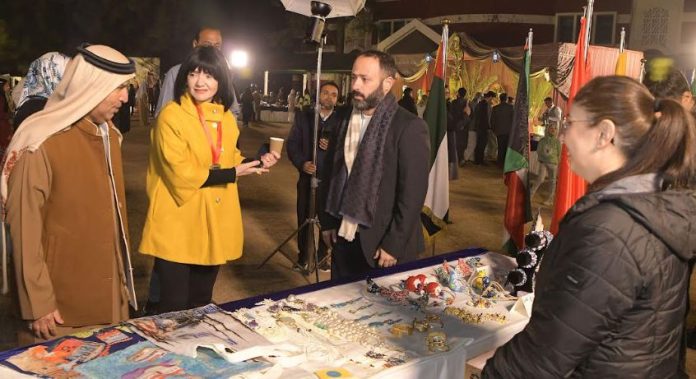
ISLAMABAD, DEC 7 /DNA/ – The Sheikh Zayed International Academy (SZIA) marked International Day with colour and cultural vibrancy as students, parents and diplomats showcased traditions from around the world.

Ambassador of the United Arab Emirates, Salem Alzaabi, visited various country stalls and took particular interest in the items displayed at the Turkiye pavilion. Accompanied by the Principal of SZIA and other senior faculty members, the ambassador appreciated the cultural exhibits, traditional artefacts and cuisine presented by the Turkish community.

The event brought together diverse cultures represented by the academy’s multinational student body, offering a platform for cross-cultural exchange and global learning. Diplomats and guests lauded SZIA for promoting inclusivity and strengthening cultural understanding among students through such initiatives.

Christmas Tree Lighting Ceremony

Christmas Tree Lighting Ceremony

ISLAMABAD, DEC 7 /DNA/ – Islamabad Serena Hotel, is delighted to commence this festive season with the Christmas Tree Lighting Ceremony on December 5th, 2025, in the decorative lobby. This celebration brings forth the magic, the excitement of the festivities, and is the start of the many celebratory events henceforth this season.

This joyous event included many festive cheers from being graced by the beautiful harmonious voices of the carollers to the anticipation of lighting up the twinkling lights and ornaments on the Christmas tree. The words shared by Pastor Rashid from Christ Church, brought forth his blessing and emphasized on the importance of giving this season. Furthermore, the General Manager of Islamabad Serena Hotel, Christoph Hoeflich, wished everyone a Merry Christmas and to relish this evening in harmony.

The spirit of Christmas was enhanced by the laughter of the children as they got to meet Santa Clause, and their unbridled innocence and happiness touched the hearts of everyone at the event. The refreshments at the ceremony with the sweet and savory treats and the beverages, warmed the very soul along with the heartfelt environment. Overall, the ambiance of the hotel lifted everyone’s spirit and left everyone giddy for the start of the season.

Why Imran Khan remains politically relevant

Zardari in China: strategic diplomacy or political foresight?

Like him or hate him, he is the only major leader who disrupts the traditional two-party monopoly that has dominated Pakistan for decades. Removing him entirely would only strengthen those two parties and make them even more unmanageable

By Ansar Mahmood Bhatti

The latest press conference by the Director General Inter-Services Public Relations (DG ISPR) marked perhaps the harshest institutional criticism of Imran Khan to date. While previous briefings had carried undertones of disagreement or veiled admonitions, this one was direct, pointed, and focused particularly on the controversial interview given by the former prime minister’s sister to an Indian media outlet. The military spokesperson termed the move unacceptable and deeply irresponsible, and to an extent, he was not wrong. No matter the political circumstances, using Indian media as a platform especially at a time when relations remain strained was ill-advised and bound to create national discomfort.

However, the argument offered by Imran Khan’s camp also carries weight: they allege that Pakistani media is so tightly controlled that the opposition is denied meaningful coverage. According to them, interview slots, airtime, and narrative-shaping opportunities are skewed to the point that opposition figures must look elsewhere to get their message out. Yet, even then, resorting to a hostile foreign platform was not an excuse. It gave ammunition to critics and raised unnecessary suspicions.

The truth is that problems exist on both sides. Political actors consistently cross red lines, while state institutions respond with disproportionate measures. But within this entire debate lies a fundamental reality that Pakistan as a nation must confront: the primary responsibility for the rise, fall, and resurgence of Imran Khan lies with those who brought him to power in the first place. Everyone knows the role the establishment played in shaping and sustaining Imran Khan’s political career. Therefore, the introspection that is being demanded today must begin at home. One cannot create a phenomenon and then expect it to disappear through force and coercion.

Imran Khan’s governance record was far from ideal. In fact, to many, his rule was chaotic. Corruption remained widespread, governance suffered, and institutional paralysis deepened. Mismanagement was visible across multiple sectors, and had he been allowed to complete five years unhindered; it is very possible that public disenchantment would have naturally peaked. Many argue that by the end of five years, no one would even be willing to speak his name politically. That is how poor the performance was.

But the way he was removed from power and more importantly, the way he and his family have been treated since turned him into something far more powerful than a politician: a symbol of victimhood. The entire narrative shifted. His flaws were overshadowed by the perception that he was wronged. Every attempt to discredit him, instead of diminishing his popularity, only increased it exponentially. The more he was pushed to the wall, the stronger his public support grew.

Why? Because the method adopted to neutralize him has been deeply flawed. In politics, perception is stronger than facts. And the perception created over the past two years is that Imran Khan is being singled out unfairly, persecuted, and silenced. This is why all efforts to damage him politically have failed.

There is only one credible way to make Imran Khan politically irrelevant: good governance. Not press conferences, not media restrictions, not court cases, and definitely not confrontation.

People today are struggling. They cannot afford basic necessities. Inflation is crushing households. Jobs are drying up. There is no sense of security, political stability, or economic direction. Under such conditions, no one is ready to listen to lectures or accusations. People judge governments by what ends up in their kitchen, not by press briefings.

All credible national and international surveys repeatedly highlight the same depressing picture: Corruption remains rampant, Poverty has surged, foreign investment has evaporated

The country’s international image has been damaged, CPEC stands frozen, businesses are shutting down, public frustration is at its peak.

Add to this the controversial lifetime immunity granted to certain figures, and the public anger becomes understandable. In such an environment, Imran Khan can never be defeated through force or narrative manipulation. The only force powerful enough to counter him is performance real, tangible, visible governance that delivers relief to ordinary people.

This is why, if free and fair elections were held today, PTI would likely win by a landslide. This victory would not necessarily be because PTI is a highly organized or ideologically superior party. Rather, it would be because of how the party has been treated and continues to be treated. The sense of injustice, deprivation, and victimization resonates with millions.

The operational strategy toward PTI must change if the goal is to stabilize the political landscape. However, it is equally important to recognize that completely eliminating Imran Khan from politics is neither feasible nor desirable. Like him or hate him, he is the only major leader who disrupts the traditional two-party monopoly that has dominated Pakistan for decades. Removing him entirely would only strengthen those two parties and make them even more unmanageable.

From a strategic standpoint, the establishment also understands this. A controlled, balanced political system requires more than two poles of power. Eliminating Imran Khan may satisfy certain short-term impulses, but in the long run, it will create a vacuum that will be quickly filled by forces less predictable and harder to negotiate with.

At the end of the day, no one in Pakistan is a traitor. They all believe they are acting in the interest of the country, even if their methods or interpretations differ. A more inclusive approach is needed. Dialogue is needed. Tolerance is needed. The economy is in shambles, inflation is at historic highs, foreign investment has dried up, and CPEC—once hailed as a game-changer—is practically dormant. This is not the time for internal wars. It is the time for reconciliation and reconstruction.

The DG ISPR’s press conference may have been aimed at correcting narratives, but the real correction that Pakistan needs goes far deeper. Until governance improves, institutions learn from past mistakes, and genuine democracy is allowed to function, Imran Khan will remain an unstoppable political force.

And perhaps, despite everything, Pakistan needs him not necessarily in power, but in the system to prevent a return to the suffocating two-party formula that has already inflicted decades of damage.

A New Soft Power Moment

A New Soft Power Moment

Dr. Muhammad Akram Zaheer

President Donald Trump has reduced many of the traditional tools through which the United States projected influence abroad. USAID has largely ceased to function, Voice of America is trapped in legal disputes and the State Department has sharply cut back its staff and programs. Stricter visa rules have made the country less welcoming and Trump’s confrontational dealings with allies have weakened trust. Observers, including former NATO official Jamie Shea, describe these developments as a form of American “soft power suicide.” Many analysts argue that China benefits from this American retreat. Joseph Nye, who introduced the concept of soft power, warned that China might move into the space the United States is leaving behind. Some commentators suggest that Trump’s policies have strengthened China’s diplomatic appeal. Yet the rivalry between the two powers is not a straightforward contest. The United States historically emphasized values, political principles and cultural attraction. China’s method has been more practical, relying on economic incentives, development assistance, infrastructure projects and training programs. Many countries, particularly in the global South, tend to accept both American and Chinese engagement rather than choosing one side.

Although China appears more reliable and accessible as Washington pulls back, it has not turned into a global soft-power leader. Beijing continues to promote its economic model and development experience, but it has actually reduced assistance to poorer countries in recent years. Its pledges to Latin American and SCO countries have declined compared with past years. These reductions reflect pressure on China’s own economy and concerns about the rising debts of Belt and Road Initiative partners. China still lends to resource-rich and high-income countries, but it is increasingly cautious toward low-income borrowers, at times suspending new loans entirely, as in Ethiopia. China has also not attempted to replace USAID. Its official aid budget has always been much smaller than Washington’s previous levels and most of it has taken the form of loans rather than grants. Recent cases of Chinese humanitarian support, such as in Cambodia and Nepal, remain isolated and do not represent a shift toward broader international assistance.

Chinese companies continue to expand trade and investment in regions such as Latin America, the Middle East and Southeast Asia. However, commercial interests than by state planning. The United States has also stepped back from promoting democracy and human rights, leaving open a space China could theoretically occupy. However, China has shown little interest in exporting a political model. Its officials emphasize principles such as noninterference and the idea that modernization can take different forms, but they do not present a clear ideological system for others to adopt. China’s diplomatic messaging focuses largely on contrasting itself with the West. Officials often criticize U.S. dominance, accuse Washington of abandoning its international obligations and portray China as a stable and dependable actor. Xi Jinping’s recent speeches highlight calls for a “fairer” world order and multipolarity, but they stop short of offering a detailed vision of global governance. In Africa, Chinese diplomats and scholars present China as a partner that respects national choices, unlike the more intrusive United States. Yet when foreign participants ask for clear guidance on how to replicate China’s developmental achievements, Chinese officials rarely provide specific steps. They often repackage Western vocabulary referring to China as a type of democracy rather than outlining unique doctrines. This reluctance limits China’s ability to turn admiration into emulation.

Cultural exports have recently helped China’s image. Popular products such as the Labubu toys, the animated film Ne Zha 2 and several video games have increased China’s visibility among foreign audiences. Technologies like DeepSeek have also enhanced interest in Chinese innovation. However, cultural popularity alone does not necessarily translate into acceptance of China’s political or ideological positions. Public opinion surveys show a mixed picture. Latin America and Africa hold generally positive views, while Europe and the Asia-Pacific remain largely distrustful due to security concerns. Even where China is respected as an economic partner, trust in its global leadership remains low. A Pew survey found that most respondents do not have confidence in Xi Jinping to manage international affairs responsibly.

Moreover, countries that depend heavily on Chinese loans often express unease. Ethiopian students and officials worry about high debts and fear that China could control key infrastructure if loans go unpaid. Protests in Central Asian countries against Chinese projects also show rising anxiety. These tensions sit alongside appreciation for China’s economic engagement. China’s apparent gains therefore come with limits. It benefits from the American withdrawal but is careful not to take on burdens that could expose it to greater criticism or financial risk. It promotes itself as a dependable partner but avoids deeper ideological commitments or the creation of a comprehensive global framework. For now, China prefers to highlight the contrast between its own approach and that of the United States, while maintaining flexibility and avoiding overextension.

The Crisis of Liberal Democracy

The Crisis of Liberal Democracy

Muhammad Wali Jan

The world is currently going through what is considered to be the most decisive and uncertain period in the history of liberal democracy. The system that has been a symbol of human freedom, fundamental rights, fair elections and the rule of law for the past two centuries. Now entered a crisis whose severity can be gauged from the fact that according to global reports from 2024, approximately 72% of the world’s population now lives in political systems that are not democratic but authoritarian or semi-authoritarian. That is, three-quarters of all humanity has come under governance models that are considered the opposite of liberal democracy. These are figures that indicate not the decline of any political ideology but an intellectual setback at the global level.

In the past few years, authoritative research institutions, such as the V-Dem Institute and International IDEA, have repeatedly emphasized that the world is going through the worst wave of democratic decline. According to the latest reports of 2025, the number of countries worldwide where democratic standards have declined in one or more key areas has reached 94. In comparison, there are only 55 countries where improvements have been recorded in some area. This gap itself shows the depth of this crisis. Moreover, in 2009, the number of countries that can be called “liberal democracies” worldwide was historically the highest, but by 2022 their number had shrunk to just 32.

A major reason for this political decline is the rise of populism, which has caused the most damage to public trust in democratic institutions. Populist leaders have transformed public deprivation and despair into emotional slogans and described institutions, the media and the judiciary as “elite”, which has the result that democratic structures are weakened from within. Whether it’s the attack on Capitol Hill in the US, questions about the impartiality of institutions in India, or the growing influence of nationalist parties in Europe—they’re all manifestations of the same global trend.

The magnitude of the erosion of public trust in institutions can also be gauged from the data. According to global assessments, 71 countries experienced seven consecutive years of decline in democratic freedom between 2016 and 2023. And the decline was primarily seen in media freedom, judicial independence, and civil liberties—the cornerstones of liberal democracy. International IDEA’s 2025 report makes it clear that the biggest decline has come in the “rights category,” with freedom of expression and freedom of the press being the areas that have weakened the most.

This political crisis is also accompanied by an economic crisis, which is hitting the claims of liberal democracy the hardest. The wealth of the rich has multiplied, the middle class is shrinking, and youth unemployment has reached historic levels. This economic inequality undermines the system’s promise that a free economy and democracy can deliver progress and justice.

Social media has compounded this crisis. Misinformation, political propaganda, hate speech, and algorithmic polarization have deepened the ideological divide in societies. In the form of “echo chambers,” people now only see information that supports their own views, stifling democratic discourse and fostering extremism. According to global reports, press freedom has fallen to its lowest level in ten years, the strongest sign of this crisis.

The growing questioning of the electoral system in the world’s most powerful democracy, the new wave of nationalism in Europe, the weakening of civil liberties and minority rights in India, and the rise of military interventions in Africa and Latin America—all of these are part of a global pattern, not individual state problems. The basis of this pattern is data that is not just opinion but also numbers—and it is this evidence that proves that the crisis of liberal democracy is not an intellectual or moral crisis but a historical and structural change.

The world is indeed standing at a new political crossroads. If liberal democracy cannot incorporate new elements such as reform, economic justice, institutional transparency, media freedom, and controls on the negative effects of technology, then the system that was once considered a symbol of human dignity and collective prosperity will shrink further in the coming years and become a limited historical experiment. Global data and evidence confirm that this crisis is not temporary but structural—and the future of world politics depends on understanding this crisis and finding a solution to it.

Stay Connected

64FansLike
60FollowersFollow

Latest Reviews

Exchange Rates

USD - United States Dollar
EUR
1.17
GBP
1.34
AUD
0.67
CAD
0.73