Home Blog Page 39

Iraq PM visits White House for first time as US pushes closer ties

Iraq PM visits White House for first time as US pushes closer ties

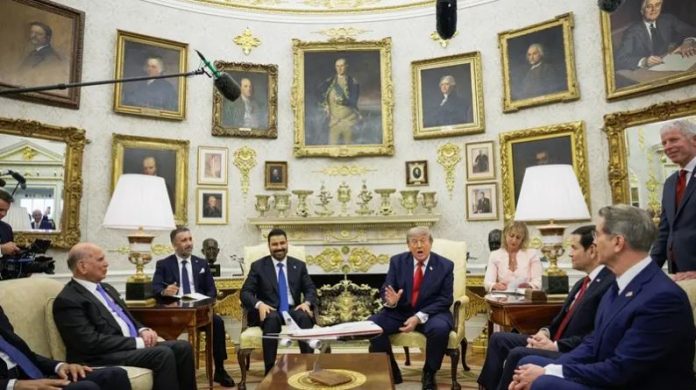
WASHINGTON, JUL 14: US President Donald Trump welcomed Iraqi Prime Minister Ali al-Zaidi to the White House on Tuesday for talks aimed at expanding US investment in Iraq and strengthening ties as Washington presses Baghdad to curb its reliance on Iran.

“We love Iraq, and they’re well represented. This man just won a big election; they’re very well represented. I can tell you that,” Trump told reporters before walking into the Oval Office with the Iraqi premier.

After the meeting, the two leaders spoke to reporters in the Oval Office. Trump said they would continue talks over lunch, which was not originally scheduled.

He heaped praise on the Iraqi prime minister. “This man is going to be a great leader in the Middle East, beyond Iraq. His influence is going to spread all throughout the Middle East,” Trump said.

For his part, al-Zaidi said he was excited to boost ties between Washington and Baghdad. He also said his government’s decision to exert a monopoly over all arms in the country was not an option.

Al-Zaidi said this was a decision that he would not back down from. He added that there would be no need for any armed faction in the country after Sept. 30, the scheduled date for the withdrawal of US troops.

Asked about OPEC output quotas for Baghdad, al-Zaidi said Iraq wanted “a fair share.”

‘Cashless economy’: PM orders all overseas remittances to be processed digitally

'Cashless economy': PM orders all overseas remittances to be processed digitally

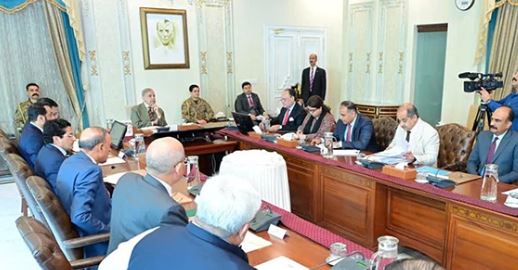
ISLAMABAD, JUL 14: Prime Minister Shehbaz Sharif on Tuesday directed that all overseas remittances be processed through digital channels to accelerate Pakistan’s transition towards a cashless economy and enhance financial transparency.

Chairing a meeting on the promotion of a cashless economy and digital payments, the prime minister praised the economic team for increasing the number of active merchants using QR code-based digital payments by 300% within a year.


PM Shehbaz praises the economic team for increasing the number of active merchants using QR code-based digital payments by 300% within a year

He also described the rise in mobile banking application users from 95 million to 137 million as a major achievement.

The prime minister directed the authorities to further strengthen awareness campaigns to encourage greater adoption of QR code-based digital payments among merchants.

He also called on banks and financial institutions to play a more proactive role in accelerating the country’s transition to a cashless economy.

The prime minister appreciated the initiative to shift Benazir Income Support Programme (BISP) payments to a digital system, describing it as more transparent, faster, and more convenient for beneficiaries.

During the briefing, the meeting was informed that between June 2025 and June 2026, the number of merchants receiving digital payments increased by 300% to 2.003 million.

It was also noted that 99% of National Database and Registration Authority (Nadra) payments have been digitised, while the share of cash payments has declined sharply from 71% to just 1%.

Similarly, it was informed that all payments to 10 million BISP beneficiaries are now being made through digital wallets.

The current number of mobile banking app users stands at 137 million.

Between July 2025 and June 2026, a total of 11.9 billion digital transactions were recorded.

During the past year, 92% of remittances from overseas Pakistanis were received through digital channels.

An independent third-party validation of the cashless economy initiative is currently underway, and the final report, along with recommendations, will be presented in November 2026, the prime minister was informed.

The Pakistan Banks’ Association has assigned targets to its member banks to promote digital payments, including the Raast instant payment system.

The meeting was attended by Federal Ministers Ahad Khan Cheema, Muhammad Aurangzeb, Attaullah Tarar, Shaza Fatima Khawaja, Ali Pervaiz Malik, Minister of State for Finance Bilal Azhar Kayani, State Bank of Pakistan (SBP) Governor Jameel Ahmad, the Nadra chairman, and senior officials from relevant institutions.

Five blasts heard around Bandar Abbas, near Hormuz strait: State TV

Five blasts heard around Bandar Abbas, near Hormuz strait: State TV

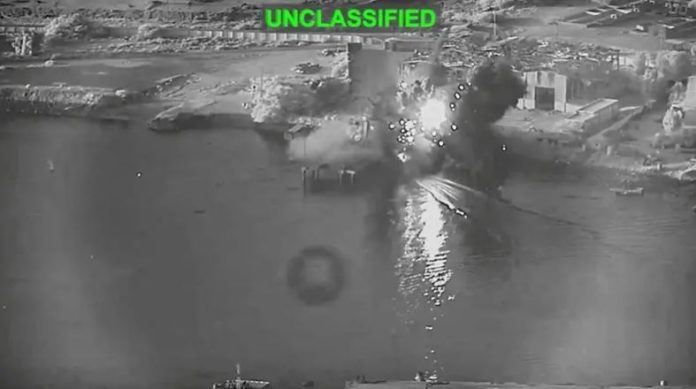
TEHRAN, JUL 14: Iranian state television on Tuesday reported that five explosions were heard around the port city of Bandar Abbas, near the Strait of Hormuz, which has been at the center of renewed Iran-US fighting.

“A few minutes ago, five explosions were heard west of Bandar Abbas,” the state broadcaster said, without providing further details.

Separately, Reuters reported citing Fars news agency that explosions were heard by residents in Iran’s Bushehr and Choghadak.

IRNA news agency reproted citing a provincial official that four areas of Iran’s Bushehr city were hit by US projectiles.

Info minister agrees to include newspaper websites in govt ads

Info minister agrees to include newspaper websites in govt ads

ISLAMABAD, JUL 14 /DNA/ – The All Pakistan Newspapers Society (APNS) has urged the federal government to implement the Prime Minister’s longstanding commitment to increase advertising rates for the print media, warning that the industry is grappling with severe economic challenges.

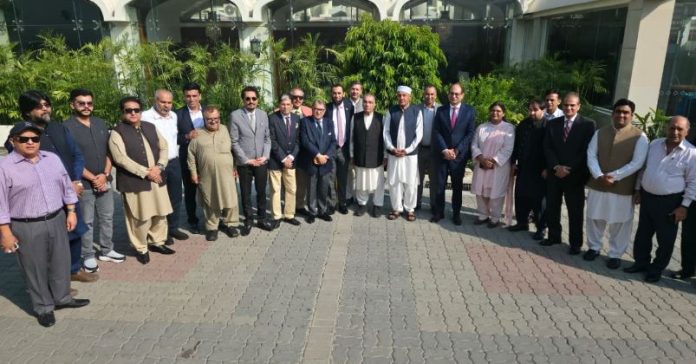
The demand was made during a high-level meeting between the APNS Executive Committee and Federal Minister for Information and Broadcasting, Attaullah Tarar, held here on Tuesday. The delegation, led by APNS President Senator Sarmad Ali, presented a comprehensive charter of demands ranging from advertising policy reforms to taxation relief.

Key Developments:

  • Digital Integration: Minister Tarar agreed in principle to incorporate the digital websites of newspapers into the federal government’s print advertising campaigns and directed officials to formalize the mechanism.
  • Ad Rate Revision: APNS proposed that government advertising rates be delinked from the Audit Bureau of Circulations (ABC) and frozen until a new rate-determination mechanism is developed. The Society also demanded that the authority to fix these rates be transferred from the Cabinet Division to the Ministry of Information and Broadcasting, aligning with policies for other media.
  • Regulatory Reforms: The minister directed the Secretary Information to form a joint committee with APNS representatives to formulate a comprehensive policy framework. Discussions also covered the restructuring of the ABC and the Registrar’s office, with APNS calling for simplified registration rules in consultation with stakeholders.
  • Cyber Crime Authority’s Role: In a significant legal contention, APNS strongly objected to the National Cyber Crime Investigation Agency (NCCIA) taking action against newspaper content. The Society asserted that the NCCIA lacks jurisdiction over print and newspaper websites, maintaining that the Press Council of Pakistan is the sole competent statutory forum to handle such matters.
  • Taxation Relief: The delegation raised issues regarding the taxation of newsprint, with the minister assuring that efforts would be made to resolve them at the earliest.

Overhaul of 1964 Policy: APNS pointed out that the current government advertising policy, largely based on a 1964 framework, requires a comprehensive review. The Society proposed empowering client departments to prepare media plans according to their communication objectives and target audiences.

The minister was accompanied by Federal Secretary for Information Ashfaq Khalil and Principal Information Officer Raisa Adil. The APNS delegation included senior media figures such as Mujib ur Rehman Shami (Daily Pakistan), Shahab Zuberi, Mohsin Bilal, and representatives from leading newspapers across the country.

Field Marshal’s visit reinforces multifaceted defence relationship with Turkiye 

Field Marshal's visit reinforces multifaceted defence relationship with Turkiye 

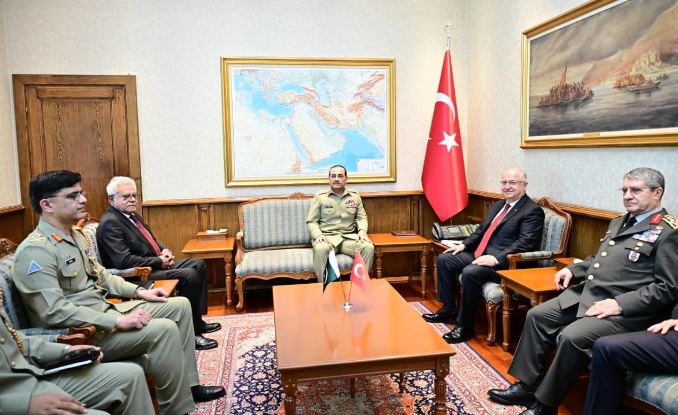
ANKARA, JUL 14 /DNA/ – Field Marshal Syed Asim Munir, NI (M), HJ, Chief of Army Staff & Chief of Defence Forces is currently on a high level official visit to the Republic of Turkiye, aimed at further enhancing the deep-rooted strategic and defence ties between the two brotherly nations.

Upon his arrival, Field Marshal was extended a warm reception reflecting the historic and brotherly relations between Pakistan and Turkiye.

Field Marshal's visit reinforces multifaceted defence relationship with Turkiye 

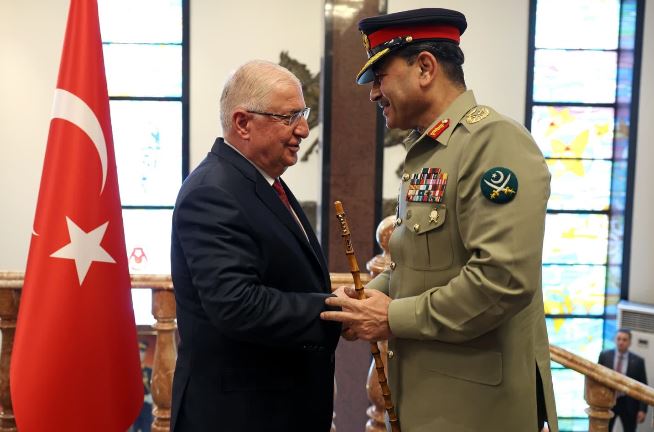
During the visit, the Field Marshal held a series of high level engagements with the Turkish political and military leadership. Field Marshal Syed Asim Munir called on President H.E. Recep Tayyip Erdoğan and Minister of National Defence, Yaşar Güler, to discuss matters of mutual interest and regional security. These high level deliberations underscored the shared vision of both nations to foster a more robust strategic partnership in evolving geopolitical environment.

At the Turkish General Staff (TGS) Headquarters, the Field Marshal was welcomed with a Guard of Honour. He held a detailed meeting with General Selçuk Bayraktaroğlu, Chief of the Turkish General Staff. The two leaders discussed regional security dynamics and professional matters of mutual concern.

Field Marshal's visit reinforces multifaceted defence relationship with Turkiye 

The Field Marshal was bestowed upon Turkish Armed Forces Distinguished Service Medal by General Selçuk Bayraktaroğlu in recognition of his meritorious services and commitment to bolstering bilateral military cooperation.

The Field Marshal visited the Turkish Land Forces (TLF) Headquarters, where he was received by General Metin Tokel, Commander of the Turkish Land Forces.

Field Marshal's visit reinforces multifaceted defence relationship with Turkiye 

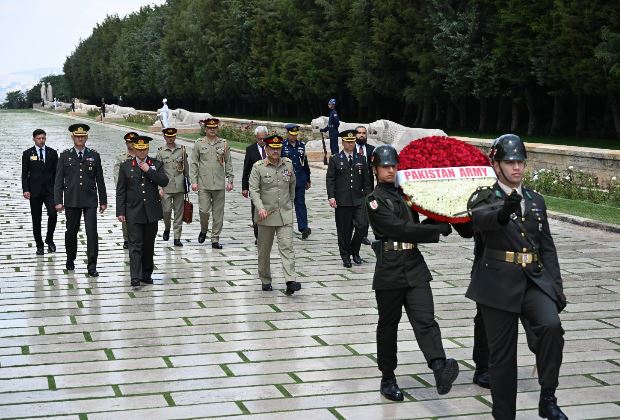
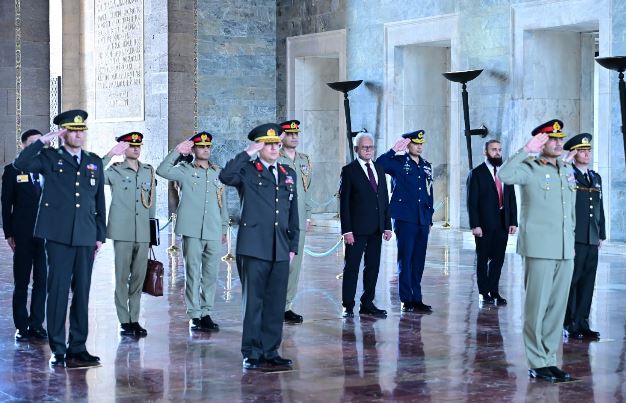
The Field Marshal visited Anıtkabir, the Mausoleum of Mustafa Kemal Ataturk, where he laid a floral wreath and paid respects to the founder of modern Turkiye, acknowledging his visionary leadership and the deep-rooted historical bonds between the two nations.

The visit of the Field Marshal signifies the resolve of both nations to further strengthen their multifaceted defence relationship and continue their joint efforts for regional peace and stability.

Iran mocks Trump’s Hormuz fee as Gulf states brace for high cost of US military protection

Iran mocks Trump’s Hormuz fee as Gulf states brace for high cost of US military protection

By: DANIELLE GREYMAN-KENNARD

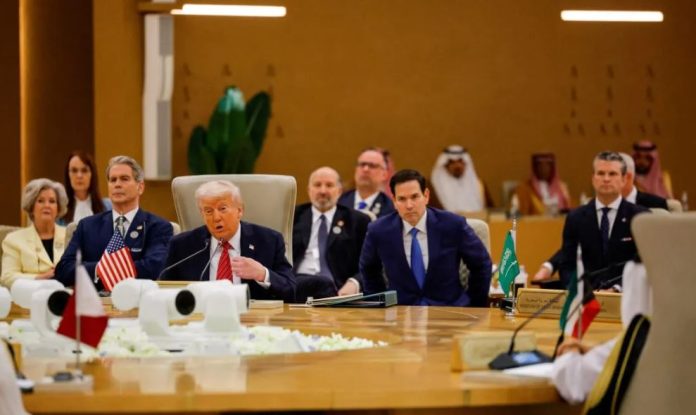
WASHINGTON, JUL 14: US President Donald Trump wants Gulf states to reimburse the United States for the protection provided to them amid ongoing Iranian attacks, the president told reporters in the Oval Office on Monday.

“I want to be reimbursed because we’re protecting a very rich portion of the world. We’re spending money, so… we are going to be reimbursed for protection,” Trump told reporters.

The US doesn’t “need” those countries because “we have more oil than any other country in the world,” he asserted. “We’re protecting all of them, and we’ve done a very effective job.”

Trump previously said Washington would become the “guardian of the Hormuz Strait,” protecting the vital waterway, responsible for a fifth of global oil and liquefied natural gas, in exchange for a reimbursement rate of 20%.

Though potentially lucrative, Professor Chuck Freilich warned The Jerusalem Post that Trump’s “absurd demand” validated Tehran’s own demands for fees in Hormuz.

A view of Iranian-flagged cargo ship M/V Touska as the U.S. Navy Arleigh Burke-class Aegis guided missile destroyer USS Spruance conducts its interception in a location given as the north Arabian Sea, in this screen capture from a video released April 19, 2026.
Iran’s FM Araghchi mocks Trump 20% demand, Tehran jockeys for Hormuz control
Iran’s Foreign Minister Abbas Araghchi had earlier mocked Trump’s demand for a 20% fee for crossing the Strait of Hormuz, seemingly positioning Tehran as the preferred administrator.

“POTUS is absolutely right. Whoever provides secure and safe passage of commercial vessels through the Strait of Hormuz should be compensated for this service,” Araghchi wrote on social media. “Iran has always been the GUARDIAN of the Strait and will remain so FOREVER.”

Asked what Trump’s motives could be, Frieilich said that “money is his primary motivation in life; he thinks only in monetary terms.”

Though the financial demand on Gulf states may be a new development, Dr. Yoel Guzansky, the head of the Gulf Research Field at the Institute for National Security Studies, said that it was likely something Gulf states expected from Trump, who has built his identity on being a businessman.

“Trump, he is transactional, always looking for where the money is. He’s a businessman, he admits it, and he’s not ashamed of it; he’s proud of it, and the Gulf States understood that from the beginning,” Guzansky commented.

Asked how Gulf states would justify the cost of US protection, given that Washington’s military presence in the region has itself been cited by Iran as a justification for attacks, Guzansky responded that the security benefits of hosting US forces ultimately outweigh the risks and would likely tip the balance in favor of maintaining an American presence.

Without America’s presence in the region, Guzansky argued that many Gulf states would have been conquered by Iran, or at least subjected to Iranian attempts. “There’s a price to pay for US bases in the Gulf, but one cannot live without them because the threat of Iran is still there,” he asserted.

The problem would not be paying for America’s protection; the issue would lie with what that protection would look like, he highlighted.

A gap in trust and expectations
“I think they expect more from the US, not just from this administration, but from the US as a whole, to do more for their defense than it has done so far during this war,” he commented. “There is a lot of disappointment in the Gulf with US strategy toward Iran and with the way the US conducted itself during the war. So yes, there is a transactional element, but the question is: what do we get in return? I think there is a gap between what the US understands as protection and what the Gulf states understand as protection.”

Advertisement

That gap in trust and expectations has largely contributed to the continued dialogue held between Gulf states and Iran, he continued, asserting that the talks and financial involvements were “not because they love Iran” but out of “fear.”

Aware that the US “can’t wait to leave the Gulf,” the states are less likely to throw their full weight behind any US efforts, even as they build deeper military ties, because they need to maintain some level of appeasement because the US, while capable, cannot be fully relied upon.

Many of the Gulf states pushed for the conflict with Iran to be resolved through diplomacy, particularly Qatar and Oman, and the efforts eventually materialized in a failed Memorandum of Understanding that offered no real resolution to the Hormuz crisis and gifted Iran what many experts see as a financial lifeline.

Advertisement

“The US is the strongest military power in the world, but it faces many constraints on how it can use that power. The political will, if you may, was not there. So the Gulf states will do everything possible to strengthen their relations with the US, maintain a continued dialogue with Iran, and strengthen their own militaries. This is hedging, doing several things in parallel because none of these options is perfect. You hedge your bets, as you would with financial risks,” he explained.

Asked about Trump’s motivation in Washington receiving some kind of financial gain for its continued involvement, especially given that the war lacks popularity, Guzansky said he wasn’t sure, but it was possible that a continued military presence in the region would be “easier to sell as a business transaction.”

“There is a lot of opposition in the US, especially within the Republican Party, to what is called the ‘long war’ and foreign intervention. This is what I was referring to earlier, the pressure on Trump to step back, move away from the war, and cut his losses. But it is very difficult when the Strait of Hormuz is at stake, and the stakes are high. So would it be easier to sell this as a business transaction? Perhaps to some in the Republican Party, maybe. I really don’t know; I would only be guessing,” he concluded.

YouGov reported in March that only 28% of Americans strongly or somewhat support the war with Iran, while 59% oppose it. A slight majority of Republican voters (62%) supported the action, though that number fell to 33% when it came to non-Trump-supporting Republicans.

Twin Sisters Rule PAKMMAF Contender Series

Twin Sisters Rule PAKMMAF Contender Series

By our correspondent

ISLAMABAD: The Pakistan Mixed Martial Arts Federation (PAKMMAF) successfully held the inaugural PAKMMAF ACTIVIT Contender Series featuring 12 elite bouts and showcasing the country’s top emerging MMA talent ahead of upcoming IMMAF World Championships.

Twin sisters Maliha Ali and Manesha Ali stole the spotlight with impressive victories. Former National MMA Champion Manesha Ali defeated Karachi’s Imama by unanimous decision and earned the Fight of the Night award with a dominant three-round display. Her sister Maliha Ali overcame Quetta’s Sadia despite giving away around five kilograms in weight, highlighting her class and determination.

Former national wrestling champion Rashid Gujjar avenged his National Championship final defeat by beating Qurban Khan in a keenly contested rematch, while rising star Aurangzeb Ahmed produced a stunning knockout victory as he prepares for the IMMAF Youth World Championships in Abu Dhabi this August.

Maliha Ali, Manesha Ali and Rashid Gujjar will now focus on the IMMAF World Championships in Georgia this November. The Contender Series aims to provide Pakistani fighters with high-level competition and a pathway to international events and professional MMA organizations.

Punjab Senior Minister Marriyum Aurangzeb attended the event as chief guest and praised PAKMMAF for promoting MMA among youth, saying sports help steer young people away from drugs and crime while building discipline, resilience and healthier lifestyles.

PAKMMAF President Omar Ahmed said the federation is developing a complete athlete pathway from schools and colleges to international championships and professional promotions, adding that the goal is not only to win medals but also to create sustainable opportunities for Pakistani MMA athletes. He also thanked ACTIVIT and Dr. Rizwan Aftab Ahmed for their continued support in promoting the sport.

FPCCI VP meets D-8 Secy General in Istanbul

FPCCI VP meets D-8 Secy General in Istanbul

KARACHI, JUL 14 /DNA/ – Atif Ikram Sheikh, President of the Federation of Pakistan Chambers of Commerce and Industry (FPCCI), has emphasized the need to further strengthen economic cooperation, trade, investment, and institutional linkages among the member countries of the D-8 Organization for Economic Cooperation. He stated that the D-8 region possesses enormous economic potential and that closer collaboration among member states would significantly contribute to regional prosperity, trade expansion, and sustainable economic growth.

The President FPCCI made these remarks while appreciating the meeting held by Quratul Ain, Vice President FPCCI, with H.E. Ambassador Sohail Mahmood, Secretary General of the D-8 Organization for Economic Cooperation, at the D-8 Secretariat in Istanbul.

During the meeting, both sides discussed a wide range of issues relating to strengthening Pakistan’s engagement with D-8 member countries and explored new opportunities for enhancing bilateral and multilateral trade, investment, and economic cooperation. Special emphasis was laid on improving banking connectivity among D-8 member states to facilitate smoother financial transactions, reduce barriers to trade, and promote greater business-to-business collaboration within the region.

Quratul Ain highlighted FPCCI’s commitment to promoting stronger economic partnerships with D-8 member countries and reiterated its resolve to create new opportunities for Pakistani businesses through enhanced regional cooperation. She also emphasized the importance of strengthening institutional interaction between FPCCI, the D-8 Secretariat, and the national chambers of commerce of D-8 member countries.

Ambassador Sohail Mahmood appreciated FPCCI’s proactive role in promoting regional economic cooperation and expressed the D-8 Secretariat’s commitment to working closely with the private sector to advance the objectives of the Organization and deepen economic integration among its member states.

FPCCI remains committed to playing an active role in strengthening economic diplomacy and expanding trade and investment relations with D-8 member countries through sustained engagement with the D-8 Secretariat and its member chambers.

As part of these efforts, FPCCI will organize an Interactive Session of its National Committee on D-8 CCI on 23 July 2026 at Federation House, Karachi. Diplomats from the Embassies and Consulates of all D-8 member countries, representatives of the business community, and members of the FPCCI National Committee on D-8 CCI will be invited to discuss measures for promoting trade, investment, banking connectivity, and greater private-sector cooperation among D-8 member countries.

Four more terrorists killed in Balochistan operations, taking tally to 121 since July 5

Four more terrorists killed in Balochistan operations, taking tally to 121 since July 5

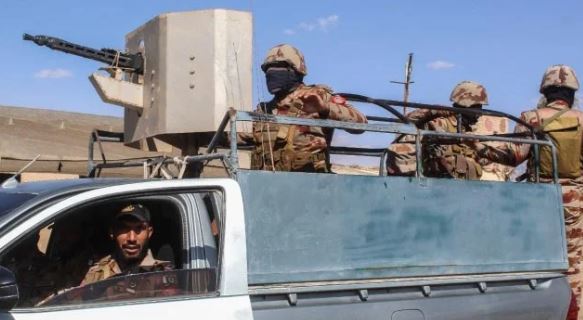
ISLAMABAD: Four more terrorists were killed during an operation in Balochistan, raising the total number of terrorists eliminated in Operation Shaban to 83, security sources confirmed on Tuesday.

The sources said that since July 5, a total of 121 militants had been killed in Operation Shaban and other intelligence-based operations (IBOs) carried out across the province.

They reiterated that the operation would continue until the last militant was eliminated.

Operation Shaban is being conducted jointly by the Pakistan Army, Frontier Corps and Balochistan Police and was launched in the aftermath of the deadly attack on the Mangi Dam police station in Ziarat.

A day earlier, the security sources confirmed that 8 more terrorists were gunned down during fresh operations in the province.

A large cache of weapons and ammunition was also recovered from the killed militants, including M4 rifles, submachine guns, rocket launchers, mobile phones and other equipment, they added.

Forty-two people, including security personnel and civilians, were martyred in three recent terrorist attacks in Balochistan.

ISPR Director General Lt Gen Ahmed Sharif Chaudhry had said last week that India-backed terrorists attacked the checkpoint but police personnel fought bravely, killing 15 militants in the initial engagement.

Nine police personnel had embraced martyrdom in the initial fighting, while militants also took police personnel hostage before security forces reached the area.

Pakistan has witnessed a surge in terrorist activities, particularly in Khyber Pakhtunkhwa and Balochistan, since the Afghan Taliban came to power in 2021.

In response, Pakistan launched Operation Ghazab lil-Haq, targeting terrorist hideouts across the border, killing scores of Afghan Taliban operatives and injuring hundreds more.

Despite several rounds of talks, both countries have been unable to reach an agreement, largely due to the Afghan Taliban regime’s reluctance to act against terrorist outfits operating from Afghan soil.

Indonesia, Pakistan advance a more sustainable, investment-oriented economic partnership

Indonesia, Pakistan advance a more sustainable, investment-oriented economic partnership

Karachi forum promotes diversified trade, two-way investment and practical cooperation towards a future CEPA

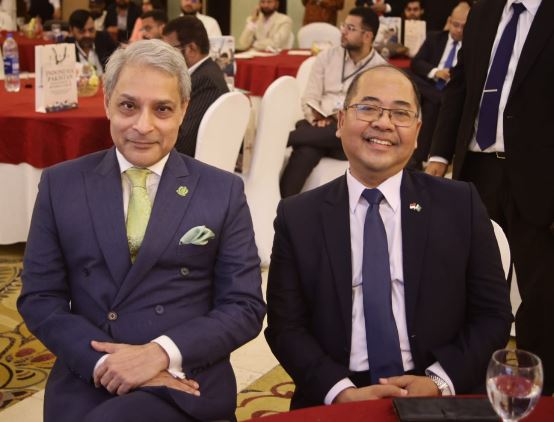
KARACHI, JUL 14 /DNA/ — Indonesia and Pakistan reaffirmed their commitment to strengthening a more balanced, sustainable, and investment-driven economic partnership at the Indonesia–Pakistan Investment and Business Forum held in Karachi.

Organised by the Embassy of the Republic of Indonesia in Islamabad and the Consulate General of the Republic of Indonesia in Karachi, with the support of the Indonesia Investment Promotion Centre (IIPC) Abu Dhabi, the Forum brought together government officials, investment authorities, chambers of commerce, business leaders, investors and academics from both countries.

The opening session featured remarks by H.E. Mr. Mudzakir, Consul General of the Republic of Indonesia in Karachi; Mr. Saquib Fayyaz Magoon, Acting President and Senior Vice President of FPCCI; H.E. Lt. Gen. (Ret.) Chandra W. Sukotjo, Ambassador of the Republic of Indonesia to Pakistan; and the Honourable Syed Murad Ali Shah, Chief Minister of Sindh, who attended as Chief Guest.

In his welcoming remarks, Consul General Mudzakir described the Forum as part of Indonesia’s sustained efforts to connect the business communities of both countries and translate commercial interest into practical cooperation. He highlighted Karachi’s strategic position as Pakistan’s commercial, industrial, financial and maritime centre, and reaffirmed the Consulate General’s role as a facilitator of business information, credible partnerships and market access.

Representing Pakistan’s private sector, Mr. Saquib Fayyaz Magoon highlighted the complementary strengths of both economies and the vast potential of a combined market of more than 520 million people. He called for more diversified trade, stronger business-to-business collaboration, improved logistics, and continued progress toward a Comprehensive Economic Partnership Agreement (CEPA).

Ambassador Chandra W. Sukotjo in his keynote address underscored that Indonesia and Pakistan should transform their longstanding friendship into tangible economic results. He described Indonesia not only as a major market of over 280 million people but also as a manufacturing hub, investment destination, and gateway to ASEAN. He stressed that a future CEPA should provide a comprehensive framework covering trade, investment, services, standards, customs procedures, and supply-chain connectivity.

Chief Minister Syed Murad Ali Shah, as chief guest, reaffirmed Sindh’s commitment to attracting international investment and highlighted opportunities in manufacturing, agriculture, pharmaceuticals, renewable energy, healthcare, infrastructure, logistics, digital technology, and data centres. He encouraged Indonesian businesses to explore partnerships in Sindh and welcomed closer cooperation between governments and the private sector.

The opening ceremony featured the “Resonance of Partnership” Gong Ceremony, symbolising the shared commitment of both countries to deepen practical economic cooperation.

During the business dialogue, Indonesian speakers showcased opportunities in investment, trade, and private-sector collaboration. Mr. Nova Herlangga Masrie, Director of IIPC Abu Dhabi, presented Indonesia’s investment potential in manufacturing, healthcare, renewable energy, food security, downstream industries, and the digital economy. Mr. Bayu Wicaksono Putro, Director of Export and Import Facilitation at Indonesia’s Ministry of Trade, highlighted the importance of trade diversification, improved market access, and closer cooperation toward a future CEPA.

Representing KADIN Indonesia, Mr. Mufti Hamka Hasan described Indonesia and Pakistan as natural strategic partners with complementary economies. He identified food and agribusiness, halal industries, pharmaceuticals, livestock, and the digital economy as promising sectors for future collaboration while encouraging stronger business matching, regulatory cooperation, SME partnerships, and improved logistics.

The Forum concluded with business networking and discussions aimed at translating dialogue into concrete partnerships. The Indonesian Embassy and Consulate General will continue working closely with Pakistani partners, including FPCCI, KCCI, SIFC, the Board of Investment, and KADIN Indonesia, to facilitate follow-up cooperation and expand two-way trade and investment.

The Forum reaffirmed the shared commitment of Indonesia and Pakistan to move beyond traditional trade toward long-term investment, value creation, and sustainable economic growth.

Stay Connected

64FansLike
60FollowersFollow

Latest Reviews

Exchange Rates

USD - United States Dollar
EUR
1.15
GBP
1.34
AUD
0.70
CAD
0.71