Home Blog Page 389

Pakistan women publishers seek government ad payment arrears

Pakistan women publishers seek government ad payment arrears

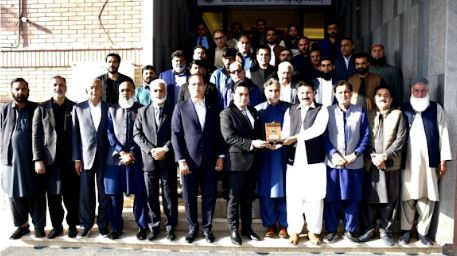
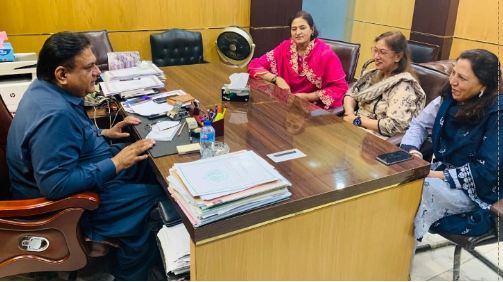
KARACHI, NOV 12 /DNA/ – A delegation of the All Pakistan Newspapers Society (APNS), led by Chairperson of the Women Publishing Committee and Founder & Editor-in-Chief of Monthly Dastak, Fauzia Shaheen, called on Director General, Press and Information Department (PID), Iram Tanveer in her office yesterday.
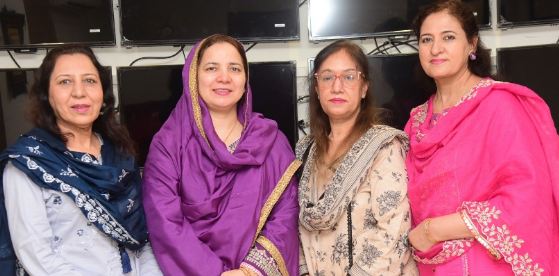
The delegation comprised Zahida Abbasi, Editor-in-Chief of Daily Nau Sijj, Karachi, and Haseena Jatoi, Editor-in-Chief of Daily Moomal, Karachi. During the meeting, the delegation discussed various issues confronting the print media sector and Urdu journals, particularly those related to the fair distribution of government advertisements, the revision of advertisement rates, and the clearance of pending arrears.

DG PID Iram Tanveer gave a patient hearing to all concerns raised by the delegation and assured them of full cooperation from the department in resolving their problems. She emphasized that supporting women-led publications and journals is one of the government’s key priorities. “God willing, these long-standing issues will be resolved very soon,” she assured.

Later, the Women Publishing Committee delegation also met with Director of Advertisements Sindh, Yousif Kabooro, and apprised him of the challenges faced by Urdu journals and women publishers, particularly regarding advertisement allocations and overdue payments.

Kabooro assured the delegation that the Sindh government is fully aware of the financial difficulties being faced by small and women-run publications. He vowed to take serious and immediate steps to resolve the pending issues and ensure timely release of advertisement payments. “Issuing advertisements to women publishers’ journals is our top priority, and we will make every effort to address their grievances without delay,” he added.

The delegation expressed gratitude to DG PID Iram Tanveer and Director Advertisements Sindh Yousif Kabooro for their positive response and assurance of cooperation, terming the meetings productive and encouraging for the future of women-led print media in Pakistan.
Court of arbitration issues clarifications on Pak’s request in Indus Waters Treaty case

Court of arbitration issues clarifications on Pak's request in Indus Waters Treaty case

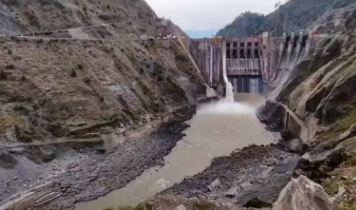
ISLAMABAD, NOV 12 /DNA/ – In a significant development in the ongoing arbitration between Pakistan and India under the Indus Waters Treaty (IWT), the Court of Arbitration has issued a decision providing clarifications on its recent landmark ruling.

According to a press release from the Ministry of Foreign Affairs on Wednesday, Pakistan has taken note of the Court’s recent Decision, which offers “helpful clarification on certain aspects of the Court’s ‘Award on Issues of General Interpretation of the Indus Waters Treaty’.”

The referenced Award, published on August 8, 2025, addressed fundamental legal questions concerning the interpretation of the decades-old water-sharing pact.

In parallel with this clarifying decision, the Court also issued a Procedural Order. Pakistan noted that this order affirms the Court’s commitment to continuing the proceedings in a structured, phased manner. This approach is expected to ensure a thorough and methodical examination of the remaining technical issues in the case.

The arbitration was initiated by Pakistan to resolve longstanding disputes with India over the design and operation of certain hydroelectric projects on the western rivers—the Indus, Jhelum, and Chenab—which are allocated to Pakistan under the IWT. Pakistan has expressed concerns that these projects violate the Treaty’s provisions.

The recent clarifications from the Court of Arbitration are seen as a positive step towards bringing clarity and legal certainty to the implementation of the Treaty. The Ministry of Foreign Affairs stated that Pakistan remains committed to a peaceful resolution of the matter through the mechanisms provided for in the Indus Waters Treaty itself.

The world continues to watch these proceedings closely, as the outcome has significant implications for water security and diplomatic relations between the two nuclear-armed neighbors.

Dar values UAE delegate’s participation at parliament conference

Dar values UAE delegate's participation at parliament conference

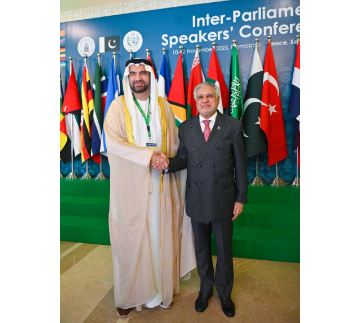
ISLAMABAD, NOV 12 /DNA/ – Deputy Prime Minister/Foreign Minister @MIshaqDar50 met Mr. Ahmed Mir Hashim Khoori, Member of the Federal National Council of the UAE, on sidelines of #InterParliamentarySpeakersConference 2025.

The DPM/FM appreciated Mr. Khoori’s participation and the positive momentum in Pakistan–UAE fraternal relations, reaffirming Pakistan’s commitment to further strengthening cooperation in all areas of mutual interest.

F-8 Markaz to become a model business centre: ICCI

F-8 Markaz to become a model business centre: ICCI

ISLAMABAD, NOV 12 /DNA/ – President, Islamabad Chamber of Commerce and Industry (ICCI), Sardar Tahir Mehmood, has reaffirmed the Chamber’s firm commitment to transform all business centres of the federal capital into model business hubs through concerted efforts and active collaboration with relevant authorities. He said the Chamber is focused on addressing key issues, including encroachments, security, structural upgradation, parking, cleanliness, sewage, and street lighting, to create a modern and business-friendly environment in Islamabad.

He expressed these views while addressing a large delegation of the Traders Welfare Association (TWA) F-8 Markaz, which visited the Chamber under the leadership of its General Secretary Ismail Khan.

Sardar Tahir Mehmood thanked the market representatives for their continued support and cooperation, assuring them of ICCI’s full commitment to resolving their longstanding issues. He said that the Chamber has already taken up major challenges of F-8 Markaz particularly the removal of encroachments and boundary fences to ensure a cleaner, accessible, and vibrant commercial area.

 “We have held several meetings with the relevant departments and initiated concrete steps to remove all illegal structures and obstacles,” he said. “Our collective goal is to restore the true commercial identity of F-8 Markaz and make it a secure, organized, and exemplary business centre.”

On the issue of security, the ICCI President informed the delegation that multiple combing and search operations had been conducted in collaboration by local police in collaboration with the  concerned TWA  to ensure the safety of traders and visitors.

He further announced that one filtration plant has already been installed with the support of former ICCI President Ahsan Zafar Bakhtawari, while another would become fully operational within a month. He reiterated ICCI’s commitment to serve the business community round the clock, saying:

 “With unity, cooperation, and mutual trust, we will make F-8 Markaz a role model for all other markets of Islamabad.”

Speaking on the occasion, Senior Vice President ICCI assured the traders of ICCI’s continued facilitation and efforts to promote an ease of doing business environment across the city. Vice President Mohammad Irfan Chaudhry said that resolving traders’ issues would remain one of the top priorities of the Chamber, urging close coordination between the business community and ICCI for sustainable progress.

Addressing the gathering, President Traders Welfare Association Blue Area, Yousuf Rajput, and President All Pakistan Anjuman-e-Tajran, Ajmal Baloch, lauded Sardar Tahir Mehmood’s dedication and dynamic leadership. They expressed confidence that his tenure would prove to be exemplary, provided the business community remains united in its ranks.

General Secretary TWA F-8 Ismail Khan, Senior Vice President Saeed Khan Swati, Vice President Mohammad Usman, Malik Arif, and other speakers also expressed their confidence in the ICCI leadership. They appreciated the initiatives being undertaken by the Chamber and urged the authorities, particularly the Capital Development Authority (CDA), to address traders’ issues on a priority basis.

Those present on the occasion also included ICCI Executive Members Malik Abdul Aziz, Zulqurnain Abbasi, Umer Khayyam Abbasi, former Senior Vice President Khalid Chaudhry and other.

27th Amendment govt enjoys majority yet couldn’t evolve consensus, says Bilawal

27th Amendment govt enjoys majority yet couldn’t evolve consensus, says Bilawal

Fiaz Chaudhry

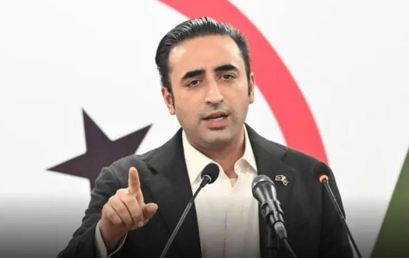
ISLAMABAD, NOV 12 /DNA/ – Pakistan People’s Party (PPP) Chairman and Foreign Minister Bilawal Bhutto Zardari on Wednesday said that while the government enjoys a clear majority in Parliament, it was unfortunate that consensus could not be developed on the 27th Constitutional Amendment. Speaking on the floor of the National Assembly, Bilawal emphasized that the PPP and the coalition government remain fully committed to the Charter of Democracy and to strengthening the parliamentary system in line with constitutional principles.

Bilawal said that the proposed 27th Amendment includes significant reforms, including the establishment of a Constitutional Court to ensure judicial accountability and to prevent overlapping jurisdiction among courts. He said the amendment also seeks to amend Article 243, which deals with the command and structure of the Armed Forces, in order to formally recognize the title of Field Marshal for Pakistan’s military leadership.

Referring to the recent tensions with India, Bilawal said Pakistan’s armed forces had once again proven their professionalism and valor by downing six Indian aircraft. “In this context, giving constitutional cover to the rank of Field Marshal is both symbolic and deserving, especially after Pakistan’s clear defensive victory,” he remarked.

Bilawal reaffirmed that no one could abolish the 18th Amendment, terming it the backbone of Pakistan’s federal structure. “Let me make it clear—PPP will never allow anyone to undo provincial autonomy or reverse the gains of democracy achieved through the 18th Amendment,” he declared, adding that the party has always stood for the protection of people’s rights and devolution of power to the provinces.

The PPP Chairman expressed hope that the opposition benches would act responsibly and become part of the legislative process rather than resorting to politics of confrontation. “It would have been far better if the opposition had chosen to sit with us and help shape this important amendment for the country’s future,” he said.

Bilawal criticized the opposition for being singularly focused on securing the release of their incarcerated leader, former Prime Minister Imran Khan, instead of engaging in meaningful legislative dialogue. “The opposition today seems more interested in individual cases than in national causes,” he observed.

Concluding his address, Bilawal reiterated that the PPP remains committed to dialogue, democracy, and institutional balance, urging all political forces to rise above personal interests and work together for a stronger, more stable Pakistan.

Dengue spread declines to a single digit, 8 new cases reported

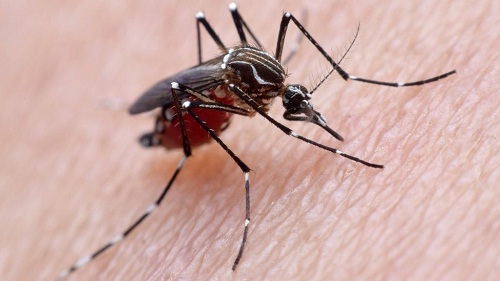
RAWALPINDI, Nov 12 (APP/DNA): The District Health Authority (DHA) Rawalpindi has reported only 8 new dengue cases in past 24 hours, a remarkable decline in the disease spread since August this year. 

According to the latest data released by the health authority on dengue prevention and control, the district’s hospitals have screened 22,725 patients with 1,506 confirmed cases. There are currently 16 confirmed cases admitted in various hospitals, and no deaths reported so far this year.

Vector surveillance teams have checked 6,465,031 houses, identifying 211,148 positive ones. Additionally, 1,896,888 spots were inspected, with 28,997 positive, resulting in 240,145 larvae found.

Enforcement actions for larva detection and SOP violations include 4,833 FIRs, 1,940 sealings, 3,741 challans, and fines amounting to Rs. 11.43 million.

NA debates 27th Amendment as Tarar says bill can be tabled in Senate again if tweak required

NA debates 27th Amendment as Tarar says bill can be tabled in Senate again if tweak required

ISLAMABAD, NOV 12: The National Assembly session resumed on Wednesday with the lower house expected to pass the 27th Constitutional Amendment Bill, tabled by Law Minister Azam Nazeer Tarar on Tuesday.

The proposed tweaks require a two-thirds majority in the 336-member National Assembly for passage. The ruling coalition appears well-positioned to secure the numbers, with the PML-N holding 125 seats, the PPP 74, MQM-P 22, PML-Q four, Istehkam-e-Pakistan Party four, and one seat each held by the PML-Z, Balochistan Awami Party (BAP), and National Peoples Party.

The 59-clause amendment, passed by the Senate on Monday, seeks to overhaul the country’s military and judicial structures. It was moved by the law minister and secured 64 votes in the 96-member House, with no votes against it, as opposition lawmakers boycotted the proceedings and tore up their copies in protest.

Apart from treasury members, ANP’s senators, PTI-backed Saifullah Abro, and JUI-F’s Ahmed Khan also supported the bill. In a surprise move, Abro refrained from joining the protest and later announced his resignation from the Senate.

Achakzai tears copy of bill
As the National Assembly session began today, NA Speaker Ayaz Sadiq referred to the agenda on the 27th Amendment bill and gave the floor to PkMAP chief Mahmood Khan Achakzai.

Addressing the lower house, Achakzai criticised the government, saying it was formed under “Form 47” and questioned the legitimacy of members who had narrowly won elections.

He challenged whether such a parliament should have the authority to amend the Constitution. Achakzai tore a copy of the 27th Constitutional Amendment Bill in the House.

NA speaker reiterates dialogue offer
During the session, National Assembly Speaker Sardar Ayaz Sadiq once again offered opposition parties to hold dialogue with the government.

“As speaker of the National Assembly, I am ready to facilitate negotiations between the government and the opposition. If both sides sit together, solutions will emerge,” he added.

The NA speaker reiterated that Prime Minister Shehbaz Sharif had repeatedly invited the opposition for talks, offering to facilitate dialogue to find solutions.

“Even if nothing comes out on the first day, continuing talks will yield results. My role is to bring the government and opposition to the negotiation table,” said Sadiq.

PTI Chairman Barrister Gohar Ali Khan, while replying to the NA speaker’s dialogue offer, said the party “never gave up on dialogue” and requested permission for KP CM Sohail Afridi to meet PTI founding chairman Imran Khan in jail.

‘Bill can be tabled in Senate again’
While talking to the media, the law minister said voting on the amendment will take place in the house today.

“If any changes are needed, it can be presented in the Senate. If there is any ambiguity, it is better that it is discussed.”

“Only the parliament has the power to amend the Constitution. The constitutional court cannot rewrite it,” he added.

Tarar slams PTI
Information Minister Attaullah Tarar criticised the opposition on Wednesday for rejecting the 27th Constitutional Amendment Bill, accusing them of “selective memory” and “double standards.”

Referring to speeches made by opposition members, Tarar said it appeared they “could not recall anything before 2022” — the year former prime minister Imran Khan was ousted.

He accused the PTI of accepting “fascism” when in power but opposing parliamentary procedures now. “When Parliament — the highest institution — tries to pass a constitutional amendment through legal means and consultation, they have a problem with it,” he said.

“This selective morality, selective justice, double standards — what exactly is their politics other than this?” Tarar questioned.

Tarar accused PTI’s Shehryar Afridi of failing to suggest any “improvements” to the proposed amendment and criticised the party for constantly raising the Form-47 issue after the 2024 general elections.

Highlights of new amendment
Chief of Army Staff to assume role as Chief of Defence Forces
Field Marshal, Marshal of Air Force, Admiral of Fleet titles to remain for life
Federal Constitutional Court to be established
Equal provincial representation approved in Federal Constitutional Court
FCC empowered to take suo motu notice upon petitions
Islamabad High Court to have one judge on FCC bench
President and prime minister to play a key role in judicial appointments
Supreme Court powers to be reduced, with some authorities shifted to the new court
Presidential immunity limited if president assumes any public office after tenure
Judges must serve five years in high court for eligibility of Constitutional Court
Judicial Commission to decide transfer of high court judges
Objections on transfers to be reviewed by Supreme Judicial Council

Fragile Coexistence

Fragile Coexistence

By: Muhammad Asif Saddique

This evening feels like a gentle knock on the door of winter. A cool breeze drifts through the air as I sit by the window of my office, watching the season slowly change. My thoughts wanderto the shifting weather, the passage of time, and the subtle transformations in people, their behavior, their ways of living, and the society around us.

My heart yearns to speak, to pour the words of my thoughts onto the waiting heart of the page. So, I took up my pen to reflect on the social behavior and intricate nexus that shape how people like or dislike one another—how they interact, sometimes unintentionally, and sometimes with deliberate intent. Our daily actions and behaviors collectively shape the evolution of society. It is thought-provoking to ponder why people often struggle to tolerate others, and why they clash over matters that should not affect their lives or livelihoods.

Why are we forgetting the essence of human comfort and ease? Why have we neglected the lessons of our holy faith, which teaches the giving and receiving of ease and compassion? Why has simplicity vanished from our society—and from our minds? I do not write this as satire, but as a bitter and painful truth. In my view, our society is racing at breakneck speed toward the erosion of its values and traditions.It charges ahead like blazing saddles, leading society toward an erosion of empathy.

People spend a large portion of their lives among others, yet we often fail to align with their ways of thinking or grasp the impact of the journey they share with us. Minor conflicts can sometimes become impossibly hard to resolve. Over time, we come to realize that some relationships are like ocean waves—moving together only until they reach the shore. Their meeting with the shore reveals hidden depths, unraveling the mysteries and secrets that once lay beneath. Such moments change the way we think and lead us to analyze people differently, offering insight into how sociality itself continues to evolve.

No society can be brought together, no society held together — whether by sticks or carrot-sweeteners. Behavioral rigidity often hinders the untangling of conflicts and alters one’s perspective on personality and relationships. If people learn to absorb the thoughts and behavioral nuances of others—to listen more, to respect others as they wish to be respected themselves—they can avoid the endless wars of argument. Our lines of thinking may differ, yet our lines of action can align if we truly understand and honor one another’s existence.

As contemplation deepens, it becomes evident that societal harmony depends on accepting diversity with grace rather than on homogeneous thinking. Every individual has an inner world that has been molded by their hardships, experiences, and unspoken tales. Ignoring this inner life results in imperceptible barriers that erode ties within the community. Empathic discourse, not opinion dominance, is the path to true social harmony. Allowing another person’s truth to momentarily inhabit us is a necessary component of true listening, which goes beyond simply hearing what they have to say. This mutual comprehension enhances human interactions by converting surface-level coexistence into a true connection.

The strength of any society rests not in its wealth or power, but in its moral tenderness—in its people’s ability to pause, reflect, and act with conscience. The erosion of empathy begins the moment we value success over sincerity and appearances over authenticity. Perhaps, the revival of compassion lies in returning to simplicity—where kindness is not a grand gesture but a natural reflex, where respect is not demanded but freely given. If we can rediscover the art of living with gentleness—toward ourselves and others—our social bonds may once again find their lost rhythm, and the coldness of modern indifference may slowly melt away into the warmth of shared humanity.

It should serve as food for thought that there must exist a modus operandi that fosters and sustains a modus vivendi respectfully. We should think seriously about finding a practical approach that promotes and upholds a respectful way of coexistence.

Renewables outpace fossil fuels despite US policy shift: IEA

Renewables outpace fossil fuels despite US policy shift: IEA

PARIS, NOV 12 (AFP/APP):Renewable energy is still expanding faster than fossil fuels around the world despite policy changes in the United States, with oil demand possibly peaking “around 2030”, the International Energy Agency said Wednesday.

The Paris-based IEA presented different scenarios for the future of energy in its annual World Energy Outlook — the first since coming under fire from the government of US President Donald Trump over its oil forecasts.

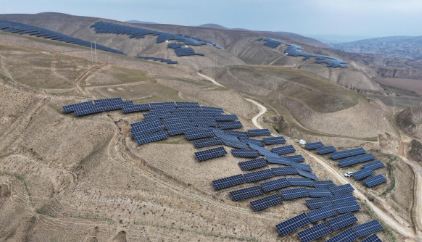
“The pace varies, but renewables grow faster than any other major energy source in all scenarios, led by solar photovoltaics,” the agency, which advises mostly developed nations, said in its 518-page report.

In one scenario, “policy changes mean that the United States has 30 percent less renewables capacity installed in 2035 than in last year’s Outlook, but at the global level renewables continue their rapid expansion”.

The report comes as world leaders meet at the UN’s COP30 climate conference in Belem, Brazil, which Trump and his government have shunned.

Trump, who has pulled out of the Paris climate accord, wants to expand oil and gas production and roll back the clean energy policies of his predecessor, Joe Biden.

The IEA had to walk a fine line when drafting its latest outlook as it has faced criticism from the Trump administration for projecting dwindling demand for fossil fuels.

  US Energy Secretary Chris Wright threatened in July to pull out of the IEA if it did not reform how it operates.

– ‘Politically motivated’ –

The IEA used three scenarios for its World Energy Outlook: one takes into account policies that are currently in place, another looks at “stated” government policies including measures that have yet to be adopted, and a third considers a world that reaches net zero emissions by 2050.

Under the Current Policies Scenario (CPS), oil and natural gas demand would increase by 16 percent to 2035 and rise further through to 2050.

The IEA had dropped such scenarios from its reports in 2020.

“That (CPS) scenario is entirely politically motivated,” Rachel Cleetus, senior policy director at the Union of Concerned Scientists, told reporters at COP30 in Belem.

“The Trump administration, unfortunately, has been setting bad policy in the United States and trying to undermine policy around the world.”

In the IEA’s Stated Policies Scenario (STEPS), oil demand would peak “around 2030” and decline to 100 million barrels per day by 2035 before falling in subsequent years.

In a report in June, the IEA had forecast that global oil demand would fall slightly in 2030, which would mark the first drop since the 2020 Covid pandemic.

The World Energy Outlook said demand for electricity is rising, fuelled by data centres and artificial intelligence in advanced economies and China, along with increasing use of air conditioning in developing countries.

In every scenario, China remains the largest market for renewable energy, accounting for 45 to 60 percent of their global deployment over the next 10 years.

Under every scenario, however, the IEA said the world would exceed 1.5C of warming above pre-industrial levels — the most ambitious goal of the 2015 Paris climate agreement.

“There is less momentum than before behind national and international efforts to reduce emissions, yet climate risks are rising,” the report said.

Under the CPS, warming would exceed 2C around 2050 and 2.9C in 2100 — and then keep rising from there.

In STEPS, warming would exceed 2C by around 2060 and 2.5C by 2100.

But in the net-zero scenario, it would peak at about 1.65C around 2050 and decline slowly after that, before dropping back below 1.5C by 2100, according to the IEA.

The IEA has “confirmed that no single country can stop the energy transition, with oil and coal demand to peak by 2030 in its business-as-usual scenario”, said David Tong, global industry campaign manager at Oil Change International, a non-profit advocacy group.

      “But this year’s report also shows Donald Trump’s dystopian future, bringing back the old, fossil-fuel intense, high pollution Current Policies Scenario,” he said.

ANP leader escapes life attempt in Swat blast

ANP leader escapes life attempt in Swat blast

PESHAWAR, Nov 12 (APP/DNA): Awami National Party (ANP) leader, Mumtaz Ali Khan on Wednesday survived an attempt on his life when a roadside bomb exploded near his car in Shakardara area of Matta, Swat, police informed.

According to police, no casualties were reported in the explosion. The blast occurred near the vehicle of former PK-9 ANP candidate Mumtaz Ali Khan, causing partial damage to the car.

Police said Mumtaz Khan was on his way to attend a funeral when the explosive device, planted about 300 feet from his house, detonated.

A heavy police contingent reached the scene shortly after the incident, and an investigation is currently underway.

It is worth noting that on the same day, the Khyber Pakhtunkhwa government is holding a peace jirga aimed at promoting stability and countering the recent rise in violence in the province.

Stay Connected

64FansLike
60FollowersFollow

Latest Reviews

Exchange Rates

USD - United States Dollar
EUR
1.14
GBP
1.34
AUD
0.69
CAD
0.71