Home Blog Page 386

New toll plazas planned across KP to boost highway revenue: Aleem Khan

New toll plazas planned across KP to boost highway revenue: Aleem Khan
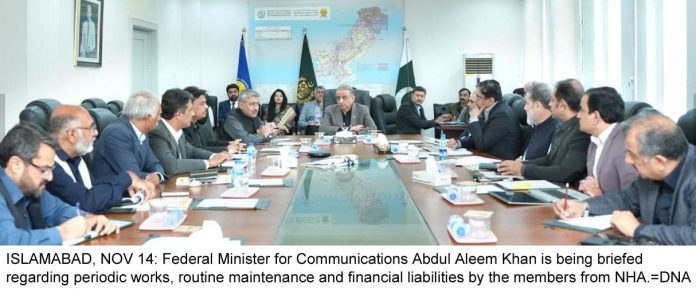
ISLAMABAD, NOV 14: Federal Minister for Communications Abdul Aleem Khan is being briefed regarding periodic works, routine maintenance and financial liabilities by the members from NHA.=DNA
ISLAMABAD, Nov 14 (APP/DNA): Federal Minister for Communications Abdul Aleem Khan on Friday directed the National Highway Authority (NHA) to establish new toll plazas across Khyber Pakhtunkhwa (KP) to enhance revenue collection on highways and motorways in the province.

He was chairing a meeting where concerned members from the National Highway Authority (NHA) briefed the Federal Minister regarding periodic works, routine maintenance and pending financial liabilities at the Ministry of Communications, said a press release.

During the meeting, approval of pending liabilities for various projects was also sought. Federal Minister directed the Secretary Communications to take the Government of Khyber Pakhtunkhwa into confidence and formally communicate with the Chief Minister and Chief Secretary KPK regarding the establishment of new toll plazas across Highways and Motorways in the province.

The Minister stated that revenue collection is essential for the continuation of developmental projects and maintenance activities. He emphasized that the revenue generated from these toll plazas will be reinvested in road network across Khyber Pakhtunkhwa, ensuring that the province directly benefits from the funds collected within its jurisdiction—especially from tourism-related traffic coming from all over Pakistan.
Abdul Aleem Khan further directed the Secretary Communications to personally visit projects with pending liabilities to assess whether approvals should be granted. He instructed that all projects with pending liabilities exceeding one crore rupees (10 million rupees) shall be physically verified by the Secretary Communications and his team before approvals are granted. Payments shall only be made after thorough physical inspection. Responding to reports of vandalism at certain toll plazas, the Federal Minister made it clear that any such acts of damaging toll facilities or Government property will not be tolerated. He directed NHA officials to take immediate and strict legal action against those involved, including the registration of FIRs to deter future incidents.

Aleem Khan further added that he would not allow routine maintenance projects; as such projects often enable corruption. He stressed that officials at all levels must curb corrupt practices to protect the Government exchequer. It is not enough, he noted, for one official to be upright while allowing subordinates to continue corrupt practices. Secretary Communications Mr. Ali Sher Mehsud and other senior officials were also present during the meeting.

Gaza hospital says received 15 Palestinian bodies under ceasefire exchange deal

Gaza hospital says received 15 Palestinian bodies under ceasefire exchange deal

KHAN YUNIS, Nov 14 (AFP/APP): Gaza’s Nasser Hospital in the southern city of Khan Yunis said it received the bodies of 15 Palestinians on Friday as part of the US-brokered ceasefire deal between Israel and Hamas.

In a statement, the hospital said that: “15 bodies of Palestinian martyrs arrived at Nasser Medical Complex as part of the thirteenth batch of the body exchange deal, bringing the total number of bodies received to 330 martyrs.”

  Under the ceasefire deal, Israel was to turn over the bodies of 15 Palestinians for every deceased Israeli returned.

Israel confirmed overnight that militants had returned the remains of Israeli hostage Meny Godard, killed at age 73 the day of the Hamas-led attacks on Israel on October 7, 2023.

    The Israeli military informed Godard’s family that “their loved one has been returned to Israel and that his identification has been completed”, Prime Minister Benjamin Netanyahu’s office said.

At the start of the truce, which came into effect on October 10, Hamas was holding 20 living hostages and 28 bodies of deceased captives.

  It has since released all the living hostages and returned the remains of 25 dead hostages, in line with the ceasefire terms.

   In exchange, Israel has released nearly 2,000 Palestinian prisoners in its custody and returned the bodies of hundreds of dead Palestinians.

Israel has accused Hamas of dragging its feet in returning the bodies of deceased hostages, while the Palestinian group says the process is slow because many are buried beneath Gaza’s rubble after two years of war.

TTAP vows to vigorously protest through all democratic means

TTAP vows to vigorously protest through all democratic means

DNA

ISLAMABAD: The opposition alliance Tehreek-i-Tahafuz Ayeen-i-Pakistan (TTAP) on Friday vowed to vigorously protest through all democratic means to restore the Constitution to its original form in the wake of the passage of the contentious 26th and 27th amendments.

President Asif Ali Zardari gave his assent to the contentious 27th Constitutional Amendment on Thursday, enacting it into law. The TTAP had already ann­o­unced a nationwide protest movement aga­i­nst the am­­end­ment since Sunday and urged the people to take a stand agai­nst the “extremely dark and dangerous” change in the Constitution.

While the 26th Amendment was passed by Parliament during an overnight session in October 2024, with the PTI claiming seven of its lawmakers were abducted to gain their vote as the party opposed the legislation. The Balochistan National Party-Mengal (BNP-M) had also alleged its two senators were being pressured, with both later defying party line to vote in the tweaks’ favour.

In a post on X today, the TTAP said it was holding an emergency meeting at the residence of Majlis Wahdat-i-Muslimeen (MWM) Chairman Senator Allama Raja Nasir Abbas.

In attendance were Qaiser, PTI Chairman Barrister Ali Gohar and Secretary General Salman Akram Raja, Balochistan National Party-Mengal (BNP-M) chief Sardar Akhtar Mengal, Pashtunkhwa Milli Awami Party (PkMAP) Chairman Mahmood Khan Achakzai and others, including Zain Ali Shah, Mustafa Nawaz Khokhar, Ali Asghar Khan, Hussain Akhwandzada, Shahid Khaqan Abbasi and Shaukat Basra.

The members of the meeting later gathered and chanted slogans against the post-amendment Constitution and dictatorship and in favour of PTI founder Imran Khan and democracy.

In a press release issued after the meeting, the alliance said: “TTAP reiterates its resistance and struggle against these unconstitutional amendments and will vigorously protest through all democratic means to restore the Constitution in its original form and demands that the Constitution be restored in its original form.”

It said the amendments were against the basic structure of the Constitution and an attack on a fundamental pillar of democracy — the judiciary — that had subordinated the judiciary to the executive and “destroyed the basic structure of the Constitution” while introducing person-specific changes.

The TTAP said its leaders rejected the amendments and demanded that the Constitution be restored to its original form.

“These controversial constitutional amendments have completely destroyed the judiciary and limited the authority and existence of the Supreme Court,” the TTAP said.

It also hailed the resignations of Supreme Court Justices Mansoor Ali Shah and Athar Minallah as resistance to the “robbery of the Constitution” and paid tribute to judges who upheld their constitutional oath.

Outlining the moves against the 27th amendment, the TTAP said MNAs and senators would march from the National Assembly to the Supreme Court on Monday, a resolution would be presented in the Khyber Pakhtunkhwa Assembly against the 27th amendment and MPAs would march from the Punjab Assembly to the Lahore High Court on Monday with lawyers participating as well.

The TTAP further announced observing next Friday as a ‘black day’ across the country.

In other announcements, the TTAP said it fully supported the declaration of the KP Peace Jirga and demanded its implementation; demanded the immediate release of Imran, his wife and incarcerated PTI leaders and workers, as well as the leadership and members of the Baloch Yakjehti Committee.

The PTI’s Parlia­mentary Commi­ttee previously suggested holding countrywide protests against the passage of the 27th Constitutional Amendment.

Former and sitting judges, as well as lawyers, also voiced opposition to the amendment, particularly citing its implications for the Supreme Court.

Contentious bill

The government’s plan to make a 27th Amendment to the Constitution took shape roughly a year after it managed to get the 26th Constitutional Amendment approved.

In the following months, even though the 26th Amendment remained mired in controversy and continued to face challenges in the court, the power corridors in Islamabad remained abuzz with talk of a possible 27th Constitutional Amendment.

The speculation about whether the government intended to further tweak the Constitution was put to rest when Bilawal announced on social media platform X on November 3 that the government had sought his party’s support for the amendment.

Subsequently, the prime minister also held consultations with other ruling allies to secure support for the controversial amendment.

TRNC marks 42nd anniversary of proclamation in Islamabad

TRNC marks 42nd anniversary of proclamation in Islamabad

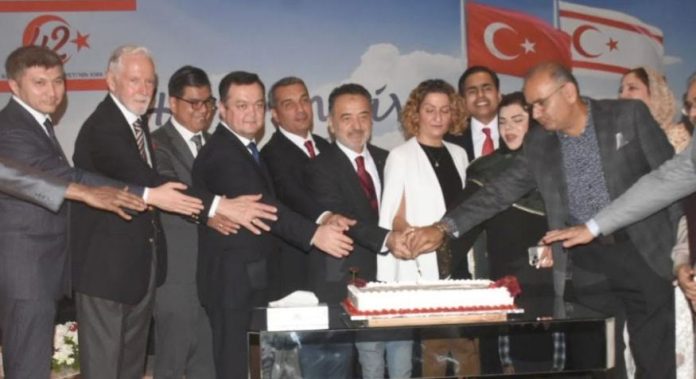
ISLAMABAD, NOV 14 (DNA) — The 42nd Anniversary of the proclamation of the Turkish Republic of Northern Cyprus (TRNC) was celebrated in Islamabad on Friday. with a dignified ceremony attended by diplomats, government officials, and members of the Turkish Cypriot community.

Naeem Cheema from Pakistan’s Ministry of Foreign Affairs, Ambassador of Türkiye Dr. Irfan Neziroğlu, and TRNC Representative in Islamabad Ms. Buket Kop jointly cut a celebratory cake to mark the occasion. Several other distinguished guests were also present at the event.

Speakers highlighted the historic significance of the TRNC’s proclamation and reaffirmed the longstanding ties between Türkiye, TRNC, and Pakistan. The gathering emphasized continued cooperation, mutual respect, and commitment to shared diplomatic goals.

The ceremony concluded with expressions of solidarity and hopes for peace, stability, and development in the region

US, Pakistan discuss economic ties and Gaza peace efforts

US, Pakistan discuss economic ties and Gaza peace efforts

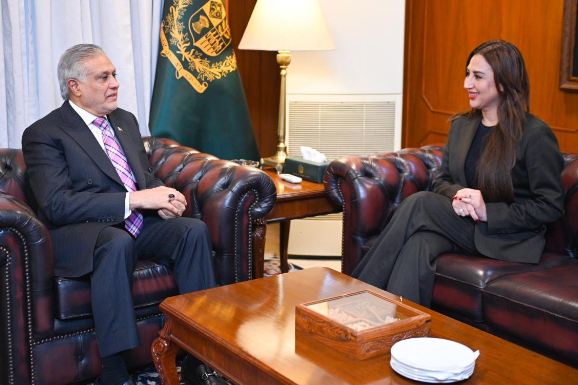
ISLAMABAD, NOV 14 /DNA/ – US Chargé d’Affaires Natalie Baker, called on Deputy Prime Minister/Foreign Minister Senator Mohammad Ishaq Dar @MIshaqDar50 today.

Highlighting the importance of enhancing bilateral economic & investment cooperation, particularly in IT & critical minerals, the DPM/FM welcomed growing interest of U.S. companies to invest in Pakistan, including establishment of the Google Chrome assembly line in Haripur.

Both sides also exchanged views on regional & international developments, including ongoing peace efforts for Gaza.

Rise of the robots: the promise of physical AI

Rise of the robots: the promise of physical AI

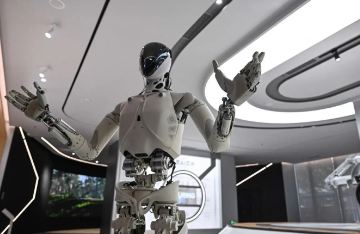
TOKYO, NOV 14 (AFP/APP): A pair of swivelling, human-like robotic arms, built for physical artificial intelligence research, mirror the motions of an operator in a VR headset twirling his hands like a magician.

With enough practice, arms like these can complete everyday tasks alone, says Tokyo company Enactic, which is developing humanoid robots to wash dishes and do laundry in short-staffed Japanese care homes.

Welcome to the future of AI as it starts to infiltrate the material world in the form of smart robots, self-driving cars and other autonomous machines.

“The next wave of AI is physical AI,” Jensen Huang, head of US chip giant Nvidia, said last year.

That’s “AI that understands the laws of physics, AI that can work among us” and understands “how to perceive the world”, Huang added.

 Tech firms are pouring massive sums into physical AI, and Morgan Stanley predicts the world could have more than a billion humanoid robots by 2050.

                  The buzz is only heightened by videos showing advanced androids, often Chinese-made, dancing to Taylor Swift or pulling heavy objects with ease.

                  Beyond the promise of sci-fi robot butlers, the race has sparked concern over job losses, privacy and how long these innovations will take to actually be useful.

                  Hiro Yamamoto is the 24-year-old CEO of Enactic, whose OpenArm physical AI training devices are used by Nvidia and at top universities such as Stanford.

                  He plans to begin deploying new robots, currently under development, from next summer to “live alongside people in environments that are very chaotic, and where conditions are always changing” like care homes.

                  “So it has to be safe,” with a soft exterior that won’t injure anyone, Yamamoto said.

                  – ‘Any human role’ –

                  In the Chinese city of Guangzhou, a female figure with a glowing oval-shaped visor for a face, clad in white woven fabric like a fencing athlete, walked slowly across a stage last week to cheers and whispers.

                  It was the latest humanoid robot to be unveiled by Chinese electric vehicle maker XPeng, which is also pushing into physical AI.

                  Nimble machines made by US companies, such as Boston Dynamics’ dog-like robots, have grabbed headlines over the years.

                  But government support and strong domestic supply chains are helping Chinese rivals, also including Unitree Robotics and EngineAI, race ahead.

                  “I haven’t given much thought to how many robots we will sell annually in 10 years’ time, but I think it would be more than cars,” XPeng CEO He Xiaopeng told reporters.

                  XPeng’s robots walk and even dance autonomously — but how well they handle objects, a more complicated feat, has not been widely demonstrated.

                  Their dexterous fingers and flexible skin are unlikely to replace workers on China’s factory floors soon, He said.

                  The cost of one robot hand, which needs to be replaced regularly for heavy-duty work, could pay a Chinese worker’s salary for years.

                  But with enough data and training, AI humanoid robots could one day perform “almost any human role”, from nanny to home chef or gardener, XPeng co-president Brian Gu told AFP.

                  – On-the-job training –

                  Text-based AI tools like ChatGPT are trained on huge volumes of words, but physical AI models must also grapple with vision and the spatial relationship between objects.

                  For now, remotely operating AI robots to teach them how to do something like picking up a cup “is by far the most reliable way to collect data”, Yamamoto said.

                  Just 30 to 50 demonstrations of each task are needed to fine-tune “vision-language-action” AI models, he added.

                  Enactic has approached several dozen care facilities in Japan to propose that its teleoperated robots take over menial tasks, so qualified care workers have more time to look after elderly residents.

                  This on-the-job experience will train physical AI models so the robots can act autonomously in future, Yamamoto said.

                  US-Norwegian startup 1X is taking a similar approach for its humanoid home helper NEO, which it will deliver to American homes from next year.

                  NEO costs $20,000 to buy, but so far its performance is shaky, with one video in US media showing the robot struggling to close a dishwasher door, even when teleoperated.

                  – Physical limits –

                  In another embarrassing moment, a Russian humanoid robot, said to be the country’s first, staggered then fell flat on its face as it made its debut on stage earlier this week.

                  There is currently a “big gap” between robots’ AI systems and their physical abilities, which lag behind, said Sara Adela Abad Guaman, assistant professor in robotics at University College London.

                  “Nature has shown us that in order to adapt to the environment, you need to have the right body,” Abad told AFP, giving the example of a mountain goat that stumbles on ice.

                  Nevertheless, big deals are being struck, even as booming investment in artificial intelligence feeds fears of a stock market bubble.

                  Japan’s SoftBank recently called physical AI its “next frontier” as it said it was buying industrial robot maker ABB Robotics for $5.4 billion.

                  Automation raises questions about the future of human labour, but Abad is not too worried.

                  At the end of the day, “our sense of touch is incomparable,” she said.

FIA arrests four suspects in banking fraud

FIA arrests four suspects in banking fraud

LAHORE, Nov 14 (APP/DNA): The Federal Investigation Agency (FIA) Commercial Banking Circle Lahore on Friday carried out a major operation against individuals involved in banking fraud,arresting four suspects,including two employees of a commercial bank, for their role in a financial scam worth millions of rupees.

According to the FIA spokesperson,the suspects Mahmood-ul-Hassan,Zeeshan Ishaq,Arshad Ali Tabassum and Bashir Ahmed were involved in approving a fraudulent loan of Rs. 3.9 million through fake documentation.

Mahmood-ul-Hassan and Zeeshan Ishaq,who were serving as Agriculture Finance Officers at the commercial bank, allegedly prepared forged documents and approved a bogus loan in the name of a citizen.

Further investigation revealed that suspect Arshad Ali Tabassum,employed as a Tag Master in a private insurance company,prepared a fake Livestock Insurance Proposal Form and falsely recorded tags for 16 non-existent buffaloes to support the fraudulent loan.

The fourth suspect,Bashir Ahmed,received the fraudulently obtained funds in his bank account, after which the accused distributed the amount among themselves.

All suspects have been arrested and further investigation has been initiated.

President accepts judges’ resignations

President accepts judges’ resignations

Mahnoor Ansar

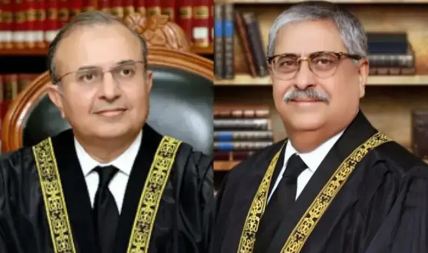
ISLAMABAD: President Asif Ali Zardari has accepted the resignations of Supreme Court judges Justice Mansoor Ali Shah and Justice Athar Minallah. The two judges had submitted their resignations earlier this week amid ongoing debate surrounding judicial reforms and the evolving structure of the superior judiciary.

Their departure marks a significant development for the Supreme Court at a time when major constitutional matters are pending. Official notifications confirming the acceptance of both resignations have been issued, and the process to fill the vacant positions is expected to begin soon.

Sindh CM discusses investment, social uplift with Hungarian, French, Dutch EU ambassadors

Sindh CM discusses investment, social uplift with Hungarian, French, Dutch EU ambassadors

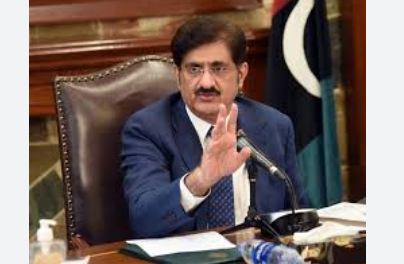
KARACHI, Nov 14 (DNA): A series of high-level diplomatic meetings was held at the Chief Minister’s House on Friday, where Sindh Chief Minister Syed Murad Ali Shah met with the ambassadors of Hungary, France, the Netherlands, and the European Union (EU) to discuss bilateral cooperation, investment opportunities, heritage preservation, and social development initiatives across the province.

The meetings were attended by Special Assistant to CM for Investment Syed Qasim Naveed, Secretary to CM Abdul Raheem Shaikh, senior diplomats, consuls general, and officials from the concerned departments.

Sindh Chief Minister Syed Murad Ali Shah met with Hungarian Ambassador Dr Zoltán Varga to discuss cooperation in water treatment, solid waste management, environment, and technology. Deputy Head of Mission Dóra Gunsberger and Honorary Consul General Makhdoom Omar Shehryar also attended.

The two sides held detailed discussions on the promotion of archaeological sites and cultural heritage, including Mohenjo-Daro, Makli Hills, Chaukhandi necropolis, and other ancient sites of the Indus Civilisation.

The Chief Minister said, “The people of Sindh are heirs to a 5,000-year-old Indus Civilisation. Our heritage reflects the roots of human history.”

He also highlighted Sindh’s identity as the land of peace, shaped by the teachings of Sufi saints who preached love, harmony, and interfaith tolerance. “People of different faiths have lived together in Sindh with respect and brotherhood for centuries,” he said.

Both sides discussed expanding investment opportunities and considered forming joint working groups in education, technology, and environmental cooperation. The Hungarian envoy expressed interest in strengthening bilateral ties.

CM Shah also met French Ambassador Mr Nicolas GALE, accompanied by Consul General Alexis Chahtahtinsky. The two sides discussed cooperation in archaeology, culture, investment, and capacity-building.

They exchanged views on the Asian Civilisations Museum in Paris and agreed to enhance cultural exchange programs. The French envoy expressed special interest in the preservation of Sindh’s archaeological heritage.

The Chief Minister welcomed potential French investment, saying, “There are vast opportunities for French companies in Sindh- particularly in renewable energy and urban development.”

Shah assured full government support for French investors and emphasised collaboration in the agriculture and dairy sectors. The ambassador said French companies are keen to explore mines and minerals in Sindh.

The CM directed the Investment Department to share a detailed list of priority projects with the French Embassy to facilitate future engagements.

The Chief Minister later met Dutch Ambassador Robert-Jan Siegert, accompanied by First Secretary Mr Alexander Akerboom and Honorary Consul General Tariq Khan.

Discussions focused on strengthening bilateral economic ties, with emphasis on water management, agriculture, renewable energy, and education.

The CM said that Karachi, being a major port city, offers vast investment potential. He added, “Sindh’s Public-Private Partnership model is regarded among the best in the world.” He encouraged Dutch firms to explore opportunities in cattle farming, dairy production, and renewable energy, assuring full facilitation for potential investors.   

The Dutch envoy expressed strong interest in expanding investment in multiple sectors and appreciated Sindh’s business outlook.

Ambassador of the European Union: Sindh CM Syed Murad Ali Shah also met EU Ambassador Raimundas Karoblis, with discussions centred on bilateral relations, investment, and ongoing development cooperation.

The EU envoy informed the Chief Minister that a delegation of European investors is expected to visit Pakistan soon. The CM welcomed the initiative, saying, “we look forward to European investors. Their visit will help generate new investment agreements in Sindh.”

The two sides discussed opportunities in marble, granite, minerals, and other high-value sectors.

The CM briefed the ambassador on ongoing rehabilitation work in flood-affected districts and praised the EU for its strong support. “The European Union has played a crucial role in the recovery of flood-hit communities in Sindh,” he said.

They also discussed cooperation in education, healthcare, and skill development programs, and emphasised the need to enhance people-to-people exchanges.

The Chief Minister highlighted Sindh’s deeply rooted tradition of religious harmony and said, “around the world, divisions emerge based on religion, sect, or nationality, but Sindh has always remained a land of tolerance and coexistence.” He added that Sindh is the only province where members of minority communities contest general seats in elections.

The EU ambassador expressed keen interest in Sindh’s ongoing development initiatives, and both sides reaffirmed their commitment to strengthening cooperation.

Through these engagements, Sindh and its international partners Hungary, France, the Netherlands, and the European Union – agreed to deepen collaboration in investment, heritage preservation, culture, renewable energy, agriculture, education, water management, and economic development.

The Chief Minister Syed Murad Ali Shah assured all visiting envoys that Sindh remains committed to providing full facilitation, transparency, and security to foreign investors and development partners.

Experts warn of forces aiming to split Pakistan-China ties

Experts warn of forces aiming to split Pakistan-China ties

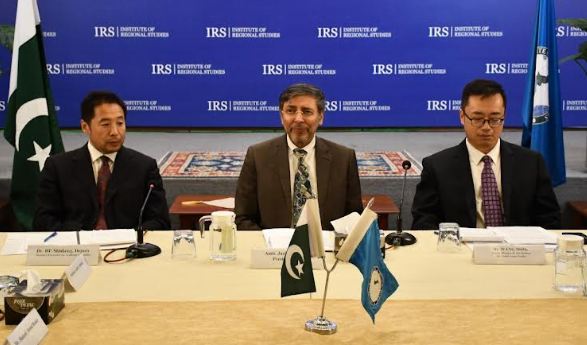
ISLAMABAD, NOV 14 /DNA/ – The Institute of Regional Studies (IRS), Islamabad, organized a high-level roundtable on “Pakistan–China Convergence of Interests in the Evolving Geopolitical Dynamics” with a visiting delegation from the China Institute of Contemporary International Relations (CICIR) and leading policy experts. The discussion focused on the shifting global order and the enduring strategic partnership between Pakistan and China.

In his welcome remarks, Ambassador Jauhar Saleem, President of IRS, outlined the long-standing history of cooperation between Pakistan and China, noting that the relationship has consistently withstood regional and global turbulence and emerged as a stabilizing force in an era of rapid change. He highlighted that the world is undergoing a profound transition driven by artificial intelligence—threatening millions of jobs—alongside the existential challenge of climate change and the reconfiguration of the global economy along more protectionist lines. Ambassador Saleem stressed that East and South Asia, home to half the world’s population, are experiencing accelerated transformation amid U.S.–China competition, Indo-Pacific strategies, and containment efforts that risk provoking a “Thucydides Trap.” He pointed to persistent challenges emanating from India and Afghanistan, affecting Pakistan and other regional states. Despite these pressures, Pakistan–China relations continue to deepen, particularly through economic cooperation under the China–Pakistan Economic Corridor (CPEC), as well as robust defense collaboration, and a shared worldview founded on peaceful coexistence, non-interference, and mutual respect and cooperation.

Dr. Hu Shisheng, Deputy Secretary-General of the Academic Committee at CICIR, observed that the “old world order” is disintegrating while a new one has yet to emerge. He argued that the rule-based international order is weakening and that globalization is receding, citing rising protectionism and tariff barriers. Dr. Hu noted that China’s rise is not only economic but also technological, with the Global South increasingly becoming a significant force in technological innovation. He reflected on new modes of warfare, referencing Pakistan-India clashes, and emphasized the need for integrated defense systems. He also discussed cross-border tensions between Pakistan and Afghanistan, the evolving Pakistan–Saudi relationship, and shifting geopolitical trends in the Middle East and South Asia. While acknowledging the opportunities presented by artificial intelligence, he cautioned against the risks, stressing the need for careful management. Dr. Hu underscored that Pakistan and China must stand together to confront shared challenges such as climate change, trade disruptions, and terrorism, and highlighted the importance of ensuring that CPEC’s second phase becomes a success story centered on industrial development.

Dr. Azhar Ahmad, Professor of International Relations, underscored the natural convergences between Pakistan and China, predicting that these ties will strengthen further. However, he warned that centrifugal forces are working to impede the relationship. He stressed the importance of sustained dialogue and public outreach to ensure that broader society remains informed and supportive of the partnership. Dr. Ahmad expressed optimism about CPEC’s trajectory, noting that regional stability would allow the initiative to expand and deepen.

Dr. Wang Shida, Deputy Director of the Institute for South Asian Studies at CICIR, highlighted the rapidly shifting geopolitical environment. He commended Pakistan’s defense capabilities in deterring aggression and noted the improved relations between Pakistan and Bangladesh following the 2024 change in government. He emphasized the need for practical cooperation across all sectors while underscoring that strategic cooperation remains paramount. Dr. Wang reaffirmed China’s continued support for Pakistan in counterterrorism efforts and called for further strengthening of military collaboration.

Shakeel Ahmad Ramay, from the Asian Institute of Eco-civilization, Research and Development, offered an in-depth reflection on the evolution of diplomacy and economic relations. He contrasted the post-Westphalian diplomatic order with the economic transformations ushered in by successive industrial revolutions—particularly the fourth industrial revolution, which has reshaped global value chains and cooperative models. He argued that Pakistan must elevate its diplomatic approach to align with contemporary economic dynamics. Mr. Ramay posed a critical question: why has Pakistan’s military and diplomatic cooperation with China been exemplary while economic outcomes remain limited? He emphasized the need for stronger implementation mechanisms, noting persistent obstacles in the economic domain. On security matters, he urged a deeper examination of underlying causes, warning that Pakistan has become a central target for anti-China forces seeking to create vulnerabilities around China and undermine its partnerships. He cautioned that such efforts aim to destabilize Pakistan and deter China from expanding cooperation. He concluded that Pakistan and China must work jointly to overcome these challenges, ensuring that economic cooperation matches the strength of their military and diplomatic ties, and called for a rethinking of economic diplomacy to complement strategic alignment.

Dr. Rizwan Naseer, Senior Research Fellow at IRS, stressed that the international community increasingly expects China to play a larger role in global conflict resolution. He argued that China requires a clear strategic vision to complement the Belt and Road Initiative (BRI) and must develop counterbalancing strategies to respond to emerging global challenges. He emphasized the urgency of a coordinated Pakistan–China counterterrorism strategy, noting that such cooperation is essential for regional stability.

The roundtable concluded by reaffirming the shared commitment of Pakistan and China to deepen cooperation across economic, strategic, and security domains, ensuring that their partnership continues to serve as a pillar of stability in an evolving global landscape.

Stay Connected

64FansLike
60FollowersFollow

Latest Reviews

Exchange Rates

USD - United States Dollar
EUR
1.14
GBP
1.34
AUD
0.69
CAD
0.71