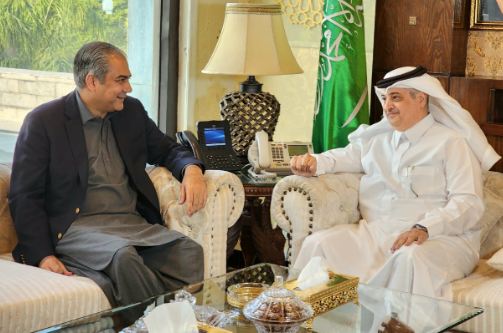
ISLAMABAD, NOV 19 /DNA/ – Federal Interior Minister Mohsin Naqvi met with the Saudi Ambassador to Pakistan, Nawaf bin Saeed Al-Malki. Upon arrival at the Diplomatic Enclave, the Saudi Ambassador was welcomed by Interior Minister Mohsin Naqvi.
During the meeting, Pakistan-Saudi Arabia relations, enhancement of bilateral cooperation, and security matters were discussed. The Saudi Ambassador condemned the suicide bombing near the Islamabad Courthouse and expressed sorrow over the loss of lives caused by the attack.
During the meeting they also expressed satisfaction that the longstanding issue regarding the legal status of Rohingya Muslims between Pakistan and Saudi Arabia has been resolved. The Saudi Ambassador thanked the Government of Pakistan for its positive role in resolving the matter.
A formal agreement on this issue will be signed next week in Saudi Arabia. The discussion also included ways to further strengthen cooperation between the interior ministries of both countries. The Saudi Ambassador said that he is proud of the deep ties with the people of Pakistan.
Federal Secretary Interior Muhammad Khurram Agha was also present on the occasion.
Saudi envoy condemns Islamabad courthouse bombing
HEC builds capacity of KPK varsities reps to strengthen higher education statistics
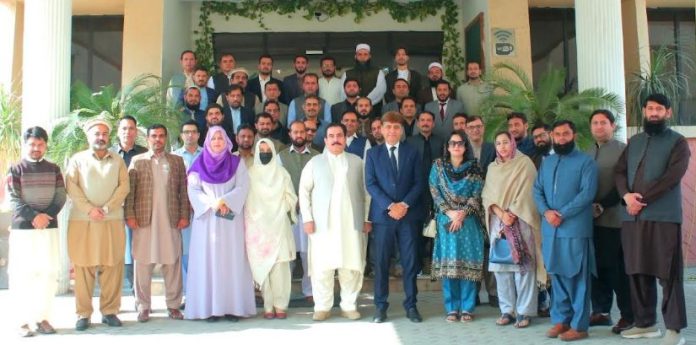
ISLAMABAD/PESHAWAR, NOV 19 /DNA/ – The Higher Education Commission (HEC), Pakistan organised a capacity-building and follow-up session on Higher Education Statistics (HES) and Affiliated Colleges Data at the HEC Regional Centre Peshawar. The session was aimed at enhancing the capacity of focal persons of higher education institutions (HEIs) in Khyber Pakhtunkhwa in developing authentic data.
The two-day session was conducted by HEC’s Higher Education Data Repository (HEDR) Division, focusing on building the technical capacity of focal persons to ensure accuracy, consistency, and timely submission of data for the years 2023–24 and 2024–25.
In the inaugural session, Dr. Bashir Khan, Incharge (HEDR) Division, termed reliable and timely data as the backbone of effective planning, informed decision making, and policy formulation. He stressed the need for efforts to make higher education system modern, integrated, and data-driven.
The first day was dedicated to affiliated colleges’ data. The HEDR team provided individualised technical assistance, addressed institution specific challenges, and offered on-the-spot troubleshooting to facilitate data completion. This engagement enabled HEIs to identify outstanding areas, gain clarity on reporting requirements, and expedite data submission.
This initiative has significantly strengthened the data management and reporting capacity of HEIs and their affiliated colleges, reaffirming HEDR Division’s commitment to enhancing the National Higher Education Statistics Framework and promoting evidence-based decision-making across Pakistan’s higher education sector.
Decent Defeat Chaudhary Sports in PCB Inter-Club Tournament
By our correspondent
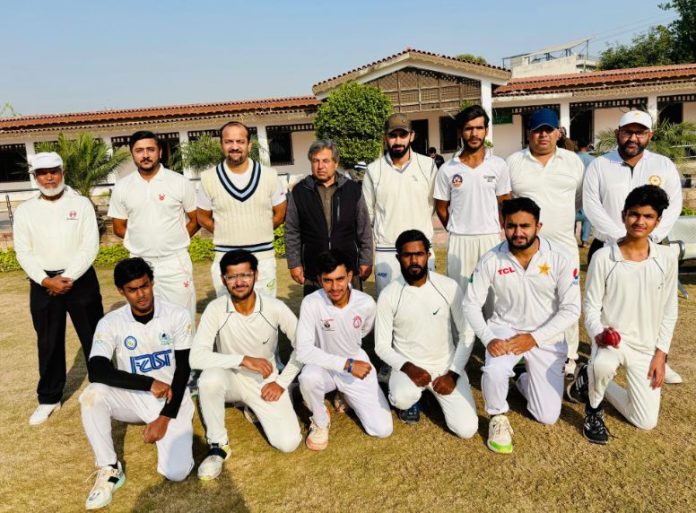
ISLAMABAD, NOV 19: Decent Cricket Club defeated Chaudhary Sports Cricket Club by five wickets in the ongoing PCB Inter-Club Cricket Tournament.
In a low-scoring encounter played at Rawal cricket ground, Chaudhary Sports were bowled out 71 runs in 21.4 overs. Mujeeb ur Rehman top-scored with 24, while Afzal Javed contributed 13 and Abdul Rehman added 10 runs. For Decent Club, the off-spinner Karamat Khan delivered an exceptional spell, claiming five wickets for just 15 runs, while Muhammad Nabi picked up two wickets.
In reply, Decent Club comfortably chased down the target in 11.4 overs, losing five wickets. Firdus Khan played a crucial knock of 38, while Samiullah added 14 runs to steer the team to victory. For Chaudhary Sports, Mujeeb ur Rehman took 2 for 13, while Afzal Javed and Fahim Aslam claimed one wicket each.
Punjab Info minister hosts APNS executives at Lahore dinner
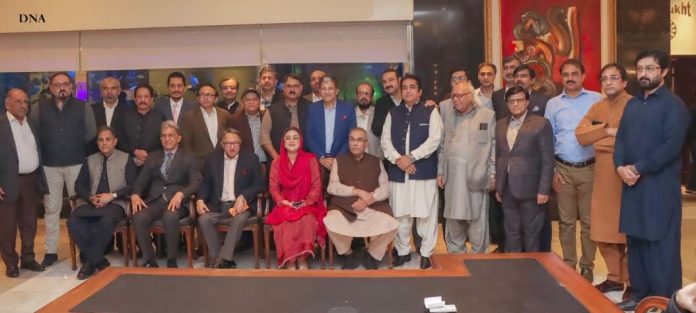
LAHORE, NOV 19 /DNA/ – Punjab Information Minister Azma Bukhari hosted dinner for the Executive Committee of the APNS.
Present in the picture are Information Secretary, Director General PR, Senator Sarmad Ali President APNS, Shahab Zubairi, Mujeeb ur Rehman Shami, Imtinan Shahid, Dr. Tanvir A Tahir, Mohsin Siyal, Munir Jilani, Faisal Zahid Malik, Imran Athar, Naveed Chaudhry, Bilal Mahmood, Hamayun Gulzar, Irfan Athar, Mumtaz Shah, Najmudding Shikh and others. DNA
Saudi–US strategic reset deepens after Crown Prince’s US Visit
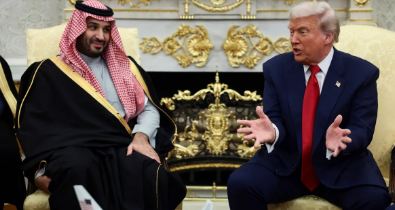
In a landmark moment for US–Saudi relations, Crown Prince Mohammed bin Salman’s recent visit to Washington and his meeting with President Donald Trump has accelerated and deepened a transformative strategic package between the two countries. Once strained by controversies such as the 2018 killing of journalist Jamal Khashoggi, their partnership now appears to be entering a new chapter grounded in mutual economic ambition, defense cooperation, and a pragmatic understanding of past tensions.
During his US trip, MBS and Trump finalized a “historic” Strategic Defence Agreement, reinforcing America’s role as a regional security enabler and streamlining US defense companies’ operations in Saudi Arabia.
Notably, Trump approved a major defense sales package that includes F-35 jets — a long-sought capability by Riyadh. Reports suggest that Saudi Arabia could buy as many as 48 of the jets.
On the economic front, MBS pledged to significantly increase Saudi investment in the United States, taking the figure from an earlier $600 billion commitment to nearly $1 trillion.
This surge underscores the Crown Prince’s ambition to deepen US–Saudi economic ties beyond oil — tapping into sectors like artificial intelligence, infrastructure, and critical minerals.
Indeed, their agenda included agreements on civil nuclear energy cooperation, an AI Memorandum of Understanding, and a framework for critical minerals — each designed to boost industrial and technological collaboration.
Through these deals, the US aims to safeguard its broader supply chains and reinforce its technological leadership, while Saudi Arabia bets on diversification in line with its Vision 2030.
This rapprochement carries strong symbolic weight. MBS’s trip to Washington was his first since 2018, following the global uproar over Khashoggi’s murder. The very fact that such high-stakes cooperation — including advanced arms sales — has moved forward points to a tacit, if uneasy, reconciliation.
Analysts suggest that both sides have quietly agreed to put old grievances on the back burner in favor of strategic gains. While human rights concerns remain alive, there’s a clear signal that they will not derail the renewed partnership. The US continues to voice support for nonproliferation and good governance, but geopolitics appears to be taking priority.
Strategically, the alignment comes at a crucial moment: Riyadh seeks greater security guarantees amid regional volatility, while Washington is eager to deepen ties with a Gulf power that can act as a counterweight in a shifting Middle East. For Saudi Arabia, advanced US military hardware and promises of long-term economic engagement remain indispensable. For the US, securing Saudi capital, access to AI and critical minerals, and strengthened defense ties supports both its economic and security imperatives.
In sum, Crown Prince Mohammed bin Salman’s visit to the United States and his summit with Trump have not just reaffirmed the old alliance — they have reshaped it. What emerges is a more dynamic, high-stakes partnership that seems designed to carry both nations well into the coming decade, even as the shadow of Khashoggi lingers in the background.
Taliban regime must halt TTP support, says EU ambassador
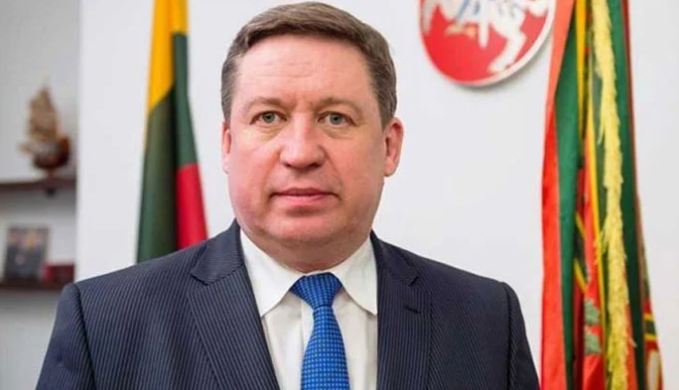
“Pakistan’s call for Taliban to stop TTP from operating on Afghan soil is legitimate,” says Raimundas Karoblis
ISLAMABAD, NOV 19 /DNA/ – The European Union’s Ambassador to Pakistan, Raimundas Karoblis, has voiced strong support for Islamabad’s stance that Pakistan faces real security threats from militant groups based in Afghanistan. Speaking to Pakistani media, the envoy said Pakistan’s demand that the Taliban prevent the Tehreek-e-Taliban Pakistan (TTP) from using Afghan territory was “legitimate and justified.”
“We condemn terrorism in every form,” Karoblis said, emphasising that Pakistan’s concerns regarding TTP sanctuaries across the border were grounded in reality. However, he also underlined that Islamabad must couple its security expectations with concrete progress on human rights and democratic standards, areas closely monitored by the EU.
Karoblis noted that the EU was encouraging Pakistan to sustain diplomatic engagement with Kabul, pointing to Turkiye’s ongoing mediation between the two sides. Responding to a question about whether the Taliban were honouring their Doha commitment not to allow Afghan soil to be used against neighbouring states, he said he did not possess independent intelligence to verify compliance. “It is too early for a definitive conclusion,” he added.
The ambassador confirmed that a high-level Pakistan–EU Strategic Dialogue is scheduled to take place in the coming weeks, led by EU foreign policy chief Kaja Kallas and Deputy Prime Minister Ishaq Dar. The discussions will focus on Afghanistan, the Russia–Ukraine war, regional security and Pakistan’s role at the United Nations. Issues related to trade, migration and counterterrorism will be addressed through separate specialised platforms.
The upcoming dialogue holds particular significance as Pakistan seeks to retain its GSP+ trade preferences, which grant duty-free access to European markets in return for adherence to international human rights conventions.
Karoblis said enforced disappearances — historically concentrated in Balochistan but increasingly reported in Punjab and Sindh — would be among the EU’s “top priorities” in the next monitoring cycle. The bloc will also review the performance of Pakistan’s Commission of Inquiry on Enforced Disappearances.
Commenting on Pakistan’s recent elections — both widely criticised by the opposition — the envoy refrained from declaring them illegitimate but acknowledged shortcomings. “No system is perfect, but irregularities must be addressed so they are not repeated,” he said. He stressed that while the EU recognises the current parliament and government, concerns regarding electoral transparency remain under observation.
Karoblis also avoided taking a position on the recent constitutional amendments affecting judicial powers, saying Brussels was closely following the debate. Compliance with UN treaties, he said, remained the EU’s primary benchmark.
Asked about former prime minister Imran Khan’s detention, Karoblis declined to comment directly. “I may have personal views, but this is a matter for Pakistan’s judicial authorities,” he said. “Political pluralism is important, but it must function within the rule of law.”
The envoy highlighted that the EU and its member states mobilised nearly one billion euros in support for Pakistan following the catastrophic 2022 floods, including an immediate one-million-euro tranche for emergency relief. Under the EU’s Global Gateway strategy, he said, climate resilience and adaptation would continue to be priority areas for future cooperation.=DNA
Pakistan Navy to host 11th amateur golf cup in Lahore
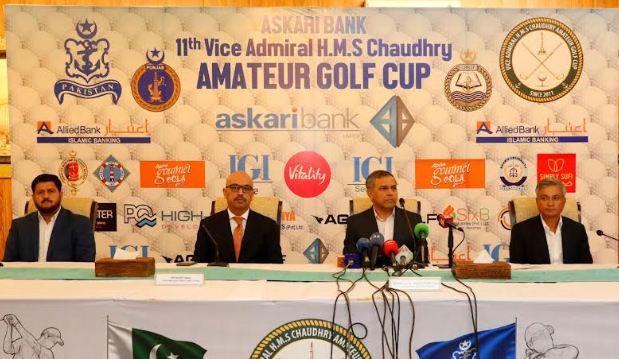
LAHORE, NOV 18 /DNA/ – The media briefing for the 11th Vice Admiral H.M.S. Chaudhry Amateur Golf Cup 2025 was held at Pakistan Navy War College, Lahore. Commander Central Punjab, Rear Admiral Sohail Ahmad Azmie briefed the media on the details of the tournament, scheduled to be played from 20 to 23 November 2025 at Defence Raya Golf & Country Club, Lahore.
While addressing the media, Rear Admiral Sohail Ahmad Azmie stated that Pakistan Navy has been playing a vital role in promoting sports in the country.
This golf cup holds significant importance, and the golf championships organized by Pakistan Navy in Lahore since 2011 are a testament to this fact. Players who took part in previous championships displayed commendable performances, and a tough competition is expected this year as well.
The tournament features three major categories: Amateurs, Seniors, and Ladies. The Amateur category includes players with a handicap of 10 or below, who will play 18 holes daily, competing a total of 54 holes over three days. In the Ladies category, golfers with a handicap of 24 or below will compete over 18 holes. Senior Amateurs, with a handicap of 12 or below, will participate in a two-day competition featuring 36 holes.
Inaugural session of naval medicine seminar 2025 held in Karachi

KARACHI, 18 NOV /DNA/ – The two-day maiden Naval Medicine Seminar 2025 commenced in Karachi, marking a significant milestone in advancing regional collaboration in naval healthcare and maritime medical support. The event is being hosted by Pakistan Navy under the auspices of Western Pacific Naval Symposium (WPNS) and is attended by a large number of foreign delegates from 28 WPNS countries.
While addressing the seminar, Director General Medical Services (Navy), Surgeon Rear Admiral RizwanSadiq highlighted Pakistan Navy’s continued commitment to medical excellence, humanitarian assistance, and the enhancement of international partnerships through knowledge sharing. Later, Commandant PNS SHIFA introduced the seminar’s theme while emphasizing the importance of innovation, leadership, and resilience in shaping modern naval medical practices.
The scientific proceedings of the day featured a diverse range of professional presentations and discussions. The first day’s activities reflected active participation, constructive dialogue, and professional engagement among all delegates, underscoring the importance of collaborative approaches in addressing contemporary challenges in naval healthcare and operational medical support.
The seminar serves as a vital platform for the exchange of ideas, expertise, and best practices in naval medicine, preventive healthcare, and medical readiness at sea, thereby promoting mutual understanding and strengthening professional cooperation among regional navies.
Trump–MBS Pact: F-35s, $600 Billion and the End of Israel’s Monopoly
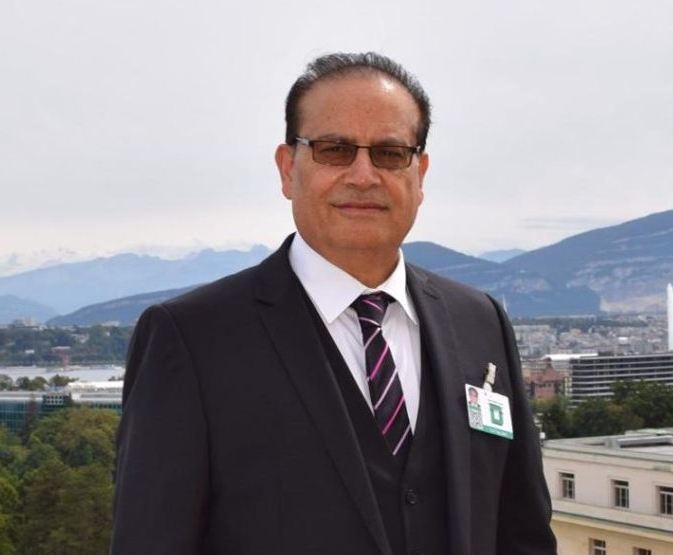
By Qamar Bashir
When Crown Prince Mohammed bin Salman stepped onto the White House lawn on 18 November 2025, it was not just a long-delayed rehabilitation of a controversial leader. It was the opening scene of a transactional revolution: a Saudi-American bargain that combines hundreds of billions of dollars in investment with the transfer of the United States’ most advanced stealth fighter to a second power in the Middle East. According to a White House fact sheet, Saudi Arabia has already committed to invest some $600 billion in the United States over coming years, spanning energy, critical minerals, technology and infrastructure. As part of this week’s visit, officials say at least $20 billion of that will be channelled specifically into U.S. artificial-intelligence data centres and digital infrastructure, locking Saudi capital into the next engine of American power.
Alongside this economic flood comes hard steel. Trump has now publicly confirmed that Washington will sell F-35 Lightning II fighters to Saudi Arabia, ending Israel’s exclusive status as the only F-35 operator in the region. Riyadh has formally requested up to 48 aircraft, a “multi-billion-dollar” package that U.S. officials acknowledge will transform the regional air balance. The precise price tag is still classified, but export precedents are revealing. Australia’s F-35 programme, for example, works out to roughly $160 million per jet once training, spares, depots and support are included. Switzerland’s deal for 36 F-35As is valued at about $7.5 billion, more than $200 million per aircraft when all ancillaries are counted. On that basis, defence economists estimate that a 48-jet Saudi package, with weapons, simulators, basing works and training, could easily fall in the $10–12 billion range, and ultimately cost far more over its multi-decade life.
This mega-deal comes on top of an already staggering pipeline of U.S.–Saudi defence commerce. In May 2017, Trump’s first term began with letters of intent for $110 billion in immediate arms sales and up to $350 billion over ten years. In May this year, his second administration announced a further $142 billion defence cooperation package in Riyadh, billed as the largest in U.S. history, spreading contracts across air defence, missiles, naval security and cyber systems. Add a prospective F-35 tranche of around $10–12 billion, and Trump-era arms frameworks with Saudi Arabia edge toward $260 billion in nominal value, even before counting legacy sales and support. Not all of this will be delivered in full, but the political signal is unmistakable: Saudi Arabia is no longer just a big oil client; it is the premier customer of the U.S. defence-industrial state.
To grasp how disruptive this is, one must recall what Washington’s Middle East doctrine was really about for decades. American strategists had two core goals: keep the oil and trade arteries open, and ring-fence Israel’s security with a lattice of bases, pre-positioned stockpiles and compliant regimes. U.S. aid to Israel reflects that priority. Under a ten-year memorandum of understanding signed in 2016, Washington pledged $38 billion in military assistance between 2019 and 2028—$3.8 billion a year, including $500 million for missile defence. Cumulatively, Israel has received more than $300 billion in U.S. economic and military aid since 1948, making it the largest single recipient of American assistance anywhere in the world. Even today, Israel holds roughly $39 billion worth of active U.S. Foreign Military Sales cases, from precision munitions to missile-defence components.
That hardware has been used with devastating effect in Gaza since October 2023. After Hamas’s attack that killed some 1,200 people in Israel, the subsequent war has, according to the Gaza Health Ministry and UN-cited tallies, killed more than 69,000 Palestinians by early November 2025, with total fatalities across Gaza and Israel now exceeding 71,000. Entire neighbourhoods were levelled, famine conditions took hold, and the word “genocide” moved from activist slogans into the vocabulary of UN officials, human-rights bodies and international courts. In much of the Arab and Muslim world, this confirmed a long-held belief: that American bases in Qatar, Bahrain, Kuwait and elsewhere existed less to protect host countries than to guarantee Israel’s ability to fight, occupy and—when it chose—annex.
In that climate, the Trump–MBS summit is startling because it punctures the aura of untouchability around Israel’s military monopoly. By opening the F-35 club to Saudi Arabia, Washington is no longer treating Israel as the only trusted steward of fifth-generation air power in the region. Instead, the United States is consciously elevating Riyadh into a near-peer, even at the cost of re-arguing Israel’s “qualitative military edge” in Congress and within its own law. The Council on Foreign Relations notes that maintaining that edge has, for years, meant giving Israel the region’s first access to new platforms and then compensating it when others received high-end kit. This time, it is Israel that must watch while another capital is courted with the crown jewels.
The strategic implications are far wider than one procurement line. Saudi Arabia is already deepening security ties with Pakistan, the Muslim world’s only declared nuclear power, and has the financial capacity to buy nearly any conventional system it desires. The F-35 fleet would sit atop an ecosystem of imported missiles, air-defence networks and cyber capabilities, manned by Saudi officers but designed, trained and patched by a rotating cadre of American and allied technicians. In parallel, tens of billions in Saudi AI and tech investments will intertwine its fortunes with U.S. semiconductor fabs, data farms and software platforms. Economic leverage begins to flow in both directions: Washington sells arms and regulatory shelter; Riyadh deploys capital, energy coordination and political cover in a turbulent region.
For the Gulf publics who watched U.S. assets stand aside—or assist—during the destruction of Gaza, this shift carries another message. If the same American system that armed Israel can now empower a Saudi-led axis to say “no” to future adventures, the old equations begin to crack. Arab governments, burned by the realisation that U.S. bases were used primarily to shield Israel rather than their own cities, will be under pressure to tether any future U.S. operations tightly to their national interest. If Israel again contemplates annexation or large-scale attacks on neighbours from whose soil U.S. forces operate, they will not only face resistance from their populations but also from Gulf rulers who can now point to their own F-35 inventories and ask why they need foreign tripwires at all.
This changing geometry does not mean Israel is abandoned. Its cumulative $300-plus-billion aid record, the active $38-billion MOU and fresh wartime top-ups—at least $16.3 billion in extra military support authorised since October 2023—ensure it remains embedded in the American security machine for years to come. But it does mean that the story of a Middle East entirely scripted by Israeli preferences and enforced by American power is fraying. The Trump–MBS handshake, buttressed by the promise of $600 billion in Saudi investment and a prospective $10-plus-billion F-35 package, says plainly that Washington now prices Saudi Arabia not just as a client but as a co-author of regional order.
Critics will rightly point to the moral abyss: the Khashoggi assassination unresolved, political prisoners in Saudi jails, and an American weapons pipeline implicated in tens of thousands of Palestinian deaths. Supporters will counter that arming Saudi Arabia and tying its fortunes to advanced U.S. technology is the surest way to pull it permanently into a U.S.-led orbit and restrain more adventurist actors, from Tehran to non-state militias. Both readings may prove partly true. What is beyond dispute is that the Trump–MBS summit has fused money and metal on an unprecedented scale, producing a relationship where petrodollars, AI clusters and stealth fighters are all strands of the same rope.
For decades, Middle Eastern observers have complained that Washington was effectively “run by Israel,” its regional policy captured by a single small state with a huge lobby. This week’s choreography at the White House does not magically dissolve that perception, but it does crack it. A United States willing to put F-35s in Saudi hands, welcome $600 billion in Saudi investment, and accept some erosion of Israel’s exclusive privileges is no longer acting as a wholly owned subsidiary of anyone. It is, for better or worse, reverting to something more dangerous and more interesting: a great power juggling multiple clients, playing off rival ambitions, and gambling that this time its bet—on Mohammed bin Salman, on Saudi capital, and on a re-armed Gulf—will produce stability rather than another cycle of catastrophe.
By Qamar Bashir
Press Secretary to the President (Rtd)
Former Press Minister, Embassy of Pakistan to France
Former Press Attaché to Malaysia
Former MD, SRBC | Macomb, Michigan, USA
Ahsan Iqbal inaugurates most powerful computing facility of Pakistan at PIEAS

ISLAMABAD, NOV 18 /DNA/ – Federal Minister for Planning, Development and Special Initiatives, Prof. Ahsan Iqbal inaugurated Center for Mathematical Sciences (CMS) along with a state-of-the-art High-Performance Computing (HPC) facility at Pakistan Institute of Engineering and Applied Sciences (PIEAS) here on Tuesday.
Chairman PAEC Dr. Raja Ali Raza Anwar accompanied the minister during the inauguration and showed him various CMS laboratories.
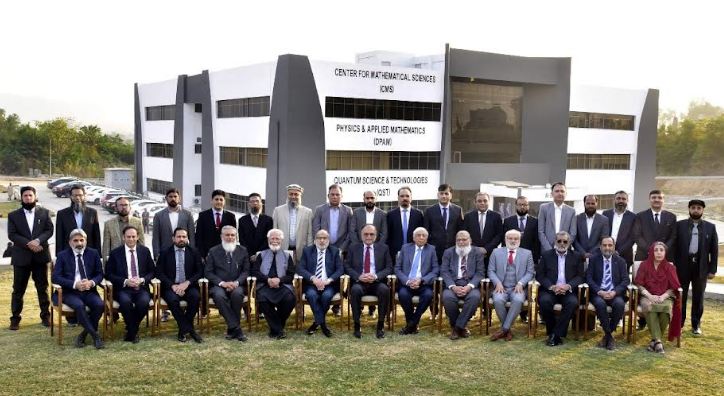
Talking to media persons on this occasion, Prof. Ahsan Iqbal said, “I am very excited to inaugurate the Center for Mathematical Sciences and HPC facility at PIEAS and I would like to congratulate both PIEAS and PAEC for this achievement. It is high time that we start initiatives which serve to improve the stature of our dear motherland rather than prioritising individual impact factors. Universities should focus on introducing such research programmes which help convert the country’s economy into a technology-based economy.”
The CMS and HPC facilities were approved in 2017 under the Vision 2025, he added.
Prof. Ahsan Iqbal further said that successful nations are those that gain high levels of knowledge and technology and this advancement adds to the URAAN Pakistan initiative to have the best research and development facilities in Pakistan.
Chairman PAEC thanked the Federal Minister, Prof. Ahsan Iqbal for his vision, support and patronage to help make this dream come true.
The Center for Mathematical Sciences (CMS) at PIEAS was approved through the Higher Education Commission (HEC) by the special interest of Prof. Ahsan Iqbal back in 2017, during his previous tenure as Federal Minister for Planning and Development.
Major facilities developed under the project included the HPC facility and eight other high-tech specialized laboratories related to Applied Mathematical Sciences and Computational Mathematics. A dedicated Academic Block and a Researchers Hostel have also been developed under this project. The HPC facility developed in the project would serve to bring Pakistan and its universities at par with the infrastructure required for High Performance Computing needed to carry out cutting-edge Mathematical and Applied Research. The long-term benefit of the project is the production of highly trained personnel leading towards technological self-reliance.
With a consistent support from Prof. Ahsan Iqbal, PIEAS has recently commissioned the Al-Khwarizmi HPC Cluster, the most powerful CPU-based computational facility in Pakistan to date.
With a peak performance of 350 TFLOPs, the system includes 58 compute nodes (48 standard and 10 large-memory), 5,104 CPU cores, 40 TB of RAM, and 2 petabyte (2048 TB) of storage, all interconnected via InfiniBand NDR at 200 Gbps. This infrastructure enables scientific modeling, data analytics, AI, simulations, and other compute-intensive research at national scale.
The cluster will serve universities, research institutions, and industry across Pakistan, reducing dependence on overseas facilities and empowering local researchers to address critical national challenges — from climate science and energy to genomics and AI.
Access will be granted through a proposal-based system, with training and support offered to new users. This facility would run in integration with the HPCs being developed by HEC. The facility represents a game-changing resource for advancing Pakistan’s innovation and research ecosystem.
PIEAS is the leading Engineering University of the country working under the aegis of Pakistan Atomic Energy Commission. Established as a ‘Reactor School’ in 1967, PIEAS gained the status of degree awarding institute in 2000.