Home Blog Page 38

Global market demands ethical business practices: IOE Head

Global market demands ethical business practices: IOE Head

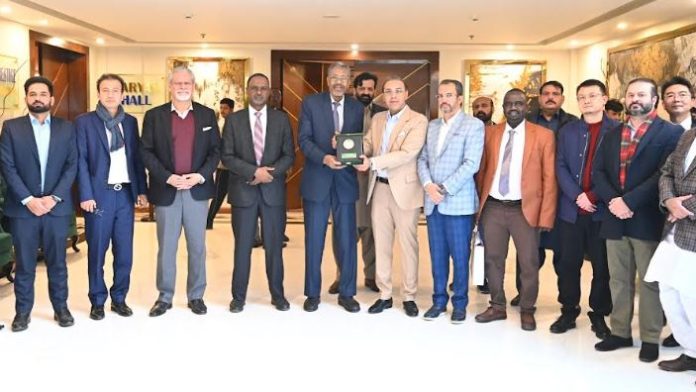
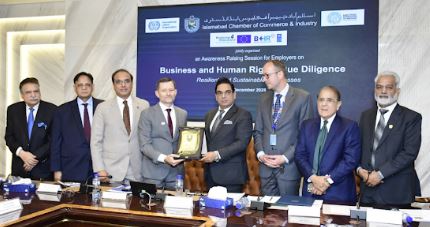
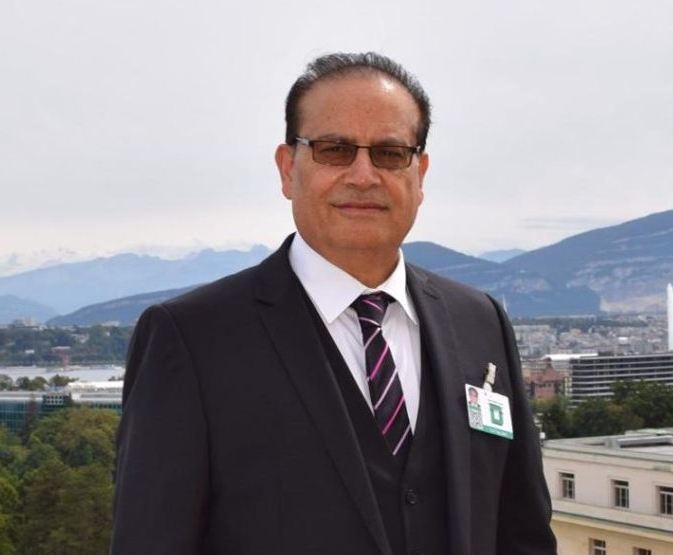
ISLAMABAD, DEC 8 /DNA/ – At the Islamabad Chamber of Commerce & Industry (ICCI), Roberto Suarez Santos, Secretary General of the International Organization of Employers (IOE), delivered a powerful address as the Chief Guest at the Awareness Raising Session for Employers on Business and Human Rights Due Diligence held here on Monday. He underscored the rising global importance of Business and Human Rights, noting that in today’s era of instant information and interconnected markets, a country’s global perception is shaped not only by economic indicators but also by how responsibly its businesses operate. Nations that prioritize ethical practices, transparency, and fairness, he said, attract greater investment, stronger partnerships, and deeper trust from international markets.

The IOE Secretary General emphasized that Human Rights Due Diligence is no longer a technical concept but a core expectation of global buyers, investors, and consumers. For businesses to remain competitive, he stressed, they must demonstrate credibility and engage meaningfully with workers, communities, and supply chains. He highlighted that addressing the systemic root causes of human rights challenges requires a holistic approach that includes improved labor practices, greater access to remedies, safe workplaces, and a culture of respect across industries.

He further noted that sustainability can no longer be separated from human rights, as climate pressures, economic instability, and social vulnerabilities directly shape the long-term viability of enterprises. He urged Pakistani businesses to prepare for global shifts by embracing sustainability, integrating climate considerations into business planning, and strengthening resilience across their value chains.

Speaking on the occasion, President ICCI, Sardar Tahir Mehmood, said that the future belongs to economies that are ethical, responsible, sustainable, people-centric, and aligned with international norms. He announced that ICCI will establish a dedicated Business and Human Rights Working Group in partnership with the International Labour Organization (ILO) and the Employers’ Federation of Pakistan (EFP). This initiative, he added, will help bring Pakistan closer to meeting global expectations and building a transparent, sustainable, and competitive economic landscape. “Together, we can shape a future where responsible business conduct becomes the cornerstone of national progress,” he concluded.

Country Head International Labor Organization (ILO), Geir Tonstol, highlighted the significance of compliance with international standards and showcased the major steps Pakistan has taken toward achieving these objectives.

Malik Tahir Jawaid, President Employers’ Federation of Pakistan (EFP), offered full technical support to ICCI members in improving compliance with international labor standards, responsible business practices, and strengthening the global credibility of Pakistani enterprises.

Chairman Founder Group ICCI, Sheikh Tariq Sadiq, reaffirmed that economic progress and human dignity must advance together. “No business can truly grow if its workforce feels insecure, unheard, or unsupported. Let us commit to a future where business success strengthens human rights,” he said.

Patron-in-Chief EFP, Mian Akram Farid, in his welcome remarks, emphasized that compliance with human rights conditions is now a mandatory requirement for international trade, including the European Union. He stressed that Pakistan’s GSP+ status is tied to compliance with 27 international conventions relating to human rights and labor rights. Senior Vice President ICCI, Tahir Ayub conducted the program.

The Ministry of Human Rights, Government of Pakistan representative elaborated the National Action Plan and highlighted government initiatives and penalties for violations. Former EFP President Majyd Aziz spoke about the importance of Human Rights Due Diligence for the sustainability and long-term growth of businesses.

 Prominent participants included ICCI Council Members Zubair Ahmed Malik, Mohammad Ejaz Abbasi, Chaudhry Waheed ud Din, Khalid Javaid, former Presidents Zahid Maqbool, Mohammad Ahmad, Nasir Khan, SVP Islamabad Industrial Association Mirza Mohammad Ali,  Feroz Alam VP, EFP, Directors Humayun Nazir,  Mohsin Tabani. Ms Sadef Hatif, Dr. Yousuf, Nazar Ali, Secretary General,  market Presidents, trade leaders, and executive members.

Speakers call for unified strategy to advance Kashmir issue globally

Speakers call for unified strategy to advance Kashmir issue globally

ISLAMABAD, DEC 8 /DNA/ – The geopolitical climate after the May 2025 Pakistan-India conflict has created a more conducive environment for Islamabad to advance the Kashmir cause through constructive diplomacy. In this regard, Pakistan’s enhanced regional stature and its strengthening relationship with the US should be leveraged to reinvigorate international attention toward Kashmir in line with UN resolutions. At the same time, Pakistan should exercise caution regarding India’s hegemonic ambitions and shifting strategic alignments in the region.

Such diplomatic openings matter because Kashmir is not a territorial dispute; it is an issue rooted in the denial of the right to self-determination. Despite decades of Indian repression, the Kashmiri people continue to demonstrate unwavering resolve in their pursuit of a just and dignified solution.

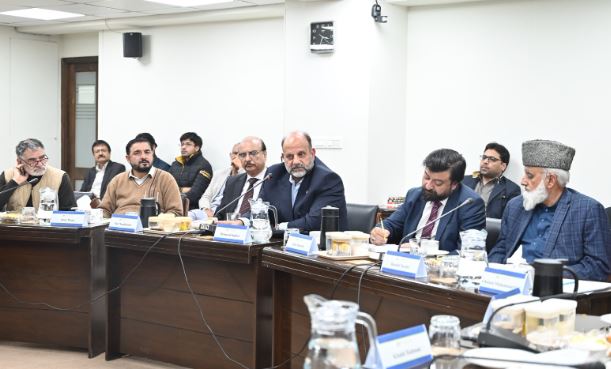
This was observed by speakers representing a diverse set of the Kashmiri diaspora during a session titled “Kashmir: Current Situation and a Possible Future Scenario,” held at the Institute of Policy Studies. The participants included Khalid Rahman, chairman IPS, Ambassador (r) Syed Abrar Hussain, vice-chairman IPS, Dr Waleed Rasool, senior research fellow IPS, Dr Ghulam Nabi Fai, secretary general of the World Kashmir Awareness Forum, and representatives of different Kashmiri-led global awareness forums.

Participants said that before May 2025, Kashmir was a forgotten issue. Despite the efforts of the Kashmiri diaspora across the world, scant attention was paid to the severity of human rights abuses in IIOJ&K. However, following Pakistan’s sweeping victory over India, the Kashmir resistance movement has been internationalized, and its unresolved status as a threat to regional security re-realized.

Speakers suggested that moving forward, building on its political, diplomatic, and military proficiency, Pakistan should leverage its close ties with the incumbent American leadership to resolve the Kashmir issue. To do so, Pakistan’s political leadership should engage with and convince the American leadership to make India abide by the UN resolutions on Kashmir. As part of this engagement, pressure on India should also be created to answer for human rights violations in IIOJ&K and the release of Kashmiri prisoners.

Furthermore, the international community also needs to be sensitized about a nuclear threat in South Asia that would keep looming until India abides by the UN resolutions on Kashmir.

Participants emphasized that the effectiveness of Pakistan’s Kashmir policy would depend on a coherent national position, backed by political consensus and articulated through a comprehensive document for international forums, including the UN and OIC. They called for the formation of a specialized professional team within the Foreign Ministry, both legal and political, to present Pakistan’s case globally with clarity and factual grounding.

Participants discussed the role of the diaspora community and observed that unity within the Kashmiri diaspora is critical for effective global advocacy. The diaspora was urged to engage international institutions and legal forums proactively and to highlight human rights abuses, incarceration of Kashmiri leaders, and demographic engineering in IIOJ&K. Engagement with civil society voices in India, supportive of human rights, was also encouraged.

Concluding the session, participants reiterated that unity among Kashmiris – both within the Valley and across the diaspora – is essential for amplifying their voice. A consolidated platform with a unified message, they stressed, is the need of the hour to counter divisive policies and sustain global awareness regarding the situation in IIOJ&K.

COAS/CDF addresses officers, honors martyrs of Marka-e-Haq

COAS/CDF addresses officers, honors martyrs of Marka-e-Haq

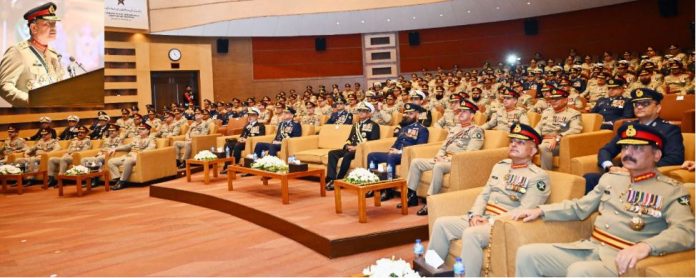
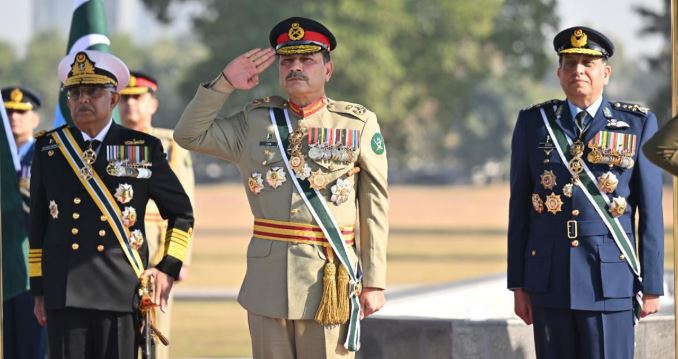
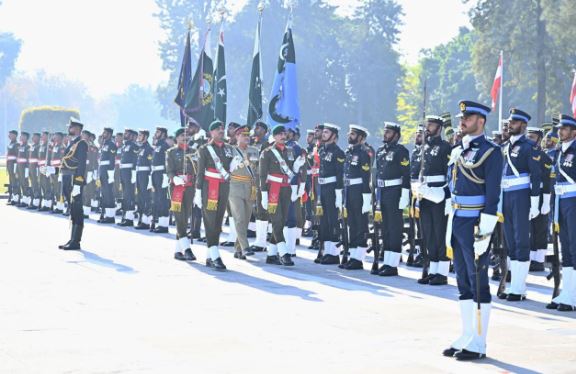
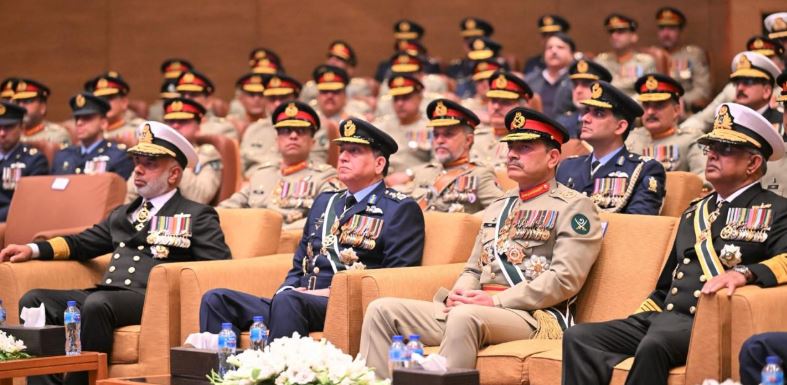
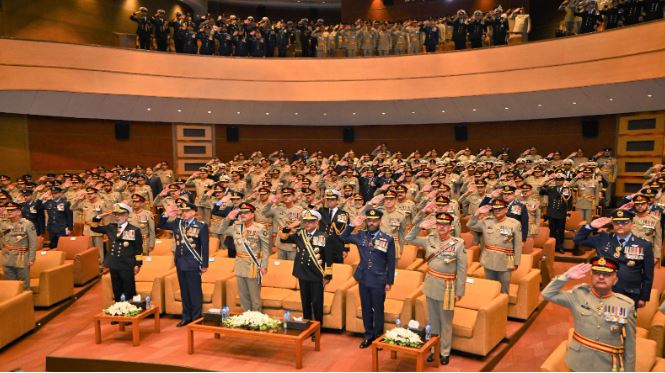
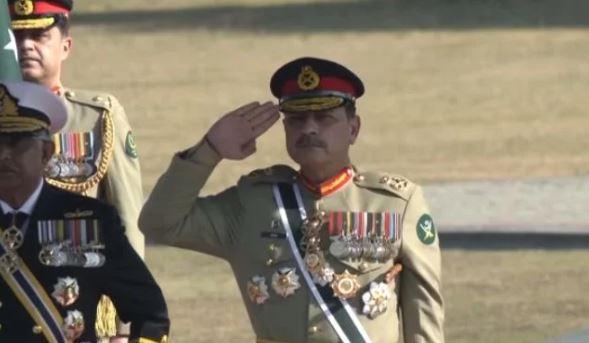
RAWALPINDI, DEC 8 /DNA/ – Field Marshal Syed Asim Munir, NI (M), HJ, Chief of Army Staff and Chief of Defence Forces was presented with Tri Services Guard of Honour at the General Headquarters (GHQ) today to mark the institution of the appointment of Chief of Army Staff and Chief of Defence Forces (COAS & CDF). Admiral Naveed Ashraf, NI, NI(M), Chief of the Naval Staff, Air Chief Marshal Zaheer Ahmed Babar Sidhu, NI (M), HJ, Chief of Air Staff and senior military officers of the three services attended the ceremony.

Chief of Army Staff and Chief of Defence Forces while addressing the officers of the tri services reiterated the extraordinary courage and conviction displayed by the complete Pakistani nation, particularly the professionalism of the valiant men and women of the Armed Forces of Pakistan during Marka-e-Haq. He highlighted that the Multi Domain Operations of Marka-e-Haq have now become a textbook example and case study for future warfare. The COAS & CDF paid deep homage to the martyrs who would always remain the pride of the nation.

Emphasizing on the necessity of a formalized arrangement for tri-services integration and synergy he highlighted that Armed Forces have to remain aligned with the new realities of warfare which are now expanding to an exhaustive array of emerging technologies in cyber space, electro-magnetic spectrum, outer-space, Information Operations, Artificial Intelligence and Quantum Computing. He termed the newly instituted CDF Headquarters as historic, which will afford requisite integration, coherence and coordination to meet the dynamics of future threat spectrum under a tri-services umbrella.

In his closing remarks he encapsulated the vision for the Armed Forces to be a culturally futuristic, combat ready military machine that deters aggression and enjoys full confidence of the Nation.

The ceremony included presentation of awards to the heroes of Marka-e-Haq from Pakistan Navy and Pakistan Air Force to recognize their acts of valour during the war.

Pakistan’s response will be ‘more severe’ next time, CDF warns India at GHQ ceremony

Pakistan's response will be ‘more severe' next time, CDF warns India at GHQ ceremony

RAWALPINDI, DEC 8: Chief of Defence Forces and Chief of Army Staff Field Marshal Asim Munir has warned India of more “severe response” if it resorted to any aggression against Pakistan.

“India should not be in any delusion [as] Pakistan’s response [in case of any aggression] will be even more swift and intense,” CDF Munir said while speaking to the officers of the armed forces following a guard of honour ceremony held at the GHQ to honour him on being appointed as the country’s first CDF.

During the ceremony, the CDF was presented a guard of honour by contingents of all three services — the Pakistan Army, Pakistan Navy and Pakistan Air Force.

The event was attended by the Pakistan Air Force (PAF) Chief Air Chief Marshal (ACM) Zaheer Ahmed Baber Sidhu, Chief of the Naval Staff Admiral Naveed Ashraf and senior officers from all three armed forces.

The Ministry of Defence on Friday issued an official notification for the appointment of Field Marshal Syed Asim Munir as the Chief of Defence Forces (CDF).

The notification was issued a day after President Asif Ali Zardari approved the appointment on the advice of Prime Minister Shehbaz Sharif.

The CDF — who was promoted to the rank of Field Marshal earlier this year — will concurrently serve as Chief of Army Staff for five years

COAS Munir was elevated to the rank of field marshal — Pakistan’s second and the first in more than six decades — following the country’s resounding victory over India in the May war.

The establishment of the new military title, i.e., the CDF, follows President Zardari’s assent on November 15 to the Pakistan Army, Air Force, and Navy (Amendment) Bills 2025, after their approval by parliament.

Under the amended provisions, Article 243, which governs the powers and responsibilities of a Field Marshal, will also apply to any General promoted to the rank.

CDF’s brief profile
Field Marshal and CDF Munir was commissioned in the 23rd Frontier Force Regiment in 1986. He passed out with the 17th Officers Training Course at Mangla.

He has held several key military positions, including directing staff at Command and Staff College, Quetta; brigade major of a deployed infantry brigade in Kel; general staff officer, grade-2 at the CGS secretariat; and chief of staff of Mangla Corps. He also served as Quartermaster General at the General Headquarters.

Field Marshal Munir has commanded the 23rd Frontier Force Regiment and an infantry brigade, and has served as force commander in the Northern Areas, Gilgit.

He has held top intelligence positions, including Director General of Military Intelligence (MI) and head of Inter-Services Intelligence (ISI). After heading ISI, he was posted as Corps Commander Gujranwala and then as Quartermaster General — his last assignment before becoming army chief.

He graduated from Fuji School, Japan; Command and Staff College, Quetta; Malaysian Armed Forces College, Kuala Lumpur; and National Defence University, Islamabad.

He also holds an MPhil in Public Policy and Strategic Security Management from the National Defence University. CDF Field Marshal Munir is the first army chief to be awarded the Sword of Honour.

Bosnia’s Islamic community alarms over intensifying Islamophobic campaign

Bosnia's Islamic community alarms over intensifying Islamophobic campaign

SARAJEVO, DEC 8 /DNA/ – The Islamic Community in Bosnia and Herzegovina has sounded the alarm over what it describes as a coordinated and intensifying Islamophobic campaign aimed at Bosniaks and the state of Bosnia and Herzegovina. In a strongly worded statement, the Riyasat’s Public Relations Office warned the domestic and international public that radical political actors are attempting to manufacture an “Islamic threat” narrative targeting the country’s Muslim population.

According to the statement, right-wing politicians from within Bosnia, the region and beyond have recently amplified hateful rhetoric, while pseudo-academic narratives seek to portray Bosniak identity and Islamic traditions as a danger. The Islamic Community stressed that Islam’s role in Bosniak cultural, social, and political life mirrors the role Christianity plays for other peoples of Bosnia and Herzegovina, as well as in secular European societies.

The statement condemned as “shameful” recent accusations of “demographic opportunism” directed at Bosniaks—particularly given that Bosniaks were victims of genocide and systematic extermination during the 1990s, leaving lasting demographic and social scars across regions where they had lived for centuries.

The Islamic Community expressed deep concern that individuals who openly promote anti-Muslim hatred are being given platforms within state institutions, and that their views are being disseminated through public broadcasters without any official condemnation. It warned that such legitimization of extremist narratives risks further polarizing an already fragile society.

While affirming the importance of open political debate, the Community stressed that this must not serve as a justification for exclusionary or racist ideologies that undermine long-term peacebuilding. “Sowing hatred and distrust, and blaming genocide victims for having survived and for seeking an inclusive and democratic Bosnia and Herzegovina, does not lead to a better future,” the statement noted.

The Islamic Community emphasized that Bosniaks, through their political representatives, do not demand any rights or guarantees for themselves that they are not prepared to ensure for all other peoples and citizens of Bosnia and Herzegovina.

The statement cautioned those attempting to mobilize international opinion against Bosniaks by stoking Islamophobic fears. Such tactics, it said, will only complicate efforts to reach durable political solutions and damage interethnic trust. “The key to peace lies in building confidence and respecting all components of society,” it stressed.

Calling on responsible political leaders, media outlets, academics, and international partners to counter this “malicious campaign,” the Islamic Community underscored the urgent need to protect societal cohesion and mutual trust.

Despite the escalation of anti-Muslim rhetoric, the Islamic Community affirmed that it remains steadfast. Together with its imams, educators, members, and believers, it will continue advocating interreligious dialogue, mutual understanding, and an inclusive vision of religiosity that strengthens unity in diversity.

Pakistani students to participate in JENESYS exchange program in Japan

Pakistani students to participate in JENESYS exchange program in Japan

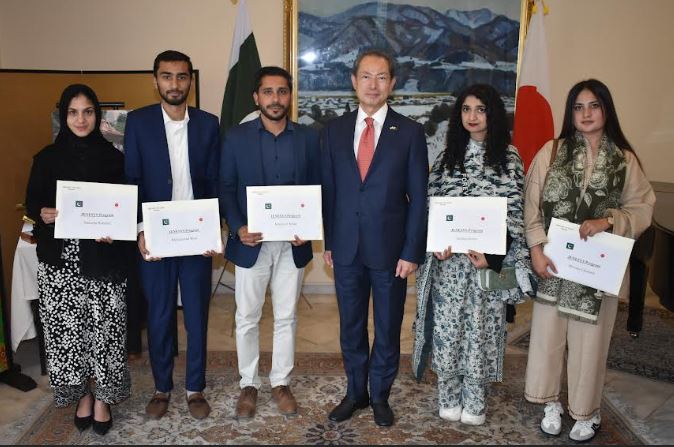
ISLAMABAD, DEC 7 /DNA/ – On the invitation by the Government of Japan, five Pakistani university students will travel to Japan to participate in the JENESYS (Japan-East Asia Network of Exchange for Students and Youths) program. The students are scheduled to visit Japan from December 16 to 23, joining a delegation of 35 high school and university students from SAARC countries. This year’s program centers on the theme “Environmental Sustainability and Disaster Resilience.”

Established by the Japanese Government, the JENESYS program is a youth exchange program between Japan and the Asia Pacific region that seeks to enhance mutual understanding and respect between Japan and the Asia-Pacific region. During their visit, participants will engage in activities designed to deepen their knowledge of Japan’s economy, history, politics, and diplomatic relations. They will also experience Japanese culture through lectures, discussions, and site visits aligned with the program’s theme.

The Embassy of Japan in Islamabad today held a pre-departure orientation session for the visiting students from Pakistan to give them useful information before their departure for Japan.

H.E. Mr. Akamatsu Shuichi, the Ambassador of Japan to Pakistan, while interacting with the students, conveyed his best wishes, and expressed his hopes that the student’s visit would be enriching and encouraged them to maximize this unique learning opportunity.  He highlighted the value of the homestay experience, offering both the students and their Japanese hosts a chance to share and appreciate their respective cultural heritages. Ambassador Akamatsu emphasized the student’s role as cultural ambassadors, fostering stronger ties and greater mutual understanding between Japan and Pakistan.

The JENESYS program is held annually and is designed to foster capacity building but also to nurture mutual understanding and collaboration between the youth of Japan and SAARC countries.

Iran says dual national arrested for spying for Israel

Iran says dual national arrested for spying for Israel

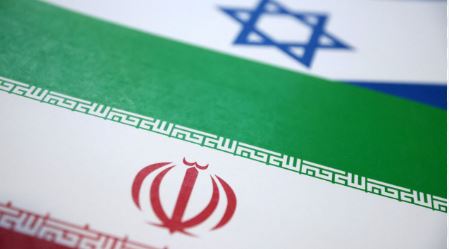
TEHRAN, DEC 8 (AFP/APP): Iran’s judiciary said Monday that a dual national arrested during the recent 12-day war with Israel has been referred to trial on charges of spying for the enemy.

The judiciary’s Mizan Online news agency did not name the defendant, describing him only as a “dual national who lives in a European country” and was arrested in Iran during the June war.

It said an Iranian court has begun hearing his case, in which he is accused of “intelligence cooperation and espionage in the interest of the Zionist regime”.

According to Mizan, the defendant entered Iran one month before the conflict, which erupted after Israel launched an unprecedented attack on Iran, striking military and nuclear sites, as well as residential areas.

That attack triggered a 12-day conflict in which Iran responded with drone and missile strikes on Israel, and later saw the United States join Israel in striking Iranian nuclear sites.

Mizan said investigations indicated the defendant had been in contact with Israel’s Mossad spy agency and had been trained as an agent in “the capitals of several European countries and the occupied territories”.

                  “Sophisticated espionage and intelligence equipment were found at the time of his arrest and in the villa where he was staying,” it added, without elaborating.

                  During the war, Iranian authorities announced at least three arrests of Europeans, including Lennart Monterlos, a 19-year-old French-German cyclist, who was later released.

                  In October, Iran passed a law that toughened penalties for those convicted of spying on behalf of Israel and the United States.

                  The official IRNA news agency reported at the time that “all deliberate assistance is condemned as corruption on Earth” — one of the most serious charges in Iran, punishable by death.

                  Since the war, Iran has vowed swift trials for those arrested on suspicion of collaborating with Israel, announcing multiple arrests of people suspected of spying for Israel and the execution of several people convicted on such charges.

                  Iran does not recognise Israel and has long accused it of carrying out sabotage operations against its nuclear facilities, as well as assassinating its scientists.

                  The June war was the first sustained conflict between Iran and Israel after sporadic tit-for-tat strikes in 2024 that stopped short of open warfare.

                  A ceasefire between Iran and Israel took effect on June 24.

A State in Fear of a Prisoner

Qamar Bashir

Qamar Bashir

Pakistan crossed another dark milestone when the DG ISPR held his politically charged press conference on 4 December 2025 in Islamabad—a briefing that signaled not professionalism, but power; not security, but political domination; not institutional neutrality, but institutional fear. The nation watched as a military spokesperson delivered a fierce ideological assault on an elderly man already locked behind bars: Imran Khan. After nearly three years of isolation, broken communication, severed organizational links, and denied legal relief, he was declared a “national security threat.”

In Pakistan’s political vocabulary, that term is not descriptive—it is fatal. It pushes a political opponent outside the sphere of citizenship and dangerously close to being labelled an “enemy of the state,” a label historically weaponized in Pakistan to justify irreversible outcomes.

The absurdity of branding a man in solitary confinement as a threat to a nuclear state of 240 million has not gone unnoticed. Imran Khan has no access to television, no political machinery left, no communication with his party, no legal recourse, and no presence on the ground. If he still poses a threat, the threat is not him—the threat is the weakness of the system that trembles at the mere idea of him.

This pattern is not new. Pakistan has a long history of producing “security threats” from among its own political leaders—only to resurrect them when circumstances shift.

Nawaz Sharif was declared a security risk, jailed, exiled, stripped of political rights, and disqualified for life. The state projected him as a conspirator, a destabilizer, and a liability. Yet when his utility re-emerged, the same state brought him back on a red carpet, wiped away all convictions, and reinstalled him into political respectability. Benazir Bhutto was repeatedly branded a national danger, exiled, chased through fabricated cases, only to be recalled when political engineering required her. Even Zulfikar Ali Bhutto—executed under the label of being a threat—was posthumously resurrected so completely that his ideology still anchors Pakistan’s largest political dynasty.

The message is clear: in Pakistan, security threats are manufactured, not discovered, and resurrected, not eliminated. Their destruction and their revival carry the same signature—military necessity.

But Imran Khan represents something unprecedented: a man who, even in chains, commands legitimacy that no amount of engineering can fully dissolve. And that is where the danger lies for the establishment. Declaring him a “security threat” is not about politics—it is about preparing public ground for permanent removal, because if imprisonment is insufficient and political erasure is incomplete, the state appears to be contemplating a solution beyond politics.

This chilling conclusion becomes sharper when placed against Pakistan’s newly consolidated military architecture. The political nervousness of the DG ISPR cannot be separated from the creation of the Chief of Defence Forces (CDF) under the 27th Constitutional Amendment. This restructuring abolished the Chairman Joint Chiefs of Staff Committee and placed all armed forces—army, navy, air force, cyber, intelligence, and space—under a single command held by Field Marshal Asim Munir. His tenure, renewable every five years, and his legal status, backed by amendments to the Pakistan Army Act, have created the most centralized military command Pakistan has witnessed in half a century.

In such a system, dissent is not opposition—it is treason. Popular legitimacy is not competition—it is danger. And an imprisoned leader with the loyalty of millions becomes a symbolic threat to a command structure built on totality, continuity, and unchallenged supremacy.

The press conference also revealed another uncomfortable truth. When journalists asked pointed, probing questions—about political overreach, constitutional violations, engineered dismantling of political parties, and the legal basis for calling a prisoner a security threat—the DG ISPR visibly lost composure. He advised reporters to “focus on other issues,” “leave the army alone,” and “not drag the military into unnecessary controversy.” His irritation made one fact undeniable: the most powerful institution in Pakistan now lacks the confidence to face civilian questioning.

The contradictions deepened when the spokesperson insisted, “The state is above the army,” and claimed that “the state will decide the fate” of a man the army has branded a threat. This would have carried weight in a country where parliament legislates independently, courts rule autonomously, and governments govern freely. But in Pakistan’s current reality—where parliament passes military-authored amendments, courts deliver establishment-aligned verdicts, and civilian governments act as administrative arms of GHQ—the claim collapses.

When the DG ISPR says “the state will decide,” he is describing the institution speaking through him. And when the same institution labels a defenseless prisoner as a national enemy, the fate implied is not a political one—it is existential.

Yet even this suffocating structure cannot escape the judgment of history. No authoritarian system—whether apartheid South Africa, military South Korea, communist Czechoslovakia, or pre-independence Bangladesh—has survived the moment when its people realize their rulers fear prisoners more than they fear public collapse. Every regime that declared a man in chains as the nation’s greatest danger eventually fell. And the prisoner, once helpless, became the symbol of national awakening.

A state does not fall because of a man in solitary confinement; it falls because of those who rule through fear and forget that nations ultimately belong to their people. When a government and an entire military hierarchy must be reengineered to contain a prisoner, it is not the prisoner who is powerful—it is the regime that is terrified. No decree, no amendment, no uniform, and no manipulated narrative can suppress the collective will of a nation once awakened. The more the state tries to erase Imran Khan, the more it exposes its own illegitimacy. And when a state trembles before a man in chains, the people eventually realize the chains are not on the prisoner—they are on the nation itself. The day those chains break, the prisoner becomes the leader, and the regime that feared him becomes a footnote in history.

Qamar Bashir
Press Secretary to the President (Rtd)
Former Press Minister, Embassy of Pakistan to France
Former Press Attaché to Malaysia
Former MD, SRBC | Macomb, Michigan, USA

‘Not our fault’: KP CM rejects blame over security lapses, urges policy reform

'Not our fault': KP CM rejects blame over security lapses, urges policy reform

PESHAWAR, DEC 7: Khyber Pakhtunkhwa (KP) Chief Minister Sohail Afridi on Sunday rejected “claims” that his province was negligent in security matters, urging the federal government to change its policies instead.

“They [the federal government] say KP is not serious about security matters… it is not our fault, you should change your policies,” the provincial chief executive said while addressing a public gathering in Peshawar.

He further said that they do not “critique policies for the sake of criticism, but also propose solutions,” vowing to cooperate on matters related to Pakistan’s national interest.

The chief minister further emphasised that KP has governance, citing that the public has elected his party for the third consecutive term. He contrasted that the governance wasn’t there where “the IMF [International Monetary Fund] presented its charge sheet”.

“Rs5,300 billion was not brought from anyone’s personal pocket; it is taxpayers’ money,” Afridi said, adding: “The elite mafia and those who control the country have stolen these funds. We will not let them take it.”

For his part, Pakistan Tehreek-e-Insaf (PTI) leader Asad Qaiser highlighted legal and border issues, saying that the 26th and 27th constitutional amendments have made courts subservient, and that the nation will stand against such measures.

He also said Afghanistan-related challenges reflected failures in federal border policy and urged the government to give peace a chance.

Terrorist attacks have seen a sharp increase in Pakistan, particularly in the bordering provinces of KP and Balochistan since the Afghan Taliban regime came into power.

A police report noted that KP alone recorded over 600 terror incidents, in which at least 79 police personnel were martyred alongside 138 civilians, during the first eight months of 2025.

Islamabad has repeatedly urged Kabul and the international community to address the presence of terrorist safe havens in Afghanistan, including those of the outlawed Tehreek-e-Taliban Pakistan (TTP).

Last month, State Minister for Law Aqeel Malik said that the federal government was considering imposing a governor’s rule in KP, citing poor governance, terrorism and the border situation with Afghanistan.

“The situation in KP is evident to everyone, given the cross-border terrorism and governance issues,” he said while speaking on Geo News’ programme “Naya Pakistan”.

Malik said the federal government was evaluating the move in light of security and safety concerns, as well as national security priorities.

The remarks, however, irked CM Afridi, who dared Centre to impose governor’s rule in his province.

Speaking to Geo News, the KP CM said: “There is no need for any other rule in the province.”

The chief minister said those enforcing “closed-door policies” in KP should realise the consequences of their actions.

PM Shehbaz commends Souriya Anwar’s 50 Years of Service for SOS Children’s Village

PM Shehbaz commends Souriya Anwar’s 50 Years of Service for SOS Children's Village

ISLAMABAD, DEC 7 /DNA/ — The Prime Minister has honoured Mrs Souriya Anwar, outgoing President of SOS Children’s Villages Pakistan, for five decades of voluntary service to orphaned and vulnerable children.

Prime Minister Mian Muhammad Shehbaz Sharif praised her leadership, noting that SOS has grown to 65 projects, caring for 2,600 children, providing subsidised education to 12,500 students, and offering technical training to 1,200 youth each year. He highlighted the support of 25,000 donors as a testament to the trust she built.

The Prime Minister’s message was read by Mr Shahid Hamid at the Annual General Body Meeting and was received with strong applause from all participants.

The Government reaffirmed its support for SOS Children’s Villages Pakistan, and expressed confidence that Mrs Souriya Anwar will continue to guide the organisation in the years ahead.

Mr Shahid Hamid, former Governor Punjab has been elected as the new President of SOS Children’s Villages Pakistan.

Stay Connected

64FansLike
60FollowersFollow

Latest Reviews

Exchange Rates

USD - United States Dollar
EUR
1.17
GBP
1.34
AUD
0.67
CAD
0.73