Home Blog Page 378

ICRC, PRCS convene International Conference to Restore Family Links

ICRC, PRCS convene International Conference to Restore Family Links

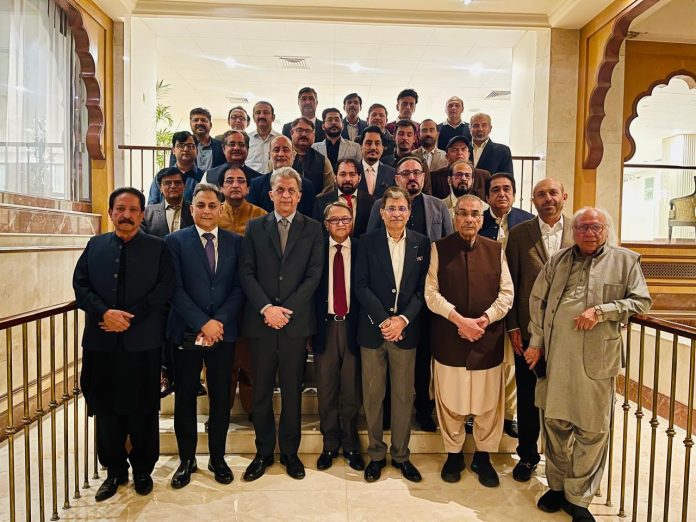
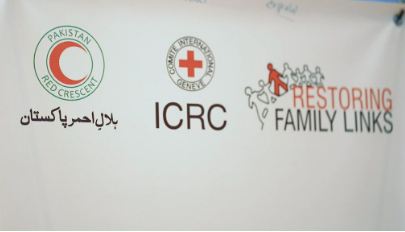
ISLAMABAD, NOV 21 /DNA/ – The International Committee of the Red Cross (ICRC) in collaboration with the Pakistan Red Crescent Society (PRCS) hosted the Global Conference on Restoring Family Links at the PRCS National Headquarters in Islamabad.

Following the successful editions held in 2021 and 2023, the 2025 conference brought together eight families from across Pakistan whose relatives have become separated abroad because of international migration, mainly towards Europe. The event aimed to provide these families a safe space to connect, share their experiences, and strengthen mutual support through a global solidarity network.

Organized by the ICRC’s Central Tracing Agency together with National Red Cross and Red Crescent Societies around the world, the conference serves as a unique international platform for families who have lost contact with loved ones due to natural disasters, international migration, or other humanitarian emergencies.

This year, several conference hubs are being hosted simultaneously by Red Cross and Red Crescent Societies globally, bringing together hundreds of families from diverse contexts to share their stories and learn from each other.

In her remarks, Chairperson PRCS, Mrs Farzhana Naek said that ICRC and PRCS continue to work together under the Restoring Family Links (RFL) program to help people separated from their families following migration, natural disasters, or other humanitarian crises. The program is part of a global effort by the Family Links Network to locate and reconnect separated relatives.

The three-day hybrid conference features a mix of online and in-person sessions, including discussions with experts and families, sharing circles, and presentations on psychosocial support and coping strategies. Participants from Pakistan are connecting virtually with families from around the world, learning how others cope with uncertainty, and exploring the support services available to them.

Families seeking to reconnect with relatives abroad, especially in Europe, can visit www.tracetheface.org an online platform that helps people look for their loved ones.

Yango Pakistan partners with Airblue to redefine Airport Rides

Yango Pakistan partners with Airblue to redefine Airport Rides

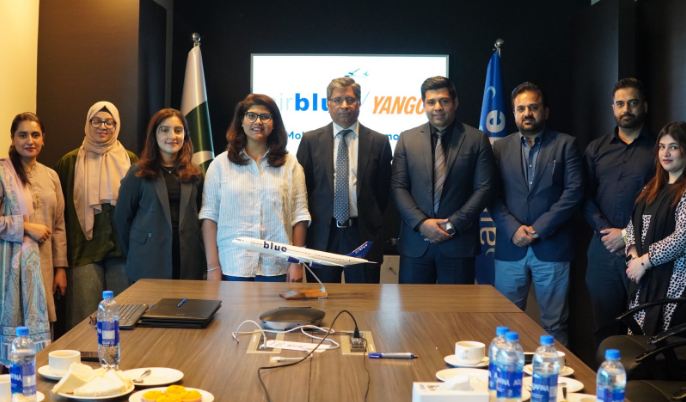
ISLAMABAD, NOV 21 /DNA/ – Yango Pakistan, part of the global tech company Yango Group, has entered into a strategic partnership with Airblue, one of Pakistan’s leading airlines. The partnership is aimed at enhancing the travel experience for passengers through exclusive airport ride discounts and integrated travel touchpoints.

As part of this collaboration, Airblue passengers will be able to enjoy exclusive discounts on rides to and from the airport booked using special promo codes via the Yango app. With this partnership, both Yango and Airblue aim to further create a smooth transition from air to ground travel. Additionally, the partnership also includes dedicated co-branded pocket inserts placed on Airblue flights, alongside cross-brand visibility across digital and offline platforms.

Speaking at the signing ceremony held in Islamabad, Miral Sharif, Country Head of Yango Pakistan, said: “At Yango, we are continuously looking for new ways to make mobility smarter and more accessible for the people of Pakistan. This partnership with Airblue allows us to merge flying and commuting: the two most critical parts of a traveler’s journey, under one seamless experience.”

Commenting on the partnership, Airblue’s representative, Mr Muhammad Shafique – Director Commercial, shared: “Our collaboration with Yango aligns perfectly with Airblue’s longtime commitment to providing value, comfort, and convenience to passengers who opt for our services. Together, we are reimagining how travelers experience connectivity from the moment they land.”

Through this partnership, Yango intends to strengthen its position as a trusted travel companion, ensuring passengers can move conveniently between airports and city destinations of their choice. The initiative also strengthens Yango’s focus on integrating digital mobility with lifestyle services, helping passengers save time, enjoy comfort, and experience the safety and reliability that both brands stand for.

ICCI launches official Podcast Studio

ICCI launches official Podcast Studio

President Sardar Tahir Mehmood calls it a powerful platform for youth and business community

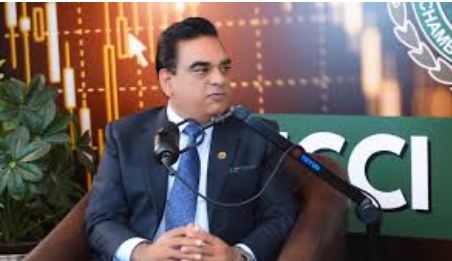
ISLAMABAD, NOV 21 /DNA/ – The Islamabad Chamber of Commerce & Industry (ICCI) has formally inaugurated its official podcast studio and launched its new podcast series aimed at empowering Pakistan’s youth and business community. The inaugural episode featured ICCI President Sardar Tahir Mehmood, who underscored the significance of the initiative as a modern and impactful platform for knowledge-sharing.

Speaking at the launch, Sardar Tahir Mehmood said that the podcast series will serve as a valuable source for young entrepreneurs and professionals by providing them access to the real-world experiences, insights, and success principles of accomplished business leaders. He noted that in a rapidly evolving economic environment, authentic guidance and direction are essential for youth and this podcast aims to bridge that gap effectively.

The ICCI President stated that the series will feature prominent senior businessmen, industrial leaders, and distinguished figures from various fields, who will share their journeys, challenges, and key lessons that shaped their success. Highlighting the concept of introducing Pakistan’s “economic heroes,” he said the podcast will showcase individuals who have made remarkable contributions to the national economy through resilience, innovation, and leadership.

He said that the initiative reflects ICCI’s commitment to promoting a progressive mindset, fostering innovation, and supporting professional development across the business sector.

It is noteworthy that full podcast series will be released soon and made available across all major digital platforms. This will allow a wider audience including youth, entrepreneurs, and students to benefit from the guidance of Pakistan’s leading business personalities.

The business community has described  the ICCI podcast studio  a significant step towards modern communication, enhanced outreach, and the promotion of informed economic dialogue in the country.

Saudi Arabia boosts Pakistan ties with Quran contest

Saudi Arabia boosts Pakistan ties with Quran contest

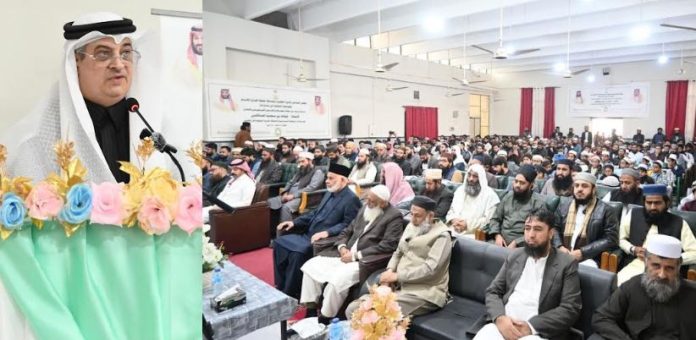
ISLAMABAD, NOV 21 /DNA/ – A grand Qur’an Memorization Competition was organized at Jamia Salfia Islamabad under the patronage of the Saudi Ministry of Religious Affairs and in collaboration with Jamia Salfia. Students from various hifz institutions across Rawalpindi and Islamabad participated in the competition.

The closing ceremony was attended by Ambassador of Saudi Arabia to Pakistan Nawaf bin Saeed Al-Maliki, Sheikh Mutib bin Muhammad Al-Judaie, Director of Religious Affairs at the Saudi Embassy, Dr. Fahd bin Faraj Al-Juhani from Imam University Riyadh, and Dr. Adel Al-Subaie from Imam University as special guests. The event was also graced by Rector Jamia Salfia Hafiz Sheikh Muhammad Shafiq, Sheikh-ul-Hadith Allama Ibrahim Khalil Al-Fazli, along with prominent scholars and dignitaries from Rawalpindi and Islamabad.

Cash prizes were distributed among the students who secured top positions, along with awards for all participants to acknowledge their efforts and dedication.

Addressing the ceremony, Saudi Ambassador Nawaf bin Saeed Al-Maliki said that Saudi Arabia regards Pakistan as a close, brotherly, and trusted partner. He stated that the relations between the two countries are not merely diplomatic but are rooted in shared faith, history, and cultural foundations. In recent years, bilateral ties have grown stronger than ever, with significant progress in economic cooperation, investment, security partnerships, and people-to-people engagement.

He added that, under the special directives of Crown Prince Mohammed bin Salman, Saudi Arabia is expanding its investment, development assistance, and public welfare initiatives in Pakistan with renewed priorities. He emphasized that Saudi Arabia is committed to supporting Pakistan’s economic stability, youth development, and religious as well as cultural programs. This Qur’an Memorization Competition is a symbol of the deep and enduring ties between both nations. Saudi Arabia will continue to stand shoulder to shoulder with Pakistan in every field, and we aim to pass on these brotherly relations to the generations ahead,he added.

Speaking on the occasion, Rector Jamia Salfia Hafiz Sheikh Muhammad Shafiq expressed gratitude to Ambassador Al-Maliki and the Government of Saudi Arabia. He said that such religious, educational, and cultural initiatives play a vital role in bringing the people of both countries closer and further strengthening bilateral friendship and cooperation.

Weekly inflation goes up slightly

ISLAMABAD, Nov 21 (APP/DNA):The weekly inflation, measured by the Sensitive Price Indicator (SPI), witnessed slight increase of  0.07 percent for the combined consumption group during the week, ended on November 20, the Pakistan Bureau of Statistics (PBS) reported on Friday.

According to the PBS data, the SPI for the week under review was recorded at 335.54 points, up from 335.31 points last week. On a year-on-year basis, the SPI rose by 3.53 percent.
The weekly SPI (base year 2015-16=100) covers 17 urban centres and 51 essential items for all expenditure groups.
The SPI for the lowest consumption group (up to Rs17,732) increased by 0.07 percent, rising to 329.13 points from 328.89 points last week.

The SPI for consumption groups of Rs17,733–22,888; Rs22,889–29,517; Rs29,518–44,175; and above Rs44,175 rose by 0.07 percent, 0.04 percent, 0.03 percent, and 0.09 percent, respectively.
During the week, out of 51 items, prices of 16 (31.37%) items increased, 13 (25.49%) items decreased, and 22 (43.14%) items remained unchanged.

Major commodities registering an increase during the week included tomatoes (57.03%), LPG (5.16%), garlic (2.61%), sugar (2.23%), diesel (2.17%), georgette (0.80%), bananas (0.72%), tea prepared (0.59%), firewood (0.26%), vegetable ghee 1-kg (0.21%), beef (0.17%), and mustard oil (0.13%).

Items showing a decline in prices during the week included onions (12.38%), chicken (8.07%), potatoes (5.69%), salt powdered (1.67%), pulse moong (1.62%), wheat flour (1.41%), pulse gram (0.81%), and eggs (0.48%).

On a year-on-year basis, major increases were observed in the prices of sugar (43.77%), gas charges for Q1 (29.85%), wheat flour (17.31%), gur (16.35%), beef (13.45%), firewood (12.52%), bananas (11.81%), diesel (11.66%), vegetable ghee 2.5-kg (9.04%), lawn printed (8.29%), powdered milk (8.17%) and cooking oil 5-litre (7.75%).

Commodities showing year-on-year declines included garlic (36.79%), potatoes (29.56%), pulse gram (29.26%), electricity charges for Q1 (26.26%), tea Lipton (17.79%), pulse mash (15.28%), onions (9.97%), LPG (5.66%), pulse masoor (5.08%) and pulse moong (3.42%).

PM for integrating private-sector proposals into unified industrial policy framework

PM for integrating private-sector proposals into unified industrial policy framework
ISLAMABAD, Nov 21 (APP/DNA):Prime Minister Shehbaz Sharif on Friday directed the relevant ministries and departments to accelerate work 

on integrating private-sector proposals into a unified industrial policy framework, stressing that coordinated
decision-making was essential for sustainable economic growth.

Chairing a meeting of the private-sector committee on national industrial development, he said the government
sought to translate expert recommendations into actionable reforms without delay.

He emphasized that the country’s economic growth, employment generation, and increased income were not
possible without industrial development.

During the meeting, the private sector members of the committee presented their recommendations aimed at
the country’s industrial development and increasing investment in the country, which the prime minister
welcomed and said that the private sector’s proposals were of key importance for the country’s industrial
development.

The business community has diligently prepared comprehensive proposals for industrial development, which
are commendable,” he said adding that after careful review of these proposals, an implementation plan will
be formulated.

The prime minister appreciated these proposals and instructed that they should be merged with recommendations
from other economic sectors and incorporated into the national policy framework.

He said measures to ensure ‘ease of doing business’ and to enhance investment were the government’s top
priorities.

The Pakistani business community supported government policies during difficult times and helped the country
overcome economic challenges, the prime minister said adding that by the grace of Allah, the country’s economic
direction had improved, and Pakistan is moving towards progress.

However, he stressed to work even harder for ensuring national development.

During the meeting, a comparison with regional countries was also shared to highlight ways to increase the competitiveness of Pakistan’s industry.

Federal Ministers Ahsan Iqbal, Jam Kamal Khan, Ahad Khan Cheema, Ali Pervaiz Malik, Advisor to the Prime
Minister Muhammad Ali, Minister of State Bilal Azhar Kayani, Special Assistant Haroon Akhtar, and industrialists
included in the Industrial Working Group led by Saqib Shirazi, attended the meeting.

27th Constitutional Amendment elevates security safeguards for CPEC projects: Chinese Scholar

27th Constitutional Amendment elevates security safeguards for CPEC projects: Chinese Scholar

BEIJING, NOV 21 (APP/DNA): Pakistan’s 27th Constitutional Amendment, which elevates security safeguards for key cooperative projects to a constitutional level, stands as a landmark measure in protecting Chinese investments—especially those under the China-Pakistan Economic Corridor (CPEC), the flagship project of the Belt and Road Initiative (BRI).

This legislative move not only addresses long-standing coordination bottlenecks between Pakistan’s federal and provincial authorities but also reinforces the strategic bedrock of China-Pakistan all-weather strategic cooperative partnership.  

These views were expressed by Prof. Cheng Xizhong, Senior Research Fellow at the Charhar Institute, a non-governmental Chinese think-tank on diplomacy and international studies based in Beijing.

He said that the core value of this amendment lies in its systematic optimization of security governance. Prior to its enactment, overlapping command structures among Pakistan’s military, police and provincial security forces often led to bureaucratic delays in responding to security threats. The amendment abolishes these redundant mechanisms and establishes a unified security command system, ensuring swift and coordinated responses.

For Chinese investors, this institutional overhaul has delivered immediate and tangible benefits. The Karachi-Lahore Motorway expansion project, once hindered by prolonged security assessment procedures, recently obtained approval within just three months, with construction progressing 30% ahead of the original schedule. Similarly, the Gwadar Port Free Trade Zone, a vital node of CPEC, has accelerated its expansion plan, with three new industrial parks under construction to accommodate Chinese enterprises in logistics and manufacturing, he added.

Prof Cheng said that more importantly, the amendment explicitly designates CPEC as a “national top priority,” legally binding all government agencies to prioritize project implementation—greatly consolidating investor confidence.

Beyond safeguarding existing projects, the amendment’s essence—linking national stability with cooperative security—sets a pioneering precedent. As Chinese investment in Pakistan expands into emerging sectors like high-tech industrial parks and textile processing zones, this security framework provides a reliable guarantee for new collaborations. It also serves as a valuable model for Belt and Road cooperation globally, proving that targeted institutional innovation can effectively mitigate cross-border investment risks and enhance the sustainability of international cooperation, he added.

Trump’s 28-point Ukraine plan

Trump's 28-point Ukraine plan

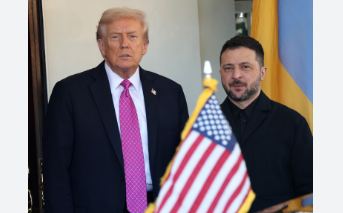
WASHINGTON, NOV 21 (AFP/APP): A draft 28-point plan backed by US President Donald Trump would require Ukraine to offer territorial and security concessions to Moscow, while Russia would be readmitted to the G8 group and receive sanctions relief.

Trump’s special envoy Steve Witkoff and Secretary of State Marco Rubio had been “quietly” working on the plan for around a month, according to White House Press Secretary Karoline Leavitt.

Ukrainian President Volodymyr Zelensky said he expected to discuss the plan with Trump “in coming days.”

Here is the 28-point plan, according to a draft reviewed by AFP:

1. Ukraine’s sovereignty will be confirmed.

2. A comprehensive non-aggression agreement will be concluded between Russia, Ukraine and Europe. All ambiguities of the last 30 years will be considered settled.

3. It is expected that Russia will not invade neighboring countries and NATO will not expand further.

4. A dialogue will be held between Russia and NATO, mediated by the United States, to resolve all security issues and create conditions for de-escalation.

  5. Ukraine will receive reliable security guarantees.

6. The size of the Ukrainian Armed Forces will be limited to 600,000 personnel.

7. Ukraine agrees to enshrine in its constitution that it will not join NATO, and NATO agrees to include in its statutes a provision that Ukraine will not be admitted in the future.

8. NATO agrees not to station troops in Ukraine.

9. European fighter jets will be stationed in Poland.

10. The US will receive compensation for the security guarantee. If Ukraine invades Russia, it will lose the guarantee. If Russia invades Ukraine, in addition to a decisive coordinated military response, all global sanctions will be reinstated, recognition of the new territory and all other benefits of this deal will be revoked. If Ukraine launches a missile at Moscow or St. Petersburg without cause, the security guarantee will be deemed invalid.

11. Ukraine is eligible for EU membership and will receive short-term preferential access to the European market while this issue is being considered.

12. A powerful global package of measures to rebuild Ukraine, including the creation of a Ukraine Development Fund, rebuilding of Ukraine’s gas infrastructure, the rehabilitation of war-affected areas, development of new infrastructure and resumed extraction of minerals and natural resource, all with a special finance package developed by the World Bank.

13. Russia will be reintegrated into the global economy, with discussions of lifting sanctions, rejoining the G8 group and entering a long-term economic cooperation agreement with the United States.

14. $100 billion in frozen Russian assets will be invested in US-led efforts to rebuild and invest in Ukraine, with the US receiving 50 percent of the profits from the venture. Europe will add $100 billion to increase the amount of investment available for Ukraine’s reconstruction. Frozen European funds will be unfrozen, and the remainder of the frozen Russian funds will be invested in a separate US-Russian investment vehicle.

15. A joint American-Russian working group on security issues will be established to promote and ensure compliance with all provisions of this agreement.

16. Russia will enshrine in law its policy of non-aggression towards Europe and Ukraine.

17. The United States and Russia will agree to extend the validity of treaties on the non-proliferation and control of nuclear weapons, including the START I Treaty.

18. Ukraine agrees to be a non-nuclear state in accordance with the Treaty on the Non-Proliferation of Nuclear Weapons.

19. The Zaporizhzhia Nuclear Power Plant will be launched under the supervision of the the International Atomic Energy Agency (IAEA), and the electricity produced will be distributed equally between Russia and Ukraine.

20. Both countries undertake to implement educational programmes in schools and society aimed at promoting understanding and tolerance.

21. Crimea, Luhansk and Donetsk will be recognised as de facto Russian, including by the United States. Kherson and Zaporizhzhia will be frozen along the line of contact, which will mean de-facto recognition along the line of contact. Russia will relinquish other agreed territories it controls outside the five regions. Ukrainian forces will withdraw from the part of Donetsk Oblast that they currently control, which will then be used to create a buffer zone.

22. After agreeing on future territorial arrangements, both the Russian Federation and Ukraine undertake not to change these arrangements by force. Any security guarantees will not apply in the event of a breach of this commitment.

23. Russia will not prevent Ukraine from using the Dnieper River for commercial activities, and agreements will be reached on the free transport of grain across the Black Sea.

24. A humanitarian committee will be established to resolve prisoner exchanges, remains returned, hostages and civilian detainees returned, and a family reunification program will be implemented.

25. Ukraine will hold elections in 100 days.

26. All parties involved in this conflict will receive full amnesty for their actions during the war and agree not to make any claims or consider any complaints in the future.

27. This agreement will be legally binding. Its implementation will be monitored and guaranteed by the Peace Council, headed by US President Donald Trump. Sanctions will be imposed for violations.

28. Once all parties agree to this memorandum, the ceasefire will take effect immediately after both sides retreat to agreed points to begin implementation of the agreement.

Three years on, PM’s announcement on ad rate increase still unimplemented: APNS

 DNA

KARACHI: The APNS expressed its dismay on consistent indifference of the Federal Government to notify and implement the decision of the Prime Minister, Mian Muhammad Shehbaz Sharif to increase Government advertisement rates of newspapers.

The Prime Minister in his last tenure had publicly announced his decision of increase in the Government advertisement rates and also repeated the same in his present tenure but despite delay of 3 years, the decision is yet to be implemented. This delay has caused severe financial crunch to the newspaper industry, stated a press release.

The Executive Committee of the All Pakistan Newspapers Society at its meeting held at Lahore under the Chairmanship of its President, Senator Sarmad Ali considered the problems faced by the print media and urged upon the Press Information Department to clear outstanding dues pertaining to advertisements of the Federal Government released during the period from April 2020 to June 2025 at the earliest.

Punjab Secretary Information, Mr. Tahir Raza Hamdani, DGPR Mr. Fareed Ahmed and DG, PID Lahore Mr. Shafqat Abbas attended the meeting on special invitation. The members apprised the officials on the payment issues faced by publications based in Punjab.

It was pointed out that approximately PKR 220 million is currently due with DGPR towards print dues. Further the members expressed their concern on an outstanding amount of 730 million that has been received at DGPR and is yet to be disbursed to newspapers for the fiscal years 2024-25. The members requested that these dues be disbursed to newspapers at the earliest.

The Secretary assured that the outstanding amount will be cleared by the end of December this year and efforts for recovery of dues from Provincial Government departments have also been accelerated. He hoped that a large amount will be cleared by the next month. He stated that the amount currently under litigation is in the process of reconciliation, and updates will be provided once the process is completed.

The members appreciated the Chief Minister Ms. Maryam Nawaz Sharif, the Information Minister, Ms. Azma Bukhari and Secretary Information for addressing the most disturbing issue of restrictions on the release of IPL tenders to newspapers. The members also appreciated Secretary Information and DGPR for streamlining the payment to print media.

The members approved the report of advertising committee on applications of advertising agencies. The Executive Committee unanimously approved grant of provisional accreditation to the following agencies:

M/s. Adventure Media Marketing (SMC-Pvt.) Ltd. Islamabad, M/s. Cinecast Media (Pvt.) Ltd., Karachi., M/s. Commcraft (Pvt.) Ltd., Islamabad., M/s. Design Synopsis (Pvt.) Ltd., Islamabad., M/s. Khyber Advertising Agency (SMC-Pvt.) Ltd., Peshawar, M/s. Think Big Communications (Pvt.) Ltd., Islamabad and M/s. Vision 21 Marketing (Pvt.) Ltd., Islamabad.

The Executive Committee also approved the re-structuring and change of name of following advertising agencies:

M/s. Awan Brand Communications, Karachi, M/s. Marketing & Advertising (Pvt.) Ltd., Karachi and M/s. G.S Associate, Karachi to M/s. G.S Advertising Associates (Pvt.) Ltd., Lahore, M/s. Group M Pakistan (Pvt.) Ltd., Karachi to M/s. WPP Media PK (Pvt.) Ltd., Karachi, M/s. Adreach Advertising, Islamabad to M/s. Adreach Advertising (Pvt.) Ltd., Islamabad  and M/s. Hakuna Matata, Lahore to M/s. Hakuna Media (Pvt.) Ltd., Lahore.

The Punjab Information Minister hosted a dinner for members of the Executive Committee. The members also met the Governor Punjab, Sardar Saleem Haider Khan at a dinner and discussed matters of national interest.

The meeting was attended by the following:

Senator Sarmad Ali, President, Mr. Shahab Zuberi, Vice President, Mr. Mohsin Bilal, Joint Secretary, Mr. Naveed Kashif, Finance Secretary, Mr. Mohsin Seyal, (Aftab), Mr. Bilal Farooqui, (Aghaz), Mr. Humayun Tariq, (Business Report), Mr. Naveed Chaudhry, (City 42), Mr. Najamuddin Sheikh, (Deyanat), Mr. Bilal Mahmood, (Family), Mr. Imtinan Shahid, (Khabrain), Syed Mumtaz Ahmed Shah, (Mashriq Quetta), Mr. S.M. Munir Jilani, (Paigham), Mr. Mujib-ur-Rahman Shami, (Pakistan Lahore), Mr. Faisal Zahid Malik, (Pakistan Observer), Mr. Muhammad Awais Khushnood, (Sahafat), Mr. Humayun Gulzar, (Sayadat), and Mr. Irfan Athar, (Tijarat).

Following attended the meeting on Zoom:

Mr. Muhammad Athar Kazi, Secretary General, Mr. Waseem Ahmed (Awam,Quetta), Mr. Ansar Mahmood Bhatti (M/Centerline), Syed Akbar Tahir (Jasarat).

Following attended the meeting as special observer:

Mr. Tanvir Shah, (City 42), Mr. Muhammad Sarmad Gulzar (Sayadat), Mr. Imran Athar (Jurat), Mr. Muhammad Farooq (Yalghar) and Mr. Noor Ullah Malik, (Jang).

Russia offers to mediate Pakistan’s conflicts with India, Afghanistan

Russia offers to mediate Pakistan's conflicts with India, Afghanistan

MOSCOW, NOV 19: Russia on Wednesday offered its help in mediating Pakistan’s conflicts with India and Afghanistan, amid ongoing tensions between the neighbouring countries.

Islamabad’s relations with India have remained tense since the four-day war in May, while the Afghan Taliban regime also drew Pakistan into a brief skirmish last month.Speaking during a discussion organised by the Institute of Strategic Studies Islamabad, Russia’s Ambassador to Islamabad, Albert Khorev, said that his country stood ready to mediate the conflicts between Pakistan and India, as well as between Pakistan and Afghanistan.

“We also share mutual concern about regional security, especially the situation in Afghanistan, and support continued cooperation to ensure peace, counter terrorism and contribute to social and economic development,” he added.

Ambassador Khorev maintained that Russia views Pakistan as an important regional partner, saying that the country held significance in Russian President Vladimir Putin’s initiative to establish the Greater Eurasian Partnership.

He said that the initiative proposed that “regional problems should be solved by regional actors”.

The Russian envoy was of the view that tensions in relations between South Asian countries were “often provoked by external states”.

Islamabad has repeatedly expressed gratitude to friendly countries for making efforts to mediate tensions with Afghanistan.

Earlier this month, the Foreign Office said that Pakistan welcomed any efforts aimed at mediating tensions between bordering nations.

“We welcome Iran’s efforts at mediation. We are confident that they can play an important role in mediation,” the FO spokesperson said after Iran extended the offer for the same.

Islamabad has also expressed regret over the breakdown of the peace negotiations, mediated by Qatar and Turkiye, with the Afghan Taliban after the two nations engaged in week-long border clashes last month.

Pakistan-Afghanistan border clashes
The clashes began after the Taliban forces, backed by their affiliated militants, launched an unprovoked attack on the border posts of the Pakistani forces on October 12.

Pakistan’s retaliatory strikes resulted in the killing of more than 200 Afghan Taliban and affiliated militants, while the Pakistan Armed Forces also conducted “precision strikes” deep inside Afghanistan, including Kabul and Kandahar province.

However, as many as 23 Pakistani soldiers also embraced martyrdom while defending the homeland.

Pakistan has accused elements within the Afghan Taliban regime of acting at the behest of New Delhi to destabilise the country.

In an interview last month, Defence Minister Khawaja Asif said that “India started a proxy war against Pakistan using Kabul” to compensate for the defeat it faced during the May conflict.

The defence minister said that the Taliban delegation — engaged in negotiations with Pakistan — “was powerless”, saying that real power rested in Kabul, which was penetrated by India.

Pakistan-India conflict in May
The four-day war between the two nuclear-armed neighbours broke out in May after India conducted missile strikes inside Pakistan, hitting civilian infrastructure.

The strikes, which New Delhi claimed were aimed at “terrorist targets” in response to the Pahalgam attack, resulted in the martyrdom of several civilians and security personnel.

Pakistan, in its response, downed multiple Indian fighter jets, including French-made Rafales.

Security forces also launched a large-scale retaliatory strike, named “Operation Bunyan-um-Marsoos”, targeting over 20 Indian military sites across multiple regions.

In addition to downing Indian fighter jets, Pakistan’s JF-17 Thunder jets also destroyed India’s S-400 air defence system in Adampur via hypersonic missiles.

The clashes, in which both countries struck targets deeper into each other’s territories than at any point in the past 50 years, ended on May 10 after they agreed to a US-brokered ceasefire agreement.

Stay Connected

64FansLike
60FollowersFollow

Latest Reviews

Exchange Rates

USD - United States Dollar
EUR
1.14
GBP
1.34
AUD
0.69
CAD
0.71