Home Blog Page 375

Prabowo’s Pakistan trip back on track

Prabowo’s Pakistan trip back on track

With Indonesia under President Prabowo taking on an increasingly prominent regional role, Pakistan seeks to deepen engagement not just in economic cooperation, but in strategic partnership

Ansar M Bhatti

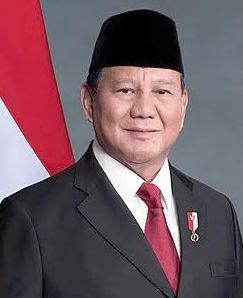
ISLAMABAD: The President of Indonesia, Prabowo Subianto, is tentatively scheduled to visit Pakistan in the second week of December, according to sources at the Pakistani Ministry of Foreign Affairs. The planned state visit, which was postponed earlier for undisclosed reasons, is being viewed as a major opportunity to deepen the already close bilateral ties between Islamabad and Jakarta.

Foreign Office officials, speaking on the condition of anonymity, told this newspaper that President Prabowo’s trip will focus on strengthening political, economic, and strategic cooperation. “Both countries are trusted friends, and this visit could catalyze new agreements,” one senior diplomat said. Pakistan hopes to leverage the visit to reinforce cooperation in key areas such as trade, defense, and infrastructure.

According to the sources, the rescheduling of the trip had been due to logistical and timing issues. But with the December window now under consideration, the Pakistani government is expressing optimism of a positive outcome. Several senior Pakistani officials have begun preliminary planning for bilateral meetings, and a formal agenda is expected to be announced once the dates are finalized.

Analysts view the visit as especially timely. With Indonesia under President Prabowo taking on an increasingly prominent regional role, Pakistan seeks to deepen engagement not just in economic cooperation, but in strategic partnership. Islamabad sees Jakarta as an important partner in Southeast Asia, and hopes to tap into its growing diplomatic influence.

From the Indonesian side, sources suggest that President Prabowo may raise issues such as trade imbalance, mutual investment opportunities, and greater people-to-people exchange. Pakistan, for its part, is expected to press for increased Indonesian investment, particularly in the energy and infrastructure sectors.

Diplomatic insiders in Islamabad say that Pakistan officials are particularly hopeful that the visit will produce landmark agreements — possibly memorandums of understanding — that could unlock new phases in bilateral ties. “There is a growing recognition in both capitals that this is not just a ceremonial visit but one with real substance,” remarked one senior aide.

If the visit goes ahead as expected, it would mark one of the highest-level exchanges between the two countries in recent years. Islamabad is preparing to accord the Indonesian president a warm welcome, with ceremonies, diplomatic receptions, and high-level meetings lined up.

The  trip of President Prabowo Subianto is being closely watched in both countries as a defining moment to cement Pakistan–Indonesia friendship and chart a forward-looking roadmap for cooperation.
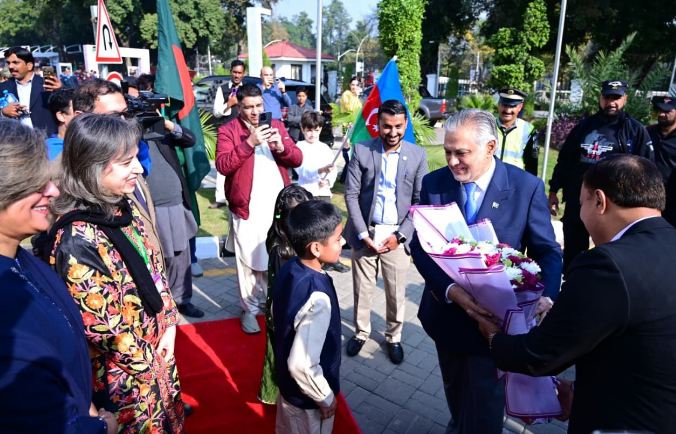
Govt committed to women empoerment, says Ishaq Dar

Govt committed to women empowerment, says Ishaq Dar

While this year’s bazaar drew participation from several friendly nations, European countries were notably absent. According to some diplomatic sources, security-related concerns were among the factors that discouraged their participation.

By Saifullah Ansar

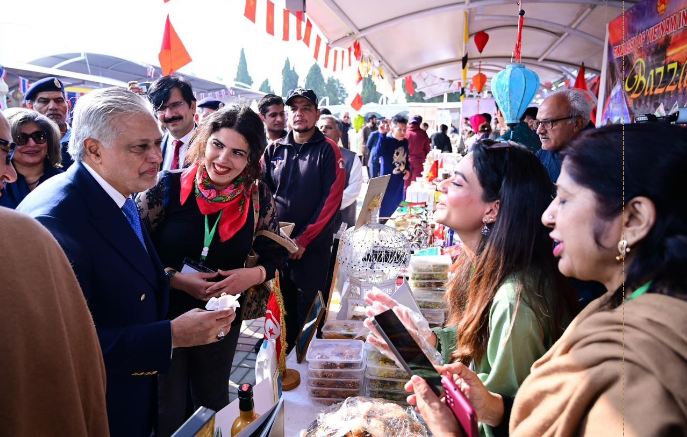
ISLAMABAD: Deputy Prime Minister and Foreign Minister Ishaq Dar on Sunday reaffirmed the government’s commitment to women’s empowerment and the promotion of welfare initiatives aimed at improving socio-economic conditions across Pakistan.

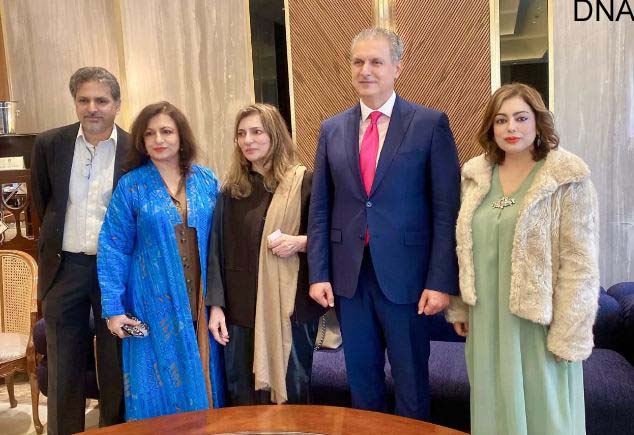
Speaking at the inauguration of the Annual Charity Bazaar 2025, organized by the Pakistan Foreign Office Women’s Association (PFOWA), he praised the Association’s longstanding humanitarian contributions and service “beyond duty.” Foreign Secretary Amna Baloch accompanied him as he visited various country stalls set up at the event.

While this year’s bazaar drew participation from several friendly nations, European countries were notably absent. According to some diplomatic sources, security-related concerns were among the factors that discouraged their participation. Despite this, stalls of Morocco, Indonesia, Uzbekistan, Brunei, Sri Lanka, Rwanda, Türkiye, Sudan, Myanmar, and Malaysia drew special attention from visitors for their vibrant displays and cultural presentations.

In his remarks, Ishaq Dar said the stalls symbolize enduring cooperation and friendship with Pakistan. He added that PFOWA’s humanitarian efforts—including assistance during recent floods and support to NDMA, the PM’s Relief Fund, PIMS, and Polyclinic—reflect its deep-rooted commitment to public welfare.

Highlighting PFOWA’s contributions to education, health, and social services, he said the Association continues to uphold a proud legacy of generosity, supporting both Foreign Service families and marginalized communities nationwide.

Referring to his recent international engagements, the Deputy Prime Minister said he had just returned from a busy diplomatic tour, which included the SCO Council of Heads of Government Meeting in Moscow and the EU Indo-Pacific Ministerial Forum in Brussels. He noted that the Brussels leg involved a “successful” 7th Pakistan-EU Strategic Dialogue and nearly two dozen bilateral meetings, describing the Foreign Office’s diplomatic efforts as “extremely valuable” for the national interest.

Democracy in a Changing World

Democracy in a Changing World

Dr, Muahammad Akram Zaheer

In 2021, before her death,Madeleine Albright expressed the expectations about democracy and contrasts with the sobering reality that has unfolded over the past four years. She explained why the anticipated resurgence has not occurred, how authoritarian states have adapted; how the United States has shifted away from its long-standing support for democratic causes and why democratic, ideals nonetheless remain alive in many societies despite mounting pressures.Madeleine Albright argued that authoritarianism was inherently weak because it relied on coercion rather than genuine public legitimacy. She believed that democratic idealsrooted in dignity, accountability, and autonomy remained powerful forces around the world. For her, the growing political activism of youth, the durability of civil society, and the universal desire for fairness pointed toward a coming democratic renewal. Her essay predicted that dissatisfaction with aging dictatorships would lead to openings for democratic change, particularly if the United States continued to support pro-democracy movements.

However, four years later, events have not supported this optimistic vision. Instead of an international revival, democracy has retreated in many regions. Protest movements that once seemed promising have been crushed. Governments with authoritarian tendencies have strengthened their grip, often using legal frameworks and digital tools to justify repressive measures. A particularly significant change has occurred in the United States itself. The second Trump administration has withdrawn funding from programs that traditionally supported democratic causes abroad and reduced the government’s readiness to defend democratic norms at home. According to Albright’s earlier warnings, this shift in U.S. policy encourages authoritarian governments, weakens global democratic networks, and reduces America’s influence as a moral and political leader.Examples from Iran and Cuba illustrate how authoritarian fragility does not necessarily lead to democratic change. In Iran, widespread protests following the death of MahsaAmini in 2022 briefly suggested that long-standing grievances could erupt into real political transformation. Yet the government suppressed the movement through mass arrests, executions, and strict control of communication. In Cuba, historic protests in 2021 raised hopes that economic hardship and political frustration might force change. Once again, the state responded with intimidation, surveillance, and imprisonment, successfully silencing dissent. These cases demonstrate that even unpopular authoritarian regimes can survive by adapting their methods of control, especially in the absence of strong external pressure.

The text also argues that the United States once played a critical role in supporting democratic activists in such situations. Through diplomatic pressure, targeted sanctions, civil society funding, and international broadcasting, Washington helped dissidents raise their voices and protected them from isolation. However, current U.S. policy has dismantled many of these tools. Institutions such as USAID, Radio Free Europe, and numerous democracy-related programs have lost funding. Thousands of initiatives that previously trained journalists, supported election monitoring, or strengthened civil society organizations have been reduced or shut down. As a result, protest movements facing repression now have fewer resources and less visibility.Meanwhile, China and Russia, the world’s leading authoritarian powers, have not offered appealing alternative models. Russia’s full-scale invasion of Ukraine discredited any notion that strongman governance brings stability or responsible leadership. China, once admired for rapid economic growth and efficient administration, now faces slowing economic performance, stricter political controls, and growing skepticism about its intentions in developing countries. In many regions, China is increasingly seen as a creditor that encourages dependency rather than a partner that supports long-term development. Yet because the United States is retreating from the democratic sphere, China has found more space to present itself as a reliable, non-interfering provider of investment and political support for governments that do not wish to face democratic accountability.

Although authoritarian models appear unattractive, democracy has not advanced because its institutional foundations have weakened in many places. Yet public support for democracy remains strikingly strong. Surveys from multiple regions show that majorities continue to prefer accountable government over authoritarian rule. Even in countries experiencing political setbacks or military coups, citizens consistently express support for fair elections, independent courts, and term limits. This demonstrates that democratic ideals continue to resonate, even when democratic institutions are failing.Across the world, civic resistance movements reveal this continuing commitment. In Georgia, large crowds have challenged flawed elections and a controversial law targeting nongovernmental organizations. In Israel, massive demonstrations in 2023 defended judicial independence. In Myanmar, despite extreme repression, activists continue to resist military rule at enormous personal cost. In Tunisia, where democracy flourished for a decade after the Arab Spring but has since been dismantled by President Kais Saied, citizens continue to challenge the erosion of rights. In Belarus, opposition leaders remain imprisoned or exiled, but protests and international campaigns persist.

Albright believed strongly in the potential of youth movements. Young people, she argued, were more globally connected, more educated, and more determined to demand accountability than previous generations. Their willingness to challenge long-standing hierarchies appeared to offer a new force for democratic change. Yet in practice, youthful idealism has often collided with entrenched power structures. In many authoritarian or semi-authoritarian states, young activists face digital surveillance, online harassment, and imprisonment. In some countries with declining democratic institutions, such as Tunisia and Turkey, many young people have responded not by organizing politically but by emigrating. This trend reflects a crisis of confidence: young citizens expect more from their governments, yet see fewer opportunities to shape political outcomes.The text emphasizes that democracy requires more than public support it needs strong institutions capable of enforcing accountability. Independent courts, legislatures, media organizations, and election commissions form the infrastructure that sustains democratic systems. These institutions, together with global networks of assistance, have historically helped democracies build resilience. Organizations such as the National Endowment for Democracy, the European Union, and others have long contributed to training election observers, supporting journalism, and encouraging reform. Their efforts have helped secure important victories, such as Poland’s 2023 opposition win and Tunisia’s decade of democratic experimentation.Nonetheless, successes are increasingly rare. Freedom House reports that nearly 60 countries experienced democratic decline in 2024 alone. Examples include the dissolution of opposition parties, the removal of term limits, and the passage of laws designed to silence civil society organizations. Meanwhile, the reduction in U.S. support for democratic initiatives has strained the international system that once helped movements survive repression.

Albright’s central insight: that the human desire for freedom, dignity, and accountability continues to exist even when democracy is under strain. The challenge lies not in the disappearance of these ideals but in the weakening of the structures and alliances needed to help them flourish. Albright argued that democracies must work together to support one another, counter authoritarian influence, and preserve the institutions that uphold democratic life. The future of democracy depends not only on public aspiration but also on coordinated leadership and sustained investment in democratic infrastructure.

ISLAMABAD: Torch ceremony of the 35th national games held

ISLAMABAD: Torch ceremony of the 35th national games held

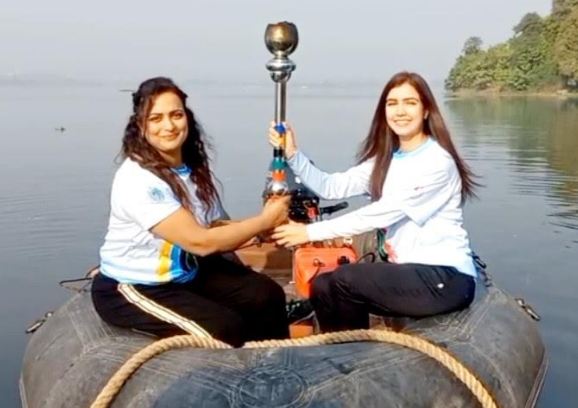
ISLAMABAD, NOV 23 /DNA/ – The torch relay ceremony of the 35th National Games was held at Rawal Dam in Islamabad, featuring the participation of Olympian Sadaf Siddiqui and Asian gold medalist Muhammad Akram. A large number of athletes, organizers, and officials from the Islamabad Olympic Association were also present on the occasion.

During the ceremony, the Islamabad Olympic Association formally handed over the torch to the Balochistan Olympic Association, marking the next phase of its symbolic journey. The torch had traveled through various cities before reaching the federal capital, where it received a warm welcome.

The 35th National Games are scheduled to begin on December 6 in Karachi, with more than 6,000 athletes from across the country set to participate. The mega sporting event will feature competitions in multiple disciplines, showcasing the country’s top athletic talent.

Jordanian Ambassador to inaugurate Heritage Furniture Exhibition at Islamabad Marriott

Jordanian Ambassador to inaugurate Heritage Furniture Exhibition at Islamabad Marriott

ISLAMABAD, NOV 23 /DNA/ – M. Hayat & Bros., one of Pakistan’s oldest and most revered furniture houses, is set to host a exclusive two-day Heritage Furniture Exhibition on November 22nd and 23rd, 2025. The event will be held at the Lapiz Hall, Marriott Hotel, from 11:00 am to 8:00 pm daily.

Established in 1870, the brand will celebrate over a century and a half of dedication to traditional artistry and fine woodworking. The exhibition will be inaugurated each day at 12:00 noon, with the inauguration on the first day graced by His Excellency the Ambassador of Jordan as the Chief Guest.

Curated by Nilofar Khalid Aziz, the exhibition will present a meticulously selected collection that embodies the brand’s legacy. Attendees will have the opportunity to view and acquire a range of heirloom-quality pieces, including classic bed sets, elegant consoles, dining and drawing room sets, as well as unique Safari and accent furniture. Each item is a testament to the brand’s commitment to using premium hardwoods and traditional techniques that have been passed down through five generations.

“We are not just showcasing furniture; we are inviting patrons to become a part of a living history,” said a spokesperson for the brand. “This event is a tribute to the timeless spirit of craftsmanship and design that has defined M. Hayat & Bros. since 1870. It is a celebration of the hands that have carved, the vision that has designed, and the families who have cherished our pieces for generations.”

The event will bring together distinguished guests, longstanding multi-generational patrons, and the valued team and family behind the brand, creating a unique gathering to honor Pakistani cultural heritage.

M. Hayat & Bros. has been a cornerstone of Pakistan’s furniture tradition, shaping aesthetic sensibilities with pieces known for their durability, elegance, and deep-rooted connection to South Asian artistry. This exhibition offers a rare glimpse into the enduring legacy of a brand that has furnished Pakistani homes for 155 years.

Event Details:

  • What: Hayat & Bros. Heritage Furniture Exhibition 2025
  • Curator: Nilofar Khalid Aziz
  • Dates: November 22 & 23, 2025
  • Time: 11:00 am to 8:00 pm (Inauguration at 12:00 noon daily)
  • Venue: Lapiz Hall, Marriott Hotel, Islamabad

Punjab by-elections: Polling underway on 13 PA, NA seats

Punjab by-elections: Polling underway on 13 PA, NA seats

ISLAMABAD, NOV 23 : Polling is underway today for by-elections on 13 key seats of the National Assembly and Punjab Assembly, with thousands of security personnel deployed across Punjab.

The contests—many triggered by the disqualification of PTI-backed candidates—have drawn intense political attention, particularly in Lahore’s NA-129 and Haripur’s NA-18.

Polling opened at 8am and will continue until 5pm, with the Election Commission of Pakistan (ECP) overseeing the process under a reinforced security plan.

Most seats were vacated after PTI-backed members were disqualified following their conviction in the May 9, 2023 incidents that erupted after former prime minister Imran Khan’s arrest.

The National Assembly seats where voting is underway include NA-18 Haripur, NA-96 Faisalabad, NA-104 Faisalabad, NA-129 Lahore, NA-143 Sahiwal, and NA-185 Dera Ghazi Khan.

Punjab Assembly by-elections are being held in PP-79 Sargodha, PP-87 Mianwali, PP-98 Faisalabad, PP-115 Faisalabad, PP-116 Faisalabad, PP-203 Sahiwal, and PP-269 Muzaffargarh.

Heavy security deployment across Punjab

More than 20,000 police personnel have been deployed on national and provincial constituencies to maintain order.

According to the ECP’s code of conduct, armed forces personnel have also been stationed outside polling stations declared “highly sensitive”, while remaining troops are on standby as a third-tier response force.

Security officials have been directed to ensure a safe and neutral environment, prevent violence, and allow voters to enter freely—except in cases involving weapons, explosives, or security risks.

Key political contests

NA-129 Lahore

NA-129 gained significance again after the death of former MNA Mian Muhammad Azhar, who won the seat on a PTI ticket. PML-N has fielded seasoned political organizer Hafiz Noman, while Chaudhry Arsalan Ahmed, the late Mian Azhar’s nephew and a PTI-backed independent, is running a strong campaign.

A tight contest is expected between PML-N and PTI-backed forces, making this one of the most closely watched constituencies.

NA-18 Haripur: Ayub family vs PML-N

This seat fell vacant after former opposition leader Omar Ayub Khan was disqualified following a conviction in a May 9 case.

His wife, Shehrnaz Omar Ayub, is contesting her first election and faces PML-N candidate Babar Nawaz Khan, who previously held the seat. The Ayub family’s strong local influence suggests a tough fight.

NA-96 Faisalabad

The seat became vacant after Rai Haider Ali Khan was disqualified post-May 9 conviction. PML-N has nominated Bilal Badar Chaudhry, brother of Minister of State for Interior Talal Chaudhry.

Independent candidate Nawab Sher Wasir is a key contender, while Talal Chaudhry was fined today by the ECP for violating the election code of conduct.

NA-104 Faisalabad

This constituency fell vacant after Sahibzada Hamid Raza, elected as an independent and chairman of the Sunni Ittehad Council (SIC), was sentenced to 10 years in a May 9 case.

PML-N has fielded young lawyer Daniyal Ahmed, son of former opposition leader Raja Riaz. He is facing three independent candidates, while SIC and PTI workers remain active in the constituency.

NA-143 Sahiwal

This seat also became vacant after the conviction and disqualification of PTI-backed Rai Hassan Nawaz.

NA-185 Dera Ghazi Khan

Former federal minister Zartaj Gul was disqualified after her conviction in a May 9 case, leaving the seat vacant.

PML-N has nominated Mehmood Qadir Khan Leghari from the influential Leghari family, making this another significant local political contest in South Punjab.

Provincial Assembly seats also being decided

By-elections are simultaneously being held in seven Punjab Assembly constituencies:

PP-79 Sargodha

PP-87 Mianwali

PP-98 Faisalabad

PP-115 Faisalabad

PP-116 Faisalabad

PP-203 Sahiwal

PP-269 Muzaffargarh

PML-N has fielded strong candidates in most constituencies, while PTI and SIC-backed independent candidates are also in the race. PTI, however, has boycotted elections on provincial seats in some areas.

These by-elections are expected to influence the political balance at both the national and provincial levels, especially where PML-N faces PTI-backed independents.

The results—particularly from Lahore and Haripur—may shape the narrative around party popularity ahead of future political developments.

American investors explore economic potential of Dakhla

American investors explore economic potential of Dakhla

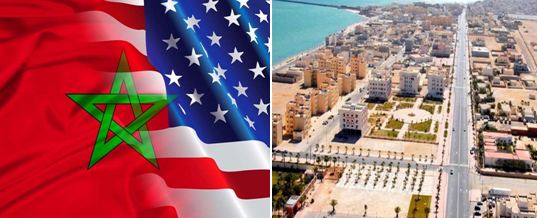
RABAT, NOV 22 /DNA/ – During this mission, the delegation of business people from Great Neck learned about the business climate, developing infrastructure, and prospects for bilateral cooperation in several areas of mutual interest.

This visit is part of the operationalization of the twinning agreement between Dakhla (Morocco) and Great Neck, aimed at developing economic partnerships and strengthening cooperation in a win-win approach.In a statement to the press, American investor Lior Cohen indicated that the mission’s objective is “to develop joint projects and identify new investment opportunities in the region,” emphasizing that the delegation wishes to establish lasting economic relationships with local stakeholders.

For his part, American healthcare investor Edwin Cohen Azarkian indicated that the favorable conditions observed during his first visit to Dakhla, combined with the region’s remarkable economic dynamism, encouraged him to return to examine in greater depth the investment opportunities it offers and identify sectors with strong development potential.

At the same time, the president of the Dakhla Municipal Council, Erragheb Hormatallah, stated that the delegation conducted site visits, including the Dakhla Atlantic port, agricultural operations, aquaculture projects, and several industrial units, noting that these visits allowed the American delegation to witness firsthand the region’s dynamic development.For his part, the director of the Regional Investment Center (CRI), Ahmed Ktir, noted that the American delegation “was impressed by the significant progress made in the region, particularly in terms of infrastructure and investment”.

During this visit, a presentation was given to the members of the American delegation, focusing on the region’s economic strengths, ongoing major projects, and promising investment opportunities in several sectors.The American delegation held meetings with the Wali of the Dakhla-Oued Eddahab region, the Governor of the Oued Eddahab province, the President of the Dakhla Municipal Council, the Director of the Dakhla-Oued Eddahab Regional Investment Center (CRI), and the regional president of the General Confederation of Moroccan Enterprises (CGEM).

During these meetings, emphasis was placed on the prospects for economic cooperation between Dakhla and the city of Great Neck, the investment opportunities offered by the region in various promising sectors, as well as on the efforts made to support investors and strengthen territorial attractiveness.

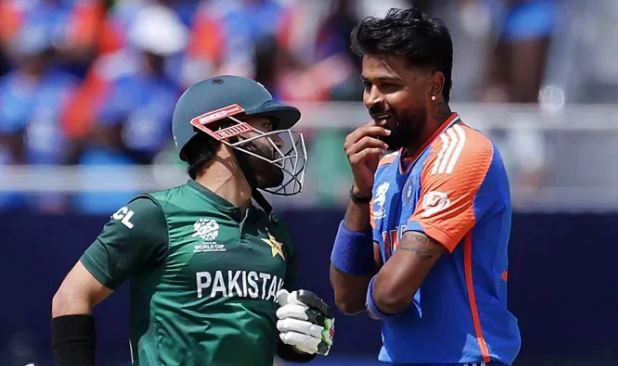
Pakistan, India to face-off in T20 World Cup 2026 on Feb 15: reports

Pakistan, India to face-off in T20 World Cup 2026 on Feb 15: reports

LAHORE, NOV 22: The International Cricket Council has reportedly finalised the schedule of the ICC Men’s T20 World Cup 2026, with a high-octane encounter between arch-rivals Pakistan and India slated for February 15.

As per Indian media reports, the 10th edition of the men’s T20 World Cup is likely to be played between February 7 and March 8, with India and Sri Lanka confirmed as co-hosts for the tournament featuring 20 teams. The ICC is anticipated to officially announce the schedule on November 25.

Pakistan and India are reportedly placed in the same Group alongside the United States, Namibia, and Netherlands. The arch-rivals will face each other on February 15 in Colombo, while Pakistan will play all its matches in Sri Lanka.

Teams are divided into four groups of five, with the top two from each group advancing to the Super Eight stage, which will then be split into two groups of four.

The top two sides from each Super Eight group will move on to the semi-finals.

India enter the competition as defending champions, having defeated South Africa in the final in Barbados earlier this year.

Notably, all 20 teams set to participate in the mega event have already been confirmed, with the United Arab Emirates’ (UAE) qualification last month.

The final is likely to be held in Ahmedabad or Colombo, depending on whether Pakistan qualifies, given that India and Pakistan are currently not playing bilateral cricket due to political tensions.

The UAE joined Nepal and Oman as the final three teams to qualify for next year’s T20 World Cup 2026 from the Asia-EAP region.

Alongside hosts India and Sri Lanka, the other teams with automatic qualification include the top seven sides from the 2024 T20 World Cup: Afghanistan, Australia, Bangladesh, England, South Africa, the United States, and West Indies.

The three teams that qualified based on their T20I rankings are Pakistan, New Zealand, and Ireland.

Regional qualifiers also secured their places: Canada claimed the lone Americas spot, while Italy (making their T20 World Cup debut) and the Netherlands qualified from Europe.

Namibia and Zimbabwe grabbed the two spots from the Africa qualifier.

Farhan’s 80 propels Pakistan past Sri Lanka in T20I tri-series game

Farhan's 80 propels Pakistan past Sri Lanka in T20I tri-series game

RAWALPINDI, NOV 22 – Sahibzada Farhan scored an unbeaten 80-run knock as Pakistan defeated Sri Lanka by seven wickets in the third T20I of the tri-series, also featuring Zimbabwe, at the Rawalpindi Cricket Stadium on Saturday.

The victory, which was Pakistan’s second in the ongoing series, helped them replace Zimbabwe at the top of the standings, having four points in two matches. Sri Lanka, on the other hand, succumbed to the bottom after suffering back-to-back defeats.

Set to chase a modest 129-run target, the home side comfortably knocked the winning runs for the loss of just three wickets and 27 balls to spare.

Farhan spearheaded Pakistan’s pursuit with an unbeaten 80 off just 45 deliveries, studded with five sixes and six fours.

He received notable support from fellow opener Saim Ayub and star batter Babar Azam, who contributed with 20 and 16, respectively.

For Sri Lanka, Dushmantha Chameera bagged two wickets, while skipper Dasun Shanaka could take one.

Sri Lanka captain Dasun Shanaka’s decision to bat first backfired as his team could accumulate 128/7 in 20 overs despite Janith Liyanage’s gutsy knock.

The visitors got off to a brief flying start to their innings, with opener Kamil Mishara taking on Pakistan bowlers for two sixes and as many fours during his 12-ball 22 until Faheem Ashraf drew curtains on his blazing knock in the fourth over.

Sri Lanka then suffered another setback 13 balls later when Kusal Mendis (three) was run out by Mohammad Wasim Jr, bringing the total down to 38/2 in 5.4 overs.

Following the back-to-back wickets, Kusal Perera joined opener Pathum Nissanka (17) for a cautious 22-run partnership, which culminated with the former’s dismissal on the first delivery of the ninth over, bowled by Abrar Ahmed.

Nissanka’s dismissal sparked a middle-order collapse, instigated by Nawaz as he picked up three wickets in quick succession, out of which two came in the same over, as Sri Lanka slipped further to 86/6 in 13.3 overs.

Meanwhile, Liyanage stood his ground firm amid the collapse and attempted to launch a recovery by putting together a one-sided 35-run partnership for the seventh wicket with Wanindu Hasaranga, who fell in the penultimate over after scoring a 12-ball 11.

Liyanage, on the other hand, remained unbeaten and walked back after top-scoring with an anchoring 40 off 37 deliveries, featuring three fours and a six.

Nawaz was the standout bowler for Pakistan, returning economical bowling figures of 3/16 in his four overs, while Abrar, Faheem and Salman Mirza chipped in with one wicket apiece.

Opposition alliance demands probe into ‘economic irregularities’ flagged in IMF report

Opposition alliance demands probe into 'economic irregularities' flagged in IMF report

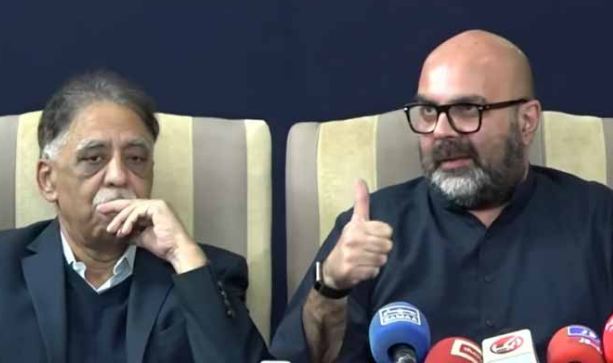
ISLAMABAD, NOV 22: A coalition of six opposition parties, under the banner of Tehreek Tahafuz Ayeen-i-Pakistan (TTAP), on Saturday demanded an investigation into alleged economic irregularities highlighted in a recent International Monetary Fund’s (IMF) report

Addressing a press conference along with Pakistan Tehreek-e-Insaf (PTI) leader Taimur Khan Jhagra, former Sindh governor criticised the incumbent government for failing to issue any clarification more than 48 hours after the IMF’s report surfaced.

“The government representatives had not denied or responded to the IMF’s findings despite repeated calls,” he said, questioning why the administration “kept the IMF report hidden for three months” when, according to him, “the IMF had made the release of the report a condition for receiving the next tranche.”

The IMF, in its long-awaited Governance and Corruption Diagnostic Assessment (GCDA), warned that persistent corruption and weak institutions continue to undermine the country’s economic development even as it stabilises under an Extended Fund Facility (EFF).

The report, publication of which is a precondition for the IMF executive board’s approval of a $1.2 billion disbursement next month, estimated that Pakistan could boost economic growth by about 5% to 6.5% over five years if it implements a package of governance reforms beginning within the next three to six months.

The GCDA seeks an end to special treatment for a few influential public sector entities in direct government contracts.

It also recommends tighter limits on the government’s financial powers without greater parliamentary oversight and streamlining of anti-corruption agencies. The government had been delaying the publication of the report since August.

Speaking to journalists today, Zubair — who left the Pakistan Muslim League-Nawaz (PML-N) — said the opposition was formally seeking a probe into the “irregularities documented in the report”, adding that the public was already suffering under the burden of inflation.

Zubair also reiterated his criticism of cases lodged against the PTI founder Imran Khan, terming them “false, fabricated and baseless”.

For his part, Jhagra said the IMF had explicitly raised concerns about corruption and political interference in Pakistan’s institutions.

“The IMF is saying there is corruption in Pakistan,” he remarked. “It [IMF] says institutional performance comes under political pressure.” He added that investors were hesitant because “judicial institutions are perceived as corrupt” and that such an environment discouraged investment.

Jhagra said the report, dated November 2025, pointed out that Pakistan’s “transfer culture” functioned as a form of punishment within the system. He emphasised that accountability for all was essential, noting that “no one in the world enjoys lifelong immunity.”

He further noted that the IMF did not directly comment on the SIFC but consistently demanded transparency in the country’s governance mechanisms.

“In such conditions, no investor will come to Pakistan,” he said, adding that the country needed a transparent system and broad accountability to restore trust.

Stay Connected

64FansLike
60FollowersFollow

Latest Reviews

Exchange Rates

USD - United States Dollar
EUR
1.14
GBP
1.34
AUD
0.69
CAD
0.71