Home Blog Page 374

Pakistan crushes Zimbabwe by 69 runs, books spot in Tri-Series Final

Pakistan crushes Zimbabwe by 69 runs, books spot in Tri-Series Final

RAWALPINDI, NOV 23 /DNA/ – In a dominant display, Pakistan defeated Zimbabwe by a convincing 69 runs in the fourth match of the tri-nation T20 series. This victory ensures Pakistan’s qualification for the tournament final.

Pakistan Sets a Big Target

Winning the toss and choosing to bat first, Pakistan put up a strong total of 195 runs for the loss of 5 wickets in their 20 overs. The innings was built around a brilliant 74-run knock from captain Babar Azam, who was well-supported by Sahibzada Farhan’s quickfire 63. Fakhar Zaman remained not out on 27.

For Zimbabwe, Sikandar Raza was the most successful bowler, taking two wickets.

Zimbabwe’s Chase Falls Short

In reply, Zimbabwe’s batting lineup crumbled under pressure and were bowled out for 126 runs in just 19 overs. Ryan Burl offered some resistance with an unbeaten 67, but no other batsman could provide substantial support. Sikandar Raza was the next highest scorer with 23 runs.

The Pakistani bowling attack was effective, with Usman Tariq being the star, claiming four wickets. Mohammad Nawaz chipped in with two wickets.

With this win, Pakistan has secured its place in the final of the series.

Govt streamlining pension system for overseas Pakistani retirees

Govt streamlining pension system for overseas Pakistani retirees

ISLAMABAD, Nov 23 (APP/DNA): The Ministry of Finance, in collaboration with the Controller General of Accounts and the Accountant General Pakistan Revenues, has undertaken a series of initiatives aimed at improving the pension disbursement system for overseas Pakistani retirees.

According to a document available with Wealth Pakistan, the government is addressing longstanding issues related to pension disbursements, data integration and logistical challenges, ensuring that pensioners residing abroad receive their benefits without delay.

The Finance Division is working to further strengthen the pension and General Provident Fund (GPF) management system by improving data integration between autonomous bodies and the AGPR system. Enhancing this linkage will help streamline the processing of pensions and GPF contributions for employees on deputation.

Since many civil servants working in autonomous bodies operate under separate pension contribution mechanisms, better coordination will ensure smoother and more accurate pension transfers.

To achieve this, the Finance Ministry is planning to develop a more robust and unified tracking system that will securely record pension histories and ensure timely and accurate transfer of contributions.

The Finance Division is also working to improve disbursement of pensions to employees of abolished or merged entities through smoother processes. While many pensioners have been receiving their benefits without difficulty, the Division recognizes the need to further streamline procedures for those nearing retirement or approaching superannuation, particularly in matters such as leave encashment and GPF withdrawals. To strengthen this transition, the Finance Division has emphasized prioritizing these cases and putting in place measures that fully safeguard the rights and entitlements of all pensioners.

A large number of Pakistani retirees living abroad will soon experience greater ease in managing their pension payments, as efforts are underway to simplify account opening and verification procedures.

The National Database and Registration Authority (NADRA) is developing a dedicated online platform that will enable biometric and facial-recognition verification from anywhere in the world. Through this system, overseas pensioners will be able to submit their proof-of-life certificates remotely, eliminating the need for travel to Pakistan for physical verification.

Once launched, the platform will greatly reduce inconvenience for pensioners and help ensure the timely and uninterrupted disbursement of pensions. The system is in its final development stages and is expected to be rolled out in the near future.

The Finance Ministry has also instructed the SBP to work closely with banks to synchronize their systems and implement the proposed online application, ensuring the smooth flow of pension payments to overseas retirees.

These reforms are part of the government’s broader efforts to modernize the public sector pension system and provide better services to Pakistan’s pensioners, regardless of their location.

AIOU, CESA to host int’l conference on “Challenges for Inclusive and Equitable Education” this month

AIOU to launch BS, M.Phil programs on Seerat -un –Nabi
ISLAMABAD, Nov 23 (APP/DNA):Allama Iqbal Open University (AIOU), in collaboration with the Comparative Education Society of Asia (CESA), has planned to organize the 14th Biennial International Conference from November 23 to 25. 

This year’s conference will focus on the theme “Challenges for Inclusive and Equitable Education,” aiming to present practical research and policy recommendations for promoting equity, inclusion, and sustainability in the field of education.

The opening session of the conference will be addressed by national and international renowned educationists, including Bella Jamil, CEO of the Institute of Education and Awareness (Lahore), Professor Manzoor Ahmed, Chairman of the Early Childhood Development Network of Bangladesh, Manjula Withana Pathirana, Director of the National Institute of Education of Sri Lanka, and Professor Dr Nasir Mahmood, Vice Chancellor AIOU. Researchers, teachers, policymakers and representatives of educational institutions from various Asian countries including Pakistan will also participate in the conference, said a press release on Saturday.

During the conference, participants will present their research insights on the challenges and opportunities facing the region in the context of inclusive education, gender equality, educational technology, special education, early childhood development and the Sustainable Development Goals (SDGs).

The conference will also serve as an important forum for strengthening educational cooperation among Asian countries, exchanging best practices and formulating common strategies for educational reforms to ensure quality, equitable and accessible education for every child and individual in the region.

Bangladesh win toss, opt to bowl against Pakistan in Asia Cup Rising Stars final

Bangladesh win toss, opt to bowl against Pakistan in Asia Cup Rising Stars final

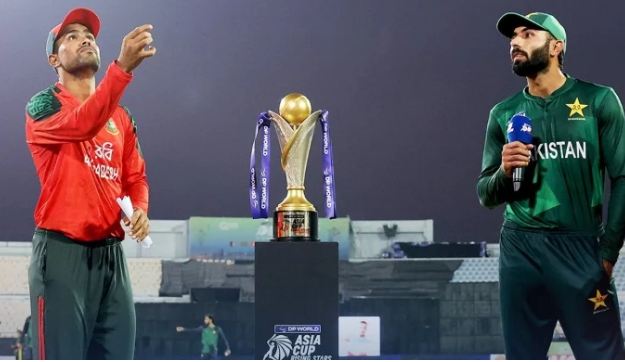
DOHA, NOV 23: Bangladesh A won the toss and elected to bowl first against Pakistan Shaheens in the final of the Asia Cup Rising Stars 2025 at West End Park International Cricket Stadium, Doha, on Sunday.

The Green Shirts qualified for the final undefeated, having beat India A, Oman and United Arab Emirates in the group games.

Playing XIs:

Pakistan Shaheens: Maaz Sadaqat, Yasir Khan, Mohammad Faiq, Irfan Khan Niazi (c), Ghazi Ghori (wk), Saad Masood, Arafat Minhas, Shahid Aziz, Ahmed Daniyal, Ubaid Shah and Sufiyan Muqeem.

Bangladesh A: Habibur Rahman Sohan, Jishan Alam, Akbar Ali (c/wk), SM Meherob, Mahfuzur Rahman, Mrittunjoy Chowdhary, Mahidul Islam Ankon, Yasir Ali, Rakibul Hasan, Ripon Mondol and Abdul Gaffar Saqlain.

Pakistan names 31-player hockey squad for Pro League in Argentina

Pakistan names 31-player hockey squad for Pro League in Argentina

ISLAMABAD, NOV 23 /DNA/ – Following the approval of the President of the Pakistan Hockey Federation (PHF), Mir Tariq Hussain Bugti, the Secretary General Olympian Rana Mujahid Ali Khan has announced, through a notification, the training camp for the national senior probables in preparation for the FIH Pro Hockey League. The camp will commence on November 24, 2025, at the Naseer Bunda Hockey Stadium in Islamabad.

​The Pro Hockey League will be played in Rosario, Argentina, from December 9 to 14, 2025.

​According to the notification, all selected officials and players have been instructed to report to the Camp Commandant at the Naseer Bunda Hockey Stadium on November 24, 2025, at 5:00 PM (1700 hours).

​A total of 31 top players and 7 officials from across the country have been summoned for the camp. Their details are as follows:

​Goalkeepers:

​Abdullah Ishtiaq Khan (Mari Energies)

​Muneeb-ur-Rehman (WAPDA)

​Waqar (WAPDA)

​Ali Raza (PAF)

​Defenders:

​M. Sufyan Khan (Customs)

​Muhammad Abdullah (Mari Energies)

​Hammadudin Anjum (WAPDA)

​Abdul Manan (PAF)

​Ammad Shakeel Butt (NBP)

​Usama Bashir (PAF)

​Arbaz Ahmad (Mari Energies)

​Abu Bakar Mahmood (NBP)

​Midfielders:

​Moin Shakeel (WAPDA)

​Zikriya Hayat (Navy)

​Ghazanfar Ali (Mari Energies)

​Arshad Liaqat (Mari Energies)

​Junaid Manzoor (NBP)

​M. Sulman Razzaq (WAPDA)

​Izhar-ul-Haq (Punjab)

​Strikers:

​Abdul Hannan Shahid (WAPDA)

​Abdul Rehman (PAF)

​Afraz (Mari Energies)

​Rana Waheed (WAPDA)

​Rana M. Waleed (Navy)

​Ahmad Nadeem (Mari Energies)

​Muhammad Ammad (Customs)

​Abdul Qayyum (Customs)

​Basharat Ali (Navy)

​Umair Sattar (Mari Energies)

​Team Officials:

​The team officials include Olympian Anjum Saeed (Manager), Olympian Tahir Zaman (Head Coach), Olympian Muhammad Usman, Olympian Zeeshan Ashraf (Assistant Coaches), Mr. Mukhtar Ahmad (Trainee Coach), Mr. Nadeem Khan Lodhi (Video Analyst), and Mr. Muhammad Aslam (Masseur).

Vote counting underway as polling concludes for by-election

Vote counting underway as polling concludes for by-election

ISLAMABAD, NOV 23: Polling has concluded for the by-elections in six National Assembly and seven Punjab Assembly constituencies, where voters turned out in Lahore, Faisalabad, Sahiwal, Sargodha, Mianwali, Muzaffargarh, Haripur and several other areas.

The vote, which began at 8am under strict security measures, continued uninterrupted until closing time at 5pm.

By-elections were held in six National Assembly constituencies — NA-18 (Haripur), NA-96 (Faisalabad), NA-104 (Faisalabad), NA-129 (Lahore), NA-143 (Sahiwal) and NA-185 (Dera Ghazi Khan).

Polling was also held in seven Punjab Assembly constituencies, PP-73 (Sargodha), PP-87 (Mianwali), PP-98 (Faisalabad), PP-115 (Faisalabad), PP-116 (Faisalabad), PP-203 (Sahiwal) and PP-269 (Muzaffargarh).

The seats became vacant largely due to the disqualification of Pakistan Tehreek-e-Insaf (PTI) lawmakers convicted in cases related to the May 9, 2023, riots following the arrest of former prime minister Imran Khan.

The Election Commission of Pakistan (ECP) has said that the election material, including ballot papers, has safely reached the polling stations, foolproof security arrangements have been made, and specific instructions have been issued to authorities concerned to ensure the conduct of free and fair elections.

NA-18 and NA-129 are among the few high-profile constituencies where the electoral contest will be of paramount interest. Pakistan Tehreek-e-Insaf (PTI)-backed disqualified MNA Omar Ayub Khan’s spouse Ms Shehnaz will face Babar Nawaz of the ruling Pakistan Muslim League-Nawaz (PMLN) in NA-18, while the late Mian Azhar’s nephew Arsalan Ahma,d is being seen as a potential rival to PMLN’s Hafiz Mian Nauman in Lahore’s NA-129, The News reported.

Speaking to the media in Faisalabad after casting his vote, Adviser to PM on Political Affairs said that no one was arrested or stopped in the entire constituency and there was no chance for anyone to complain.

“Punjab Chief Minister Maryam Nawaz’s announcement of a development project was stopped due to elections in the constituency,” said Sanaullah adding that in by-elections is between 25% and 30%.

Security, code of conduct

As per the code of conduct released for the armed forces/civil armed forces, the personnel will perform their duties in accordance with the role of the  Armed Forces defined in Article 245 of the Constitution of Pakistan, the law and within the confines of the mandate assigned to Armed Forces to assist the ECP.

Their deployment is meant for the provision of a secure environment for easy and secure access of voters to the polling station. Wherein, the police will be first-tier responders, while civil armed forces as second-tier responders (standby/ quick reaction mode only) and Pakistan Army as 3rd tier responders (in-situ Quick Reaction Force Mode).

The code of conduct outlines that security personnel are to be deployed outside selected highly sensitive polling stations and must concentrate exclusively on ensuring a secure environment. 

They must not disallow any eligible voter from entering, except those found possessing weapons, explosives or creating a disturbance. The personnel are not to assume the duties of polling staff, take custody of any election material, or interfere in the functions of polling officials or the counting process.

Meanwhile, the ECP has also issued a code of conduct for the media, emphasising that unofficial results from a polling station should not be broadcast until at least one hour after polling concludes. Such results must be clearly indicated as unofficial and partial.

Broadcasters are warned that violations will lead the commission to approach the authorities concerned for disciplinary action. Only the Returning Officer concerned is authorised to release the final and official result of any constituency.

Also, the Punjab Inspector General Police (IGP) in a statement said that over 20,000 police personnel have been deployed for security.

“Voters will be provided with a peaceful environment,” the IGP said, adding that Section 144 of the CrPC was in effect and there arms ban violation — along with other prohibitions — will not be tolerated.

“Out of 2,792 polling stations, 408 are highly sensitive, 1,032 are sensitive,” the police official said, nothing that the polling process was being continuously monitored and that the police had the support of the Pakistan Army and the Punjab Rangers.

NA-129 — Lahore

NA-129 is in focus as PTI and Pakistan Muslim League-Nawaz (PML-N) face off, with the ruling party aiming to reclaim the seat while PTI contests without its symbol.

Over 558,364 voters will choose a new representative following the death of former Punjab Governor Mian Muhammad Azhar, father of PTI’s Hammad Azhar. Mian Azhar had won the seat in 2024 as a PTI-backed independent before joining the Sunni Ittehad Council.

Chaudhry Arsalan Ahmad, Mian Azhar’s nephew, is nominated by Hammad Azhar, while PML-N’s Hafiz Mian Nauman, who lost to Mian Azhar by over 30,000 votes in 2024, is his main rival.

A total of 17 people are contesting in the constituency including independent candidates.

Faisalabad NA seats

Faisalabad has a busy day with four seats up for grabs. NA-96 alone has 16 people contesting, with PML-N’s Talal Badar Chaudhry facing a long list of independents.

There are 587,124 registered voters here and 345 polling stations. The seat was left empty after PTI’s Rai Haider Ali Kharal was unseated.

NA-104 is a smaller field, where PML-N’s Raja Daniyal is up against four independents. The constituency has around 557,000 voters and 375 polling stations. Chairman Sunni Ittehad Council (SIC), Sahibzada Hamid Raza, had held this seat before his disqualification. PP-116 features PML-N’s Rana Shehryar and five independents.

There are 190 polling stations for roughly 276,000 voters. The seat became vacant after Muhammad Ismail Sila’s disqualification in a May 9 case.

In PP-115, five candidates are in the race. PML-N’s Tahir Jamil is the main party-backed candidate, while the rest are independents. The seat was vacated after PTI’s Sheikh Shahid Javed was disqualified.

NA-18 — Haripur (KP)

In Haripur, nine candidates are vying for a seat in NA-18. PTI-backed independent Shehrnaz Omar Ayub is among the front-runners, with Pakistan PML-N’s Babar Nawaz Khan and Pakistan People’s Party’s ( PPP) Erum Fatima also in the mix.

Six other independent candidates have filed their papers as well. The constituency has a little over 753,000 voters, and 602 polling stations are operating today.

The seat had fallen vacant after PTI leader Omar Ayub’s disqualification in a May 9 case.

NA-185 — DG Khan

Eight candidates are contesting NA-185. A close fight is likely between PML-N’s Mahmood Qadir Leghari and PPP’s Sardar Dost Muhammad Khosa.

There are 226 polling stations set up — separate stations for men and women, along with mixed ones. The seat became vacant after Zartaj Gul Wazir’s disqualification.

PP-87 — Mianwali

By-election is also being held in PP-96 Mianwali III where 193 polling stations, of which 65 have been declared sensitive, have been set up for a total of 283,272 registered voters.

The seat became vacant after the disqualification of former PA opposition leader Ahmed Khan Bachar. PMLN-‘s Ali Haider Noor Khan, independent candidate Awaz Khan Niazi and JUP’s Khalid Masood Khan are among the candidates contesting for the provincial seat.

A total of 1,500 security personnel have been deployed in the constituency for security.

PP-98 — Faisalabad I

PP-98 has 10 candidates. A close contest is expected between PML-N’s Azad Ali Tabbasum and independent Muhammad Ajmal Cheema.

There are 171 polling stations for nearly 290,000 voters. The seat had fallen empty after PTI’s Junaid Afzal Sahi was unseated and later sentenced in a May 9 case.

PP-73 — Sargodha

PP-73 has five candidates in total. PML-N’s Mian Sultan Ali Ranjha is up against four independents. The seat was declared vacant after PTI’s Ansar Iqbal Heral was disqualified and later given a 10-year sentence in a May 9 case.

PP-269 — Muzaffargarh

In PP-269, 17 candidates are trying their chances. PPP’s Alamdar Abbas Qureshi faces competition from independents Iqbal Khan and Abdul Hai Dasti.

The seat opened up after Qureshi stepped down before a recount request by Iqbal Khan was to be taken up.

Iran warns of attempts to target supreme leader Khamenei

Iran warns of attempts to target supreme leader Khamenei

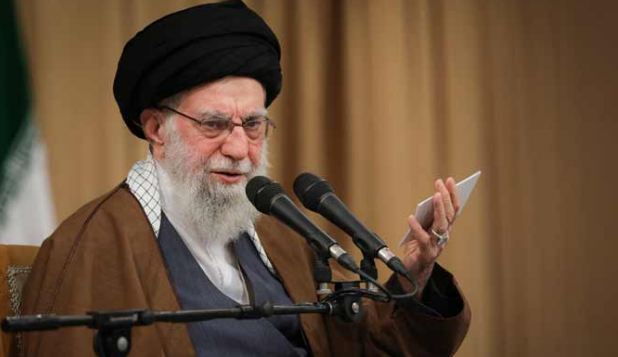
TEHRAN, NOV 23: Iran’s intelligence ministry has warned of attempts by foreign adversaries, including the United States and Israel, to target supreme leader Ayatollah Ali Khamenei and destabilise the Islamic republic.

The country’s ISNA news agency reported on Saturday that intelligence minister Esmail Khatib cautioned “the enemy seeks to target the supreme leader, sometimes with assassination attempts, sometimes with hostile attacks”.

While it was not immediately clear if the minister was referring to a specific incident, and Iranian officials often allege foreign plots, statements on threats against Khamenei’s life had been rare prior to a 12-day war between Israel and Iran in June.

“Those who act in this direction, knowingly or unknowingly, are the infiltrating agents of the enemy,” Khatib added, referring directly to Israel and the United States.

During the conflict earlier this year, Israel targeted senior Iranian military officials, nuclear scientists and sites as well as residential areas, with the US later joining with strikes on key nuclear facilities.

Asked about reports during the war that US President Donald Trump vetoed an Israeli plan to kill the supreme leader out of concern it would escalate the Iran-Israel showdown, Israeli Prime Minister Benjamin Netanyahu was dismissive but said the move would “end the conflict”.

At the time, Trump had also said that Iran’s supreme leader was a “very easy target” and that “we are not going to take him out, at least not for now.”

He later said in a post on Truth Social that he had saved Iran’s supreme leader from “A VERY UGLY AND IGNOMINIOUS DEATH”.

The 86-year-old Khamenei has been Iran’s supreme leader since 1989 and has the final say on all state affairs.

Earlier this month, Iran’s President Masoud Pezeshkian said he was particularly concerned for Khamenei’s life during the war and feared that the country’s institutions “would start fighting among each other.”

In July, Khamenei said Israel’s attacks during the war were intended to weaken the Islamic republic, sow “unrest and bring people into the streets to overthrow the system”.

A ceasefire between Iran and Israel has been in place since June 24, but both Israel and the United States have threatened new strikes if Tehran revives its nuclear programme.

CDA implements 85pc rent ceiling from Nov 1

CDA implements 85pc rent ceiling from Nov 1

ISLAMABAD, 23 NOV (DNA) — Capital Development Authority (CDA) has approved an 85 percent rise in the house rent ceiling for all its employees, with the revised rates effective from November 1, 2025.

Talking to media on Sunday, CDA spokesperson confirmed the decision and stated that the authority had issued the notification on November 18 titled “Revision of Rental Ceiling for Hiring of Residential Accommodation at Islamabad and Other Specified Stations including Rawalpindi, Lahore, Karachi, Peshawar, and Quetta.”

He said that the CDA adopts the decision of the Federal Government regarding an increase in the ceiling for hiring of residential accommodations of CDA employees. The spokesperson added that in this period of inflation, the 85 percent increase in the house rent ceiling is a welcome step for employees, and this decision will not only reduce their financial hardships but also help improve their standard of living. — DNA

Pakistan poised as gateway to three billion consumers

Pakistan poised as gateway to three billion consumers

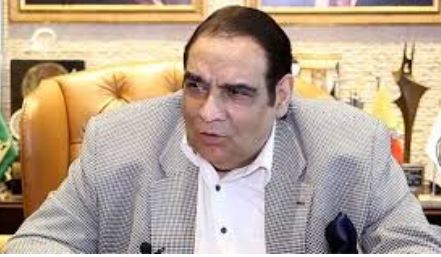
LAHORE, NOV 23 (DNA): SAARC Chamber of Commerce & Industry former president Iftikhar Ali Malik said that Pakistan was rapidly transforming into a pivotal economic corridor connecting South Asia, Central Asia and the Middle East, with the China-Pakistan Economic Corridor (CPEC) reshaping the country into a significant regional hub.

In a statement issued here on Sunday, he said Pakistan’s geo-strategic location was regaining global attention as new transport networks and energy routes take shape under the CPEC, placing the country at the centre of major commercial pathways and providing direct access to nearly three billion consumers across neighbouring regions. This unique geographic advantage, he added, supported by modern infrastructure, had greatly enhanced Pakistan’s capacity to facilitate cross-border trade, transit and investment. “CPEC has modernized Pakistan’s logistics backbone and created new economic openings that were previously unimaginable,” he noted.

Malik said Pakistan’s rise as a regional hub would rely on the continuity of reforms, political stability and policies that encourage long-term investment. Efficient customs systems, uninterrupted energy supply and seamless transport corridors, he stressed, were critical to boosting Pakistan’s competitiveness within emerging global value chains.

He pointed out that the second phase of CPEC, focusing on industrial cooperation, special economic zones, agricultural development and technology transfer, would further strengthen Pakistan’s regional connectivity. Enhanced road and port infrastructure, particularly the development of Gwadar Port, positions Pakistan as the most viable gateway for Central Asian states seeking access to world markets, while simultaneously expanding commercial linkages with Gulf nations.

He said the business community remained committed to promoting regional cooperation and fostering partnerships that support sustainable economic growth. He added Pakistan’s geographic location was its greatest economic asset, and with collaborative regional initiatives, the country was poised to play a decisive role in shaping Asia’s future trade landscape.=DNA

==========

A Crisis Hidden in Plain Sight

A Crisis Hidden in Plain Sight

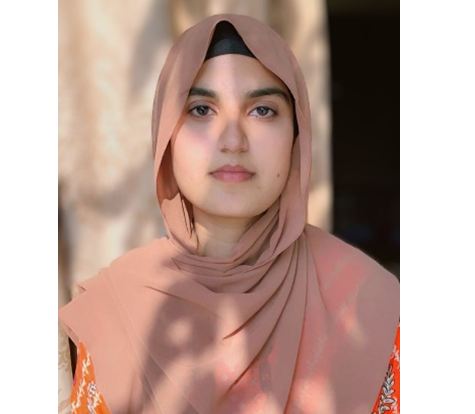
Saman Zahra

The issue of rape in Pakistan remains one of the most disturbing and persistent challenges within the domain of public safety, criminal justice and gender relations. Understanding the legal, social and structural dimensions of the problem is necessary for an honest discussion on why sexual violence continues at alarming levels and why so many survivors remain without justice.

In Pakistan, rape is defined under Section 375 of the Pakistan Penal Code (PPC) 1860. According to this provision, rape occurs when a man has sexual intercourse with a woman without her consent. Several specific conditions clarify this definition. Consent obtained through threats of death or serious harm is not considered valid. A woman below sixteen years of age is legally unable to consent, making intercourse with her rape regardless of circumstances. Furthermore, consent given under the mistaken belief that the man is her husband also falls under the definition of rape. These provisions show that the law recognizes both physical force and coercion as central elements of the crime, while also acknowledging deception and age-related vulnerability.Legal definitions alone, however, provide only part of the picture. Rape in Pakistan is situated within a complex social structure shaped by gender norms, cultural expectations and deep-rooted inequalities. Attitudes toward sexual violence are affected by several factors: restrictive views on sexuality, limited knowledge about bodily autonomy, increasing exposure to global cultural trends, weak social protection systems and the exploitation of vulnerable individuals by those in positions of influence. Psychological aspects further complicate the situation. Survivors often experience long-term trauma, anxiety, fear and mistrust. Childhood abuse, adverse family environments and the normalization of gender-based violence contribute to a cycle in which harm continues across generations.

The importance of openly addressing rape in Pakistan cannot be overstated. Silence and denial only deepen the suffering of victims and strengthen the social obstacles they face. Large segments of the population have limited understanding of how widespread the problem is or what legal protections exist for victims. The number of reported cases is far smaller than the actual number of incidents. Fear of blame, pressure from family or community and widespread distrust in the justice process stop survivors from coming forward. Many who do report are subjected to harsh questioning, stigma and isolation. According to the Human Rights Commission of Pakistan, more than eleven cases of rape are reported every day, while countless others remain hidden due to fear and lack of support. Awareness, education and preventive measures are therefore essential for reducing violence and encouraging victims to seek help.

Historical and contemporary data highlight both long-term patterns and recent fluctuations. A study conducted in 1988 revealed that 72 percent of women who were held in custody had experienced some form of abuse, while 20 to 30 percent of women across the country faced domestic violence. Between 2002 and 2004, Karachi recorded between 61 and 78 rape cases annually based on local FIRs, already a troubling figure given how many incidents go unreported. A 2004 report documented 728 rape cases, including gang rapes, along with other acts of violence such as assault, acid attacks and murder.From 2006 to 2016, Punjab saw reported cases double—from around 1,500 per year to nearly 3,000. More recent national data from 2017 to 2024 shows sharp ups and downs: 3,300 cases in 2017, rising to over 4,300 in 2019, decreasing in 2020, then jumping to more than 5,100 in 2021. Reports dropped again in 2022, rose to around 6,600 in 2023 and saw a modest decline in 2024. These numbers, although alarming, still fail to reflect the full magnitude of the problem because underreporting remains widespread.

Several high-profile cases have brought national and international attention to the issue. The 2002 case of Mukhtaran Mai exposed grave failures in protecting women in rural areas. The tragic murder of Zainab Ansari in 2018 mobilized public outrage and resulted in legal reforms focused on child protection. The Lahore Motorway case in 2020 revealed gaps in policing and public safety. The killings of Noor Mukadam (2021) and other similar cases highlighted the dangers women face even in supposedly secure environments. Mass harassment incidents, such as the Minar-e-Pakistan case in 2021, demonstrated that collective violence against women is not limited to isolated criminals but can occur in public spaces. Cases like DuaZehra (2022) and Fatima (2023) continued to raise concerns about child protection and legal loopholes. By 2024, Lahore remained the city with the highest number of documented rape cases, although conviction rates stayed low across the country.

Child abuse is another deeply troubling aspect. Early 2023 data from Punjab showed 1,390 incidents of child abuse, many involving boys and typically committed by people known to the victims. Such cases highlight the need for stronger safeguards for children at home, in schools and in workplaces.Section 376 of the PPC addresses punishments for rape. Sentences range from ten to twenty-five years imprisonment, or the death penalty in certain cases. Aggravated forms of rape—such as crimes involving children, persons with disabilities, severe physical harm, or the misuse of official authority—carry harsher penalties, including life imprisonment.Over the years, legal reforms have attempted to strengthen the system. The Criminal Law Amendment of 2016 expanded the scope of Section 376, introduced greater protections for vulnerable victims and required the use of scientific evidence such as DNA. The 2006 amendments earlier separated rape from the Hudood Ordinance, which had long created legal complications for victims seeking justice. More recently, the 2020 Anti-Rape Ordinance introduced special courts for swift trials, crisis cells for victim support, improved forensic procedures and chemical castration for repeat offenders. Reports from 2018 to 2021 documented high levels of sexual violence, workplace harassment and custodial abuse, with Punjab again reporting the most incidents. Government and civil society responses included awareness campaigns, helplines, legal amendments and school-based safety initiatives.

Survivors of rape face numerous obstacles not only in the legal process but also in their daily lives. Cultural norms frequently blame victims rather than perpetrators. Many fear retaliation from the offender or from community members who want to suppress the incident. Weak investigative procedures, delayed trials and gaps in forensic capabilities further discourage reporting. Psychological effects such as depression, fear, post-traumatic stress and social withdrawal often last for years. International estimates from the United Nations suggest that less than ten percent of rape cases are reported and Pakistan’s rate is likely even lower.Addressing sexual violence requires multiple, consistent efforts. Legal reforms must be matched with effective implementation, faster trials, trained investigators and reliable forensic processes. Consent education in schools and communities is important for reducing harmful attitudes. Public awareness campaigns can help counter victim-blaming and encourage families to support survivors. NGOs and community groups play an important role in providing safe spaces, counseling and legal guidance. Young people can contribute by volunteering in awareness programs, using social media responsibly to highlight safety issues and promoting respectful behavior in their surroundings.

Reducing rape in Pakistan is not only a legal challenge but also a social one. It requires a collective willingness to confront uncomfortable realities, protect those who come forward and build systems that prioritize safety, dignity and justice for all.

Saman Zahra

[email protected]

Stay Connected

64FansLike
60FollowersFollow

Latest Reviews

Exchange Rates

USD - United States Dollar
EUR
1.14
GBP
1.34
AUD
0.69
CAD
0.71