Home Blog Page 373

Saudi military chief visits GHQ

Saudi military chief visits GHQ

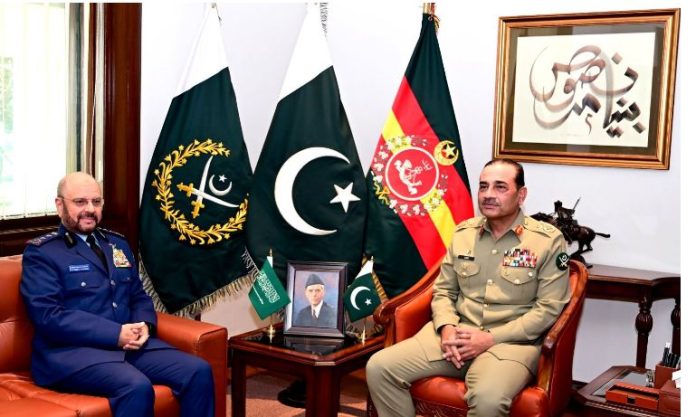
RAWALPINDI, NOV 24 /DNA/ – General Fayyadh Bin Hameed Al Rowaili, Chief of General Staff (CGS), Saudi Armed Forces, called on General Syed Asim Munir, NI (M), HJ, Chief of Army Staff (COAS), at General Headquarters (GHQ) today.

During the meeting, both leaders discussed matters of mutual interest, with a particular focus on strengthening the longstanding and strategic military cooperation between Pakistan and Saudi Arabia. They emphasized the importance of further enhancing defence collaboration, security cooperation, and counter-terrorism efforts, which continue to be pillars of the deep-rooted bilateral relationship.

The visiting dignitary appreciated Pakistan’s cooperation in multiple fields with Saudi Armed Forces and reaffirmed his commitment to furthering the strong bonds of cooperation.

Upon arrival at GHQ, General Fayyadh Bin Hameed Al Rowaili, laid a floral wreath at Yadgar-e-Shuhada and was presented a Guard of Honour by a smartly turned-out contingent of the Pakistan Army.

Can Eastern and Western Canada Ever Bridge the Divide?”

Qamar Bashir

By Qamar Bashir

Canada is often celebrated as one of the most diverse, modern, and tolerant nations in the world, a country that welcomes millions of immigrants from South Asia, China, Korea, Vietnam, the Middle East, and Africa. These communities have enriched Canada’s social fabric, strengthened its workforce, and reshaped its major cities into multicultural hubs that symbolize coexistence and opportunity. Yet beneath this impressive surface lies a deep structural tension that has existed for decades but rarely receives global attention: the simmering animosity between Eastern and Western Canada. This divide is not merely a matter of geography. It touches politics, economics, identity, federal power, culture, and the question of who controls the future of the Canadian federation.

The tension often surprises new immigrants who see Canada as unified, peaceful, and predictable. But historically, the East–West divide has been one of the most persistent challenges to national cohesion. Eastern Canada—primarily Ontario and Quebec—has long been the political, financial, and demographic center of the country. Western Canada—Alberta, Saskatchewan, British Columbia, and Manitoba—has developed a parallel identity built on natural resources, self-reliance, and a deep suspicion that federal policies are shaped by Eastern priorities at the West’s expense.

At the center of this animosity is the sense of exploitation felt strongly in Alberta and Saskatchewan. These provinces have powered Canada’s economy for decades through oil and gas revenues, yet they argue that federal decisions consistently limit their growth while forcing them to shoulder financial burdens through equalization payments. Many Western Canadians believe that they “pay into a system run by the East that redistributes money back to the East,” and this sentiment has fueled movements like the Alberta independence campaign and the Wexit movement, which at one point gained significant public traction.

Economically, the divide is rooted in two competing visions of Canada. The East depends on manufacturing, technology, service industries, and global finance, particularly in the Ontario–Quebec corridor. These sectors naturally align with progressive environmental targets, carbon pricing, renewable energy strategies, and the climate agenda that Ottawa frequently pursues. Western Canada, by contrast, relies heavily on oil, gas, mining, forestry, and agriculture—industries that suffer whenever federal regulations tighten. The federal carbon tax, pipeline restrictions, and environmental review delays are not simply policy disagreements—they are viewed in the West as existential threats to the livelihood of entire communities. When the East pushes for rapid energy transition, the West hears a call to dismantle its economic engine.

Politically, the divide is equally stark. Ontario and Quebec are strongholds for the Liberal Party and the NDP, both of which promote centralized federal governance, climate policy, multiculturalism, and social spending. The western provinces overwhelmingly vote Conservative and emphasize lower taxes, deregulation, and provincial autonomy. Because federal governments are almost always elected through the population-heavy provinces of the East, the West often feels politically irrelevant. There have been national elections where Alberta and Saskatchewan voted nearly unanimously for one party, only to watch the opposite party form a government with limited representation from the West. The feeling of disenfranchisement grows deeper every electoral cycle.

Culturally, Eastern and Western Canada have grown in different directions as well. The East has experienced waves of immigration since the 1960s, reshaping Toronto, Montreal, and Ottawa into diverse global cities. Western cities like Calgary and Vancouver are also highly multicultural but maintain a stronger frontier-style identity—independent, pragmatic, entrepreneurial, and often skeptical of federal narratives. French–English linguistic duality heavily influences Eastern political attitudes, while Western provinces tend to view national identity through an economic and practical lens rather than a historical or linguistic one.

Attempts by federal leadership to bridge the divide have been well-intentioned but largely unsuccessful. Ottawa has tried to modify equalization formulas, negotiate pipeline deals, expand interprovincial trade, or offer climate subsidies to resource provinces. But each attempt has run into structural limitations. When the federal government approves pipelines, environmental groups and Eastern provinces challenge them in courts. When Ottawa imposes carbon taxes, Western provinces challenge the federal government. When the East demands quicker climate action, the West accuses Ottawa of destroying the resource economy. The federal government sits between two visions of the country—one built on global environmental commitments and another built on natural resource prosperity—and any attempt to satisfy one fuels resentment from the other.

Moreover, the constitutional framework itself contributes to the problem. Natural resources belong to provinces, but environmental regulation belongs to Ottawa. Immigration belongs to Ottawa, but settlement services rely on provinces. Infrastructure crossing provincial borders must be approved federally, but land control remains local. The overlapping jurisdictions create an ongoing tug-of-war that keeps East and West locked in conflict, each side claiming to defend its constitutional rights.

The consequences of these unresolved tensions could shape Canada’s future in serious and unpredictable ways. If the divide continues to widen, Canada may face increasing regional polarization, weakened national unity, and growing separatist sentiment—not only from Quebec, but also from Alberta and Saskatchewan. A prolonged economic downturn in the West, combined with continued political dominance by Eastern provinces, could reignite separatist movements that previously seemed improbable in a country known for harmony. Already, polling in Alberta has shown surprisingly strong support for independence during moments of economic crisis or federal overreach. Such sentiment does not disappear; it lies dormant, waiting for another spark.

On the other hand, if federal leadership acts decisively and creatively, there is still room to heal the divide. Canada could redesign equalization to better reflect resource revenue volatility, treat interprovincial pipelines as strategic national infrastructure, decentralize certain federal powers, and build a more transparent framework for climate transition that does not punish resource provinces. A balanced approach could demonstrate that Canada’s unity is not based on uniformity but on partnership. A federation as geographically huge and economically diverse as Canada cannot function on a “one-size-fits-all” model; it must recognize the legitimacy of regional priorities and build national policy that respects them.

Canada’s future will depend on whether it sees its internal differences as threats or as sources of strength. The East and West each bring something vital to the national project—the economic engines of the West and the financial, educational, and cultural institutions of the East. Integration, cooperation, and mutual respect will determine whether Canada remains a stable, prosperous federation or drifts toward fragmentation in slow motion. The divide is real, the grievances are deep, but the potential for unity still exists—if leaders choose to build bridges instead of boundaries.

By Qamar Bashir

Press Secretary to the President (Rtd)

Former Press Minister, Embassy of Pakistan to France

Former Press Attaché to Malaysia

Former MD, SRBC | Macomb, Michigan, USA

U.K. and Pakistan celebrate ties

U.K. and Pakistan celebrate ties

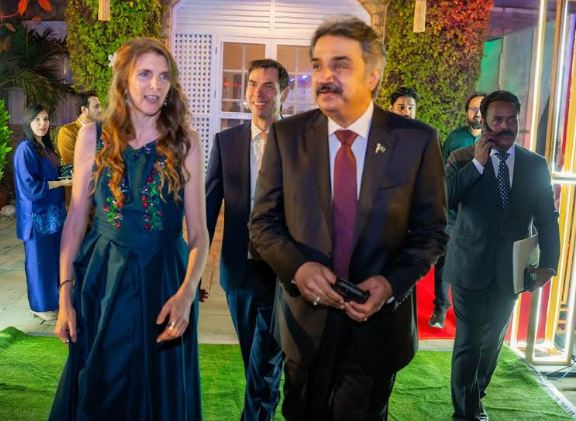
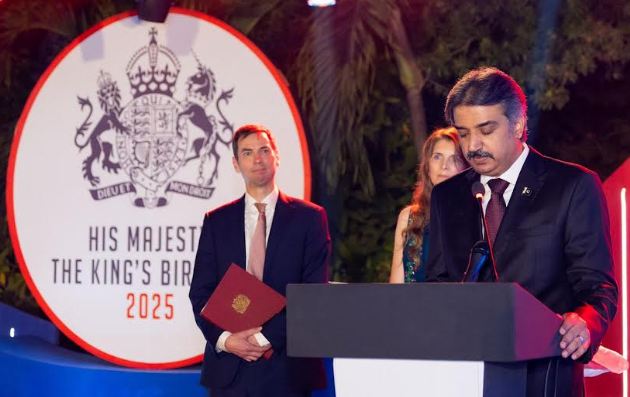
KARACHI, NOV 24 /DNA/ – Speaker of the Sindh Assembly, Awais Qadir Shah, joined British High Commissioner Jane Marriott CMG OBE and Governor Sindh Kamran Tessori to celebrate His Majesty King Charles III’s 77th birthday in Karachi.

The Karachi event concluded this year’s His Majesty the King’s Birthday Party celebrations in Pakistan, bringing together guests from across government, business and the creative sector to honour the strong cultural and people-to-people links between the UK and Pakistan.

This year has also seen steady progress across UK supported programmes in Sindh.

Under Aawaz II, five District Child Protection Units in Sindh have improved their capacity to process and respond to cases through training for one hundred and fifty social service workforce members, alongside the creation of seventy-five community forums that support safer and more inclusive dialogue. Schools damaged by the 2022 floods were rehabilitated in three districts, the UK provided vital support in Sindh during this years floods, and education research and teacher development initiatives continued in Karachi through UK backed programmes.

British High Commissioner to Pakistan, Jane Marriott CMG OBE, said:

“Karachi captures so much of what the UK and Pakistan share: energy, creativity and a spirit of openness. It is the beating heart of Pakistan’s economy. Businesses here, as well as across the country, have played a central role in driving bilateral trade between the UK and Pakistan past £5.5 billion this year. We look forward to building on this momentum and unlocking even more opportunities together.”

The celebration featured performances by Ayesha Ijlal, Khudgharz and DJ Ahmed, with the Pakistan Naval Band opening the evening by playing the national anthems of Pakistan and the United Kingdom.

The Dawn of a Reclaimed Reputation

The Dawn of a Reclaimed Reputation

by Muhammad Mohsin Iqbal

In the conduct of nations, reputation is not an ornament but a form of power. States that are trusted, respected, and taken seriously enjoy a diplomatic space unavailable to those who speak hesitantly or act apologetically. For Pakistan, a country positioned at the crossroads of regional turbulence and global scrutiny, reputation has never been a luxury—it has been a matter of stability, security, and, at times, survival. The events of May 2025 marked a turning point in this long and often complicated journey, for Pakistan demonstrated, both in the military and diplomatic arenas, that clarity of purpose can prevail over decades of misperception.

For years, India employed a strategy of provocation mixed with narrative warfare, seeking to cast Pakistan as a reckless actor, even when circumstances told a different story. Whether through ceasefire violations along the Line of Control or through orchestrated media campaigns, India repeatedly attempted to create conditions in which Pakistan could be cornered. In most of those episodes, Pakistan opted for restraint. Governments of the time believed that prudence would earn the world’s appreciation and that avoiding escalation was itself a contribution to regional peace. Yet restraint, when misread, becomes an invitation for further provocation. Silence can be mistaken for weakness, and caution for guilt.

In May 2025, India attempted once more to force Pakistan into a position from which it could either be diplomatically discredited or militarily pressured. The incursion—unprovoked and tactically unsound—was designed to test Pakistan’s response and to project India’s long-cherished illusion of regional supremacy. But this time the calculation failed. Pakistan responded with precision, demonstrating both capability and restraint. The operations were defensive, proportionate, and aimed solely at neutralising the immediate threat. Nothing more, nothing less.

What truly reshaped the regional and global narrative, however, was what followed. Intelligence shared with international partners, satellite imagery analysed by neutral observers, and testimony from independent experts all converged on a single conclusion; Pakistan had neither initiated nor escalated the crisis. The United States President—his words scrutinised globally—publicly affirmed this conclusion. A detailed report later presented to the US Congress further strengthened Pakistan’s position, noting that India’s actions were “inconsistent with its stated claims” and that Pakistan had acted in “legitimate self-defence under international law.”

This was unprecedented. For years, Pakistan had been compelled to explain its innocence; now India found itself explaining its conduct. The diplomatic embarrassment New Delhi faced was amplified by its own media, which, in the age of instant global verification, could not sustain the usual narrative of unilateral heroism.

Simultaneously, another long-standing issue reached a moment of international clarity; cross-border terrorism emanating from Afghan territory. Pakistan had warned repeatedly that the Tehreek-e-Taliban Pakistan (TTP), sheltered and guided by hostile intelligence elements, was orchestrating attacks against Pakistani security forces. Despite providing evidence over the years, Islamabad found its voice muffled by geopolitical preferences and selective interpretations of regional realities.

But the pattern changed in 2025. When TTP militants, operating under Indian facilitation, launched renewed attacks from Afghan soil, Pakistan not only neutralised the perpetrators but also presented comprehensive evidence to key capitals and international bodies. For the first time, the evidence was accepted without hesitation. The United Nations acknowledged that the TTP constituted a serious threat to Pakistan’s security. The European Union followed suit, urging that the group be internationally proscribed. Several countries, which had previously offered vague statements, now spoke with directness; the TTP was a terrorist organisation, and Pakistan was its primary victim.

This global alignment with Pakistan’s long-affirmed position did more than validate its grievances. It restored Pakistan’s diplomatic dignity on an issue where it had been unfairly questioned for far too long. The world recognised that Pakistan was not merely reacting to threats—it was confronting a sustained campaign to destabilise it. The confirmation of these facts by respected international institutions elevated Pakistan’s stature and made its voice more authoritative in regional diplomacy.

These developments collectively signalled that Pakistan’s narrative had shifted from defensive explanations to principled assertions. They showed that the international community responds not to apologetic language but to confident, evidence-based diplomacy. The events also underscored that military preparedness and diplomatic clarity are not contradictory; rather, they reinforce each other when guided by responsibility.

Yet this moment is not an end but a beginning. Having restored its credibility, Pakistan must now sustain the momentum. Its responsibility extends beyond its borders; the region stands at the threshold of either renewed conflict or unprecedented cooperation. Pakistan’s role, therefore, is not merely to defend itself but to shape a stable, peaceful environment in South Asia and beyond.

The lessons of 2025 are crystal clear. A nation that speaks with conviction is heard. A nation that responds with discipline is respected. And a nation that stands firm on principle becomes a force for regional stability. Pakistan, having reclaimed its honoured standing in the community of nations, must now carry this confidence forward—steadily, wisely, and without ever surrendering the dignity it has so justly earned.

Pakistan’s poor bear highest cost of power crisis: Reveals PIDE Study

Pakistan’s poor bear highest cost of power crisis: Reveals PIDE Study

ISLAMABAD, NOV 24 /DNA/ – A new Knowledge Brief by the Pakistan Institute of Development Economics (PIDE) warns that Pakistan’s power sector crisis has evolved into a deep socioeconomic imbalance, where the poorest households are paying the highest price for the country’s inefficiencies. Authored by Dr. Rubina Ilyas, Research Economist at PIDE, the study titled “Circular Debt and Electricity Tariffs: Unequal Burdens Across Household Quintiles in Pakistan” quantifies how circular debt—now exceeding PKR 2.6 trillion—has translated into regressive electricity tariffs that disproportionately impact low-income families.

Despite Pakistan’s generation capacity exceeding 45,000 MW by mid-2025, the sector remains fiscally insolvent. Power Distribution Companies (DISCOs) continue to face 16–17 percent transmission and distribution losses, with bill collection rates ranging from 95 percent in IESCO and LESCO to as low as 60 percent in PESCO and QESCO. These inefficiencies, coupled with delayed subsidies and mounting capacity payments, have trapped the energy sector in a debt-driven cycle of price escalation and financial instability.

The study reveals that the average national tariff has nearly tripled, rising from PKR 12.5 per kilowatt-hour (kWh) in 2015 to PKR 34.45/kWh in 2025. Crucially, 30–35 percent of this tariff is composed of non-energy financial adjustments such as debt repayments and surcharges, not actual power generation costs. “Every rupee of circular debt is being passed on to consumers through uniform surcharges, effectively making the poor pay for inefficiencies they did not create,” notes Dr. Ilyas.

For the bottom income quintile, consuming up to 100 kWh per month, the tariff has increased from PKR 11.72/kWh in 2018 to PKR 22.44/kWh in 2025, of which nearly 37 percent comprises circular-debt-related surcharges. Middle-income households (Q3), consuming around 250–300 kWh per month, now face effective tariffs of PKR 34.2/kWh, while higher-income users (Q5, consuming over 700 kWh per month) pay PKR 46.5/kWh. However, the share of non-energy costs within total bills declines from 60 percent for the poorest households to 30 percent for the richest, illustrating the regressive nature of current tariff recovery mechanisms.

The findings also show that the poorest 40 percent of households (Q1–Q2) pay around 55–60 percent of the total Debt Servicing Surcharge (DSS), even though they earn less than 30 percent of national income, while the top quintile which earns nearly 45 percent of total income, contributes only 15–20 percent of DSS. This inequitable burden underscores that Pakistan’s circular debt problem is not just financial rather it is a distributional injustice embedded within the electricity tariff structure.

The PIDE brief calls for urgent reform to restore both fiscal sustainability and social fairness. It recommends targeting the DSS and Tariff Rationalization Surcharge (TRS) only to high-consumption users (above 200 kWh per month), shifting circular debt servicing to fiscal accounts as sovereign liabilities, linking DISCO subsidies to performance and loss-reduction targets, and expanding lifeline coverage to 100 kWh per month with dynamic targeting for low-income households.

Dr. Ilyas concludes that Pakistan’s circular debt crisis has effectively turned electricity tariffs into a quasi-fiscal instrument, where the poor subsidize inefficiency while the wealthy exit the grid through solar solutions. Without efficiency-based reforms, stronger governance, and progressive tariff restructuring, the circular debt menace will continue to perpetuate economic injustice and deepen energy poverty across the country.

PML-N sweeps by-elections: a moment for Soul-Searching

PML-N sweeps by-elections: a moment for Soul-Searching

The latest round of by-elections has concluded with the ruling Pakistan Muslim League-Nawaz (PML-N) securing victories on almost all contested seats, further consolidating its power. While the party celebrates what it calls a “public endorsement” of its governance, opposition parties have rejected the results outright, alleging massive rigging, misuse of state machinery, and manipulation of voter turnout. The controversy has once again pushed Pakistan’s electoral credibility into question.

One of the most surprising results came from Haripur — long considered one of the strongest political bastions of Pakistan Tehreek-e-Insaf (PTI). In a constituency where the ruling party in Khyber Pakhtunkhwa normally enjoys a clear advantage, PTI suffered a major upset. The defeat of Omar Ayub’s wife, a candidate backed by PTI leadership, has stunned political observers. Haripur has historically been a PTI stronghold, and in KP, sitting governments often maintain their seats in by-elections. This reversal has forced many to reflect on whether PTI’s internal turmoil, voter frustration, or external interference contributed to the loss.

For PTI, the result demands serious introspection. The party has long claimed unparalleled public support in Khyber Pakhtunkhwa, yet the by-election outcome signals a shift in political winds — or, as the opposition alleges, a controlled and engineered outcome. Regardless of the explanation, the defeat has triggered calls for soul-searching within PTI ranks, as well as a reevaluation of strategy, leadership approach, and organizational discipline.

However, beneath the political drama lies a much deeper and alarming reality: the public’s trust in elections has eroded to a dangerous extent. In the eyes of many Pakistanis, the by-elections lacked credibility, transparency, and fairness. Allegations of rigging have become almost routine in Pakistan’s electoral history — whether under civilian governments, caretaker setups, or even under the oversight of different Election Commissions. This growing trend of disputed mandates is now raising serious concerns about the future stability of the democratic process.

The Election Commission of Pakistan (ECP) finds itself once again in the crosshairs. Critics argue that it has not done enough to ensure impartiality or to address the systemic weaknesses that enable manipulation. Without meaningful reforms, stronger oversight, and unquestionable transparency, the ECP will continue to struggle to restore its legitimacy.

Beyond domestic politics, these developments carry significant international consequences. Credible elections are a prerequisite for attracting foreign investment, building international confidence, and securing economic partnerships. Investors are reluctant to engage with countries where political uncertainty prevails and electoral disputes become the norm. Pakistan, already grappling with economic challenges, cannot afford further reputational damage.

The latest by-elections serve as a stark reminder that Pakistan must urgently reverse the pattern of contested polls. The country cannot progress, build stable institutions, or achieve a respectable standing in the global community unless elections are seen as free, fair, and reflective of the people’s will. Political parties, state institutions, and civil society must collectively acknowledge the gravity of the situation.

If Pakistan wishes to move forward, strengthen democracy, and regain international trust, credible elections must become the rule — not the exception. The by-elections may be over, but the debate over Pakistan’s democratic future has only just begun.

Bangladesh presses India on ousted leader Sheikh Hasina’s extradition

Bangladesh presses India on ousted leader Sheikh Hasina's extradition

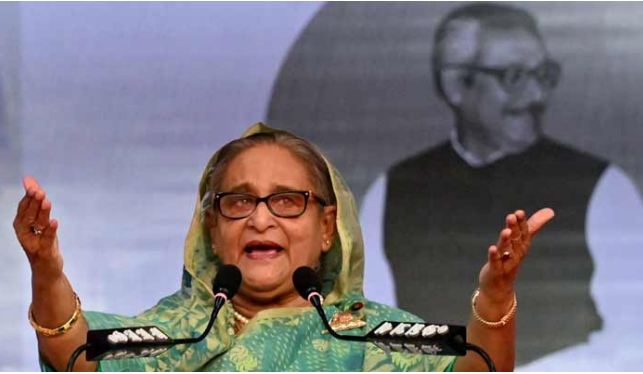
DHAKA, NOV 23: Bangladesh’s government said on Sunday it had asked India to extradite ousted prime minister Sheikh Hasina, who was sentenced earlier this week to be hanged over a deadly crackdown against a student-led uprising.

Hasina, 78, has been in hiding in India since her autocratic rule was overthrown in August 2024. As prime minister, she had had New Delhi’s backing.

Touhid Hossain, who holds the foreign affairs portfolio in Bangladesh’s interim administration, told reporters that on Friday “we sent a letter seeking the extradition of Sheikh Hasina.”

He did not elaborate on the contents of the letter, which according to Bengali newspaper Prothom Alo was the third official extradition request since Hasina fled.

Following the court ruling on Monday, convicting Hasina of crimes against humanity and sentencing her to death, the foreign ministry in Dhaka said in a statement that Delhi had an “obligatory responsibility” under a bilateral treaty to facilitate the former leader’s return.

India’s foreign ministry said in response it had “noted” the verdict, without directly commenting on the extradition request.

It did not immediately respond to the latest letter from Dhaka.

Bangladesh has been in political turmoil since the end of Hasina’s rule, and violence has marred campaigning for elections expected in February 2026.

The United Nations said up to 1,400 people were killed in crackdowns as Hasina tried to cling to power, deaths that were central to her trial.

India’s past support for Hasina has frayed relations between the two neighbours since her overthrow.

But tensions appear to have eased slightly when Bangladesh’s National Security Adviser Khalilur Rahman visited India this week for a regional security summit and met with his counterpart Ajit Doval.

Media reports in Bangladesh said Rahman has invited Doval for a visit.

Muhammad Saim Tahir wins Vice Admiral Chaudhry Golf Cup title

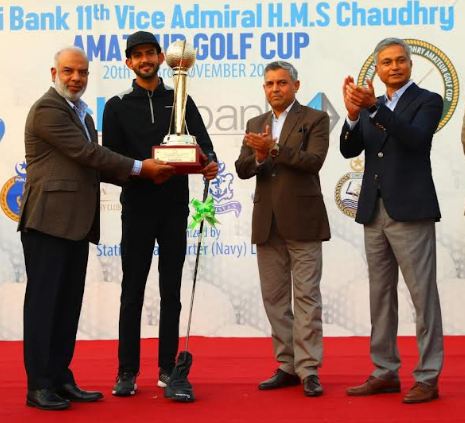
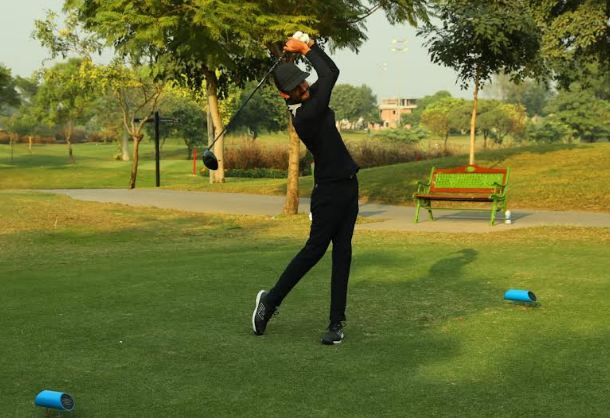
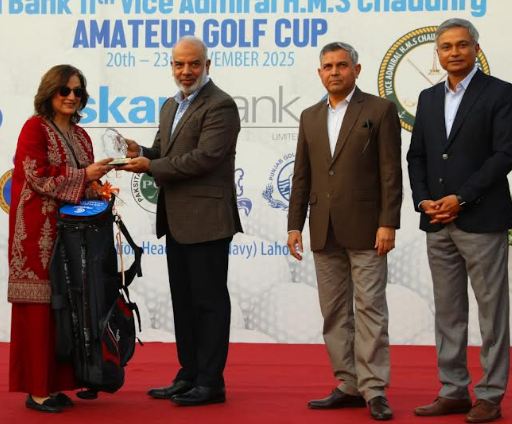
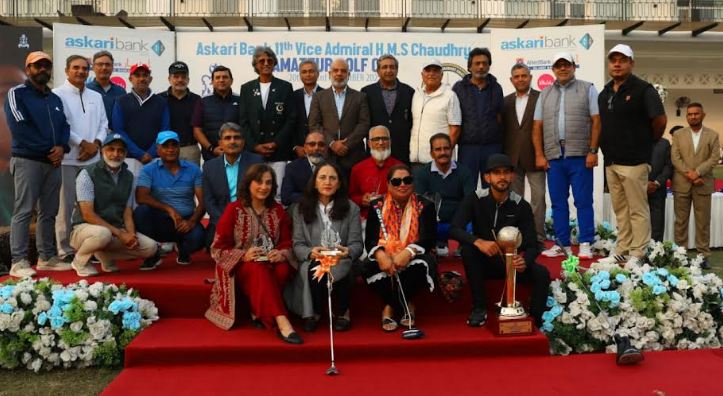
LAHORE, NOV 23 /DNA/ – Muhammad SaimTahir won the title of the 11th Vice Admiral H.M.S. Chaudhry Amateur Golf Cup 2025. Abdul Rauf Ali and ShahnazMoeen secured top positions in the Senior Amateur and Ladies categories, respectively. Chief of Staff, Pakistan Navy, Vice Admiral Raja Rab Nawaz graced the occasion as the Chief Guest.

While addressing the ceremony, the Chief Guest congratulated the winners on their remarkable achievements and commended all participants for displaying high standards of golf, with exceptional skill, precision, and sportsmanship throughout the tournament. He also acknowledged the unwavering support and contributions of the sponsors, media, and the management of Defence Raya Golf & Country Club, whose collective efforts ensured the event’s resounding success.

The four-day-long Golf Cup was held from 20 to 23 November 2025 at Defence Raya Golf & Country Club, Lahore. Around 185 golfers from across Pakistan participated in the event. Competitions were held in multiple categories, including Amateur, Senior Amateur, and Ladies.

The 11th Vice Admiral H.M.S. Chaudhry Amateur Golf Cup is a regular national-level golf event featured in the calendar of the Pakistan Golf Federation and the national golf circuit. The event reflects Pakistan Navy’s enduring commitment to fostering sportsmanship, physical excellence, and a strong national sports culture.

The closing ceremony was attended by various dignitaries, including officers, organizers, sponsors, golfers, and their families.

Pakistan strongly condemns Indian Defence minister’s dangerously revisionist remarks

Pakistan strongly condemns Indian Defence minister’s dangerously revisionist remarks

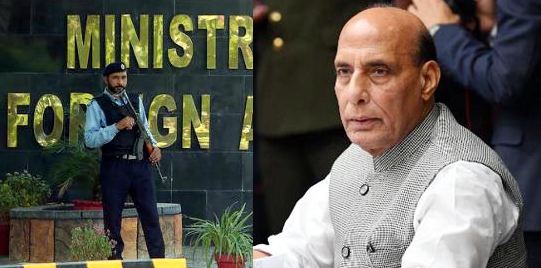
ISLAMABAD, NOV 23 /DNA/ – Pakistan strongly condemned the Indian Defence Minister’s delusional and dangerously revisionist remarks regarding Pakistan’s Sindh province. Such statements reveal an expansionist Hindutva mindset that seeks to challenge established realities and stands in clear violation of international law, the inviolability of recognized borders, and the sovereignty of states.

We urge Mr. Rajnath Singh and other Indian leaders to refrain from provocative rhetoric that threatens regional peace and stability. It would be far more constructive for the Government of India to focus on ensuring the security of its own citizens particularly vulnerable minority communities. It should hold accountable those who incite or perpetrate violence against them and address discrimination rooted in faith-based prejudice and historical distortions. India would also do well to address the persistent grievances of the peoples in its northeast, many of whom continue to face systematic marginalization, identity-based persecution, and cycles of state-enabled violence.

We call on India to take credible steps toward the genuine resolution of the Jammu and Kashmir dispute in accordance with UN Security Council resolutions and the aspirations of the Kashmiri people under occupation. Pakistan remains committed to peaceful resolution of all disputes with India on the basis of justice, equity and established international legal norms. At the same time, as in the past, Pakistan is firmly resolved to safeguard its security, national independence and sovereignty.

Tarar warns of repercussions as PTI shuns by-polls

Tarar warns of repercussions as PTI shuns by-polls

ISLAMABAD, NOV 23 (APP/DNA): Minister for Information and Broadcasting Attaullah Tarar on Sunday stated that Pakistan Tehreek-e-Insaf (PTI) was boycotting the majority of constituencies in the by-elections, cautioning that the move was bound to carry political repercussions.

Talking to media after attending the 29th National Age Group Swimming Championship (Boys) 2025 and the 24th Championship (Girls), he expressed the confidence that the Pakistan Muslim League-Nawaz (PML-N) will secure a clear lead.

 Tarar stated that political boycotts carry inevitable costs, emphasizing there was no room for such decisions in democratic practice.

He noted that the strong voter turnout in the by-elections signaled public confidence in the government’s performance, adding that the Pakistan Muslim League-Nawaz (PML-N) appeared poised to secure a clear lead.

He noted that the Sunday’s by-elections witnessed a robust voter turnout, with citizens from across social and economic divides stepping forward to exercise their democratic right.

In Lahore, unusually large crowds gathered at polling camps, while Dera Ghazi Khan reported a steady flow of voters throughout the day. Elderly citizens, young people and women turned out in significant numbers, reflecting broad public participation in the electoral process, he said.

Tarar stated that the PML-N candidate enjoyed a strong position in Lahore, with party teams actively involved throughout the polling process. He further noted that voter turnout for the party has been highly encouraging across Lahore, Faisalabad, Sahiwal and Dera Ghazi Khan.

He observed that even long-silent voters returned to the polls, attributing their renewed participation to the government’s performance. He further highlighted that Prime Minister Shehbaz Sharif’s leadership is earning recognition both at home and abroad, while Punjab Chief Minister Maryam Nawaz has delivered notable achievements within the province.

He stated that Pakistan’s armed forces enjoyed global recognition for their capabilities, while the country’s economy had also drawn international appreciation. He expressed the confidence that today’s election would be decided on the basis of performance and delivery.

Responding to a query on the Indian aircraft crash at the Dubai Airshow, the minister said investigations were underway and cautioned that it was too early to draw conclusions. He noted that, at this stage, it remained unclear whether the incident was the result of a technical fault or another cause.

Stay Connected

64FansLike
60FollowersFollow

Latest Reviews

Exchange Rates

USD - United States Dollar
EUR
1.14
GBP
1.34
AUD
0.69
CAD
0.71