Home Blog Page 37

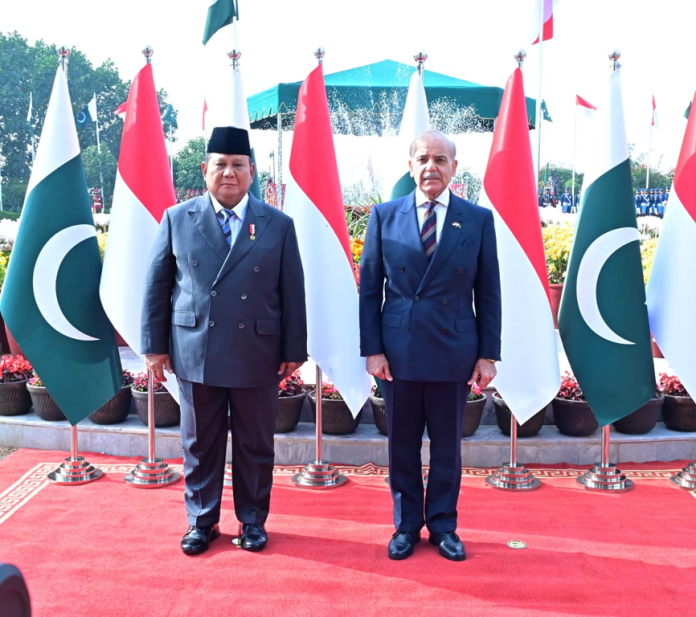
Pakistan, Indonesia pledge to diversify relations in all fields

PM Shehbaz Welcomes Indonesian President, says visit marks ‘New Horizons’ in bilateral ties; Indonesian President thanks Pakistan, sees bright future for bilateral ties

By Ansar Mahmood Bhatti

ISLAMABAD: The leaderships of Pakistan and Indonesia have pledged to further expand and diversify relations adding all efforts shall be made to make optimum use of potential that both countries have.

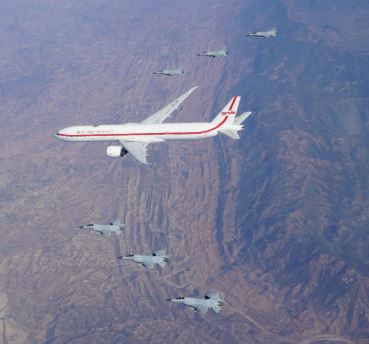
The President of Indonesia, in gracious remarks expressed profound gratitude to Prime Minister Shehbaz Sharif and members of the federal cabinet for the exceptional warmth and hospitality extended to him. He said the people of Pakistan had given him a touching reception, noting that “even before landing on Pakistani soil, I was welcomed by your Air Force pilots — a remarkable gesture of friendship.”

The Indonesian President reaffirmed that relations between the two nations remain “solid and enduring,” rooted in decades of mutual respect and shared aspirations. He revealed that Indonesia is embarking on a large-scale education and capacity-building initiative in the health sector, adding that Pakistan’s support would be “critical at this stage.” He welcomed Islamabad’s readiness to send doctors, specialists, and other professionals to contribute to Indonesia’s national development.

He further shared that he has instructed his ministers to fast-track efforts to rebalance bilateral trade. “We want to move at a fast speed,” he stressed, emphasizing the need for practical steps that transform goodwill into tangible progress. He praised the growing alignment between the two countries on regional and global issues, noting that both sides maintain close coordination in foreign policy.
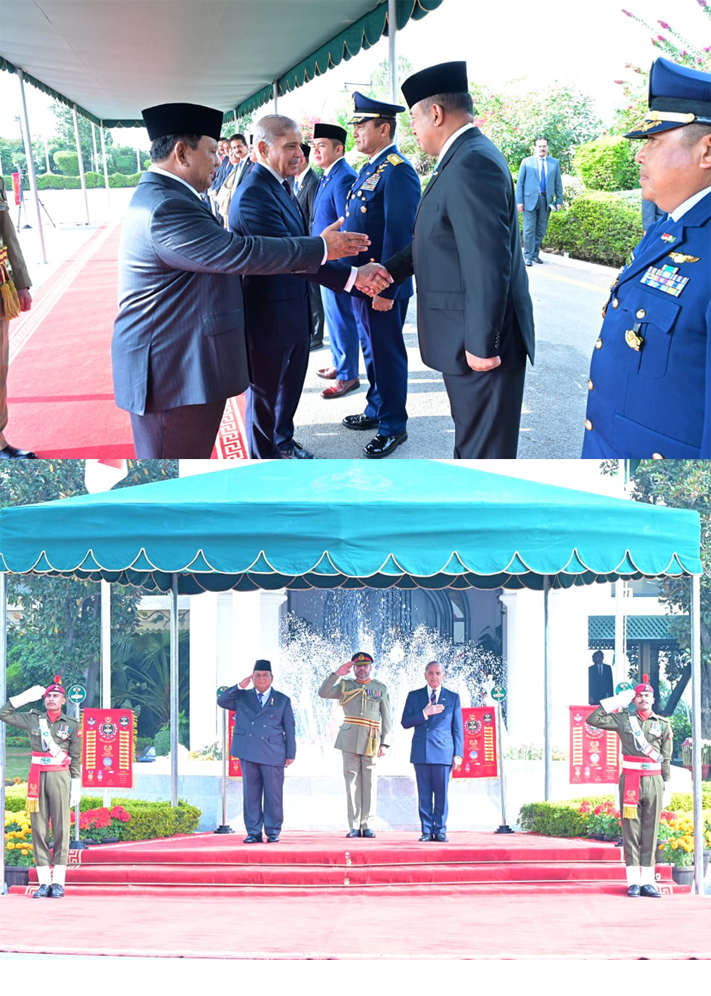
Touching upon the situation in Gaza, the President reiterated Indonesia’s unwavering commitment to the Palestinian cause. “We will not waver in our support to Palestine,” he asserted, adding that his foreign ministry is closely monitoring developments and coordinating with friendly nations, including Pakistan.

Looking to the future, the Indonesian leader said he felt optimistic about expanding cooperation across multiple sectors. Extending an invitation to Prime Minister Shehbaz Sharif, he said: “I welcome Prime Minister Shehbaz and other Pakistani leaders to visit Indonesia — come and see what we are doing and share your advice on how we can jointly enhance our partnership.”

He concluded that this visit was not merely symbolic, but a defining moment that would help both countries accelerate collaboration in health, education, trade, and foreign-policy coordination. The visit, he noted, sets the stage for a renewed era of engagement between Pakistan and Indonesia, built on trust, shared values and a commitment to progress.

Prime Minister Shehbaz Sharif warmly welcomed Indonesian President on his historic two-day visit to Pakistan, describing the occasion as a “deeply meaningful moment” that underscores the brotherly bond between the two nations.

Speaking at the joint press interaction, the Prime Minister said Pakistan felt “indebted and honoured” that the Indonesian President chose to visit Islamabad, the first such high-level visit in seven years. He noted that the presidential aircraft was welcomed by Pakistan Air Force jets — a gesture, he stressed, that was “not merely ceremonial, but an expression from the heart for a brotherly leader and a trusted partner.”

PM Shehbaz said the discussions held between the two sides were “exceptionally fruitful”, covering a wide spectrum of cooperation including trade, investment, palm oil procurement, information technology, energy, agriculture, education, and defence collaboration.

He highlighted that both sides agreed to expand economic engagement and explore new avenues of partnership. In particular, Pakistan expressed readiness to send Pakistani doctors, medical specialists, engineers, and other experts to Indonesia as part of its contribution to Indonesia’s ongoing national development.

“We will be happy to send our doctors, specialists and skilled experts to Indonesia. Pakistan is ready to partner in Indonesia’s progress in health, IT, agriculture and several other sectors,” the Prime Minister said, adding that the visit opens a fresh chapter in people-to-people and institutional cooperation.

PM Shehbaz said Pakistan takes immense pride in its 75-year-long diplomatic relationship with Indonesia — one of the earliest countries to establish ties after Pakistan’s creation. “Your visit coincides with the completion of 75 years of our relations. Let us celebrate this journey with zeal and renewed commitment,” he stated.

Recalling historical bonds, the Prime Minister noted that Quaid-e-Azam Muhammad Ali Jinnah, as President of the All-Pakistan Muslim League, had strongly supported Indonesia’s independence movement. He added that Indonesia has always stood by Pakistan in critical times, particularly during the wars with its neighbouring country, offering unwavering diplomatic and moral support.

“Indonesia supported Pakistan wholeheartedly in our hour of need. This is something we have never forgotten and will always cherish,” Shehbaz remarked.

He said Pakistan looks forward to increased high-level exchanges, collaboration in emerging technologies, enhanced investments, and joint initiatives in climate resilience, maritime security and halal trade.

Concluding his remarks, the Prime Minister reiterated that Pakistan values Indonesia not only as the largest economy in ASEAN but also as a close friend, an important Muslim-majority country, and a partner in the pursuit of global peace and development.

“We genuinely feel proud that you visited Pakistan. Our bonds are destined to grow even stronger,” he said.
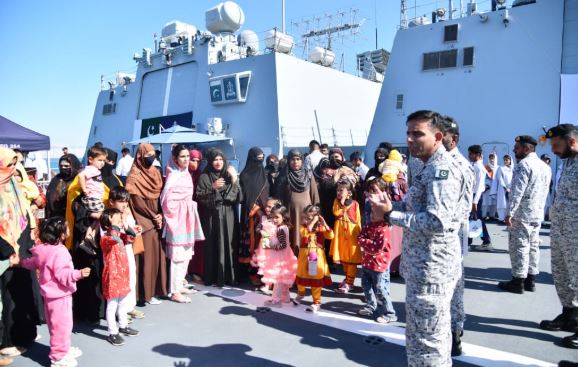

Gwadar Day Commemorates Historic Accession to Pakistan with Ceremony

Gwadar Day Commemorates Historic Accession to Pakistan with Ceremony

Gwadar, DEC 8 /DNA/ – The 67th Gwadar Day was commemorated with dignity and patriotic fervour to mark the historic accession of Gwadar to Pakistan on 8 December 1958, following 174 years of rule under the Sultanate of Oman. Major General Habib Nawaz, General Officer Commanding 44 Division, graced the occasion as Chief Guest. The ceremony began with an impressive flag hoisting at the Dimi Zar Flag Post in PNS AKRAM. Smartly turned-out naval guards and platoons presented salute while distinguished civilian guests stood in respect. The proceedings continued with speeches by prominent members of the local community, including female speakers from Government School Shamba Ismail and Bahria Model School.

Gwadar’s integration into Pakistan carries special importance for the Pakistan Navy, whose platoon led by Lt Iftikhar Ahmed Sirohey, later Chief of the Naval Staff and Chairman Joint Chiefs of Staff Committee, first hoisted the national flag in the city.

A large number of Officers from Armed Forces, Law Enforcement Agencies and civilians attended the ceremony, including Station Commander Pakistan Army, Commander 440 Brigade, Deputy Commissioner Gwadar and faculty members from Government School Shamba Ismail and Bahria Model School.

International anti-corruption day highlights youth’s role in fighting graft

International anti-corruption day highlights youth's role in fighting graft

ISLAMABAD, DEC 8 /DNA/ – It weakens institutions, affecting all of us, increasing inequalities and eroding the trust that keeps societies together. When corruption spreads, tensions deepen and communities become more fragile and vulnerable to conflict.

On this International Anti-Corruption Day, we recognize that young people understand these challenges and see these realities very clearly. Across the world, they are calling for systems that are more transparent, fair and accountable. Their demand for integrity is a broader aspiration for stability, inclusion and peace.

This message could not be more timely. This year, we mark the 10th anniversary of the UN Security Council resolution on youth peace and security, a milestone that affirmed the essential role of young people in preventing conflict and sustaining peace.

A decade ago, the international community acknowledged a simple truth. Peace is impossible without the meaningful participation of young people. Today, that role is even more clear. Integrity and anti-corruption are central to a stability agenda that directly impacts the youth peace and security framework.

When young people push for ethical leadership, for inclusive governance, and for more just institutions, they are helping to prevent conflict before it begins. They’re building the foundations of lasting peace and development. From leading community initiatives to creating innovative digital tools for transparency, young people are shaping a future where openness and accountability are guiding principles for public life. Their work is a reminder that where integrity grows, peace has space to grow too.

But creating this future is a shared responsibility. It requires open dialogue, joint work, respect for diverse perspectives and a commitment from all of us to strengthen trust wherever we can. Supporting integrity, transparency and ethical behavior benefits everyone.

When we stand with young people and amplify these values, we can create communities grounded in trust, in resilience and in lasting peace – a world where every young person has the opportunity to thrive.

Navy commemorates historic 1971 submarine victory over Indian warships

Navy commemorates historic 1971 submarine victory over Indian warships

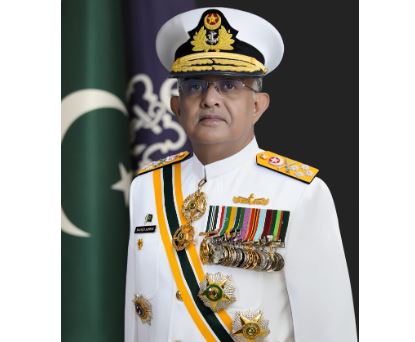
ISLAMABAD, DEC 8 /DNA/ – 54 years ago, on this day, PN Submarine HANGOR created history by sinking INS KHUKRI and crippling INS KIRPAN, the first submarine engagement against a warship post WW-II and the only successful attack by a conventional submarine in modern history. This moment remains etched in the annals of our naval history and a ghastly reminder for the enemy. It was not just a tactical victory but also a strategic demonstration of Pakistan Navy’s resolve to counter aggression and defend our maritime frontiers against all odds.

This day stands as a reminder of the courage, perseverance and devotion of the HANGOR crew. Their remarkable achievement symbolizes ALLAH SWT’s blessings and reflects the highest standards of professionalism, dedication and equanimity. The inspirational role and valour of our veteran submariners created a proud historical legacy for our submarine service which continues to enrich our precious heritage.

Pakistan Navy places special emphasis on our sub-surface offensive capability and our ongoing submarine acquisition programme with China bears testimony to this vision. The induction of eight HANGOR Class submarines will give a formidable boost to our offensive punch and provide operational flexibility to Pakistan Navy. As we celebrate our triumph, let us also not forget the Shuhada of PNS/M GHAZI, who sacrificed their lives for the defence of their motherland. Pakistan Navy will continue to draw inspiration from their ultimate sacrifice as well as exemplary feat of PNS/M HANGOR.

I wish submarine service all the success in their future endeavors.

May ALLAH SWT remain our Protector and Benefactor (Amen).

In the Shadow of the Kiln: A Debut That Redefines Environmental Storytelling in Pakistan

In the Shadow of the Kiln: A Debut That Redefines Environmental Storytelling in Pakistan

by Mudassar Javed Baryar

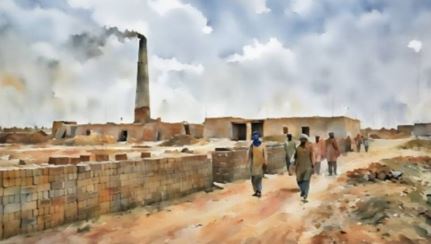
Aisha Hassan’s When the Fireflies Dance feels less like a debut novel and more like an early tremor of a writer who understands that Pakistan’s next great fiction will not emerge from cities, campuses, or intellectual salons, but from the smog-choked peripheries where labourers breathe in their own slow undoing. In this enthralling first work, Hassan writes not about the environment from a distance but from within its wound: the red earth, the black smoke, the claustrophobic winter smog and the brick-kiln landscape where human life and ecological life are crushed by the same hand.

This is an urgent novel, environmental in the deepest political sense, where ecology is not metaphor but material violence, etched into bone, breath, and memory. From the first page, the bhatti is introduced not merely as a workplace but as a malignant force: a “giant chimney” that “billowed thick, black smoke,” its evil eye fixed on the people below, its fumes settling like a curse on everything that grows, moves, or remembers. The soil is “red and loamy,” but its fertility is ironically what enables exploitation; the ground is “rent of all its green,” and the land’s depletion mirrors the emotional erosion of the families trapped there. Nothing in this novel is separate; environmental ruin is the grammar of survival.

The novel’s emotional power builds from its portrait of a family living under ecological and psychological siege. Lalloo returns to the bhatti each year like a pilgrim to a site of unresolved grief. His mother, broken by Jugnu’s death, rocks silently in the dark, hitting her head against a mud wall; an image so quiet yet so unbearable that it encapsulates the novel’s ability to wound without spectacle. His father, driven mad by guilt, crushes a sparrow during evening prayer, the small dead body lying on the “red earth” like a tiny omen of everything the bhatti destroys. Even Pinky, the child who has never known any world beyond this kiln, moves through life with dust in her hair and resignation in her bones.

Hassan does not dramatize ecological collapse; she shows how it seeps into routine: the families huddling under smog, the donkey’s ribs jutting out like exposed infrastructure, the rubbish heap’s stench rising “like a slap,” the winter sun hidden behind a “grey dupatta.” Pakistan’s environmental crises are often written about from the perspective of policy or urban anxiety. Hassan relocates those crises to where they originate, in the labour that powers our construction, our cities, our progress. This shift alone makes her voice distinct among contemporary women writers.

Yet the brilliance of When the Fireflies Dance lies not in its sociological clarity, but in its narrative urgency. The plot carries a quiet desperation: a daughter’s impending marriage, the father’s threat of taking another loan from the kiln owner Heera, the suffocating inevitability of debt bondage. With each decision the family makes, the reader senses the tightening of an invisible noose; one woven from poverty, exploitation, and an environment that offers no refuge.

In one of the novel’s most devastating passages, the family walks to Jugnu’s grave under a full moon. A few fireflies rise briefly above the mound—brief flashes of yellow-green light, appearing and disappearing so quickly that Lalloo wonders if they were even real. Those fireflies become the book’s emotional thesis: tiny survivals against total darkness, transient yet unforgettable. They are not symbols of hope, Hassan refuses such sentimentality, but signs of life persisting at the very edge of erasure.

Hassan’s prose is deeply controlled, almost understated, but beneath its restraint lies a ferocity. She writes in clean, sensory lines: the “smouldering behemoth” of the kiln, the “grey dupatta” sky, the taste of sewage on young Lalloo’s tongue, the brittle silence of a mother who cannot speak her grief. Her language is not ornamental; it is atmospheric. There is a journalistic sharpness in her observation, paired with a lyrical intimacy in her emotional intuitions. She writes like someone who has watched this landscape for a long time and refuses to look away.

In the broader tradition of Pakistani women’s writing, Hassan’s novel marks a shift; not away from the concerns of writers like Uzma Aslam Khan, Kamila Shamsie, or Bina Shah, but into a more grounded, class-bound environmental politics. Khan’s mountain ecologies, Shamsie’s cosmopolitan climate anxieties, and Shah’s gendered dystopias form important precursors, but Hassan’s vantage is different. Her eco-fiction grows not from the sublime or the futuristic, but from the inhaled toxins of Lahore’s outskirts. It is the environment as experienced by those whose names never appear in policy reports or climate panels. The women in her novel, Ami, Shabnam, Pinky, carry ecological disaster inside their lungs, their routines, their thinning futures. In this sense, When the Fireflies Dance expands the moral and imaginative territory of Pakistani Anglophone writing in a direction both urgent and overdue.

By the novel’s end, the reader realises that Hassan has accomplished something rare: she has written an environmental novel that is not about climate change statistics or heroic activism but about the intimate, inherited violence of a poisoned landscape. Her achievement is to show that environmental fiction in Pakistan must begin in the places where the air is unbreathable, the labour unpaid, the grief unspoken, where a firefly’s brief glow contains more truth about survival than any grand gesture.

A debut of startling maturity and visionary force, When the Fireflies Dance establishes Aisha Hassan as one of the most urgent new voices in Pakistan’s environmental fiction, one who understands that the land remembers everything we do to it, and sooner or later, our stories will have to answer back.

The review is written by Mudassar Javed Baryar, a doctoral researcher in English Literature at The University of Faisalabad (TUF), with a research focus on South Asian fiction, environmental narratives, and contemporary Pakistani Anglophone writing.

PM Shehbaz hails Pakistan–UAE ties as ‘Excellent’ on UAE’s 54th Eid Al-Etihad Day

PM Shehbaz hails Pakistan–UAE ties as ‘Excellent’ on UAE’s 54th Eid Al-Etihad Day

ISLAMABAD, Dec 8 /DNA/ — Prime Minister Muhammad Shehbaz Sharif has praised the strong and enduring partnership between Pakistan and the United Arab Emirates, describing bilateral relations as having grown from “cordial to excellent” over the years.

Speaking at an event marking the 54th Eid Al-Etihad Day of the UAE, the Prime Minister said the relationship between the two brotherly nations is “poised to grow even further,” supported by shared values, mutual respect, and a deep history of cooperation.

The Prime Minister extended warm greetings to the leadership and people of the UAE on the national occasion, noting that the UAE has always stood by Pakistan in times of need. He highlighted the UAE’s consistent support during economic challenges, natural disasters, and regional crises, expressing profound gratitude on behalf of the Pakistani nation.

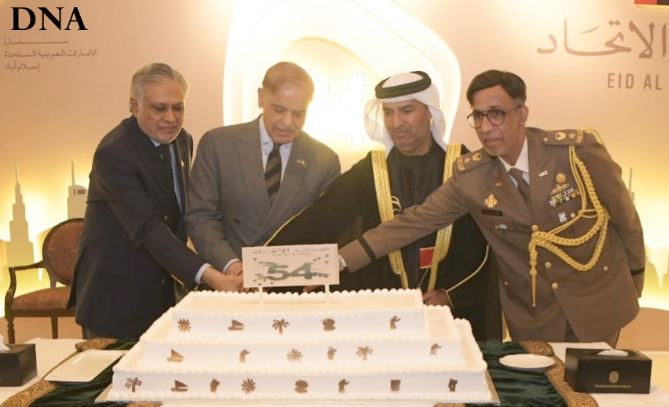
The Ambassador of the United Arab Emirates, H.E. Salem Alzaabi, hosted a grand reception in the capital on Monday evening to celebrate the 54th Union Day of the UAE.

The event was graced by Prime Minister Shehbaz Sharif as the Guest of Honour, alongside federal ministers, diplomats, senior officials, and notable figures from Pakistani society.

In his address Ambassador Alzaabi commemorated the historic unification of the Emirates in 1971 under the founding father, the late Sheikh Zayed bin Sultan Al Nahyan. He emphasized that this year’s theme, “United,” reflects the core values of unity, cohesion, and tolerance that have propelled the UAE’s remarkable development over five decades.

“This year’s celebrations coincide with the declaration of 2025 as the ‘Year of the Community’ in the UAE, reaffirming our leadership’s belief in the vital role played by all citizens and residents,” the Ambassador stated. He highlighted the UAE’s strategic national visions, including “We the UAE 2031” and the “UAE Centennial 2071,” which guide the nation’s advancement in clean energy, knowledge-based growth, and future-ready sectors.

Turning to bilateral ties, Ambassador Alzaabi spoke of the deep-rooted and historic friendship between the UAE and Pakistan, built on mutual respect and a shared vision for regional peace and development. “As we gather here in Islamabad, we are reminded of the strong bonds that unite our two nations,” he said.

Looking forward, the Ambassador outlined a robust commitment to strengthening the partnership. “We see tremendous potential for collaboration in various sectors, including renewable energy, artificial intelligence, sustainability, economic diversification, and agricultural innovation,” he announced. He expressed confidence that such cooperation would create new opportunities for the youth of both nations and drive innovation beneficial to the wider region.

In his concluding remarks, Ambassador Alzaabi extended heartfelt gratitude to the government and people of Pakistan for their consistent warmth, hospitality, and support. “May the bond between the UAE and Pakistan continue to grow stronger for generations to come,” he said.

The reception served as a vibrant testament to the enduring diplomatic and people-to-people ties between the two brotherly nations, with attendees celebrating the UAE’s national day amidst a spirit of camaraderie and shared future aspirations.

US, Pakistan open new hub for educational exchange in Islamabad

US, Pakistan open new hub for educational exchange in Islamabad

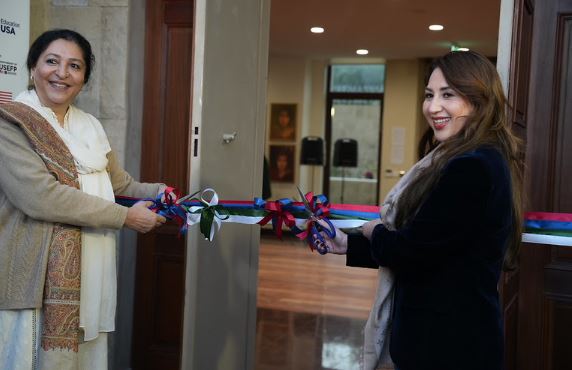
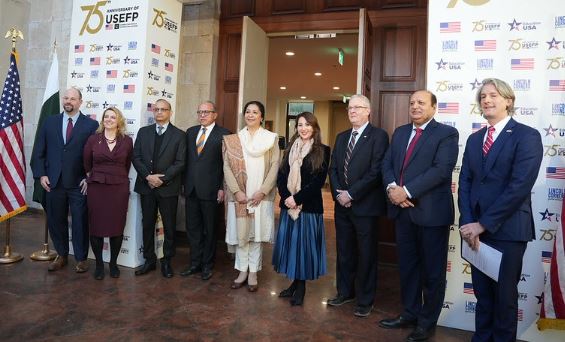
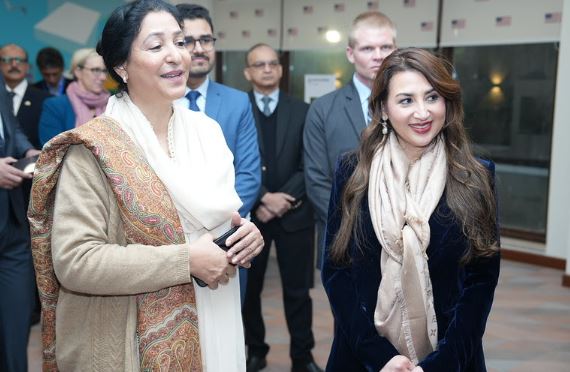
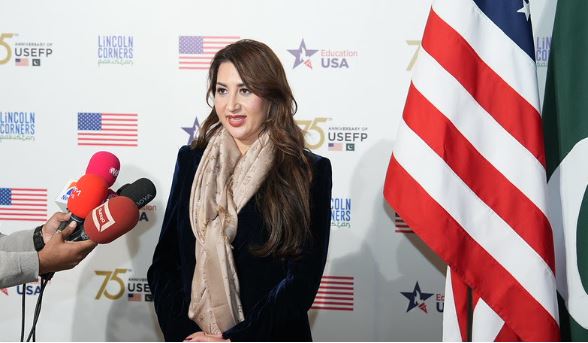
ISLAMABAD, DEC 8 /DNA/ – U.S. Embassy Islamabad’s Chargé d’Affaires (CDA) Natalie A. Baker joined Minister of State for Education Wajiha Qamar as they inaugurated a new purpose-built building of the United States Educational Foundation in Pakistan (USEFP) in Islamabad, marking a major milestone in the longstanding U.S.-Pakistan educational partnership.  This year also marks the 75th anniversary of the Fulbright program in Pakistan. 

CDA Baker noted that as the United States approaches its 250th anniversary in 2026, the new USEFP building will highlight America’s founding ideals and global impact, using this milestone to further strengthen U.S.-Pakistan relations. 

Designed to serve as a central U.S.-supported resource for learning and exchange, the new USEFP building is a five-story, 9,755-square-meter complex which will expand access to educational resources, empower Pakistani students and educators, and foster innovation.  By bringing together EducationUSA advising services, a Lincoln Corner, training spaces, and public programs under one roof, the building will equip Pakistan’s next generation with the skills and knowledge needed to thrive in a global economy. 

CDA Baker and Minister of State Qamar officially opened the building during a ribbon-cutting ceremony.  U.S. Department of State’s Principal Deputy Assistant Secretary for Educational and Cultural Affairs Sherry Keneson-Hall, Acting Deputy Assistant Secretary for South and Central Asian Affairs Shelly Seaver, USEFP Executive Director Peter Moran, USEFP Chair Kamal Uddin Tipu, artist and poet Dr. Raja Changez Sultan, and many distinguished guests from Pakistan’s academic and government sectors also attended the event. 

Speaking on the occasion, CDA Baker emphasized the long-term impact the new public building will have on advancing education in Pakistan and strengthening the U.S.-Pakistan bilateral relationship.  “This is more than a building.  It is a symbol of the deep commitment both the United States and Pakistan have to education, innovation, and building a safe, stronger, more prosperous future together.  It will also be used as a public space for Pakistanis to learn more about the United States and a place where people can come to exchange ideas on issues that affect us all,” she remarked. 

Established in 1950 as a binational commission, USEFP promotes mutual understanding through educational and cultural exchanges and is one of 49 Fulbright Commissions worldwide.  More than 9,000 Pakistanis and nearly 1,000 Americans have participated in USEFP-administered exchanges, enriching academic and cultural ties between the two countries. 

Tarar reaffirms enduring Pak-China friendship

Tarar reaffirms enduring Pak-China friendship

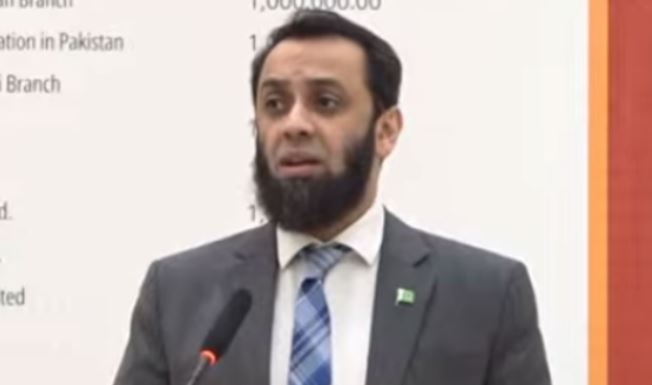
ISLAMABAD, 08 DEC (DNA) — Federal Minister for Information and Broadcasting Attaullah Tarar on Monday described China as Pakistan’s “second home,” stressing that Pakistan holds the same place for China. Speaking as chief guest at an event organized by the China Chamber of Commerce, Tarar highlighted the growing strength of bilateral ties, noting that the bond between the two nations continues to deepen with time.

He reaffirmed that Pakistan values its enduring friendship with China and pledged continued efforts to expand cooperation across all sectors. Tarar said China has supported Pakistan through every challenging moment, describing the friendship between the two countries as unmatched. He expressed gratitude to the Chinese leadership for its consistent backing and noted that people-to-people exchanges have enabled Chinese culture to flourish in Pakistan, further reinforcing bilateral relations.

He remarked that China has consistently stood by Pakistan during difficult times, adding that the passage of time has affirmed the two nations as true “iron brothers,” with a partnership that continues to grow in strength and trust.

Tarar also pointed out that Pakistan contributes less than one percent to global carbon emissions yet faces some of the most severe consequences of climate change. He stressed that the country ranks among the top ten most vulnerable nations despite its minimal role in the crisis, underscoring the urgent need for greater international support to help Pakistan address climate-related challenges. — DNA

Six JF-17 Thunder Jets escort Indonesian President Prabowo into Pakistan

Six JF-17 Thunder Jets escort Indonesian President Prabowo into Pakistan

ISLAMABAD, DEC 8 /DNA/ – In a remarkable display of hospitality and brotherhood, a 6-ship formation of JF-17 Thunder aircraft of Pakistan Air Force provided Ceremonial Air Escort to President of the Republic of Indonesia H.E Prabowo Subianto as his aircraft entered Pakistani airspace. As a symbol of the strong ties and mutual respect between the two nations, the formation leader extended warm greetings to President Prabowo Subianto, showcasing the commitment of Pakistan Air Force to strengthen bilateral relations. The aerial escort served not only as a gesture of goodwill but also as a testament to the enduring friendship and bod of brotherhood between the two countries.

JF-17 Thunder is a state-of-the-art, 4.5 generation, multi-role combat aircraft, that reflects the advanced capabilities of Pakistan Air Force. The ceremonial escort is a continuation of the tradition of honoring visiting dignitaries, highlighting PAF’s role in promoting peace and stability in the region.

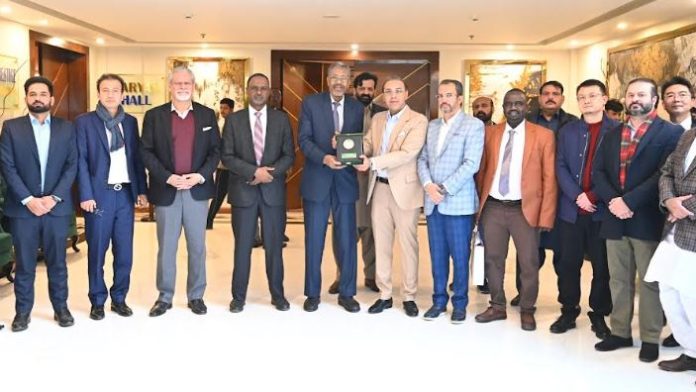
RCCI hosts Sudanese trade delegation

RCCI hosts Sudanese trade delegation


RAWALPINDI, DEC 8 /DNA/ – The Rawalpindi Chamber of Commerce and Industry (RCCI) hosted the Sudanese trade and health-sector delegation during their official visit to Pakistan. RCCI President Usman Shaukat welcomed the delegation and briefed them on the close cooperation, industrial landscape, and investment potential especially in pharmaceutical sector.

Additional Secretary (Africa), Ministry of Foreign Affairs, Ambassador Hamid Asghar Khan, was also present on the occasion. The Ambassador of Sudan to Pakistan is H.E. Mr. Salih Mohamed Ahmed Mohamed Siddig also in presence The Sudanese delegation included:

  • Dr. Ali Babikir Seid Ahmed Mohamed, Secretary General, National Medicines & Poisons Board
  • Dr. Badreldin Mohamed Ahmed ElGozoli, Director General, Medical Supplies Fund
  • Dr. Hayder Mohamed Abdel-Nabi, Director, Hospitals Department, Federal Health Ministry
  • Mohamed Marwan Awad, Head of Executive Office, Undersecretary of the Federal Health Ministry
  • Mr. Hatim Motasim Mohamed Ali, Representative, Economic Security

Discussions focused on collaboration in the health, pharmaceuticals, and medical technology sectors, with both sides exploring avenues for joint ventures, knowledge exchange, and strengthening bilateral economic ties. The delegation also visited local pharma factory Bio-Labs as part of their visit.

The delegation appreciated RCCI’s support and expressed interest in boosting cooperation between Pakistan and Sudan, particularly in the field of healthcare and pharmaceuticals.=DNA

========

Stay Connected

64FansLike
60FollowersFollow

Latest Reviews

Exchange Rates

USD - United States Dollar
EUR
1.17
GBP
1.34
AUD
0.67
CAD
0.73