Home Blog Page 367

French Alumni Gala celebrates talent, creativity and growing academic ties

French Alumni Gala celebrates talent, creativity and growing academic ties

By Ansar M. Bhatti

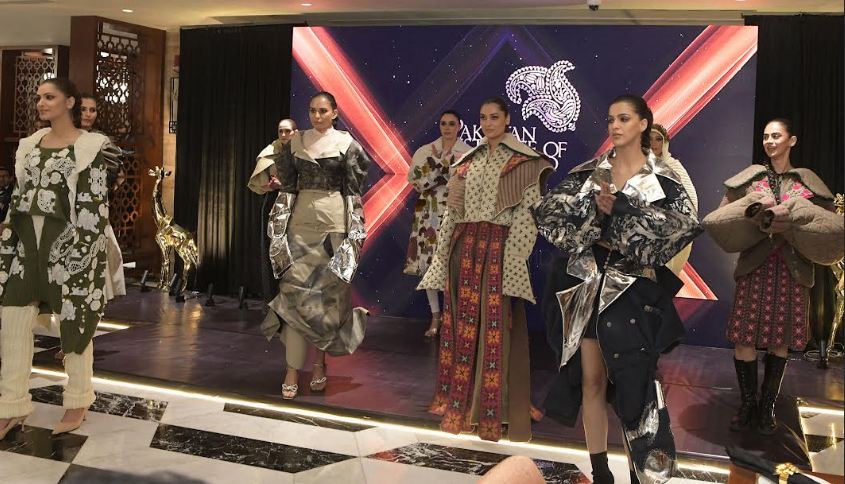
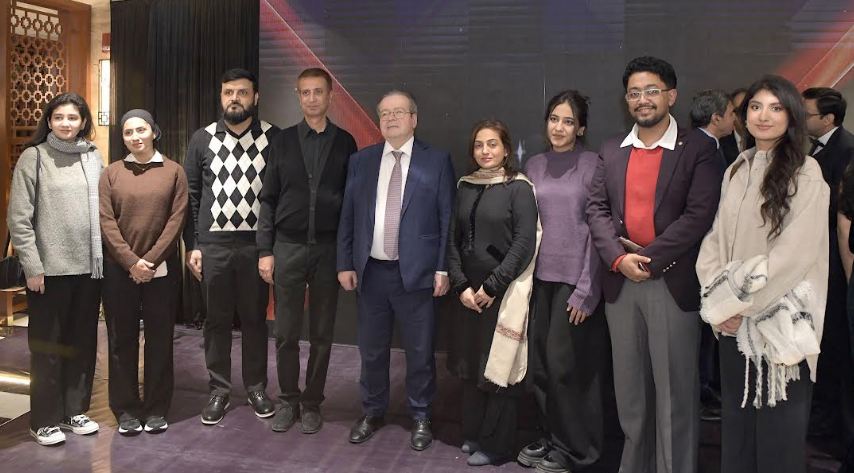
ISLAMABAD: The Embassy of France in Pakistan hosted a vibrant and elegant evening as it marked the third edition of French Alumni Day with a special Awards Distribution Ceremony and Fashion Show, celebrating Pakistan’s growing community of France-educated professionals. The event, held with the support of Campus France, marked a significant milestone with the launch of the first-ever French Alumni Gala and Excellency Awards in Pakistan.

French Ambassador Nicolas Galey, in his keynote address, highlighted the remarkable rise in Pakistani students choosing France as a study destination, noting that applications had surged from 200 only four years ago to an impressive 7,000 this academic year—a striking 35-fold increase.

“This growth reflects not only the interest of Pakistani students,” he said, “but also the increasing willingness of French academic institutions to deepen cooperation with Pakistani universities.” He credited the success of the annual Choose France Education Tours, held consecutively for four years, for resulting in numerous exchange agreements and enhanced institutional linkages.

Ambassador Galey emphasized that French Alumni Day was more than a reunion of former students. “The objective is to highlight the impact of studying in France for talented Pakistanis,” he noted. “Being part of this alumni network is an asset for individuals, their institutions, and Pakistan as a whole.”

He praised the contributions of Pakistani and French universities, the Campus France—Pakistan offices in Islamabad, Lahore and Karachi, and the cultural section of the French Embassy for their steadfast commitment. “Their efforts,” he said, “are fully aligned with the development of relations between France and Pakistan and are deeply appreciated by both governments.”

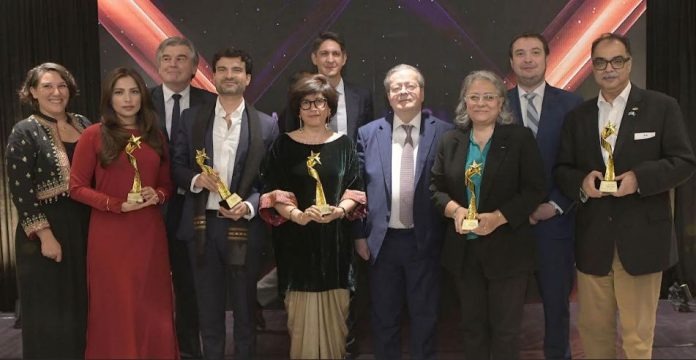
The highlight of the evening was the recognition of five remarkable alumni who have distinguished themselves in fields including banking, arts and theatre, gastronomy, consulting, entrepreneurship and women’s empowerment. Ambassador Galey said these individuals embodied the creativity, talent and modernity of today’s Pakistan, enriched by their academic experience in France.

He noted that French education builds values such as multicultural exposure, curiosity, innovation and the courage to take risks—qualities that make alumni highly sought after by major companies, especially in the energy, mobility, industrial and cosmetic sectors.

Ambassador Galey also acknowledged the support of the Pakistan-France Business Alliance, calling it a crucial partner in ensuring continuity between studies in France and professional engagement with French and Pakistani companies.

Expressing satisfaction over the growing interest in French higher education, he told the alumni: “You are the best ambassadors for France. Your experiences and achievements will continue to inspire young Pakistanis to follow the same path.”

True to French tradition, the evening concluded with a display of gastronomy and fashion, celebrating the cultural elegance France is known for. Ambassador Galey thanked the organizers and participants for making the event “unique and memorable,” while reaffirming that the dynamic alumni community remains a vital bridge between the two nations.

The gala not only showcased talent and success but also reaffirmed the deepening educational and cultural partnership between France and Pakistan.

Pakistan elected ECO Council of Ministers chair for 2026–27 term

Pakistan elected ECO Council of Ministers chair for 2026–27 term

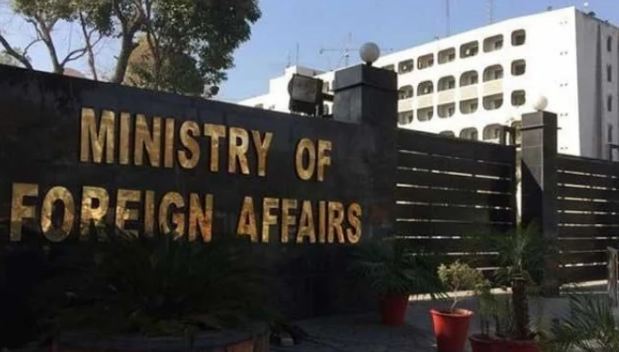
ISLAMABAD, NOV 28 /DNA/ –  Pakistan has been elected as the chair of the Economic Cooperation Organisation (ECO) Council of Ministers (COM) for the term 2026-27, read a statement issued by the Foreign Office on Friday.

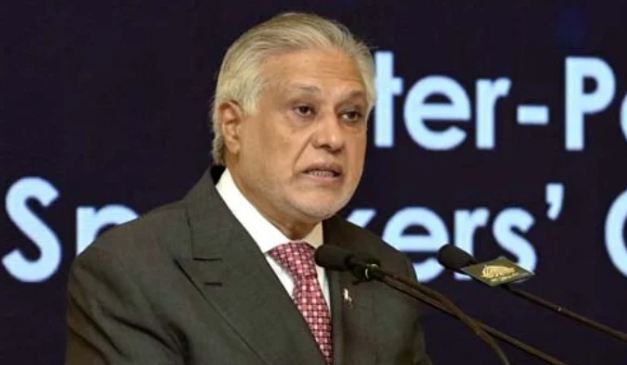
The development came during the 29th COM meeting, attended virtually by Deputy Prime Minister and Foreign Minister Senator Ishaq Dar.”The Foreign Ministers of ECO member states congratulated Pakistan on assuming the chairmanship. [DPM Dar] thanked them for their felicitations and support, and said he looked forward to working with them and welcoming all ECO members to Pakistan for the next COM meeting in 2026,” the FO said in a post on X.

In his address to the meeting, DPM Dar said that Pakistan was committed to the ECO Vision 2025, stressing ECO’s role in fostering prosperity, economic integration, and connectivity.

He assured the participants that Pakistan would work closely with member states in finalising the ECO Vision 2026-2035.DPM Dar emphasised Pakistan’s priority to strengthen multimodal transport corridors, harmonise customs frameworks, and align transport systems for seamless regional integration.

He said that Pakistan was committed to operationalising regional connectivity projects, including the Islamabad–Tehran-Istanbul Rail Corridor, the Eurasian Multimodal Corridor, as well as new railway initiatives linking Central Asia with Pakistan via Afghanistan.

Highlighting Pakistan’s efforts to shape regional cooperation in transport and digital connectivity, he said that the country’s liberalised visa policy enabled easier access for businesspersons and tourists from 126 countries.

DPM Dar urged ECO member states to deepen cooperation in sustainable transport, customs harmonisation, and climate-resilient infrastructure.

He also stressed for joint efforts to combat terrorism, threatening regional economic progress.

DPM Dar congratulated Kazakhstan’s Foreign Minister Yermek Kosherbayev for successfully hosting the ECO-COM meeting, while extending an invitation to the members to attend the 30th meeting, scheduled in Pakistan next year.

Noor Zaman wins CAS-Serena Hotels International Squash Championship

Noor Zaman wins CAS-Serena Hotels International Squash Championship

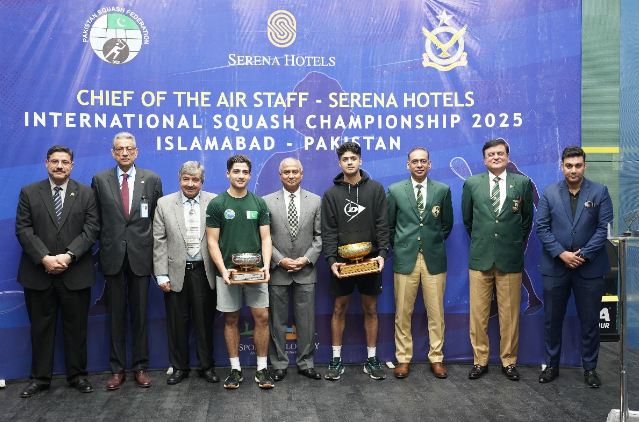
ISLAMABAD, NOV 28 /DNA/ –  Pakistan Squash Federation in collaboration with Serena Hotels, organized the Chief of the Air Staff-Serena Hotels International Squash Championship at Mushaf Squash Complex, Islamabad from 24 – 28 November, 2025.  Apart from 07 Pakistanis, a group of 17 world ranking players from Czech Republic, Egypt, Hong Kong China, Japan, Malaysia and Switzerland participated. It is highlighted that Serena Hotels, under its Sports Diplomacy Initiative, is committed to using sports to build bridges between nations and communities. Sporting events like squash championship, highlight their dedication to promoting athletic excellence and positioning Pakistan as a prominent venue for world-class sporting events.

The Final of CAS-Serena Hotels International-25 was played today (28 Nov-25) between Mr Muhammad Hamza Khan and Noor Zaman from Pakistan, followed by the Closing Ceremony.  Air Marshal Kazim Hammad, President Pakistan Squash Federation graced the ceremony as Chief Guest and presented trophies and souvenirs. Air Vice Marshal Sohail Akbar, Senior Vice President PSF along with Mr Fahim Inam, Chief Operating Officer Serena Hotels, Squash Legend Mr Qamar Zaman, VP PSF Dr Riaz Khan, President Sindh SA Mr Adnan Asad and a number of players, officials and squash lovers were also present during the ceremony.

World No 43 Noor Zaman won the Championship Title by beating World No 101 Mr Muhammad Hamza Khan with a game score of 9-11, 7-11, 11-7, 11-4 and 11-8.

Yuri Gagarin monument unveiled in Islamabad

Yuri Gagarin monument unveiled in Islamabad

DNA

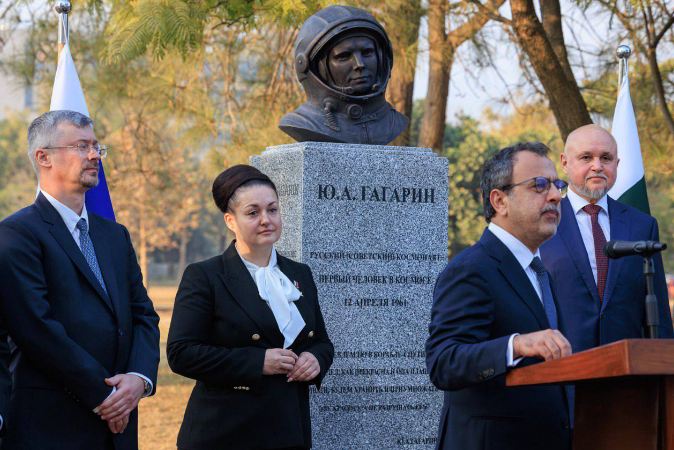
ISLAMABAD, NOV 28: A monument honouring Yuri Gagarin — the first human to journey into space — was unveiled on Wednesday at Islamabad’s F-9 Fatima Jinnah Park, marking a new chapter in Russia–Pakistan scientific and cultural cooperation.

The ceremony was attended by Russian Energy Minister Sergei Tsivilev, Pakistan’s Minister for Power Sardar Awais Ahmad Khan Leghari, Russian Ambassador Albert P. Khorev, Pakistan’s Ambassador to Russia Faisal Niaz Tirmizi, and Russian pilot-cosmonaut and Hero of Russia Elena Serova.

Speaking on the occasion, Minister Tsivilev said, “This is the greatest feat in our shared history. A huge number of scientists are engaged in space research. Let this work benefit all countries of the world.”

He also announced that Islamabad will host a Russia–Pakistan conference next year, dedicated to advancing cooperation in cosmonautics and space infrastructure — a development welcomed by both sides as a major step towards expanding bilateral scientific collaboration.

The inauguration coincided with the 10th meeting of the Russia–Pakistan Intergovernmental Commission on Trade, Economic, Scientific, and Technical Cooperation, currently underway in Islamabad.

The Russian Embassy expressed gratitude to the International Charitable Fund “Dialogue of Cultures – United World” for donating the bust of Yuri Gagarin, to the St. Petersburg International Mercantile Exchange for its support in the installation, and to Pakistani authorities for facilitating the project.

The monument is expected to serve as a symbol of expanding people-to-people ties and growing cooperation between Russia and Pakistan in science, technology, and culture.

Ceasefire with Afghan Taliban ‘not holding’ amid continued terror attacks, says FO

Ceasefire with Afghan Taliban 'not holding' amid continued terror attacks, says FO

ISLAMABAD, NOV 28 –  Pakistan on Friday said the ceasefire with Afghanistan was “not holding”, citing continued attacks by terrorist groups inside the country.

Speaking during his weekly press briefing, Foreign Office spokesperson Tahir Andrabi noted that the ceasefire between Pakistan and the Afghan Taliban regime was intended to prevent terror attacks within Pakistan rather than serve as a conventional ceasefire.”There have been major terrorist attacks even after this ceasefire. In that sense, the ceasefire is not holding, as it was aimed at stopping terrorist attacks inside Pakistan by TTP [Tehreek-e-Taliban Pakistan], FAK [Fitna al-Khawarij], and Afghan nationals using Afghan soil,” he said.

Andrabi added that Islamabad was “not very optimistic about the ceasefire” following recent terror incidents in parts of the country, including the federal capital.

The ceasefire was agreed between the two neighbouring countries on October 17 after week-long border clashes instigated by the Taliban regime and its proxy militant groups.

The conflict saw Pakistan Armed Forces killing over 200 Taliban fighters and affiliated militants after unprovoked firing along the Pakistan-Afghanistan border on October 12. Security forces also conducted targeted strikes inside Afghanistan, including in Kabul, eliminating terrorists’ hideouts.Responding to questions about potential threats from Afghanistan, the FO spokesperson affirmed that security forces remained fully alert.

“Our military preparedness is robust, and the security challenges we face will be addressed with the seriousness they deserve,” he said.

Andrabi stated that he was unaware of any Saudi offer to mediate tensions between the two nations. However, he added that Islamabad would welcome such efforts.

‘Claims about Daesh’s presence outrageous’

The FO spokesperson dismissed Afghan Taliban claims about Daesh operating in Pakistan, terming them “outrageous” and a figment of Kabul’s imagination.

Highlighting the regional impact of terrorism emanating from Afghanistan, he said Pakistan has been continuously coordinating with bilateral and multilateral forums on cross-border terrorism issues.

Responding to a question on an Afghan Taliban statement blaming “certain elements” for the attack in Tajikistan, he said, “This is exactly what we are saying. Control these elements—they are present on Afghan soil.”The FO spokesperson condemned the attack on Chinese workers as a “heinous terrorist act” and expressed grief over the loss of lives.

At least three Chinese workers were killed in Tajikistan in an attack launched from Afghanistan near the border, with the Tajik foreign ministry reporting that a drone and firearm assault hit employees of a Chinese company in the country’s south.

ICT Police conduct grand operations; 8 suspects detained, Including 2 Afghans

ICT Police conduct grand operations; 8 suspects detained, Including 2 Afghans

ISLAMABAD, Nov 28 (APP/DNA): Islamabad Capital Territory (ICT) Police carried out grand search and combing operations in the jurisdictions of Aabpara, Industrial Area, Kirpa and Sangjani police stations as part of the ongoing strategy to curb crime across the federal capital.

An official told APP on Friday that the operations were conducted under the supervision of SSP Operations Qazi Ali Raza, while zonal SPs monitored the activity in their respective areas.

He said ladies police and CTD teams also participated in the large-scale operations. Before the start of the operation, the deployed personnel were given a detailed briefing regarding search strategy and security protocols.

During the operations:

599 individuals were checked

341 houses were inspected

07 hotels were checked

13 shops were inspected

139 motorcycles were checked

57 vehicles were examined

He said eight suspicious individuals — including two Afghan nationals — were shifted to police stations for verification.

The official added that the purpose of the search and combing operations is to eliminate criminal elements and ensure security across the capital. The IGP Islamabad has already directed district-wide grand operations to prevent crime and strengthen public safety.

He urged citizens to cooperate with police during checking and immediately report any suspicious activity, stating that the protection of citizens’ lives and property remains the top priority of Islamabad Police.

VC FATA University awards certificates under PM’s youth skills development programme

VC FATA University awards certificates under PM’s youth skills development programme

KOHAT, Nov 28 (APP/DNA): Vice Chancellor FATA University, Professor Dr. Mohsin Nawaz, distributed certificates among students who successfully completed technical and vocational courses under the Prime Minister’s Youth Skills Development Programme here on Friday.

The initiative is designed to provide young people with modern, market-driven practical skills to enhance employment opportunities and support regional development.

The ceremony was attended by the university registrar, treasurer, programme coordinators, faculty members, trainers, and a large number of students.

Speaking on the occasion, Dr. Mohsin Nawaz underscored the national importance of the programme, terming it an effective step toward empowering youth through practical training.

He said FATA University continues to play a proactive role in offering high-quality, skill-focused education to students from the merged districts.

The Vice Chancellor congratulated the successful trainees and urged them to utilize their newly acquired skills for both personal advancement and societal benefit.

He added that such programmes help bridge the gap between academic learning and industry needs.

The ceremony concluded with the formal award of certificates to the successful participants.

President grieved over loss of lives in Sri Lanka floods, landslides

President grieved over loss of lives in Sri Lanka floods, landslides

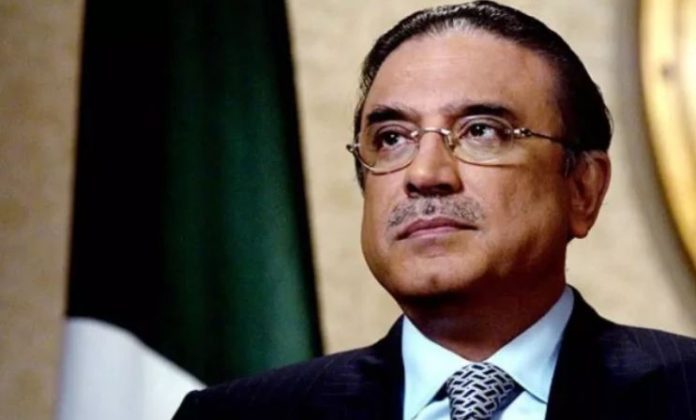
ISLAMABAD, 28 NOV (DNA) —   President Asif Ali Zardari on Friday expressed deep sorrow over the loss of lives and widespread damage to properties caused by floods and landslides in Sri Lanka following days of heavy rainfall. The president, in a message of condolence, conveyed his heartfelt sympathies to the bereaved families and those affected by the disaster.

He noted with concern reports indicating significant casualties, with dozens of people having lost their lives and many others still missing. President Zardari said that Pakistan stood in solidarity with the people of Sri Lanka during this difficult time, as rescue and relief operations continued across several districts amid ongoing weather challenges.

Highlighting the broader context of such disasters, the president observed that climate change was a reality impacting countries of the Global South more severely, despite their limited contribution to the factors driving that change.

He said nations like Pakistan and Sri Lanka were increasingly facing extreme weather events placing immense pressure on lives, livelihoods, and public resources. President Zardari noted that Pakistan, which has itself suffered heavily from the effects of climate change, believed there was an urgent need for collective efforts.

He emphasised the importance of working together not only to support affected countries in times of crisis, but also to develop shared strategies focused on resilience, preparedness and mitigation. The president also conveyed his condolences to the President of Sri Lanka, Anura Kumara Dissanayake and expressed support for the government and people of Sri Lanka as they respond to the humanitarian impact of the floods and landslides.

He prayed for the departed souls, for strength for the bereaved families, and for the safe recovery of those still missing. — DNA

ICCI President pledges full support for growth of businesses

ICCI President pledges full support for growth of businesses

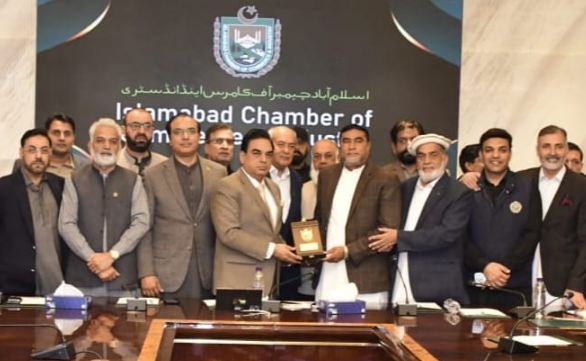
ISLAMABAD, NOV 28 /DNA/ –  A thirty member delegation of the Traders Welfare Association, F-10 Markaz, led by its President Ahmad Khan, paid a visit to the Islamabad Chamber of Commerce and Industry (ICCI) and briefed the Chamber’s leadership about the pressing challenges confronting the local business community.

During the meeting, the delegation highlighted key concerns related to civic amenities, infrastructure gaps, and facilitation issues that continue to hinder a smooth and business-friendly environment in F-10 Markaz. They urged ICCI to take up these matters with the relevant departments for timely redressal.

Sardar Tahir Mehmood, President ICCI, gave a patient hearing to the delegation and reaffirmed the Chamber’s unwavering commitment to safeguarding the interests of the business community across the Capital. He assured that all issues raised by the delegation would be formally taken up with the concerned authorities for prompt action. He emphasized that a conducive business ecosystem is vital for boosting trade and economic activities, and ICCI is fully focused on working in close coordination with stakeholders to resolve their genuine grievances.

ICCI Council Member Zubair Ahmed Malik underscored the significance of unity among the community for the attainment of the objectives for the ease of business.

ICCI Senior Vice President Tahir Ayub said that the Chamber is actively pursuing various initiatives aimed at improving the overall business environment in Islamabad. He assured the delegation that ICCI would continue advocating for better civic infrastructure and greater government facilitation.

Vice President Mohammad Irfan Chaudhry also spoke on the occasion, stressing the need for collaborative efforts between traders, community representatives, and government departments to ensure sustainable improvements in commercial areas. He highlighted ICCI’s ongoing efforts to engage with relevant institutions for practical and long-term solutions.

The key issues highlighted by the Traders Welfare Association included infrastructure development, sewerage and sanitation, encroachments, security concerns, and  taxation and regulatory challenges that traders of F-10 Markaz face on a daily basis.

Those shared their insights included  Malik Naeem Iqbal, Rana Iftikhar, Akbar Siddique, Rizwan Abbasi, Raja Abdul Majeed, Tariq Mughal, Rana Shehzad and  ICCI former SVP Khalid Chaudhry.

Prominent attendees included former President Mohammad Ejaz Abbasi, Executive Members Waseem Chaudhry, Ishaq Sial, Mohmmad Imran Minhas, Zulqurnain Abbasi, 

The delegation thanked the ICCI leadership for their support and expressed confidence that the Chamber’s intervention would help mitigate the difficulties being encountered by the business community of F-10 Markaz.

Understanding the Great-Power Competition

Understanding the Great-Power Competition

Dr. Muhammad Akram Zaheer

Great-power rivalry has once again become the defining feature of global politics. The 21st century, much like the 20th, is witnessing a struggle among powerful states to shape the world order according to their interests and visions.

Yet, unlike the Cold War which was framed largely as a clash between capitalism and communism the current competition cannot be understood solely through ideology. It is a deeper contest over geography, economic influence and control of the global commons. The divide today is between two enduring worldviews: the continental and the maritime. This conflict over how the world should be organized through control of land or dominance at sea has existed for centuries. Historically, great empires have risen and fallen according to how well they adapted to one of these models.

The continental powers, traditionally land-based, emphasize control over territory, resources and regional security zones. In contrast, maritime powers focus on global trade, open sea routes and flexible alliances that allow them to project power across the world. This geographic divide has once again come to shape international relations. The post-Cold War period was marked by a brief illusion of consensus. The collapse of the Soviet Union led many in the West to believe that the liberal, market-oriented and maritime vision of global order had triumphed permanently.

The United States stood unchallenged as the dominant naval power, commanding the world’s sea lanes and promoting a system of globalization centered on open trade and financial flows. However, the early decades of the 21st century have shown that history never ends. As new powers rise and old ones recover, the underlying geographic logic of international politics has returned.China and Russia, the two main continental powers of the modern era, have challenged the Western maritime order. Their cooperation, though often uneasy, is rooted in a shared perception that the U.S.-led system limits their sovereignty and strategic freedom.

Both countries seek to secure their continental peripheries Russia in Eurasia and China across East Asia and to reduce the influence of maritime powers along their borders. For them, the international system is not merely about rules or norms but about the physical control of space and the ability to shape trade, energy and security routes.

For continental powers, geography dictates a worldview built around defense and depth. Their primary concern is the security of borders and the stability of their neighboring regions. Russia, for example, sees the plains of Eastern Europe as both a potential invasion route and a buffer zone essential to its survival. Its interventions in Ukraine, Georgia and Central Asia are rooted not only in politics but in geography a desire to prevent the expansion of hostile forces into its near abroad.

Similarly, China’s Belt and Road Initiative represents an effort to anchor its economic and strategic influence across the vast expanse of Eurasia, connecting its industrial heartlands to markets and resources through railways, pipelines and highways that cannot be blocked by foreign navies.In this continental logic, power is derived from territorial control, resource security and regional integration. The land becomes both a source of wealth and a defensive shield. The modern expression of this worldview can be seen in Russia’s energy diplomacy, China’s infrastructure-led expansion and their mutual preference for multipolarity over Western-dominated globalization. Both states are trying to build a world in which no single maritime power can dictate the flow of goods, technology, or ideas.

The maritime powers led by the United States and its allies in Europe and the Indo-Pacific see global order through a different lens. For them, the seas are not barriers but bridges. Control of maritime routes enables economic interdependence, international cooperation and access to distant markets. The power of the maritime world rests not on conquering territory but on maintaining open and secure sea lanes, stable institutions and technological leadership.

Historically, maritime powers have thrived on trade and innovation. From the British Empire’s control of the oceans to America’s postwar dominance of the Pacific and Atlantic, their prosperity depended on the ability to move goods, capital and information freely. The U.S.-led alliances NATO in Europe and the network of partnerships across the Indo-Pacific reflect this maritime tradition. They are not empires of occupation but systems of coordination, where mutual defense ensures freedom of navigation and the protection of shared interests.

In today’s context, the maritime order faces growing challenges. China’s naval expansion, Russia’s renewed submarine activity and Iran’s influence over the Strait of Hormuz all test the stability of global sea routes. The competition is not only military but also technological and economic. Disputes over undersea cables, maritime surveillance and freedom of movement in the South China Sea illustrate how the contest between continental and maritime powers now extends into new domains, including cyberspace and outer space.

Unlike the rigid bipolarity of the Cold War, the present great-power competition is more fluid and complex. The dividing line between land and sea power is blurred by technology and interdependence. China, for instance, though primarily continental in its origins, has developed a formidable navy and invested heavily in port infrastructure across Africa, the Middle East and South Asia through the “Maritime Silk Road.” Meanwhile, the United States and its allies have expanded their influence inland, building defense partnerships in Central Asia, Eastern Europe and even parts of Africa.

The result is a global tug-of-war over the architecture of power. On one side stands the vision of a connected, rules-based maritime world led by the United States and supported by partners like Japan, Australia and the United Kingdom. On the other stands a continental vision led by China and Russia, which prioritizes sovereignty, security and control over internal regions and trade corridors. The tension between these two visions defines the strategic dilemmas facing many middle powers, from India and Turkey to Iran and Pakistan. Each must balance access to global markets with the need for regional security.

The central question for the future of international order is whether these two worldviews can coexist. Some analysts argue that interdependence will force a compromise, as both systems depend on each other’s resources and markets. Others believe the divide is deepening, with military build-ups, sanctions and regional conflicts creating a self-reinforcing cycle of suspicion. What is certain is that geography continues to shape destiny. The physical layout of continents and oceans still defines how states perceive their threats, opportunities and ambitions.

In this emerging era, power is no longer measured solely by nuclear arsenals or GDP figures but by control over supply chains, digital infrastructure and the movement of energy and data. Whether it is China building railways across Central Asia, the United States forging alliances in the Indo-Pacific, or Russia asserting its dominance in the Arctic, all major powers are adapting old geographic principles to new technological realities.

The contest between continental and maritime powers is thus not merely a matter of ideology or military might. It is a struggle over how the world’s wealth, security and influence should be organized. The outcome will determine whether the 21st century is shaped by networks of open connectivity or by blocs of territorial control. Geography, once again, is destiny but in this era, it is being redrawn through both land and sea.

Stay Connected

64FansLike
60FollowersFollow

Latest Reviews

Exchange Rates

USD - United States Dollar
EUR
1.14
GBP
1.34
AUD
0.69
CAD
0.71