Home Blog Page 366

Print media in Sindh faces survival crisis, says APNS

Print media in Sindh faces survival crisis, says APNS

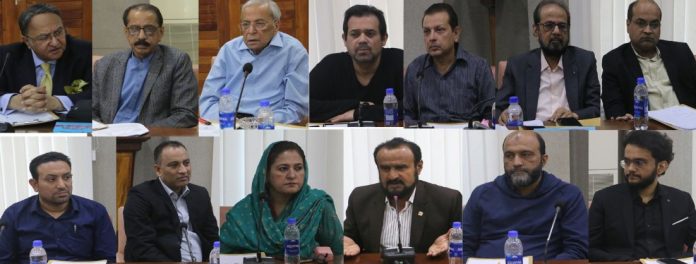
KARACHI, NOV 29 /DNA/ – A meeting of the All Pakistan Newspapers Society (APNS) Sindh Committee, chaired by Javed Mehr Shamsi, has raised serious concerns over the financial survival of print media in the province.

The committee unanimously issued a set of demands to the government, highlighting a dire situation caused by unpaid dues and a sharp reduction in official advertising.

The members expressed deep regret that delays in payments from the Sindh Information Department have precipitated a severe financial crisis, threatening the continued publication of newspapers.

A primary concern was the significant reduction in advertisement volume, which the committee stated has been cut to the lowest possible level by the Sindh Information Department, ignoring member publications. They demanded an immediate increase in ad volume to help newspapers survive.

Regarding payment systems, the committee rejected the current “non-budgeted” method and called for a return to the old system where payments were settled on a monthly basis.

They also insisted that the “85:15” payment system be maintained and that the government revert to making advertising payments through agencies. Furthermore, the committee accused the Press Information Department (PID) of ignoring newspapers from Sindh and deliberately delaying payments, demanding the immediate release of advertisements and the clearance of all pending dues.

The meeting was attended by prominent figures including APNS President Sarmad Ali, Vice Chairman Younas Mehr, and representatives from major publications such as Daily Jang, Daily Ibrat, Daily Ummat, and others.

‘Not enough,’ DPM Dar says Afghan Taliban jailed hundreds of TTP militants

ISLAMABAD, NOV 29 – Deputy Prime Minister and Foreign Minister Ishaq Dar said on Saturday that during his recent visit to Kabul, the Afghan Taliban interim rulers informed him about the detention of hundreds of TTP militants.

“[Afghan Foreign Minister] Amir Muttaqi invited Pakistan to send a delegation to come and verify arrests of hundreds of TTP members,” the deputy premier said while terming the TTP militants detention “not enough”.

Sponsored Content
Dog Raises 3 Tiger Cubs – Years Later, Zookeeper Bursts Into Tears When Tiger Does The Unexpected
Tips and Tricks
Briefing the media on his recent visits to Moscow, Berlin and Brussels, Dar urged the interim rulers to ensure Afghan soil is not used for terrorism against Pakistan.

“Islamabad maintains that far more decisive and sustained action is needed against TTP [Fitna al-Khawarij] elements operating from Afghan soil,” he added.

Fitna al Khawarij is a term the state uses for terrorists belonging to the banned TTP.

Pakistan has witnessed a sharp rise in terrorism since 2021, the year that the Taliban took control of Afghanistan, and despite Islamabad’s repeated requests, the regime has yet to rein in terrorists using its soil for cross-border terrorism.

Lately, banned Tehreek-e-Taliban Pakistan (TTP) chief Noor Wali Mehsud plotted the Islamabad suicide attack, which martyred 12, Information Minister Attaullah Tarar confirmed on November 25.

The ties between the neighbours have strained further since October, when the two sides engaged in clashes. Taliban forces, along with TTP militants, attacked Pakistani posts, martyring nearly two dozen soldiers, following which Pakistan launched major attacks against Afghanistan.

A ceasefire was eventually reached in Doha with the help of friendly nations, but negotiations ended without a long-term deal after Kabul did not provide a written commitment to take action against militants sought by Islamabad.

During today’s media briefing, Dar noted that Pakistan’s sincerity regarding Afghanistan was “not hidden from anyone,” noting that he himself had undertaken three visits to Kabul.

The deputy prime minister said Pakistan and Afghanistan have had no high-level engagement for the past four years, stressing that such interaction must be restored.

He urged the Afghan Taliban leadership to review its policy, warning that Pakistan had “carried the coffins of its own soldiers” due to continued terrorist attacks.

Dar said Pakistan had suffered 4,000 martyrdoms since the Taliban takeover in 2021. Furthermore, he said Pakistan had conveyed to Afghan authorities that peace was the only way forward.

The deputy prime minister said Pakistan categorically asked Afghan leadership to take action against the banned TTP. However, he stressed, Afghanistan did not fulfil its counterterrorism commitments, and the security situation deteriorated.

He said Pakistan had only one demand: Afghan territory must not be used for attacks against Pakistan. Islamabad also asked Kabul to move TTP elements away from the border or hand them over to Pakistan.

Dar said his April 19 visit to Kabul yielded some benefit, and Pakistan fulfilled all promises it made — something Afghanistan also acknowledged.

He said Pakistan signed a railway agreement with Afghanistan, and during his visit to China, the Chinese foreign minister proposed holding a trilateral meeting in Kabul. Pakistan fully agreed with the proposal. But despite Pakistan’s single and clear demand, Dar said, “there has been no positive progress from Afghanistan.”

‘Cleanup operation’
Responding to a question during the briefing, the foreign minister said that Pakistan was prepared to launch a cleanup operation in Afghanistan when friendly nation Qatar alongside Turkiye offered to mediate between the two countries.

“They [Qatar] were aware of our planned kinetic operation, and they requested us to stop and took responsibility of resolving the matter,” he said, thanking PM Shehbaz Sharif and Chief of Army Staff Field Marshal Asim Munir for halting the operation.

However, Dar regretted, the two to three rounds of negotiations yielded no results. He added that the mediators withdrew in “embarrassment” after the Taliban refused to soften their position.

He said Pakistan did not close the border with Afghanistan “out of happiness,” but due to security imperatives, adding that within the Afghan Taliban regime, “half are inclined toward peace, while the other half think otherwise.”

APNS calls for reversal of Sindh Government Ad decision

APNS calls for reversal of Sindh Government Ad decision

KARACHI, NOV 29 /DNA/ – The Sindh Committee of the All Pakistan Newspapers Society (APNS) has strongly rejected the Sindh government’s decision to issue government advertisements through the PTI-85/15 mechanism. The committee, in a meeting chaired by Syed Javed Murtaza Sheikh, demanded that the government immediately restore the existing and transparent advertisement distribution system.

Members warned that the newly proposed mechanism would negatively impact Sindh-based newspapers and undermine the stability of the print media industry. They criticized the Information Department for reducing the size and volume of newspaper advertisements, causing severe financial difficulties for media houses.

The committee further expressed concern over the suspension of classified advertisements and the decline in the release of new government ads. Members urged the Sindh Information Department to take urgent notice of the matter and ensure that the previous advertisement system is reinstated without delay.

The meeting also stressed that classified advertisements and other routine government ads must be restored immediately to support the already struggling newspaper industry.

The session was attended by Syed Javed Murtaza Sheikh, Tajuddin Palijo, Azeem-ul-Haq, Shakeel Ahmed, Sher Abbas Jatoi, Zahid Khaskheli, Tahir Soomro, Rasheed Ahmed, Muhammad Raza, Shahid Sahil, and other APNS Sindh Committee members.=DNA

6 terrorists killed in 4910 operation since Nov 4, 2025, says DG ISPR

6 terrorists killed in 4910 operation since Nov 4, 2025, says DG ISPR

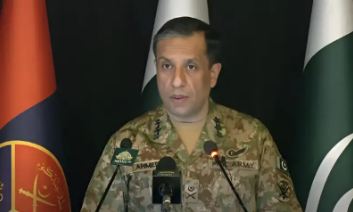
ISLAMABAD, NOV 29 (DNA): Inter-Services Public Relations (ISPR) Director General (DG) Lt Gen Ahmed Sharif Chaudhry on Saturday said that 206 terrorists have been killed in 4,910 intelligence-based operations conducted by the armed forces since November 4, 2025.

He shared this data during a briefing with senior journalists on Saturday.

The DG ISPR apprised journalists that the armed forces have conducted 67,023 intelligence-based operations across the country during the current year.

He added that 12,857 intelligence-based operations were conducted in Khyber Pakhtunkhwa province and 53,309 in Balochistan province, during which a total of 1,873 terrorists were killed this year, including 136 Afghans.

The DG ISPR said that misleading propaganda is being spread about security agencies regarding border management, noting that the Pak-Afghan border consists of extremely difficult terrain.

He stated that the Pak-Afghan border in Khyber Pakhtunkhwa spans 1,229 km with 20 crossing points, adding that the distance between posts along the border ranges from 20 to 25 km.

He stressed that the border fence cannot be effective without proper observation.

Speaking about on-ground border management challenges, he said that unlike Punjab and Sindh, many villages in Khyber Pakhtunkhwa are divided across the border, making the control of movement a major challenge.

He said that, globally, border management is carried out jointly by both countries.

However, in contrast, the Afghan Taliban completely facilitate the infiltration of terrorists from Afghanistan into Pakistan.

He said that an ineffective administrative structure in bordering areas has increased governance problems, as the strong political-terror-crime nexus in these regions is being facilitated by the Fitna al-Kharij.

He questioned, that If terrorist formations are coming from across the border, or if illegal smuggling and trade are taking place, then whose responsibility is it to stop them within the country.

He added, that If millions of non-customs-paid vehicles are roaming the province, then who is responsible for stopping them.

Non-customs-paid vehicles are part of this political-terror-crime nexus and are used in suicide attacks.

Speaking about the Doha Agreement, the DG ISPR said Pakistan’s position on the agreement with Afghanistan is very clear. Pakistan has asked the Afghan Taliban regime to stop facilitating terrorists.

“There are terrorist centers and leadership of Al-Qaeda, ISIS, and other terrorist organizations in Afghanistan,” he added.

He said Pakistan demanded a verifiable mechanism from the Taliban regime and stated that Pakistan would not object if such a mechanism were established by a third party.

The DG ISPR said that the Afghan regime’s position on the Fitna al-Kharij is illogical, as they claim that these elements migrated from Pakistan and are now their guests.

“If they are Pakistani citizens, hand them over to us. We will deal with them according to our law,” he said.

Quoting the SIGAR report, he said that U.S. military equipment worth $7.2 billion was left in Afghanistan during the withdrawal of U.S. forces.

He added that the Afghan regime has become a threat not only to Pakistan but also to the entire region and the world.

The DG ISPR said Pakistan’s demand is clear that the Afghan Taliban should act like a responsible state.

He noted that in the Doha talks, the Afghan Taliban promised the international community that their territory would not be used for terrorism, but this commitment has not been fulfilled.

The DG ISPR further said that the Afghan Taliban regime is not representative of the Afghan people, as it does not include all ethnic groups.

He noted that representation for 50 percent of the Afghan population—women—does not exist in the current regime.

“We do not have an issue with Afghans. Our problem is with the Afghan Taliban regime,” he added.

Regarding the closure of trade between Pakistan and Afghanistan, he said the matter is directly linked to Pakistan’s security and the protection of lives and property, adding that bloodshed and trade cannot go together.

Sharing details about Afghan refugees, he said that under the dignified repatriation process, 366,704 people were repatriated in 2024 and 971,604 in 2025.

Similarly, 239,574 people were repatriated in November alone.

The DG ISPR said that India has a monopoly of leadership with a self-deceptive mindset, citing the statement of the Indian Army Chief claiming that they had shown a trailer during Operation Sindoor as an example of this flawed thinking.

“A trailer in which seven planes are shot down, 26 locations are attacked, and S-400 batteries are destroyed—if such a trailer were made into a movie, it would become a horror film for them,” he added.

He said the Indian government is issuing repeated false statements about the defeat in Operation Sindoor to quell public anger and resentment.

He stated that all governments and political parties in Pakistan agree on the National Action Plan as a solution to curb terrorism. A coordinated system has been developed in Balochistan to implement this plan, although such coordination is lacking in Khyber Pakhtunkhwa.

Under this system, steering, monitoring, and implementation committees have been formed at the district, divisional, and provincial levels.

He said that the smuggling of Iranian diesel is one of the major causes of the illegal economy, as the money earned from this activity is used to promote terrorism.

Before the crackdown by the Army, FC, and the provincial government, 20.5 million liters of Iranian diesel were being smuggled daily and this has now reduced to 2.7 million liters per day.

The DG ISPR said that the money earned from smuggled Iranian diesel goes to the BLA and BRA.

He added that the provincial government and security forces in Balochistan are continuously engaging with local communities.=DNA

IBCC concludes national workshop, empowering master trainers and item writers at AIOU

IBCC concludes national workshop, empowering master trainers and item writers at AIOU

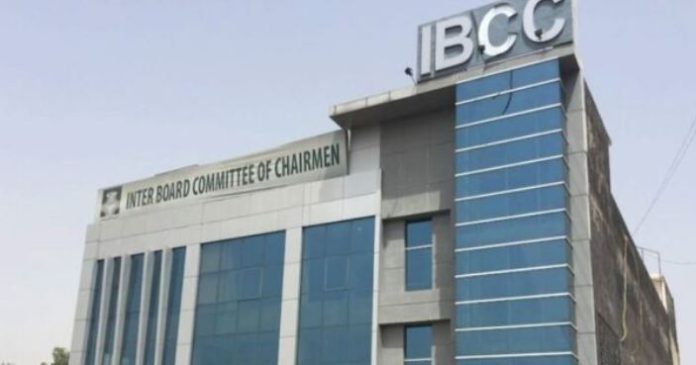
ISLAMABAD, NOV 29 (DNA): The Inter Boards Coordination Commission (IBCC) successfully concluded a two-day national consolidation workshop for master trainers and Item writers at Allama Iqbal Open University (AIOU).

The closing ceremony was graced by Farah Naz Akbar, Parliamentary Secretary for the Ministry of Federal Education and Professional Training, who was warmly received by Dr Ghulam Ali Mallah, Executive Director of IBCC, said a press release on Saturday.

This capacity-building initiative was held under the strategic guidance and strong institutional support of the Ministry of Federal Education and Professional Training, reinforcing national efforts to modernize assessment systems and enhance the quality and credibility of examinations across Pakistan.

Parliamentary Secretary Farah Naz Akbar applauded IBCC’s sustained commitment to empowering teachers and advancing examination reforms aligned with contemporary educational standards.

She noted that IBCC’s initiatives clearly reflect the Ministry’s long-term vision for strengthening national assessment frameworks.

“Teachers shape our tomorrow. They are the true architects of a skilled, educated and progressive nation,” she said, reaffirming that sustainable reforms must be rooted in teacher development and standardized assessment practices.

During the ceremony, Farah Naz Akbar distributed shields to distinguished master trainers. The participation certificates were awarded to all attendees.

Earlier, in his remarks, Dr Ghulam Ali Mallah underscored the significance of training highly qualified educators drawn from across the country, who will now cascade this knowledge to their institutions and professional networks.

He highlighted IBCC’s continued leadership in strengthening national assessment capacity, noting the workshop as a key milestone in efforts to standardize modern item-development practices.

Dr Mallah further emphasized the importance of item writers gaining mastery over digital assessment platforms and tools to transition toward intelligent and automated paper-generation systems.

 “Our goal is to reach a future where exam papers can be developed efficiently, transparently, and with enhanced precision—ultimately moving toward smart generation systems that drastically reduce manual effort, improve quality, and strengthen public trust in assessments,” he stated.

The workshop represented another moment of national significance in IBCC’s broader mission to transform examination systems through digitization, professional capacity building, standardized qualifications-based reforms, and improved assessment literacy among educators.=DNA

Pakistan opt to bowl first against Sri Lanka in T20I tri-series final

Pakistan opt to bowl first against Sri Lanka in T20I tri-series final

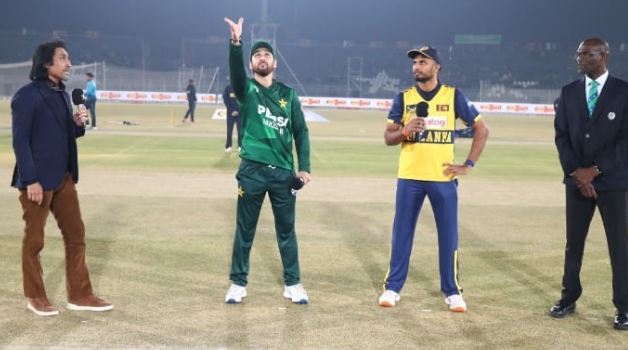
RAWALPINDI, NOV 29: Pakistan won the toss and elected to bowl first against Sri Lanka in the final of the T20I tri-series at the Rawalpindi Cricket Stadium on Saturday.

Playing XIs:

Pakistan made one change to their lineup, with Shaheen Afridi coming in for Mohammad Wasim Jr. Sri Lanka, on the other hand, have stuck to their winning combination from the previous match.

Pakistan: Saim Ayub, Sahibzada Farhan, Babar Azam, Salman Ali Agha (c), Usman Khan (wk), Fakhar Zaman, Muhammad Nawaz, Faheem Ashraf, Shaheen Afridi, Salman Mirza and Abrar Ahmed.

Sri Lanka: Pathum Nissanka, Kamil Mishara, Kusal Mendis (wk), Kusal Perera, Janith Liyanage, Dasun Shanaka (c), Pavan Rathnayake, Wanindu Hasaranga, Dushmantha Chameera, Maheesh Theekshana and Eshan Malinga.

The G-20 Summit Sans America

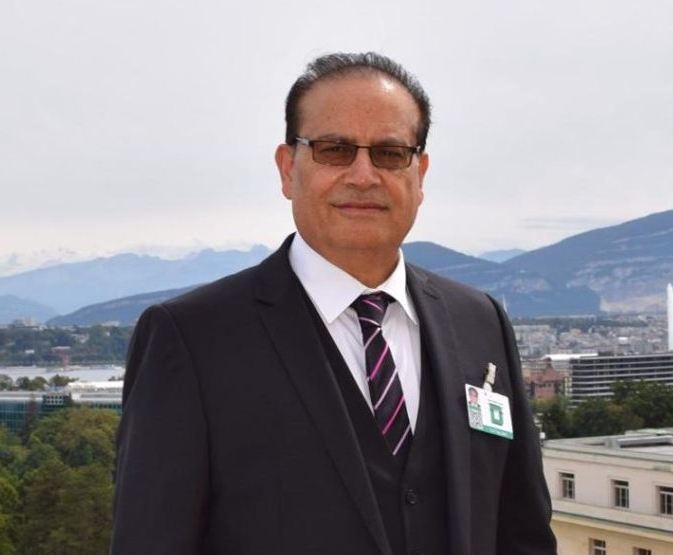
Qamar Bashir

By Qamar Bashir

The 2025 G-20 Summit in South Africa will be remembered not only for the historic decisions taken, but equally for the loud, symbolic silence created by the absence of President Donald Trump and the United States’ high-level delegation. It was a vacuum that everyone felt, a political absence that lowered the temperature of the event, diminished its traditional stature, and yet, paradoxically, empowered the rest of the world to move forward without waiting for Washington’s approval. A gathering once shaped, dominated, and animated by American leadership unfolded without it — and the world did not stop. In fact, it moved with surprising confidence and determination, proving for the first time in decades that global cooperation no longer revolves around a single pole of power.

Trump’s official explanation for skipping the summit was both extraordinary and controversial. He alleged that South Africa was maltreating, harassing and killing its white population  of Britain, France, Europe, and the United States origin,” and that the U.S. would therefore boycott the gathering in protest.

This justification stunned diplomats. The South African president and prime minister engaged in frantic outreach to convince Washington to participate at its traditional strength, but their efforts came to nothing. The United States remained absent, and the G-20 moved on. That moment alone signaled a shift: the world’s most influential economies were no longer willing to freeze or dilute their agenda because America chose not to show up.

In that vacuum, the G-20 delivered several major breakthroughs. Africa achieved its long-awaited elevation as a permanent force within the grouping. Its seat was strengthened with new mandates for development, debt restructuring, and large-scale infrastructure support — recognition that Africa is no longer a peripheral player but a central actor in the global economy. The summit also adopted the Global Debt Relief Framework 2.0, a comprehensive mechanism in which China, the United States (from the working-level side), and Europe aligned on a unified system for restructuring debt for developing nations. For the first time, the world’s largest creditors agreed on the principles of transparency, fair burden-sharing, and predictable timelines — a milestone that benefited dozens of struggling economies.

One of the most transformative decisions was the adoption of a global AI and digital governance pact. The world finally agreed on a shared code of conduct for artificial intelligence development, data transparency, cybersecurity protocols, and cross-border data flows. This was an agenda point expected to be heavily influenced by the United States, yet its absence did not hinder progress. The pact revealed a deeper truth: the world’s technological future no longer depends solely on Silicon Valley’s blessing. Beijing, Brussels, Pretoria, New Delhi, and Brasília demonstrated their ability to shape norms that will define the digital age.

Yet the most ambitious and visionary outcome was the creation of a $120 billion Green Energy Transition Fund. This fund aims to help developing and least-developed countries move away from fossil fuels and adopt solar, wind, hydrogen, and advanced battery-storage systems. It promises not only financing, but also technology transfer, expertise, and capacity building. The symbolism was profound: while Washington debates climate strategies through the prism of tariffs and industrial protection, the G-20 chose global environmental responsibility as a collective mission, marking a sharp contrast with America’s inward shift.

The summit also produced a roadmap to reduce global tariffs — a direct counterpoint to Donald Trump’s aggressive tariff wars. Leaders agreed that escalating tariffs undermine supply chains, inflate consumer prices, suffocate export markets, and weaken global economic stability. By committing to reduce trade barriers and revive the core principles of the World Trade Organization, the G-20 openly challenged the direction of U.S. trade policy and reaffirmed that globalization, though evolving, is far from dead.

Food security emerged as another defining pillar. The G-20 endorsed a multi-continental fertilizer and grain corridor network that would ensure developing nations have the ability not only to access essential agricultural inputs but also to build their own production capacity. The initiative aims to strengthen local seed development, introduce climate-resilient crops, and reduce dependency on vulnerable supply chains. It was a reminder that global hunger is not caused by scarcity, but by inequity, mismanagement, and geopolitics — and that collective action remains the only antidote.

Pandemic preparedness also received unprecedented attention. The G-20 agreed on a universal pathogen-sharing system, vaccine production guarantees for countries that cannot afford them, and the creation of global emergency stockpiles. COVID-19 had exposed the brutal reality that the world was divided between vaccine “haves” and “have-nots.” This summit promised not to repeat that inequality, committing to a global health shield that can activate instantly in the face of new threats.

Even tax justice — long a contentious issue — saw real progress. The G-20 endorsed a crackdown on tax evasion and illicit financial flows, expanding automatic exchange of banking data and creating stronger digital taxation systems capable of identifying hidden wealth and offshore transfers. It was a direct strike against corruption, financial secrecy, and the long-standing loopholes that have drained developing nations of trillions.

What is extraordinary is that these decisions, perhaps some of the most consequential in G-20 history, were made in the absence of the United States. Washington’s non-participation deprived the summit of its traditional weight, but it also gave the rest of the world a rare freedom — a chance to act without American vetoes, delays, or political bargaining. For the first time, the G-20 showed that global governance can continue even when America chooses not to lead.

This absence also reflects a deeper American decline. The United States has already withdrawn from key UN bodies, distanced itself from multilateral structures, and ceded leadership of global organizations to rising powers such as China and India. Across Europe and beyond, intellectuals are questioning the legitimacy of veto powers at the UN Security Council, arguing that one nation should not be allowed to overturn a resolution supported by nearly 200 states. The principle of unilateral veto is increasingly viewed as anti-democratic and incompatible with a modern, multipolar world. If that power is eventually dissolved, the United States — which relies heavily on the veto to protect its geopolitical interests — would suffer the greatest strategic loss.

Economists across Europe are also sounding alarms about the U.S. dollar. They note that gold prices have nearly doubled since Trump intensified tariffs, a sign that global confidence in the dollar as a reserve currency is eroding. History teaches that such erosion is initially slow and subtle — as with the British pound — until one day it becomes sudden and irreversible. A reserve currency survives on three pillars: military strength, predictable governance rooted in rule of law, and a robust, stable economy. Today, America’s economic dominance is shrinking, its global leadership is receding, its institutional predictability is weakening, and its geopolitical influence is being challenged by China, India, Russia, and an increasingly assertive Global South.

The South Africa G-20 Summit was therefore more than a diplomatic event; it was a mirror held up to the United States. It is a wake-up call for a nation that once led the free world with confidence but is now drifting into isolation, controversy, and self-inflicted decline. If the United States hopes to restore its leadership, stabilize its currency, and reclaim its global relevance, it must reverse its inward retreat, rebuild alliances, re-enter global institutions, and embrace cooperation instead of confrontation. Only then can it regain the trust of a world that, for the first time, has shown it can move forward without America — and perhaps, if necessary, beyond it.

By Qamar Bashir

Press Secretary to the President (Rtd)

Former Press Minister, Embassy of Pakistan to France

Former Press Attaché to Malaysia

Former MD, SRBC | Macomb, Michigan, USA

The World’s Credibility at Stake: Confronting Terror Without Favour

The World’s Credibility at Stake: Confronting Terror Without Favour

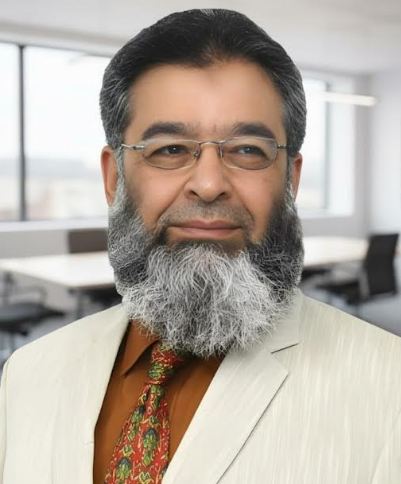
by Muhammad Mohsin Iqbal

Terrorism, in every guise and in every corner of the world, stands as a repudiation of our shared humanity. No civilisation, no religion, and no moral code sanctions the taking of innocent lives. To link this evil to any faith is to misread both history and reality. Terrorism has neither a single home nor a single face; it is an affliction that has struck schools in Pakistan, concerts in Europe, shopping centres in America, habitat in Gazaand public spaces in Africa and Asia alike. The pain it inflicts is universal, and so must be the condemnation it receives.

Pakistan’s experience with terrorism has been particularly acute. Over the last two decades, the country has lost more than seventy thousand lives—civilians and security personnel alike—and has suffered economic losses estimated in hundreds of billions of dollars. Development in many regions delayed by years. No city, whether Lahore, Karachi, Quetta, Peshawar, or smaller towns of the north and south, has been immune from the violence of extremist groups. This sustained assault reflects a deliberate and calculated strategy to weaken Pakistan from within and malign it internationally.

Pakistan has consistently presented evidence to the global community about the origins of these attacks. It has pointed to the presence of organised groups operating from Afghan territory. Pakistan has repeatedly underscored that while Afghan soil is the immediate launchpad, the direction and financing of many attacks come from networks linked to India. Numerous dossiers, containing details of funding channels, communication intercepts, and the identity of handlers, have been shared with international institutions. Yet, while sympathetic statements have been issued in response, concrete action against the perpetrators or their sponsors has remained largely absent. Diplomatic caution, geopolitical alliances, and economic interests have too often overshadowed moral responsibility.

The pattern becomes even clearer when major events take place in Pakistan. Whenever foreign sports teams visit—cricket tours being the most visible example—terrorist attempts emerge with suspicious coordination. These attacks are intended not only to cause casualties but to erode Pakistan’s image and deter international engagement. It is no coincidence that such attempts spike when Pakistan is making diplomatic or economic progress. Years of such manipulation have revealed a strategic intent; to keep Pakistan unstable, isolated, and under pressure.

In response, Pakistan has taken difficult internal steps, including the repatriation of Afghans living illegally within its borders. This was not an impulsive decision but one rooted in national security concerns and the international principle that undocumented residents must eventually regularise their status or return home. Many attacks in recent years involved individuals who crossed the border unlawfully or used refugee movement as a cover. While Pakistan acted firmly but lawfully, India exploited this moment of regional tension to escalate disinformation campaigns and support anti-Pakistan activities through covert channels. Instead of addressing the root causes, the international system largely confined itself to verbal regrets.

It is within this broader climate of instability that another deeply troubling development has emerged. Reports indicate that Afghanistan has attacked a Chinese camp operating in Tajikistan, reportedly killing three Chinese nationals. Disturbingly, the attack is said to have been carried out using a drone—an escalation that mirrors the increasingly sophisticated tactics employed across the region. It should be recalled that India, in collaboration with Israel, had used drone technology to strike Pakistan in May 2025. The replication of such methods by non-state and quasi-state actors represents a dangerous evolution in regional proxy warfare. When countries or groups normalise the use of drones for cross-border militancy, they invite an uncontrollable cycle of escalation that threatens the entire region’s stability.

The consequences of global inaction are now becoming increasingly evident outside our region as well. When the United States withdrew from Afghanistan, it left behind vast quantities of military equipment—ranging from rifles and night-vision devices to armoured vehicles—which fell into the hands of various groups. This surplus of sophisticated weaponry has strengthened extremist elements across the region and beyond.

Just days ago, an Afghan national allegedly carried out an attack outside the White House—one of the most heavily protected locations in the world. Two security personnel were injured over there. For decades, Western capitals viewed terrorism as a distant threat unfolding in faraway lands. But when violence strikes at the doorstep of the most powerful governments, it becomes an unwelcome reminder that terrorism knows no boundaries. In response, Washington has now announced a review of policies concerning Afghan arrivals and enhanced scrutiny of their backgrounds—the same measures that Pakistan has adopted for Afghans living illegally in its country.

This incident illustrates an undeniable truth;instability cannot be contained within geographical borders. If the international community continues to dismiss Pakistan’s concerns while reacting only when violence reaches major Western cities, the global fight against terrorism will remain fragmented and ineffective. Terrorism is not an issue for selective vigilance; it requires collective responsibility and uniform action grounded in justice, not geopolitics.

What the world needs is a serious, structured, and enforceable agenda on counterterrorism. There must be an international conversation—one grounded in transparency—about proxy warfare, state-sponsored militancy, and the financial networks that sustain extremist groups. Nations that use terrorism as an instrument of foreign policy must be named, confronted, and sanctioned. The existing framework, centred mainly on statements and symbolic gestures, has proven insufficient. Without accountability, the cycle of violence will persist.

Pakistan’s stance has remained principled and consistent. It condemns terrorism in every form, whether committed in the West or the East, by individuals or by organised networks. It has cooperated with global counterterrorism initiatives, shared intelligence, and offered support wherever needed. Its sacrifices are not abstract statistics; they are millions of shattered families, thousands of orphaned children, and generations traumatised by instability.

The world must now recognise that Pakistan’s fight is part of a larger struggle in which every nation has a stake. Terrorism anywhere is a threat everywhere. Only through honesty, unity, and collective resolve can the global community hope to secure a peaceful and stable future.

Pakistan reaffirms support for Palestinian self-determination on solidarity day

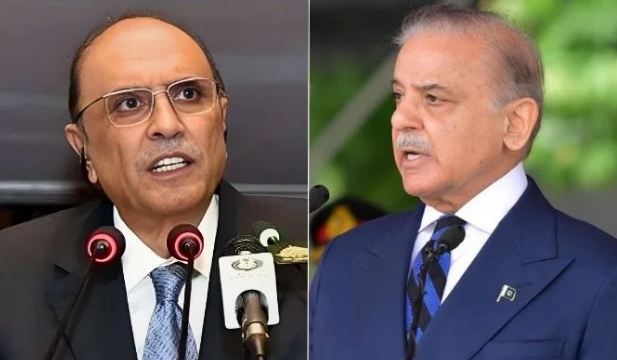
ISLAMABAD, NOV 29- President Asif Ali Zardari and Prime Minister Shehbaz Sharif have reaffirmed Pakistan’s support for the Palestinian people’s inalienable right to self-determination.

Their statements were issued as the International Day of Solidarity with the Palestinian People was being observed today (Saturday). The day has been marked annually on November 29 since it was designated by the United Nations General Assembly (UNGA) in 1977.

Both the president and the prime minister reiterated Pakistan’s longstanding position in support of Palestinian rights and called for renewed international efforts to end the humanitarian crisis.

In his message, President Zardari has said that Pakistan will continue to extend every possible political, diplomatic, humanitarian and moral support to its Palestinian brothers and sisters.

“We reiterate our unwavering support for the establishment of an independent, sovereign, viable and contiguous State of Palestine, based on pre-June 1967 borders, with Al-Quds Al-Sharif as its capital,” the president said in his message on the International Day of Solidarity with the Palestinian People.

Paying high tribute to the valiant Palestinian people for writing a new chapter in the annals of history, with unparalleled courage, unyielding resilience and steadfast resolve in the face of enormous challenges, President Zardari said Pakistan attaches great importance to its historical and close relations with the brotherly State of Palestine.

“Pakistan stands firmly with the Palestinian people. Our support for the Palestinian cause is rooted in the universal values of human dignity, fairness and justice. The bond between the people of Pakistan and Palestine is one of deep affection and mutual respect,” he said, adding that even in the gravest of times, the Pakistani nation has stood shoulder to shoulder with its Palestinian brothers and sisters.

The president pointed out that support for the Palestinian people has been part of the very existence of Pakistan. Seven years before Pakistan was even born, the famous Lahore Resolution of 1940 contained a resolution of solidarity for the people of Palestine and their statehood.

He added that Pakistan has consistently condemned the atrocities of Israeli occupying forces in Gaza and has raised its voice for the Palestinians at every forum. We have repeatedly called for an immediate, unconditional and permanent ceasefire, unhindered humanitarian access, the protection of civilians and full accountability for the war crimes perpetrated by the Israeli occupying forces.

“We remain consistent in our efforts at all international fora, including the United Nations, OIC, ICJ and NAM, for the inalienable rights of the Palestinian people.

We have constructively engaged in the Gaza Peace Deal with the hope that it will bring an end to the unimaginable sufferings of Palestinians as a result of Israel’s aggression and crimes against humanity.”

He further added: “May the resilience of the Palestinian people inspire the conscience of the world and may justice and peace prevail, he prayed, adding, “It is my earnest desire to offer prayers at Al-Aqsa Mosque beside my Palestinian brethren one day. Inshallah!”

In his message, Prime Minister Shehbaz Sharif said the government and people of Pakistan, with unwavering resolve and commitment, stand with the brothers and sisters in Palestine.

“In recent years, the world has witnessed the martyrdom of more than 70,000 people in Gaza, including children, women, and men, who were caught in the relentless violence,” the premier said.

He added: “Gaza underwent brutal atrocities with the entire neighbourhoods erased and entire families wiped out. Homes, hospitals, schools, and the basic essential civic infrastructure have been reduced to rubble.”

In the wake of these grave realities, he said, there must be a full and credible accountability for the war crimes and genocidal actions committed against Palestinians by Israel, in accordance with international law.

“However, a real opportunity has emerged in the form of the high-level conference on the two-state solution and the Gaza peace plan. The ceasefire must be sustained. Israel must cease all violations and ensure unhindered humanitarian access. United Nations Relief and Works Agency for Palestine Refugees (UNRWA) must be fully enabled to resume its vital operations, without impediment or politicisation.”

PM added: “Most importantly, there must be a complete withdrawal of Israeli forces from the occupied Palestinian lands, including Gaza, as the people of Palestine deserve permanent peace and prosperity.”

“While the world condemns the relentless aggression in Gaza, we must not allow our attention to drift away from the grave situation in the West Bank,” he stressed.

He said: “The continued expansion of illegal settlements remains a blatant violation of international law and a major impediment to peace.”

“Pakistan remains firmly committed to a just, lasting, and comprehensive resolution to the Palestinian question, based on the relevant and valid UN Security Council and General Assembly resolutions. Pakistan reiterates its full support for the Palestinian people’s legitimate rights, including the vital right to self-determination and the establishment of an independent, viable, and contiguous state of Palestine, based on pre-1967 borders, with Al-Quds Al-Sharif as its capital,” he noted.

The prime minister said: “Today, and for always, Pakistan reaffirms solidarity with the Palestinian people. We stand by Palestinians in their just struggle, in their due resilience, and in their rightful aspiration for freedom, dignity, and peace.”

Bangladesh ex-PM Zia in ‘very critical’ condition

Bangladesh ex-PM Zia in 'very critical' condition

DHAKA: Former Bangladesh prime minister Khaleda Zia’s health deteriorated since being admitted to hospital, prompting her family and party members to urge citizens to pray for her speedy recovery on Saturday.

Zia, 80, was admitted to hospital on November 23 with symptoms of a lung infection and is currently undergoing treatment in the intensive care unit, members of her party said.

Mirza Fakhrul Alamgir, from Zia’s Bangladesh Nationalist Party (BNP), told reporters late Friday that “doctors have told us that her condition is very critical”.

Several senior BNP leaders and anxious supporters visited the hospital Saturday to receive updates on her condition.

English-language newspaper, The Daily Star, said Zia has “heart problems, liver and kidney issues, diabetes, lung problems, arthritis, and eye-related illnesses”.

She has a permanent pacemaker and previously underwent stenting for her heart, the publication reported.

Zia’s eldest son, Tarique Rahman, who is based in London since 2008, requested the people of Bangladesh pray for his mother’s recovery in a post to social media on Saturday.

“We express our heartfelt thanks and gratitude for all your prayers and love for the highly respected Begum Khaleda Zia,” Rahman, 60, said.

Rahman said he was unable to return to Bangladesh because of circumstances that were beyond his control.

“I share the same deep longing as any child to have my mother’s touch in moments of crisis. However, the decision to return home is neither straightforward nor mine alone to make,” he said.

Zia, who served three terms as prime minister, was jailed for corruption in 2018 under Sheikh Hasina’s government, which also barred her from travelling abroad for medical treatment.

She was released last year, shortly after Hasina’s ouster.

Interim leader Muhammad Yunus also issued a statement.

“During this transitional period to democracy, Khaleda Zia is a source of utmost inspiration for the nation. Her recovery is very important for the country,” he said on Friday night.

Despite her ill health, Zia has vowed to campaign in elections expected in February 2026, in which BNP is widely seen as a frontrunner.

Stay Connected

64FansLike
60FollowersFollow

Latest Reviews

Exchange Rates

USD - United States Dollar
EUR
1.14
GBP
1.34
AUD
0.69
CAD
0.71