Home Blog Page 360

Deputy PM Expresses Sympathy Over Malaysian Flood Casualties, Displacement

Deputy PM Expresses Sympathy Over Malaysian Flood Casualties, Displacement

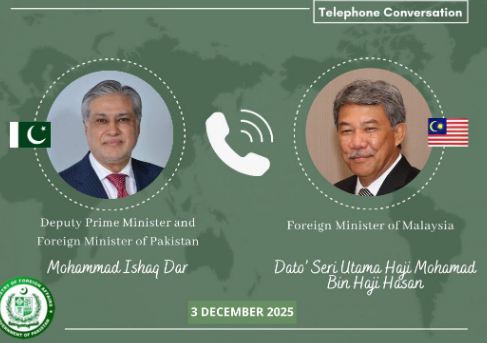
ISLAMABAD: /DNA/ – Deputy Prime Minister/Foreign Minister Senator Mohammad Ishaq Dar @MIshaqDar50 spoke with Malaysia’s Foreign Minister Dato’ Seri Mohamad Hasan @tokmatn9 to convey Pakistan’s deepest condolences on the tragic loss of lives and displacement caused by the floods in Malaysia.

He reaffirmed Pakistan’s solidarity with the people of Malaysia during this difficult time and expressed readiness to extend all possible support for relief and recovery efforts.

Bahrain Commander praises Pakistan army’s regional peace role

Bahrain Commander praises Pakistan army's regional peace role

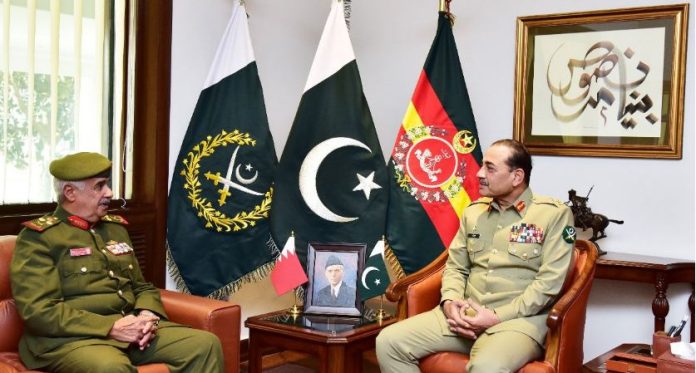
RAWALPINDI, DEC 3 /DNA/ – General Shaikh Mohammad Bin ISA Bin Salman Al Khalifa, Commander Bahrain National Guard, called on Field Marshal Syed Asim Munir, NI (M), HJ, Chief of Army Staff (COAS), at General Headquarters (GHQ) today.

During the meeting, matters of mutual interest, regional security, and bilateral defence cooperation were discussed. Both sides reaffirmed their resolve to further enhance existing military-to-military ties between Pakistan and the Kingdom of Bahrain.

The visiting dignitary appreciated the professionalism of Pakistan Army and acknowledged its role in regional peace and stability. COAS highlighted long-standing brotherly relations between the two nations and expressed Pakistan’s continued support for Bahrain in all domains.

British Deputy High Commissioner meets CDA Chairman

British Deputy High Commissioner meets CDA Chairman

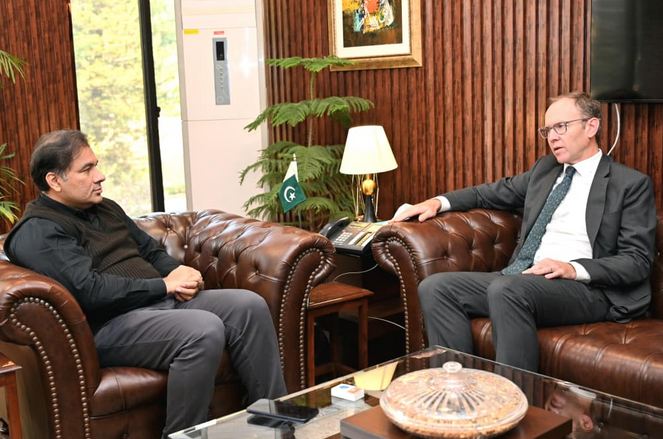
ISLAMABAD, DEC 3 /DNA/ – Chairman Capital Development Authority (CDA) and Chief Commissioner Islamabad Muhammad Ali Randhawa, met with British Deputy High Commissioner Matt Cannell at the CDA Headquarters. The meeting was attended by Member Administration Talat Mahmood, Member Finance Tahir Naeem, Member Environment Esfandyar Baloch along with other officers.

Chairman CDA Muhammad Ali Randhawa welcomed the British Deputy High Commissioner to the CDA Headquarters. During the meeting, a commitment was expressed to strengthen bilateral relations and cooperation with the United Kingdom.

The meeting involved a detailed exchange of views on matters of mutual interest, including the organized planning and development of Islamabad, education, environmental protection and particularly the promotion of sports in Islamabad.

The British Deputy High Commissioner appreciated the natural beauty of Islamabad and CDA’s efforts to develop it into a modern global City.

Chairman CDA Muhammad Ali Randhawa, during the meeting, informed about measures being taken to promote sports in the Federal Capital, Islamabad. He said that the CDA is working day and night to promote international and national sports in Islamabad. He said special attention is being given to increasing and improving facilities for sports like hockey, football, tennis and paddle tennis. Similarly, to promote cricket in the City of Islamabad, especially for women, the Islamabad Women’s Cricket Team is also in the process of being formed. Chairman CDA further added that along with the uplifting of the Diplomatic Enclave, paddle courts and other facilities are being enhanced.

The meeting also discussed making Islamabad one of the safest and smartest cities. Chairman CDA Muhammad Ali Randhawa said that in line with the vision of Prime Minister of Pakistan Shehbaz Sharif and Federal Interior Minister Mohsin Naqvi, Islamabad is being transformed into the safest, most beautiful, and smart City. In this regard, to practically implement the concept of the ‘Safe and Secure Neighborhood,’ a household survey across Islamabad has already been initiated in collaboration with NADRA and the Police.

Chairman CDA said that this initiative will enable the creation of a database with authentic information of all residents living in Islamabad. He said that for making Islamabad a safe city, the implementation of the M-Tag system is also progressing rapidly. He added that a digital parking system is also being introduced in the Federal Capital, Islamabad. Chairman CDA said that all major highways and locations in Islamabad are being connected to the Islamabad Safe City system. He said that similarly, in accordance with the vision of a digital city, comprehensive measures are being taken to transform Islamabad into a cashless City.

The meeting agreed to enhance cooperation in the fields of education, green financing and disaster management, prevention and response to natural calamities.

Chairman CDA Muhammad Ali Randhawa said the aim of all these initiatives is to make Islamabad a model city of sustainable development, beauty, safety and security not only for Pakistan but for the entire region.

At the conclusion of the meeting, the commitment to promote mutual cooperation, people-to-people contacts and educational and cultural exchanges between the two countries was also reaffirmed.

Saudi Land Forces Commander meets COAS Asim Munir at GHQ

Saudi Land Forces Commander meets COAS Asim Munir at GHQ

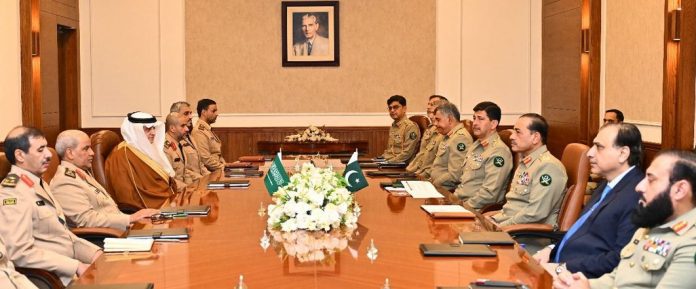
Rawalpindi, DEC 3 /DNA/ – Lieutenant General Fahad Bin Saud Al-Johani, Commander Royal Saudi Land Forces, called on Field Marshal Syed Asim Munir, NI (M), HJ, Chief of Army Staff (COAS), at General Headquarters (GHQ), Rawalpindi today.

During the meeting, matters of mutual interest, regional security, and avenues for enhanced bilateral defence cooperation were discussed. Both sides reiterated their commitment to further strengthening the longstanding and brotherly relations between the Armed Forces of Pakistan and the Kingdom of Saudi Arabia.

COAS expressed satisfaction on robust defence collaboration between the two countries and emphasized upon the need for continued cooperation in training, capacity building, and intelligence sharing. Commander RSLF acknowledged the professionalism of Pakistan Army and appreciated the positive role played by Pakistan in regional peace and stability.

Upon arrival at GHQ, the visiting dignitary was presented with a Guard of Honour.

Kyrgyz president lands in Pakistan for two-day visit

Kyrgyz president lands in Pakistan for two-day visit

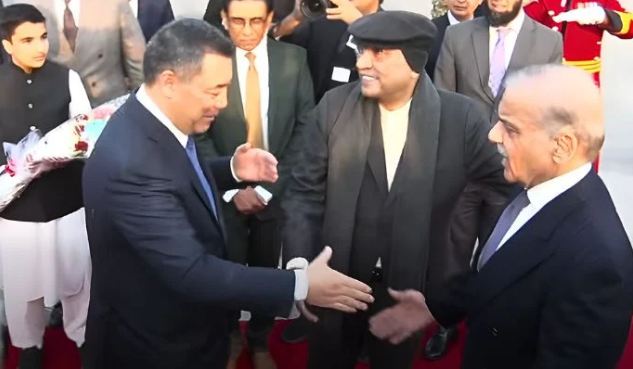
ISLAMABAD, DEC 3 – Kyrgyzstan’s President Sadyr Nurgozhoevich Zhaparov arrived in Islamabad on Wednesday on a two-day visit at the invitation of Prime Minister Shehbaz Sharif.

President Asif Ali Zardari, PM Shehbaz, and members of the federal cabinet received President Zhaparov upon arrival in the federal capital. A 21-gun salute was presented in honour of the Kyrgyz president while children, dressed in traditional attire, offered him a bouquet of flowers.

The Kyrgyz president is accompanied by a high-level delegation comprising senior cabinet ministers, top officials and prominent business leaders.

Earlier, the Ministry of Foreign Affairs stated that the Kyrgyz leader was making his maiden state visit to Pakistan from December 3-4, with meetings planned with the country’s top leadership.

“During the visit, President Zhaparov is expected to meet the President of Pakistan, hold a tête-à-tête followed by delegation-level talks with the Prime Minister, and address the Pakistan-Kyrgyzstan Business Forum,” it added.

Discussions are scheduled on bilateral relations and on exploring new avenues to further deepen cooperation across a range of sectors, including trade, energy, defence, education, people-to-people exchanges, and regional connectivity.

PIDE’s study reveals critical gaps in smog control and sustainable mobility

PIDE’s study reveals critical gaps in smog control and sustainable mobility

ISLAMABAD, DEC 3 /DNA/ – The Pakistan Institute of Development Economics (PIDE), in collaboration with the RASTA Competitive Research Grants Programme, hosted a seminar titled “Clean Air, Green Future: Smog Mitigation, Resilience and Carbon Credit Feasibility.” The event brought together researchers and policymakers to discuss Lahore’s escalating smog crisis, sectoral emissions, and emerging behavioral solutions for sustainable mobility.

Presenting first, Dr. Aqsa Shabbir, Associate Professor at LCWU and RASTA Fellow, emphasized that smog mitigation in Punjab must shift from reactive closures to long-term prevention. She noted that Lahore’s air pollution accelerated after rapid industrialization in the 1990s, with smog becoming an annual emergency by 2016. Since then, 12 policy documents have been produced, including the Punjab Clean Air Policy (2023), Climate-Resilient Punjab Action Plan (2024), and the Smog Control Strategy (2024–25). Despite these frameworks, weak implementation, insufficient surveillance, and low institutional capacity remain the biggest constraints.

Dr. Shabbir reiterated that the transport sector contributes up to 83% of Lahore’s emissions, followed by industry and agriculture. While initiatives such as vehicle inspection centers, fuel-quality monitoring, and shifts to EVs appear promising on paper, gaps in coordination — especially between the transport and energy departments — hinder progress. In agriculture, subsidized super seeders and rice straw shredders have delivered partial success, yet affordability barriers, language-inaccessible awareness campaigns, and inconsistent monitoring allow stubble burning to persist. Satellite data confirms ongoing hotspots in Jhang, Hafizabad, and Nankana Sahib, indicating that improvements seen in 2024 are real but fragile.

Delivering the second presentation, Dr. Sahar Zia, Assistant Professor of Geography at LCWU, introduced an innovative Vehicle Emission Reduction Calculation Model, grounded in behavioral research and qualitative mobility data. This model shifts the focus from AQI readings to real commuter habits, analyzing distance traveled, frequency, transport mode, and mindset. Survey findings from 385 respondents show that 55% of Lahore’s commuters — mainly students traveling 10–20 km daily — are willing to cut emissions if provided meaningful incentives. Scaling these patterns city-wide suggests a potential 38% reduction in emissions if high-emission users shift to low-emission transport.

Dr. Zia emphasized that citizens respond most strongly to reduced fares, tax rebates, fuel discounts, and reliable public transport, whereas poor infrastructure, discomfort, and high vehicle costs remain major barriers. She highlighted international best practices such as encouraging school placements within 5–10 km of residences to reduce daily commute-related emissions.

Moderating the session, Dr. Nasir Javed praised the interdisciplinary nature of the work and underscored additional challenges: political and bureaucratic mindsets, a lack of accessible communication for farmers and citizens, and limited public appreciation for environmental reforms. He stressed that smog mitigation demands both strong enforcement and behavioral change, supported by coordinated, long-term planning.

The seminar concluded that meaningful progress in Lahore’s air quality will require evidence-based policy design, sector-specific incentives, inclusive communication strategies, and integrated urban mobility reforms, backed by persistent public and governmental commitment.

High taxes, CDA policies push business community to wall

High taxes, CDA policies push business community to wall

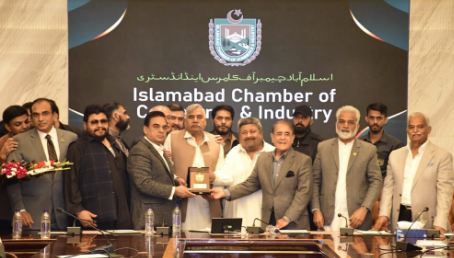
ISLAMABAD, DEC 3 /DNA/ – Sardar Tahir Mehmood, President Islamabad Chamber of Commerce and Industry (ICCI), has said that the business community is the real stakeholder of the national economy, having played a key role in the development of Islamabad. He emphasized that the issues being faced by traders must be resolved on priority, reaffirming that ICCI is fully committed to ensuring an environment conducive to the ease of doing business.

He expressed these views while addressing a large delegation of Wholesale Fruit and Vegetable Associations, I-11/4, led by Babu Aleem during their visit to ICCI.

Sardar Tahir Mehmood lamented that the business community has been pushed to the wall due to high interest rates, irrational tariffs, unjust taxation, and especially the anti-business maneuvers of the Capital Development Authority (CDA). He warned that the business community, including the industrial sector, is united and determined to have its issues resolved at all costs—even if it requires shutter-down strikes, lockdowns, or peaceful sit-ins until the core objectives are achieved.

Chairman ICCI Founder Group, Shaikh Tariq Sadiq, said that unity is the cornerstone of success, the  ICCI is the dedicated platform of the business community, and with collective strength, the traders’ issues will be resolved. The growth of business and trade, he stressed, will ultimately strengthen the national economy.

Senior Vice President ICCI, Tahir Ayub, warmly welcomed the delegation and said that the I-11 fruit and vegetable market plays a vital role in meeting the basic needs of the twin cities, Azad Kashmir, Northern Areas, and even exports. He said CDA must give priority to resolving its issues. He informed that the market covers almost 50 acres, houses over 60 small and large cold storages, and has more than 600 operational firms. He urged CDA to stop treating the market as a commercial zone instead of an industrial setup and to urgently address infrastructure, security, sewage, drinking water, road construction, and cleanliness issues.

Former Chairman Founder Group, Khalid Iqbal Malik, praised the bold leadership of President Sardar Tahir Mehmood and expressed confidence that the business community’s issues will be resolved during his tenure.

Speaking on the occasion, Babu Aleem termed the Market Committee a “white elephant” responsible for prevalent irregularities including encroachments in the locality. He said that the vicinity has become a sandwich between the CDA and the Market Committee and none of them is serious enough to discharge its duties.

Those who also shared their views included Chaudhry Arshad, Chaudhry Waseem, Ehsanullah, Chaudhry Amir Rafique, Haji Nadir, Chaudhry Rizwan, and Chaudhry Siddique.

Among others present were Vice President Irfan Chaudhry, Executive Members Raja Naveed Satti, Zulqurnain Abbasi, Waseem Chaudhry, and former SVP Khalid Chaudhry.

South Asia development future demands connectivity: Bangladeshi envoy

South Asia development future demands connectivity: Bangladeshi envoy

ISLAMABAD, DEC 3 /DNA/ – Bangladesh High Commissioner, Iqbal Hussain Khan, Wednesday opined that the South Asia development future rested in shared wellbeing enhanced through trade and connectivity cooperation amid propitious role of the New Generation Leadership, the youth that brought revolution in the East against redundant governance systems not fulfilling their needs as in Bangladesh, Nepal and Sri Lanka.

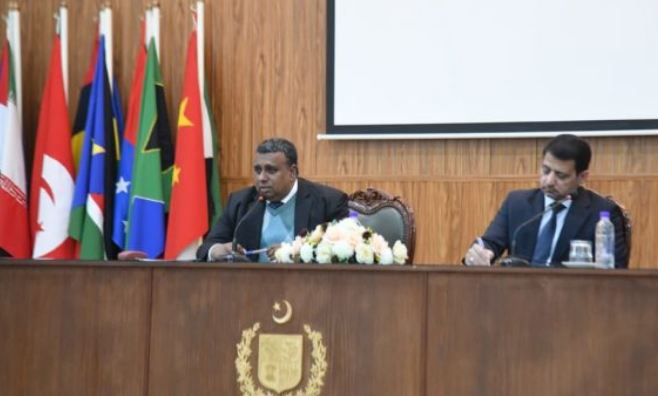
The Bangladeshi envoy called for deeper regional cooperation, expanded bilateral trade and greater people-to-people exchanges during his special address here at the Foreign Service Academy (FSA).

Speaking to the new batch of probationary officers, the envoy underscored the immense but under-utilised potential of Pakistan–Bangladesh relations and said South Asia’s future lies in shared development rather than isolation.

High Commissioner Khan said the two countries already enjoy a strong trade base, particularly in raw materials and textiles. Pakistan, he noted, is rich in minerals and supplies significant quantities of cotton and dolomite to Bangladesh’s thriving ready-made garments industry, one of the world’s largest. He also highlighted Pakistan’s export of rice to Bangladesh, stating that up to 100 million metric tons had been imported over the years to meet demand.

In return, Bangladesh remains a major global exporter of jute, pineapple and garments, he said, adding that both sides have opportunities to diversify trade. “Pakistanis are increasingly visiting Bangladesh for business, and Bangladeshis are now looking toward Pakistan. This two-way flow needs to be scaled up,” he remarked.

The envoy said that South Asia’s long-standing connectivity routes, from the historic Grand Trunk Road linking Kabul to Chittagong and onward to Myanmar, to rail lines laid during the British era, show the deep cultural and historical ties binding the region. “Our new generations are more educated, informed, and aspirational. They demand better lives, and political systems must respond to these expectations,” he added.

Referring to Bangladesh’s recent political developments, he said the 2024 shift in governance came from youth demanding accountability and opportunity. The upcoming elections, he added, aim to create a platform for “new leadership grounded in youth.”

Khan also cited examples from Sri Lanka and Nepal, saying political change across South Asia reflects rising public expectations. “We share a history of freedom from colonial rule, and with the same vision we can move forward together.”

Sharing insights from his recent travel across Pakistan, Khan noted the production of Surma in Sukkur, widely consumed in India but traded through third countries due to limited direct channels. He also discussed the long supply chain of Pashmina shawls produced in Indian Illegally Occupied Jammu & Kashmir (IIOJK), routed through Dubai, and then reaching Pakistan. “Healthy cooperation can fix these gaps. Currently, middlemen benefit the most while regional producers lose out.”

He stressed that many Pakistani products entering global markets are labeled as Indian due to existing trade routes, calling it a loss of identity and economic value for Pakistan. “Improved education and public awareness can transform public opinion and policymaking,” he said.

Responding to questions, Khan acknowledged that SAARC has struggled to deliver because India and Pakistan, the two major stakeholders, remain unable to resolve key issues. He said regional groupings in the East, such as the Bangladesh-India-Thailand-Myanmar (BIMSTEC) mechanism, emerged from this gap and have advanced cooperation based on cultural affinities.

He added that in the West, ECO offers a model of strong coordination built on cultural and religious ties. “Artificial barriers still exist, but people on both sides of borders are waiting for the right moment to embrace each other. SAARC will revive when the region is ready.”

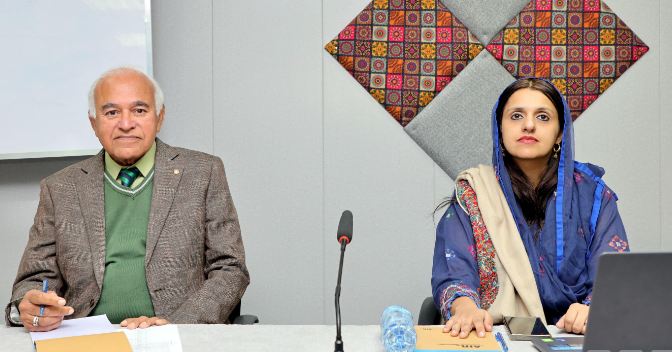
The High Commissioner underscored that South Asia is highly vulnerable to natural disasters, calling for joint action and regional preparedness. “Borders cannot be excuses when catastrophe strikes. Germany’s post-war resilience was built on public education and our region must prioritise this as well.”

He also noted that Bangladesh’s public sentiment toward India is similar to Pakistan’s, shaped by geography and economic disparities. India’s per-capita income, he said, remains lower than Bangladesh’s despite its size. “If populations are not empowered through education and development, leaders often fabricate issues that divert attention from real challenges,” he warned.

High Commissioner Khan echoed this sentiment, expressing confidence that the new generation better informed, globally aware, and ambitious will steer the region toward greater connectivity, cooperation, and prosperity.

In his vote of thanks, Director General of the Foreign Service Academy Dr. Syed Ali Asad Gillani welcomed the envoy, acknowledging the “difficult but shared history” of Pakistan and Bangladesh. He praised the contributions of Bengali leaders to the creation of Pakistan and highlighted the cultural bond between the two peoples.

“Bangladeshis are a brave and resilient nation. Our relationship is rooted in common history, and we must not be hostage to the past. Instead, we should move forward with friendship and strength,” Dr Gillani said.

Pakistan showcases stunting success at global nutrition conference

Pakistan showcases stunting success at global nutrition conference

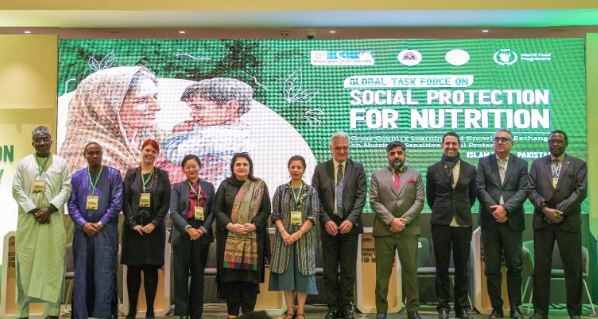
ISLAMABAD, DEC 3 /DNA/ – A three-day learning event on nutrition-sensitive social protection opens today in Islamabad, convened under the Global Task Force on Social Protection for Nutrition. The event is co-hosted by the Governments of Pakistan and Timor-Leste, with the United Nations World Food Programme (WFP) serving as Secretariat of the Global Task Force and facilitating collaboration among governments and partners.

Delegates from Bangladesh, Cambodia, Lao PDR, Nepal, Niger, Timor-Leste and Pakistan will exchange lessons, evidence and innovations to integrate nutrition effectively into national social protection systems.

The dialogue aims to build shared commitment to making social protection policies and programmes more nutrition-focused. Delegates will review practical examples, explore new approaches, and identify actions to accelerate progress against malnutrition at national and global levels. As host country, Pakistan is showcasing its leadership in social protection and nutrition, offering lessons that resonate across the region, through the Benazir Income Support Programme (BISP), a globally recognised model for poverty reduction and nutrition-sensitive social protection. Its flagship Benazir Nashonuma Programme, launched in 2020 by the Government of Pakistan with support from WFP, UNICEF, and WHO, focuses on preventing stunting – impaired growth and development in young children due to malnutrition – targeting pregnant and breastfeeding women and children under two. A recent evaluation by Aga Khan University, a leading health sciences institution based in Karachi, found stunting at six months of age to be 20 percent lower among Nashonuma beneficiaries – some of the strongest nutrition outcomes ever recorded at scale.

In a written statement, the President of Pakistan, Asif Ali Zardari, underscored: “Integrating nutrition into social protection has been a major milestone. Through the Benazir Nashonuma initiative, pregnant and lactating women and children under two receive targeted support during the first thousand days. At the core of this effort is a simple conviction: no child should face malnutrition, no mother should be without care, and no family should endure hardship alone. Ending malnutrition is both a development priority and a responsibility that shapes the future of all nations”.

Ms. Rubina Khalid, Chairperson of BISP, said,“In coordination with provincial authorities, BISP aims to continue and where possible expand its efforts to sustain the achievements of the Benazir Nashonuma Programme over the next years. This positive momentum must be maintained, as the health of today’s children shapes the promise of generations yet unborn.” She also noted since its launch in 2008, BISP has marked a turning point in Pakistan’s social protection landscape, shifting from fragmented welfare schemes to a nationally coordinated programme and laying the foundation for innovations such as digital payments, beneficiary registries, and nutrition‑sensitive interventions.

Senator Rubina Khalid highlighted that BISP is Pakistan’s largest social protection initiative supporting 10 million families nationwide. Programmes, including Benazir Kafaalat, Taleemi Wazaif, Hunarmand, and the globally recognized Benazir Nashonuma Programme, has benefited 3.9 million mothers and children with nutrition support, health services, and behavior change communication, achieving significant reductions in child stunting.

Coco Ushiyama, WFP Representative and Country Director in Pakistan, reiterated,“Pakistan’s experience shows that integrating social protection and nutrition is not only feasible and impactful but cost-effective. It requires sustained political will and predictable financing.”

On behalf of H.E. President Jose Ramos-Horta of Timor-Leste, the chair of the Global Task Force,H.E. Ceu Brites, Vice Minister of Social Security and Inclusion expressed her deep appreciation to the Government of Pakistan for hosting the event and for their leadership in advancing nutrition-sensitive social protection. She also thanked the Government of France for their support to the Global Task Force. “Let us move from ideas to impact – from commitment to collective action. Together, we can create a world where no mother, no child, and no family are left behind,” she added.

The event underscores the shared commitment of participating governments and partners to ensure that no child, woman, or man suffers from hunger or malnutrition. It reflects the spirit of collaboration required to achieve Zero Hunger (Sustainable Development Goal 2) and universal social protection (target 1.3 under Sustainable Development Goal 1: No Poverty), reinforcing the leadership of the Global South in shaping the future of nutrition-sensitive social protection.

Zayed National Museum is open to the public in Abu Dhabi

Zayed National Museum is open to the public in Abu Dhabi

  • The national museum of the United Arab Emirates tells the story of the land and its people, and stands as a tribute to the legacy of Sheikh Zayed, the nation’s Founding Father. 
  • The museum’s opening marks the culmination of an unprecedented cultural year for the UAE with the openings of teamLab Phenomena Abu Dhabi and Natural History Museum Abu Dhabi and the reopening of Al Ain Museum.

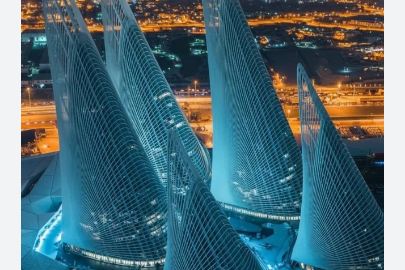
Abu Dhabi, United Arab Emirates – 3 December 2025: Zayed National Museum, the national museum of the United Arab Emirates (UAE) and the centrepiece of Saadiyat Cultural District, opened to the public today. 

Zayed National Museum offers visitors a journey through the history of the UAE, from the earliest evidence of human habitation to the civilisations that shaped its culture and identity. The museum serves as a cultural bridge connecting the seven emirates, emphasising their deep shared history and heritage. The museum reflects how the story of the UAE’s Founding Father, the late Sheikh Zayed bin Sultan Al Nahyan, is deeply intertwined with that of the UAE, presenting his life as a lens through which to explore the values and aspirations that underpin the nation. 

Zayed National Museum showcases a collection of more than 1,500 objects within its six permanent galleries, combining archaeological artefacts, historic objects, audiovisual and sensory experiences, as well as contemporary installations and authentic reconstructions. Starting from the museum’s 600-metre outdoor gallery, Al Masar Garden, the visitor journey continues through galleries dedicated to Sheikh Zayed’s life, the UAE’s natural landscapes, and the history of human habitation on this land, featuring archaeological discoveries spanning 300,000 years. Together, they reveal how geography, innovation, exchange and faith shaped Emirati identity.

HE Mohamed Khalifa Al Mubarak, Chairman of the Department of Culture and Tourism – Abu Dhabi, said: “As the national museum of the United Arab Emirates, Zayed National Museum tells the unfolding story of the land and its people. It demonstrates the unifying power of our history and our culture, providing a space where citizens, residents and visitors can see themselves reflected in the story of our people and our land. Bridging past, present and future, it will help shape how we understand the UAE’s evolving cultural narrative. As a world-class centre for research and learning, it will inspire and equip the next generation of Emirati curators, historians and conservators, enabling our nation to further contribute to knowledge production and global cultural discourse.”

Designed by Pritzker Prize-winning architect Lord Norman Foster of Foster + Partners, the museum’s opening marks a new chapter for the nation’s legacy and the culmination of an unprecedented cultural year for the UAE, with the openings of teamLab Phenomena Abu Dhabi and Natural History Museum Abu Dhabi in Saadiyat Cultural District and the reopening of Al Ain Museum in Al Ain Region.

Deep Roots and Everlasting Legacy: a month-long opening programme

To mark this milestone opening, Zayed National Museum welcomes the public to experience a programme of performances, workshops and cultural activities running until 31 December under the theme ‘Deep Roots and Everlasting Legacy’. The museum’s indoor and outdoor spaces will be activated with diverse experiences that honour the UAE’s heritage and celebrate its culture. The programme brings together music, dance and storytelling to connect audiences of all ages to the nation’s history and heritage. 

Highlights include traditional Razfa and Naashat dances; an immersive Gahwa experience designed with Bait Al Gahwa, accompanied by poetry, Taghrooda music, Nahma seafaring chants and the Nadba mountain call; poetry performances; and musical recitals. Hands-on workshops will explore traditional crafts and arts inspired by the museum narrative and collections, and museum tours will be available. Workshops and tours require advance booking.

The museum’s retail shop, Al Nagwa Boutique, offers a curated selection of gifts and souvenirs inspired by the museum’s themes and collections. Food and beverage options include the museum’s signature dining destination, Erth Restaurant, as well as Al Ghaf Cafe and the Garden Cafes. 

Zayed National Museum entry tickets and annual memberships are available at zayednationalmuseum.ae.

-ENDS- 

For further media information


Download images here and full press kit here

International media

Marion Lestra (EU) | [email protected]  | +4474 5983 7233

Yiren Shen (APAC)  [email protected]  | +44 (0)7757 748 834

Naomi Crowther (UK/US) | [email protected]  | +44 7562947254

VISITOR INFORMATION 

Zayed National Museum | Saadiyat Cultural District Abu Dhabi

zayednationalmuseum.ae

SOCIAL MEDIA 

Instagram | znmuae – X | znmuae – Facebook | znmuae – YouTube | znmuae – LinkedIn | znmuae

Opening Hours: 

Open Daily 10:00 am to 8:00 pm

Last Entry 1 hour before closing

Ticketing: 

Tickets are available to purchase from zayednationalmuseum.ae

General admission: 

  • Adults – AED 70 
  • Children (under 18) – free of charge 
  • Senior Citizens – free of charge 
  • Students & teachers – AED 35 

Memberships are available in three categories:

  • Individual – for those seeking a deeper connection with the UAE’s heritage and the flexibility to explore independently or with a companion for AED 210
  • Teacher – for educators who wish to enrich classroom learning through museum resources, workshops and professional development opportunities for AED 150
  • Student – for students who want to engage with exhibitions, events and educational programmes for AED 150

Public Programme: 

At Zayed National Museum, our programmes are designed to bring families, friends, individuals and the community together through meaningful cultural experiences. They provide opportunities to connect, spark curiosity and celebrate the rich history and culture of the United Arab Emirates.

Open to everyone, from cultural explorers to first-time visitors, the museum’s public programmes offer enriching and creative ways to learn, share and engage.

Our programme calendar includes workshops, tours, talks, conferences, musical and theatrical performances, cultural engagement and community events. Each programme invites visitors to explore the nation’s history and culture in inspiring and interactive ways.

Notes to editors

About Zayed National Museum: 

Zayed National Museum, located in the heart of Saadiyat Cultural District Abu Dhabi, is the national museum of the United Arab Emirates. Guided by the values of its Founding Father, the late Sheikh Zayed bin Sultan Al Nahyan, the museum tells the story of the nation from ancient times to present day. Through exhibitions, research and public programming, it explores the UAE’s history, culture and heritage, honouring Sheikh Zayed’s enduring legacy and his commitment to knowledge, unity and the preservation of Emirati identity.

Gallery List: 

The galleries of Zayed National Museum are: 

  • Our Beginning sheds new light on the life, legacy and values of the late Sheikh Zayed bin Sultan Al Nahyan, the UAE’s Founding Father, through an authentic form of storytelling. 
  • Through Our Nature immerses visitors in the diverse landscapes of the UAE exploring the connections between people and their environment through different forms of media. 
  • To Our Ancestors explores the evidence of human activity in our land dating back 300,000 years, showcasing early trade with other societies in the Gulf region. 
  • Through Our Connections gallery explores relationships between people and societies of this region and the broader world. The gallery covers the Iron Age from 3,000 years ago and the spread of Islam in the region from the 600s onward, up to the 1100s CE.
  • By Our Coasts focuses on the development of the distinct cultural identity on the coasts of the Emirates, tracing the history of communities back to the time of Ibn Majid (Julfar born) and the era of great Arab navigators. The gallery explores the culture of the coast ranging from architecture to currency to music to the economic mainstays of fishing, pearling, trading and boat building.
  • To Our Roots continues the exploration of Emirati identity by looking at the traditional lifestyle, customs and social practices that have prevailed in the inland areas of the emirates, from desert to oases to mountains. The gallery also highlights the intangible heritage passed down from generation to generation, reinforcing the preservation of history over time.
  • Al Masar Garden is a 600-metre outdoor gallery that takes visitors through the timeline of Sheikh Zayed, set within landscapes that reflect the environments that inspired him. It features sculptures and plants representing the UAE’s desert, oasis, and urban settings.

Stay Connected

64FansLike
60FollowersFollow

Latest Reviews

Exchange Rates

USD - United States Dollar
EUR
1.14
GBP
1.34
AUD
0.69
CAD
0.71