Home Blog Page 359

Honour on the Battlefield: The Legacy of Major Shabbir Sharif

Honour on the Battlefield: The Legacy of Major Shabbir Sharif

by Muhammad Mohsin Iqbal

In every age of conflict, nations have understood that the strength of an army does not rest merely in the number of its battalions or the size of its armoury, but in the excellence of its equipment, the discipline of its ranks, and above all, the determination that beats within the hearts of its soldiers. War requires tools that deter aggression and answer it with resolute force, yet history testifies that even the most formidable machinery is powerless without the spirit that guides it. Pakistan learned this lesson not in comfort but in fire, when in 1971 it faced a trial greater than its material capacities.

There is no denying that Pakistan entered the war of 1971 under conditions far less favourable than those of its adversary. Politically, the country was grappling with internal discord, strained governance, and the tragic anxieties emerging in East Pakistan. India, in contrast, enjoyed greater political coherence and international support. Economically as well, Pakistan was more limited in resources, while India, with a larger industrial base and greater financial resilience, possessed a comparative advantage. In matters of defence, India had the benefit of numerical superiority, larger stockpiles, and extensive backing from global partners. In external affairs too, New Delhi benefited from significant diplomatic alignments, particularly its strategic treaty with the Soviet Union, whereas Pakistan’s position was more fragile, dependent on distant alliances and insufficiently supported by its immediate region.

Yet, despite this disparity, the Pakistani nation did not lose heart. The limitations in political stability, economic strength or diplomatic support did not diminish its resolve. When India launched its offensive, the Pakistan Armed Forces met it with the courage of a people determined not to let their homeland be overrun by aggression. In those days when military hardware was unevenly balanced and the diplomatic climate seemed unfriendly, it was the indomitable courage of Pakistani soldiers that became the country’s true shield.

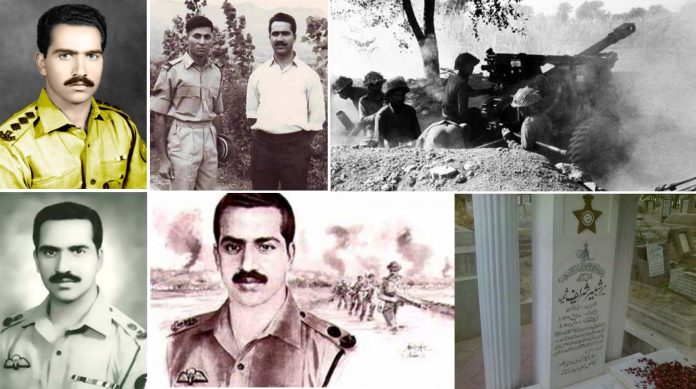
Among the shining names of that difficult period, the example of Major Shabbir Sharif stands in eternal brilliance. He was a young officer who understood that courage is not measured by the strength of the arms one carries, but by the strength of the conviction one defends. On December 6, 1971, during some of the fiercest clashes of the conflict, he led his men with an unmatched spirit. Under heavy enemy fire, he seized strategic ground, repelled repeated assaults and inflicted decisive losses on the opposing forces. In the final moments of his life, he embodied an unshakeable devotion to duty, offering his life for the defence of the motherland. For his supreme courage and sacrifice, he was awarded Nishan-e-Haider, the nation’s highest military honour. His legacy remains a symbol of what Pakistan had in its favour even when the odds appeared overwhelming: courage, faith, and an unbroken will.

From that era to the present day, a great transformation has taken place in the military sphere. The global landscape of warfare has changed, and Pakistan, despite facing geopolitical pressures and financial challenges, has strengthened itself in areas where it once lagged behind. Politically, the country today has a more structured system of governance, while India faces its own internal divisions and growing political polarisation. Economically, though Pakistan continues to address serious challenges, India’s own rise has created new strategic vulnerabilities, particularly in the context of regional disputes and military overstretch. Defence capabilities too have undergone a significant shift. Pakistan’s modern missile systems, air defence technology, and nuclear deterrence have created a strategic balance that did not exist in 1971. India may possess larger numbers, but Pakistan today commands a deterrent capability that ensures aggression cannot be contemplated without grave consequences. In external affairs as well, the global environment has evolved; alliances are no longer as predictable as they once were, and Pakistan maintains crucial partnerships that reinforce strategic stability in the region.

Thus, when one compares the Pakistan of 1971 with the Pakistan of today, it becomes clear that the nation has travelled a long distance. The disparity that once existed has narrowed. The lesson, however, remains unchanged: equipment may strengthen a nation’s hands, but it is the character of its people that strengthens its destiny. The story of Major Shabbir Sharif reminds us that when a soldier fights for honour and homeland, he stands taller than any adversary, regardless of the weapons arrayed against him.

In remembering his sacrifice, we remember the essence of Pakistan’s resilience. Though the material balance in 1971 favoured the enemy, the moral and spiritual strength of Pakistani soldiers transformed the battlefield. Today, as the region continues to witness strategic competition and military modernisation, the legacy of that era teaches us that while nations must prepare with the most advanced means of defence, they must also preserve the spirit that gave life to sacrifice. For in the final reckoning, it is not merely the might of the machine, but the courage of the heart, that decides the fate of nations.

PM Shehbaz greets Pakistan’s First Chief of Defence Forces Asim Munir

PM Shehbaz greets Pakistan’s First Chief of Defence Forces Asim Munir

ISLAMABAD, DEC 5 /DNA/ – Prime Minister Shehbaz Sharif on Thursday extended warm felicitations to Field Marshal Syed Asim Munir on assuming charge as Pakistan’s first Chief of Defence Forces, calling the appointment “historic” and a defining moment for the country’s security framework.

The Prime Minister praised Asim Munir’s “bold and courageous leadership,” noting that his command played a decisive role in unifying the Armed Forces and galvanizing the nation during what he described as the “Battle for Truth.” He said the people of Pakistan would always remember his wartime leadership, which proved instrumental in securing a “historic victory for our homeland.”

PM Shehbaz also congratulated Air Chief Marshal Zaheer Ahmad Babar Sidhu on the extension of his tenure, lauding the Pakistan Air Force under his command for destroying seven enemy aircraft and advanced missile defence systems “with unmatched professionalism,” thereby reinforcing Pakistan’s air superiority.

The Prime Minister reaffirmed that all national institutions stand united for the defence, development, and prosperity of Pakistan, adding that together, “we will make our country’s defence truly invincible, InshaAllah.

Zainab Nawaz brings pride to Pakistan with global writing win

Zainab Nawaz brings pride to Pakistan with global writing win

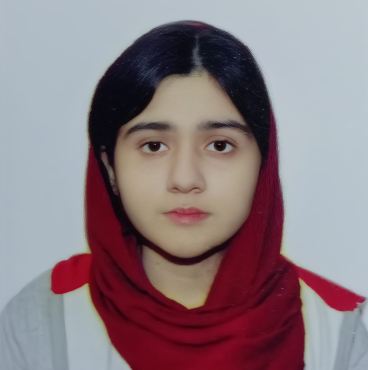
ISLAMABAD, DEC 5 /DNA/ – Zainab Nawaz, a student of O level, has earned pride for Pakistan by winning the Gold Award in the senior category of prestigious The Queen’s Commonwealth Essay Competition 2025. Her achievement stands out among 53,434 entries submitted from 56 Commonwealth member countries.

Established in 1883 by the Royal Commonwealth Society, The Queen’s Commonwealth Essay Competition is the world’s oldest international writing contest for schools. It invites young writers to explore themes aligned with Commonwealth values and global issues. This year’s theme, “Our Commonwealth Journey,” challenged participants to reflect on geographical, historical, or personal journeys.

In the senior category, for ages 14 to 18, Zainab demonstrated exceptional creativity and insight in her essay titled “National Legends and folklore can take us on a journey through history and culture. Retell a famous folklore from your own or another commonwealth country in a surprising way.” She uniquely reimagined the iconic tragic love story of Sohni Mahiwal, capturing the rich cultural heritage of the region.

Zainab, an avid reader and passionate creative writer, has previously earned Silver and Bronze awards in the junior category of this competition, highlighting her continued dedication and growth as a young literary talent.

The Royal Commonwealth Society has congratulated Zainab on her outstanding accomplishment, which brings pride to Pakistan and exemplifies the power of storytelling to connect cultures across the Commonwealth.

Taliban regime’s non-cooperation delayed Türkiye team Pak visit

Taliban regime's non-cooperation delayed Türkiye team Pak visit

Pakistan to keep borders closed until Kabul gives assurance on counterterrorism, says spokesperson Andrabi

Ansar M Bhatti/DNA

ISLAMABAD: Foreign Office Spokesperson Tahir Hussain Andrabi on Friday said that the Taliban regime’s lack of cooperation may be behind the delay in the visit of a high-level Turkiye delegation – scheduled to arrive in Islamabad last month to discuss tensions between Pakistan and Afghanistan Taliban regime.

The planned visit was first disclosed earlier this month by Turkiye President Recep Tayyip Erdogan during his meeting with Prime Minister Shehbaz Sharif in Baku last month.

Turkiye Ambassador to Pakistan Dr Irfan Neziroglu, who had played an active role in facilitating the Istanbul trilateral talks on Afghanistan, had told the delegation visiting Pakistan will also be accompanied by the Turkish intelligence chief and important ministers.

During his weekly briefing, the FO spokesperson said the delay in the visit may also be due to scheduling issues. Andrabi said Pakistan will keep its border with Afghanistan closed until firm assurances are provided by Kabul that terrorists and violent elements will not enter Pakistan.

He said that the cross-border terrorism is not limited to TTP or TTA militants, adding that Afghan nationals are also involved in serious crimes inside Pakistan.

“The border closure should be understood in this broader security context,” Andrabi added.

On the reopening of the Torkham and Chaman border crossings with Afghanistan on Thursday, the spokesperson clarified that the borders were reopened only for humanitarian aid.

Pakistan closed the Torkham and Chaman borders with Afghanistan on October 12 after the Afghan Taliban, in association with their affiliated militants, attacked multiple Pakistan Armed Forces posts along the border.

The border clashes between forces from the two countries began on the night between October 11 and 12 after the Afghan Taliban and militants launched unprovoked attacks against Pakistan’s border posts.

The resulting clashes led to the killing of over 200 Taliban and affiliated militants, while 23 Pakistani soldiers were martyred defending the motherland.

Pakistan also conducted “precision strikes” deep inside Afghanistan, targeting terrorists in Kandahar province and Kabul. A temporary 48-hour ceasefire was announced on October 15 at Afghanistan’s request.

The two sides eventually reached an official ceasefire agreement on October 19 in Qatar in talks mediated by Doha and Turkiye.

Under the deal, terrorism from Afghanistan on Pakistani soil will stop immediately with Islamabad and Kabul agreeing to establish mechanisms to consolidate lasting peace and stability between the two countries.

The two sides then held further talks in Turkiye which collapsed after Pakistan refused to accept the Taliban delegation’s “illogical” arguments and refusal to address Islamabad’s concerns regarding cross-border terrorism.

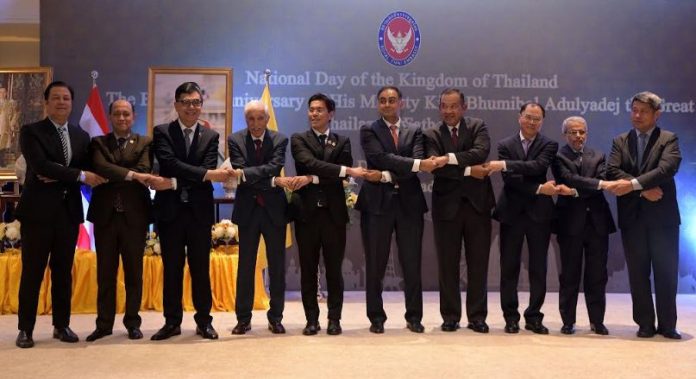
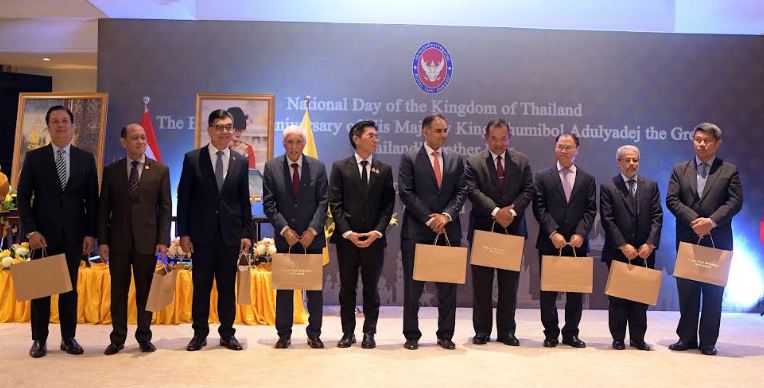
Thailand Marks National Day

Thailand Marks National Day

Thailand reaffirms commitment to deepening partnership with Pakistan

Touching upon economic cooperation, Ambassador Virabutr emphasized Thailand’s strong commitment to concluding the Pakistan–Thailand Free Trade Agreement (FTA) at the earliest

By Ansar M. Bhatti

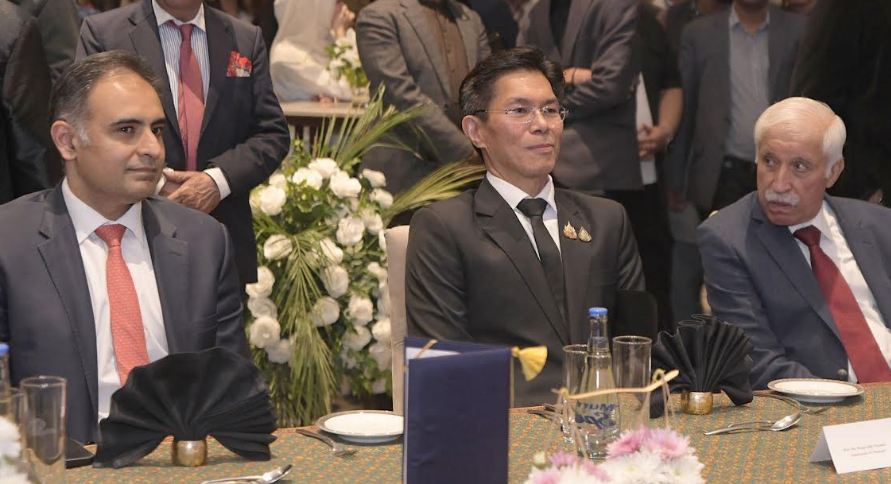
ISLAMABAD — The Royal Thai Embassy hosted an impressive reception in Islamabad to celebrate the Thai National Day, the Birthday Anniversary of the late King Bhumibol Adulyadej The Great, and Thailand’s Father’s Day. The event was attended by a large number of diplomats, dignitaries and members of the Pakistani government.

In his keynote address, Ambassador of Thailand to Pakistan, H.E. Rongvudhi Virabutr, paid rich tribute to the late King Bhumibol—revered for his 70 years of service, more than 4,000 development projects and his globally admired Sufficiency Economy philosophy. The Ambassador recalled the King’s timeless message that “the suffering of the people cannot wait,” a principle that continues to guide Thailand’s domestic and foreign policy.

He also expressed deep sorrow over the recent passing of Her Majesty Queen Sirikit, the Queen Mother, praising her lifelong dedication to culture, heritage and rural communities. A special exhibition in her honor was also arranged at the venue.

Ambassador Virabutr highlighted that this year carries special importance as Thailand and Pakistan prepare to celebrate 75 years of diplomatic relations in 2026. He noted that 2025 had been a year of “intense progress,” marked by deeper cooperation and people-centered initiatives. A short video presentation showcased various development partnerships and community projects undertaken by the Embassy across Pakistan.

A major portion of his speech focused on women’s empowerment — a priority area for Thailand. The Ambassador spoke passionately about the Royal Thai Embassy’s collaboration with UN Women to uplift women entrepreneurs in Swabi and Sialkot. Training programs in the beauty sector and regenerative agriculture have helped equip women with practical skills and income-generating opportunities. He particularly acknowledged the contribution of Ms. Jennifer Innes Taylor (“Jane”), owner of Udon Organic Farm, whose mentorship has inspired rural women to embrace sustainable farming practices.

Touching upon economic cooperation, Ambassador Virabutr emphasized Thailand’s strong commitment to concluding the Pakistan–Thailand Free Trade Agreement (FTA) at the earliest. He expressed confidence that bilateral trade—currently around USD 1.6 billion—could grow significantly once the FTA is finalized. He also underscored Thailand’s interest in expanding investment in Pakistan’s growing halal industry, an area where Thailand holds global leadership.

As current Chair of the ASEAN Committee in Islamabad, the Ambassador reaffirmed Thailand’s determination to strengthen ASEAN–Pakistan cooperation under the theme of “Visibility, Tangibility, and Bringing into Reality.” He noted that ASEAN’s enhanced engagement will help Pakistan advance towards becoming a full dialogue partner in the future.

Concluding his address, Ambassador Virabutr said that the Thailand–Pakistan friendship is defined not only by agreements but by the “smiles we create together.” He reaffirmed Thailand’s commitment to working closely with Pakistan for shared prosperity and development.

UK announces additional contribution of 3 mln pounds to support Gaza

LONDON, Dec 4 (QNA/APP/DNA):The UK government announced it will provide an additional contribution of 3 million pounds to support the people of Gaza, specifically to aid charities participating in the Disasters Emergency Committee’s (DEC) Middle East Humanitarian Appeal this winter.

In a statement, the UK Foreign, Commonwealth & Development Office said that Gaza, which receives the largest share of donations within the Middle East Humanitarian Appeal, is experiencing heavy rains that have flooded tents and damaged residents’ belongings, amid a severe shortage of shelter and basic supplies. This leaves children facing bitterly cold nights without warm clothes or blankets.

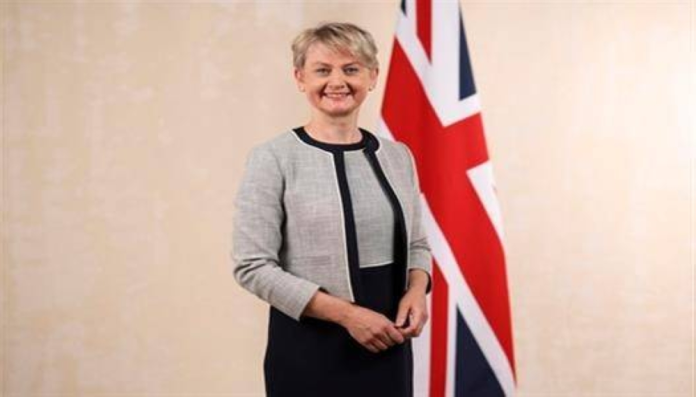
“The situation in Gaza remains critical, with winter weather taking conditions from bad to worse. Innocent families are facing icy winds and biting rain, forced to live in exposed conditions. We must act now to get vital winter aid to those that need it”, British Foreign Secretary Yvette Cooper said.

She added that “the DEC’s aid partners have already done so much, and they have the skills and knowhow to effect real change on the ground – delivering aid, winter supplies and shelter”.

According to the statement, the Disasters Emergency Response Committee’s Middle East Humanitarian Appeal has raised more than 55 million pounds since its launch in October 2024, providing life-saving assistance to those affected by conflict in Gaza, Lebanon, the West Bank, and Syria.

Rain forecasts raise fears in flood-hit Indonesia, Sri Lanka

SIBOLGA, INDONESIA, DEC 4 (AFP/APP/DNA):Rain forecasts on Thursday raised fears of more damage in flood-hit Indonesia and Sri Lanka, after earlier deluges killed more than 1,500 people in four countries.

In Indonesia, the weather agency warned the three hardest-hit provinces on the island of Sumatra would see “moderate to heavy” rain between Thursday and Friday.

The downpour started overnight and while it has not reached the same intensity as last week, it has frayed nerves in a region traumatised by flash floods and landslides.

“We are afraid that if it rains suddenly, the flood will come again,” 54-year-old Sabandi told AFP at a shelter in Pandan, North Sumatra.

Indonesia’s death toll stood at 776 on Thursday, revised down slightly from a day earlier as information arrives from remote, less accessible areas.

More than 560 people remain missing, with patchy communications and electricity making it hard to confirm their whereabouts.

Sabandi, who goes by one name, said she was stranded on her roof for two days without food or water before she could evacuate.

“My house was filled with mud,” she said — so high she couldn’t enter.

– Losing sleep –

Seasonal monsoons bring rainfall that farmers across Asia depend on, but climate change is making the phenomenon more erratic, unpredictable and deadly.

Two separate weather systems drenched all of Sri Lanka, Sumatra, parts of southern Thailand and northern Malaysia last week.

The scale of the disaster has made relief efforts challenging.

In Indonesia’s Banda Aceh, an AFP reporter said the line for fuel at one gas station extended four kilometres (2.5 miles).

The provincial governor led a relief group to the devastated Aceh Tamiang region late Wednesday, delivering 30 tons of necessities including drinking water, rice, instant noodles, biscuits, eggs and medicine, according to a statement.

In nearby Langsa city, 49-year-old Erni sheltered with her family in an Islamic prayer hall after floods devastated their home.

They had received enough drinking water and food aid to last a few days, but power outages and irregular access to clean water were making it difficult to clean up, Erni said.

“The wardrobe, table, refrigerator — all are ruined,” she told AFP.

“We honestly can’t sleep, constantly thinking about what if the flood comes again.”

Elsewhere, survivors reported food shortages, price gouging and looting.

– ‘This village is a cemetery’ –

In Sri Lanka, forecasters said the northeast monsoon was due to arrive from Thursday afternoon.

Landslide alerts were renewed for some of the worst-hit areas of the central Kandy region, and residents were advised not to return home as the saturated slopes could collapse under more rainfall.

But some were searching for the missing on Thursday in the village of Hadabima, where 18 bodies have been pulled out of six homes flattened by landslides, survivor VK Muthukrishnan told AFP.

Six people remained unaccounted for, the 42-year-old electrician said.

“We can’t live here anymore because this village is now a cemetery,” Muthukrishnan said.

At least 479 people have been killed in Sri Lanka, and hundreds remain missing, with the president appealing for international support.

Authorities estimate they will need up to $7 billion to rebuild homes, industries and roads, a tough ask for a country still emerging from its worst-ever economic crisis three years ago.

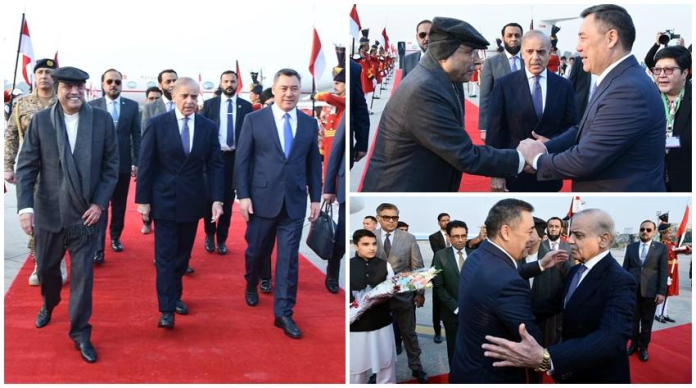
Kyrgyz President Zhaparov accorded guard of honour at PM House

ISLAMABAD, DEC 4 /DNA/: President of the Kyrgyz Republic Sadyr Nurgozhoevich Zhaparov on Thursday was accorded a guard of honour as he arrived at the Prime Minister’s House for one-on-one meeting and delegation-level talks with Prime Minister Shehbaz Sharif.

Prime Minister Shehbaz received the Kyrgyz leader at the PM House’s entrance where the formal reception ceremony took place.

The national anthems of Kyrgyzstan and Pakistan were played while both leaders stood on the saluting dais.

A smartly turned-out contingent of the three services of the Pakistan armed forces presented the guard of honour, which President Zhaparov reviewed.

The two leaders introduced their respective delegations to each other before proceeding for a one-on-one meeting, followed by talks at the delegation level.

Later, the Kyrgyz leader also planted a sapling in the lawn of the Prime Minister’s House.

President Zhaparov, who arrived here on Wednesday on a two-day state visit – the first by a Kyrgyz head of state in two decades – was received at Nur Khan Airbase by President Asif Ali Zardari and Prime Minister Shehbaz.

He is accompanied by a high-powered delegation comprising cabinet ministers, senior officials and leading business personalities.

The route of the Kyrgyz leader’s motorcade and main avenues of the federal capital were decorated with Pakistani and Kyrgyz flags as well as the large portraits of President Sadyr Zhaparov.

During the visit, President Zhaparov will also meet with President Zardari and address the Pakistan-Kyrgyzstan Business Forum.

The two sides will review the full spectrum of bilateral relations and explore new avenues to further deepen cooperation across diverse sectors, including trade, energy, defence, education, people-to-people exchanges, and regional connectivity.

Media bodies express concern over remarks regarding print and electronic media

Media bodies express concern over remarks regarding print and electronic media

KARACHI, DEC 3 /DNA/ – The All Pakistan Newspapers Society (APNS), Pakistan Broadcasters Association (PBA), and Council of Pakistan Newspaper Editors (CPNE) have expressed their concern over the remarks reportedly made by Justice Mohsin Akhtar Kayani of the Islamabad High Court regarding print and electronic media and government advertisements being released to newspapers and television channels. The comments, suggesting that newspapers were “dummies” and that public funds were being “doled out” to the print and electronic media, have caused deep disappointment across the media fraternity.


The joint organizations clarified that government advertising is a well-established international practice, designed to ensure the timely dissemination of public information. These advertisements are issued strictly in accordance with approved government policies, laws, and budgetary frameworks, and the media merely performs its mandated role in circulating information to the public.


As the fourth pillar of the state, the media has historically played an indispensable role in Pakistan’s democratic evolution. Whether in supporting national causes, highlighting public interest issues, providing unwavering coverage during floods and natural disasters as well as the recent war with India. The media stood at the forefront of the movement for the restoration of the judiciary and media has consistently upheld the people’s right to information and strengthened democratic accountability. In today’s era of misinformation, mainstream media remains a vital bulwark against fake news while promoting transparency and national cohesion.


Given this longstanding contribution and the responsibility borne by media institutions, the organizations believe that generalized or disparaging remarks may unintentionally undermine public trust in essential democratic institutions. Respectful institutional discourse is critical, and care must be taken to avoid statements that may inadvertently cast aspersions on an entire sector that serves the public interest.


The APNS, PBA, and CPNE are confident that the Judiciary shares these ideals of mutual respect and institutional dignity. In the spirit of constructive engagement, the organisations urge the relevant forums — including the Honourable Supreme Judicial Council — to kindly take notice of the matter, so that such observations may be addressed and institutional harmony preserved.


The media bodies reiterate their unwavering commitment to responsible journalism, ethical broadcasting, legal compliance, and the strengthening of democratic values in Pakistan.

Centre ‘seeks control’ over education, population welfare rights of provinces: Bilawal

Centre 'seeks control' over education, population welfare rights of provinces: Bilawal

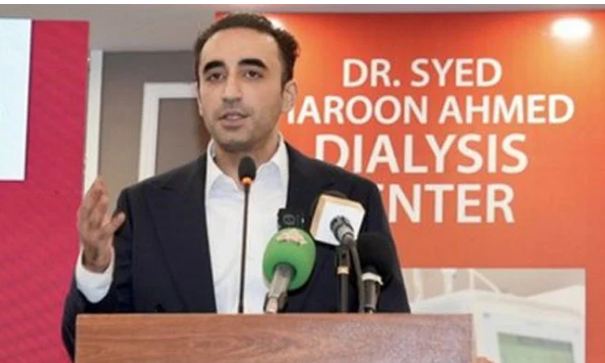
ISLAMABAD: Pakistan Peoples Party (PPP) Chairman Bilawal Bhutto-Zardari on Wednesday accused the federal government of seeking control over provincial education and population welfare rights.

Addressing the inaugural ceremony of a new Sindh Institute of Urology and Transplantation (SIUT) unit in Karachi, the PPP chairman said: “There are talks that Islamabad wants to keep the rights of education and population welfare to itself. It will be wrong.”

Stay Connected

64FansLike
60FollowersFollow

Latest Reviews

Exchange Rates

USD - United States Dollar
EUR
1.14
GBP
1.34
AUD
0.69
CAD
0.71