Home Blog Page 351

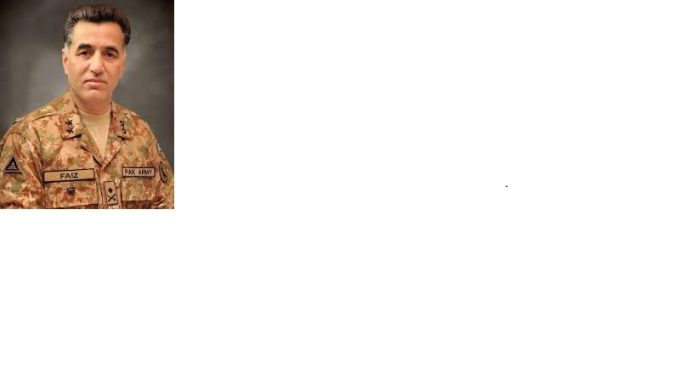
Former ISI Chief Lt Gen (retd) Faiz Hameed Sentenced to 14 Years in Corruption Case

ISLAMABAD: In a major development, former Inter-Services Intelligence (ISI) chief Lt Gen (retd) Faiz Hameed has been handed a 14-year sentence by a military court on charges linked to corruption and misuse of authority, officials confirmed on Tuesday.

According to sources, the sentence was awarded after the conclusion of a court martial proceeding initiated under the Pakistan Army Act. The case reportedly pertained to financial irregularities and alleged assets beyond known sources of income. The military’s legal branch completed the inquiry before announcing the verdict.

The conviction marks one of the most high-profile actions taken against a former senior intelligence and army official in recent years. Official statements on the detailed charges and evidence presented during the trial are expected to follow.

The development has sparked strong reactions across political and security circles, with analysts calling it a significant moment in the military’s internal accountability mechanism.

RAWALPINDI: The Field General Court Martial (FGCM) has sentenced former chief of the Inter-Services Intelligence (ISI) Faiz Hamid to 14 years of rigorous imprisonment, said the Inter-Services Public Relations in a statement on Thursday.

The military’s media wing said in a statement that the process of a field general court martial was initiated against Faiz Hamid, formerly lieutenant general, under provisions of the Pakistan Army Act, spanning over 15 months.

“The accused was tried on four charges related to engaging in political activities, violation of the Official Secret Act, detrimental to the safety and interest of the state, misuse of authority and government resources and causing wrongful loss to persons.

“After lengthy and laborious legal proceedings, the accused has been found guilty on all charges and sentenced to 14 years rigorous imprisonment by the court, which has been promulgated on December 11, 2025,” the ISPR statement read.

The statement further read that the “Field General Court Martial complied with all legal provisions [and] the accused was afforded with all legal rights, including rights of defence team of his choice.”

“The convict has the right of appeal at the relevant forum,” it added.

“Involvement of the convict in fomenting vested political agitation and instability in cohorts with political elements and in certain other matters is separately being dealt with,” the ISPR press release stated.

Hamid’s arrest

The former spy chief was taken into custody by the military on charges of abuse of power and violating the Army Act last year in August 2024.

The arrest was made in connection with a petition filed by Top City housing society’s chief executive officer in the Supreme Court last year, wherein Hamid was accused of land grabbing and stealing valuables from the owner of a private housing society during a raid.

Hamid had been formally charged with multiple offences, including engaging in political activities and violating the Official Secrets Act under provisions of the Pakistan Army Act in December 2024, according to the ISPR.

“Lt Gen Faiz Hameed (retd) has been formally arraigned on charges of engaging in political activities, violations of Official Secret Act detrimental to safety and interest of the state, misuse of authority and government resources and causing wrongful loss to a person(s),” the ISPR said in a statement.

The Pakistan Army, following Supreme Court orders, had conducted a detailed inquiry to investigate complaints against Hamid in the Top City case, according to the army’s media wing. It added that the court-martial process was started against the former spy chief based on these complaints.

The statement said that multiple instances of violation of the Pakistan Army Act post-retirement had also been established against the former general, who also served as Peshawar Corps Commander

“Three more retired officers were also taken into military custody after Hamid’s arrest in connection with the same housing scheme case,” the statement added.
China Poised to Outpace the USA in the AI Race

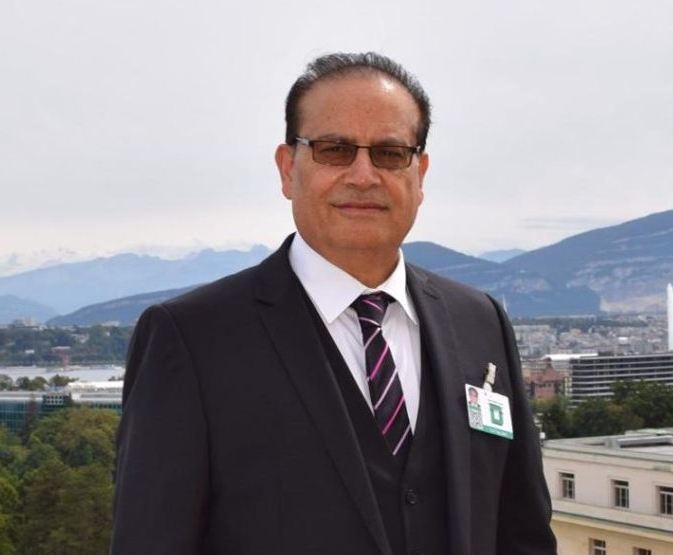
Qamar Bashir

Qamar Bashir

In a recent interview, a senior NVIDIA executive offered perhaps the most candid assessment yet of the global AI race, admitting openly that China is going full throttle across the entire AI ecosystem and will soon surpass the United States in building and deploying advanced AI platforms. According to him, AI is not a single monolithic technology; it is a vertical stack of more than five layers, stretching from the bottom layer of raw energy to the very top layer of applications. And across this entire stack, China is now moving with a speed, scale, and national purpose unmatched by any other country.

He began with the foundational fact that AI is ultimately an energy-hungry technology. Training frontier models requires immense electricity — entire power stations dedicated to data centers — and here the gap is stunning. China today generates over 9,600 terawatt-hours of electricity annually, nearly double the roughly 4,800 terawatt-hours produced in the United States.

Massive hydropower, coal, solar, and wind installations continuously expand China’s energy base, giving it the ability to power tens of thousands of new data centers and fabrication plants. Without this energy, nothing else in the AI stack functions. The United States, he warned, simply does not have enough electricity to reindustrialize, reshore manufacturing, or scale AI at the level required to maintain global leadership. Even if America decided today to double its energy output, it would take five to ten years to build the necessary power infrastructure.

The second structural difference is speed. In the U.S., constructing a semiconductor manufacturing facility can take three years or more because of permitting, regulation, zoning, and litigation. In China, the same facility can be erected in a matter of months, sometimes weeks, because the national system aligns government, regulation, industry, and capital around a single purpose: build fast, build big, and build continuously. This difference in time — not technology — is the decisive strategic advantage. Every month lost is a compounding delay. Every month gained is a compounding lead.

He further explained that semiconductors are the backbone of the AI chain, and here again the numbers speak for themselves. China has been expanding its semiconductor manufacturing capacity at an annual rate approaching 30–40 percent, with some categories even doubling year over year, particularly in mature nodes below 14nm. The United States and Europe, by contrast, expand capacity by barely 10–20 percent annually. If this trend continues, China’s domestic production will increasingly cover its own AI needs, reducing dependence on imported chips and eventually surpassing rivals in total volume. The idea that China would always lag in semiconductors is collapsing under the weight of its own accelerated progress.

Then comes the higher layer of the AI stack: the models, platforms, and applications that convert computation into economic value. Here the cultural and institutional differences are profound. In China, almost every major AI model is open source, from Baidu’s ERNIE to Alibaba’s Qwen to models emerging from startups like Zhipu and 01.AI. Tens of thousands of researchers, students, surgeons, engineers, and small businesses use these models freely, improving productivity and innovation across society. China is not earning money from these open models; instead, it is earning capability, scale, and national momentum. Open-source AI becomes a nationwide accelerator that multiplies learning, experimentation, and economic output.

In the United States, by contrast, almost all frontier models are closed and commercial. They are powerful, but they are fenced behind subscriptions, APIs, restrictions, and corporate ownership. This produces revenue, not widespread capability. The NVIDIA executive made a critical point: China is not monetizing AI at the application level; it is weaponizing openness to democratize AI across its entire population. This is why Chinese AI applications are spreading faster than American ones — because the barriers to entry are near zero.

He also offered a striking cultural insight. When surveyed, nearly 80 percent of Chinese citizens view AI as a positive force for society. In the United States, the sentiment is almost the reverse — roughly 20 percent view AI positively while 80 percent express fear, distrust, or resentment. Innovation cannot thrive in a cultural climate of suspicion. China has fused optimism, national pride, and collective ambition into its AI mission. The U.S. has not.

One example he gave was Huawei, now emerging as one of the fastest-growing AI companies despite American sanctions. The company builds chips, models, cloud platforms, and 5G systems simultaneously and is advancing at a speed that even American executives privately acknowledge with respect. When the U.S. president asked him for recommendations on how to reindustrialize America, he replied that the first requirement is not money or technology but energy — without doubling America’s energy output, no amount of reshoring will succeed. AI factories, semiconductor fabs, and advanced manufacturing all require stable, abundant, and cheap electricity. China has it. The United States does not.

He also warned that the U.S. system, while superior in pure innovation and scientific breakthroughs, is deeply constrained by regulation, litigation, and slow infrastructure development. China, meanwhile, has government coordination, manufacturing speed, infrastructure readiness, and cultural enthusiasm. As a result, the remaining AI gap between China and the United States is now as small as six months — and shrinking.

Behind these observations lies a broader truth: China is building the full AI stack. Energy, infrastructure, semiconductors, compute clusters, models, applications, and societal adoption. Every layer reinforces the others. The United States excels in some layers, particularly research and frontier architecture design, but lags in foundational layers like energy, manufacturing, and large-scale deployment. Without rebuilding the bottom of the stack, America cannot maintain leadership at the top of the stack.

Yet he was not pessimistic about America. He emphasized that the United States is a nation of extraordinary people, extraordinary innovators, extraordinary scientists, and extraordinary entrepreneurs. If the country decides to renew itself — doubling energy capacity, rebuilding industrial infrastructure, streamlining regulations, enabling faster construction, and fostering a cultural shift that welcomes AI rather than fears it — then the United States can still compete with China, perhaps even share global leadership. But without such a national transformation, the momentum is clearly with Beijing.

The verdict from within America’s own technology leadership is unmistakable. China is not catching up; China is accelerating past. It is building more, deploying more, training more, and opening more. It has the energy, the infrastructure, the manpower, the optimism, the manufacturing base, and the national will to dominate the AI century. If trends continue, then sooner rather than later, China will indeed be number one in the AI business — and the world will be shaped by the platforms it builds.

Qamar Bashir
Press Secretary to the President (Rtd)
Former Press Minister, Embassy of Pakistan to France
Former Press Attaché to Malaysia
Former MD, SRBC | Macomb, Michigan, USA

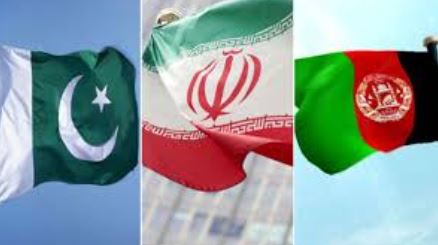
Regional stability Iran to mediate between Pakistan and Afghanistan

Regional stability Iran to mediate between Pakistan and Afghanistan

Iranian officials have been actively engaging both sides in recent days. Foreign Minister Abbas Araghchi has spoken to his Pakistani and Afghan counterparts, offering Tehran’s “good offices” to ease tensions

Ali Furqan

ISLAMABAD: Iran is preparing to host a fresh round of mediation next week between Pakistan and Afghanistan’s Taliban regime, in what is being viewed as the most ambitious diplomatic push yet to break the deadlock between the two neighbours.

According to reliable sources, this important meeting will be held of 16th and 17th December in Tehran.

The meeting follows earlier rounds of talks in Doha, Istanbul and Jeddah, all of which failed to deliver a breakthrough.

What makes the upcoming Tehran session notable is the expected participation of China and Russia, a sign that major regional powers see the escalating Pak-Afghan strain as a threat to broader stability.

Diplomatic sources say Pakistan’s special envoy for Afghanistan, Ambassador Muhammad Sadiq, will represent Islamabad.

Iranian officials have been actively engaging both sides in recent days. Foreign Minister Abbas Araghchi has spoken to his Pakistani and Afghan counterparts, offering Tehran’s “good offices” to ease tensions. He confirmed at the Tehran Dialogue Forum last month that Iran was working to convene a wider regional gathering focused on de-escalation.

Islamabad has publicly welcomed the proposal. Foreign Office spokesperson Tahir Hussain Andrabi said that Pakistan “would not shy away from” Iran’s mediatory role. “Iran is a brotherly, friendly country. Pakistan is always in favour of peaceful resolutions through dialogue and diplomacy,” he said, adding that Pakistan had a “very strong case” in seeking action against anti-Pakistan militant groups operating from Afghan soil.

Tehran, meanwhile, has framed the situation as a rising security concern. On Monday, Iranian Foreign Ministry spokesperson Ismail Baqai said Iran was “worried about the situation between Pakistan and Afghanistan” and warned that if tensions deepen, they could pose a direct threat to Iran’s national security.

Iran’s renewed involvement comes after the visit of Dr. Ali Larijani, the Supreme Leader’s envoy and secretary of Iran’s Supreme National Security Council to Islamabad last month, during which the regional security climate and Pak-Afghan dynamics were central to discussions.

Experts suggest that Iran, as a neighbour to both Pakistan and Afghanistan, is better placed than previous mediators such as Turkiye, Qatar or Saudi Arabia to take on a more influential role. The inclusion of Russia and China both increasingly wary of instability spilling across borders further raises expectations that the Tehran meeting may offer a more serious attempt at de-escalation.

Previous mediation efforts collapsed largely due to the Afghan Taliban’s refusal to offer a written commitment or accept a mechanism ensuring “decisive and irreversible” action against the Tehreek-e-Taliban Pakistan (TTP) and other anti-Pakistan groups.

Recent attacks, including a bombing in Islamabad and a foiled assault in South Waziristan, have brought the fragile ceasefire to the brink.

With tensions climbing and the diplomatic window narrowing, Iran’s initiative is being closely watched across the region. Whether the Tehran meeting will finally deliver progress remains uncertain but for now, it represents the strongest regional attempt to pull Islamabad and Kabul back from a dangerous trajectory.

Balochistan govt vows protection for vulnerable groups, launches KUMAK program for special persons

Balochistan govt vows protection for vulnerable groups, launches KUMAK program for special persons
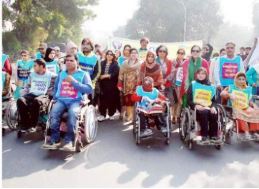
QUETTA, Dec 10 (APP/DNA):Secretary of the Social Welfare and Human Rights Department, Balochistan Asmatullah Qureshi, reaffirmed the government’s dedication to protecting human rights,  emphasized efforts to ensure medical, educational, and social justice for women, children, persons with disabilities, and transgender individuals.

The Social Welfare and Human Rights Department of Balochistan, in collaboration with the European Union (EU) and the United Nations Development Programme (UNDP), hosted an event to mark International Human Rights Day 2025. The gathering celebrated the fundamental rights of all individuals and highlighted new initiatives for vulnerable groups.

The event brought together government officials, representatives of national and international NGOs, professors, lawyers, scholars, civil society activists, students, and persons with disabilities.

Secretary Asmatullah Qureshi remarked that “resolving these issues is not solely the responsibility of the government; every member of society must play their part,” Qureshi remarked.

Secretary Qureshi outlined several major steps taken by the provincial government including approval of the Early Child Marriage Act to safeguard children’s rights.

The Balochistan government has established Dar-ul-Aman (shelter homes) for women and children and eleven active Child Protection Units across the province.

The KUMAK Program has been launched under the endowment fund to assist persons with disabilities. This program provides academic and technical education, assistance with marriage expenses, interest-free micro-finance loans, monthly stipends and various welfare assistance schemes.

Under the Balochistan Awami Endowment Fund, financial support is provided for treatment of seven life-threatening diseases, including liver and kidney transplants, Thalassemia, severe burns, cancer, cochlear implants, and heart diseases.
The Human Rights Policy 2021 has been approved for Balochistan, and an Action Plan for its implementation in 2026 is currently being developed.
Complaint cells established at the Social Welfare Department, the National Commission for Human Rights (NCHR), and the Provincial Ombudsman’s office.

Speakers including Zulfiqar Durrani (UNDP), Farkhanda Aurangzeb (former NCHR member), Qari Abdul Rasheed, and Asfandyar Badini, Regional Director, Ministry of Human Rights praised the provincial government’s initiatives, particularly the KUMAK Program for persons with disabilities.

Finance Minister Aurangzeb departs for Saudi global finance conference

Finance Minister Aurangzeb departs for Saudi global finance conference

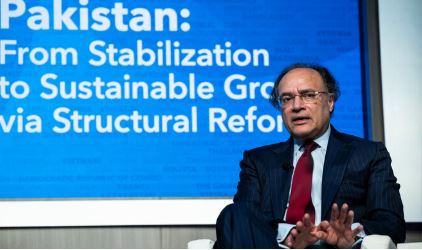
ISLAMABAD, DEC 10 /DNA/ – Federal Minister for Finance and Revenue, Senator Muhammad Aurangzeb, has departed for Riyadh to participate in the Global Development Finance Conference – Momentum 2025, which opened yesterday in the Saudi capital.

Organized by the National Development Fund (NDF) under the patronage of His Royal Highness Crown Prince Mohammed bin Salman, the three-day event brings together international policymakers, development institutions, and financial experts to advance innovative financing models aligned with the ambitions of Saudi Vision 2030.

With more than 100 speakers representing over 120 global and regional organizations, the conference is positioned as a leading platform for transforming development-focused ideas into impact-driven initiatives.

During the conference, Finance Minister Senator Muhammad Aurangzeb will participate in a high-level session on climate adaptation and resilience, where he will join global leaders in discussing how developing countries can secure the capital needed to address climate vulnerabilities. His participation will highlight Pakistan’s priorities in climate finance and the government’s efforts to strengthen economic resilience in the face of global environmental challenges.

The Finance Minister will hold important bilateral meetings with senior Saudi officials, including leadership from the National Development Fund and the Ministry of Finance. These engagements will focus on deepening Pakistan–Saudi economic cooperation, exploring opportunities for development financing, and strengthening collaboration across priority sectors. His exchanges with Saudi counterparts are expected to reinforce ongoing economic reforms and open avenues for enhanced investment and financial support.

On the sidelines of the summit, Senator Aurangzeb will also give interviews to prominent international media outlets, including CNN and RIA Novosti, where he will outline Pakistan’s economic reform trajectory, investment potential, and development finance requirements. He will further underscore the government’s commitment to mobilizing global partnerships that can accelerate sustainable and inclusive growth.

In addition, Senator Aurangzeb will participate in an interview with CGTN to expand Pakistan’s outreach to global audiences and articulate the country’s evolving development agenda. He will also interact with Pakistan’s diplomatic mission in Riyadh to review bilateral engagements and discuss upcoming economic diplomacy initiatives.

The Finance Minister’s participation in Momentum 2025 reflects Pakistan’s commitment to engaging with global development partners and contributing to collective efforts aimed at building a dynamic and resilient financing ecosystem capable of supporting sustainable growth.

Masood Khan terms Pakistan’s repulsion of Afghan provocations a ‘major diplomatic, strategic success’

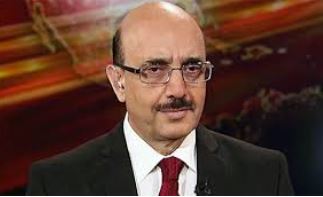
ISLAMABAD, Dec 10 (APP/DNA): Ambassador Masood Khan, Pakistan’s former Ambassador to the United States, China, and the United Nations, stated on Wednesday that Pakistan’s decisive response to the Chaman–Spin-Boldak attack constituted “a major success,” affirming that any assault on Pakistan’s sovereignty would be met with “zero tolerance and an immediate, punitive response.”

In a statement issued here, he praised Pakistan’s armed forces, intelligence agencies, and civilian leadership for their seamless coordination in repelling the latest Afghan-initiated incursion, noting that the political message to Kabul is “clear, firm, and non-negotiable: Pakistan seeks peaceful neighbourhoods, but never at the cost of its national security.”

Discussing the escalating provocations from Afghan soil. Ambassador Khan described the Taliban regime as “delusional and disconnected from their own population,” adding that their internal dysfunctions and ideological rigidity have made Afghanistan “a proxy extension of India.”

He warned that the Taliban’s refusal to regulate borders, curb terrorism, or acknowledge Pakistan’s legitimate security concerns has inflicted severe damage on both countries.

“Pakistan tried tirelessly to rehabilitate the Afghan Taliban into the international system,” he said, “but the surge of terrorism emanating from their territory has undermined any prospect of cooperation.”

Reflecting on the diplomatic engagements held earlier in Doha and Istanbul, Ambassador Khan said that Islamabad entered the talks in good faith, but the Afghan delegation’s conduct in Istanbul “scuttled the progress made in Qatar.”

He lamented that the Taliban have now resorted to “open warfare against Pakistan,” with Tehreek-e-Taliban Pakistan (TTP) enjoying sanctuaries and support in Afghan-controlled territories. “These are not ungoverned spaces,” he stressed. “These areas are fully under Taliban jurisdiction, yet they host, arm, and finance anti-Pakistan terrorists—often on India’s prompting.”

Ambassador Khan underscored the strategic danger posed by Afghanistan’s role in enabling transnational terrorism, which threatens not only Pakistan but also Central Asia, China, the United States, and the wider international community.

“The Taliban pledged in 2020 that Afghan soil would not be used for terrorism,” he said. “Today, that pledge stands broken. No country in the region is safe from the metastasis of Afghan-based militant networks.”

He emphasized Pakistan’s continued coordination with regional counterterrorism frameworks—including mechanisms under China, Tajikistan, and the Shanghai Cooperation Organisation’s Regional Anti-Terrorist Structure (RATS)—which Pakistan currently chairs.

He noted that attacks against Chinese personnel and regional infrastructure highlight the urgency of confronting Afghan-based threats, but added that Islamabad had exercised remarkable restraint to minimize harm to Afghan civilians.

Addressing the role of global powers, Ambassador Khan observed that the United States maintains significant leverage in Kabul due to its sustained humanitarian engagement. He urged Washington to use its influence to counsel the Taliban to cease hostilities, regulate borders, and curb terrorism. “If the Taliban continue their aggressive posture,” he warned, “they will invite isolation, instability, and possibly an internal implosion, because they are unrepresentative and face growing dissent both inside Afghanistan and throughout the diaspora.”

Ambassador Khan reiterated that Pakistan values centuries-old ties with the Afghan people and seeks stability, connectivity, and economic cooperation. However, he warned that the Afghan Taliban are “pitting Afghans against Pakistanis,” a policy rejected by the overwhelming majority on both sides of the border. “We are intertwined by kinship, history, and geography,” he said. “The Afghan regime’s hostility is neither sustainable nor reflective of the will of the people.”

On the question of future engagement, Ambassador Khan said that Pakistan remains open to bilateral negotiations, third-party mediation through Qatar, China, Russia, Saudi Arabia, or the United States, and regional diplomatic channels. But he cautioned that if aggression persists, Pakistan will exercise its inherent right of self-defence under Article 51 of the UN Charter. “If Afghan territory is used for attacks against us,” he declared, “Pakistan’s response will be immediate, proportionate, and punitive.”

12 energy projects completed across Sindh under CPEC

12 energy projects completed across Sindh under CPEC
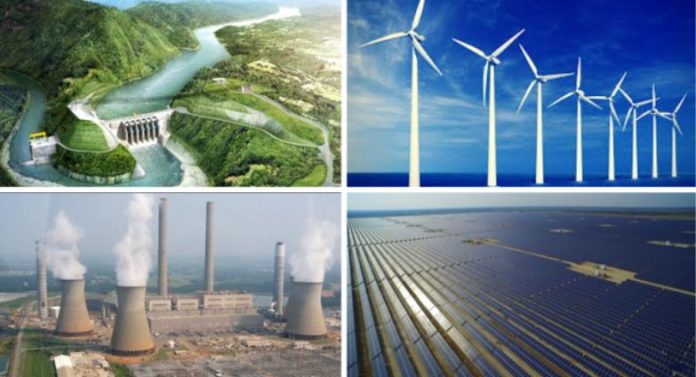
ISLAMABAD, Dec 10 (APP/DNA):The energy portfolio of the China-Pakistan Economic Corridor (CPEC) in Sindh’s less developed regions has recorded notable progress with the completion of 12 power projects. 

The initiatives have significantly boosted electricity generation, strengthened transmission capacity, and enhanced overall energy security across the province.

According to an official document by the Ministry of Planning, Development and Special Initiatives, available with Wealth Pakistan, 12 major energy initiatives have been successfully completed across Sindh under various financing modes, including Independent Power Producer (IPP), Foreign Direct Investment (FDI) and Built-Operate-Transfer (BOT) arrangements.
In Tharparkar district, the 660MW Engro Thar Power & Mine project was completed at a cost of $995 million under the IPP mode, marking a key milestone in Pakistan’s transition toward utilising its vast indigenous coal reserves.
Four renewable energy projects have been completed in the Thatta district, including 100MW UEP Wind Farm ($250 million), the 100MW Three Gorges Wind Power project ($150 million), the 50MW Sachal Wind Farm ($134 million), and the 50MW Hydro China Dawood Wind Project ($113 million). These wind projects, completed under the IPP model, have collectively strengthened the renewable power base of Sindh and significantly contributed to Pakistan’s clean energy targets.
At Port Qasim in Karachi, the 1,320MW Port Qasim Coal Power Project was completed with an investment of $1.9 billion under the IPP model, providing one of the largest baseload power sources in the country.
Meanwhile, in Tharparker, the 7.8MTPA (million tonnes per annum) TCB-II Mine project was completed through FDI at a cost of $850 million.
Additionally, the 330MW Thar Energy Limited project costing $497 million, the 330MW ThalNova Thar Power project costing $497 million and 1,320MW Shanghai Electric (TCB-1) power project costing $1.9 billion have been completed under the IPP model in the Tharparkar district.
In addition, 7.8MTPA Thar Block-I project has been completed at a cost of $990 million on the FDI basis.
Together, these projects have deepened the energy potential of the Thar coal ecosystem and enhanced long-term energy stability.
Sindh also saw the completion of a critical national transmission project – the ±660kV Matiari-Lahore High Voltage Direct Current (HVDC) Transmission Line. Executed under the BOT mode and completed at a cost of $1.7 billion, the project links Matiari in Sindh to Lahore in Punjab, enabling long-distance, high-efficiency power transmission from south to north and marking Pakistan’s first HVDC transmission system.
Collectively, the completed CPEC energy projects in Sindh represent one of the most comprehensive provincial energy transformations under the corridor initiative, bringing together coal, wind, and transmission infrastructure with precisely documented investments that continue to support Pakistan’s economic and industrial growth.

Pakistan cannot progress without eliminating terrorism, extremism, sectarianism: PM Shehbaz

Pakistan cannot progress without eliminating terrorism, extremism, sectarianism: PM Shehbaz
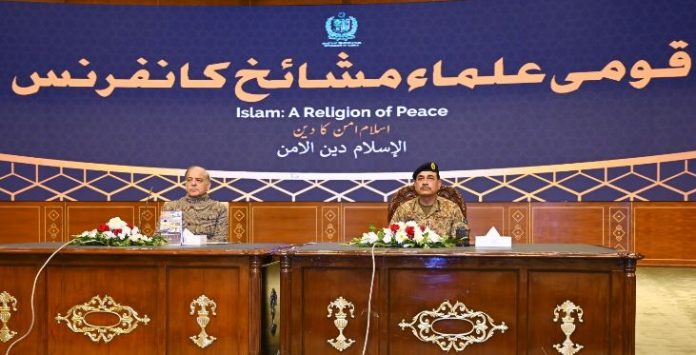
ISLAMABAD, Dec 10 (APP/DNA):Prime Minister Shehbaz Sharif on Wednesday said that the country could not achieve sustainable economic development without the complete elimination of terrorism, extremism and sectarianism from the country.

Addressing the National Ulema Convention here, the prime minister urged religious scholars to play a proactive role in discouraging sectarianism and promoting unity, harmony and brotherhood among all schools of thought. He said creating an atmosphere of national cohesion was essential for ensuring the country’s prosperity and future progress.

The Convention was attended by Deputy Prime Minister and Foreign Minister Ishaq Dar, Field Marshal Chief of Defence Forces Syed Asim Munir, ministers, parliamentarians, and a large number of religious scholars from various schools of thoughts.

The prime minister said that Allah Almighty had blessed Pakistan with a great victory in the maarka-e-haq (battle of truth) against India, which he said was due to the professionalism and bravery of the armed forces, as well as the prayers of the nation.

He said Field Marshal Asim Munir had led the war with courage and unwavering resolve, while all services, the Pakistan Army, Pakistan Air Force and Pakistan Navy, contributed equally to the victory.

The world, he added, was acknowledging Pakistan’s performance, and Muslim countries were expressing pride over the historic victory. Despite this, he noted, certain elements continued to spread propaganda against the armed forces.

Calling out the menace of terrorism, he said the Khawarij were carrying out attacks and targeting innocent citizens and security personnel. He said he often met families of martyred soldiers who expressed pride in the sacrifices of their sons for the country.

As regards the economy, the prime minister said Pakistan had reached a stage from where it was about to take off towards accelerated growth. He said the country’s political and military leadership had worked tirelessly to steer the nation away from the risk of default.

He reaffirmed the government’s resolve to put Pakistan on the path of economic prosperity, saying this was the time for implementation and hard work. By implementing austerity measures, and working collectively, he added, the nation could fulfill the dreams of Quaid-e-Azam Muhammad Ali Jinnah.

PM Shehbaz Sharif said national unity was indispensable for addressing all challenges facing the country and for achieving long-term stability and development.

Nawaz among other nine Pakistani players issued NOCs for BPL

Nawaz among other nine Pakistani players issued NOCs for BPL

ISLAMABAD, DEC 10 – The Pakistan Cricket Board (PCB) has issued NOCs to nine Pakistan cricketers for participating in the Bangladesh Premier League (BPL) till January 23.

According to details surfaced on Wednesday, prominent among those who allowed to feature in BPL included Mohammad Nawaz, Hussain Talat, Ihsanullah, Haider Ali, Abrar Ahmed, Khawaja Nafay, Salman Irshad, Faheem Ashraf.

Last week, it was reported that the senior Pakistani players are unlikely to play the Bangladesh Premier League (BPL) due to the national duty ahead of the T20 World Cup 2026.

According to details, the BPL is scheduled to begin from December 26 to January 23. During this period, the Pakistan national cricket team are scheduled to play the T20I series against Sri Lanka and Australia respectively.

The Pakistan Cricket Board (PCB) has asked the players to prioritise playing for the country over the leagues.

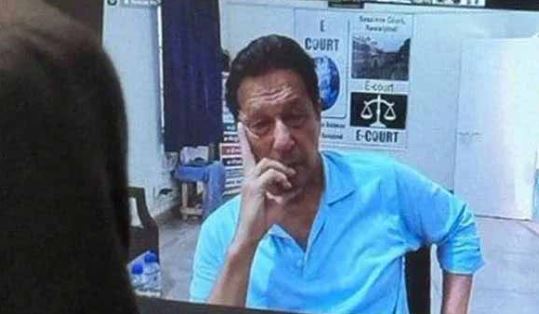
Govt mulls shifting Imran Khan from Adiala amid ‘rising political tensions’

Govt mulls shifting Imran Khan from Adiala amid 'rising political tensions'

ISLAMABAD: The federal government has begun deliberations on shifting Pakistan Tehreek-e-Insaf (PTI) founder Imran Khan from Adiala jail, with Prime Minister’s Coordinator for Khyber Pakhtunkhwa Ikhtiar Wali warning that political confrontation has reached a point “from where return seems impossible.”

Sources told Geo News that the authorities believe PTI was “pursuing an agenda to destabilise the country”, saying that attempts were underway to foment unrest under the guise of protest.

Addressing a press conference, Wali said the government was seriously examining proposals to move the “prisoner” from Adiala jail. “They want the prisoner shifted from Adiala, and the government is genuinely considering it,” he added.

Wali also claimed that Khyber Pakhtunkhwa Chief Minister Sohail Afridi has a nexus with drug smugglers. “His performance is not zero — it is minus,” he remarked.

He further claimed that CM Afridi’s family members were engaged in the narcotics business “under his patronage”.

The remarks come a day after the PTI founder’s sisters staged a sit-in near Rawalpindi’s Adiala jail after being denied a meeting with their incarcerated brother, which was ended following police action.

The protesters gathered at the Factory checkpoint after Noreen Khan, Aleema Khan and Uzma Khan. The police officials used water cannons to scatter the participants of the sit-in. Some of the protesters resisted the police operation by hurling stones, leading to the arrests of several PTI workers.

Meetings with the PTI founder have been a point of contention between the former ruling party and the government for quite some time, with the last meeting held last week when ex-PM’s sister Uzma was allowed to meet him.

Tensions have escalated outside Adiala jail recently as PTI protests, including scuffles with police and jail staff, continue over meetings with the ousted prime minister, who has been imprisoned there for over two years.

Last month, KP Chief Minister Sohail Afridi staged a 16-hour sit-in outside the facility. Before this, Imran’s sisters Aleema Khan, Noreen Khan Niazi and Uzma Khanum also held a protest outside the jail, which resulted in their brief detention.

However, since then, the government, as confirmed by Information Minister Attaullah Tarar, has imposed a blanket ban on meetings with the incarcerated politician.

The ban came hours after Inter-Services Public Relations (ISPR) Director General Lt Gen Ahmed Sharif Chaudhry termed the PTI founder a “mentally ill person” and a threat to national security.

Separately, National Assembly Speaker Ayaz Sadiq said that both Prime Minister Shehbaz Sharif and he had repeatedly stated their readiness for dialogue. “If the opposition wants to advance talks, it is a welcome development,” he said.

However, he disclosed that the opposition conveyed that it wanted dialogue only with Chief of Defence Staff and Chief of Army Staff Field Marshal Asim Munir. “The very forces that defeated India were targeted with offensive language,” he lamented.

Ayaz Sadiq said the opposition had taken politics to a point “from where return may no longer be possible”, noting that the parliamentary floor was repeatedly used for anti-judiciary and anti-army rhetoric.

“I moved four steps forward for dialogue, but now I have had to retreat 40 steps,” he said. “If Pakistan exists, politics exists, and everything else exists.”

‘No minus formula’
Speaking to journalists outside parliament, PTI Chairman Barrister Gohar Ali Khan condemned the use of water cannon on party workers.

“This is not the corporate world where one can remove one of two people and let the other remain. If attempts are made to minus us, none of them will remain either,” he said.

He added that PTI had come to Parliament to strengthen democracy, “but some people do not want to see the situation improve”.

Meanwhile, PTI leader Asad Qaiser said no one had the courage to impose governor’s rule in KP. “We know how to defend ourselves. This is beyond their capacity,” he added.

He also sought clarity from the Pakistan Peoples Party (PPP), asking whether Faisal Karim Kundi’s comments in favour of governor’s rule represented official party policy.

Qaiser emphasised that PTI desired peace and supported full use of state resources against terrorism, adding that the party would speak “as far as the law allows”.

Stay Connected

64FansLike
60FollowersFollow

Latest Reviews

Exchange Rates

USD - United States Dollar
EUR
1.14
GBP
1.34
AUD
0.70
CAD
0.71